1958–1993 · The Golden Era
The Archive.
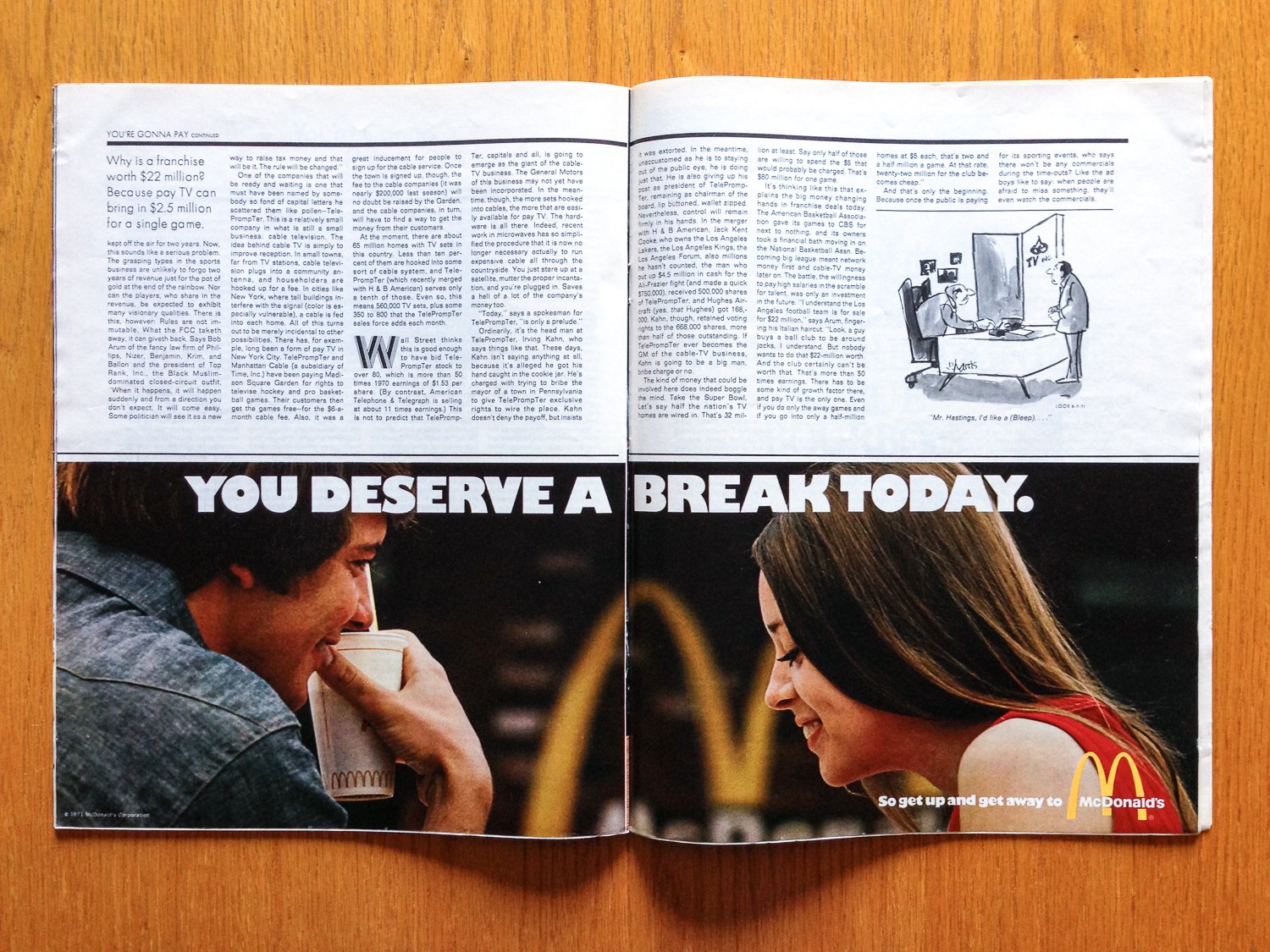
You Deserve a Break Today
A hamburger chain stopped selling hamburgers and sold the customer permission to stop, a word it found in its own research.
Hilltop
The spot that sold a soft drink as a small act of peace between strangers, and showed a jingle could become a hit record in its own right.
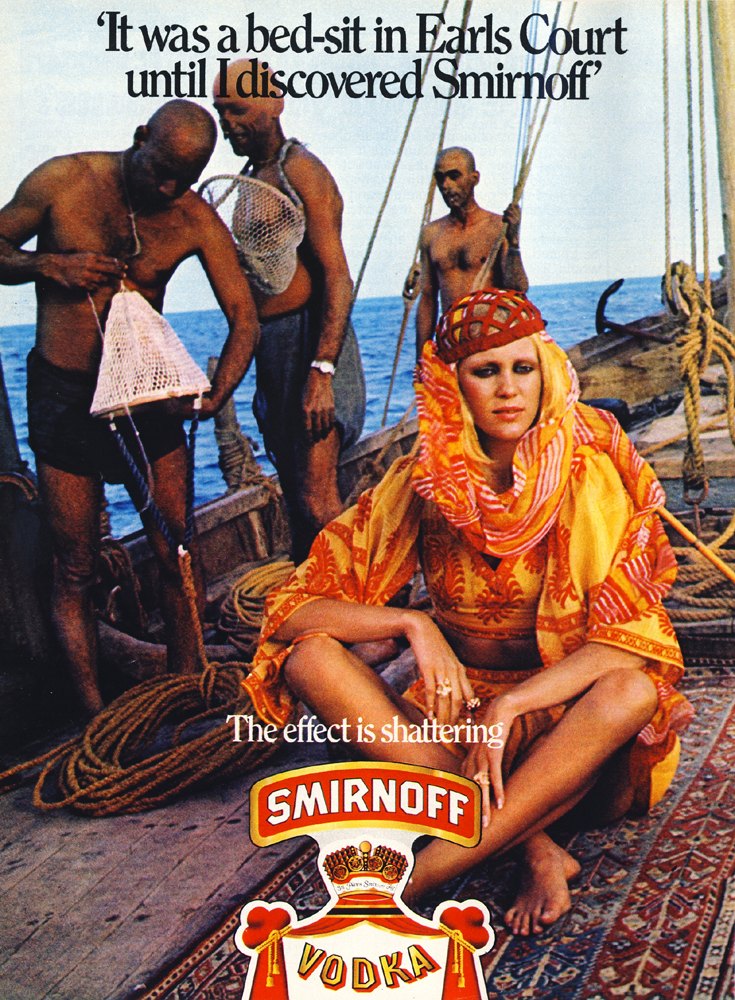
Accountancy Was My Life Until I Discovered Smirnoff
A one-line formula that let a premium vodka promise its drinkers a different life, until the advertising code made the promise too risky.
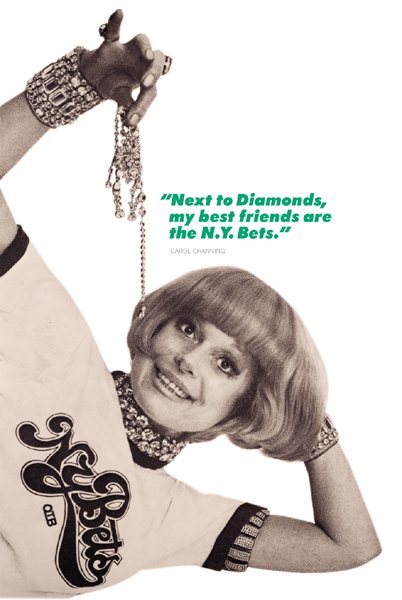
You're Just Right for the Bets
A city-run betting operation borrowed the goodwill of New York's own celebrities, for free, to make a two-dollar bet feel like civic sport.
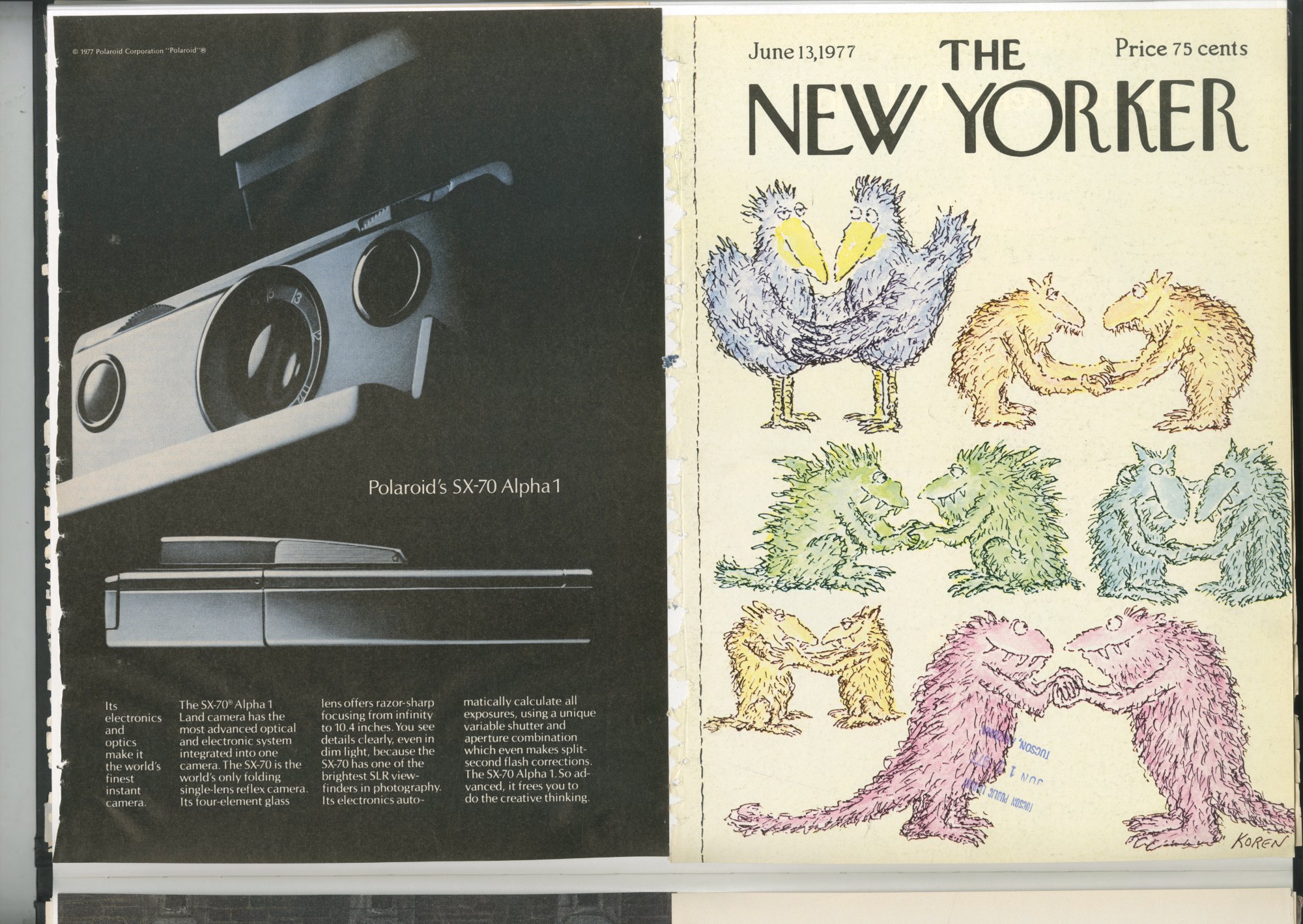
SX-70
A company with a technical marvel and a high price chose gravity over gimmicks, and cast Laurence Olivier to say plainly what the camera did.
Sales film: Nixon in the Oval Office
Don't Give Up the Ship
A Scotch about to drop its old sailing-ship trademark was told to fight for it instead, and the fight became the campaign line.
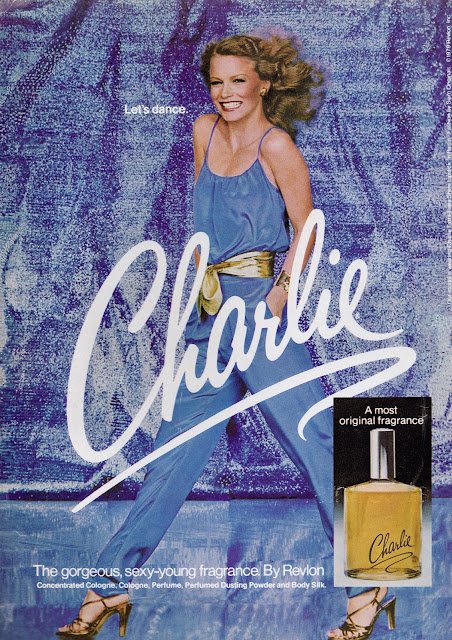
Charlie
The fragrance advertising that stopped asking a woman to be wanted and showed one on her way somewhere.
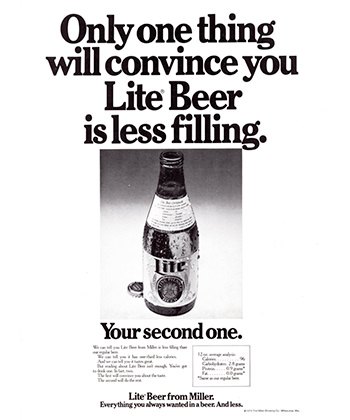
Tastes Great, Less Filling
Light beer had already failed twice as a diet product; this campaign kept the chemistry, changed the promise, and built a format that ran for seventeen years.
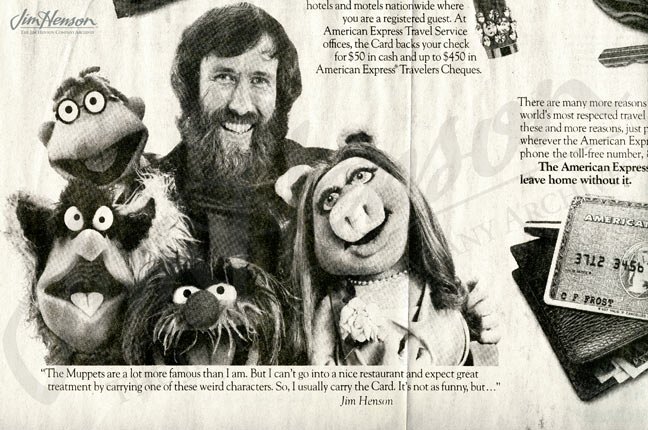
Do You Know Me?
How a card you had to pay for answered the free bank cards: by selling recognition instead of credit.
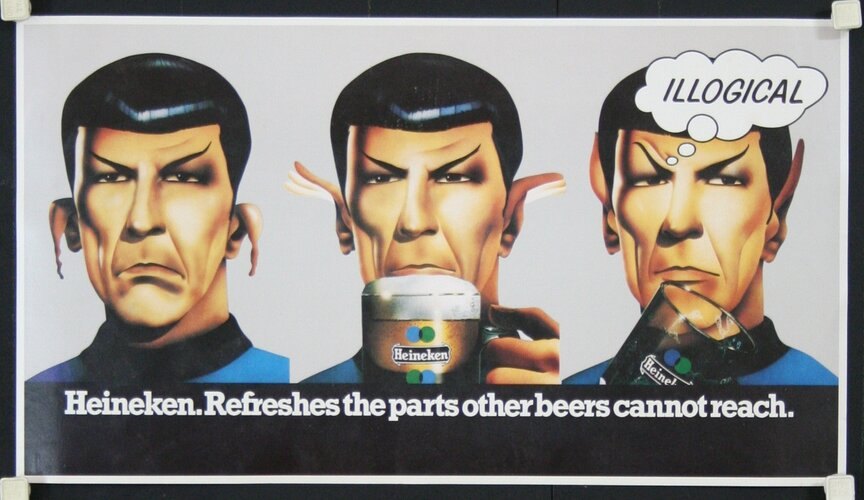
Refreshes the Parts
A lager with nothing factual to claim turned the vaguest word in the category, refreshment, into a joke that could be told a new way on every poster for sixteen years.
The Pepsi Challenge
The Pepsi Challenge
The number two brand stopped selling a mood and asked the leader's own drinkers to taste the difference on camera.
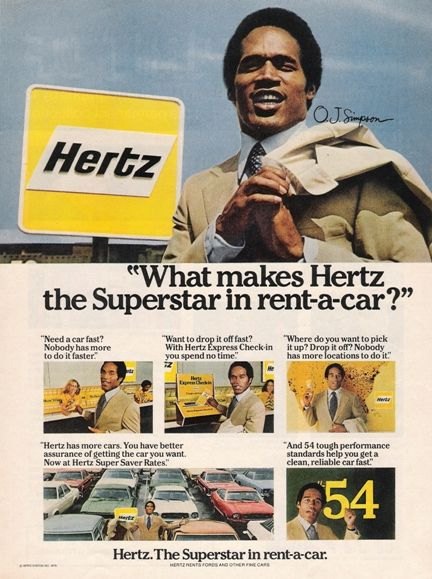
The Superstar in Rent-a-Car
The market leader answered a decade of Avis attacks by acting out its one real advantage, speed, with a running back who could make it look true.
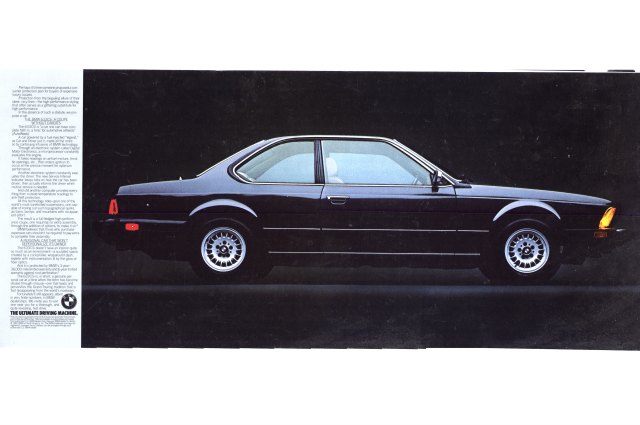
The Ultimate Driving Machine
A small German carmaker with no fixed image in America built its business there on one line about how the car drives, written by an agency that had almost run out of money.
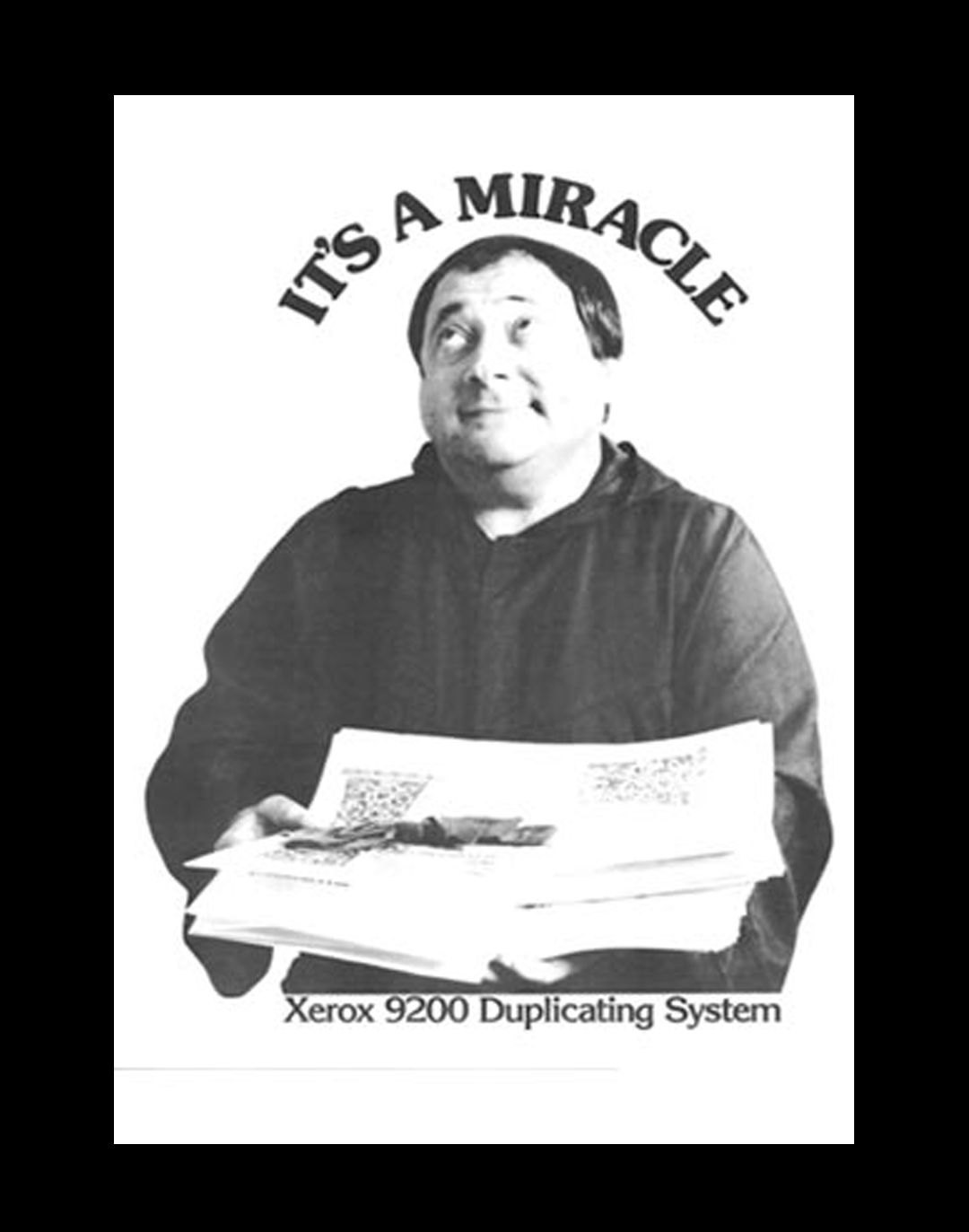
Brother Dominic
A ninety-thousand-dollar production duplicator sold to print-shop managers by measuring it against a medieval scribe, with the claim spoken by a sceptic rather than the brand.
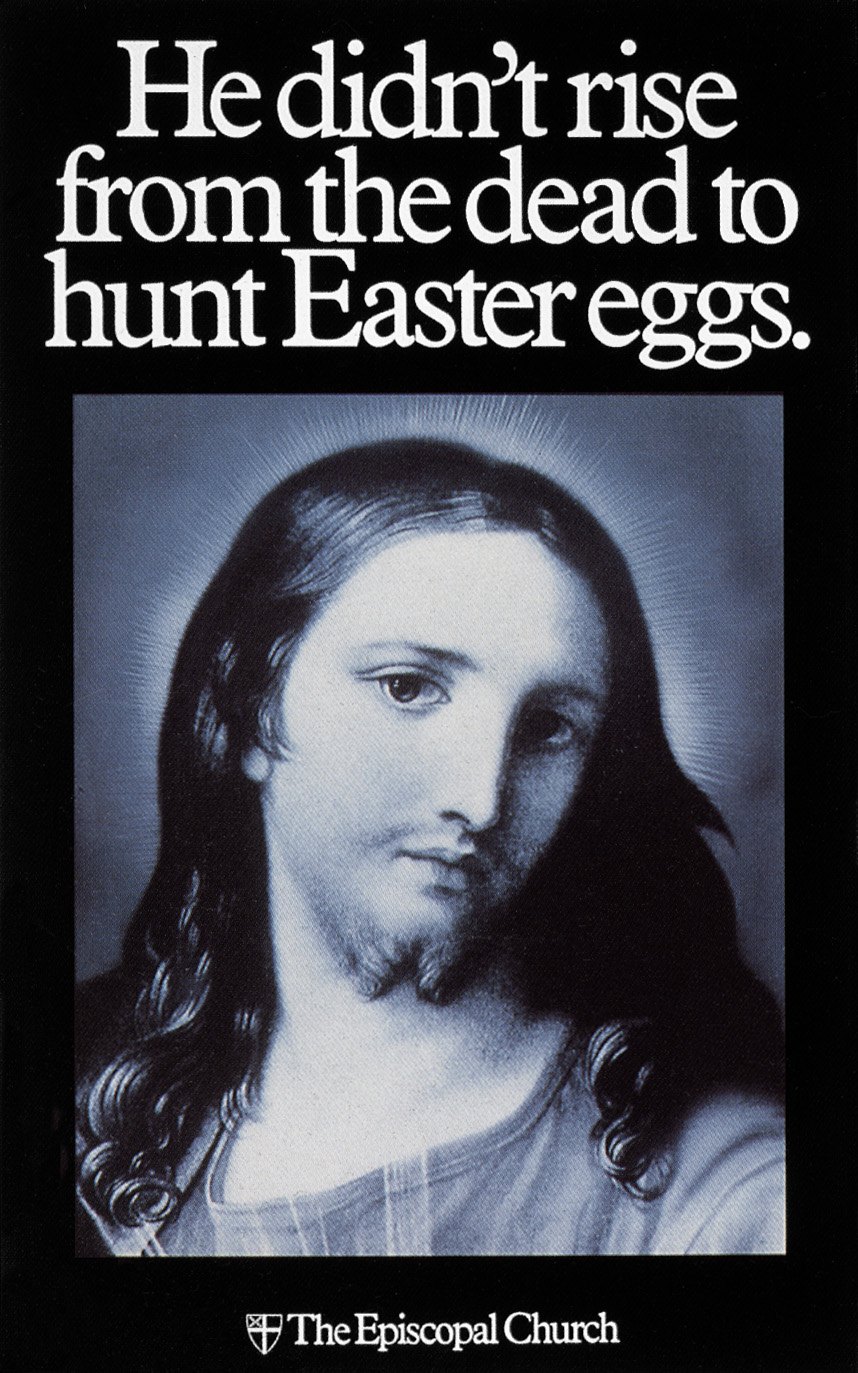
The Episcopal Ad Project
A parish priest and a priest's son sold wit to churches at cost, and the work took the public-service campaign gold at the 1984 One Show.
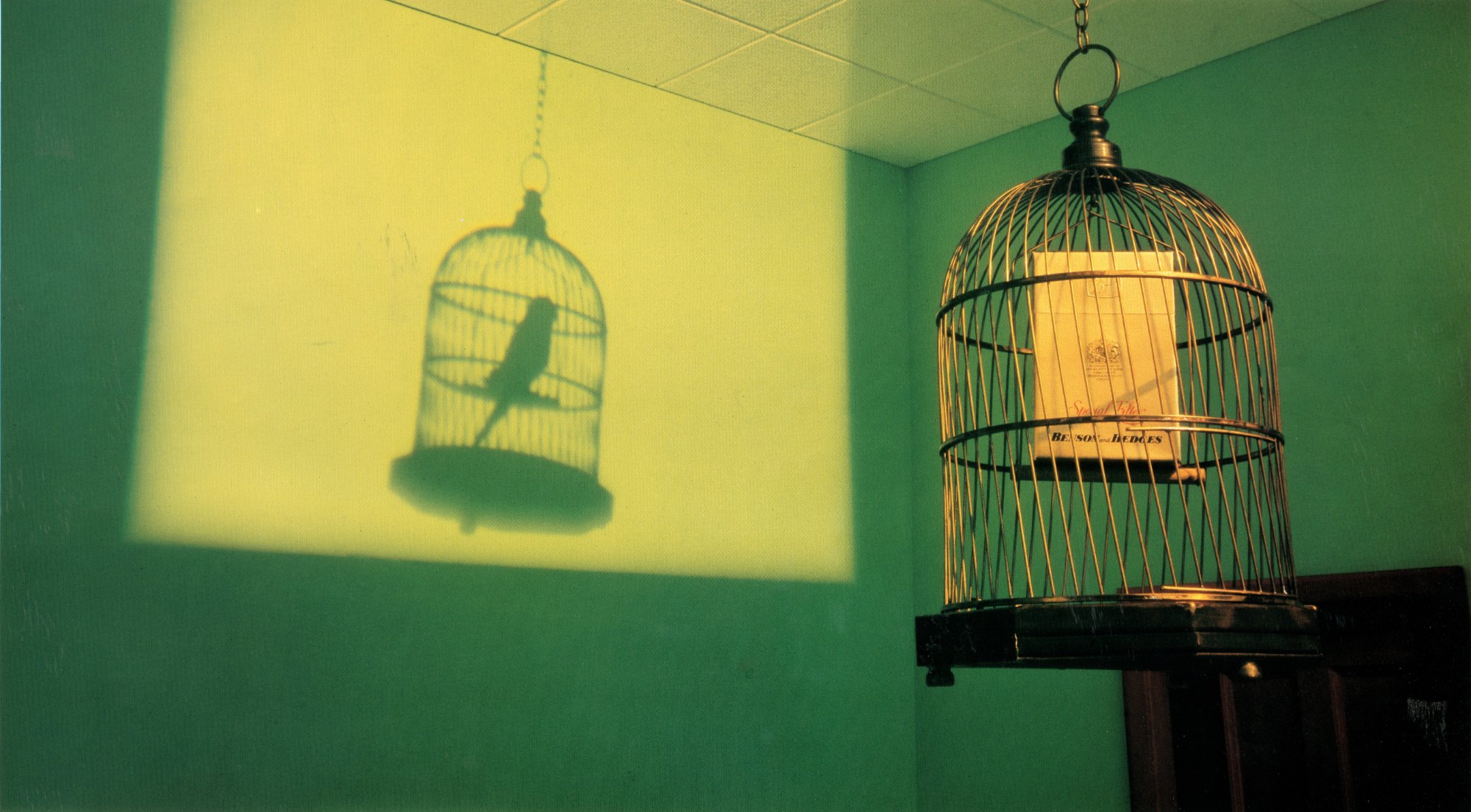
Gold Box
A brand forbidden to describe itself built a decade of recognition out of one gold rectangle and the audience's willingness to work.
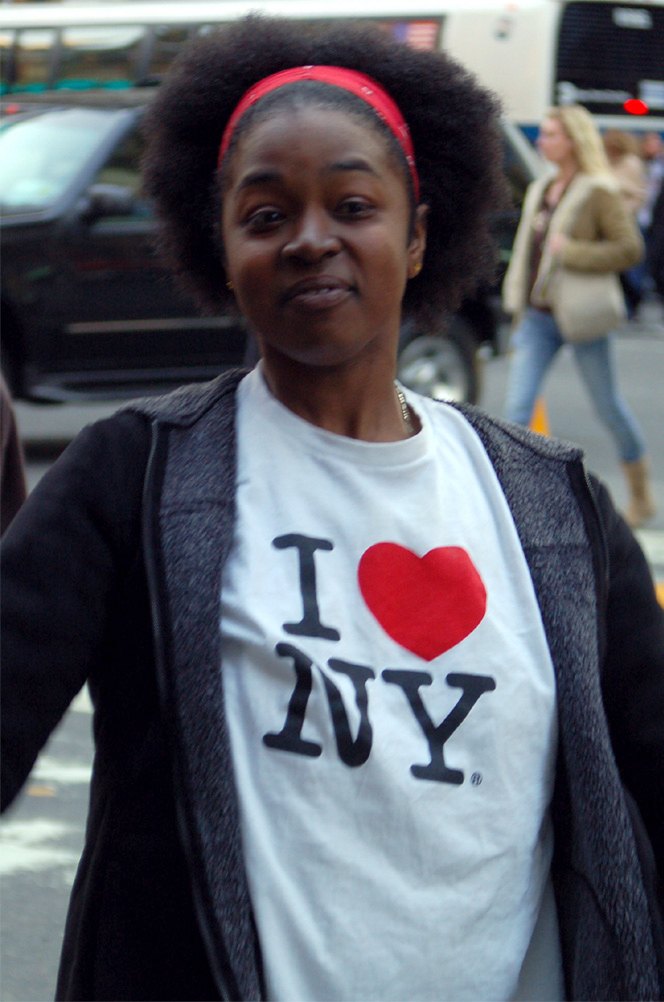
I Love New York
A government with no credibility left stopped making claims about its city and gave the audience a sentence to say in the first person, then let them carry it for nothing.
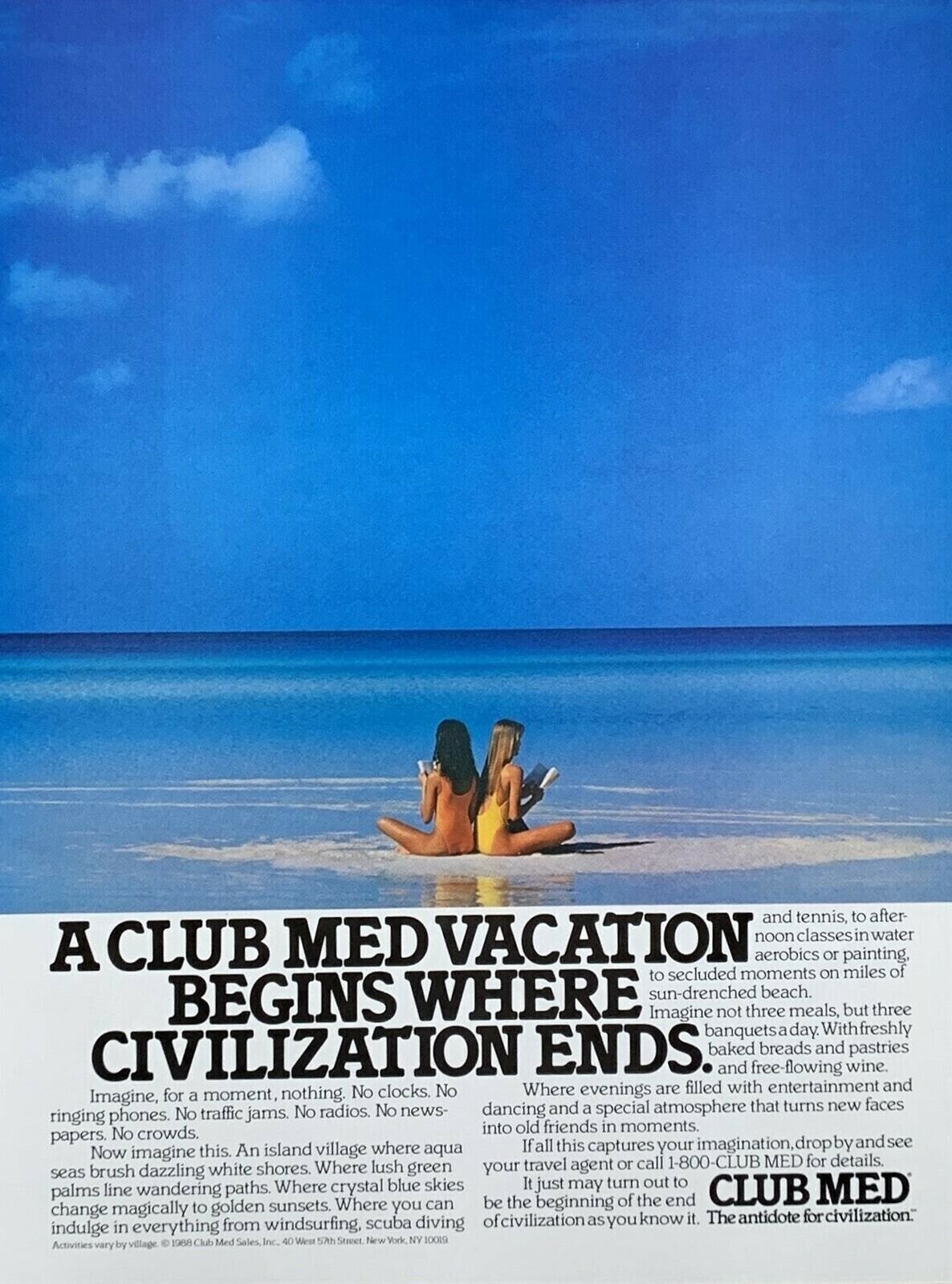
The Antidote for Civilization
A French holiday company sold its plain, all-in villages to Americans by promising to take things away: the watch, the alarm clock, the newspaper.
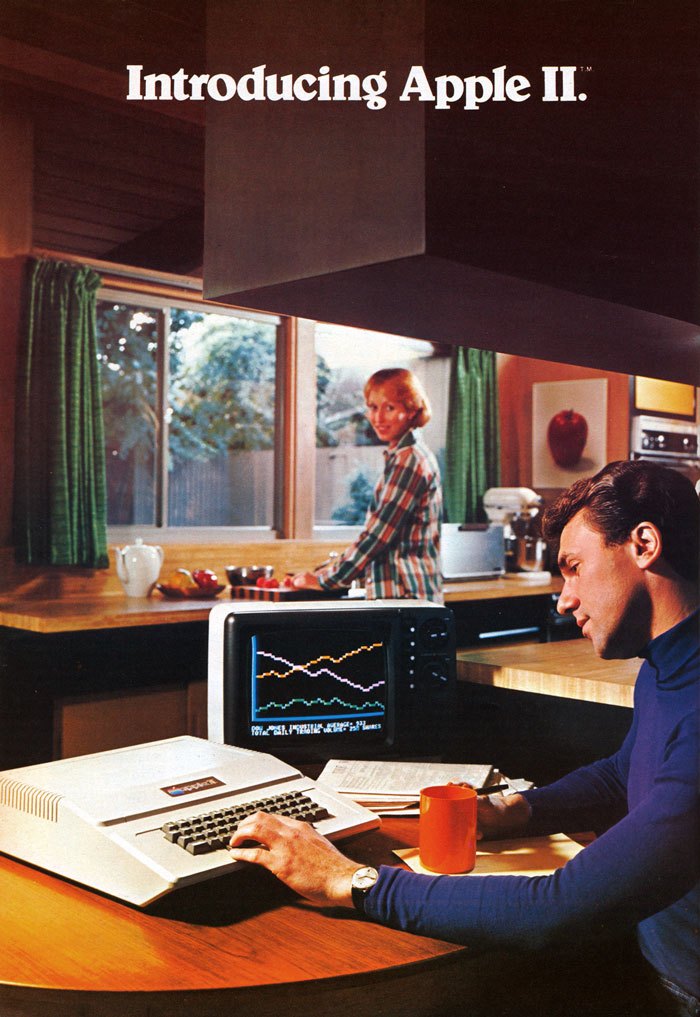
Simplicity Is the Ultimate Sophistication
The ad that took the computer off the workbench and put it on the kitchen table, and sold ease as the expensive part.
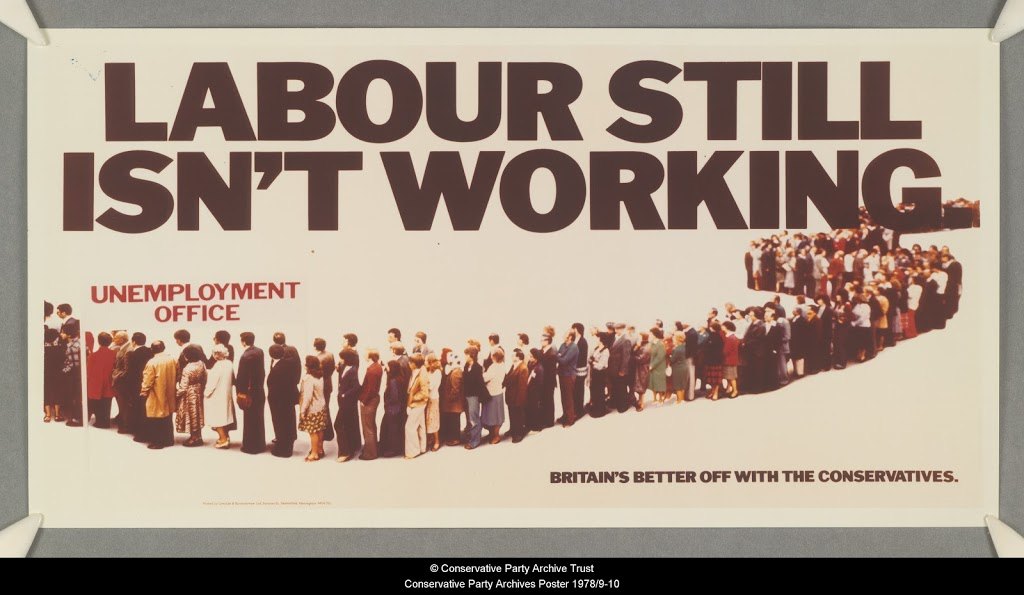
Labour Isn't Working
A poster bought for about 20 billboard sites that became a national news story, and a reference point for agencies working on British elections since.
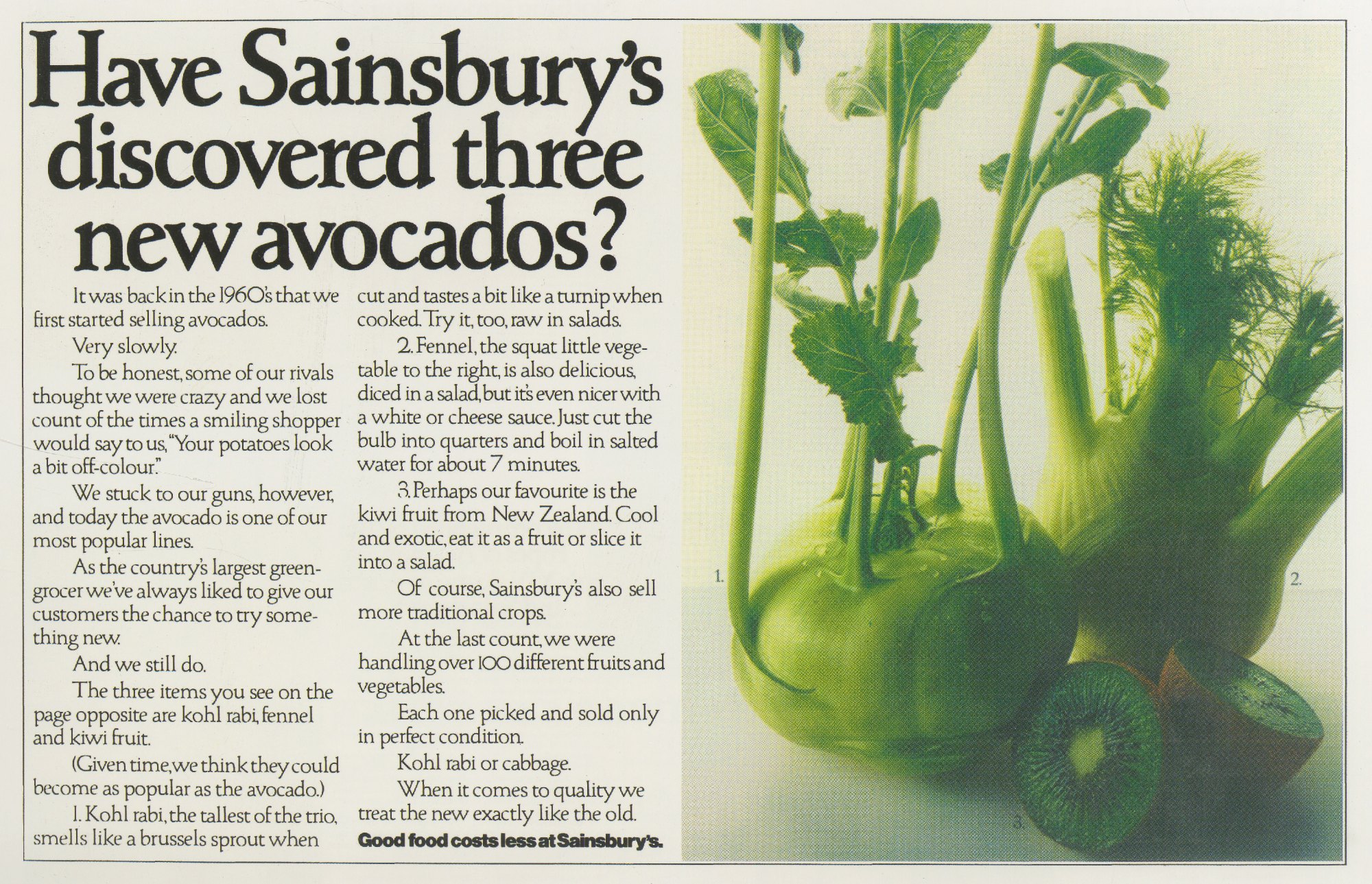
Good Food Costs Less at Sainsbury's
A supermarket caught in a price war stopped arguing about price and let a page of copy about one food at a time do the persuading.