Heineken · Collett Dickenson Pearce
Refreshes the Parts
A lager with nothing factual to claim turned the vaguest word in the category, refreshment, into a joke that could be told a new way on every poster for sixteen years.
The era.
Britain in 1974 was in poor economic shape. The three-day week, imposed to save electricity during the miners' dispute, ended in March, and inflation was rising fast. The country went to the polls twice that year.
Beer was still mostly bitter, pulled by hand in pubs owned by the big brewers. Lager was a smaller, newer drink, often thought of as light and foreign. Heineken was brewed and sold in Britain under licence by Whitbread, and it had no obvious reason to be chosen over the lagers beside it.
Collett Dickenson Pearce, in London, was the agency of the moment. Its posters and films for Benson & Hedges, Hamlet and Hovis treated the viewer as clever and the product with a light touch. Frank Lowe became its managing director during the 1970s.
The culture.
British humour of the 1970s ran on understatement and the deflating aside. Television comedy, from Monty Python to the sitcoms, was watched by most of the country on three channels. A joke that assumed the audience would catch on was a compliment to them.
Advertising claims were policed by the Advertising Standards Authority and, on television, by the Independent Broadcasting Authority. A beer could not prove it refreshed better than any other, and saying so flatly persuaded nobody. The better agencies treated that gap as room for wit.
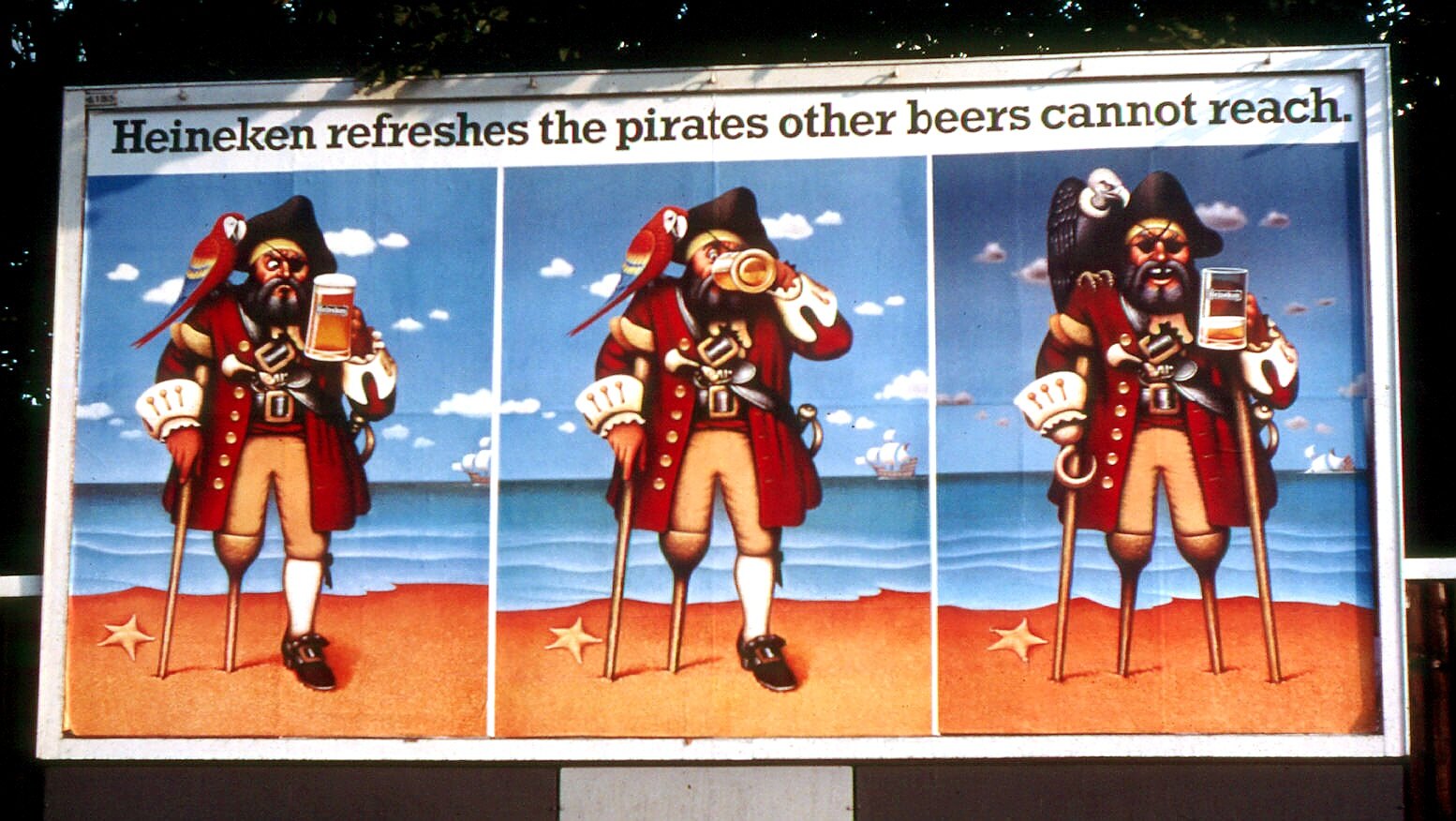
The roadside poster still mattered. A 48-sheet site seen from a bus or a car had a few seconds to land, and the best were talked about in pubs and offices. A poster campaign could also be changed site by site and season by season, which suited a line that needed new jokes.
The problem.
A parity lager with nothing true and different to say.
Every lager in Britain was cold, wet and refreshing, and every lager said so. No brand could prove it refreshed better than another.
Heineken had no age, no recipe story and no strength claim it could use. The brief asked the agency to own refreshment, a word so common it had stopped meaning anything.
Terry Lovelock worked on it for weeks without finding the line. Whatever the agency wrote had to be impossible to check and still believable, which meant it had to work as a joke.
The agency was asked to make Heineken own refreshment in Britain. Terry Lovelock worked on the brief for weeks without a line, then, by his own account, wrote it in a Marrakech hotel at about 3 a.m.
The solution.
Make the claim absurd enough that nobody asks for proof, then prove it a different way every time.
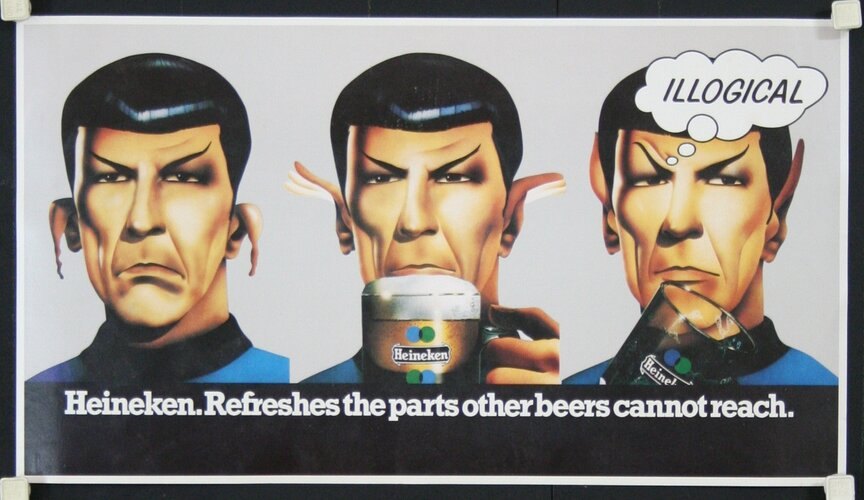
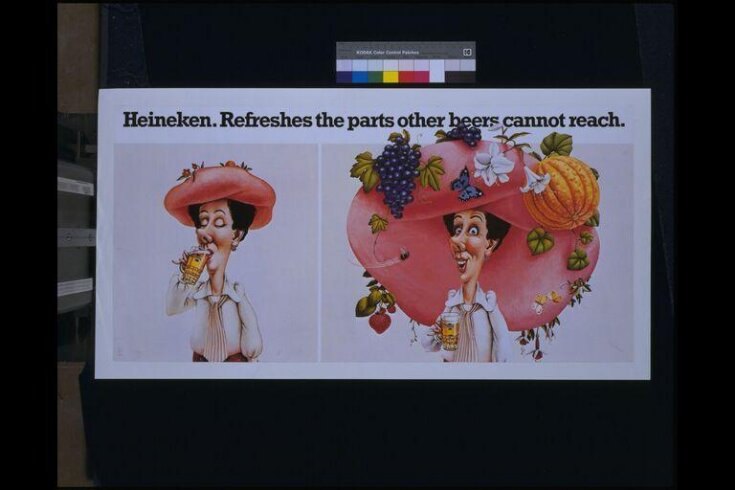
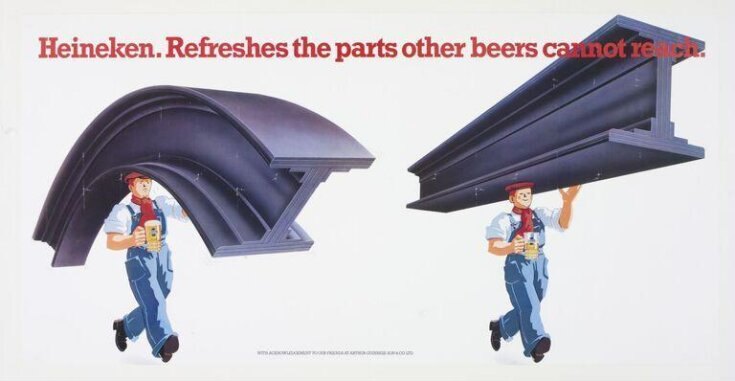
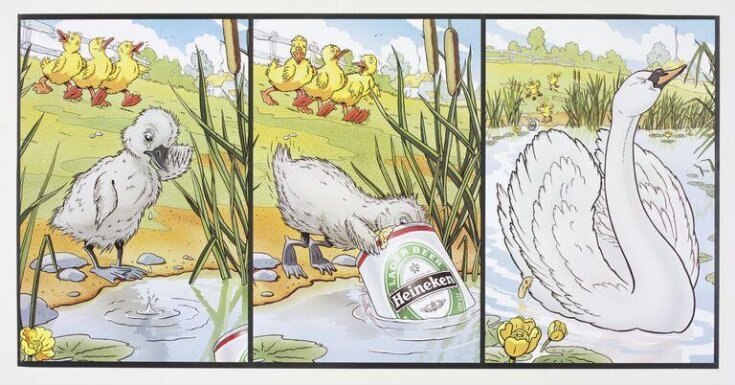
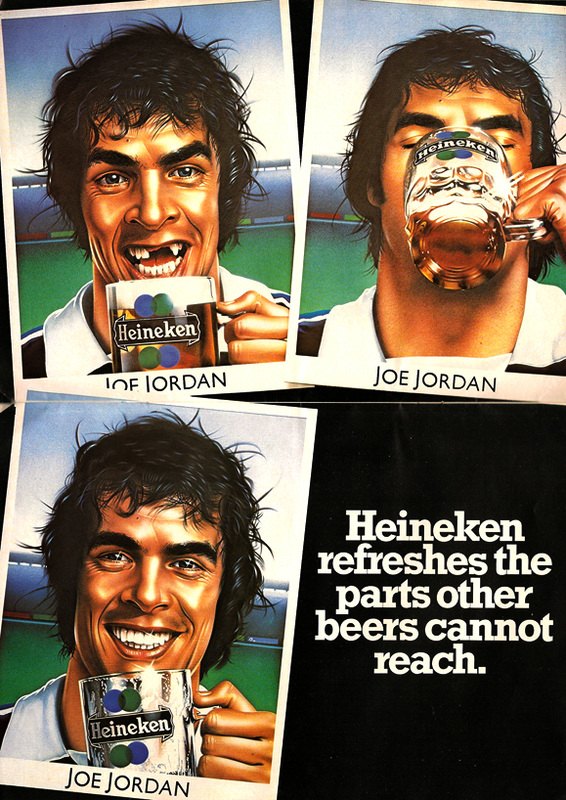
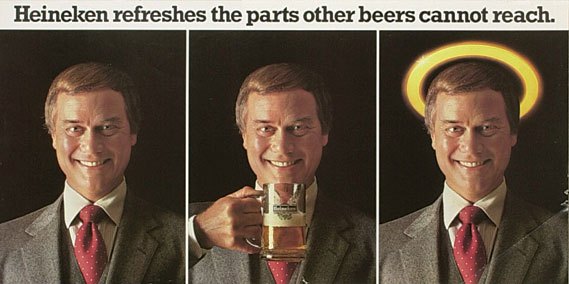
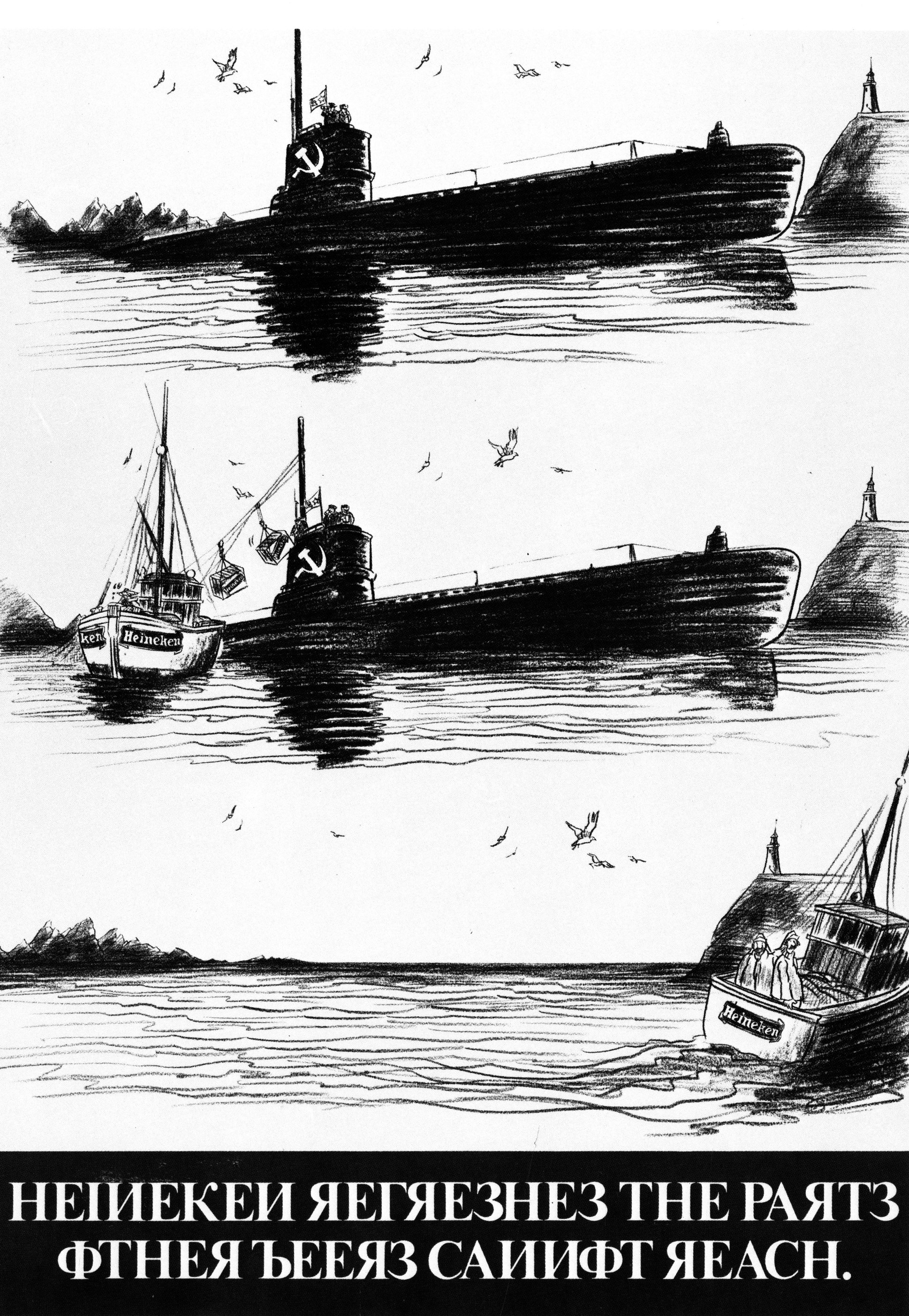
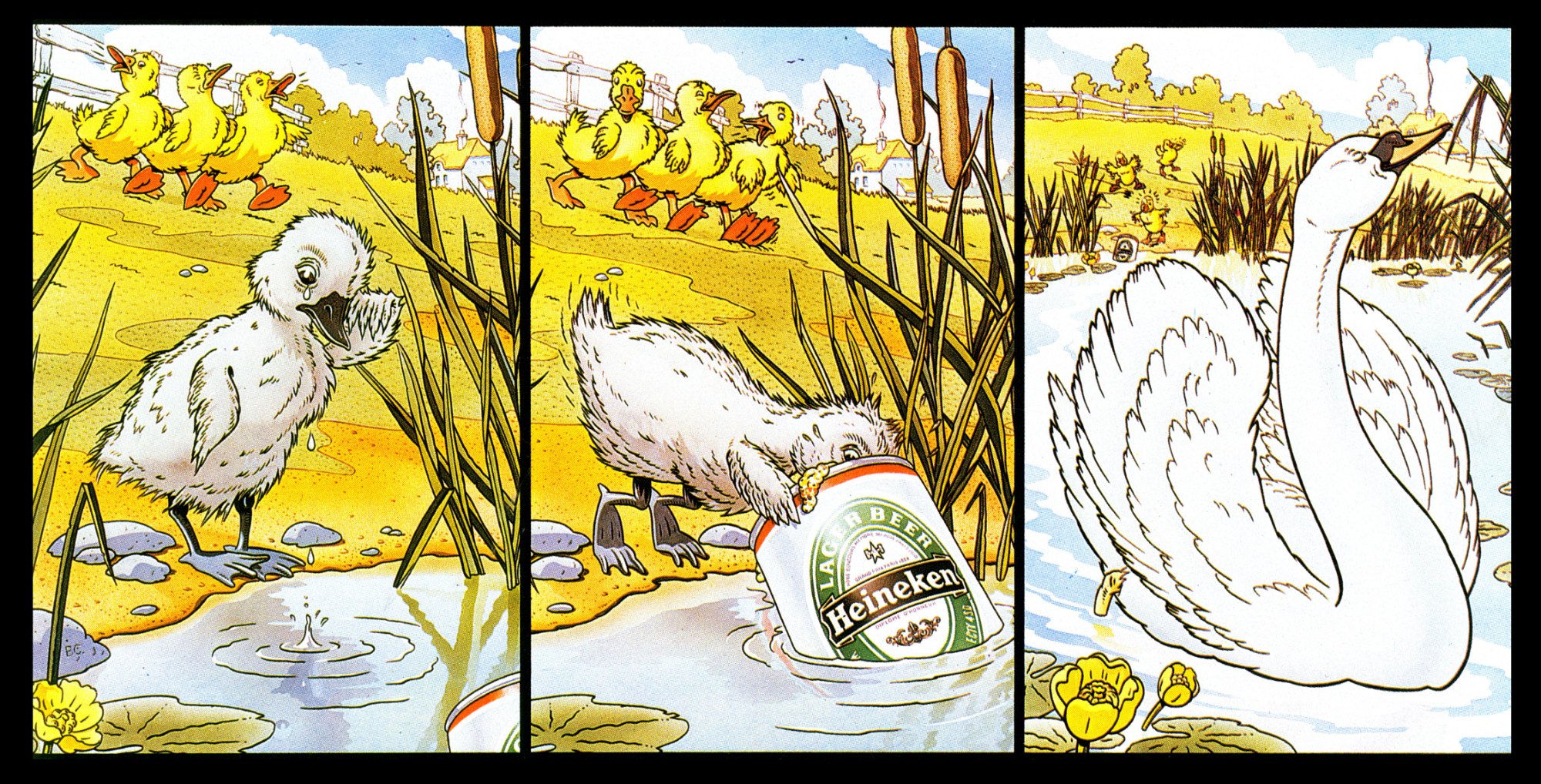
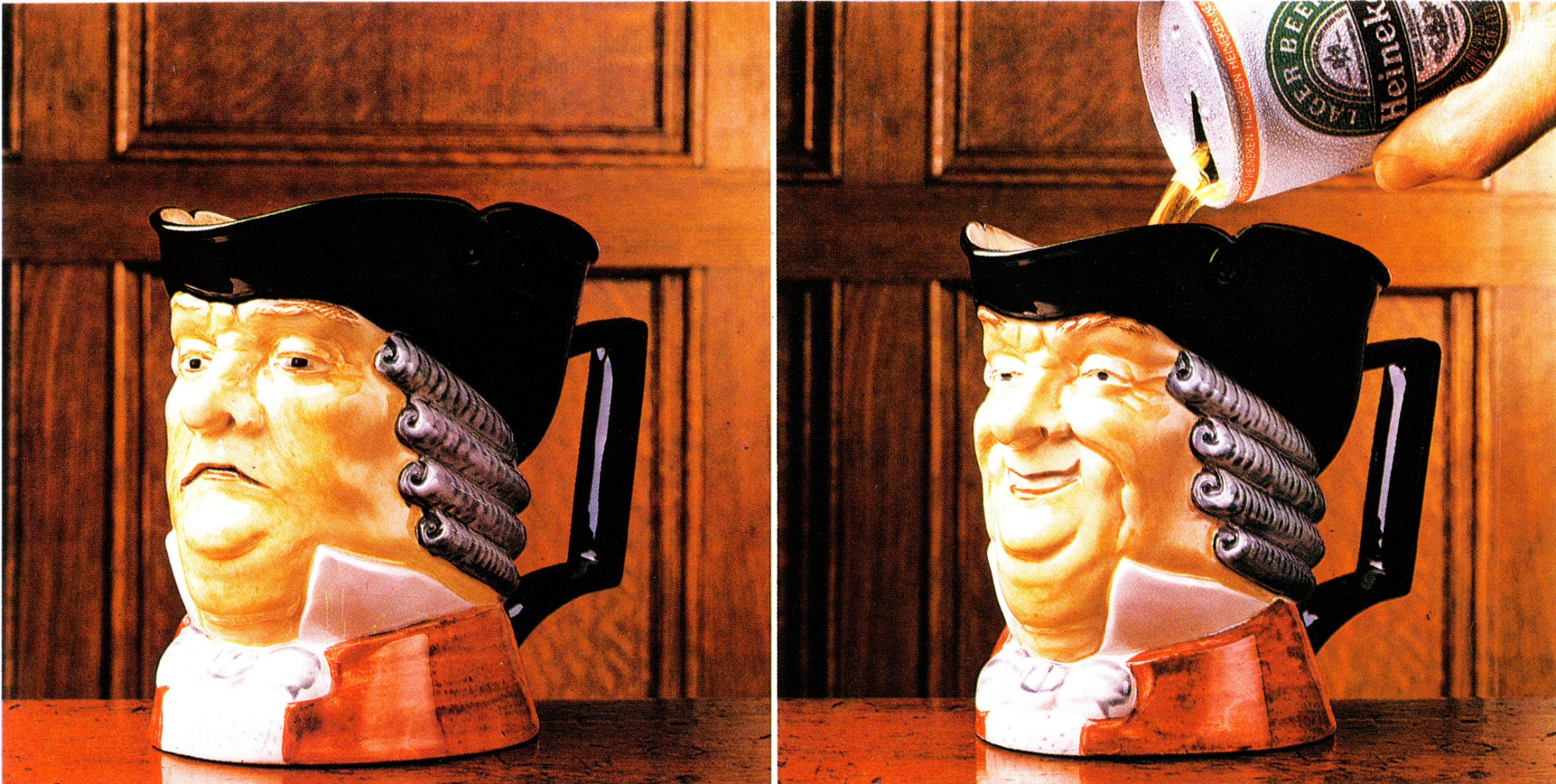
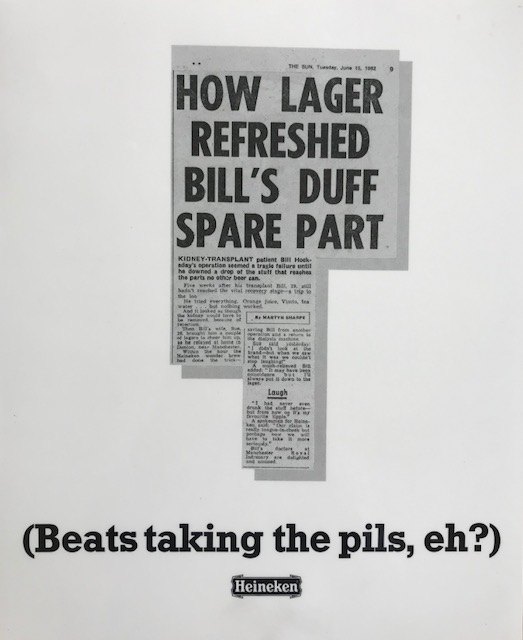
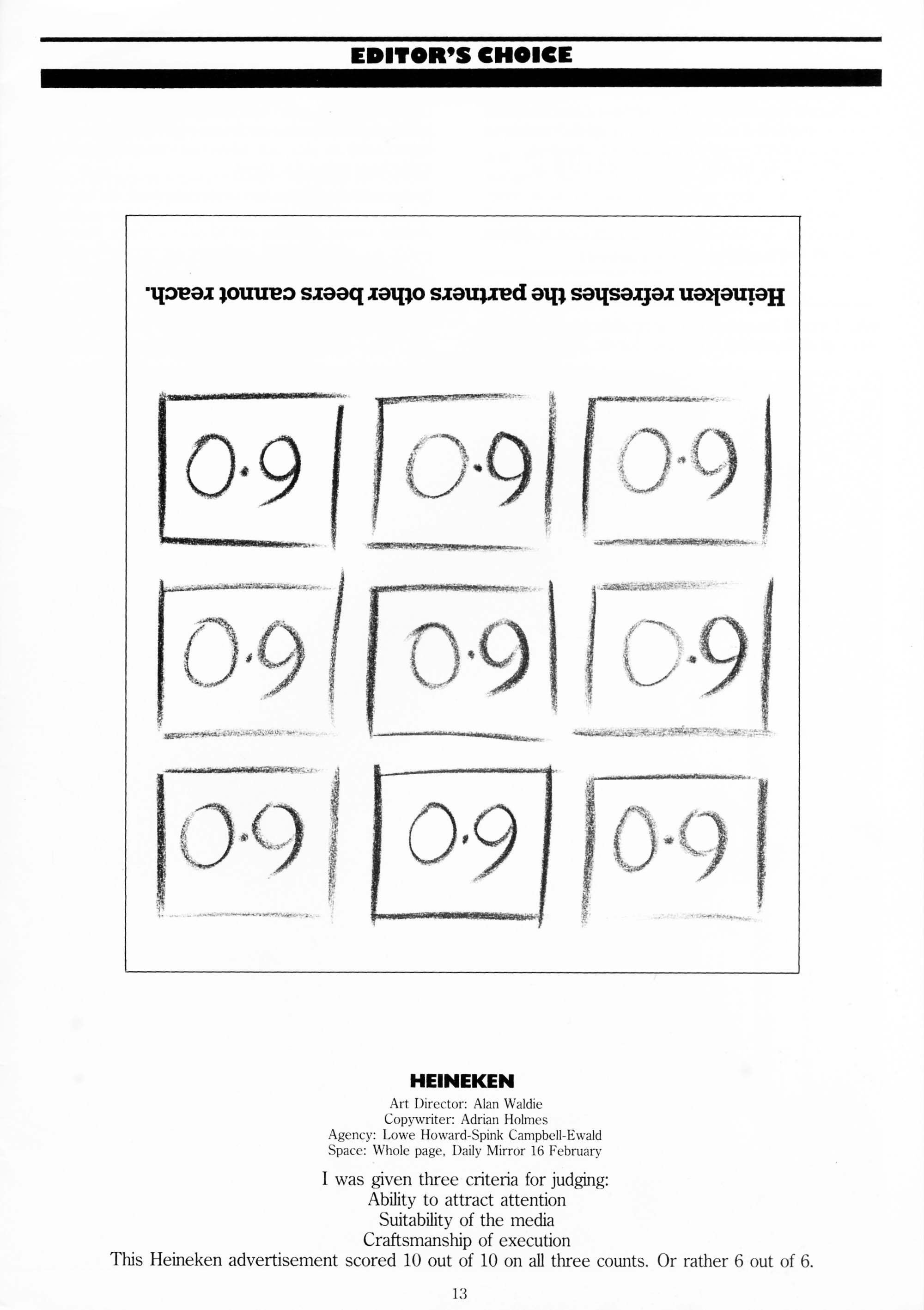
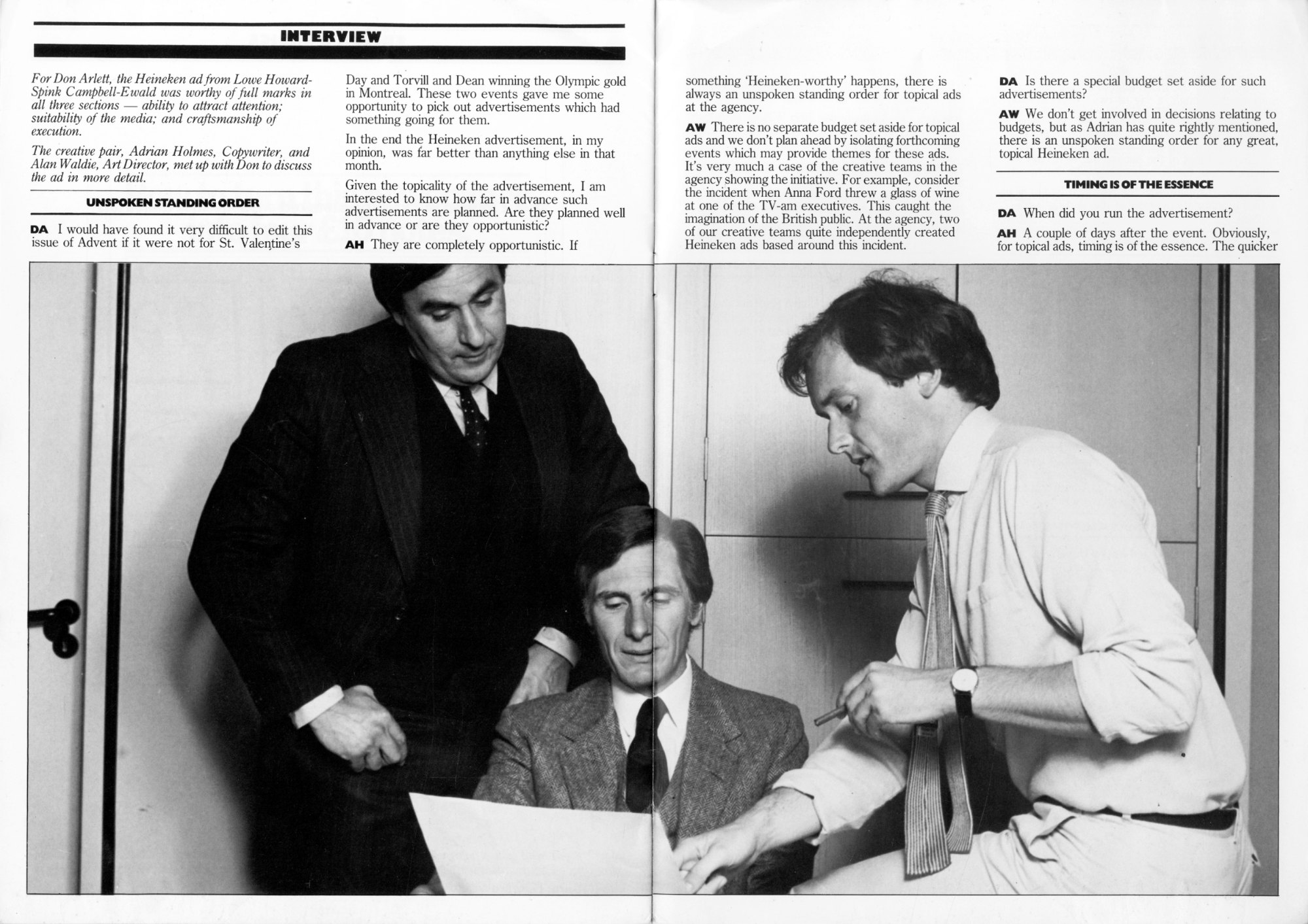
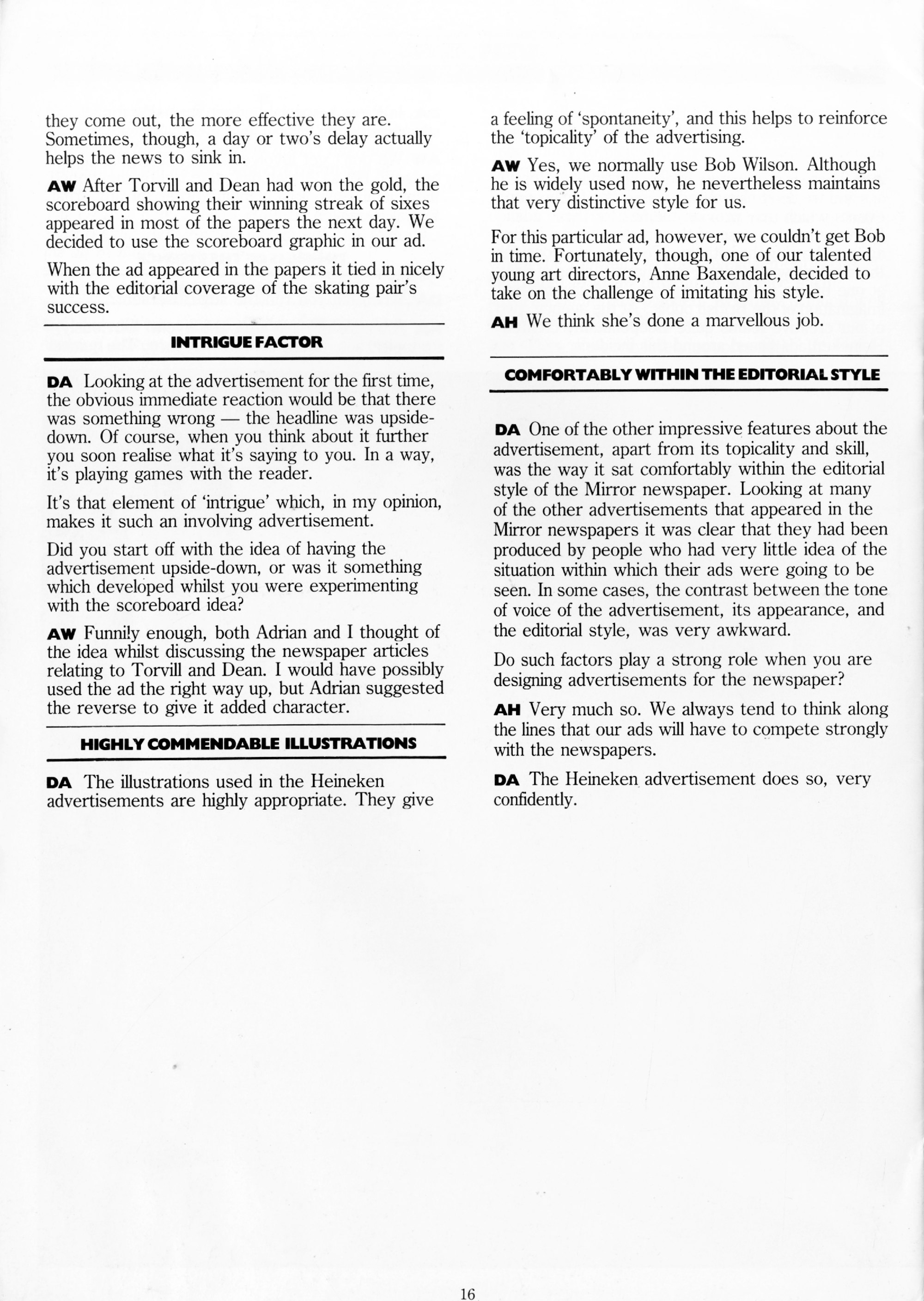
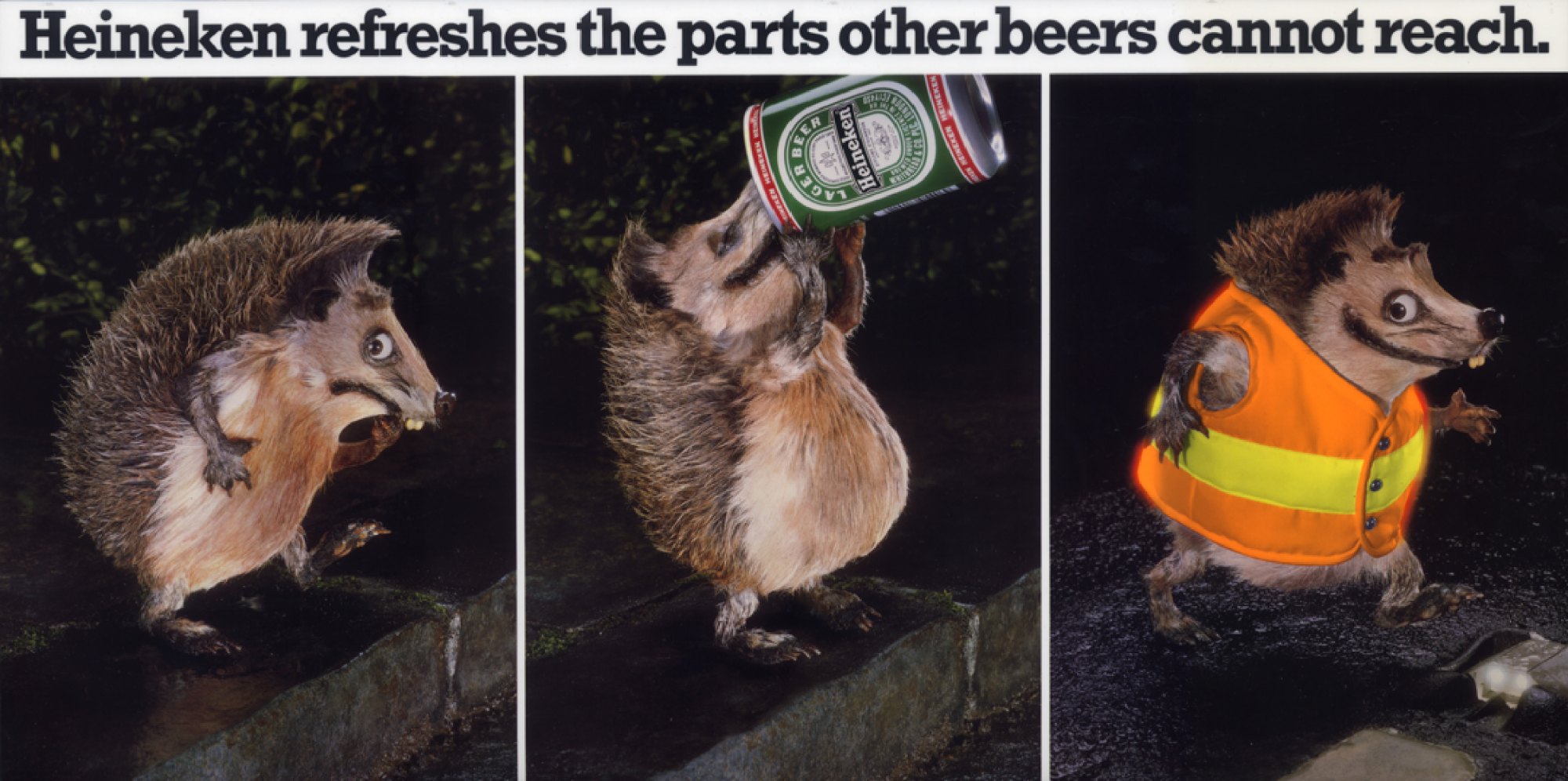
By his own account, Lovelock wrote the line at about 3 a.m. in a hotel in Marrakech, where he had gone with a film crew to get away from the brief: Heineken refreshes the parts other beers cannot reach. The posters and films that followed showed something tired, drooping or stuck being revived by a Heineken, from a policeman's feet to Mr Spock's ears to a parody of the Guinness strongman. Alan Waldie was the art director on the early posters, and illustrators such as Mike Terry and Barry Craddock drew them. The joke was the claim, so each new execution restated the promise. When the account moved with Frank Lowe to Lowe Howard-Spink in the early 1980s, the line went too, and in 1985 "Water in Majorca" had a well-spoken young woman at an elocution school unable to manage a Cockney phrase until she drank a Heineken.
The work.
Film
Same shape of problem.
The line arrived at 3 a.m. in a Marrakech hotel, after weeks of nothing.
Back to the archive →