The Antidote for Civilization
A French holiday company sold its plain, all-in villages to Americans by promising to take things away: the watch, the alarm clock, the newspaper.
The era.
By 1977 Americans had been through the 1973 oil embargo, a deep recession and years of high inflation. Fuel queues and steady price rises had become part of ordinary life. A second oil shock followed in 1979 and brought the queues back.
Club Méditerranée began in 1950, when the Belgian Gérard Blitz opened a tent village on Mallorca. Gilbert Trigano, his tent supplier and main creditor, took control and became chairman in 1963, and Baron Edmond de Rothschild bought into the company and saved it from near bankruptcy in the early 1960s. In 1970 the club absorbed its closest rival, Club Européen du Tourisme. By the early 1970s it ran 28 villages on four continents.
The club opened a New York office in November 1967 and quickly signed up about 10,000 American members, who paid a $1 joining fee and $5 a year. A village on Guadeloupe opened in 1968, together with an agreement with American Express. In 1974 Jean Lallement became head of the North American business and hired Jacques Bacon as marketing manager; Bacon is credited with the short name Club Med, first used for this market. The first full village on American soil, at Copper Mountain in Colorado, opened in 1980.
The culture.
A Club Med village ran on its own rules. Guests were called gentle members, the staff who looked after them had a matching title, meals and sport were included in one price, tipping was discouraged and drinks at the bar were paid for with beads. The senior member of staff was called the village chief.
Gilbert Trigano told Le Monde in 1980 that the club could "offer the city dweller an old fashioned village experience … neither too grand, nor too small." The idea was a few days of simple communal life away from the city. In France the club's advertising of the 1970s promised play, laughter and love, and in 1976 Jacques Séguéla called it the most beautiful idea since the invention of happiness. The 1978 French film Les Bronzés made fun of a holiday village of the same kind.
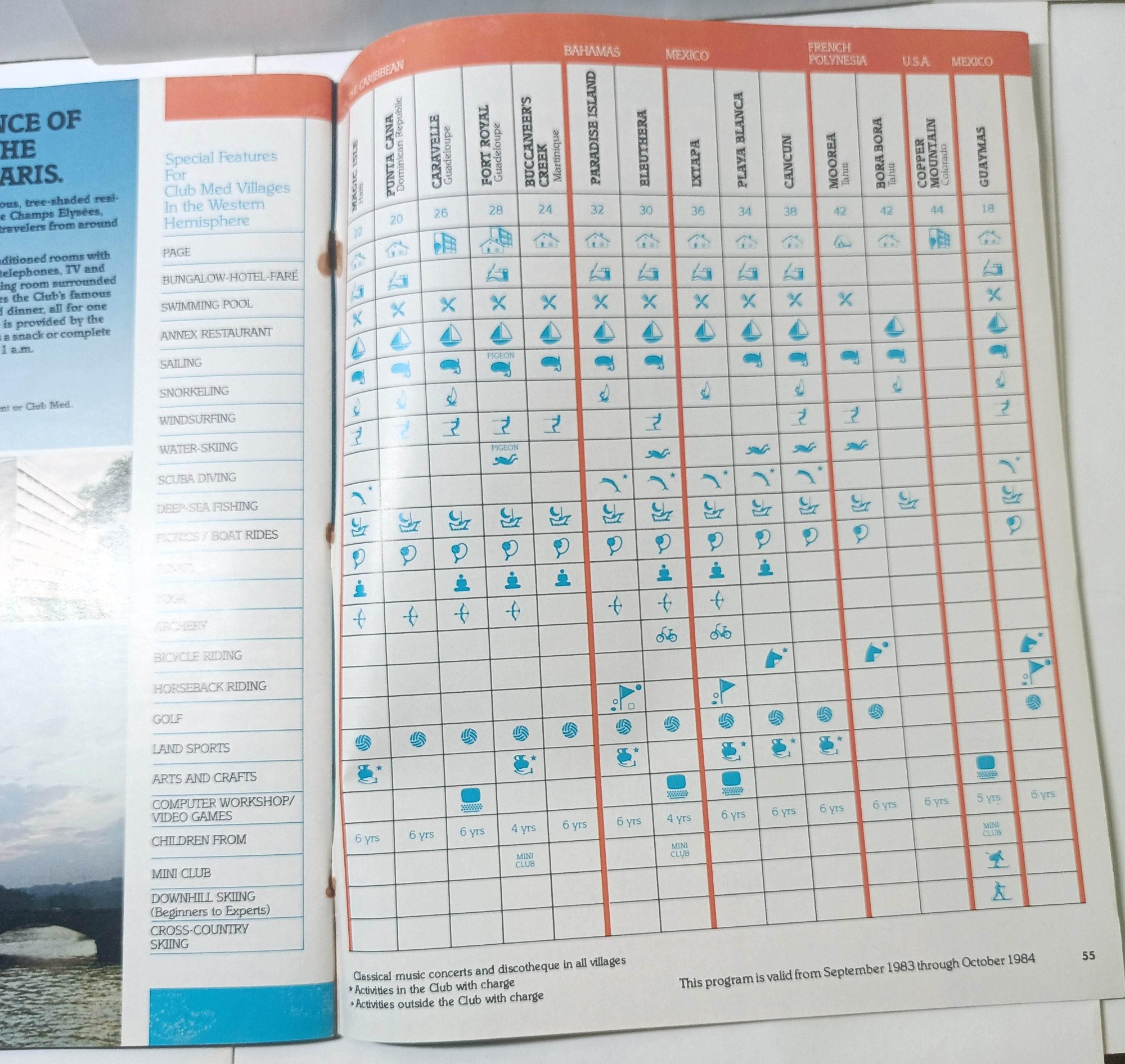
In North America the name spread through the early 1980s. Club Med villages in the Caribbean and Mexico, at Caravelle on Guadeloupe, Eleuthera in the Bahamas, Ixtapa and Punta Cana, drew American guests. By 1983 the name was familiar enough to title a film, Club Med, with Alan Thicke and Jim Carrey.
The problem.
Selling a stripped-down European holiday to Americans who expected a resort to give them more.
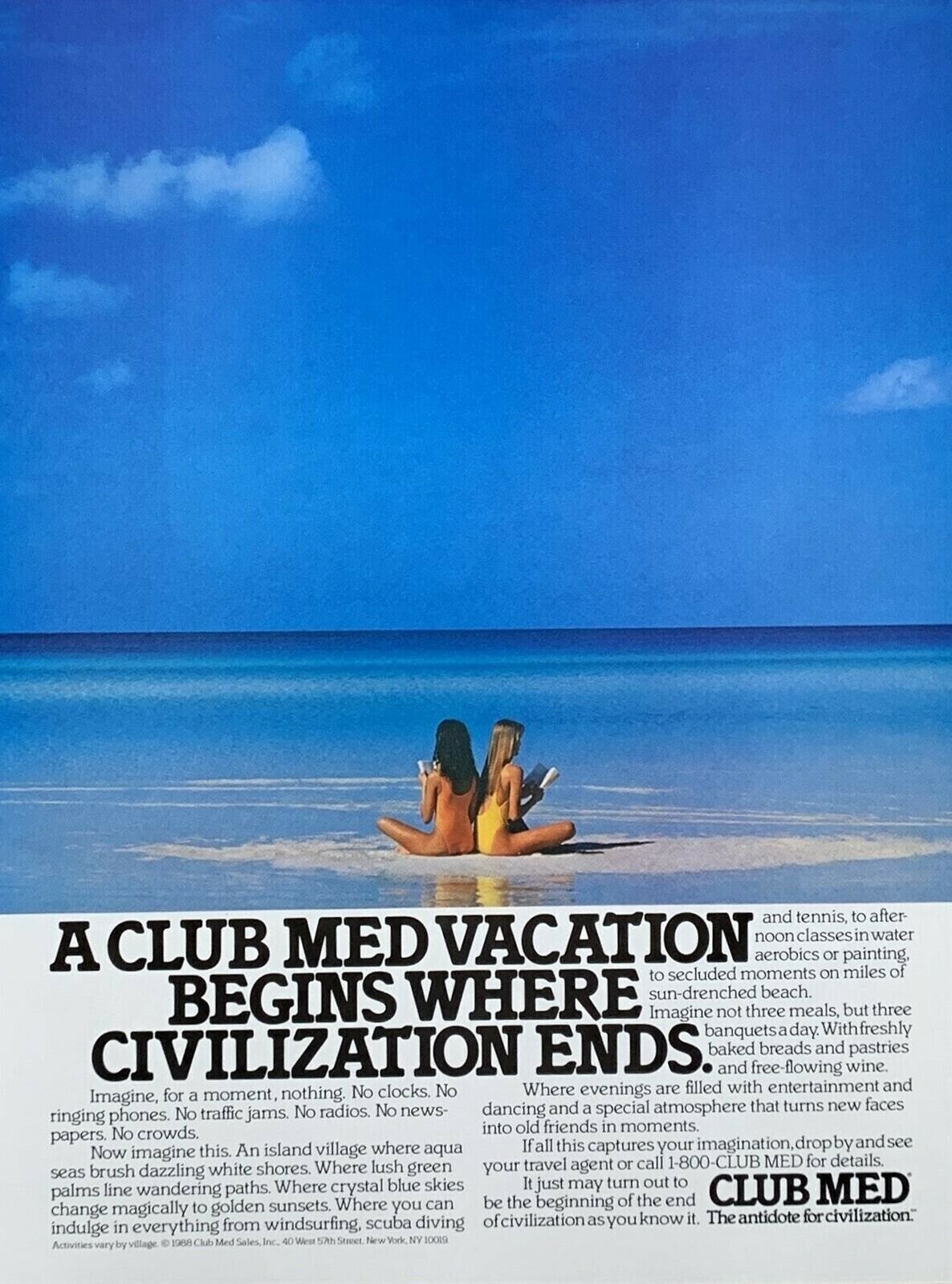
Club Med's villages were simple by design. Guests went without televisions, telephones, radios and clocks, and the point of the stay was shared village life.
American tourists were used to resorts that competed on comfort and extras. St. John's University's account of the campaign describes the club's offer as stripped-down, European-style holidays sold to Americans used to lavish resort amenities. Measured against an American hotel, the village looked like less for the money.
The same account says the effort seemed doomed until Martin Puris found the idea at the eleventh hour.
Club Med's North American business, run from 1974 by Jean Lallement with Jacques Bacon in charge of marketing, needed to sell its European-style villages to American tourists. Ammirati & Puris, which had won BMW's American account in Munich a few years earlier, took the job, and Puris supplied the line late in the process.
The solution.
Turn what the village lacks into the product: a cure for the life the buyer wants to leave behind.
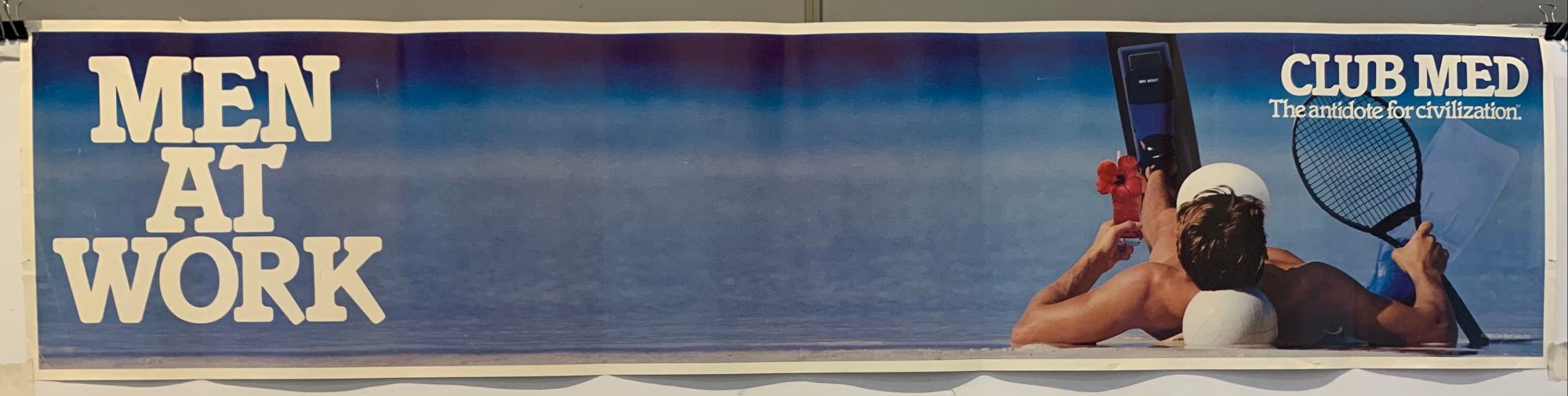
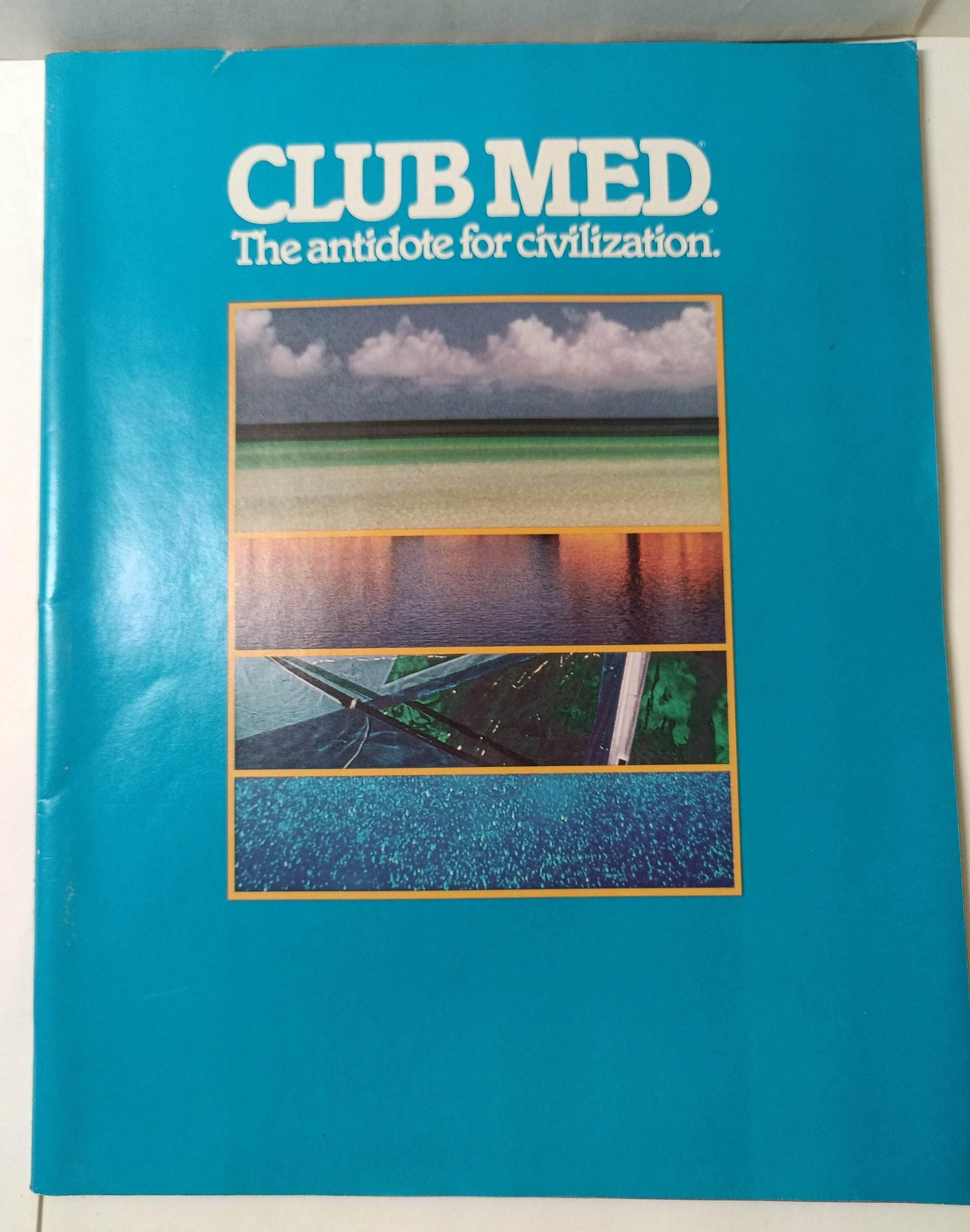
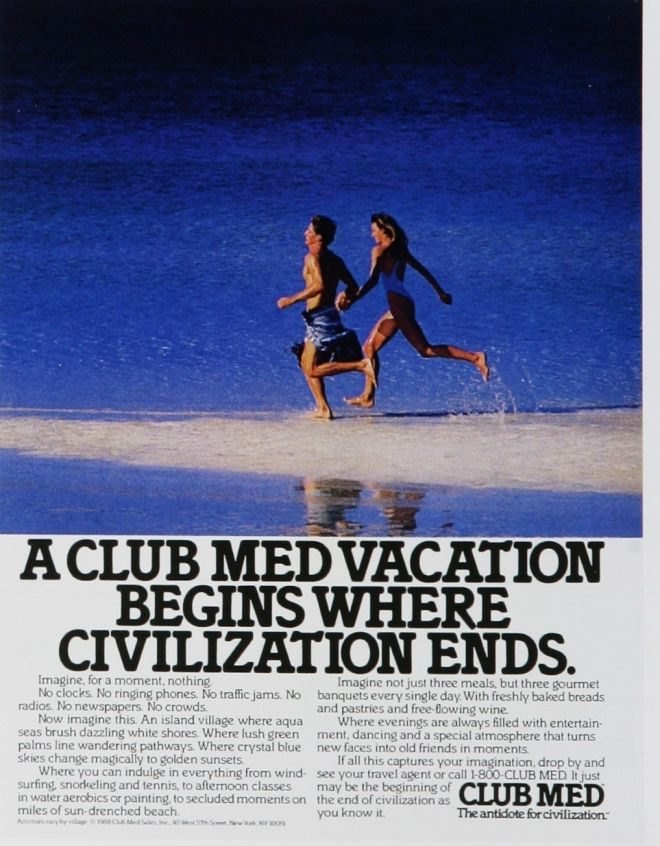
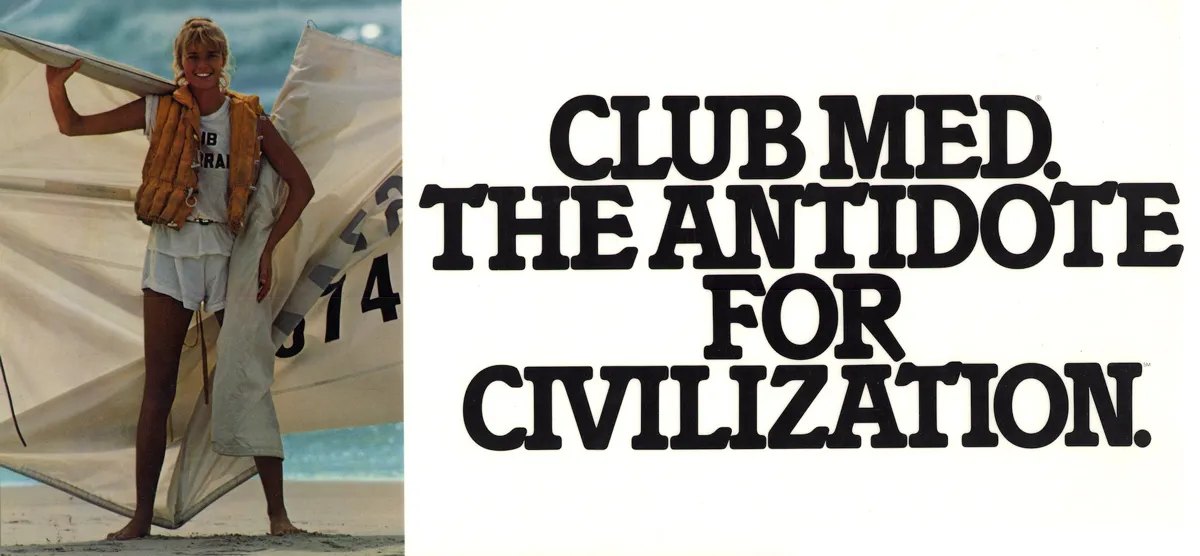
Martin Puris wrote "The Antidote for Civilization." The ads showed relaxed holidaymakers doing without watches, alarm clocks and newspapers. The missing comforts became the reason to go, and the club's plainness became the selling point. By 1983 Club Med's brochures and ads still used the line, promising a holiday without televisions, telephones, radios, newspapers or clocks. A poster from around 1980, headed "Men at Work", shows a man enjoying a village under the line. Puris summed it up: "It was the 'Antidote for Civilization.'" The Creative Hall of Fame credits the campaign with changing the look and feel of travel advertising.
The work.
Same shape of problem.
A holiday company sold Americans a week without the things they were used to, and called the absence the medicine.
Back to the archive →