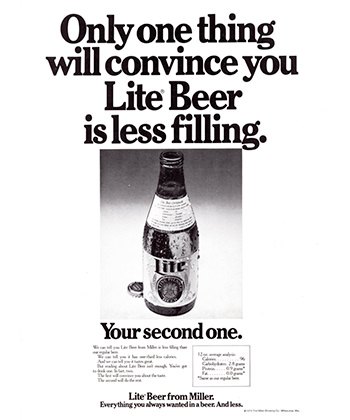
Tastes Great, Less Filling
Light beer had already failed twice as a diet product; this campaign kept the chemistry, changed the promise, and built a format that ran for seventeen years.
The era.
American brewing in the early 1970s was shrinking into a handful of national brands. Regional breweries were closing or being bought, and Anheuser-Busch held roughly a quarter of all beer sold in the United States. Miller Brewing of Milwaukee sat well down the table, around seventh, selling 5.1 million barrels in 1970. It had a strong single brand in Miller High Life and very little else.
Money from outside the industry arrived in 1969. W. R. Grace sold its 53 per cent of Miller to Philip Morris for 130 million dollars after a deal with PepsiCo collapsed, and Philip Morris bought the remaining family holding from the De Rance Foundation of Milwaukee the following year. A tobacco company now owned a brewer, and it brought a tobacco company's habits with it: heavy spending, national media, and a belief that people choose a brand by what it says about them rather than by what is in the bottle.
The other condition of the decade was weight. Low-calorie food and drink were moving from the chemist's shelf into the supermarket, and every category was looking for its diet version. Beer had tried. Rheingold of Brooklyn launched Gablinger's Diet Beer in 1966 and 1967, and the Meister Brau brewery in Chicago launched Meister Brau Lite in May 1967. Both were sold to people watching their weight, and both failed.
The culture.
Professional football had just become a weeknight habit. Monday Night Football began on 21 September 1970 under Roone Arledge at the American Broadcasting Company, shot with nine cameras where other games used four or five, and its audience was overwhelmingly male. Howard Cosell made the commentary box part of the entertainment. Sport moved from a regional Sunday afternoon to a national evening appointment, and the men who had played it a few years earlier became faces a mass audience already knew.
The American beer drinker of the mid-1970s was being courted as a working man. John A. Murphy, who became president of Miller Brewing in 1972, had run a study of American drinking habits and moved Miller High Life advertising off white-collar drinkers and onto hard hats and labourers with the line "If you've got the time, we've got the beer". Philip Morris believed beer buyers chose by image more than by taste or price, and that sport was the surest route to them. The bar, not the dinner table, was the category's home ground.
Masculinity was also under argument. Joanne Morreale's study of the campaign reads the 1970s and 1980s as years when women were gaining ground in domains men had held alone, while sport stayed a preserve of male authority. That made a diet product dangerous. One creative director on the work put the problem flatly: low-calorie was considered a weak product, and it turned off the heavy beer drinker. A retired defensive end holding the can was the one witness who could settle that objection.
The problem.
Light beer had failed twice in America because it was sold as a diet product to people who did not drink much beer.
Miller Brewing was seventh in American brewing and owned by a tobacco company that expected growth. The one new idea available to it was low-calorie beer, and low-calorie beer had already been beaten twice. Rheingold's Gablinger's Diet Beer, launched in 1966 and 1967 from a formula developed by the biochemist Joseph L. Owades using the enzyme amyloglucosidase, carried a picture of a doctor on the can and sold to dieters and diabetics. Meister Brau Lite, out of Chicago from May 1967, aimed at the same weight-conscious buyer, did better in its home city, and went down with the company in 1972.
Miller bought the Meister Brau, Lite and Buckeye names out of that bankruptcy in June 1972. It now owned a brand with a failure attached to it and a benefit its own best customers did not want. The heavy beer drinker read fewer calories as less beer, and a product sold on restraint had nothing to say to a man drinking six or seven in an evening.
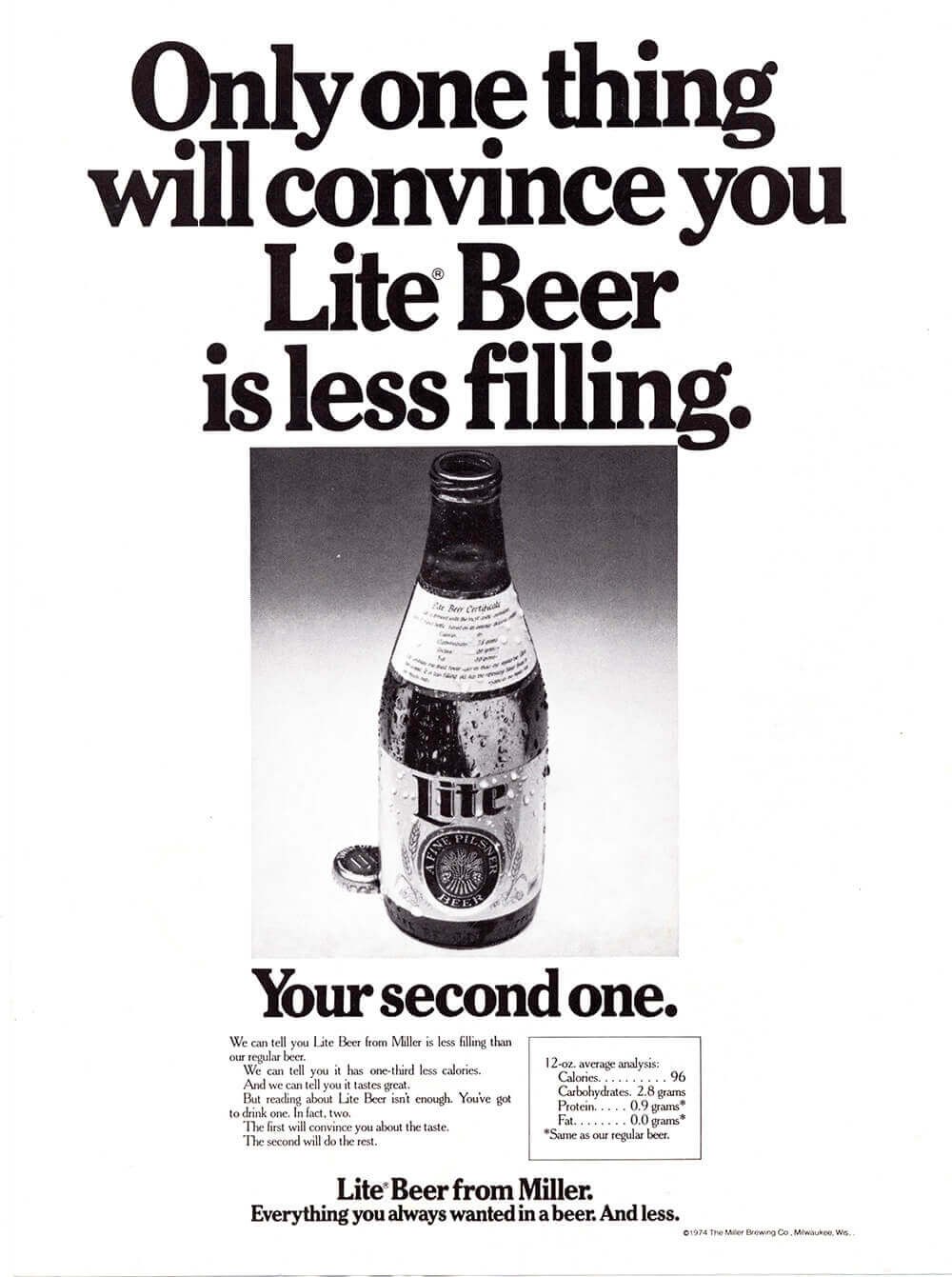
There was a second constraint. American regulation restricted beer advertising that promoted weight loss, so the obvious claim was not even available. Miller spent more than a year testing brewing formulas so the beer would taste like beer rather than like a reduced version of it. That solved the liquid. It did not solve who the beer was for, or what it was supposed to be good for.
Then the sales figures from the old Meister Brau territory said something nobody had looked for. Lite was selling unexpectedly well in Anderson, Indiana, among blue-collar men and steelworkers. The buyer was already there. He had simply never been addressed.
Miller already had its High Life business at McCann Erickson in New York when Philip Morris pushed for a low-calorie beer. The agency was handed a brand with two failures behind it and one piece of sales data in its favour: the old Meister Brau Lite was selling to steelworkers in Anderson, Indiana. The brief was to make that buyer, not the dieter, the person the beer was for.
The solution.
Restate the diet benefit as drinking capacity, then hand the two halves of the claim to two retired athletes and let them argue over it.
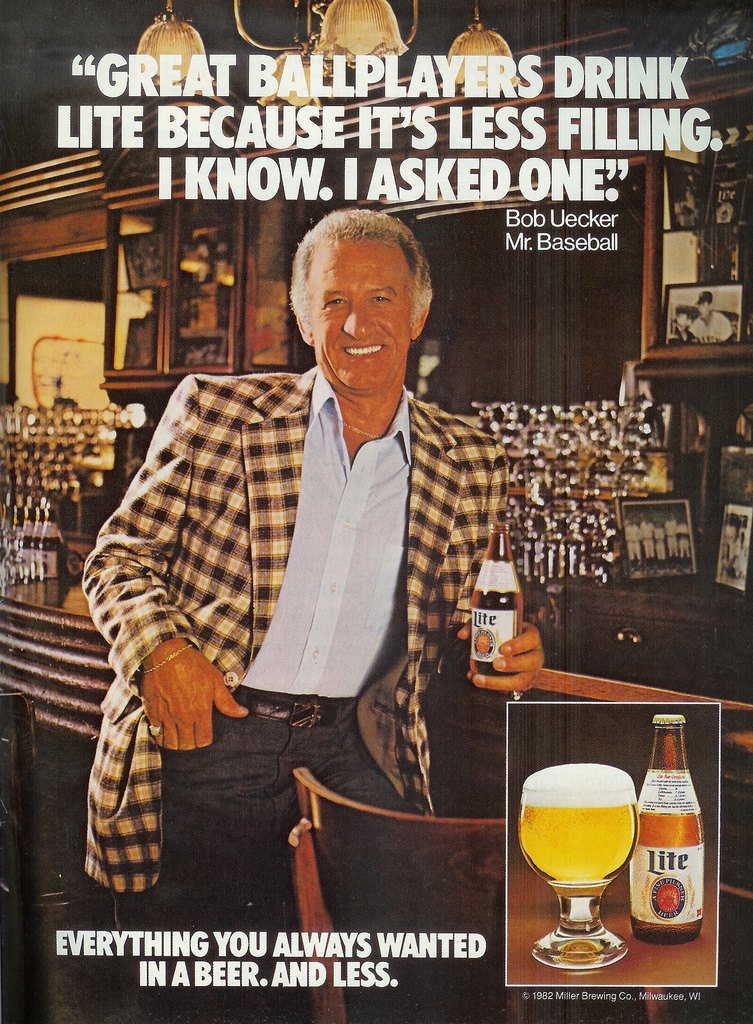
The agency stopped selling fewer calories and started selling room for another beer. "Less filling" is the same physical fact as low-calorie, turned inside out: it promises more beer rather than less of you. That reframing was forced in part by the rules against weight-loss claims, and the constraint produced the better idea.
Bob Lenz, the art director and creative group head at McCann Erickson in New York, proposed casting a retired athlete, because active players were barred from endorsing alcohol. The first was Matt Snell, the former New York Jets running back. By the account in Frank Deford's authorised history of the campaign, the line emerged on the shoot itself, when Snell improvised that the beer was everything you ever wanted in a beer, and less; the carbohydrate reference was later replaced by "Less filling". Bob Giraldi directed most of the films.
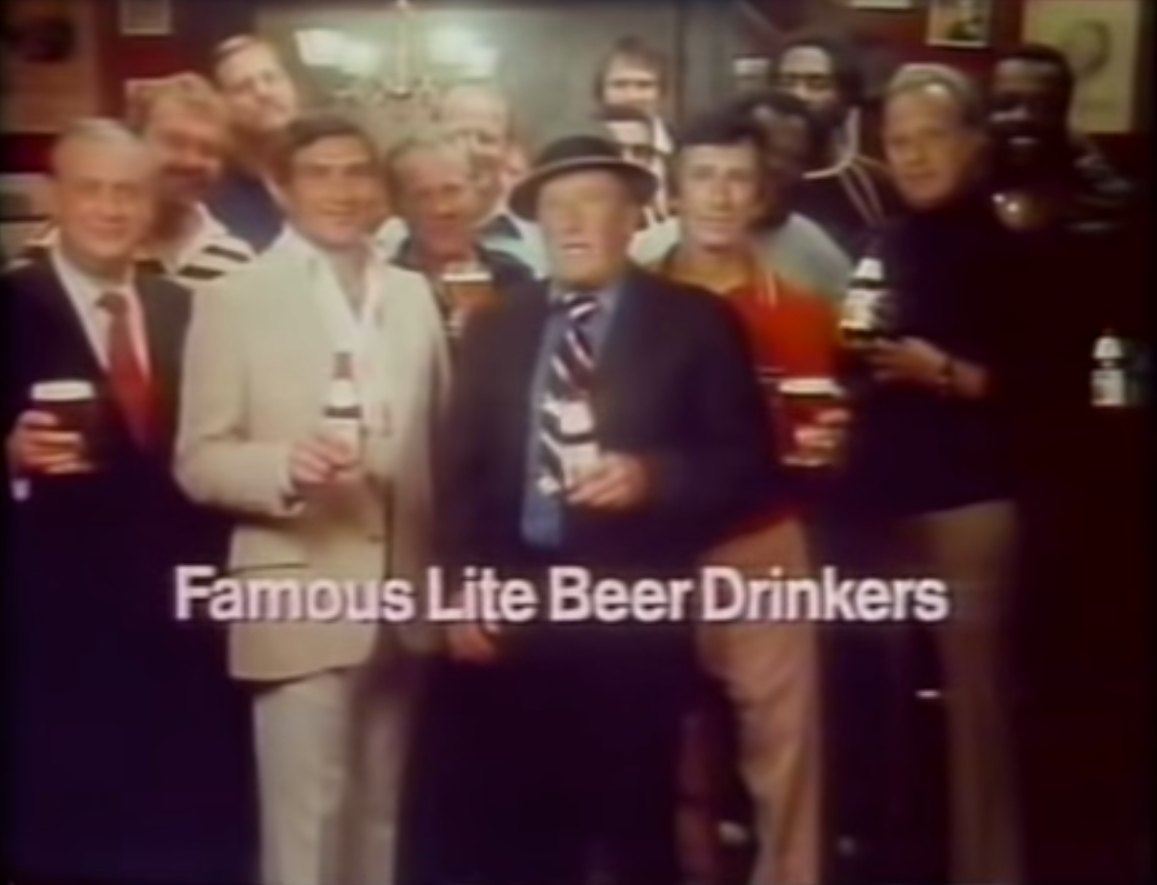
The lasting invention was the format rather than the film. Two men who had played professional sport took opposite sides in a bar, one shouting "Tastes great" and the other "Less filling", and the argument usually collapsed into a brawl. A product with two benefits normally has to choose one. Here both were kept, put in two mouths, and turned into something an audience would watch and then repeat to each other.
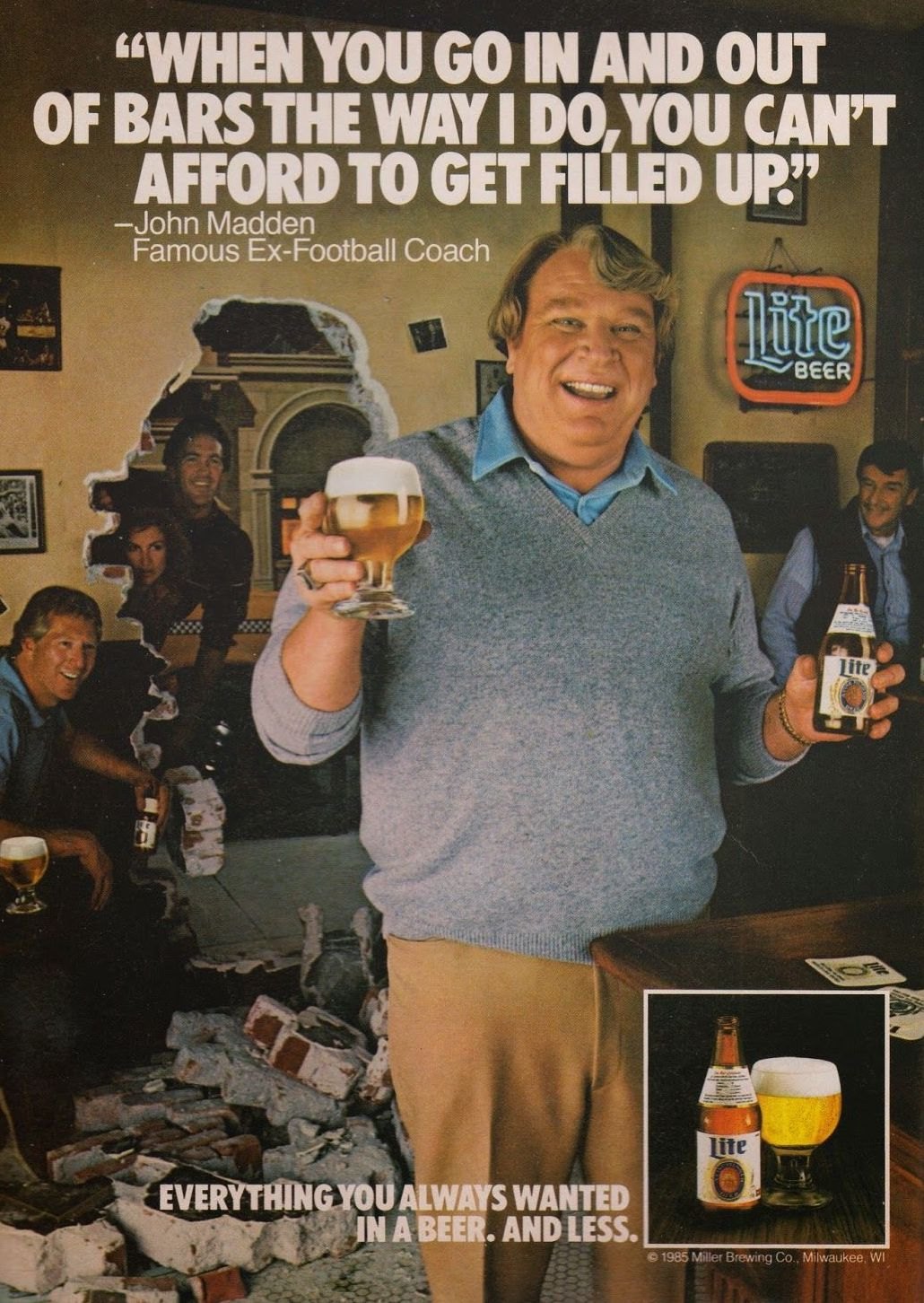
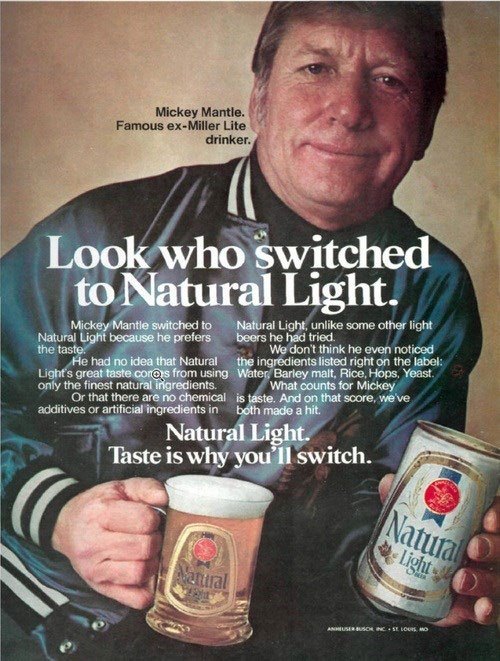
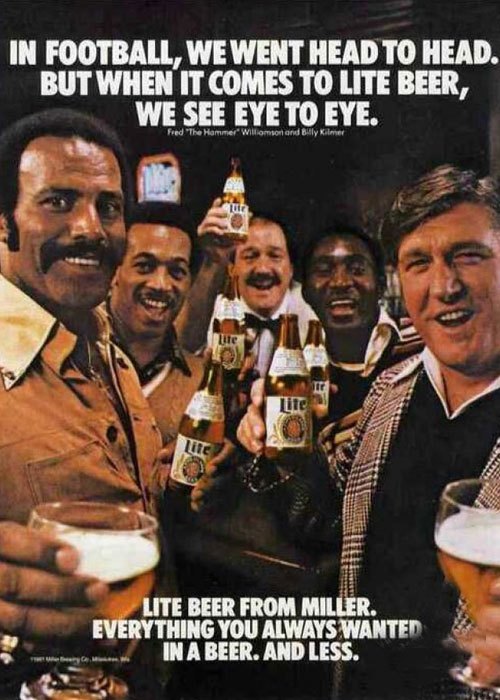
The format generated its own content for seventeen years and more than a hundred faces: Mickey Spillane with Lee Meredith, Bubba Smith and Dick Butkus, Boog Powell with the umpire Jim Honochick, Marv Throneberry, Rodney Dangerfield, Bob Uecker, Billy Martin, John Madden. Miller production went from about 7 million barrels in 1973 to 9 million in 1974 and past 31 million by 1978, and the company rose from seventh in American brewing to second by 1977, where it stayed. Reduced-calorie beer was 20.5 per cent of all American beer sales by 1985, and became the largest domestic category in 1992.
The work.
Same shape of problem.
The beer had failed twice because nobody had checked who was already buying it.
Back to the archive →