Simplicity Is the Ultimate Sophistication
The ad that took the computer off the workbench and put it on the kitchen table, and sold ease as the expensive part.
The era.
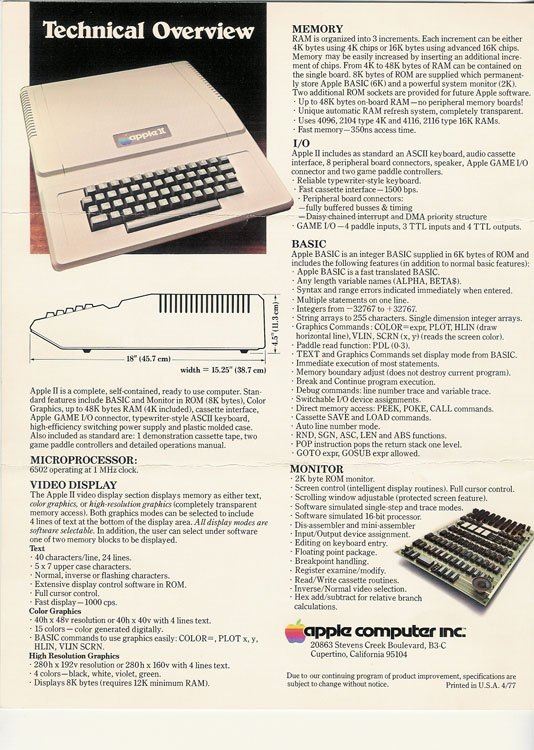
Apple Computer was founded on 1 April 1976 by Steve Jobs, Steve Wozniak and Ron Wayne, who left within about two weeks. What it sold was barely a product: the Apple I was a bare printed-circuit board, and the buyer had to supply the case, the power supply, the keyboard, the display and the storage. Paul Terrell of the Byte Shop ordered the first fifty at five hundred dollars each, and Jobs and Wozniak funded that order by selling possessions and taking credit from suppliers. Apple's sales for the whole of fiscal 1977, Apple I revenue included, came to 775,000 dollars.
Mike Markkula changed the company's shape rather than its product. He put in somewhere between eighty and ninety-two thousand dollars of his own money, secured a line of credit from Bank of America, and took twenty-six per cent of a company incorporated on 3 January 1977 — the same share as each founder. He brought in his former colleague Michael Scott as Apple's first president. He also wrote a one-page document, Apple's marketing philosophy, built on three words: empathy, focus, impute. Impute is the one that matters here. People judge a product by the signals around it, so the brochure and the advertisement have to be better made than the category they sit in.
The Apple II was announced at the first West Coast Computer Faire in San Francisco, 15 to 17 April 1977, where Markkula had ordered a backlit Plexiglas sign carrying the new rainbow logo and a static-electricity fault killed the keyboards roughly every twenty minutes. The motherboard shipped on 10 May and complete systems on 10 June. The price was 1,298 dollars with four kilobytes of memory. The Commodore PET was 595 dollars and the Radio Shack TRS-80 was 600, and both of those included a cassette recorder and a monitor, which Apple's price did not.
The culture.
The personal computer in 1977 was a social club before it was a market. The Homebrew Computer Club met in an auditorium at the Stanford Linear Accelerator Center, with builds laid out in the lobby; attend once and you were a member. Fred Moore's single-page first newsletter contains the whole thesis of the period in one sentence: he expected home computers to be used in unconventional ways, most of which nobody had thought of yet. By early 1977 the club had more than fifteen hundred names on its mailing list, and Apple's industrial designer, Jerry Manock, had met Jobs through it.
The trade press was the gatekeeper and it was not paying attention. BYTE, founded in 1975, was the heart of the category, and it coined the phrase that grouped the Apple II with the Commodore PET and the TRS-80 as the three machines of 1977. In April 1977 it suggested the Apple II might become the first appliance computer, and it reviewed the machine warmly in March 1978. But in its report on the West Coast Computer Faire, BYTE did not mention Apple at all. Apple got no earned coverage at its own launch, and had to buy its way into the conversation in the magazine that had just overlooked it.
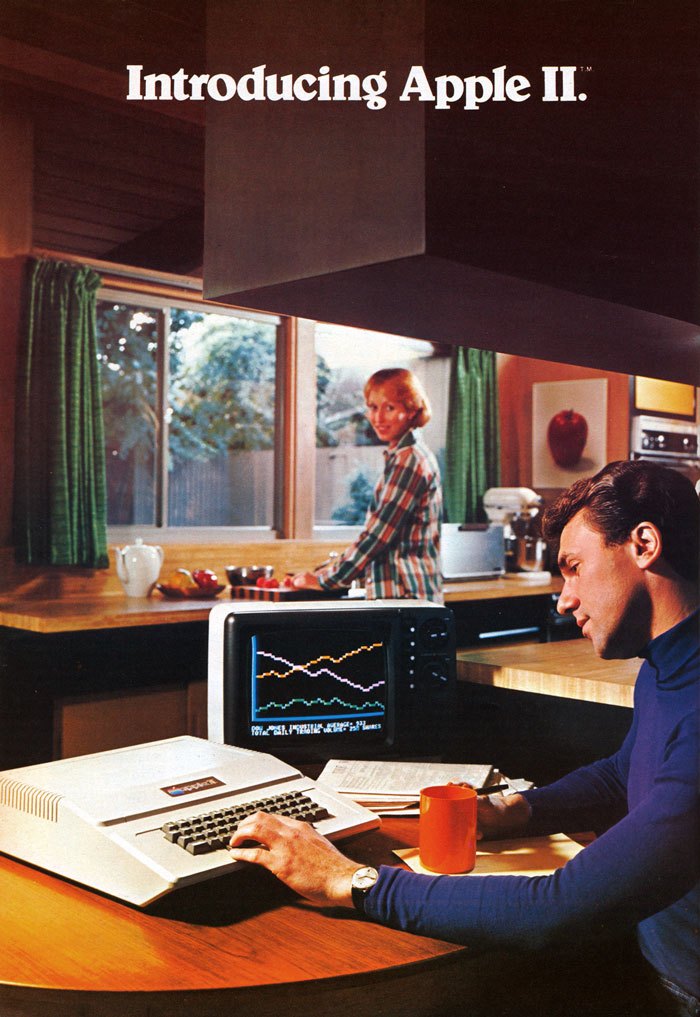
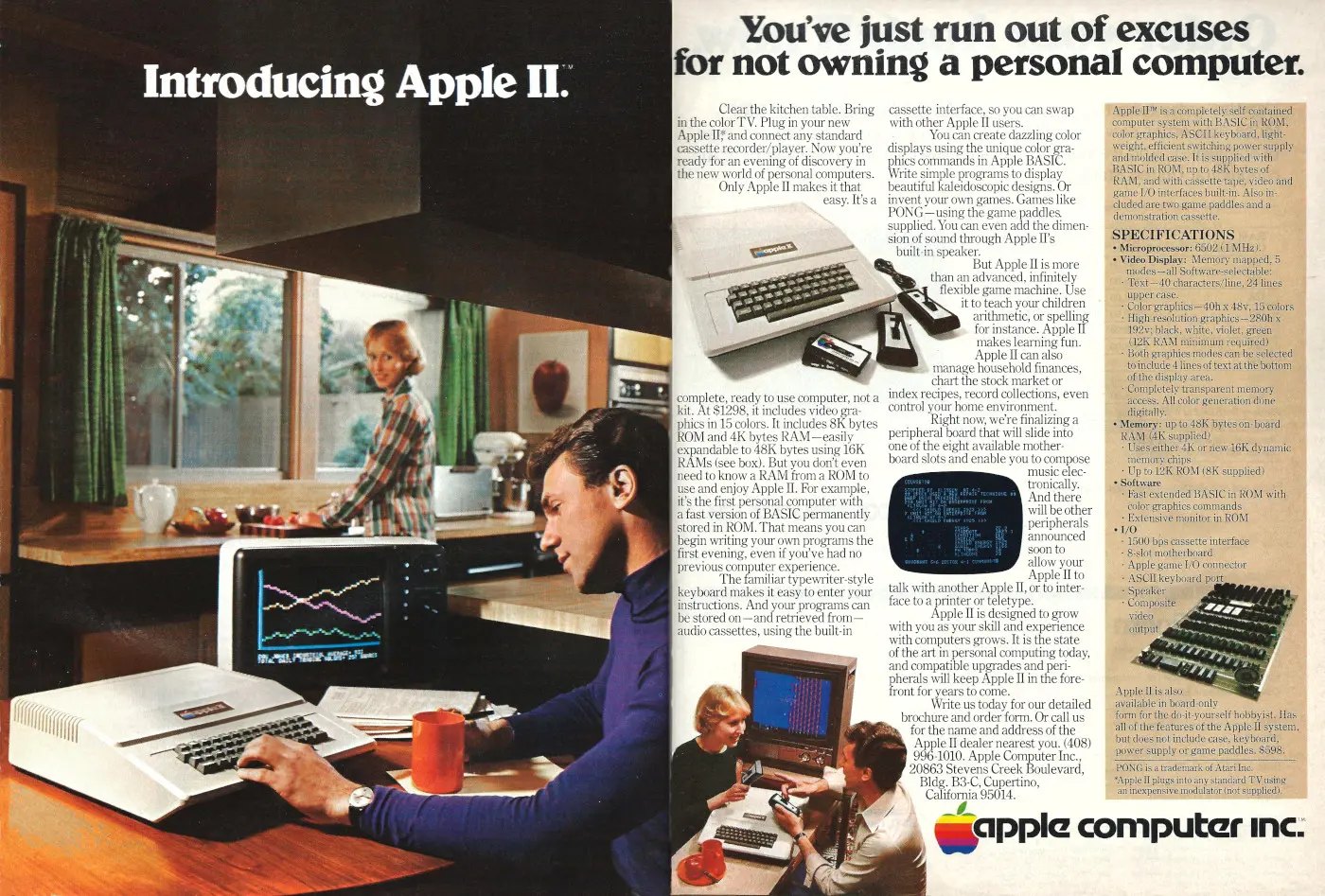
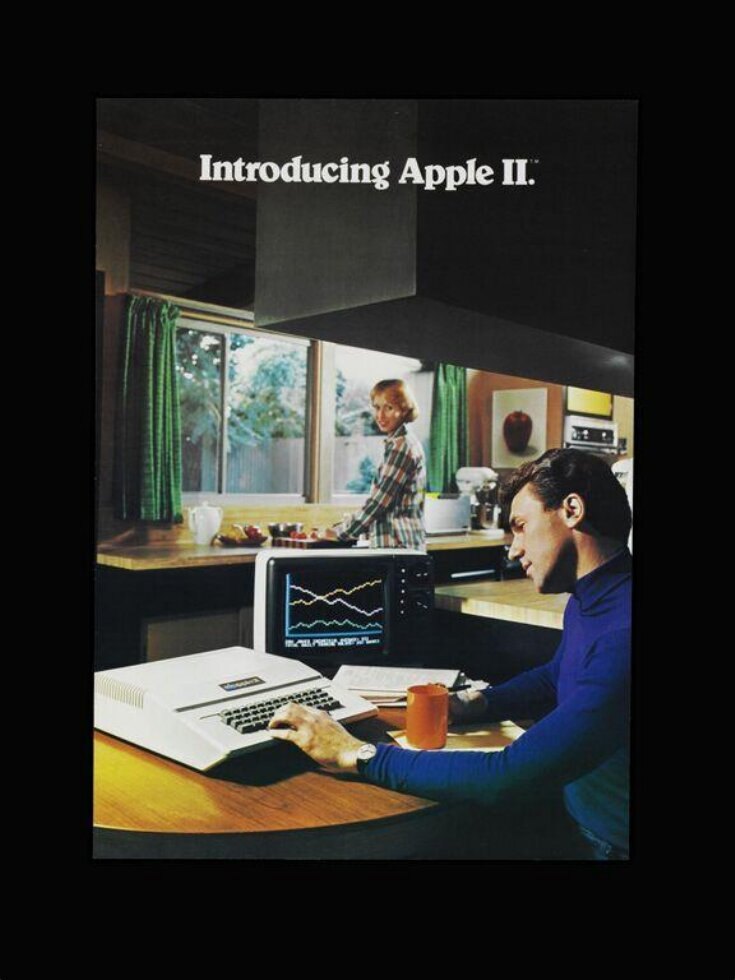
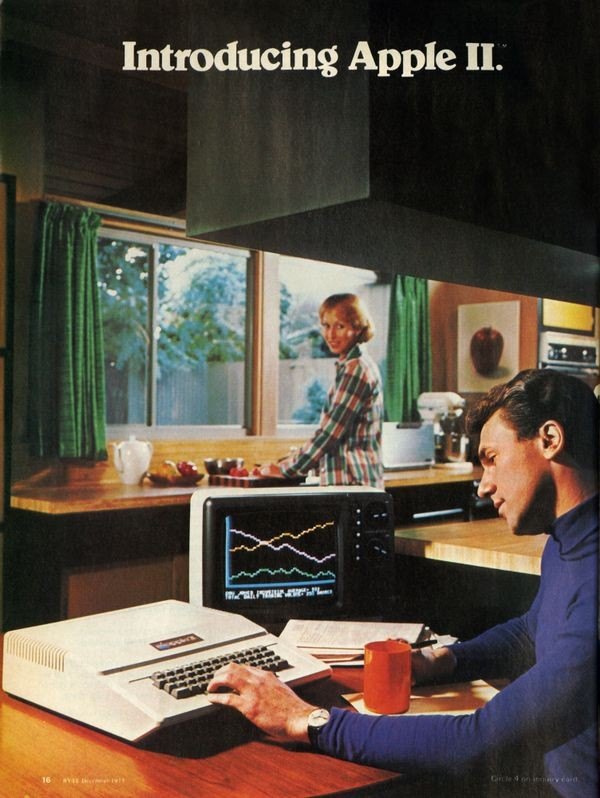
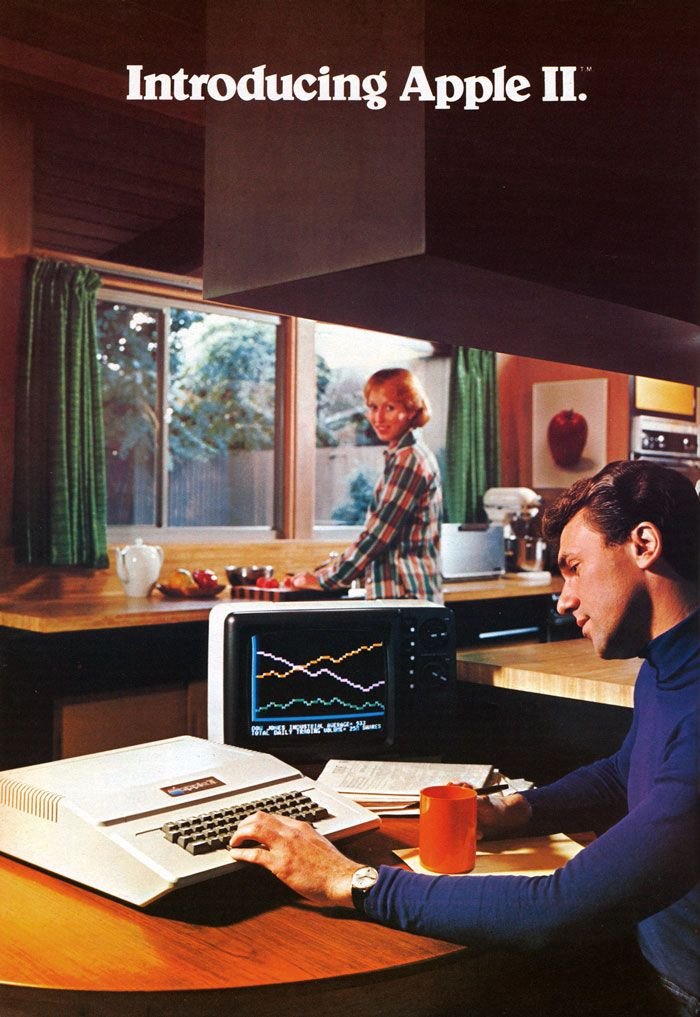
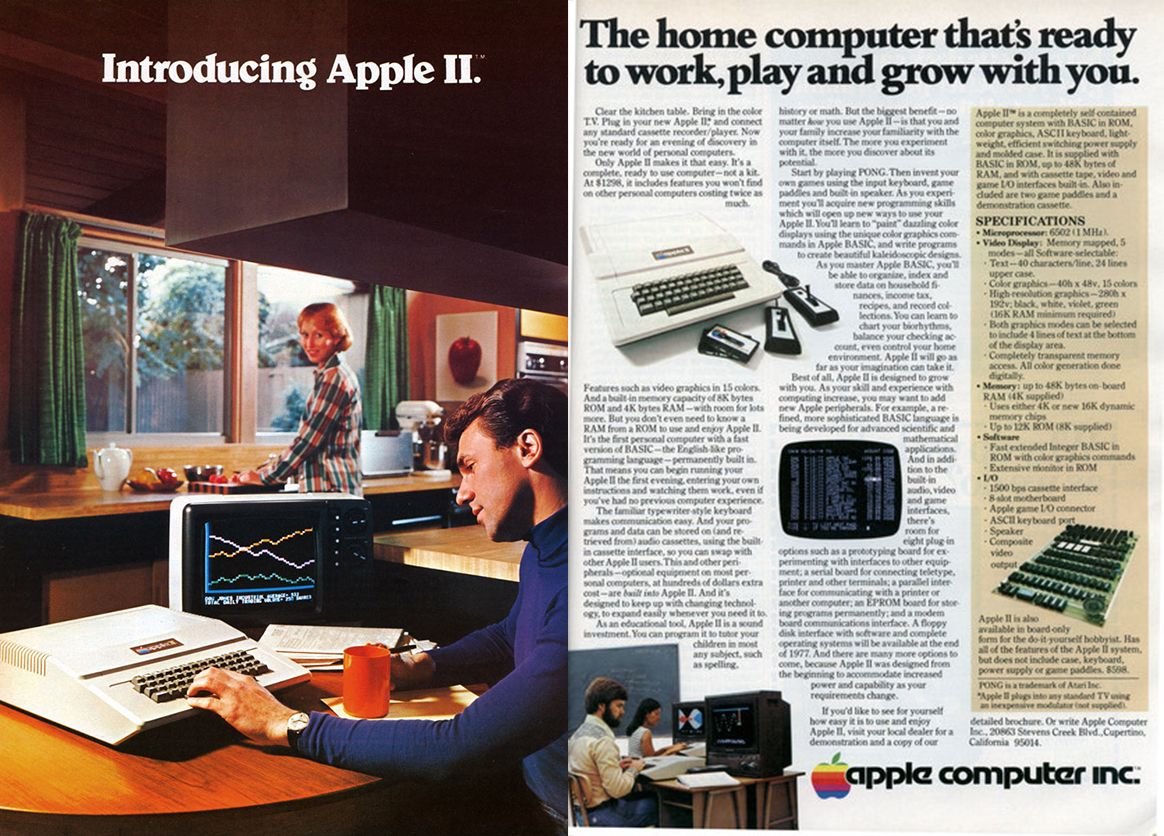
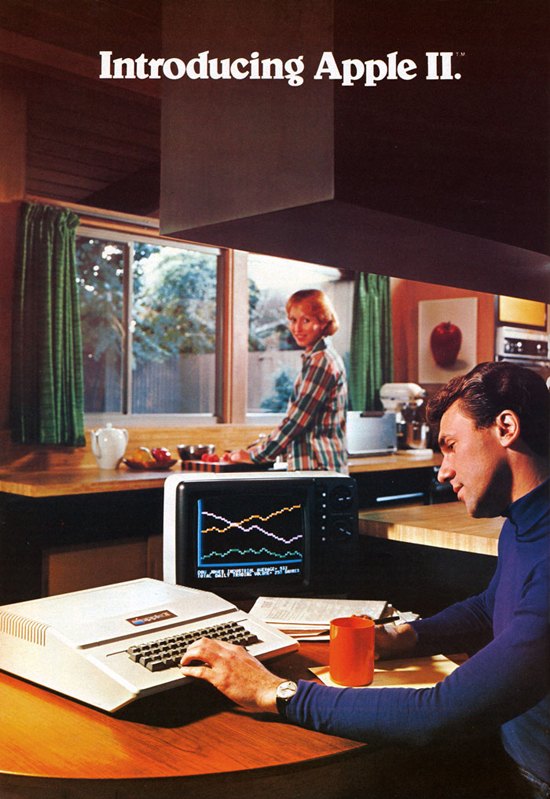
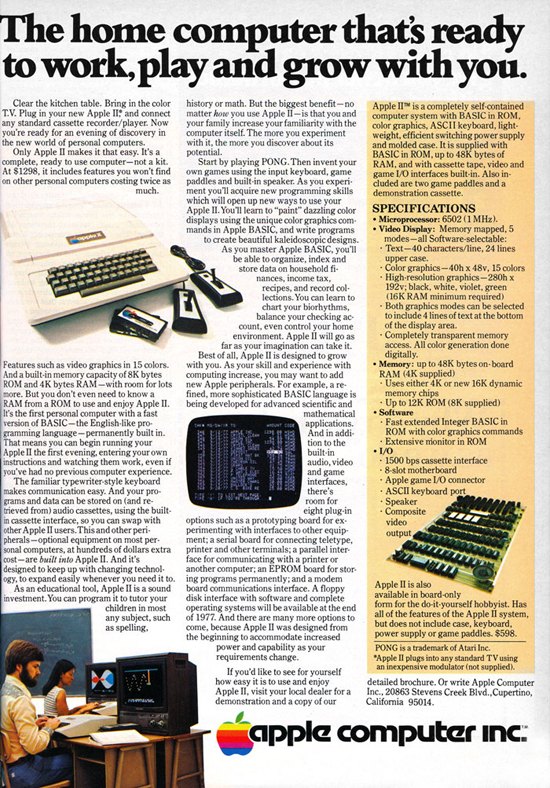
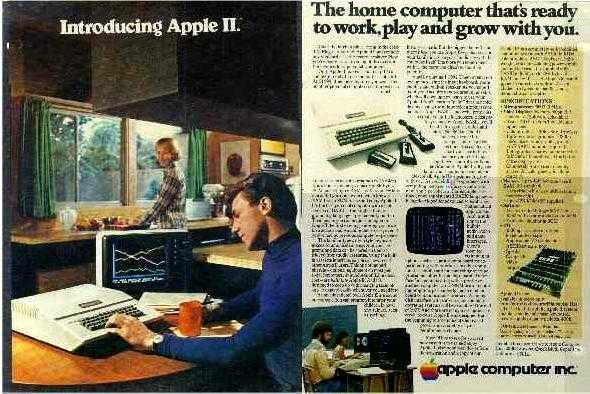
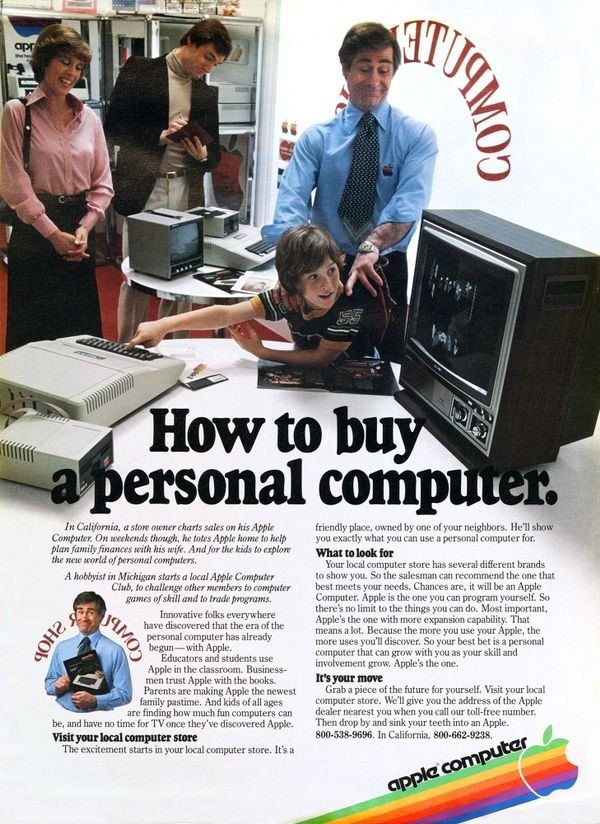
The ad moved the computer into the home. The Victoria and Albert Museum, which holds the tearsheet, catalogues it as showing a man working on an Apple II at a kitchen table while a woman works in the kitchen behind him. The People's Graphic Design Archive describes the same man in a blue turtleneck checking the Dow Jones Industrial Average. The pattern held: the next advertisement in the same family asked what kind of man owns his own computer, and answered with a Benjamin Franklin impersonator in a dim study. The domestic frontier was opened, and it was opened for one half of the household.
The problem.
Apple cost twice the price of the two machines it was compared with, shipped less in the box, and the only people buying computers were the ones least likely to pay extra for not having to build one.
Apple's problem in 1977 was that every number on the page argued against it. At 1,298 dollars for four kilobytes of memory the Apple II was roughly twice the Commodore PET and the Radio Shack TRS-80, and those two arrived with a cassette recorder and a monitor included. A working Apple II cost a buyer between 1,200 and 1,800 dollars once he had bought the rest.
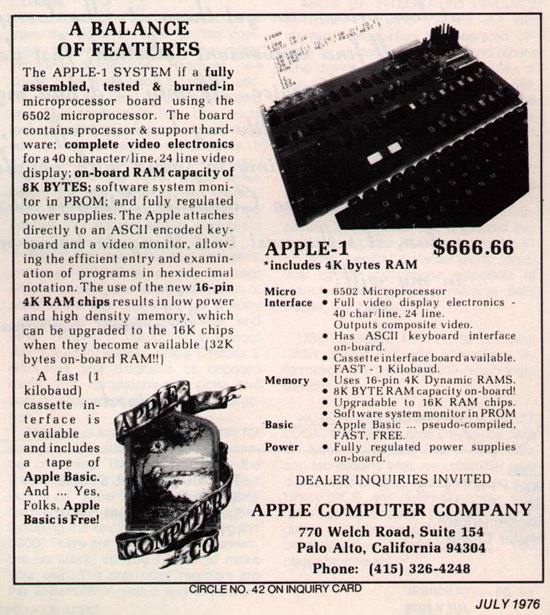
Beneath all three sat the kit world — the Altair 8800 at 397 dollars, plus IMSAI, Processor Technology and Cromemco — and the kit world contained the entire existing customer base. Those customers were people who could solder, who read BYTE, who regarded assembling the machine as part of the pleasure. Selling them a premium for convenience was selling them a premium for the thing they did not want removed. Apple's old advertising had spoken their language too: the Apple I flyer led on a single circuit board with eight kilobytes of memory. To sell the Apple II at its price, Apple had to stop addressing the people who were already in the market.
Jobs and Wozniak approached Regis McKenna themselves in 1976, before Markkula was involved, and McKenna turned them down. Jobs kept calling — McKenna's own account is that he rang back some forty times in one night — and McKenna relented after a dinner at which Jobs described what a personal computer could be. McKenna then drafted an eight-page marketing plan in December 1976, introduced Markkula to the founders, and was asked to replace Ron Wayne's pen-and-ink logo, which Jobs believed had hurt Apple I sales.
The solution.
Sell relief from expertise as the premium feature rather than the discount, and buy enough space to teach a market that does not exist yet.
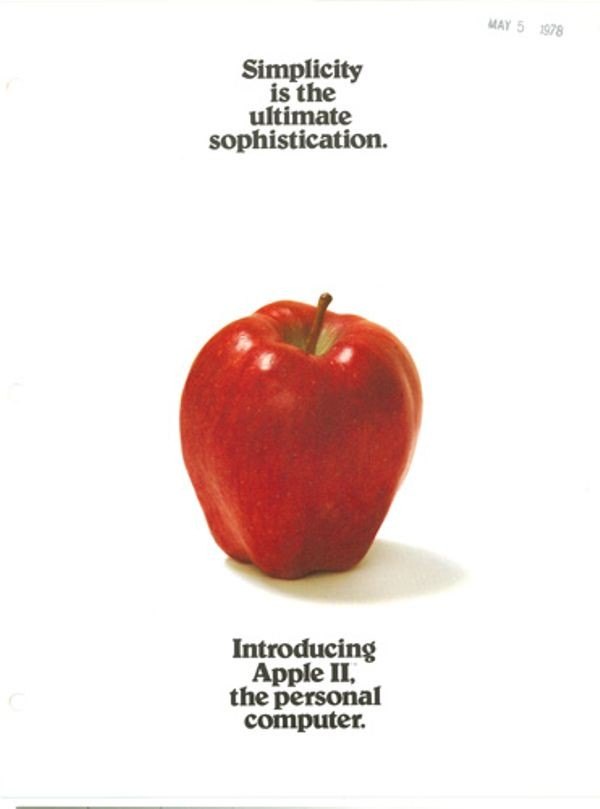
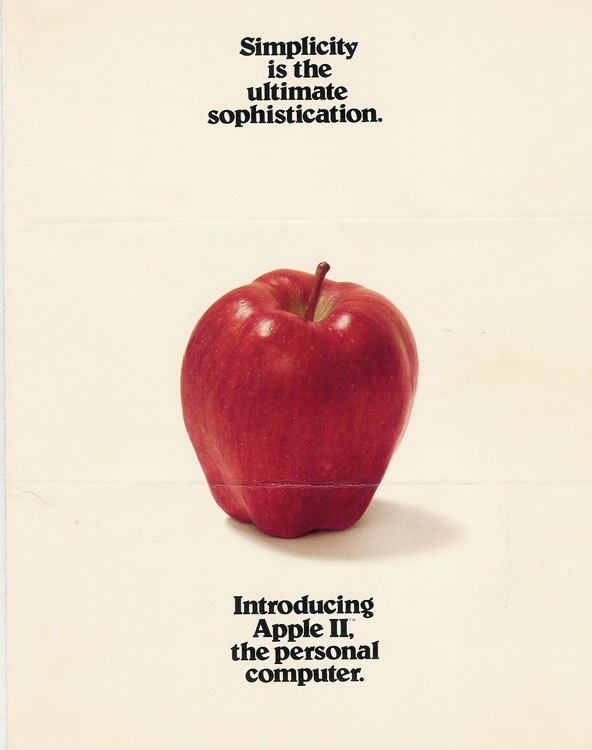
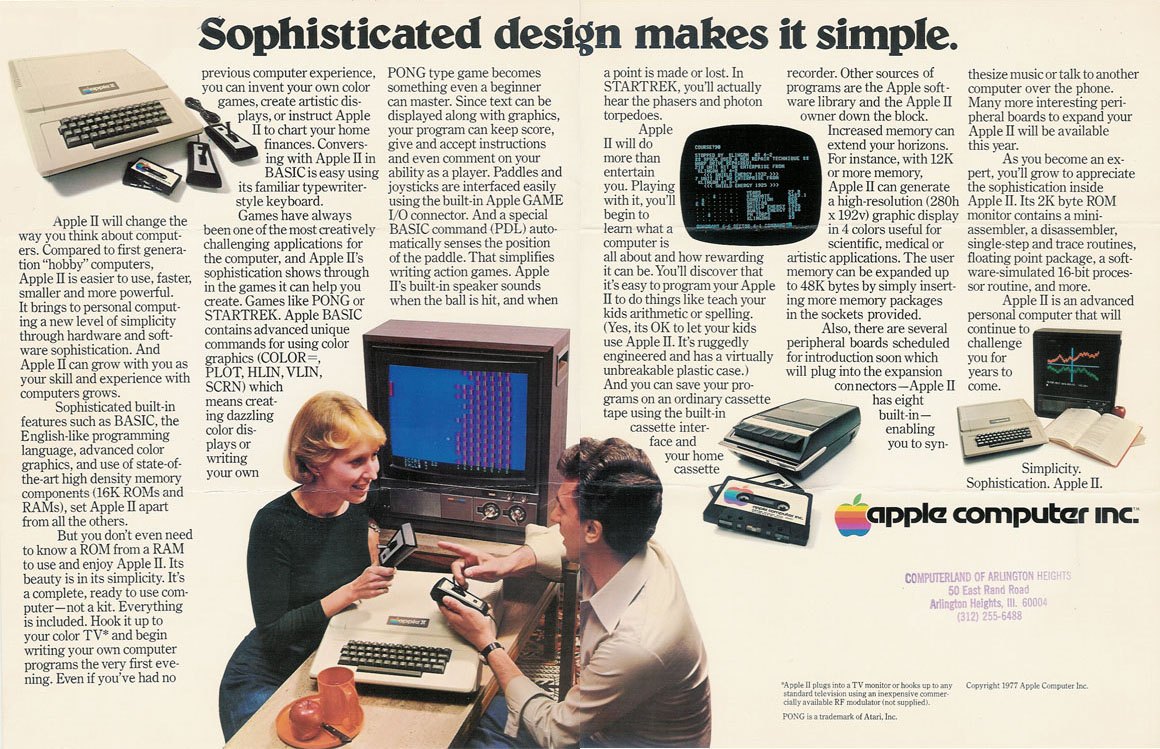
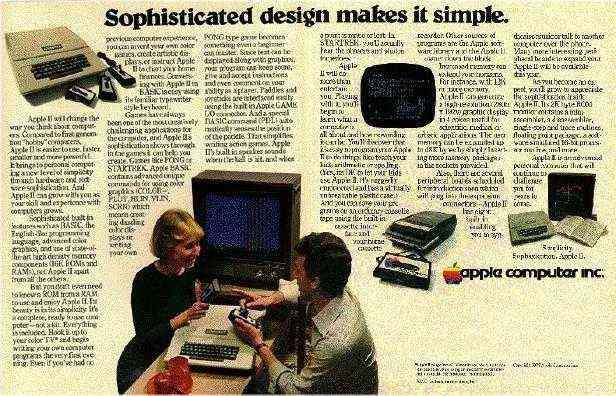
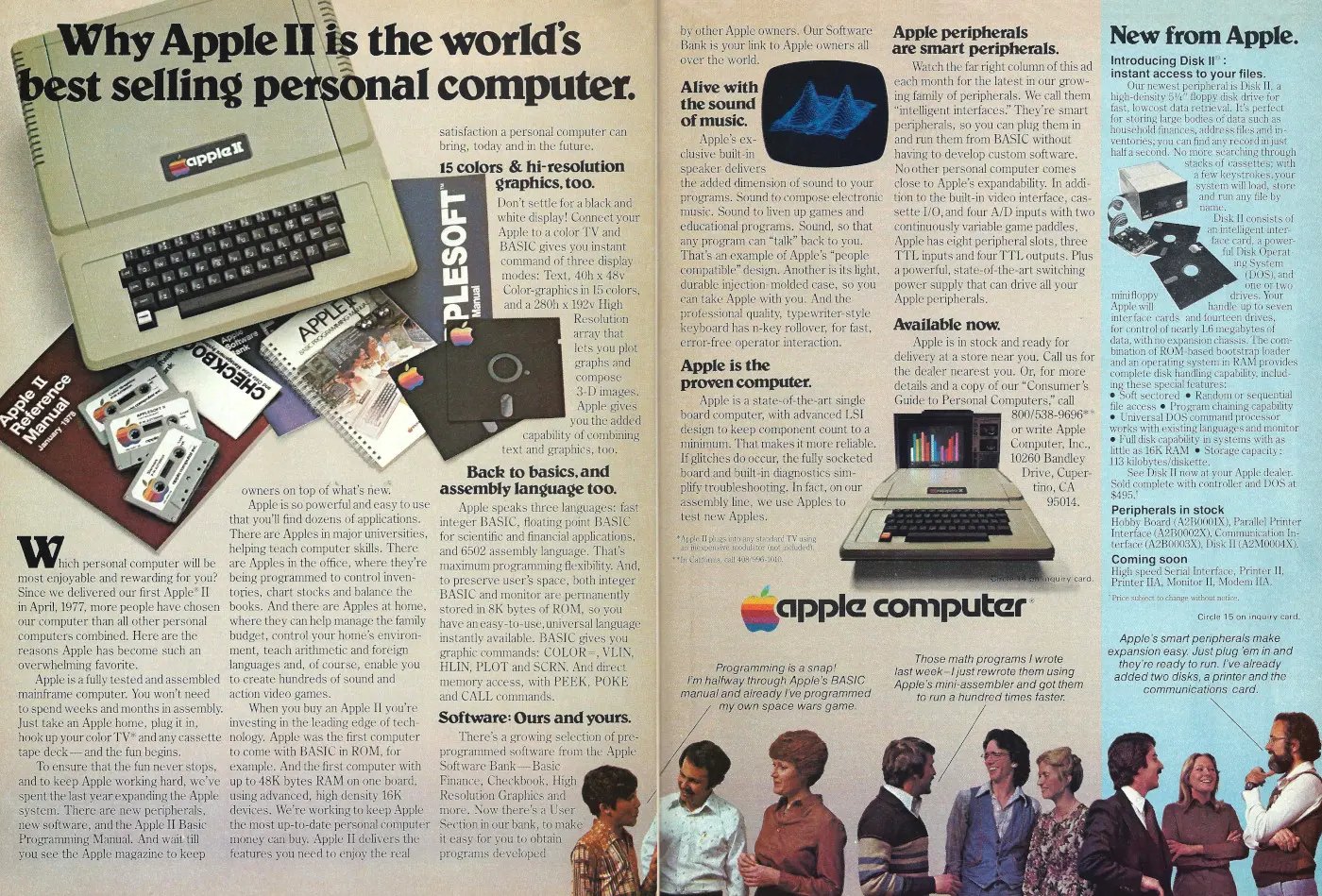
The advertising refused to argue about specification or value and relocated the product instead — out of the workshop and onto the kitchen table, under an aphorism that reframed easy from compromised to advanced. If simplicity is the ultimate sophistication, then the extra few hundred dollars pays for the ease, and the hardware is incidental. Every expensive thing about the machine became evidence for the claim rather than an objection to it. Markkula's third word, impute, is visible in the craft: printing in four inks, generous white space and a 1,200-word argument in a category whose previous best effort was a photograph of an empty box.
The ad is long because Regis McKenna's doctrine was that markets in new technology are built rather than discovered, and a market that does not yet exist has to be taught into being. So Apple bought a two-page spread and used it like a keynote, in the same magazine that had just ignored its launch. The line itself does not come from Leonardo da Vinci. The earliest attribution to him appears around 2000 with no evidence behind it, and the nearest real antecedent is Clare Boothe Luce's 1931 novel Stuffed Shirts, which has the height of sophistication is simplicity.
The work.
Same shape of problem.
More from Apple.
Every Applecampaign →The line that founded Apple's design religion is a misattributed aphorism from a 1931 American society novel.
Back to the archive →