Conservative Party · Saatchi & Saatchi
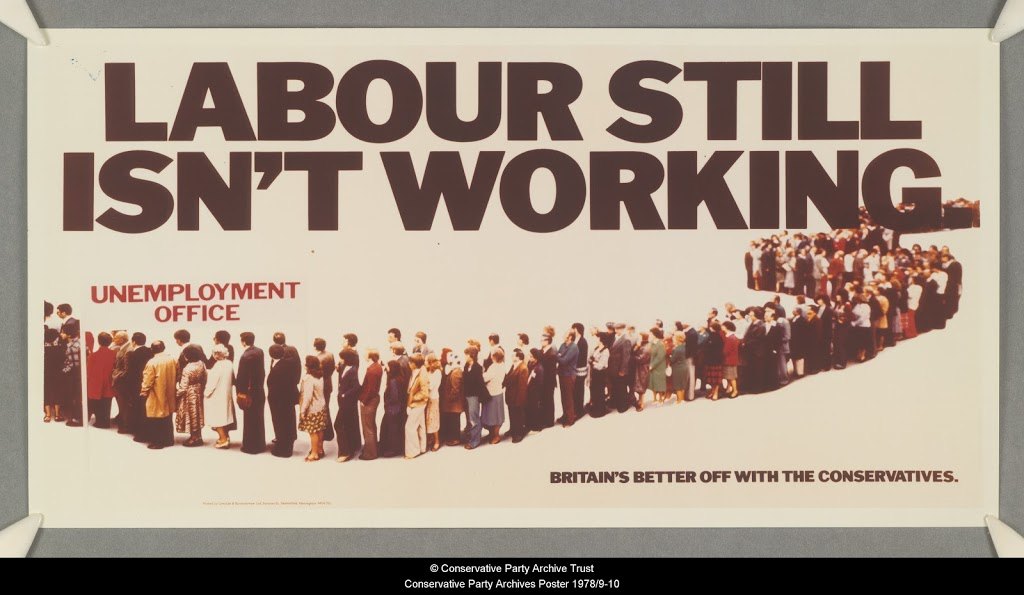
Labour Isn't Working
A poster bought for about 20 billboard sites that became a national news story, and a reference point for agencies working on British elections since.
The era.
Britain in 1978 was governed by Labour under James Callaghan, Prime Minister since 1976. For much of the decade the country had lived with high inflation, repeated industrial disputes and government attempts to hold down pay. In July 1978 the government published a white paper setting a 5% limit on pay rises, and the Trades Union Congress rejected it within a week. Callaghan had relied on a pact with the Liberals since March 1977, and that arrangement ended in the summer of 1978.
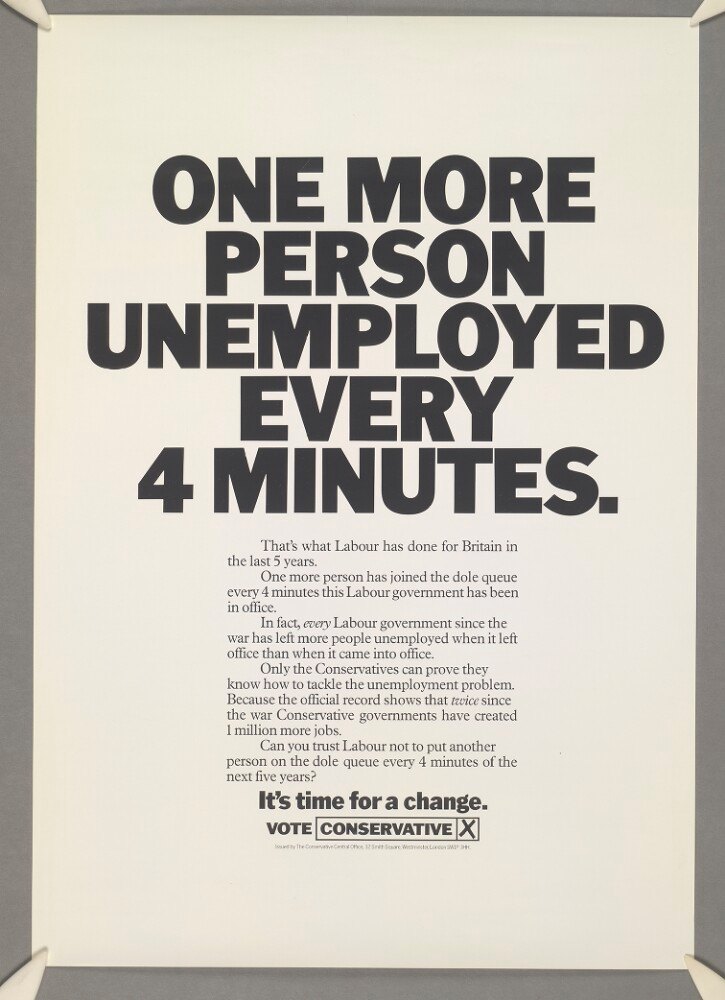
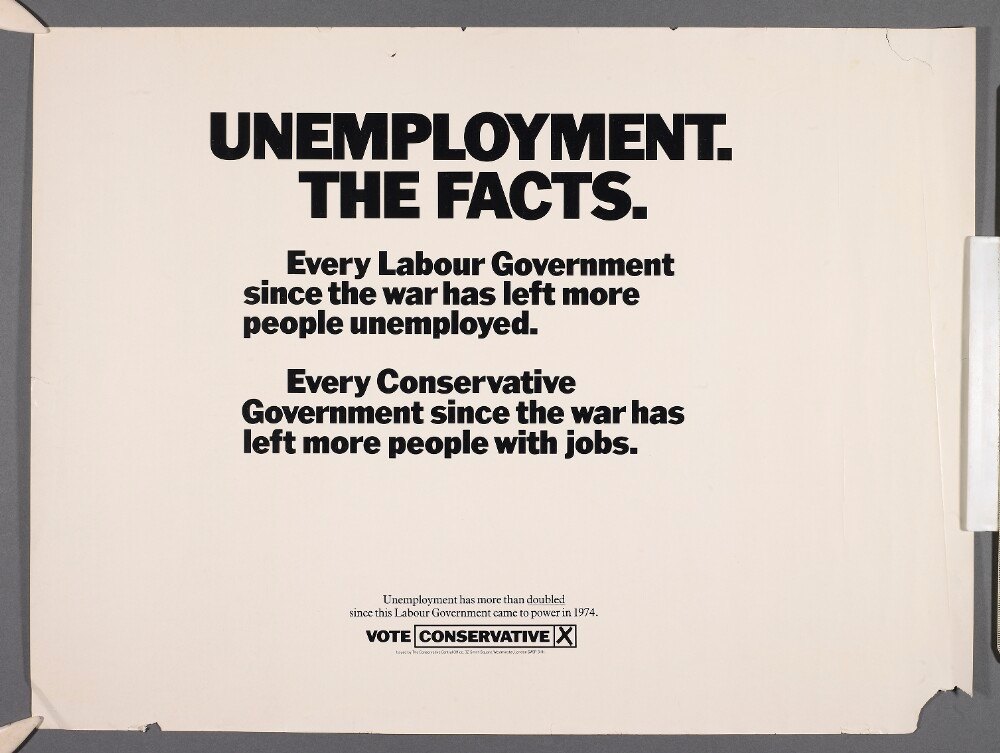
Unemployment stood at about 1.6 million in 1978, between 5% and 6% of the workforce. By the standards of the post-war decades that was high, and jobs had become a central argument between the parties. The Conservatives, led since February 1975 by Margaret Thatcher, were in opposition. Many in Westminster expected Callaghan to call a general election in the autumn of 1978.
Political advertising in Britain was a small trade. Before 1979, party posters were generally produced by supporters, often for free. The Conservatives had used professional advertisers in the 1970 election, when Barry Day's work for the party argued about rising prices. A party buying billboards to attack its opponent was still unusual.
The culture.
Saatchi & Saatchi was eight years old in 1978. Charles and Maurice Saatchi had founded it in 1970, and in London it had a name as a young, ambitious, fashionable agency. Neither brother was known for an interest in politics, and they treated the party as a prestigious account. Tim Bell, the agency's managing director, ran the business.
The autumn of 1978 became the Winter of Discontent. Ford workers walked out on 22 September and settled for a 17% rise in November. Lorry drivers struck from 3 January 1979, and on 22 January about 1.5 million public sector workers joined a Day of Action. In all, 29,474,000 working days were lost to strikes in 1979, against 9,306,000 in 1978.
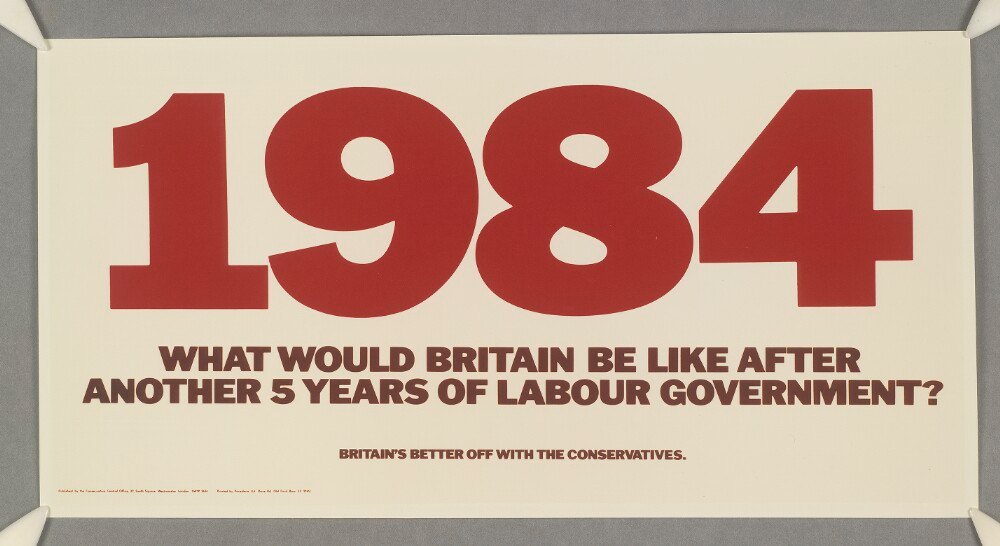
The press turned on Callaghan in January 1979. After a press conference he gave at Heathrow on 11 January, The Sun ran the headline "Crisis? What crisis?", words he never used. On 28 March the government lost a vote of no confidence by one vote, and the election was set for 3 May. The Conservatives began the campaign polling about 50% and won with 43.9% of the vote and a majority of 43. Party chairman Lord Thorneycroft claimed the poster won the election. Tim Bell gave more weight to the government's delay and the Winter of Discontent.
The problem.
The Conservatives needed one picture that would turn 1.6 million unemployed into a charge against the government, ready for an election that could be called at any moment.
In 1978 the Conservatives were in opposition and expected a general election that autumn. Margaret Thatcher had made Gordon Reece, a former television producer, the party's Director of Publicity, and one of his first moves was to appoint Saatchi & Saatchi Garland Compton as its agency. The party wanted to reach people outside its usual vote, and Tim Bell's team named trade unionists, working-class women and first-time voters among its targets.
Unemployment was the government's weak point, but a jobless total is a number, and a number is hard to put on a poster. There was also a worry inside the party: the headline would carry Labour's name, and few people read the small copy underneath. Bell later said it was a difficult battle to get the party to approve it.
Thatcher made Gordon Reece Director of Publicity in 1978, and he appointed Saatchi & Saatchi Garland Compton as the party's agency. The job was to prepare for an election expected in the autumn of 1978 and to win voters outside the party's usual base.
The solution.
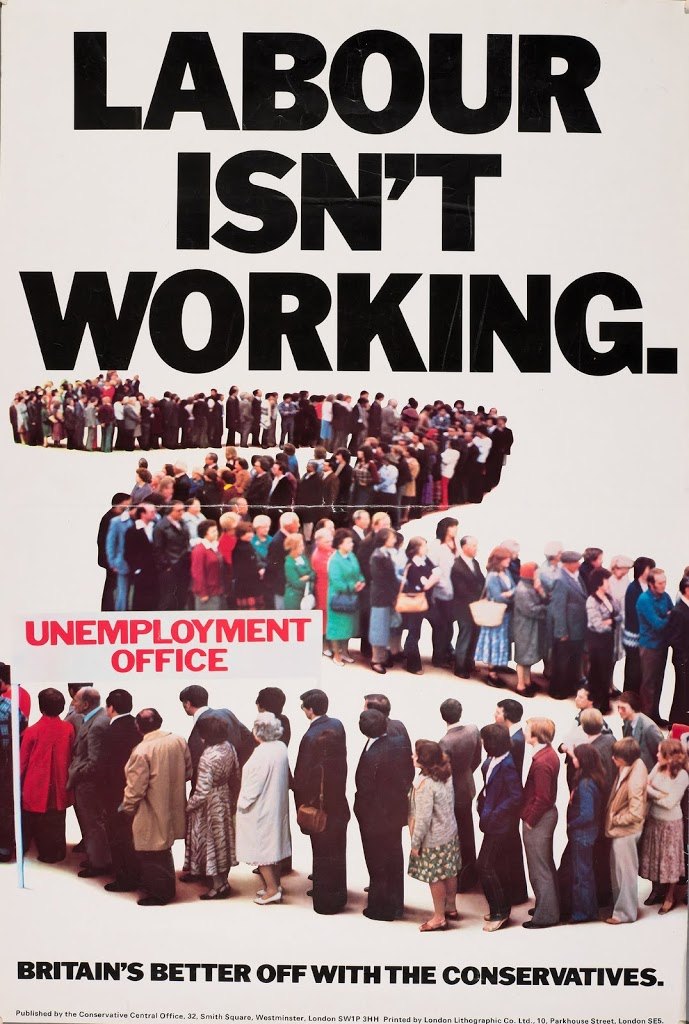
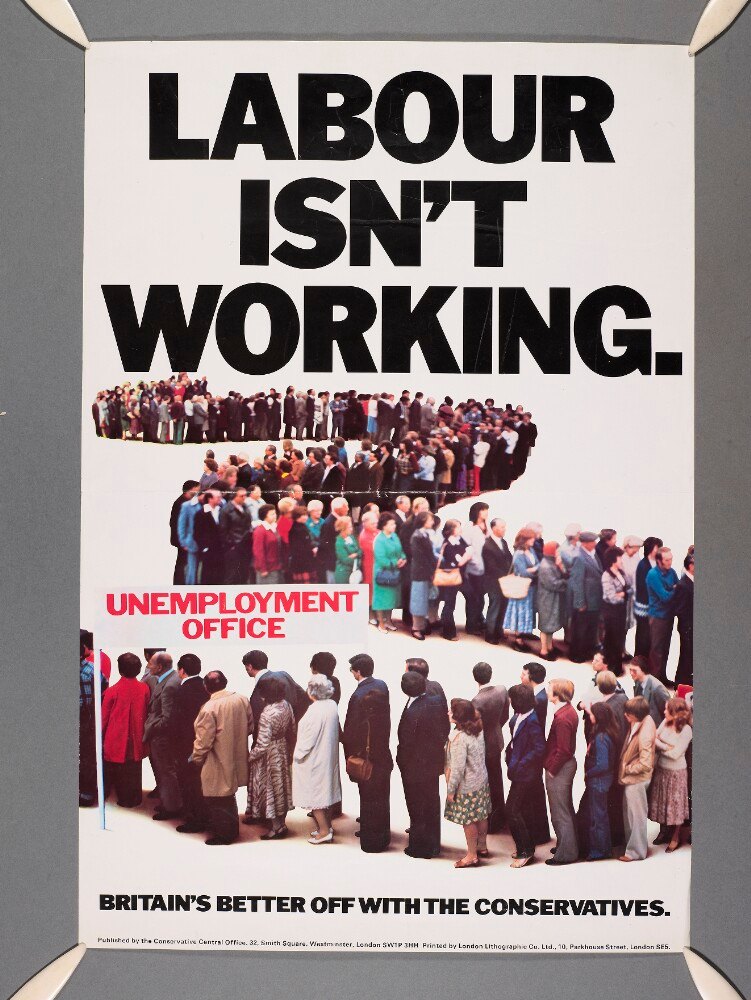
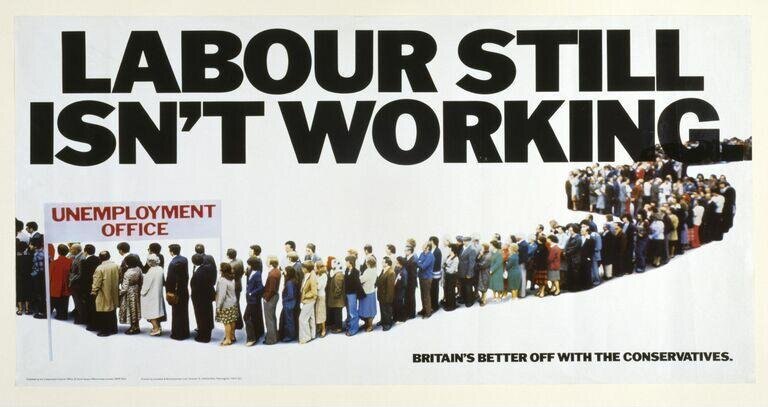
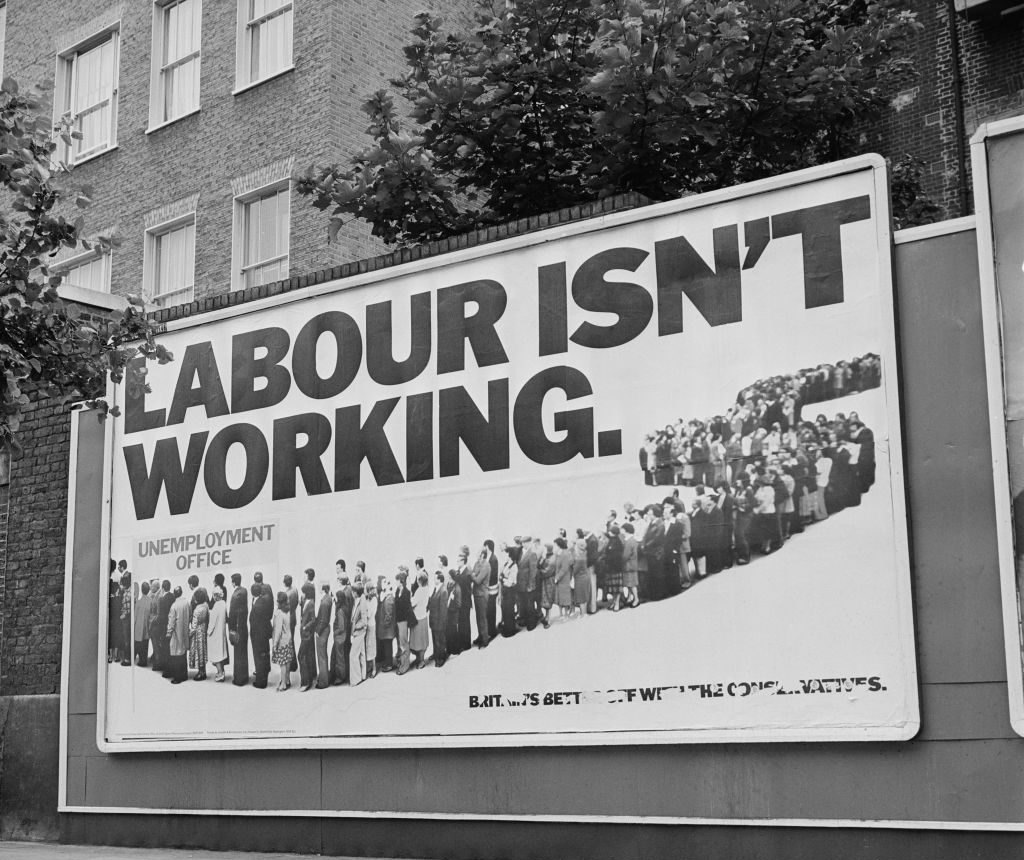
Show the jobless figure as a queue, and let the party's name carry the joke: three words that read as a pun and as a charge.
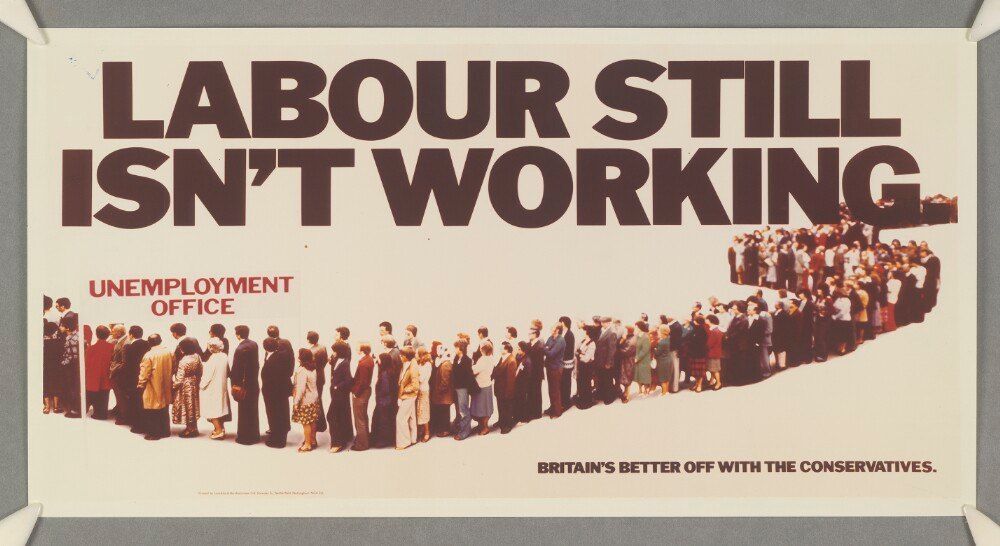
Copywriter Andrew Rutherford and art director Martyn Walsh made a poster of a queue snaking away from a door marked Unemployment Office, under the headline "Labour isn't working." The line reads two ways: the government is failing, and the people in the queue have no work. The queue was staged with about 20 members of the Hendon Young Conservatives, photographed again and again and composited into one long line, with their faces kept out of focus.
It went up on about 20 billboards in the summer of 1978, and the larger audience came from the reaction: Chancellor Denis Healey told the House of Commons the people were not genuinely unemployed and said the Conservatives were "selling politics like soap-powder," which put the poster in the news. When the election came in 1979, the party reissued it as "Labour still isn't working."
The work.
Around the work
Same shape of problem.
About twenty volunteers from Hendon, photographed over and over, became the queue that stood for 1.6 million unemployed.
Back to the archive →