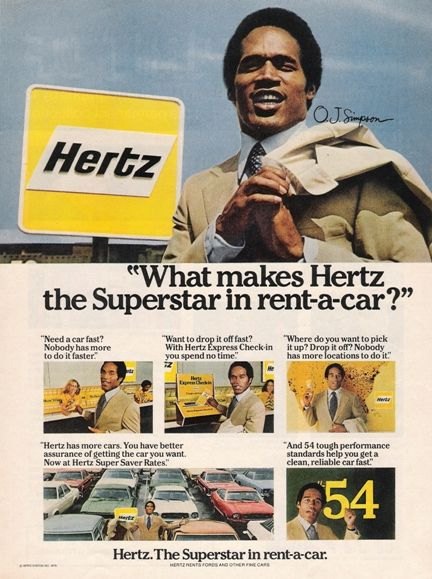
The Superstar in Rent-a-Car
The market leader answered a decade of Avis attacks by acting out its one real advantage, speed, with a running back who could make it look true.
The era.
By the mid-1970s the jet had made the business trip routine. Salesmen, engineers and executives flew out in the morning and back at night, and at the other end of the flight they needed a car. The rental counters stood side by side in the arrivals hall, and the passenger picked one on the way past.
The economy was rough. The Arab oil embargo of 1973 and 1974 had sent fuel prices up and pushed the country into recession. Companies watched their travel budgets, and the man on the trip watched the clock. Time spent standing at a counter was time not spent with a client.
Hertz was the biggest name in car rental. Since 1967 it had belonged to the electronics company RCA. Robert L. Stone, a former NBC television executive, became chairman and chief executive in 1972. Business trips made up most of the industry's customers.
The culture.
Television sport had become mass entertainment. Monday Night Football started on ABC in 1970, and athletes became household faces in a way they had not been before. Advertisers followed them.
O. J. Simpson was one of them. In 1973 he ran for 2,003 yards for the Buffalo Bills, the first player to pass 2,000 in a season. He had also just won The Superstars, an ABC series in which athletes competed outside their own sport. Viewers saw him smile, talk and joke, which most football players never got to do on camera.
A Black athlete as the face of a national brand aimed at people on business trips was new. Reporting at the time and since records that advertisers worried how white audiences would react. The agency later said it did not set out to make a point about race. It cast the man it thought had the most magnetism on screen.
The problem.
The biggest company in the business had spent ten years being described by its rival as the one that didn't try hard enough.
Since 1963 Avis had run its "We try harder" campaign. The campaign never needed to name Hertz. By admitting it was number two, Avis cast the leader as a company that no longer had to try, and made being second sound like a promise of better service.
Hertz was still number one, but number one had become a weakness in Avis's hands. Bigness suggested queues and indifference. Research for the new campaign showed that business renters saw a rental car as a necessary evil. They wanted to get in and get out fast.
Hertz needed a way to say it was the fastest without sounding like a big company boasting. A claim of speed is easy to make and easy to ignore. It had to be shown.
Hertz asked its agency, Ted Bates, for a campaign about speed of service for people on business trips. Bates first proposed an ordinary businessman running through an airport. A conversation with the client about the ABC series The Superstars led the agency to cast Simpson instead, and Stone wanted a celebrity who would act, not simply talk to the camera.
The solution.
Turn the promise of speed into a man running, and cast a running back the country already loved to watch.
Mark Morris and his team at Ted Bates first drew up a campaign showing an ordinary businessman running through an airport to his car. In a meeting with Hertz, someone asked whether they had been watching The Superstars. Morris and art director Nick Pappas watched hours of the series and cast O. J. Simpson.
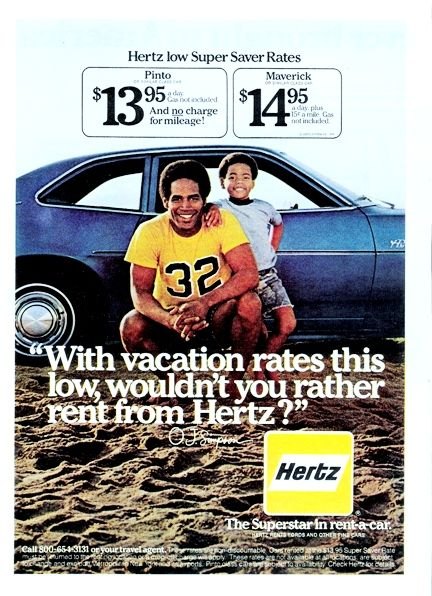
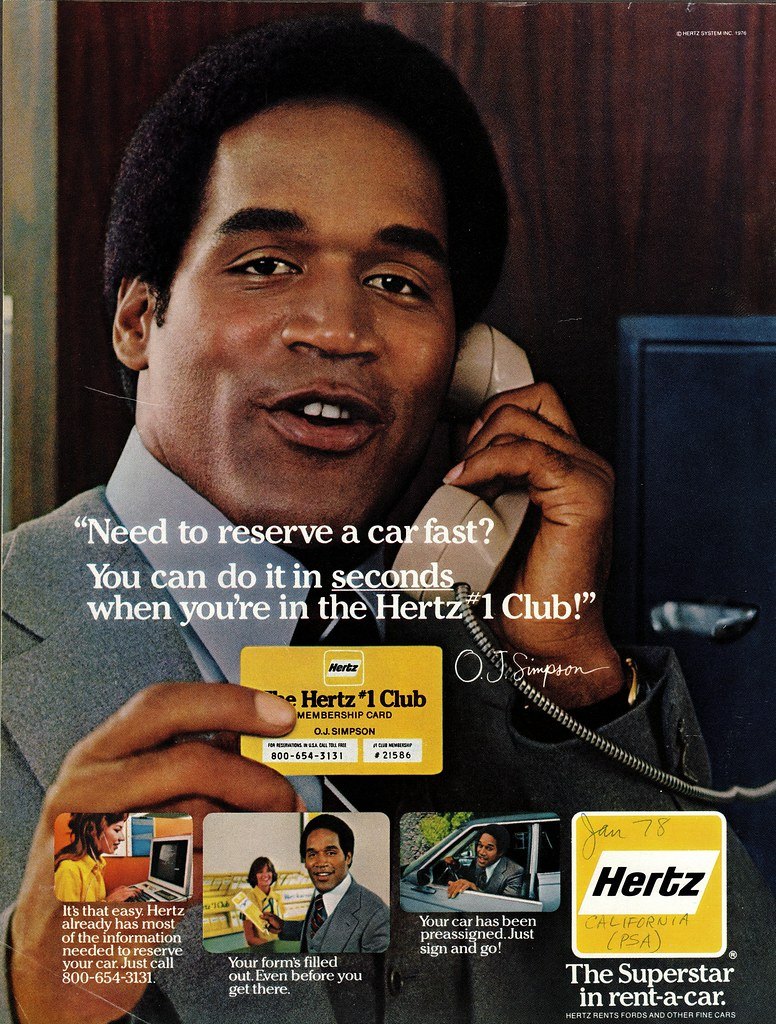
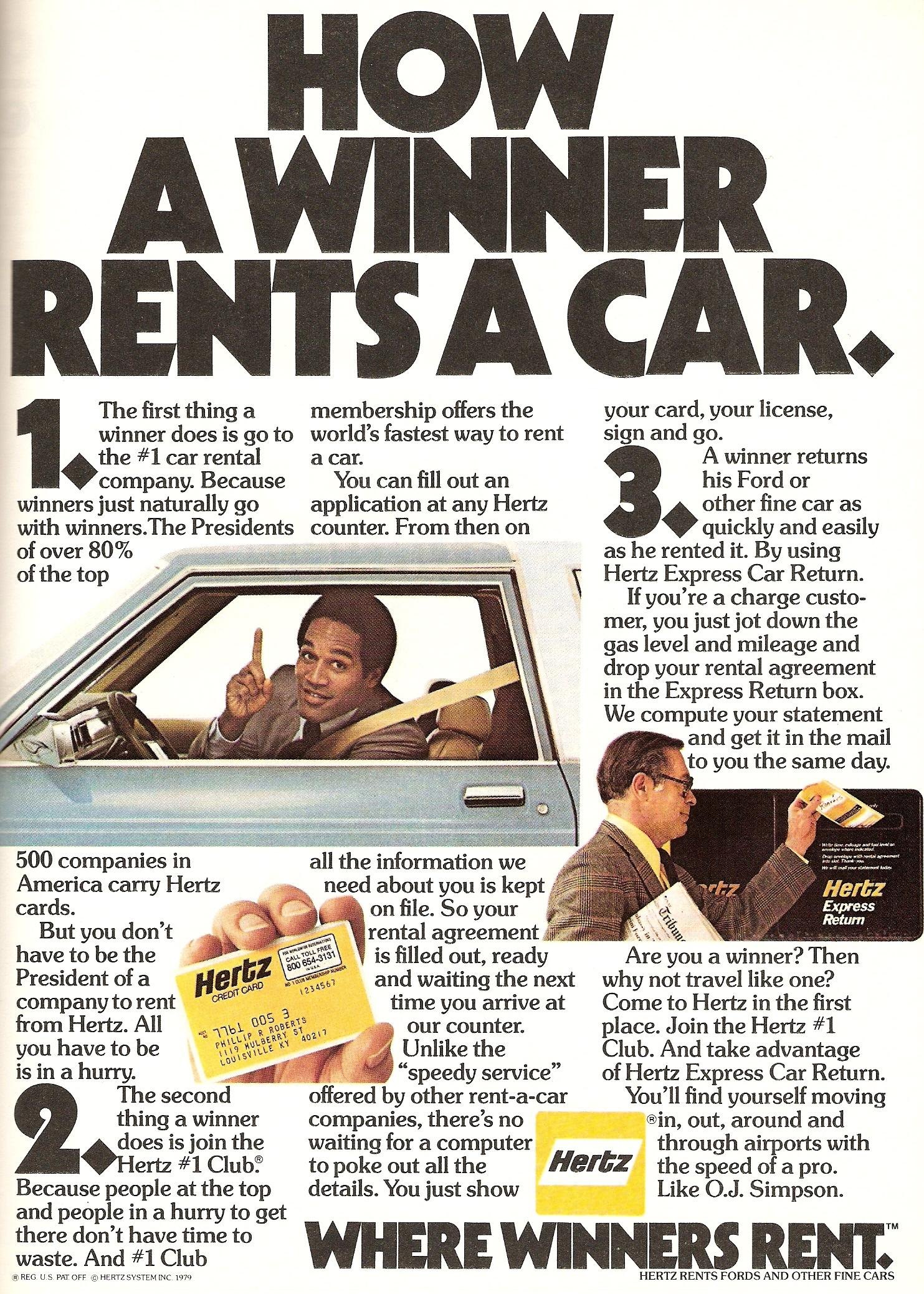
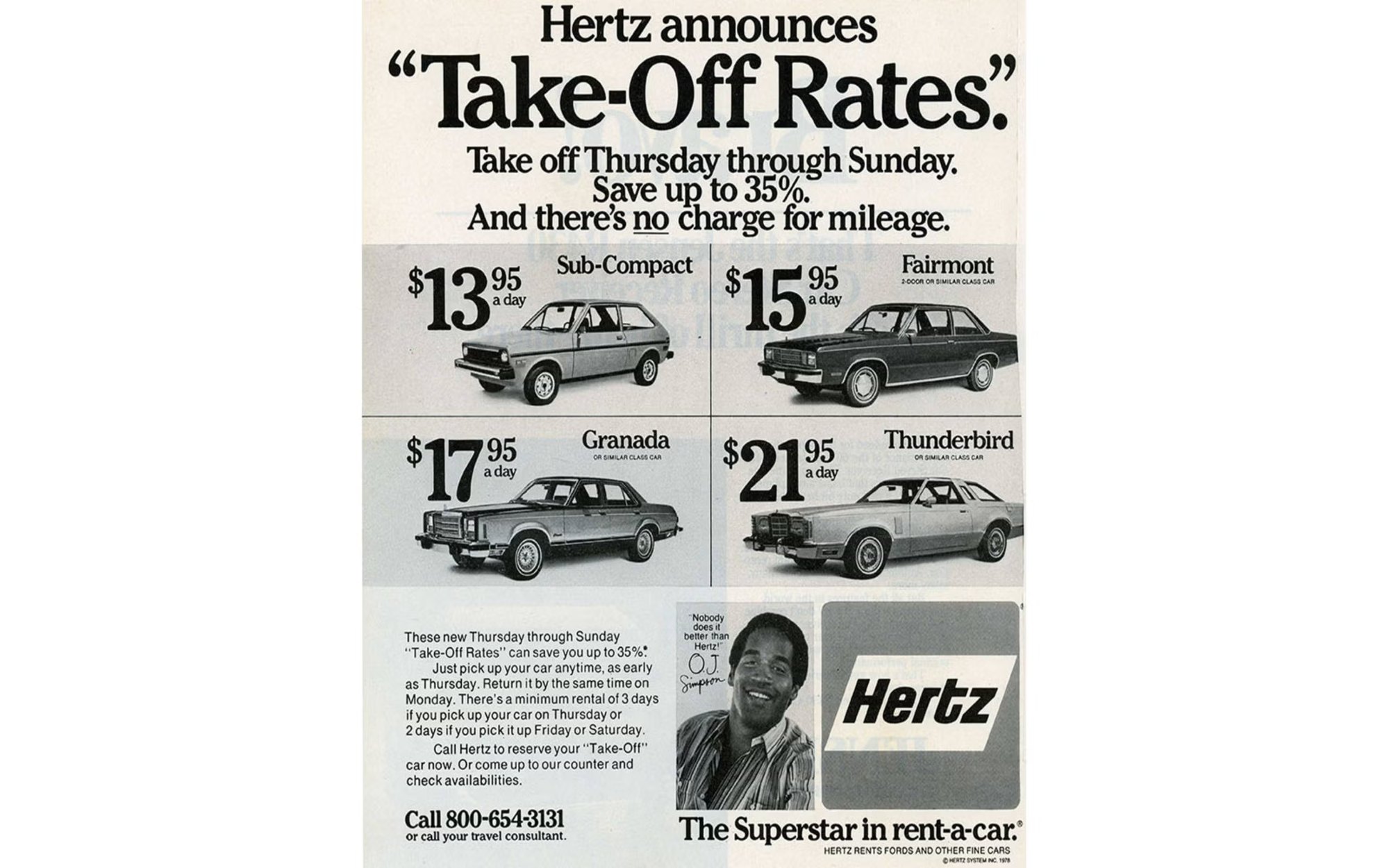
The first commercial was shot at Newark airport in June 1975 and went on air in September, much of it in football broadcasts. Simpson, in a three-piece suit with a briefcase, vaults over seats and barriers to reach his Hertz car while bystanders shout "Go, O.J., go!" The line was "Hertz, the superstar in rent-a-car."
The ad never argued with Avis. It let number one look quick instead of big. Bates research reported a 20 percent rise in people naming Hertz first, a 71 percent rise in recall of the message and a 56 percent rise in renters who called Hertz the best. Advertising Age named Simpson star presenter of the year in 1977.
The work.
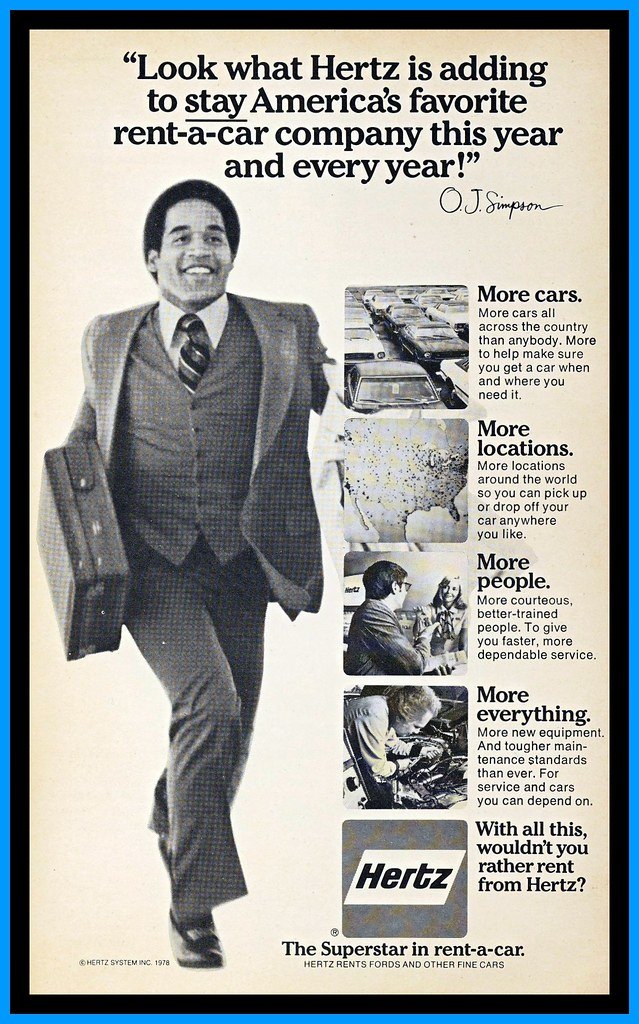
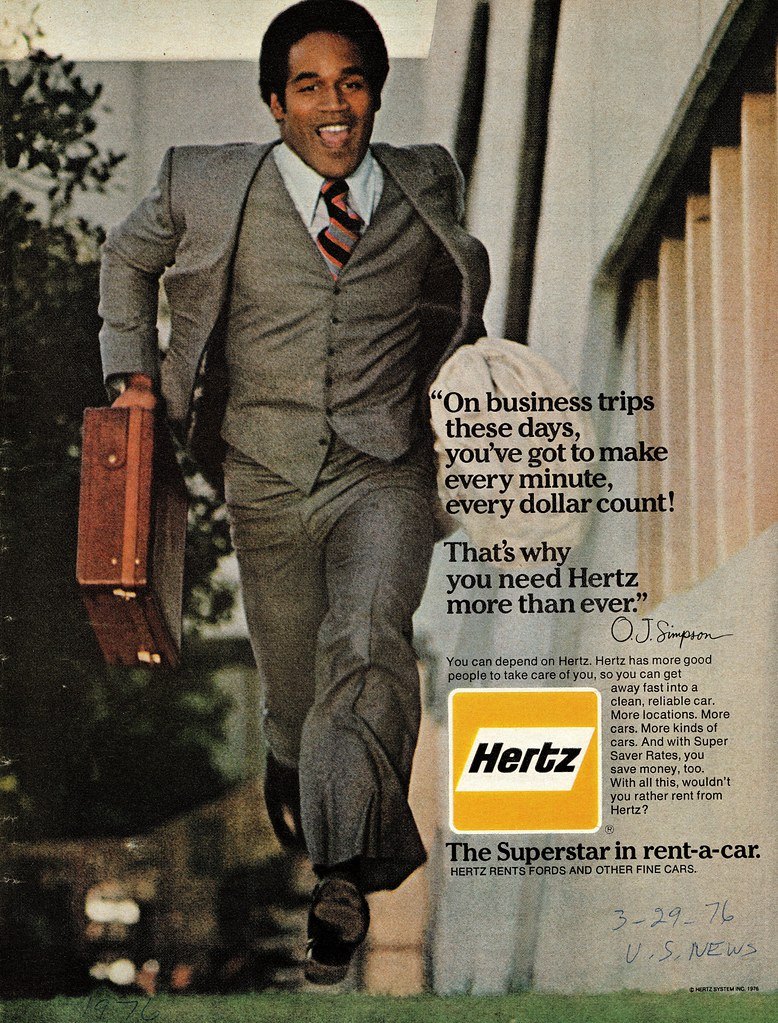
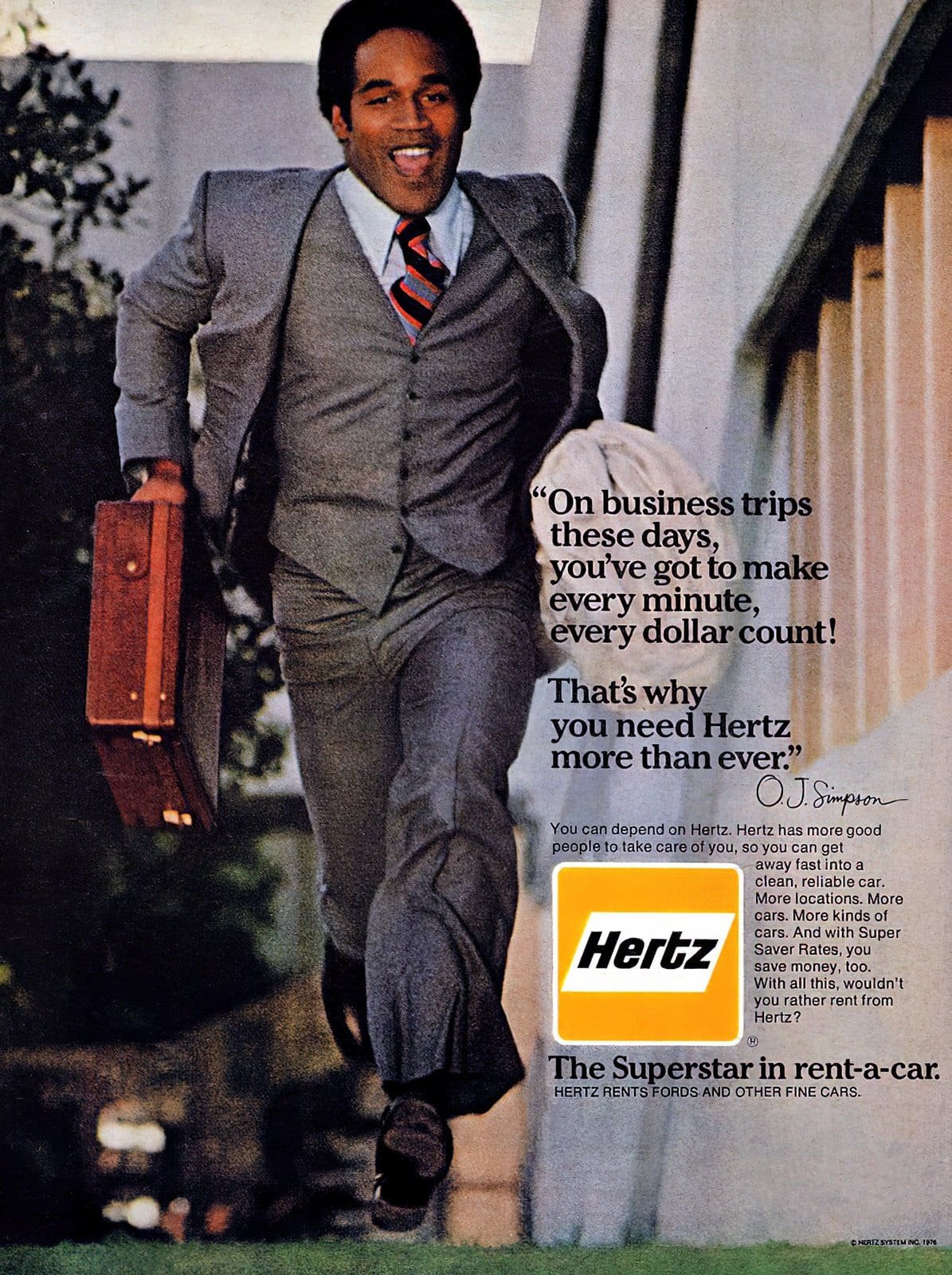
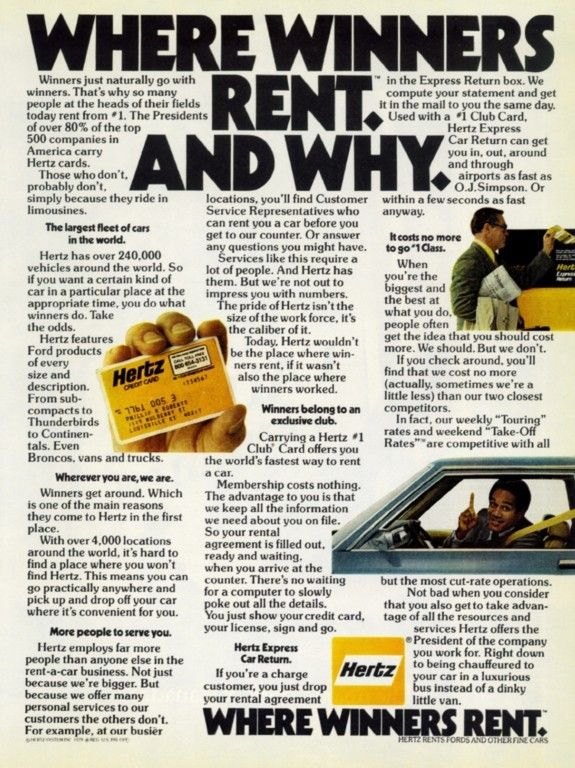
Film
Same shape of problem.
Avis made being number one sound slow. Hertz answered with a man vaulting airport seats.
Back to the archive →