Sainsbury's · Abbott Mead Vickers
Good Food Costs Less at Sainsbury's
A supermarket caught in a price war stopped arguing about price and let a page of copy about one food at a time do the persuading.
The era.
In June 1977 Tesco dropped Green Shield stamps and cut prices across its stores under the name Operation Checkout. The move is reported to have lifted its share of the grocery market from about seven per cent to about twelve within a year. For the first time the quiet competitor had made price the whole conversation, and the rest of the trade had to answer.
Sainsbury's was trading well. Its 1980 press release headlined a forty-one per cent rise in profit, and it would hold the number-one position until Tesco finally passed it in the mid-1990s. The five biggest grocers together held thirty-one per cent of the trade in 1980 and thirty-three in 1982, and the shift from the high street to the big self-service store was most of the way done.
Press advertising was still where a retailer made an argument. Television could announce an offer; a double-page spread in a Sunday magazine supplement could explain why a cheese tasted the way it did. Abbott Mead Vickers, three years old in 1980, had made its name on print and had no television reel to speak of.
The culture.
Shopping for food had become a weekly drive to a large store with a car park. The housewife of the trade's imagination was being spoken to in numbers: pence off, this week only, compare our prices. Nobody in the aisle was being treated as someone who might want to know where the Stilton came from.
At the same time Britain's eating was changing. Wine was moving from the specialist wine shop to the supermarket shelf, pasta and French cheeses were arriving in ordinary trolleys, and a growing part of the public wanted a shop that could tell them what to do with a mango. The supermarket that could play the knowledgeable grocer, at supermarket prices, had an opening nobody else had taken.
Advertising in London had its own confidence. Doyle Dane Bernbach's London office had trained a generation to believe a page of honest copy could outsell a slogan, and David Abbott, who had run that office, was now writing for his own agency.
The problem.
Tesco had turned grocery into a price fight, and every ad Sainsbury's ran about price made it look like one more shop shouting numbers.
Sainsbury's marketing director, Peter Davis, was unhappy with the work Saatchi & Saatchi was producing for him. It was mostly television, and it leaned on price. In a market Tesco had just turned into a price war, that made Sainsbury's sound like everybody else, and it said nothing about the thing Davis believed set the company apart: the quality of its fresh food and its own-label range.
He wanted a high-profile press campaign that made the case for quality. The difficulty was that the company had a strapline it was not willing to give up, Good food costs less at Sainsbury's, and that line was a price promise. The brief was to sell quality without dropping the promise of cheapness, and to do it in print, against a competitor whose whole argument fitted on a shelf-edge ticket.
Peter Davis, marketing director of Sainsbury's, was unhappy with the price-led television work Saatchi & Saatchi was producing and wanted a high-profile press campaign for quality. He had noticed Abbott Mead Vickers' 1978 house ad in Campaign and gave the agency the account after one meeting, without a competitive pitch. Richard Foster, who later wrote the campaign, is the single detailed source for the business situation.
The solution.
Keep the price promise in the strapline, then earn it with the food: one product, one page of photography, one page of copy, and the store's name in every headline.
Davis gave Abbott Mead Vickers the account after a single meeting, with no pitch against other agencies. What had caught his eye was a house ad the agency had run in Campaign in 1978, a photograph of its five principals under the line How long can these men survive without food? Abbott agreed to keep the strapline but refused a separate logo. In its place he promised that the word Sainsbury's would appear in every headline, so the name and the argument arrived together.
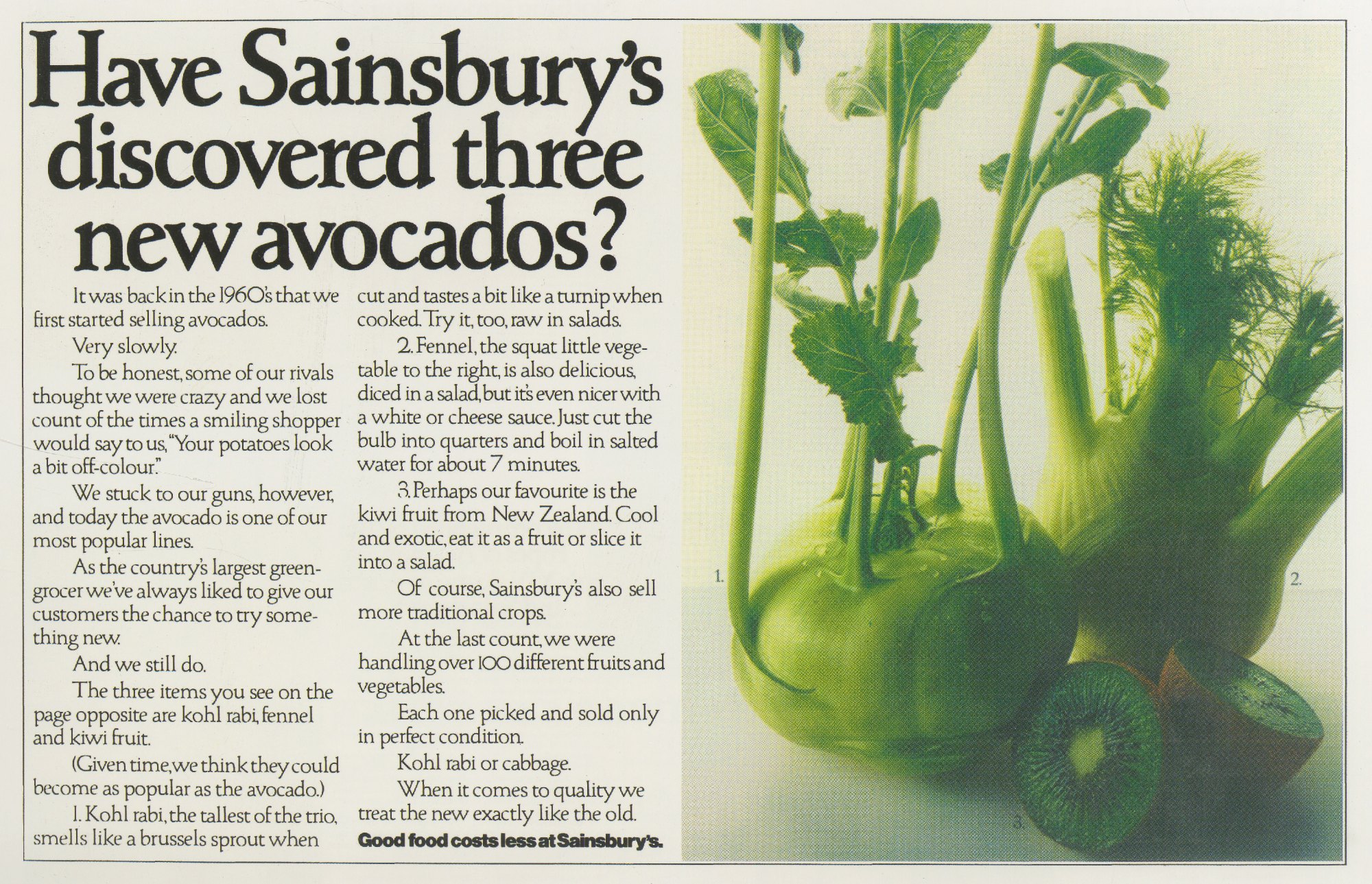
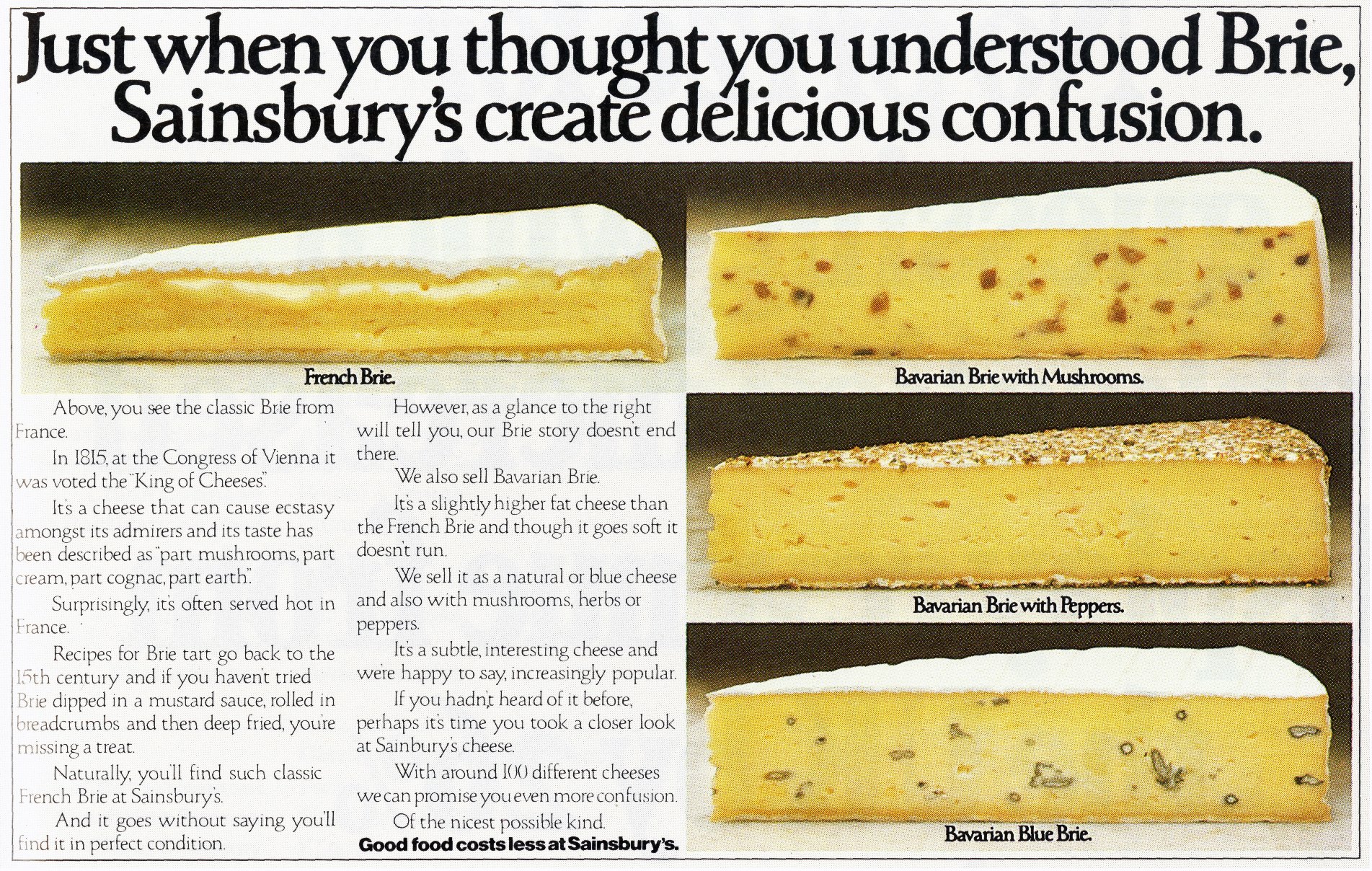
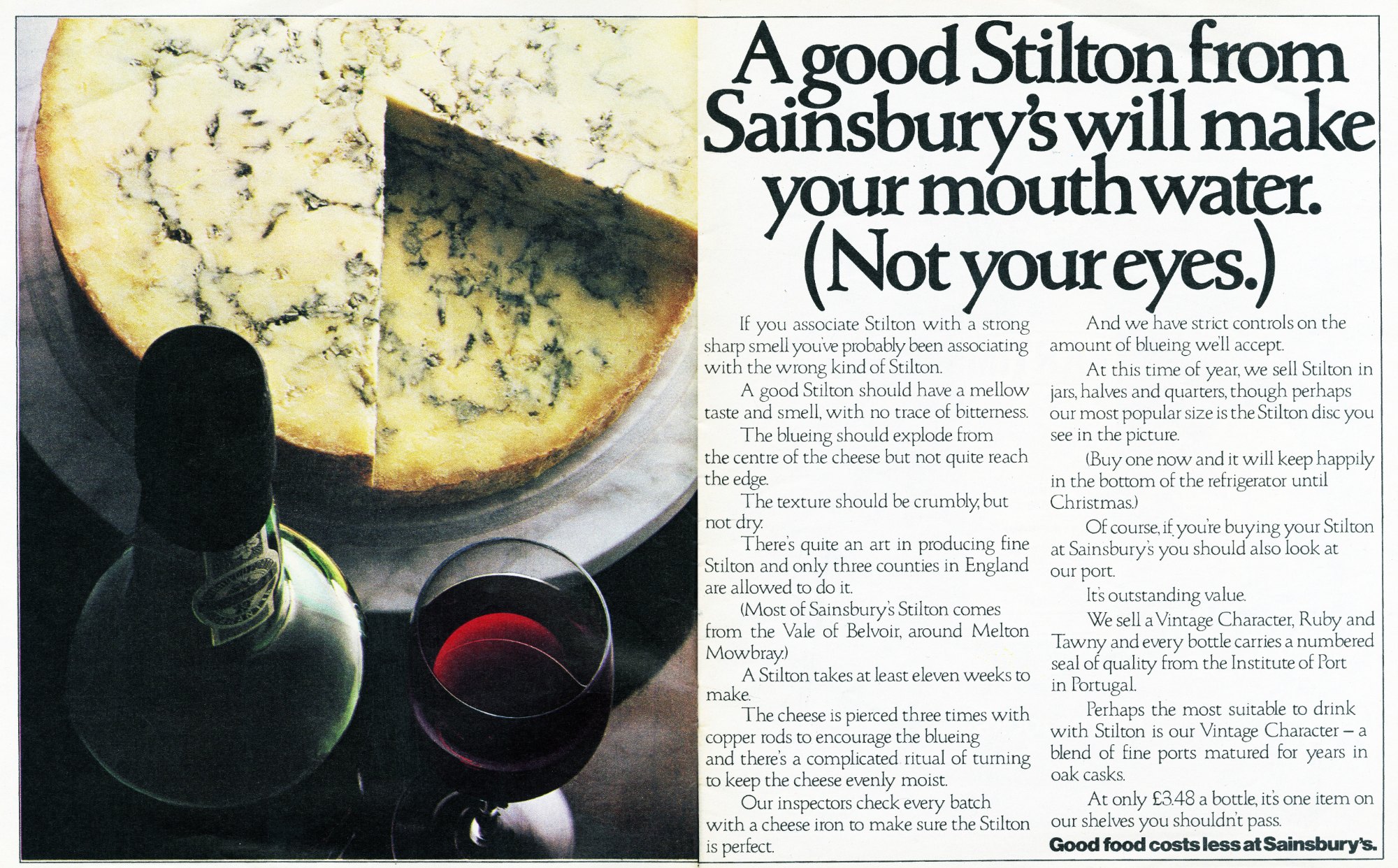
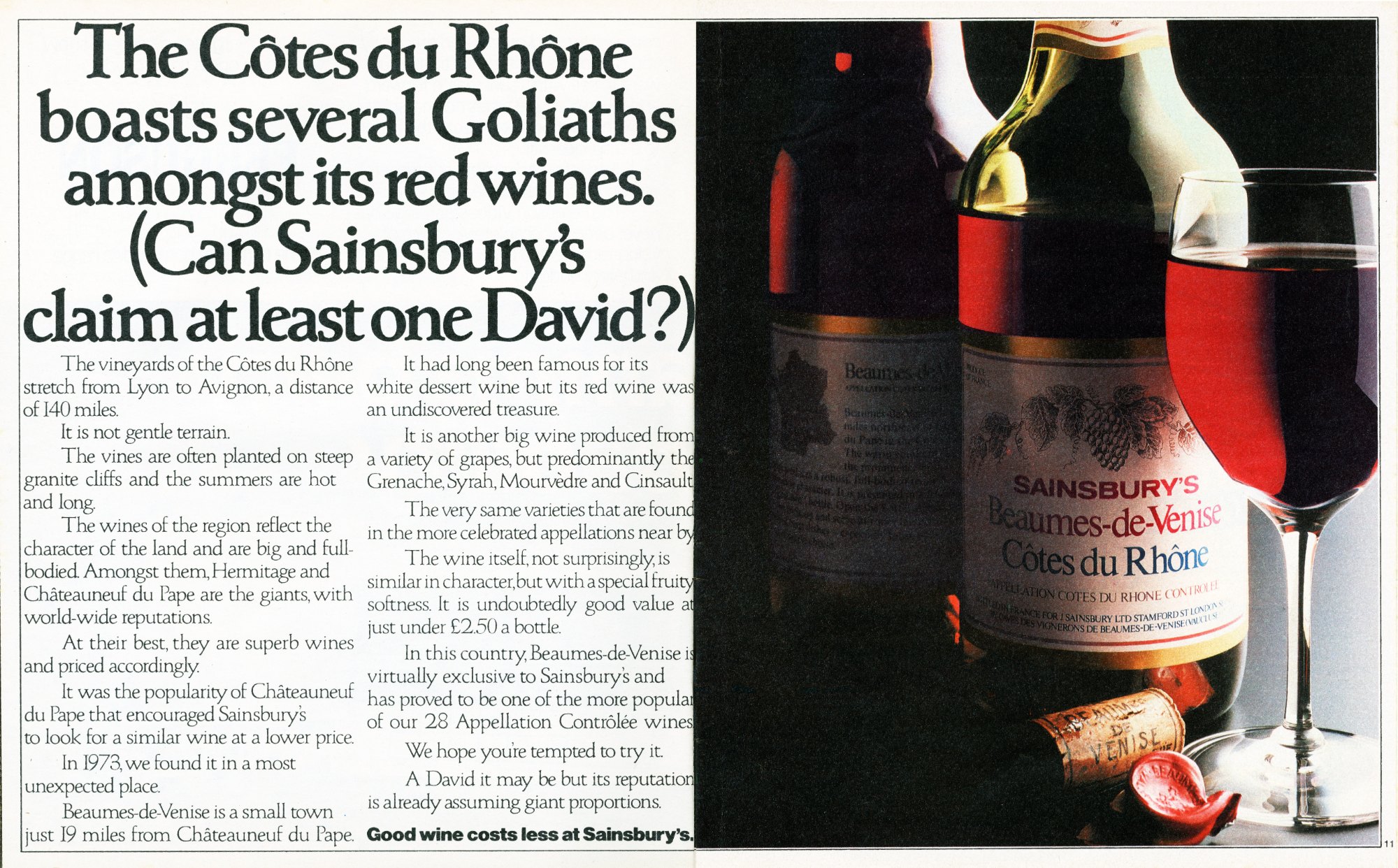
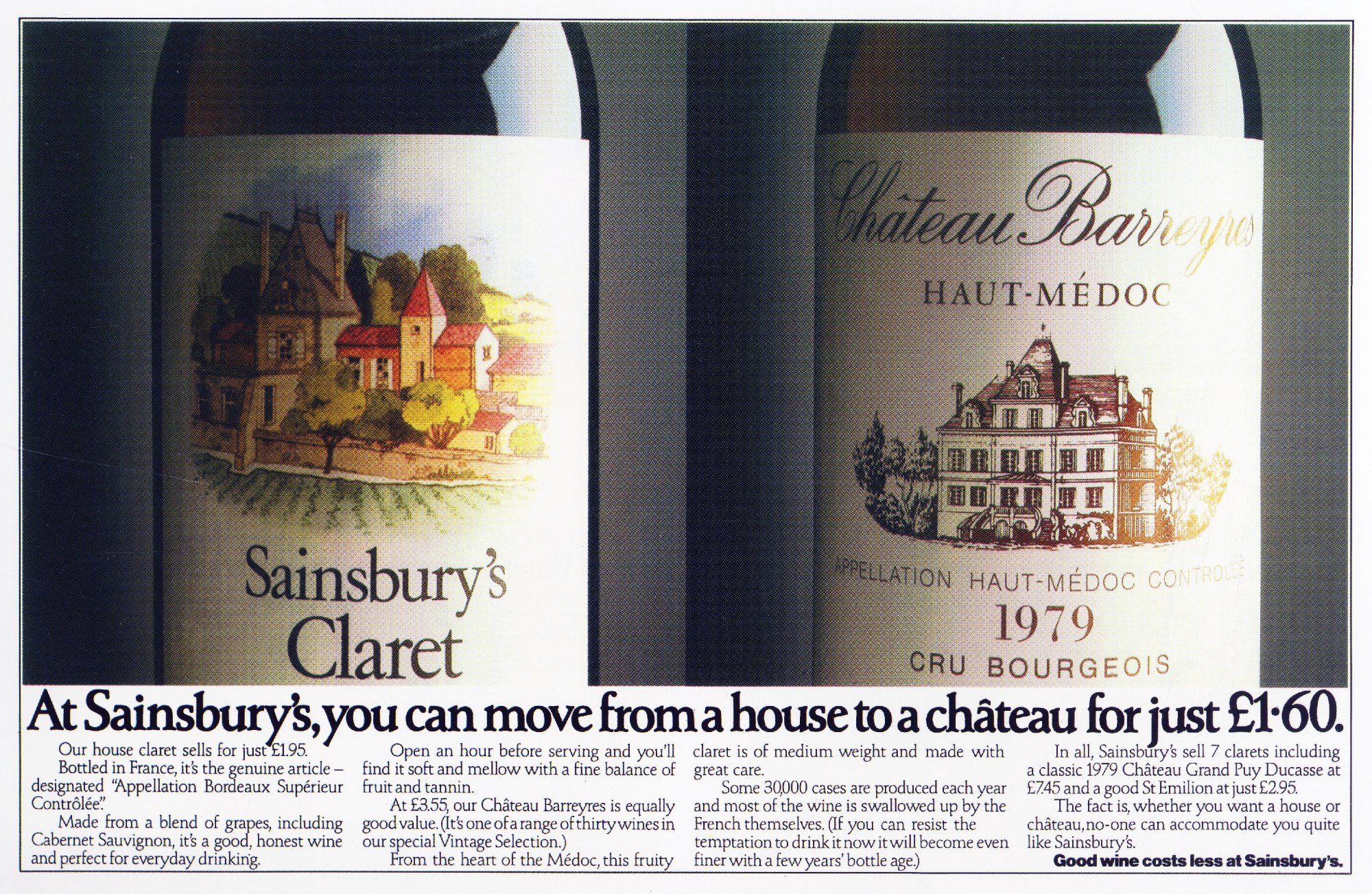
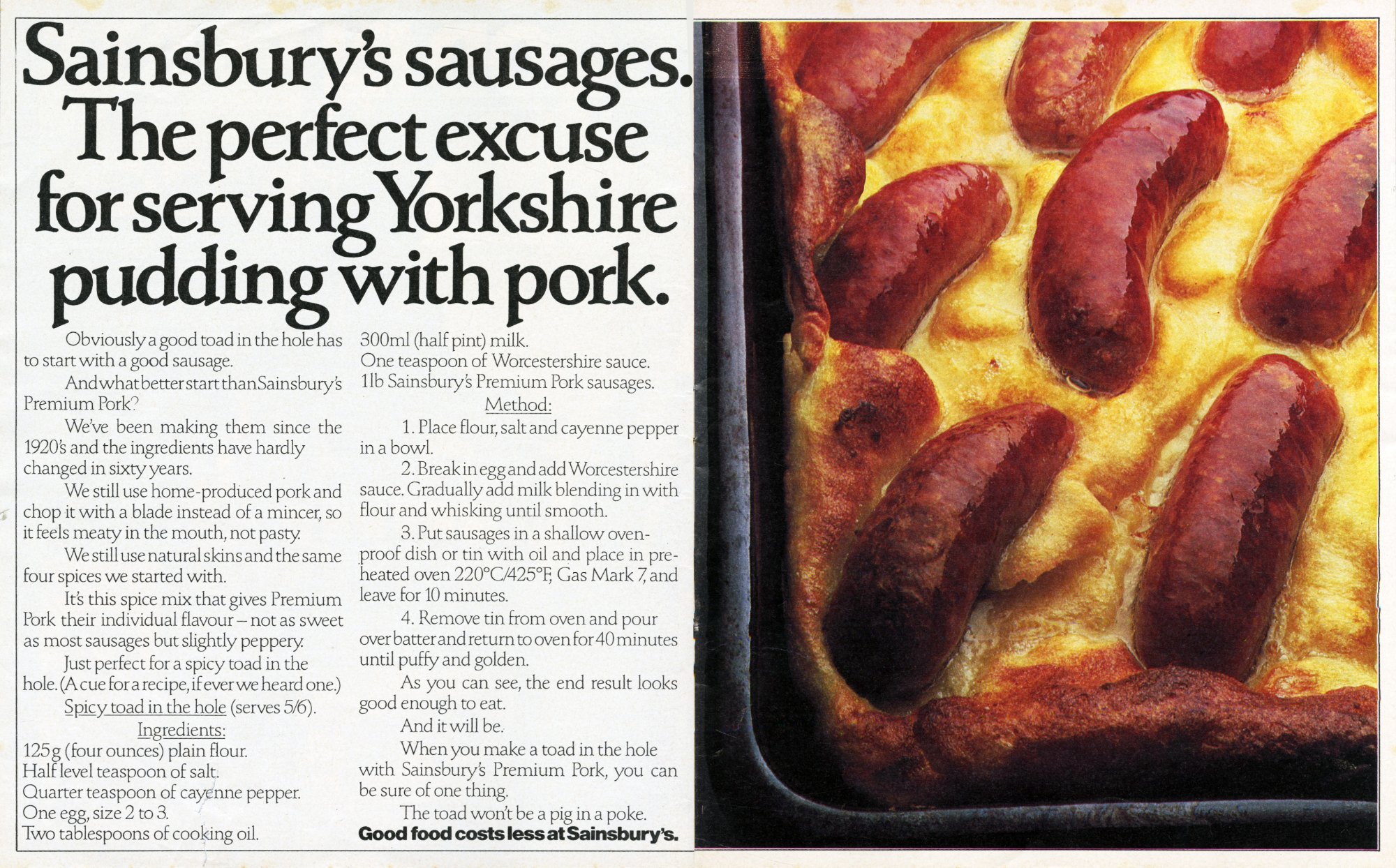
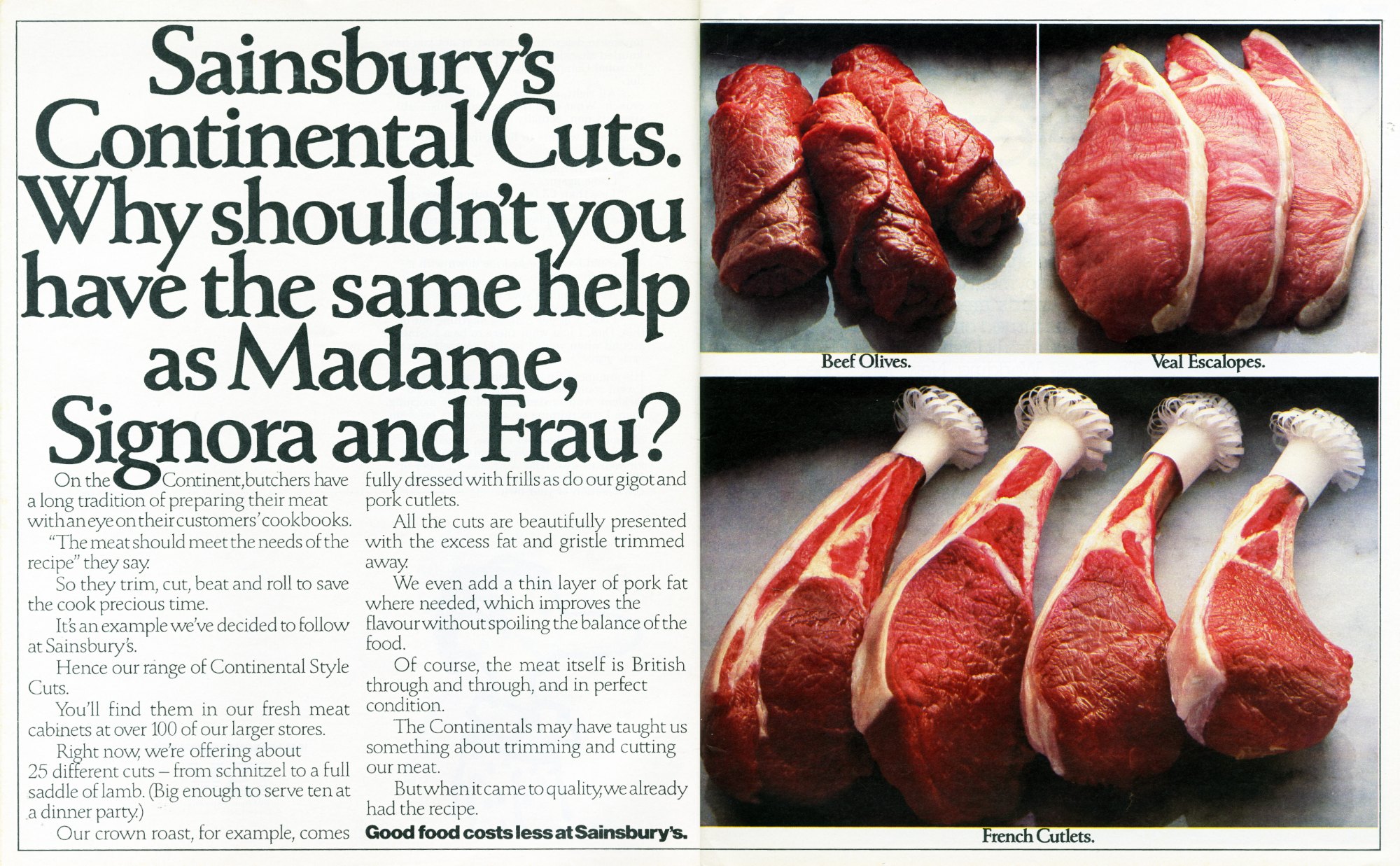
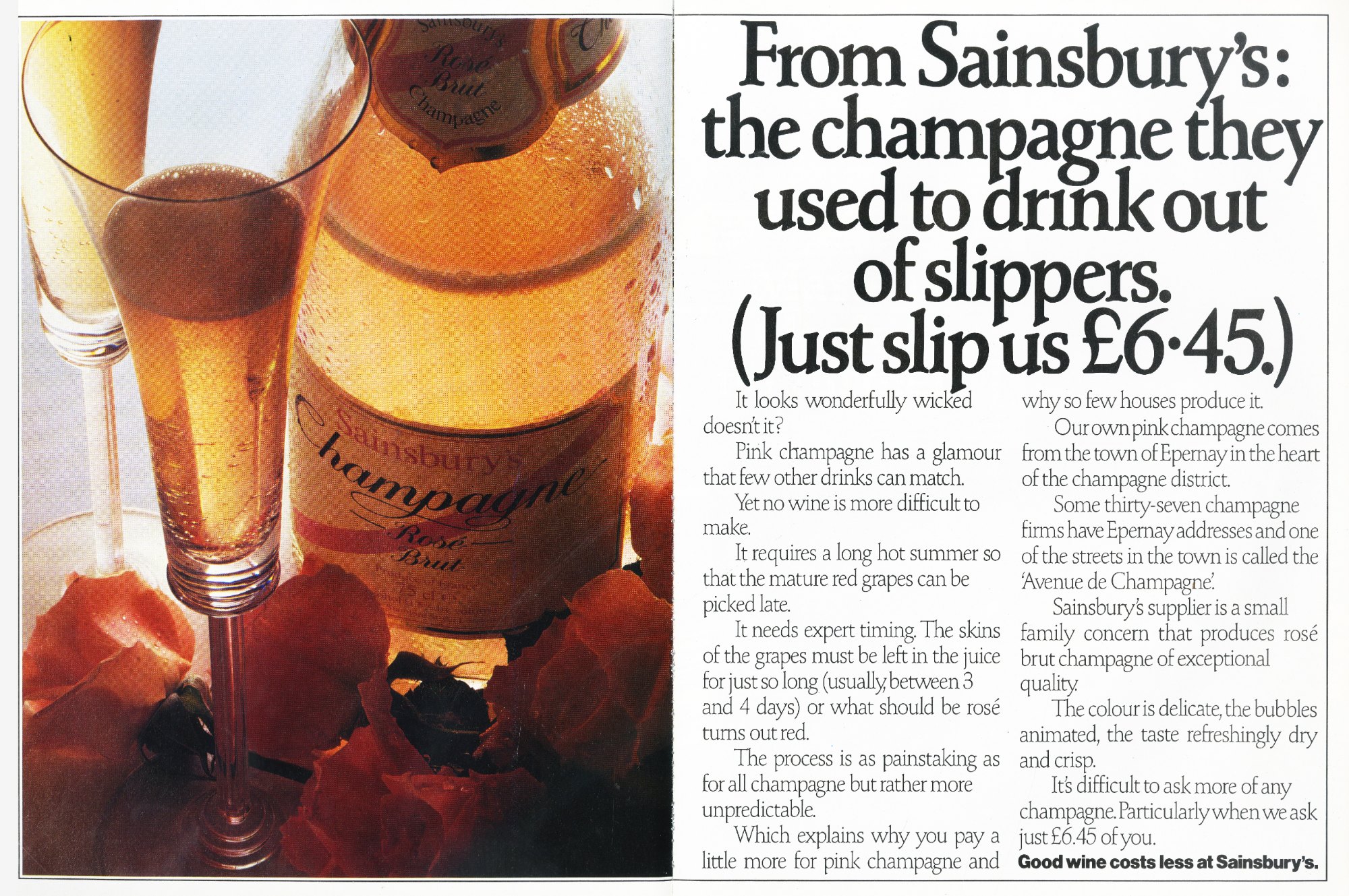
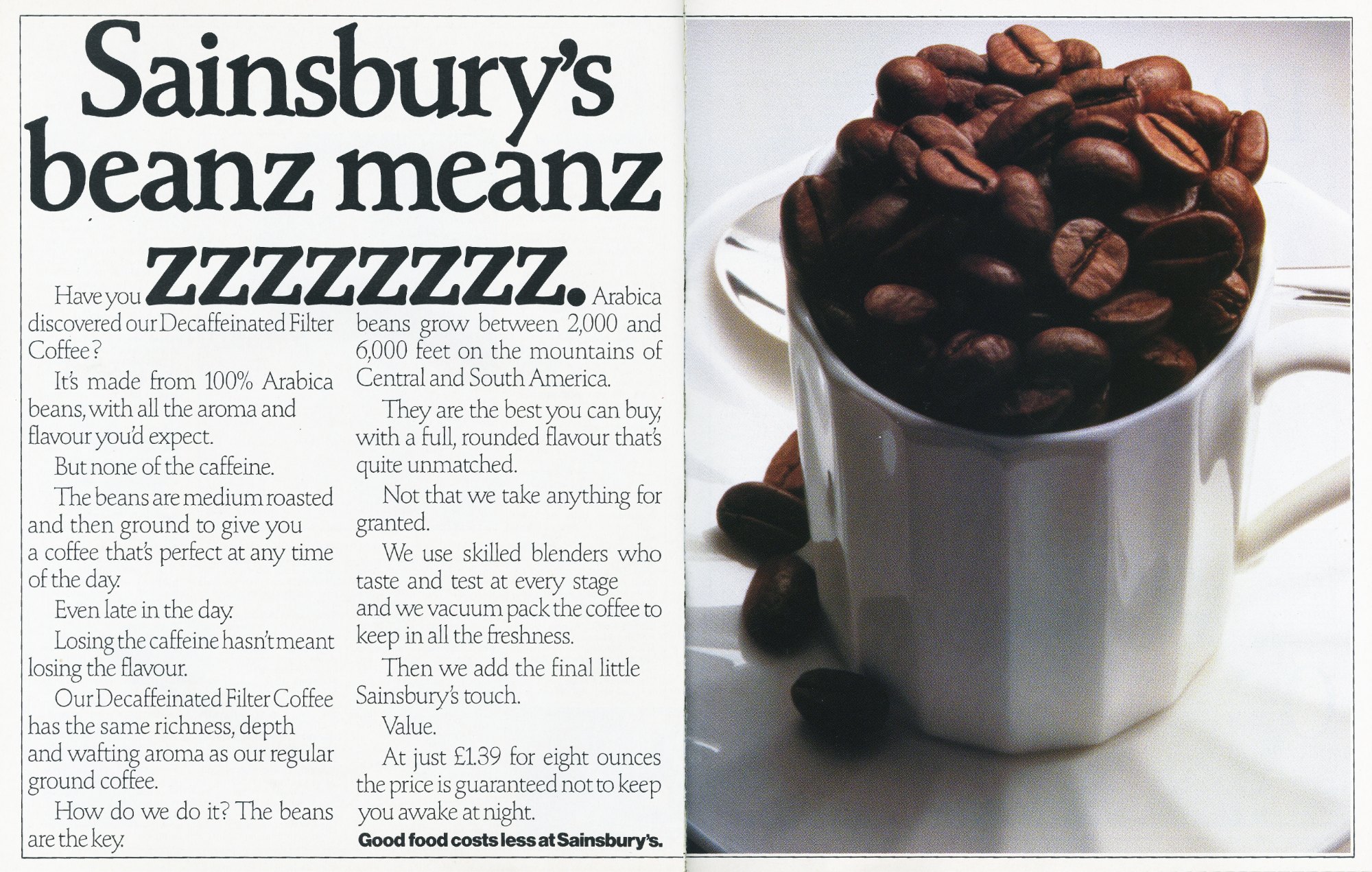
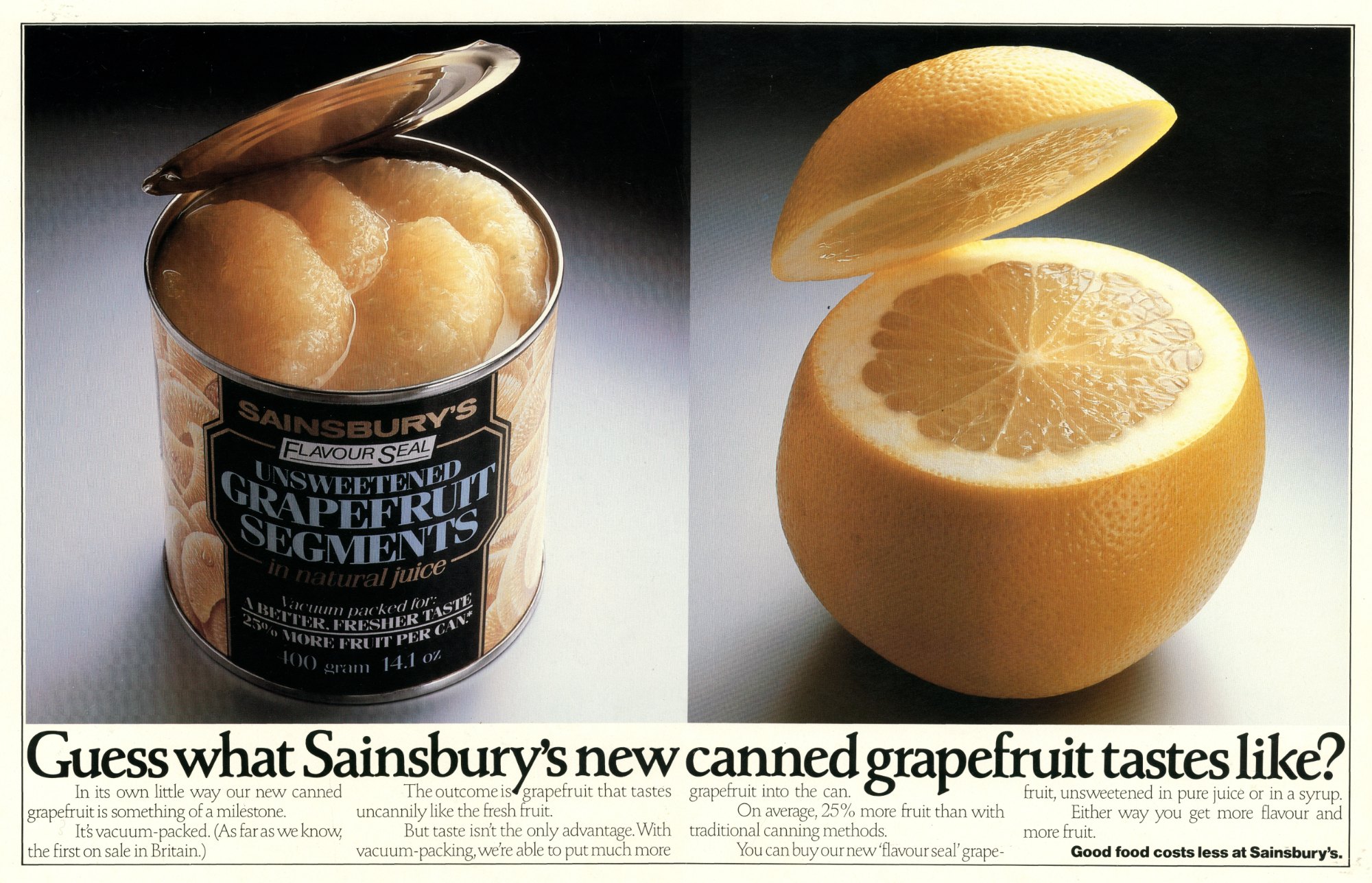
Before a layout was drawn, the team spent time with Sainsbury's buyers collecting product facts. Those facts became the campaign. Each execution took one product and told its story: how the Brie was chosen, why the mince had no fat, what the buyers had found in the Rhône. Paul Gummer, the agency's senior media buyer, devised the format that made it affordable, a full page of food photography facing a black-and-white page of long copy, so the company could run twelve spreads a year. Martin Thompson shot most of the food. Ron Brown, Abbott's art director since their Doyle Dane Bernbach days, set the pages. Black-and-white newspaper ads carried the week's offers and closed on the same strapline, so the price promise was always kept.
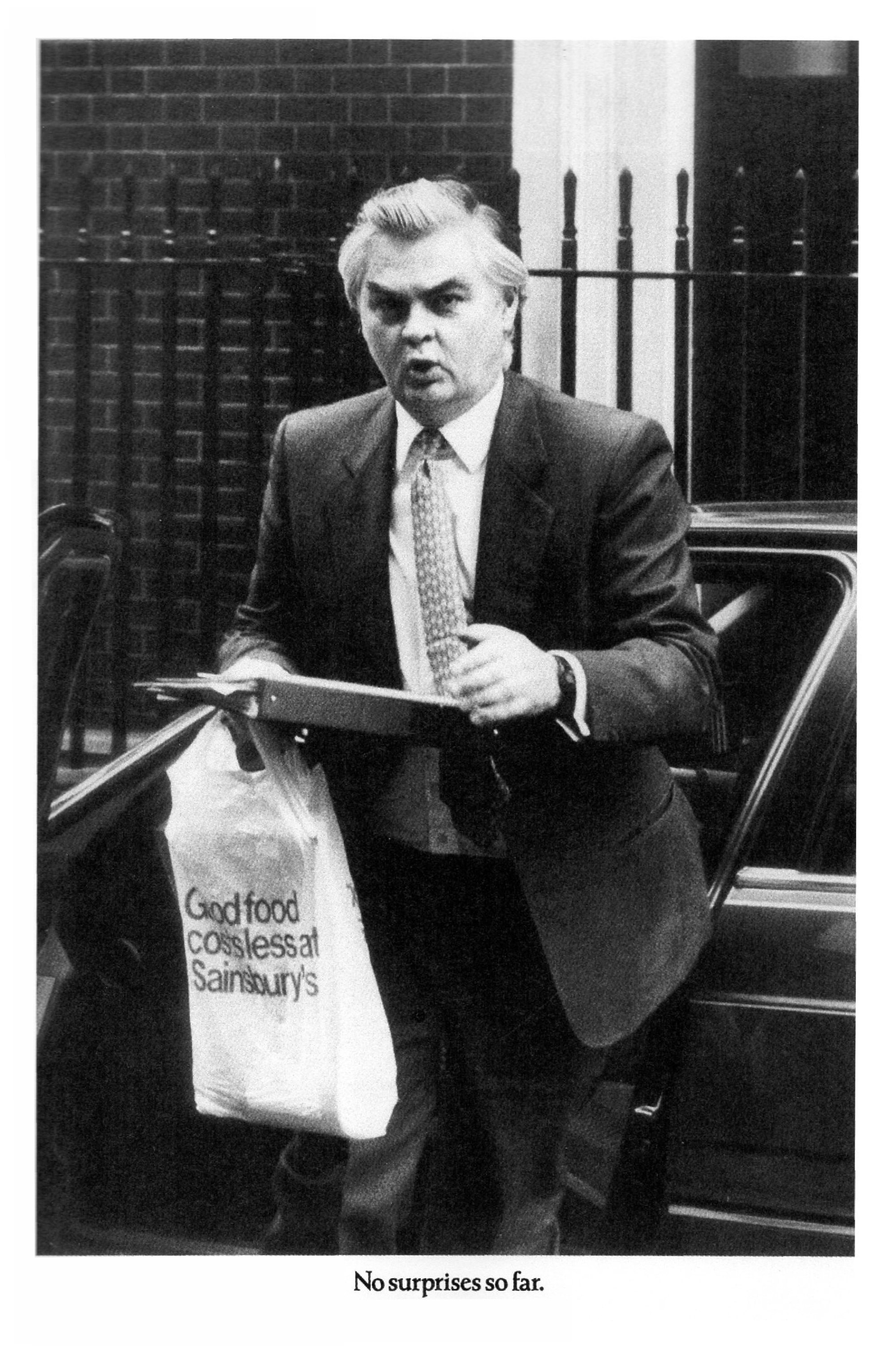
It worked because it refused the fight. Tesco could only ever be cheaper; Sainsbury's became the shop that knew about food and happened to cost less. Abbott's rule, that a small admission gains a large acceptance, ran through the copy. The potato ad admitted in its headline that the store relied on its growers. The Brie ad admitted the cheese was confusing. Each confession bought the reader's trust for everything that followed. The campaign ran for the best part of a decade, more than forty spreads by Tony Brignull's count, and about five years in Abbott handed it to Richard Foster and John Horton with his blessing.
The work.
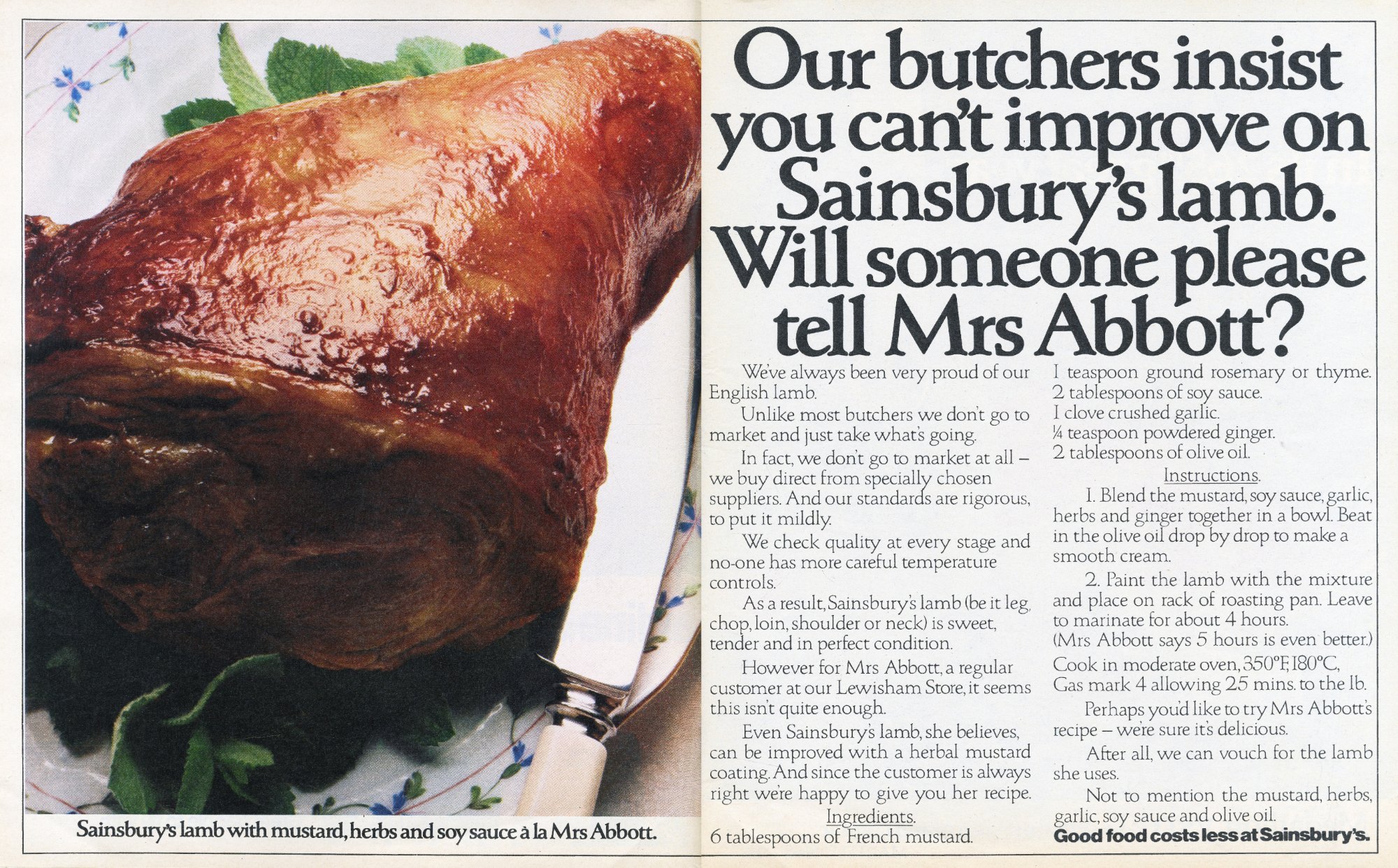
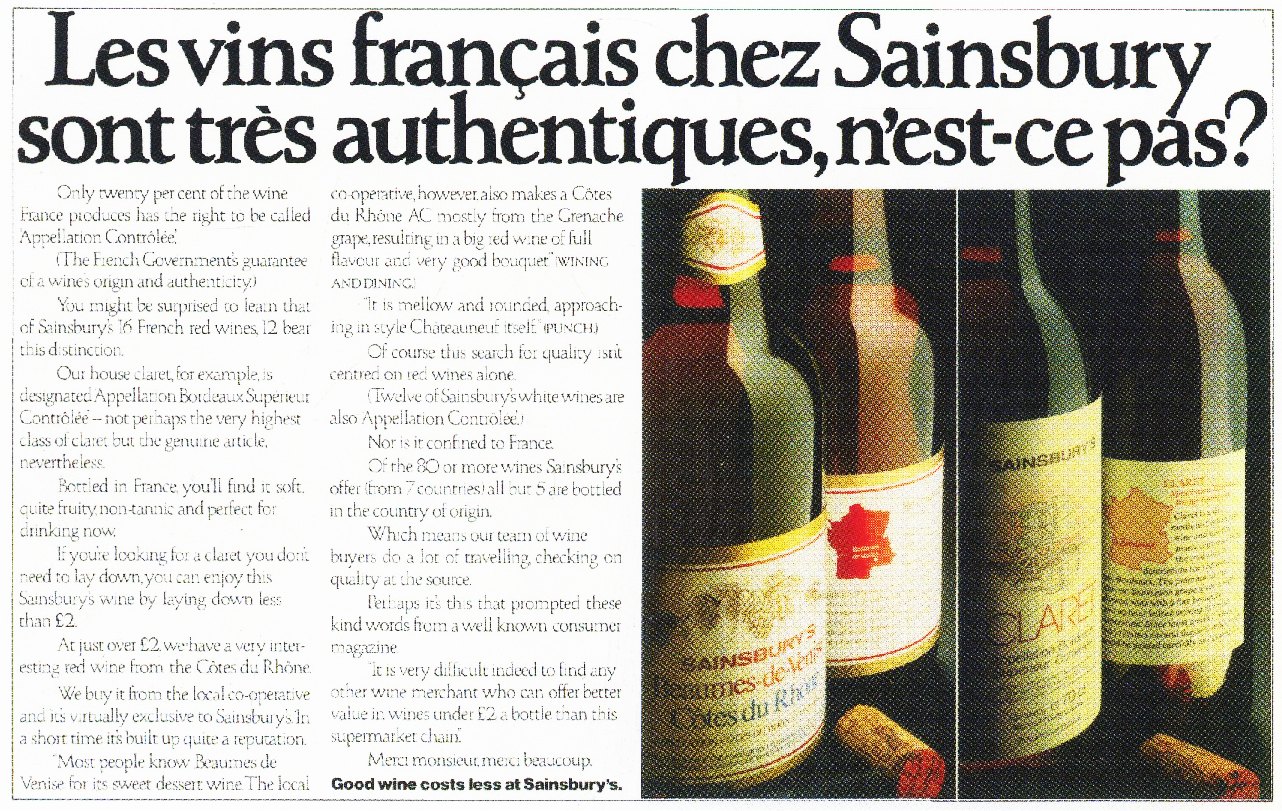
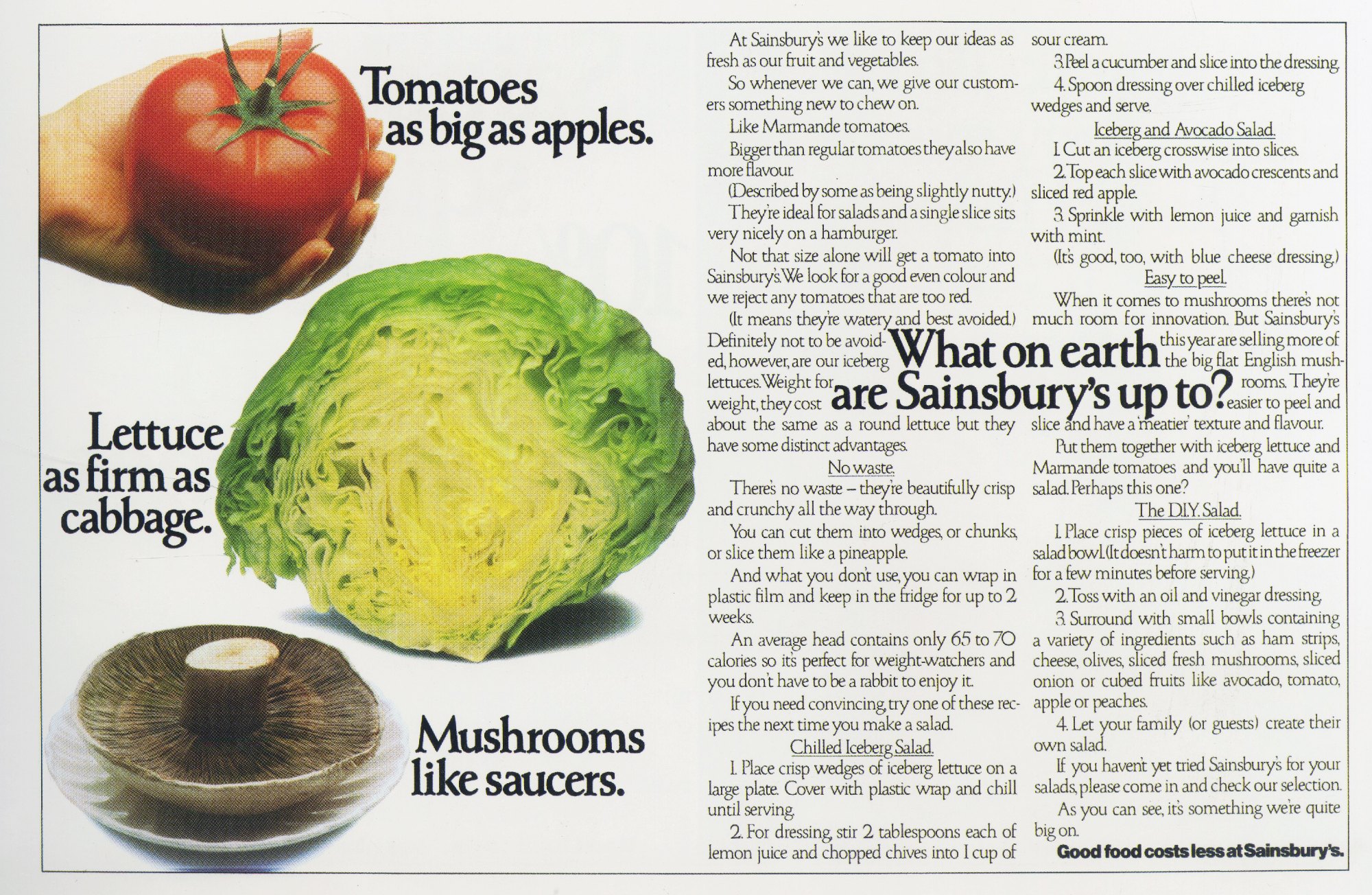
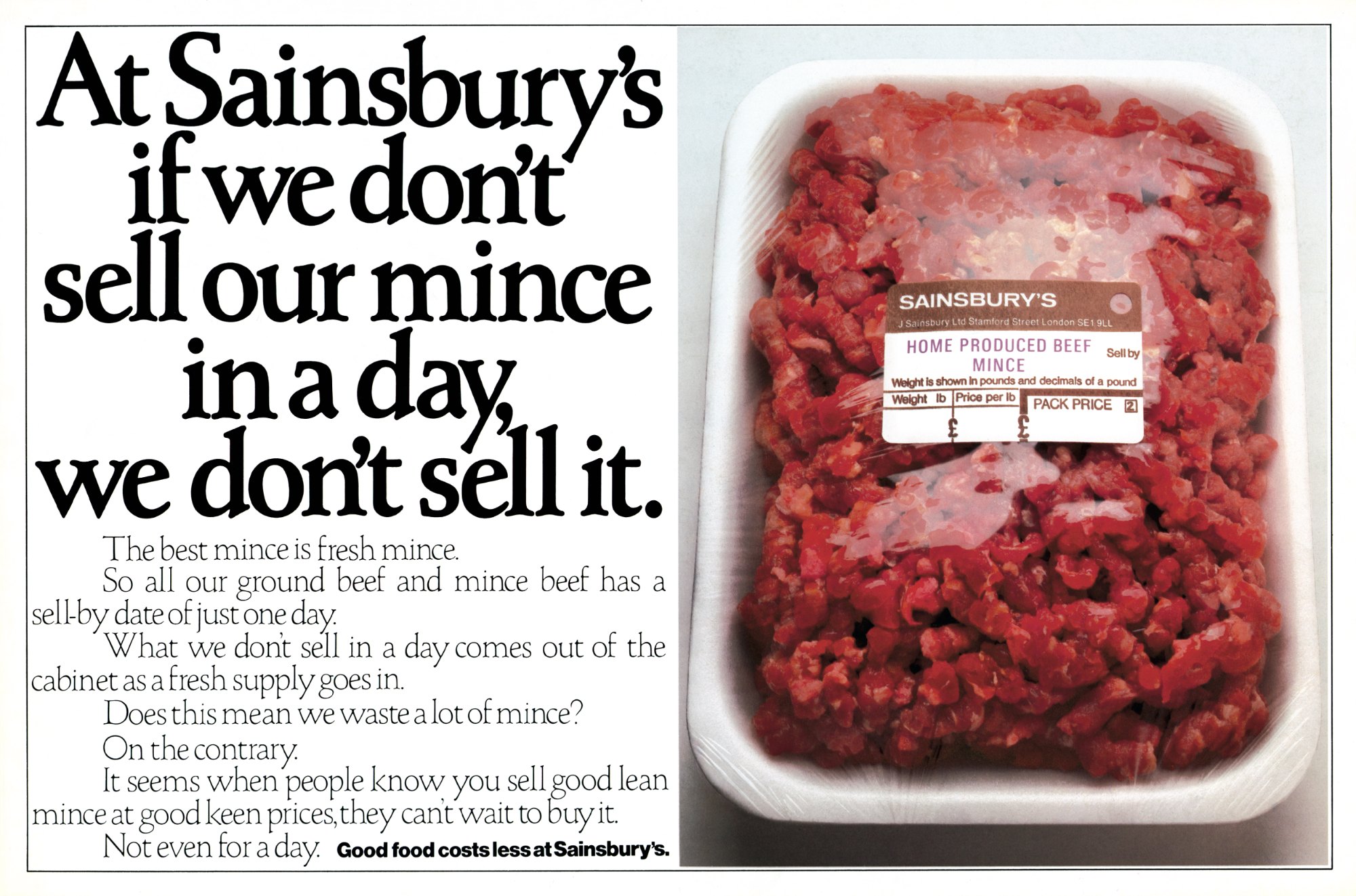
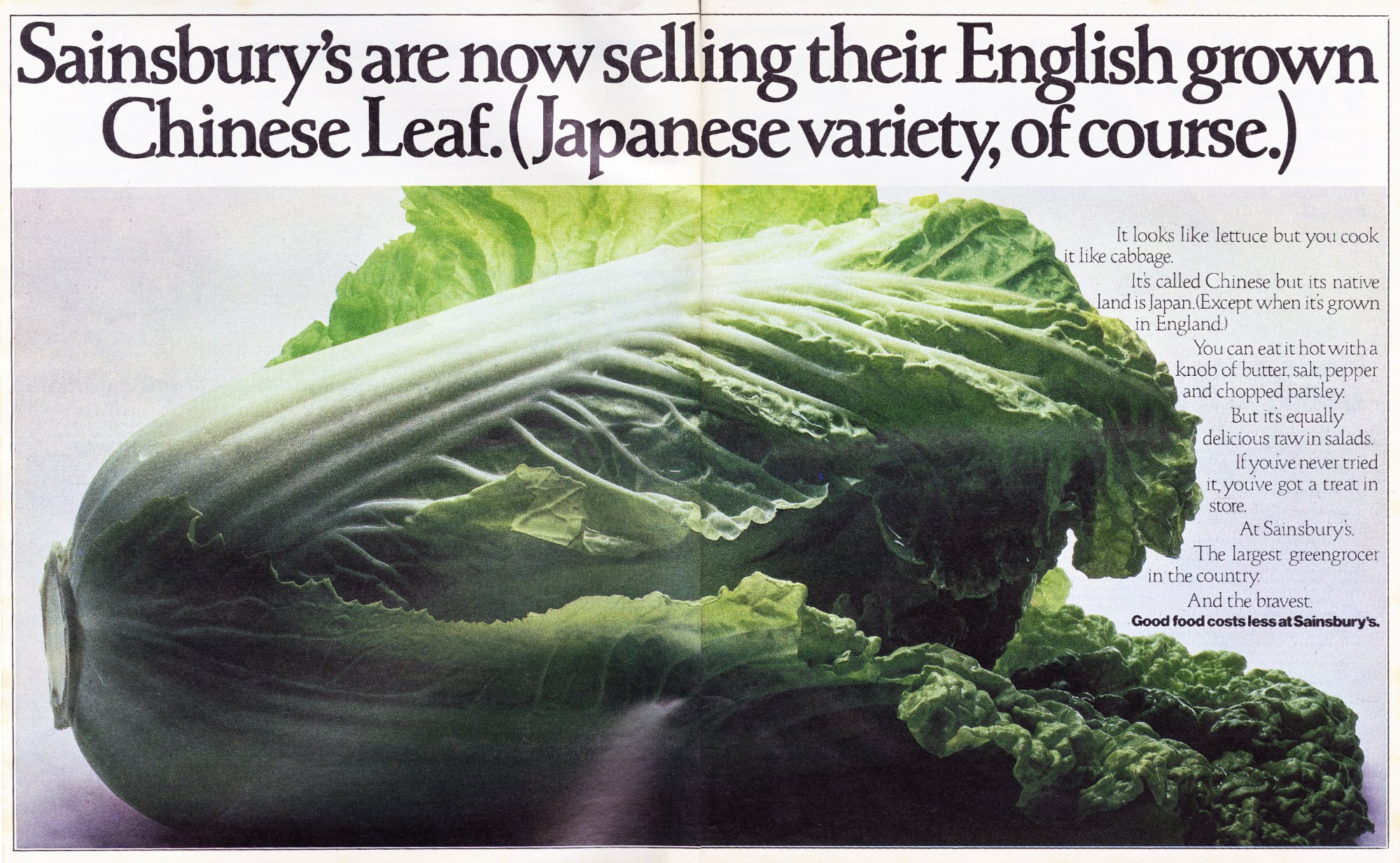
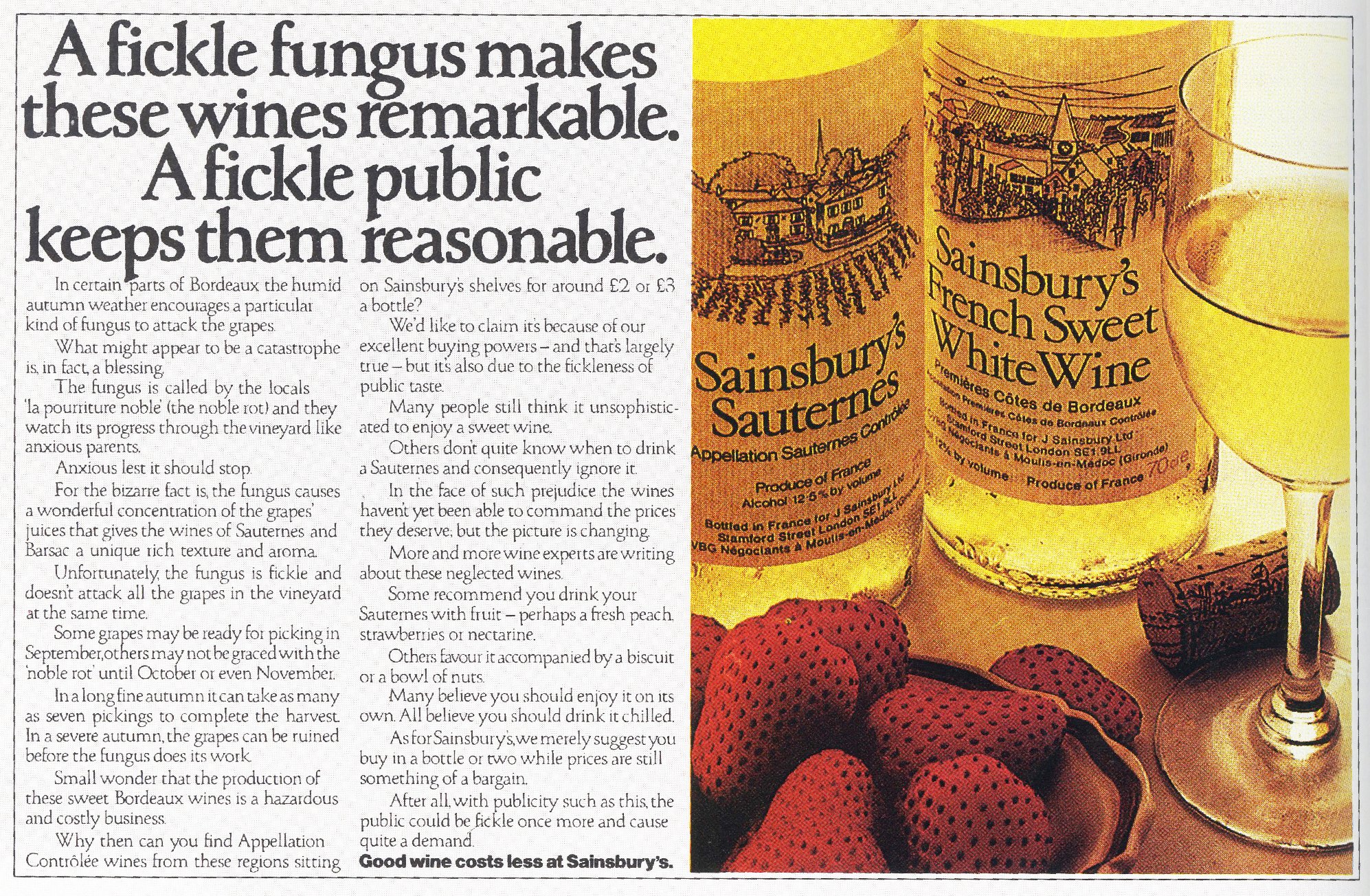
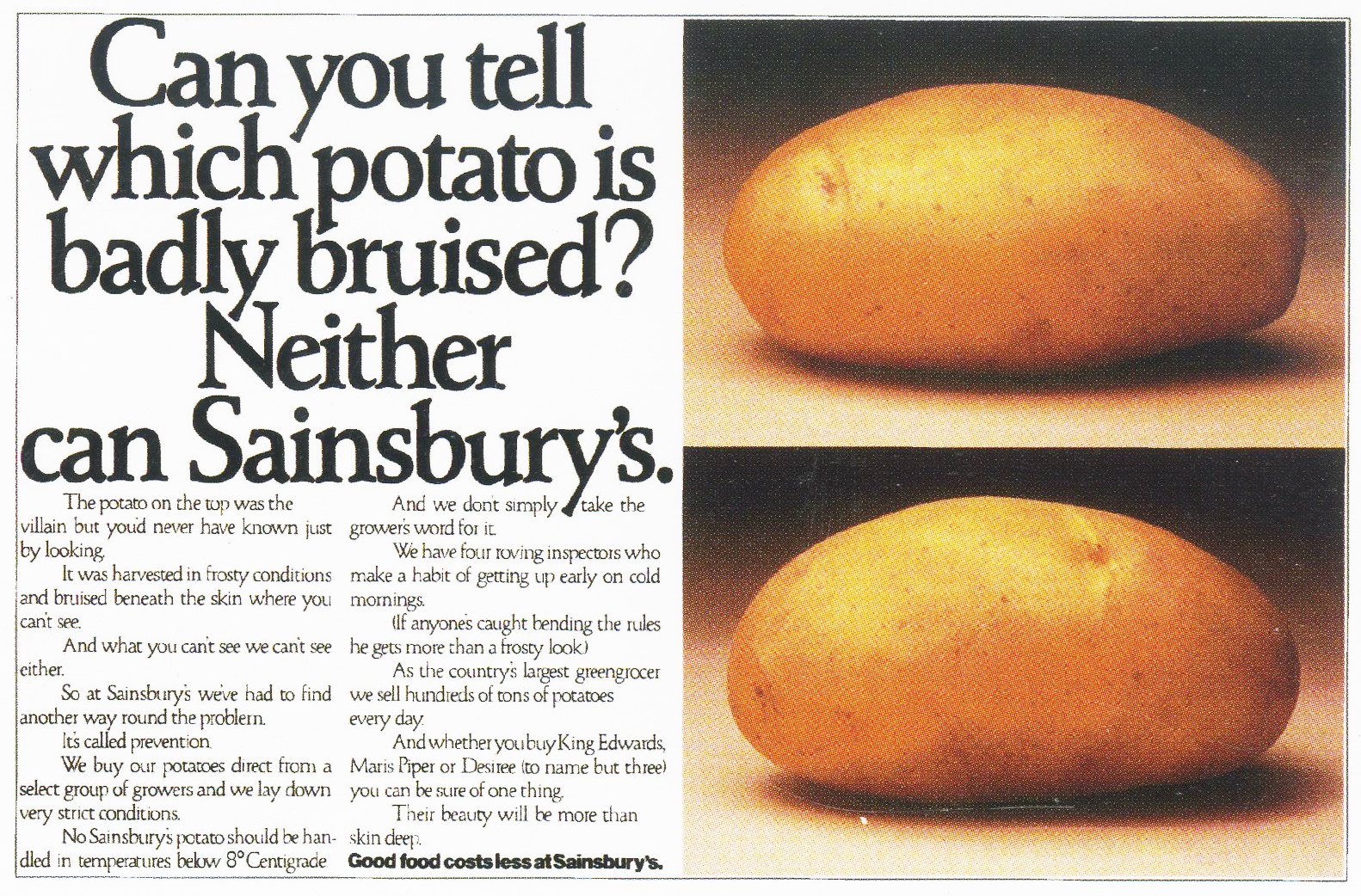
Same shape of problem.
A supermarket in a price war with Tesco put the word Sainsbury's into every headline and spent the rest of the page talking about food.
Back to the archive →