New York City Off-Track Betting · Lois Holland Callaway
You're Just Right for the Bets
A city-run betting operation borrowed the goodwill of New York's own celebrities, for free, to make a two-dollar bet feel like civic sport.
The era.
New York State authorized off-track betting at the end of its 1970 legislative session, as New York City faced a projected budget gap of about $630 million. Governor Nelson Rockefeller signed the law in April 1970. It created the New York City Off-Track Betting Corporation, the first legal off-track pari-mutuel operation in the country. The stated aims were to take business from illegal bookmakers and to raise money for the city and the state.
Mayor John Lindsay chose Howard Samuels, a businessman and former state senator, to build it. Off-Track Betting opened on 8 April 1971 with betting windows in Grand Central Terminal and a shop in Forest Hills, Queens. The Grand Central windows were ten light blue booths that had once sold New Haven Railroad tickets. Lindsay cut the ribbon at 10:51 a.m. Samuels had predicted $10,000 in bets on the first day. Bettors put down about $66,000, and some queued for two hours.
By the end of its first year Off-Track Betting had more than 50 parlors across the five boroughs and a daily handle of about $1.2 million. It was also visibly improvised. The betting machines arrived late, clerks wrote wagers by hand on three-part slips, and bets came only in fixed amounts of $2, $10, $50 and $100. Annual profit paid to the city peaked in 1974, at $43 million.
The culture.
Legal or not, betting on horses in New York still carried the air of the bookie and the poolroom. Off-Track Betting's parlors were built to discourage lingering. They had no chairs, no food or drink and no bathrooms. In March 1972 the New York Times reported that the corporation was saving money by doing without security guards or cleaners in its shops.
That design kept away the customers a public corporation most needed: women, office workers and the casual bettor who might put two dollars on a big race and go home. Lois later said he believed Off-Track Betting could double its take if its advertising persuaded everyone, and not only the regulars, that a bet there was a normal thing to do.
New York also had a large supply of celebrities who thought of themselves as New Yorkers first. Broadway stars, comedians and athletes lived in the city's newspapers and on its local television. Lois treated that affection as an asset the city could draw on. His offer to performers was plain: appear for nothing, and be seen in a citywide campaign standing up for New York.
The problem.
A city-run betting shop needed respectable customers, and its own parlors told them to stay away.
New York City's Off-Track Betting Corporation opened its first windows on 8 April 1971, at Grand Central Terminal and in Forest Hills, Queens. It was a public body with a back-room image. Its regulars were the bettors it had taken from the bookmakers, and they were not enough to make the numbers the city wanted.
The people who stayed away saw a smoky room with no seats and a line of men holding racing forms. A public corporation could not spend like a brewery or a cigarette company, and its advertising would be judged by politicians and newspapers as well as bettors. The task was to change who felt welcome at the window, quickly and cheaply.
By Lois's account, Mayor John Lindsay asked him what he thought of Off-Track Betting, and Off-Track Betting gave him the job of popularizing it. Howard Samuels, Lindsay's choice, ran the corporation until Paul Screvane took over in March 1974. The brief was to make betting at its windows socially acceptable.
The solution.
Recruit the city's best-loved stars for free, dress them in a team shirt, and turn a bet into another way of rooting for New York.
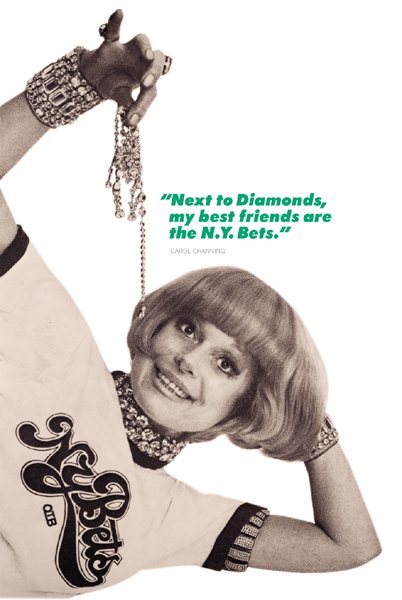
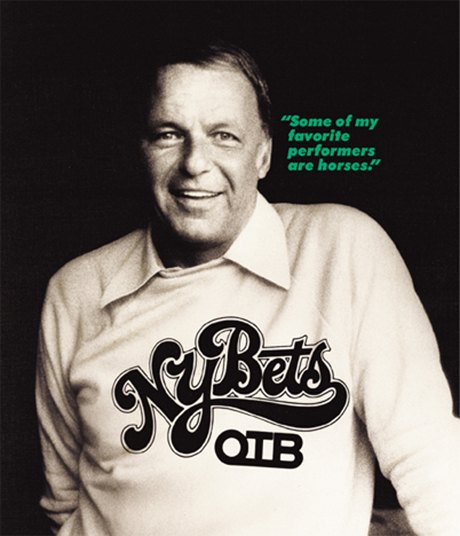
Lois presented Off-Track Betting as New York's other team. Celebrities appeared in "New York Bets" T-shirts, in television spots and in full-page newspaper ads, under a rhyme that placed the bettor beside the city's sports teams: "You're too heavy for the Mets? You're too light for the Jets? You're too short for the Nets? You're just right for the Bets!" The stars worked without fees in exchange for the exposure. Carol Channing, Jackie Gleason, Bob Hope, Rodney Dangerfield and Professor Irwin Corey are among those in the ads Lois kept. By Lois's account Frank Sinatra called to ask for a shirt and was then put in the campaign. Lois says Off-Track Betting's annual handle rose to about $1.8 billion, and that business fell after the next mayoral administration moved the account to another agency.
The work.
Film
By George Lois's account, Frank Sinatra phoned to ask for one of the T-shirts.
Back to the archive →