Rolling Stone · Fallon McElligott Rice
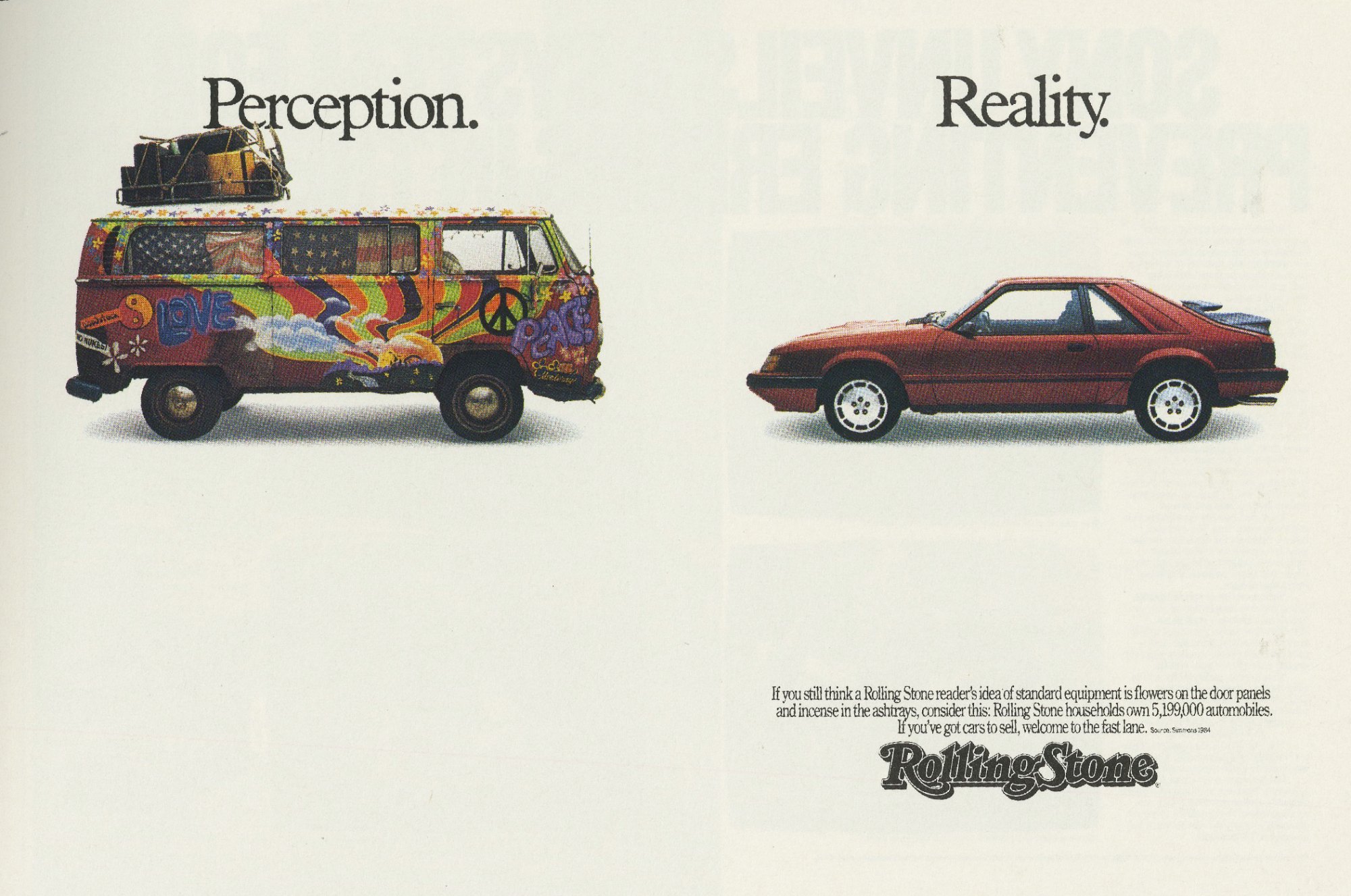
Perception. Reality.
A trade campaign aimed at media buyers that fixed a magazine's image problem with two words and two pictures, and became the model for every 'what you think versus what is true' ad since.
The era.
Rolling Stone was founded in San Francisco in 1967 by Jann Wenner, then 21, with the jazz critic Ralph J. Gleason as his partner. The first issue was put together in a loft at 746 Brannan Street, above a printer who gave them the space in exchange for the printing work. It was dated November 9, 1967, and carried John Lennon on the cover.
For its first decade the magazine was the paper of record for rock music and the counterculture around it. In 1977 Wenner moved the operation to New York. In 1981 it dropped newsprint for glossy paper and began running supplements to court advertisers.
By the early 1980s its advertising revenue was falling. The magazine leaned harder on film and television stars for its covers. In 1985 its circulation passed one million copies, mostly bought by men between 18 and 34. The readers had grown up. The magazine's reputation had not.
The culture.
The picture most buyers carried of a Rolling Stone reader was fixed in 1967. That April the San Francisco Chronicle sent a reporter and photographer on a Gray Line sightseeing bus that had added the Haight-Ashbury to its route. Hunter S. Thompson wrote that the tourists treated the neighborhood like a human zoo. The hippie had become a sight to be looked at from a bus window.
Eighteen years later the same generation was in offices. Newsweek called 1984 the Year of the Yuppie, a term a Chicago Tribune columnist had coined two years earlier for young urban professionals. Jerry Rubin, a leader of the 1960s antiwar movement, was working as a Wall Street securities analyst. The money in the country was moving to people in their thirties who had once read Rolling Stone on the floor of a dorm room, and still read it.
Media buying ran on numbers and on gut feeling. A planner choosing magazines for a car or a liquor brand needed to believe the reader was worth reaching and safe to be seen beside. In the trade press, magazines sold themselves with circulation tables and cost-per-thousand charts. Hardly anyone sold a magazine to buyers with an idea.
The problem.
Media buyers were still buying the 1967 reader. The 1985 reader owned a house and a car.
Advertisers and media buyers still connected Rolling Stone's readers with the 1960s counterculture and assumed they had little money to spend. Some feared that running in the magazine could hurt their brands. As Dave Dye put it, people thought its readers were hippies, which was not true, so media companies rarely recommended it.
The real core reader, by the publisher's account, was a working professional who owned a home and a car. The magazine had the audience. It needed the people who placed the advertising to see it.
The agency went to New York to meet the Rolling Stone team, and Jann Wenner briefed them in his Fifth Avenue office. The task was to change how advertisers and media buyers saw the magazine's readers.
The solution.
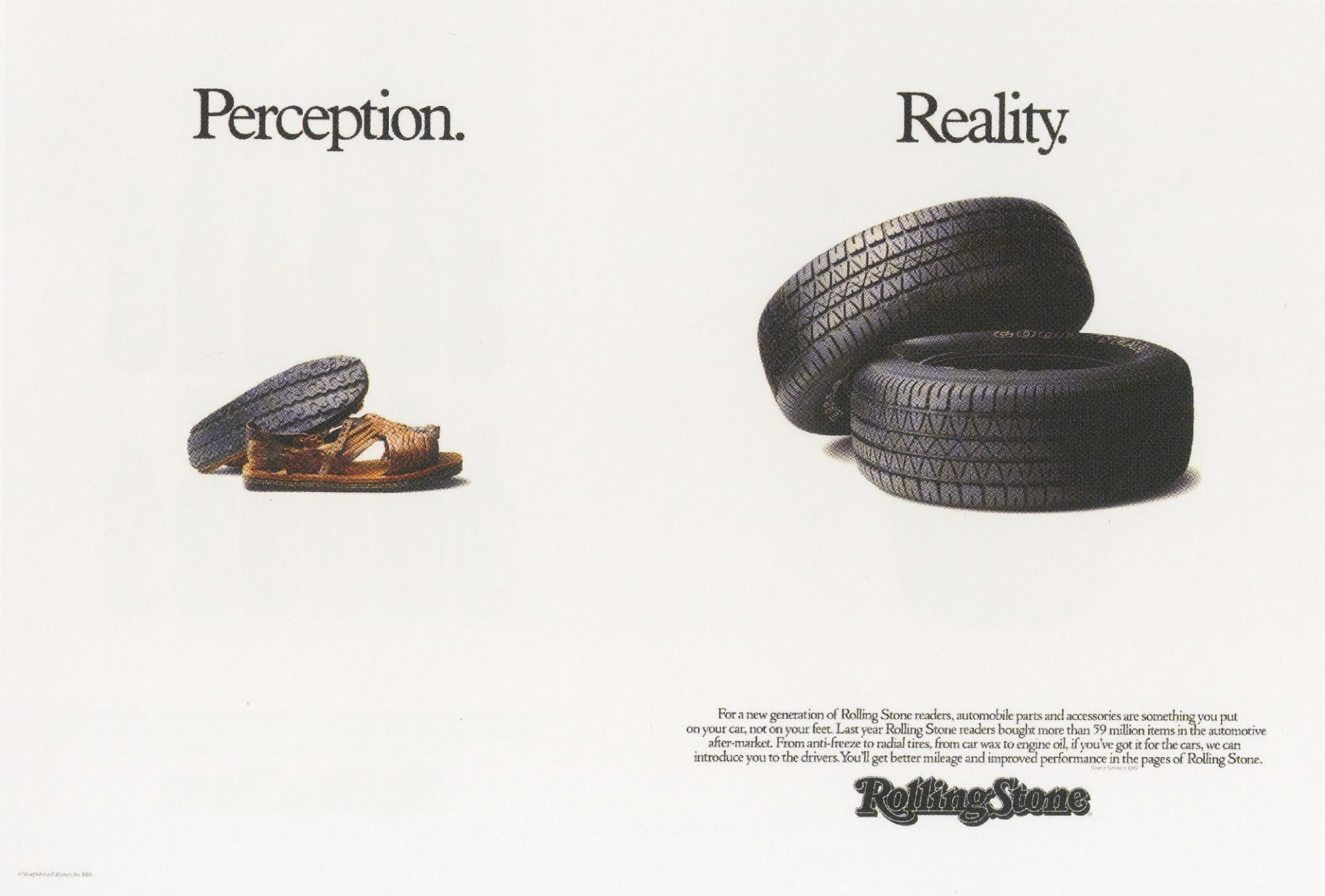
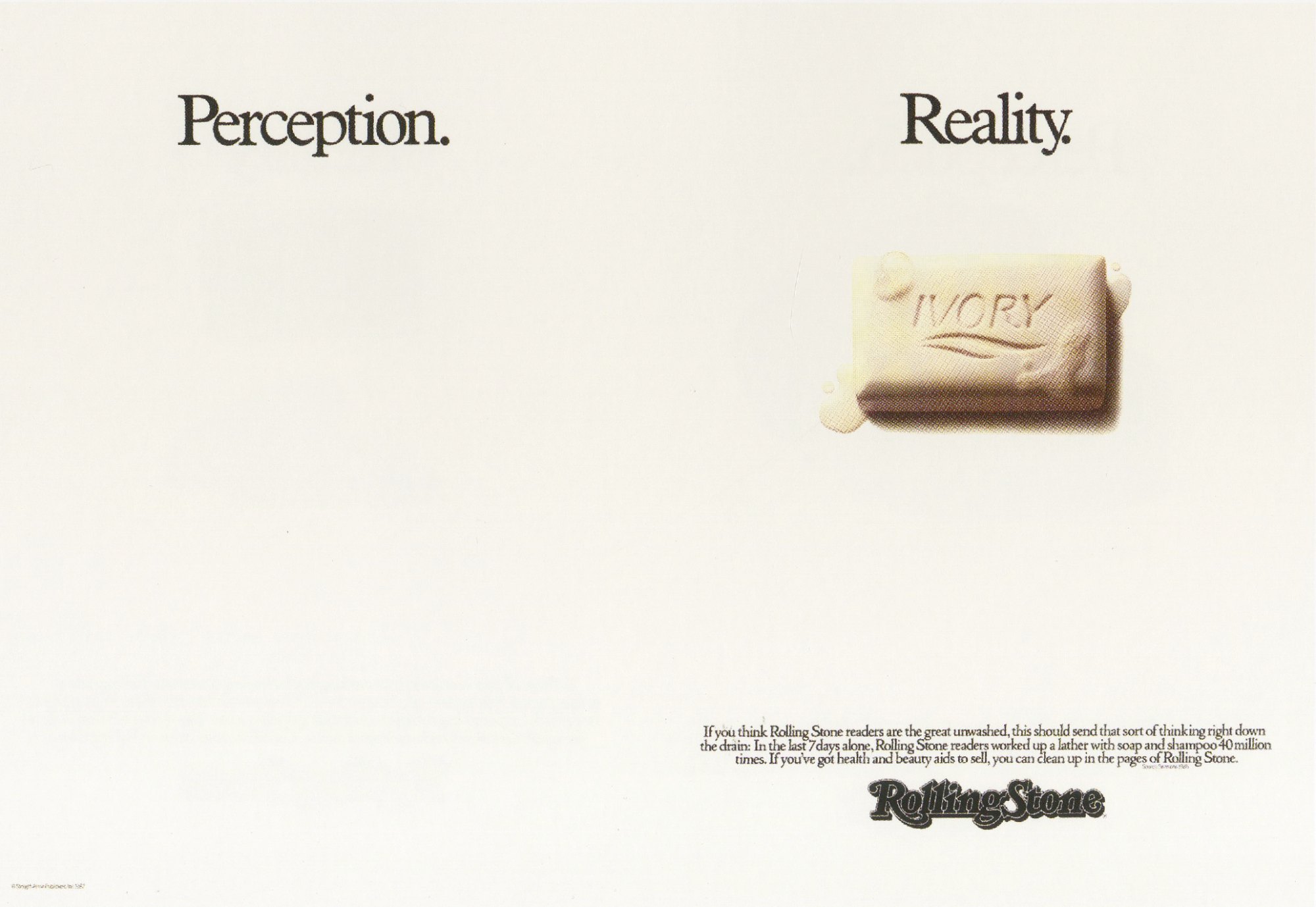
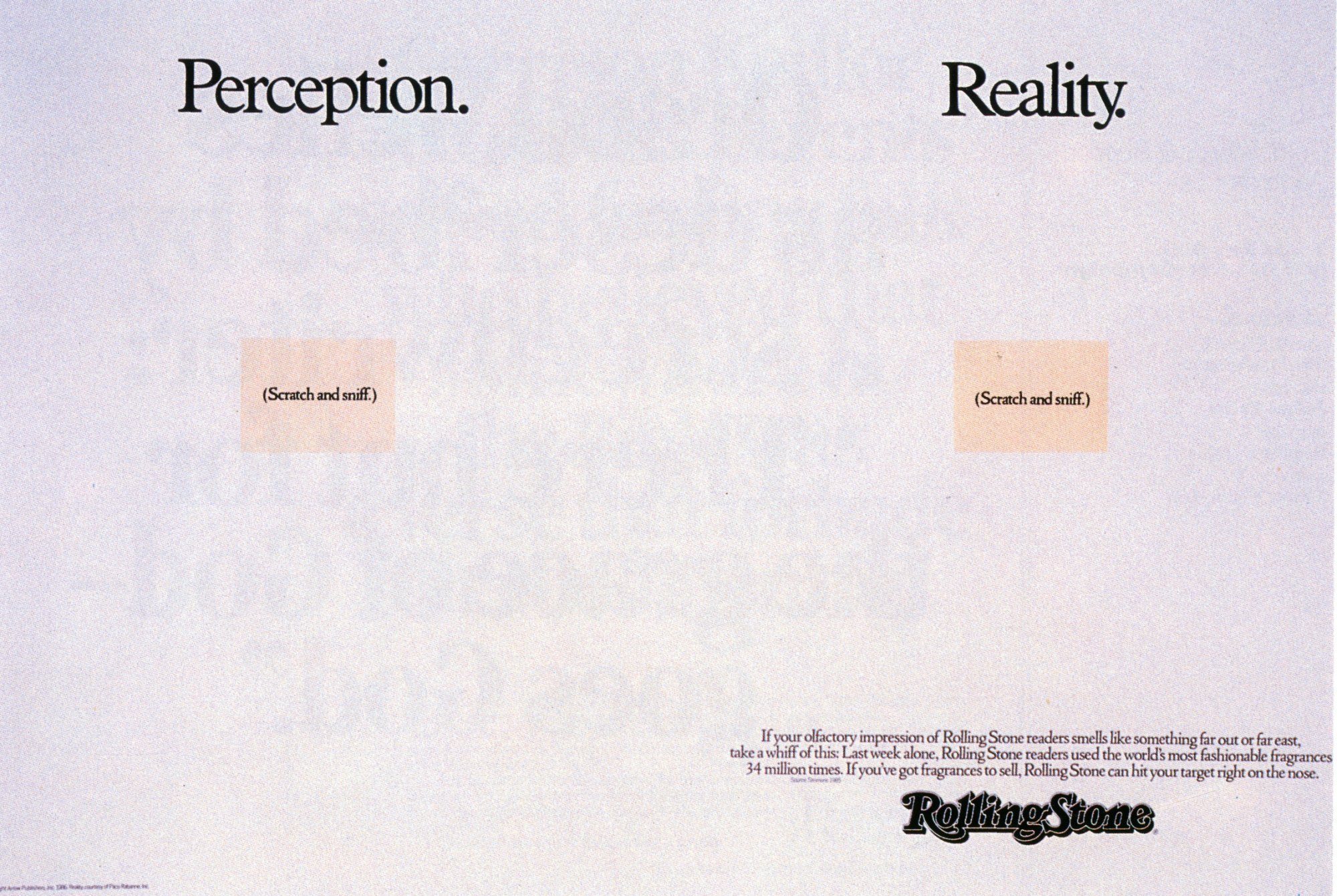
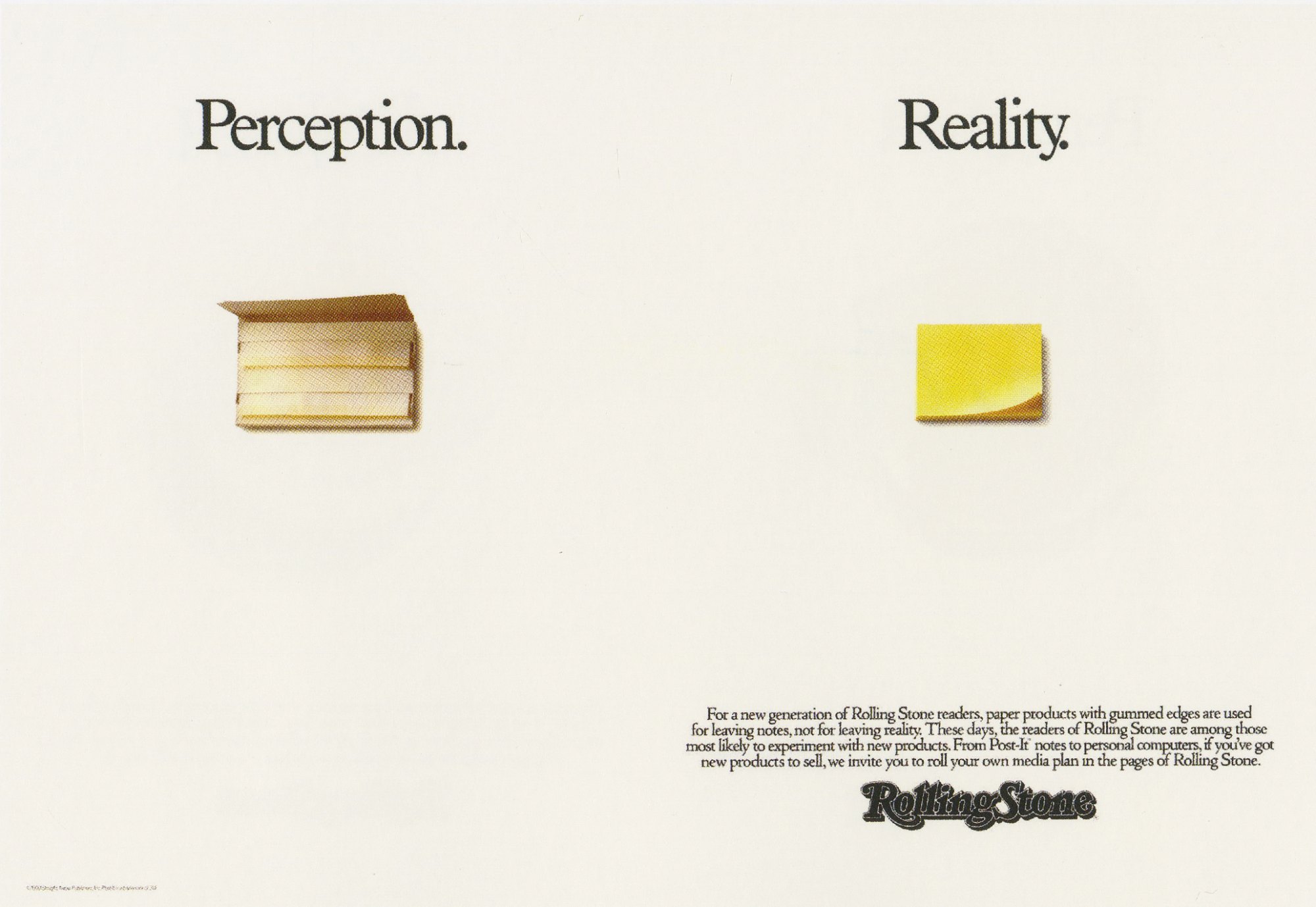
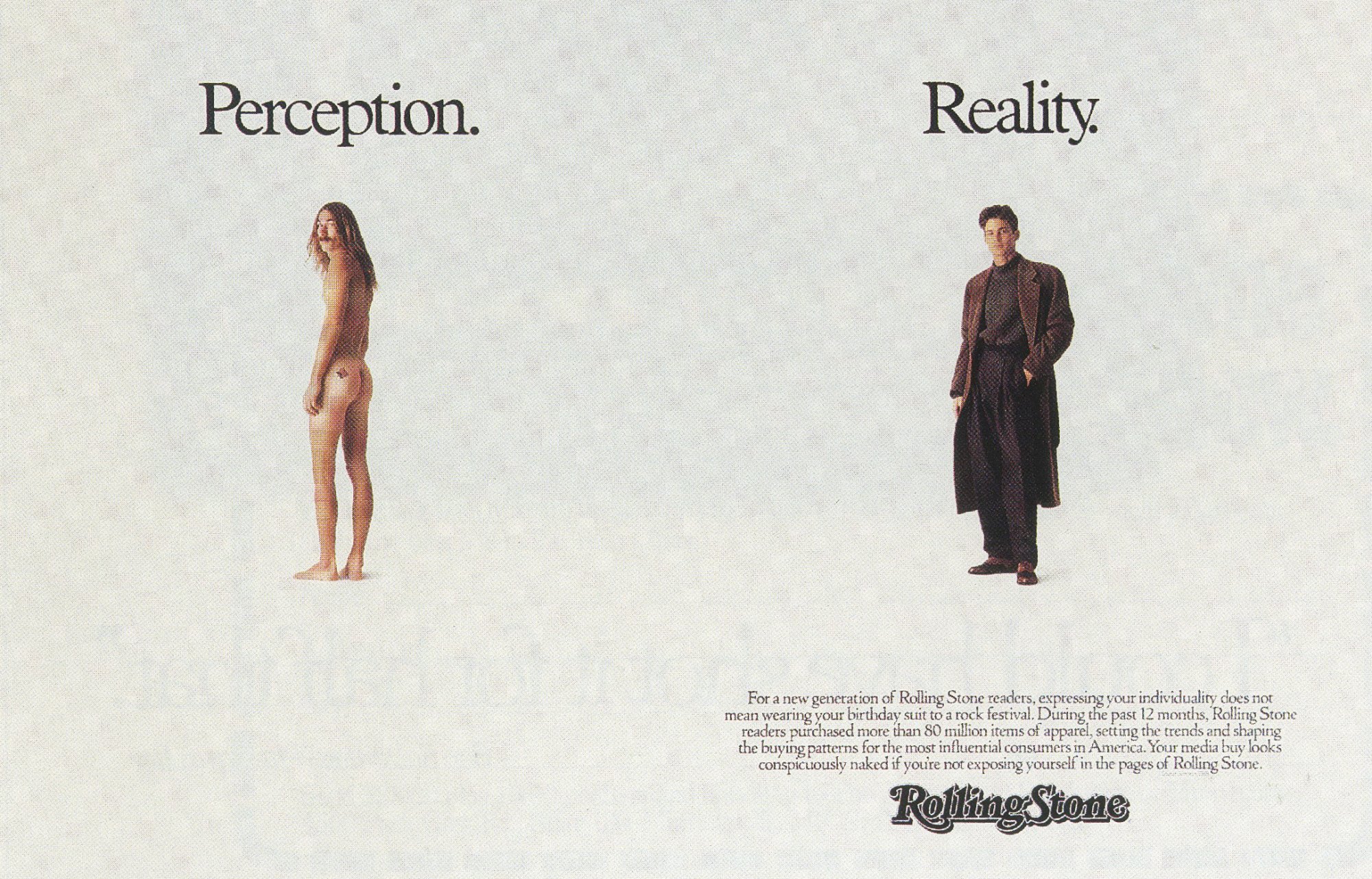
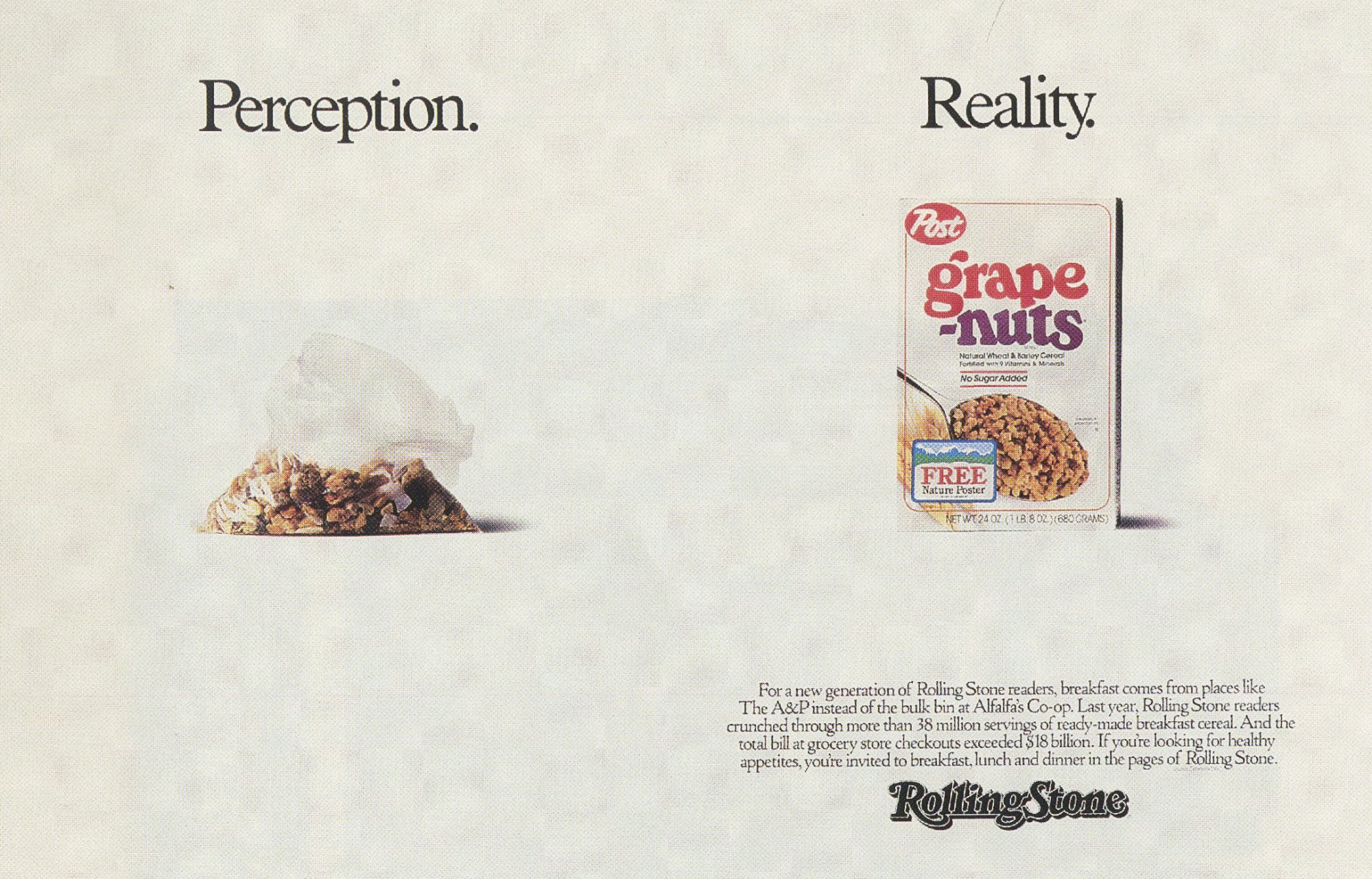
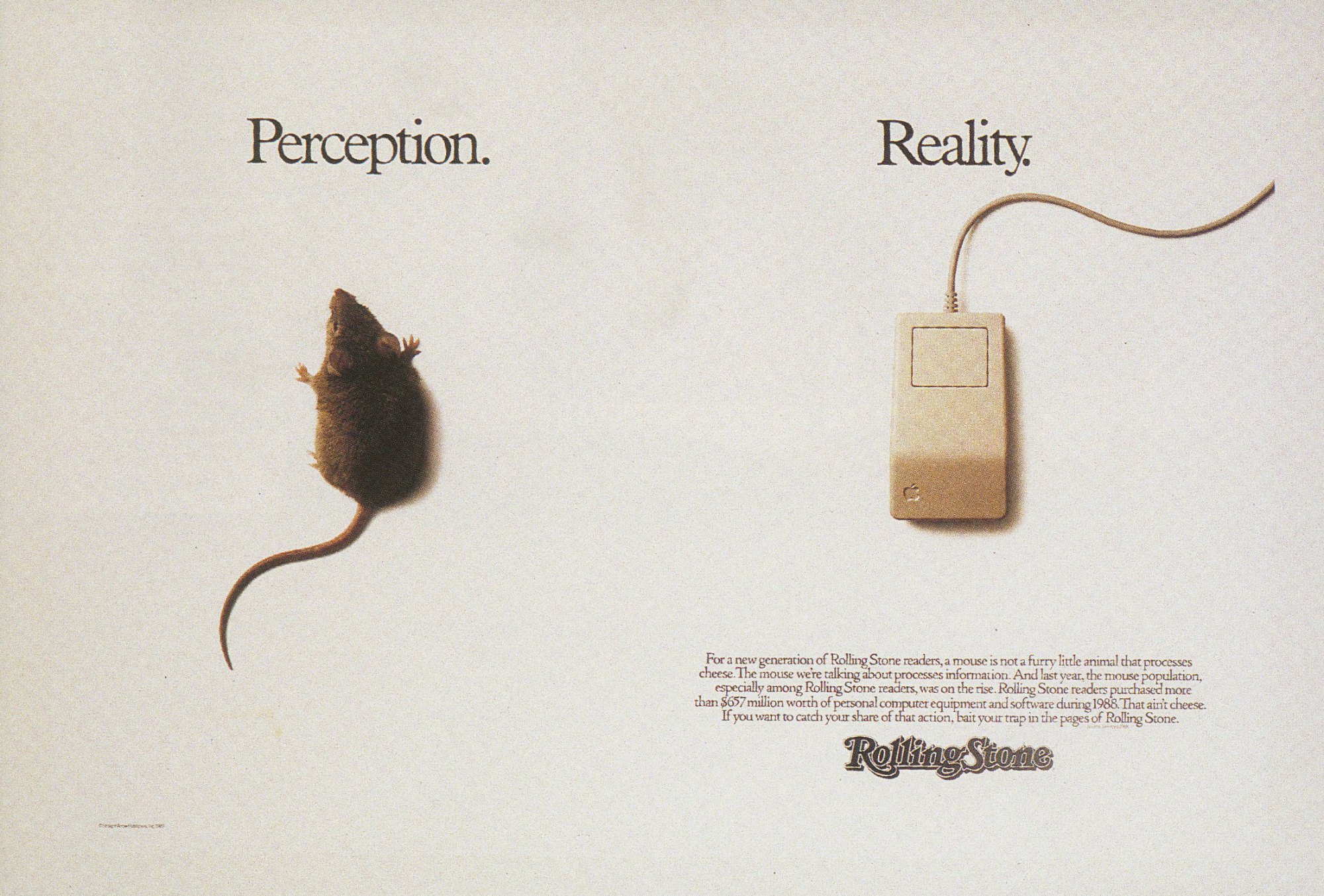
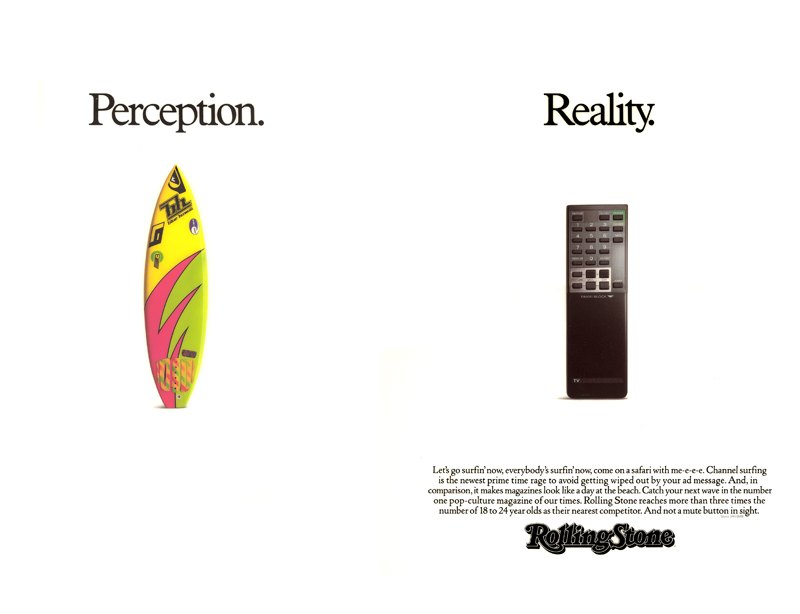
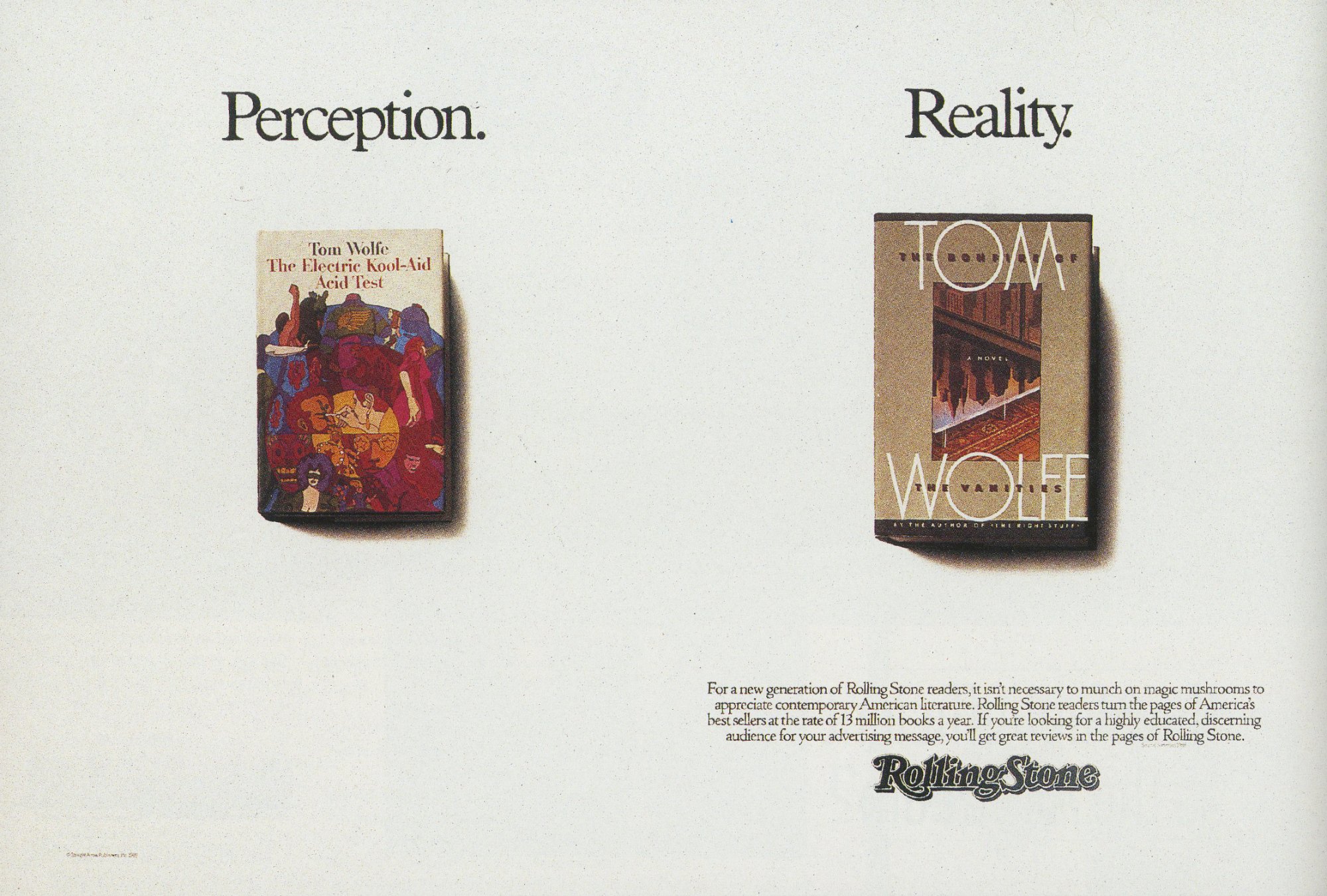
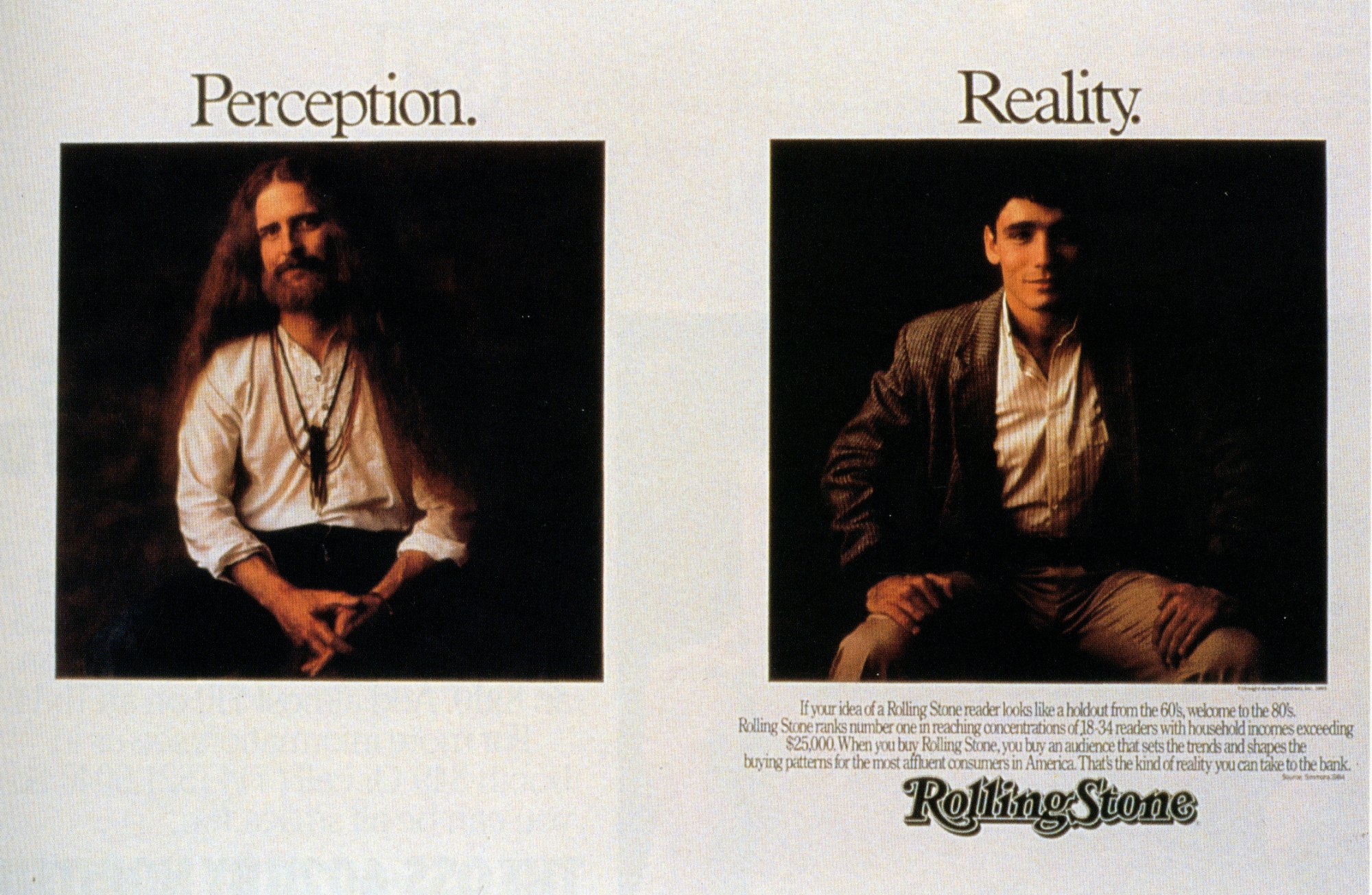
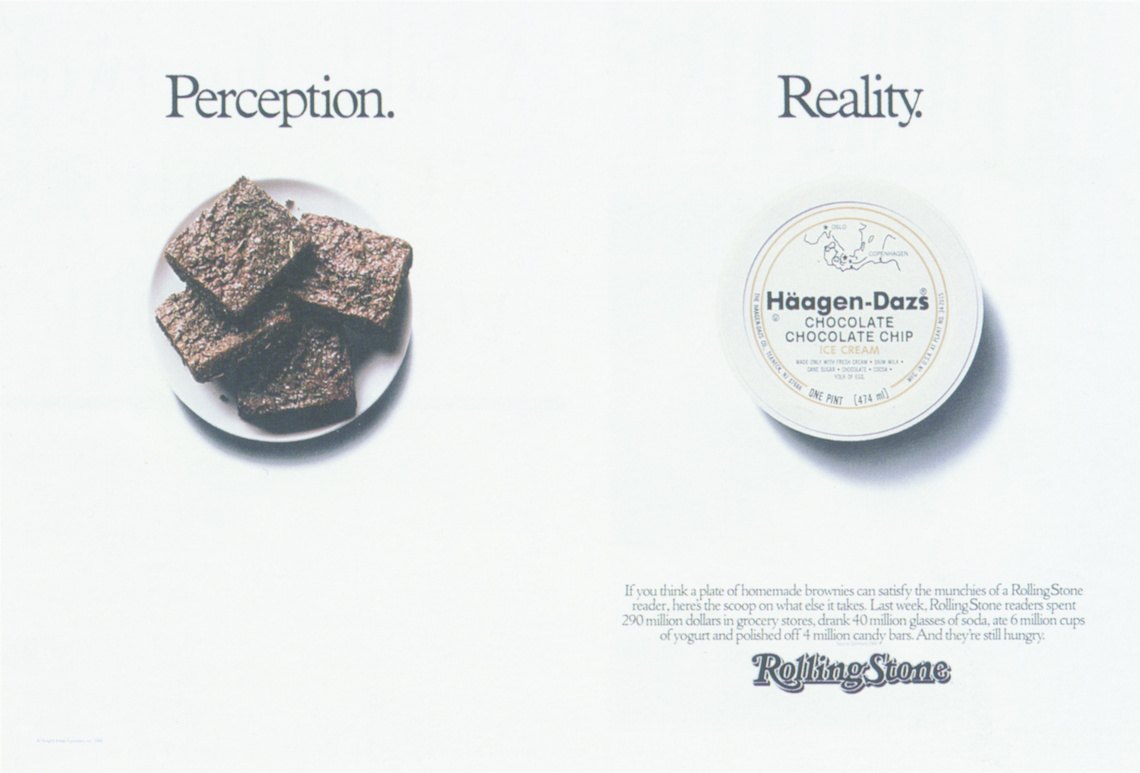
Show the buyer his own stereotype, then correct it on the facing page. Two words, no argument.
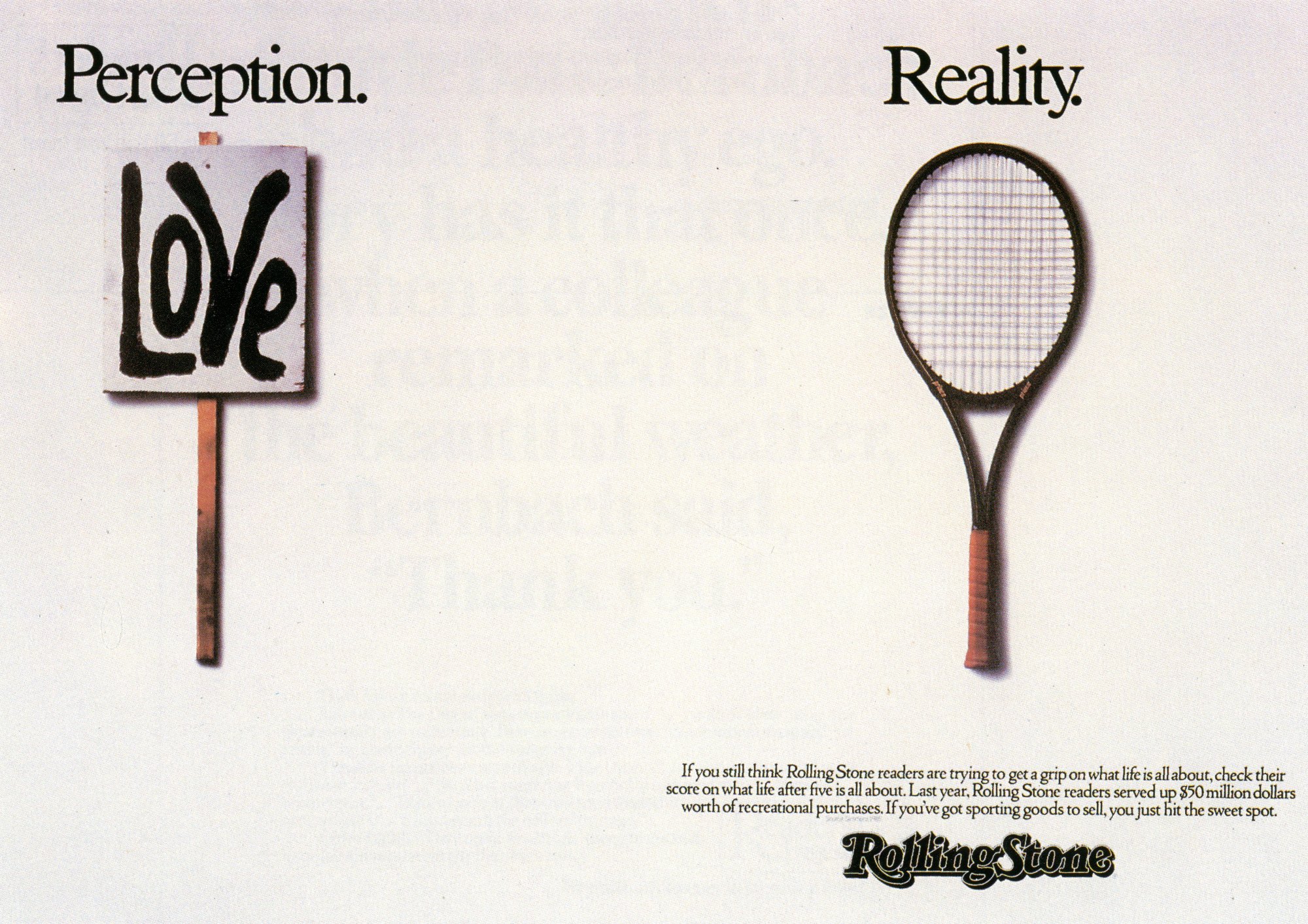
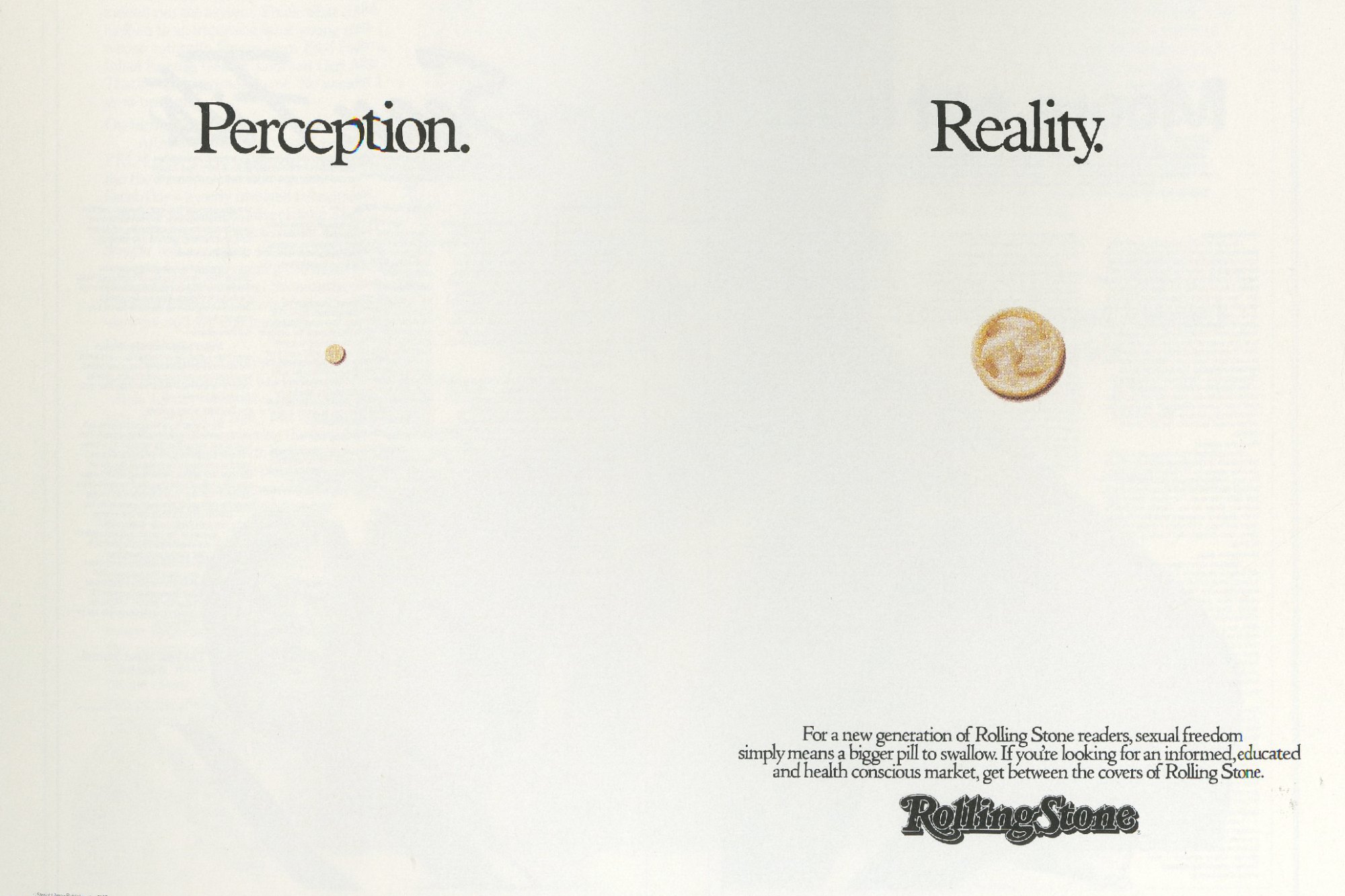
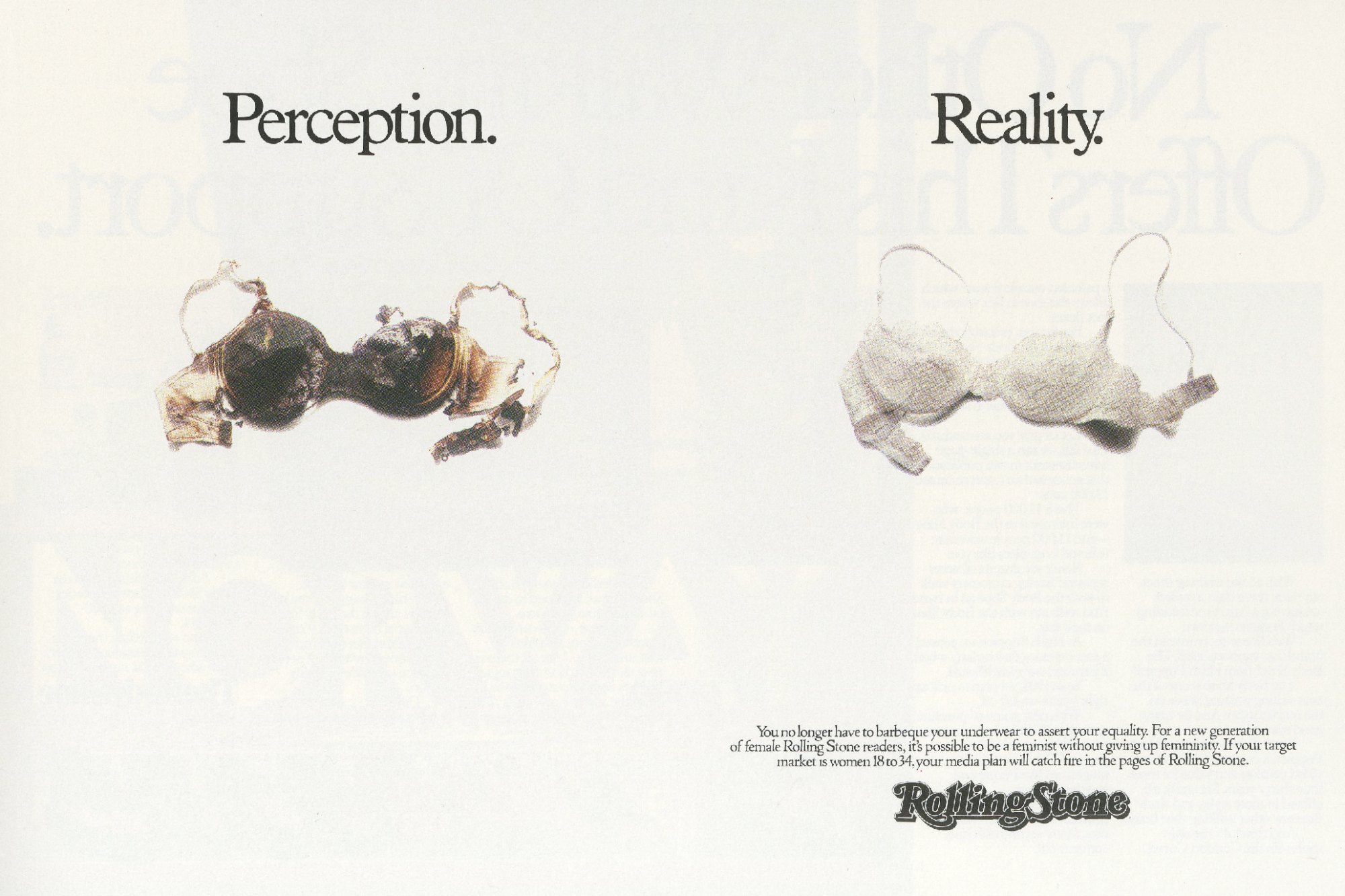
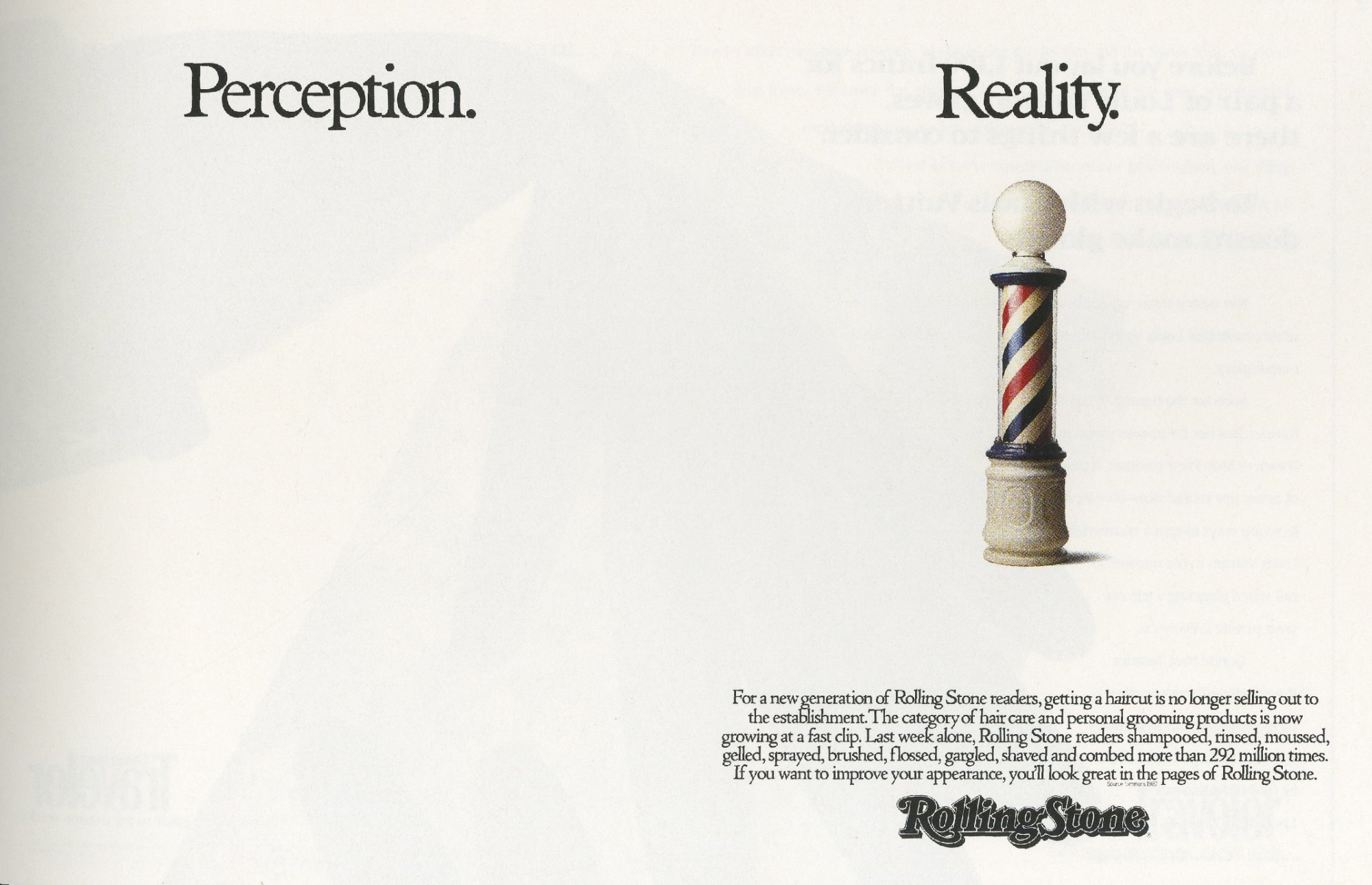
Fallon McElligott Rice built the campaign around a single structure: a picture labelled Perception on one side, a picture labelled Reality on the other. The left showed the hippie cliché; the right showed the same reader in 1985. Short body copy then put numbers on the right-hand picture. The ads ran in the trade press, where media buyers would see them. Launched in June 1985, the format carried 55 to more than 60 executions over about seven years. Dave Dye: 'It felt new, neither headline or visual lead, it had its own structure.'
The work.
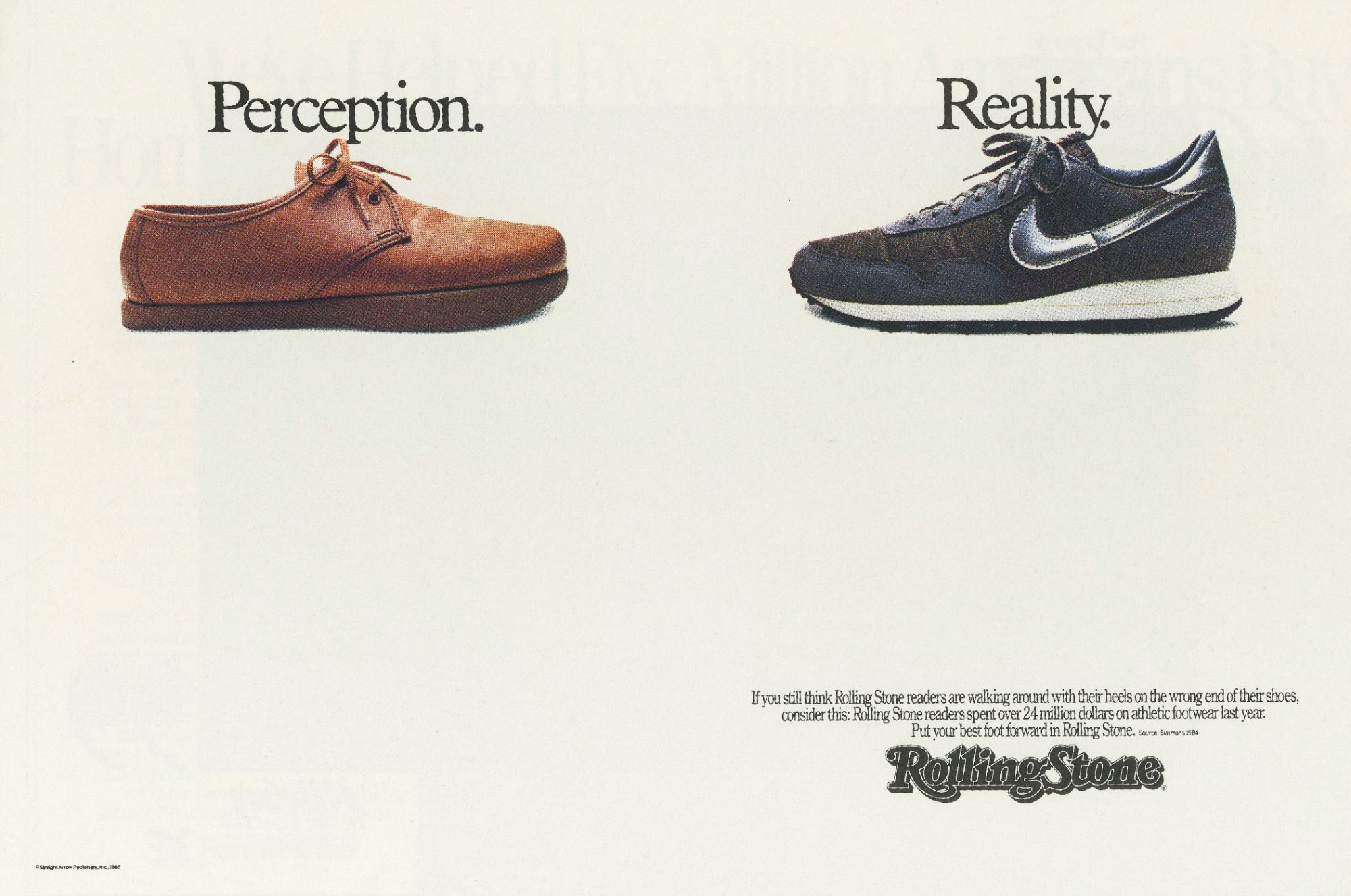
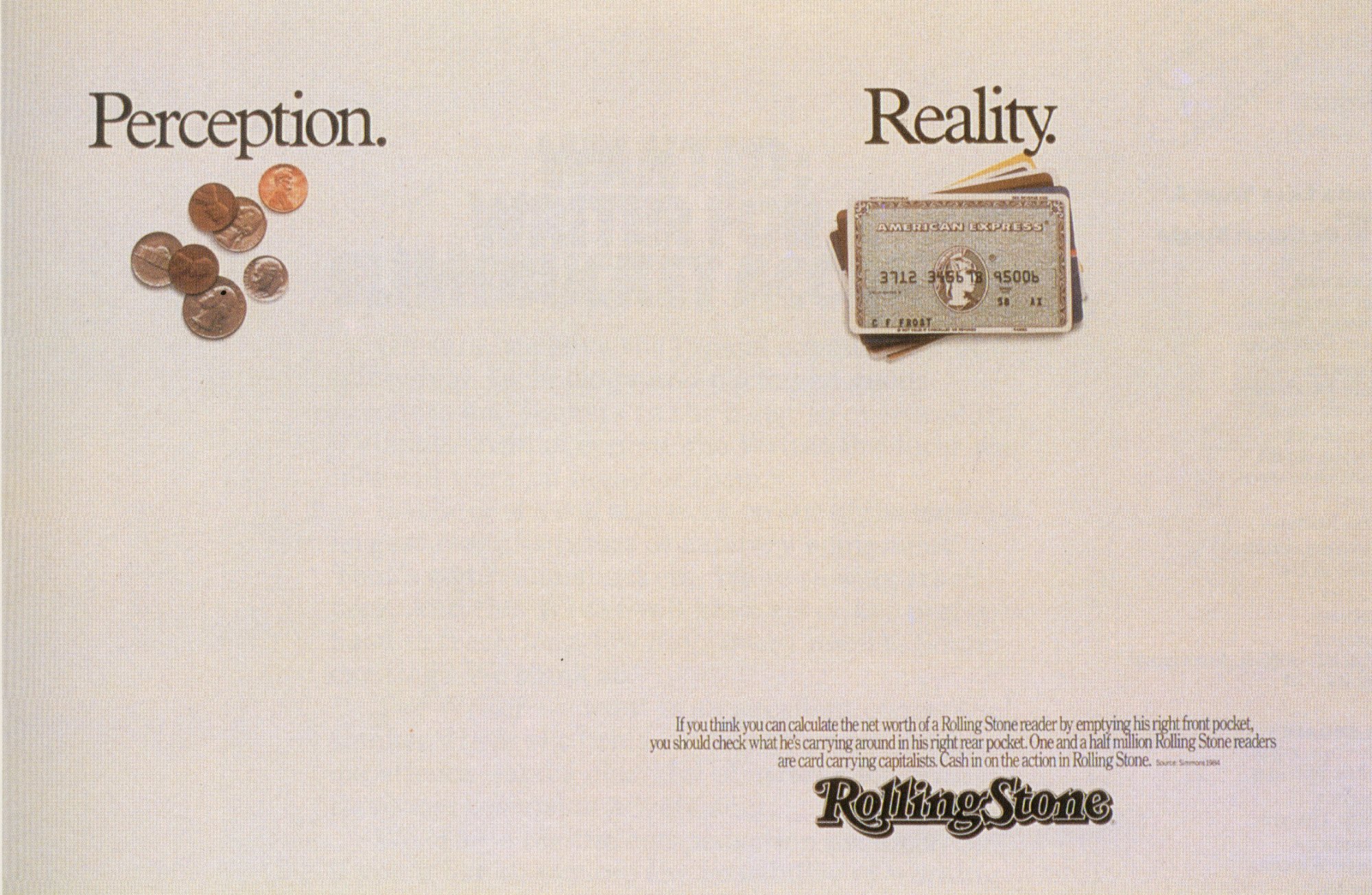
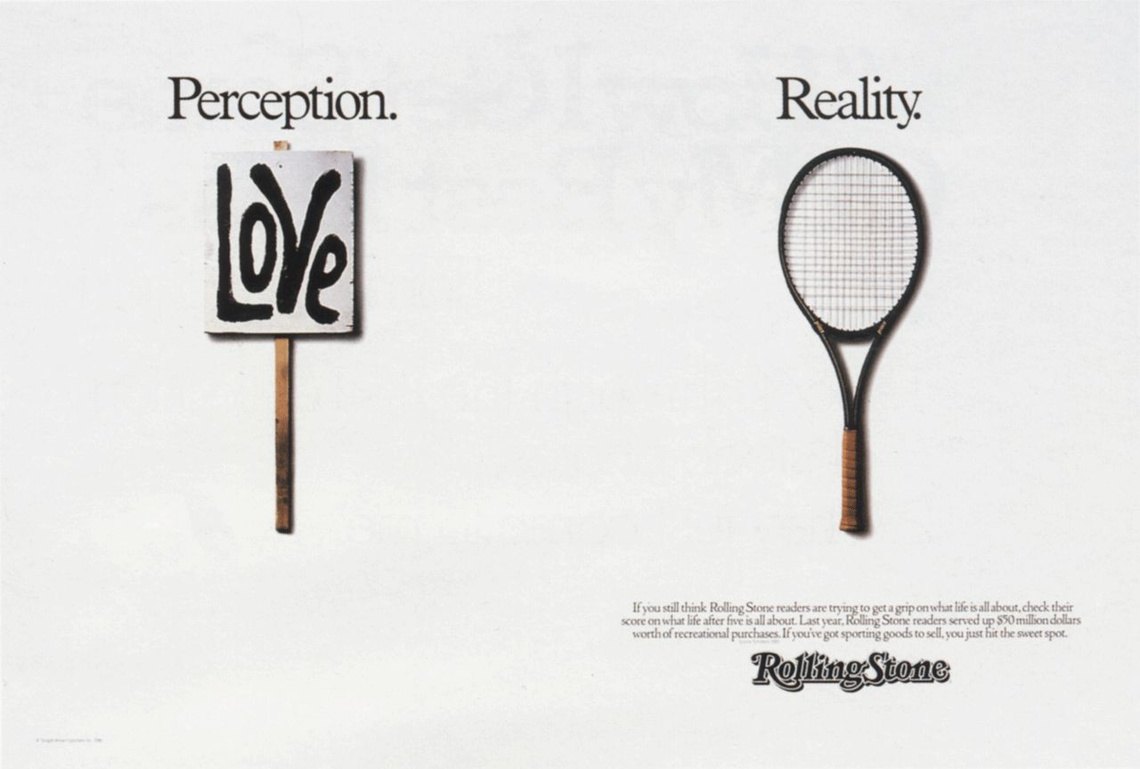
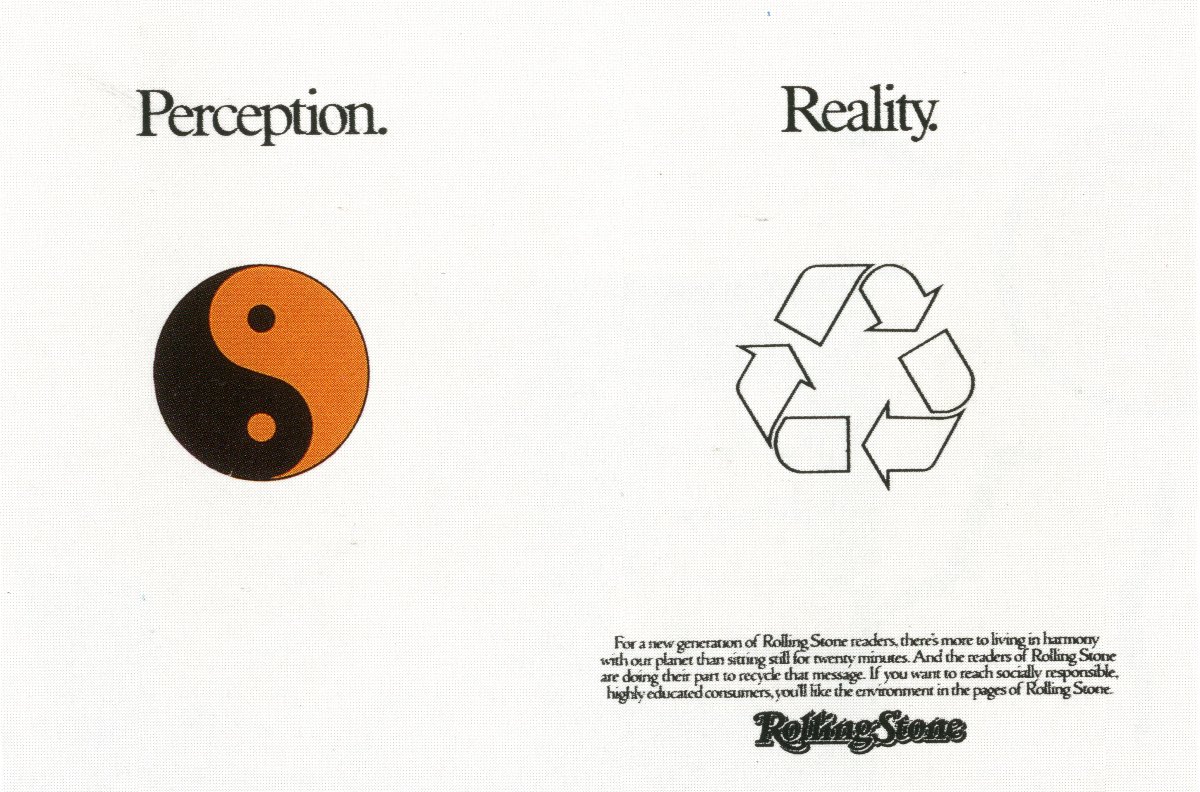
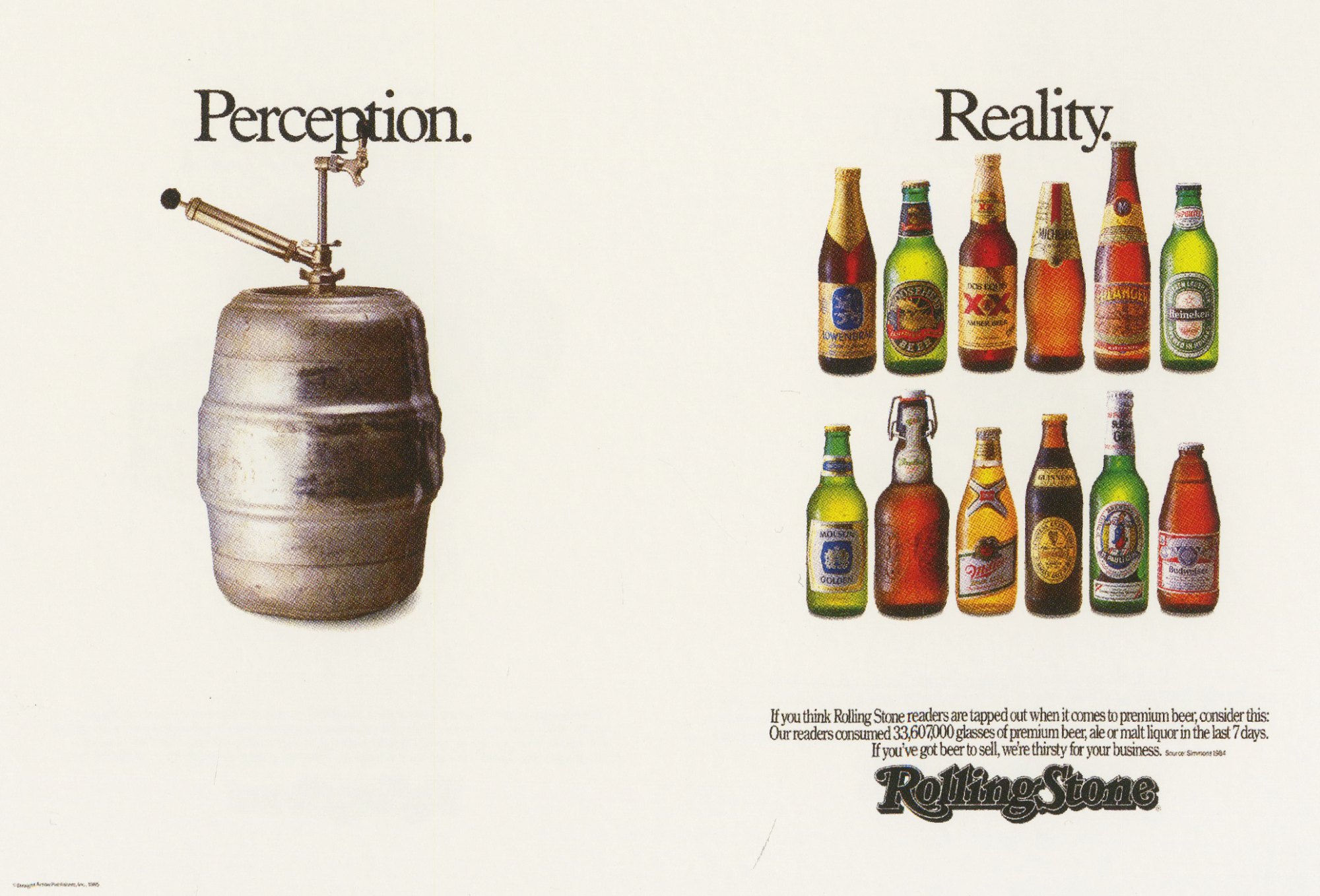
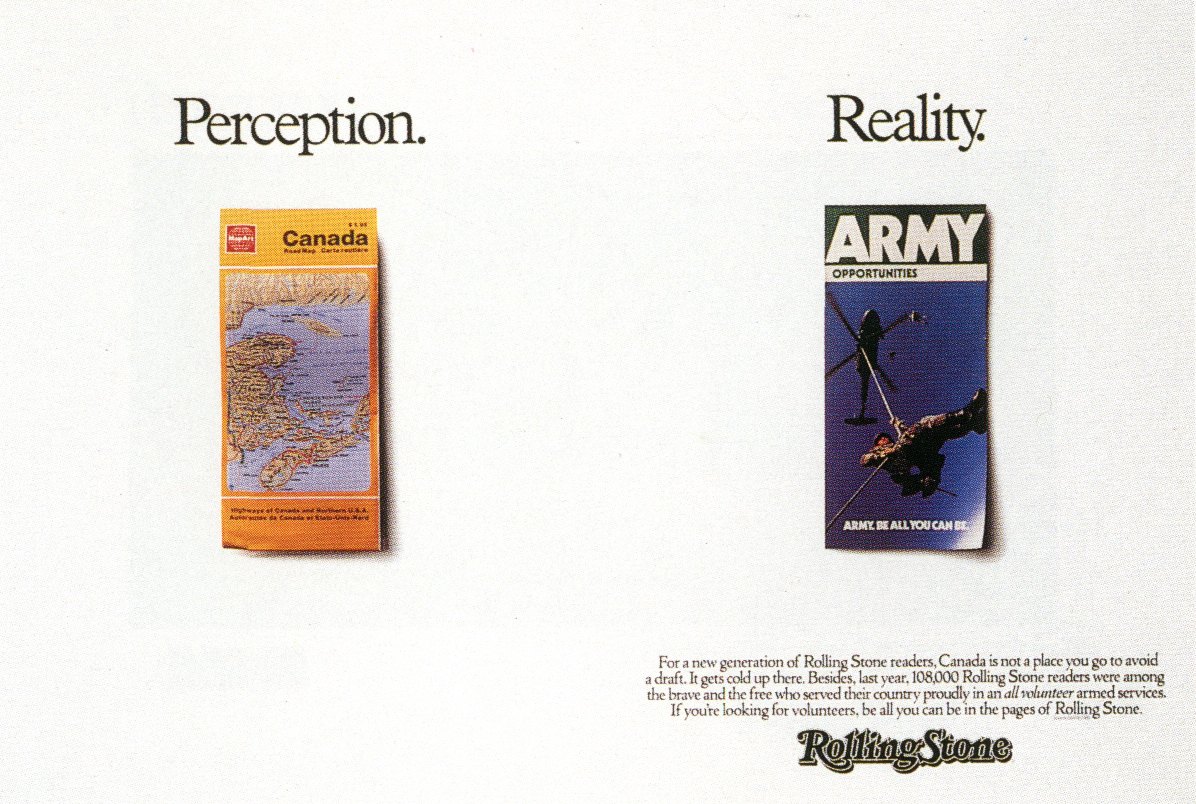
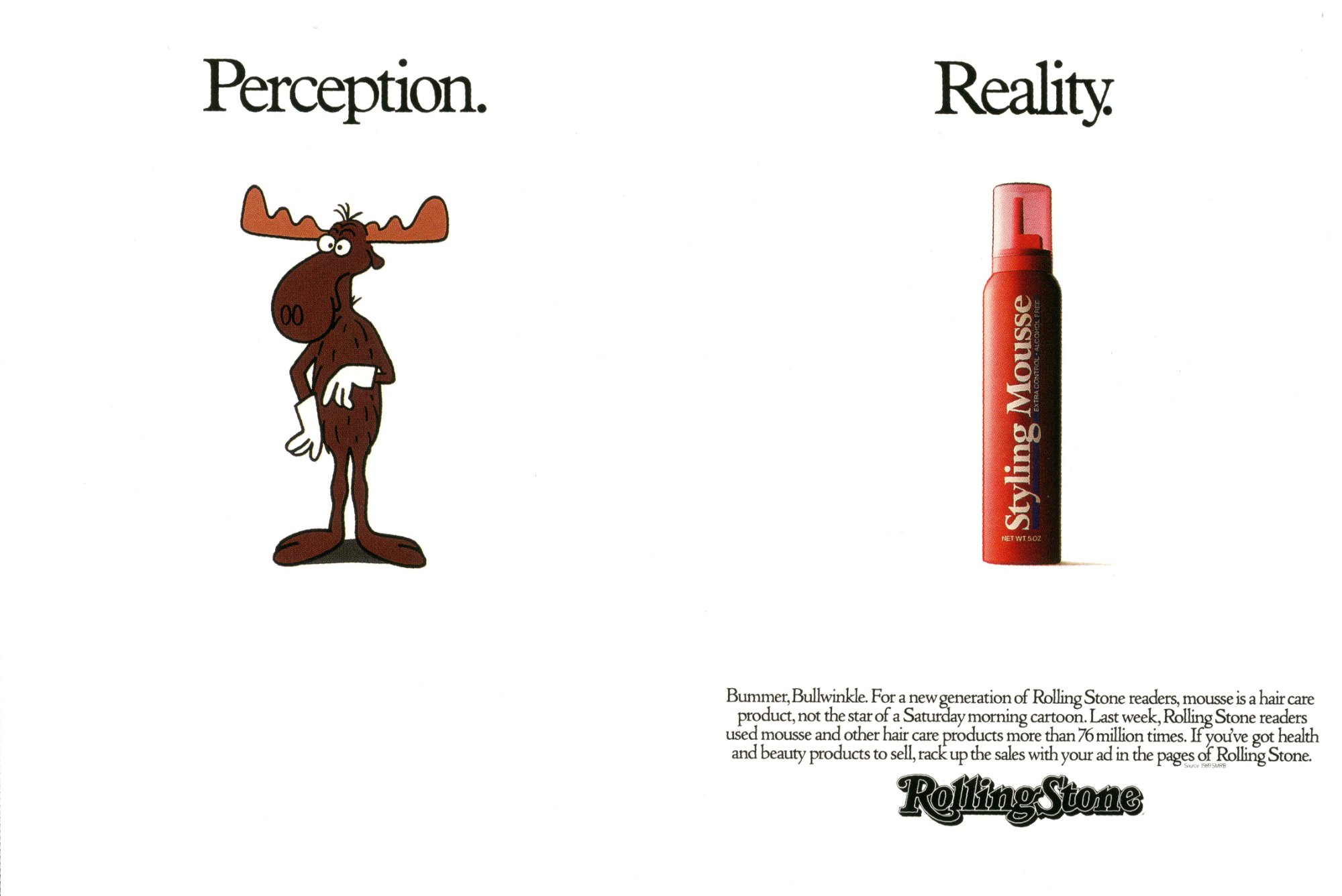
Same shape of problem.
The campaign that told advertisers the hippies had grown up and were now the ones with the money.
Back to the archive →