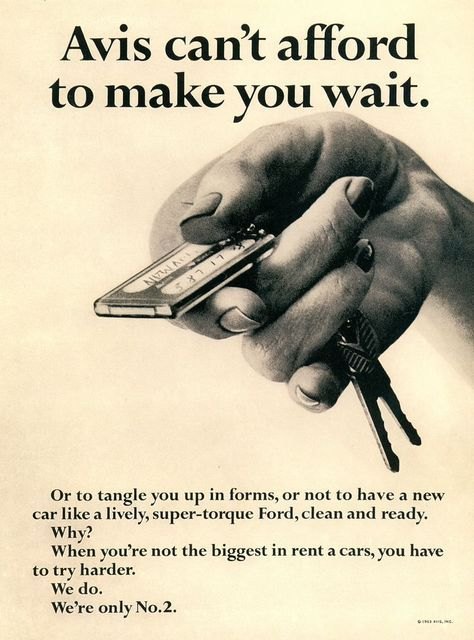
We Try Harder
The campaign that turned second place into the reason to choose a company, and wrote the first challenger-brand position into American advertising.
The era.
In 1962 renting a car meant renting from Hertz. Hertz had been in the business since the 1920s and had become the default at American airports. Since 1959 its line had been "Let Hertz put you in the driver's seat," run in print, on signs and on television by its agency, Norman, Craig & Kummel.
Air travel was growing fast. Jets had replaced propeller planes on the main routes, and business travellers were landing at airports in cities they did not know. Warren Avis had started his company in the mid-1940s on one idea: put the rental counter inside the airport, not on a downtown lot.
The rules of advertising at the time were simple. A brand behaved as if it led its category, whether it did or not. You did not name a competitor. You did not admit a weakness. A company in second place was expected to sound exactly like the company in first.
The culture.
In 1962 the investment bank Lazard Frères bought Avis, which had not made a profit in years. Its partner André Meyer persuaded Robert Townsend, a senior vice president at American Express, to run it. Townsend asked for a free hand and gave the same to his agency. He later set out his views on management in Up the Organization, published in 1970.
Townsend went to Doyle Dane Bernbach, three years into its Volkswagen work. Accounts of the meeting agree on the terms: Bill Bernbach asked for 90 days to study the business, and for the client to run the work as written. Townsend's budget was about a fifth of what Hertz spent, and he said so.
Bernbach gave the account to Helmut Krone, art director of the Volkswagen ads, and to Paula Green. Green had grown up in California and joined the agency around Christmas 1956. She later called herself "the original writer on the Avis campaign."
The problem.
You are second in a market where the leader owns the counter, the habit and the name.
Avis was a distant number two to Hertz, with fewer cars, fewer counters and a much smaller budget. It had lost $3.2 million in the year before the campaign. Nothing about its cars or prices was different enough to advertise.
Every convention said to act like a leader. Avis could not outspend Hertz into that position; Townsend had $1 million and needed the effect of five. So the advertising had to make Avis's smallness a reason to choose it. The risk showed up in testing: when the agency asked people in airports, about half of them read "No. 2" as "not as good."
Lazard Frères bought Avis in 1962 and its partner André Meyer brought in Robert Townsend from American Express to run it. Townsend took his problem to several agencies: "I have $1 million to spend, and I need $5 million worth of impact." Bernbach took the account on two conditions: ninety days to build the campaign, and a promise that Avis would run the work as written.
The solution.
Admit you are second, then show what being second forces you to do for the customer.
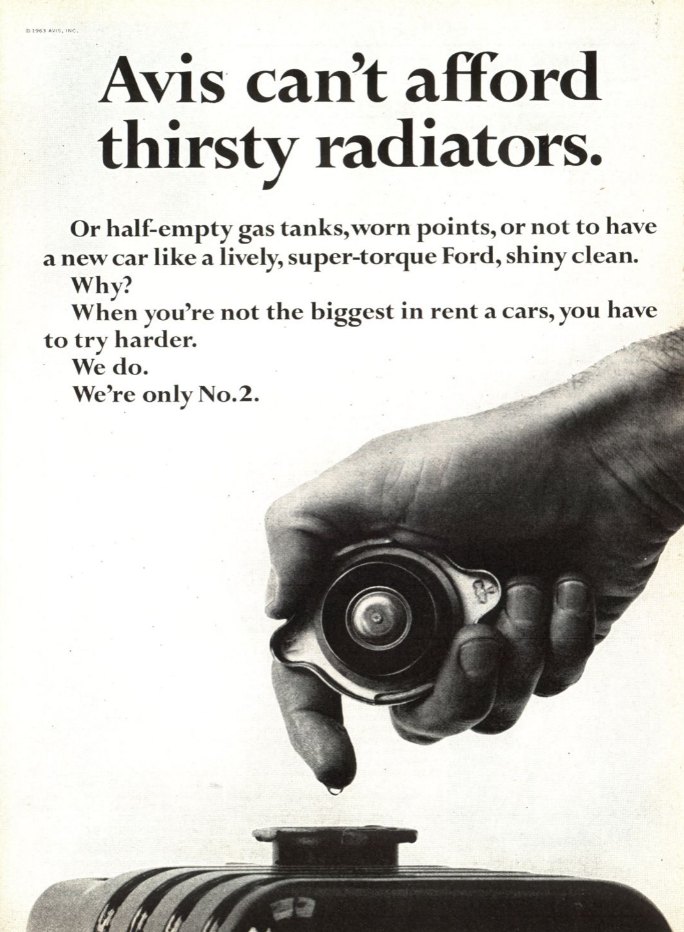
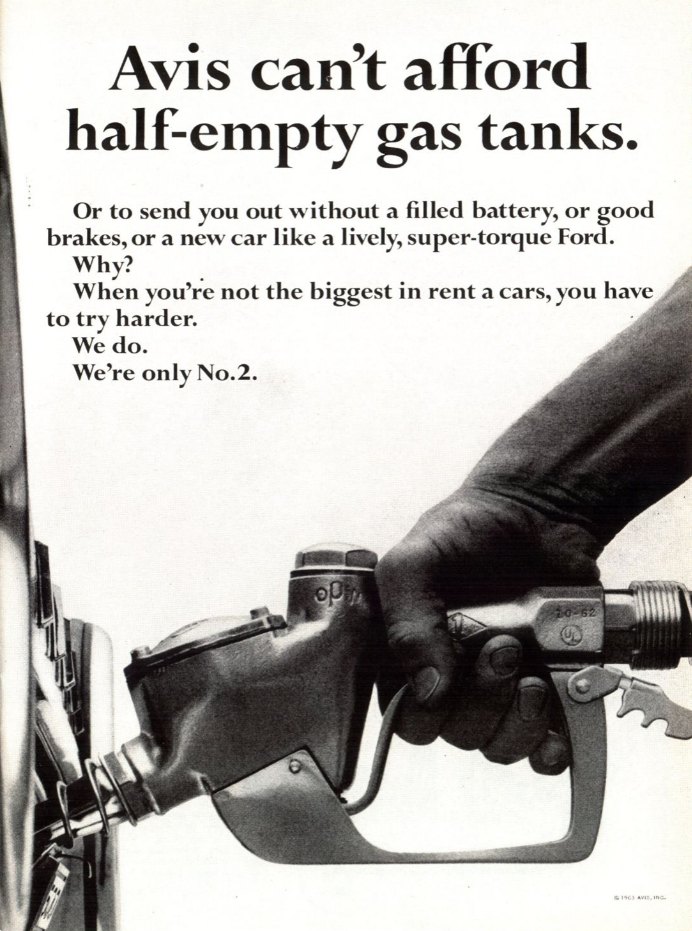
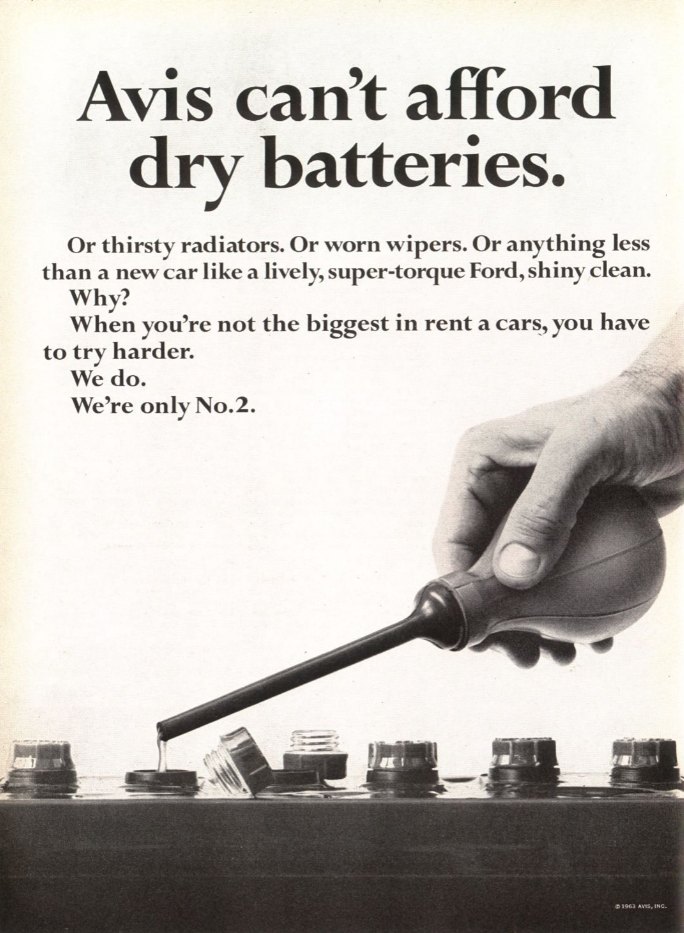
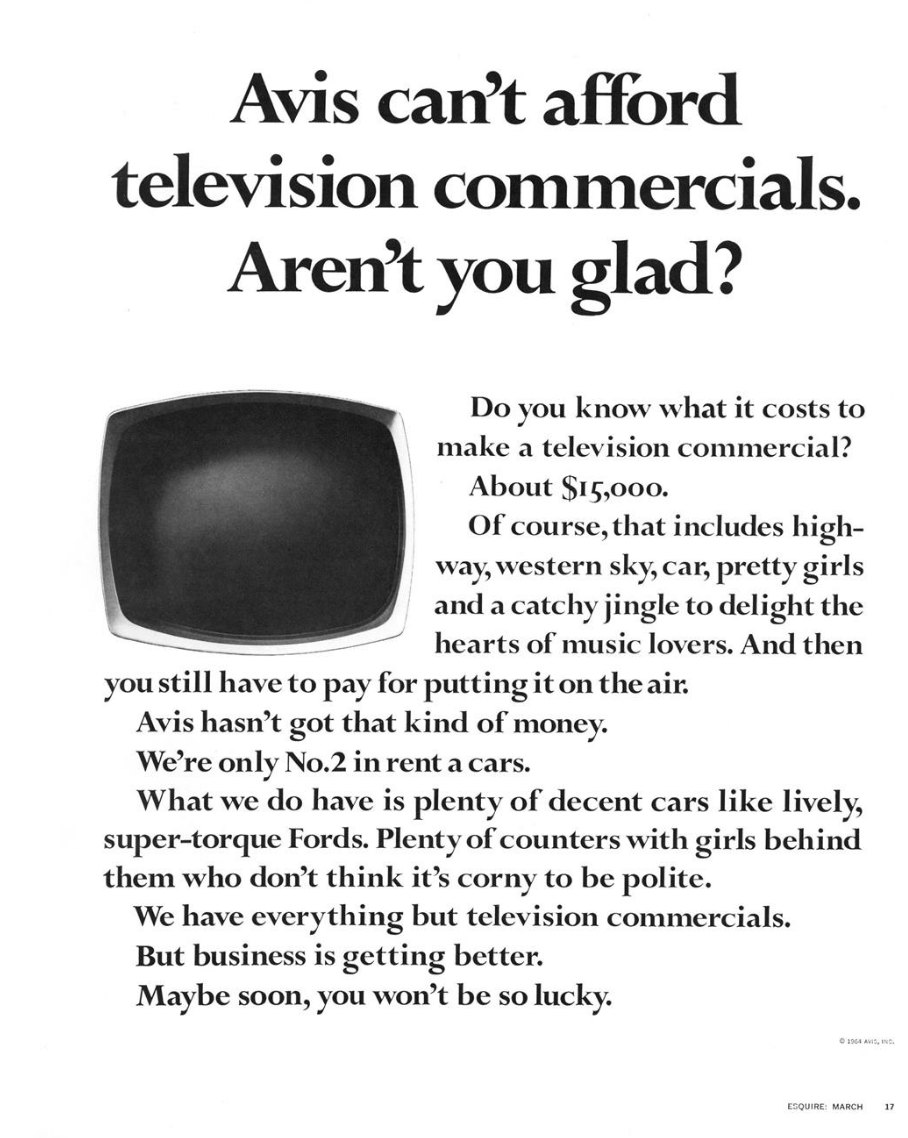
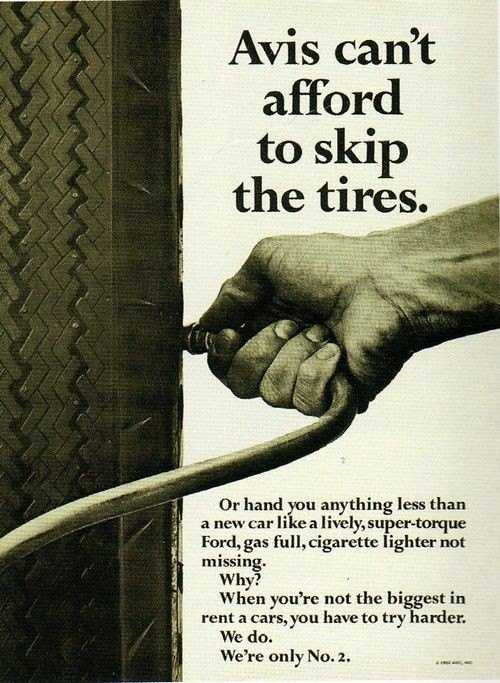
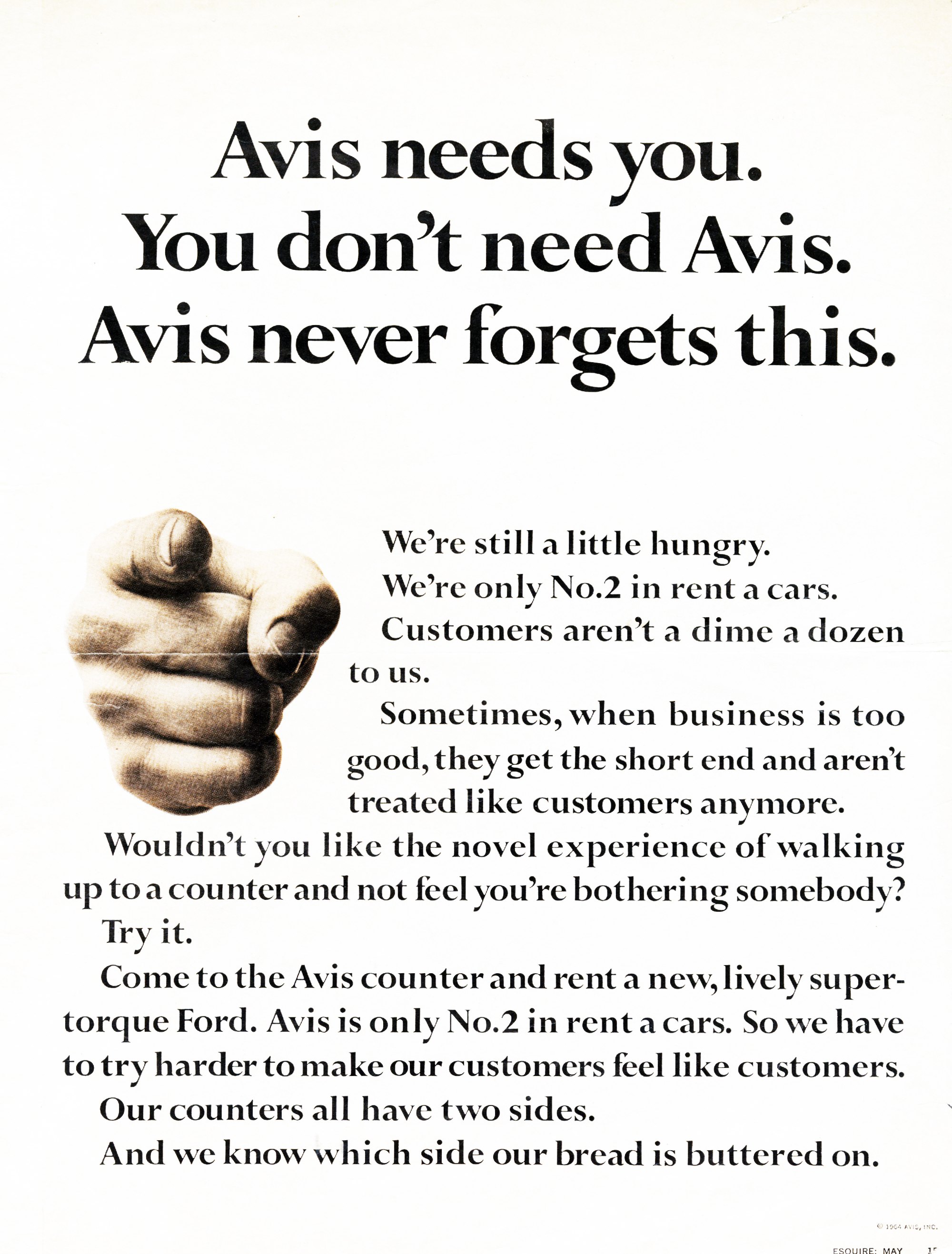
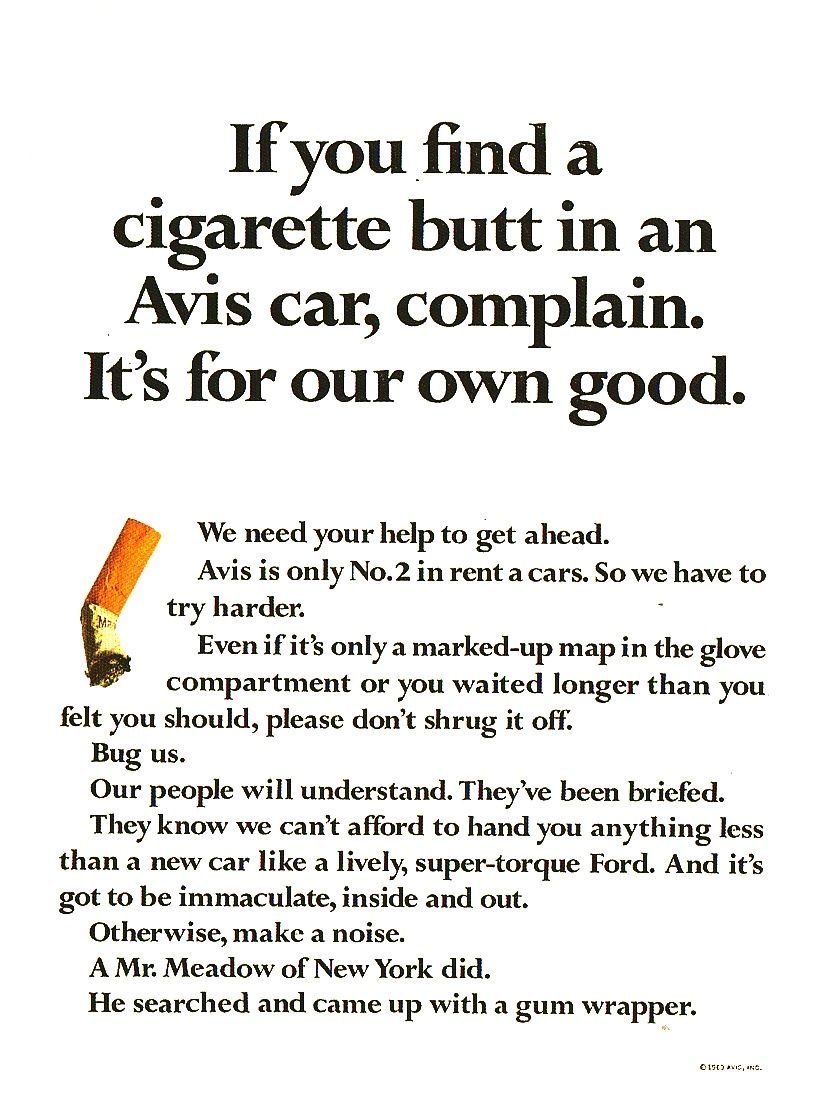
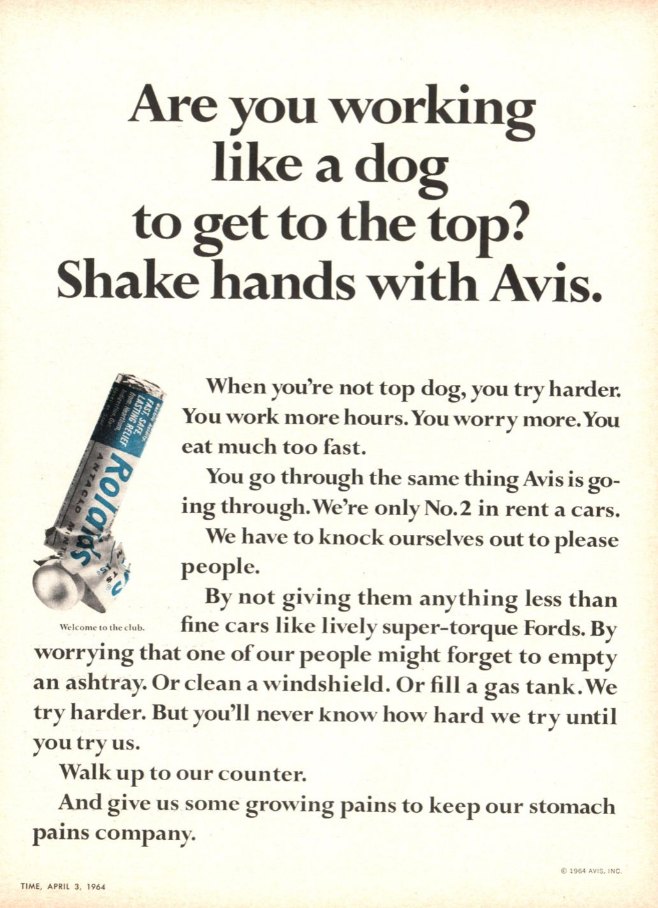
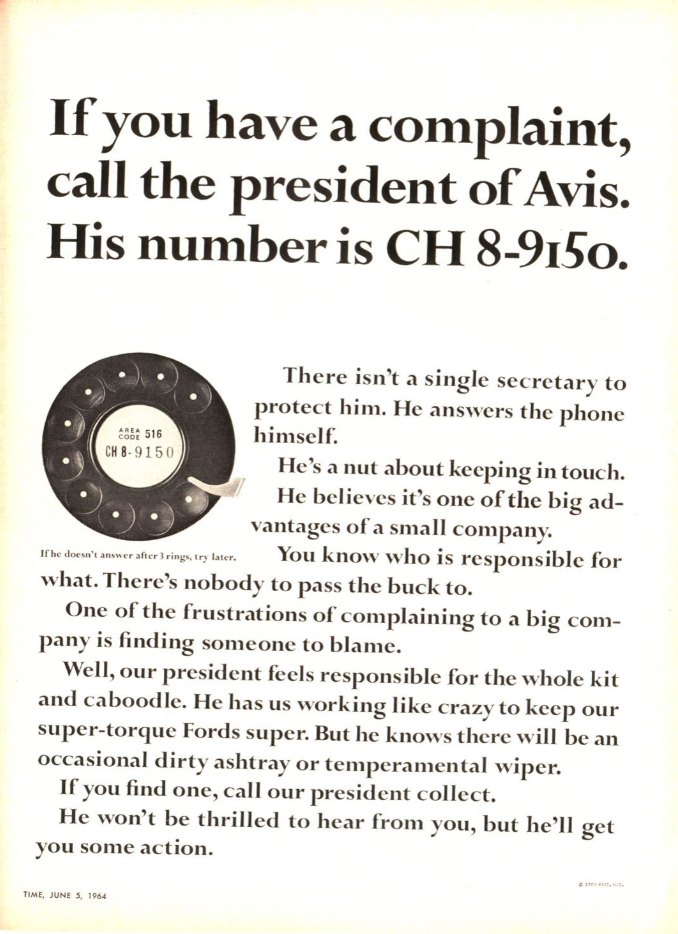
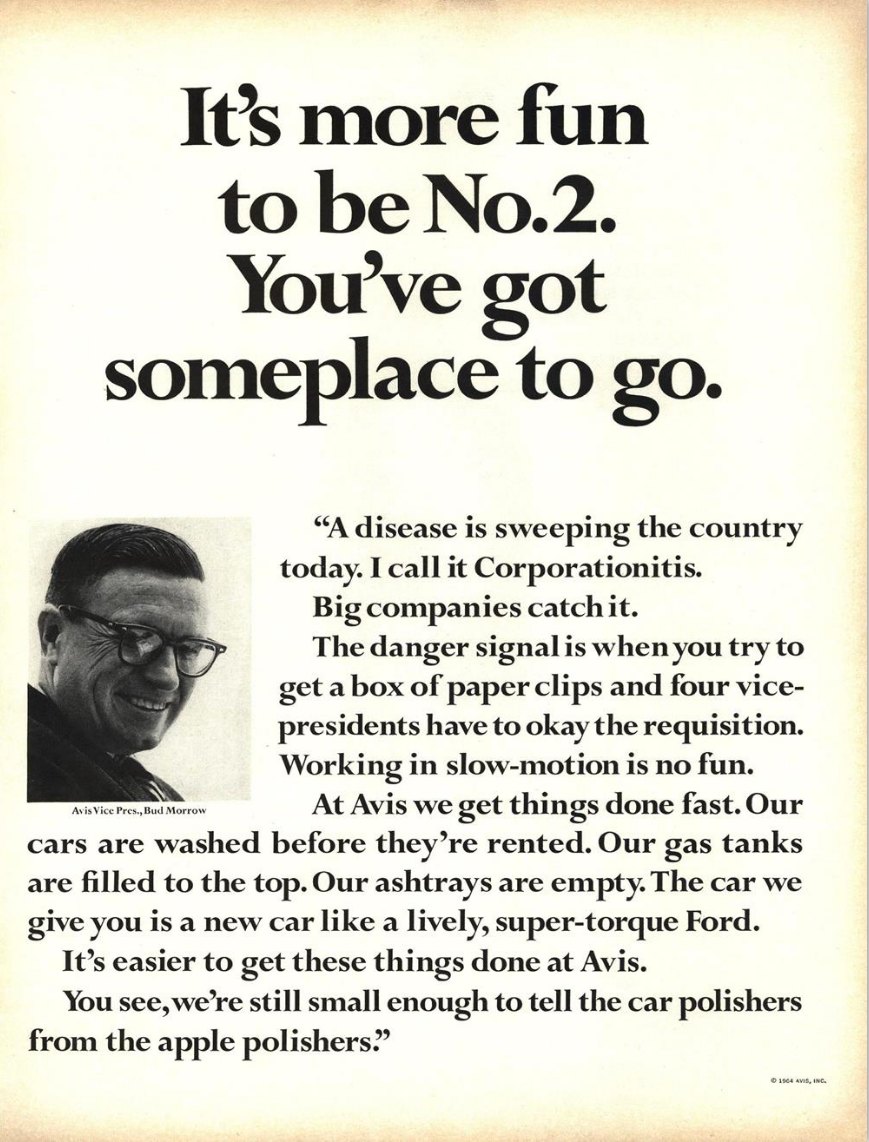
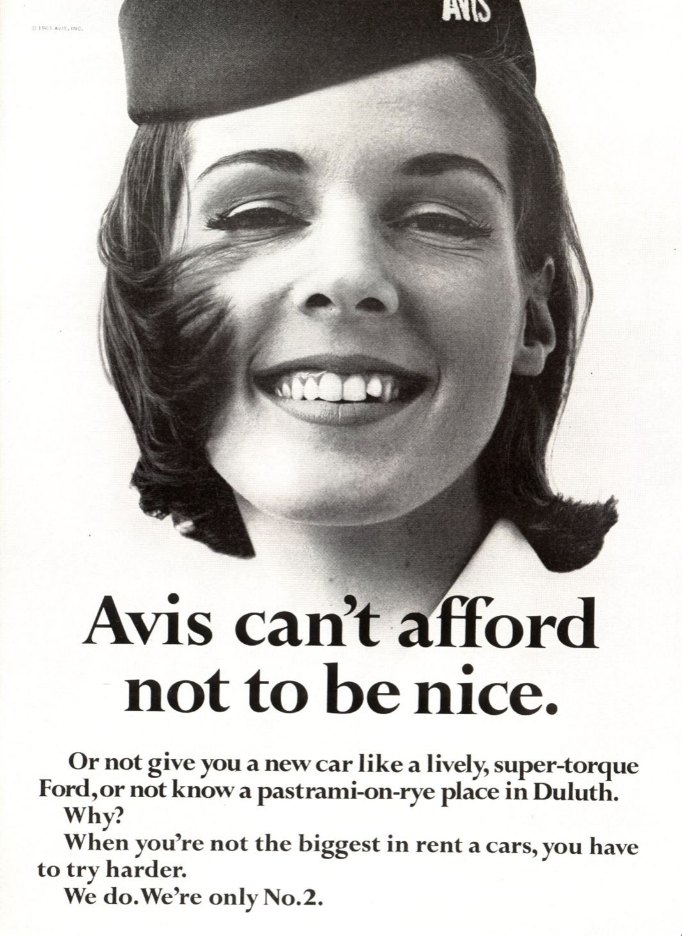
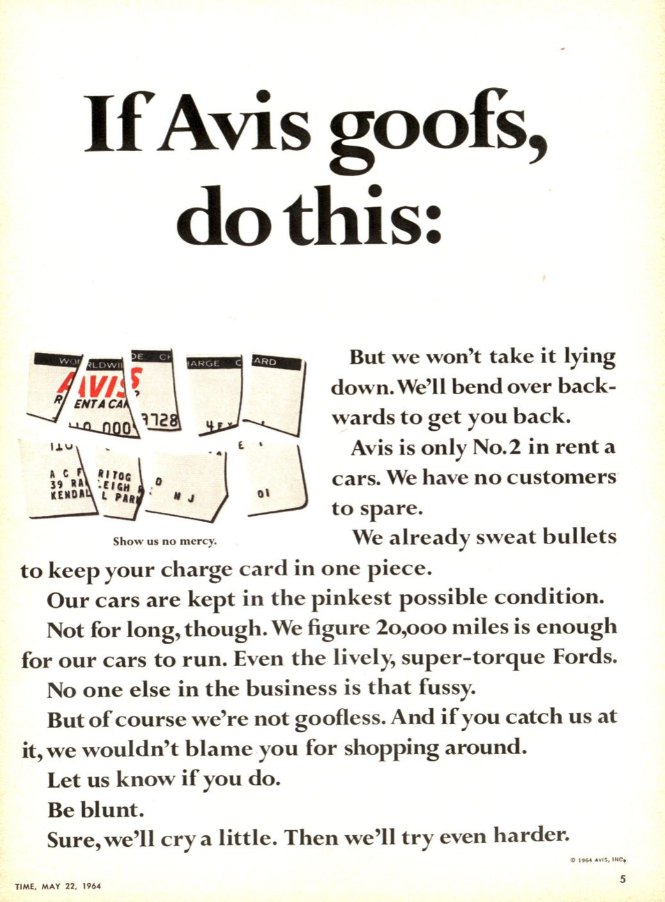
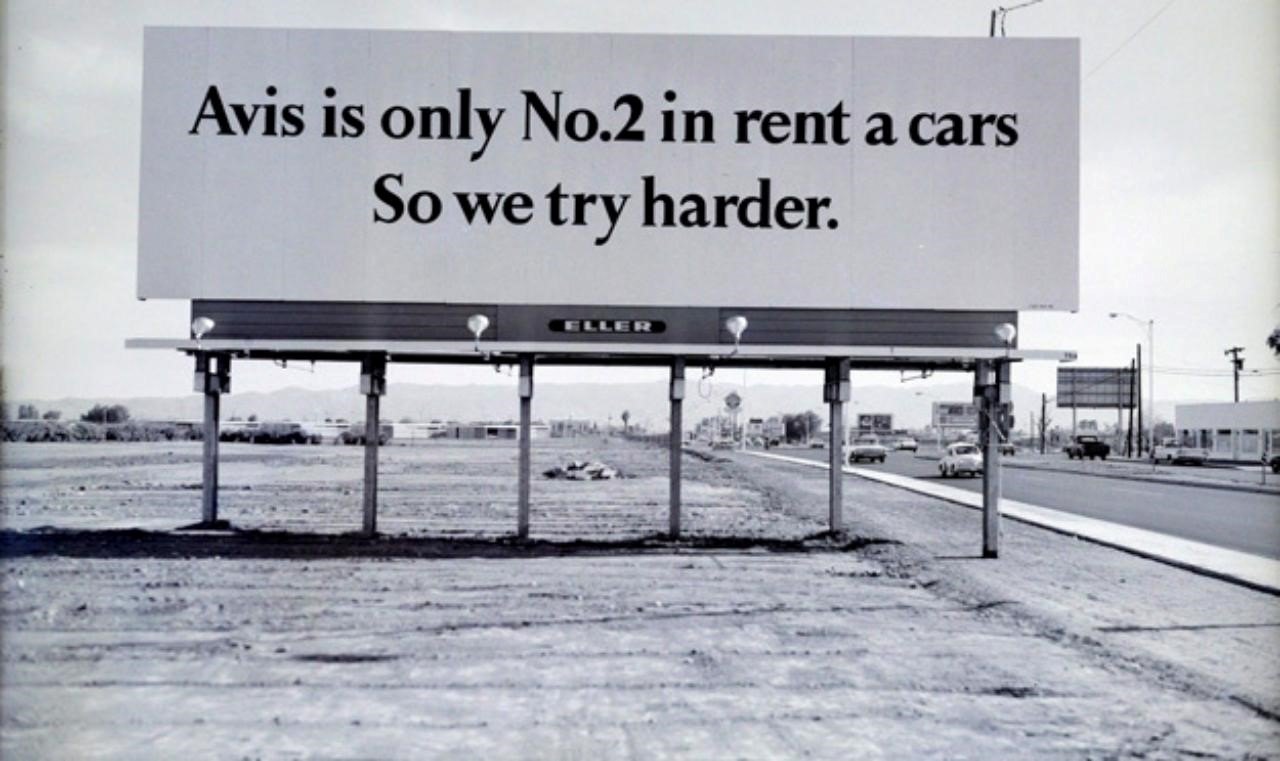
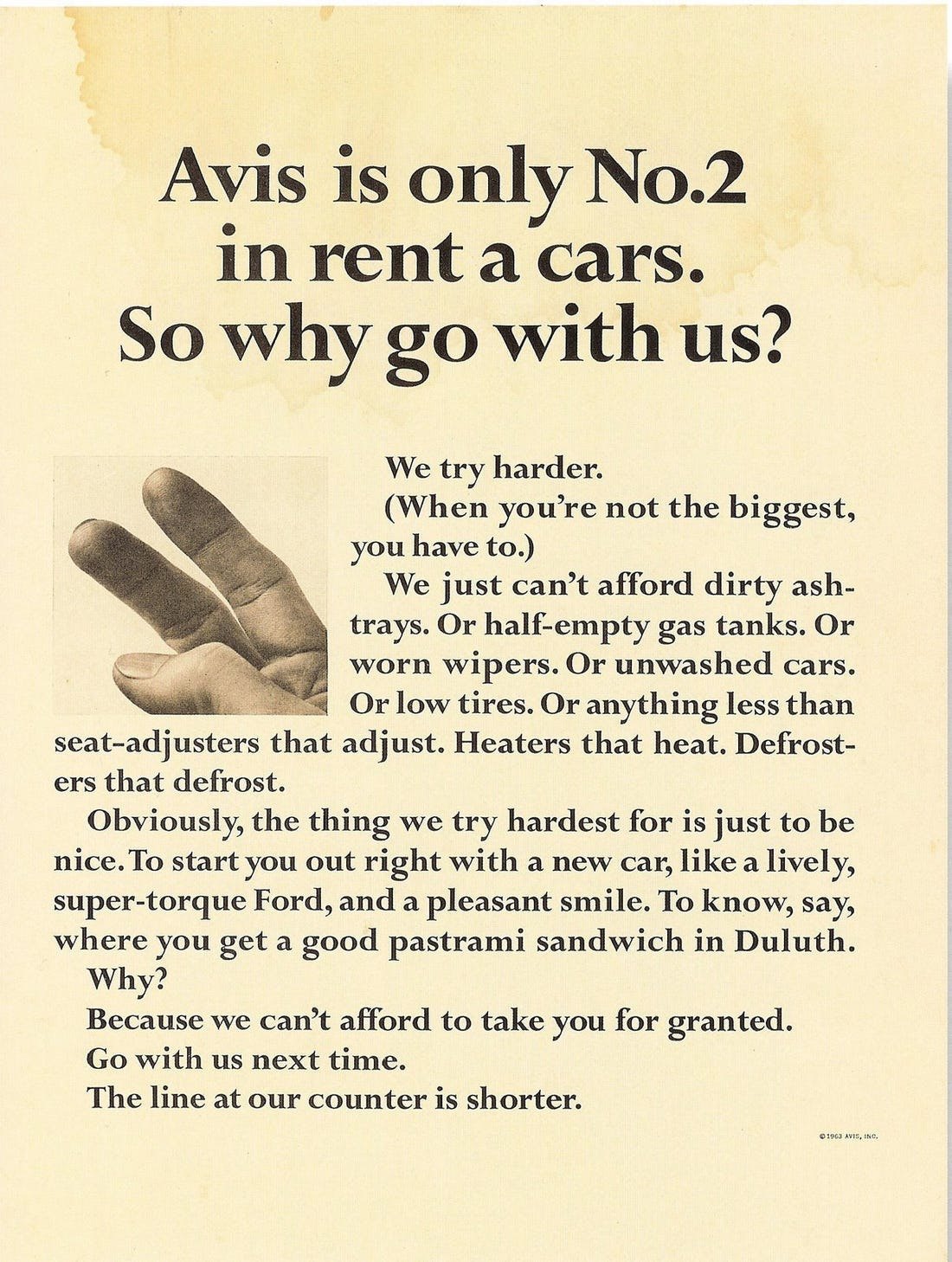
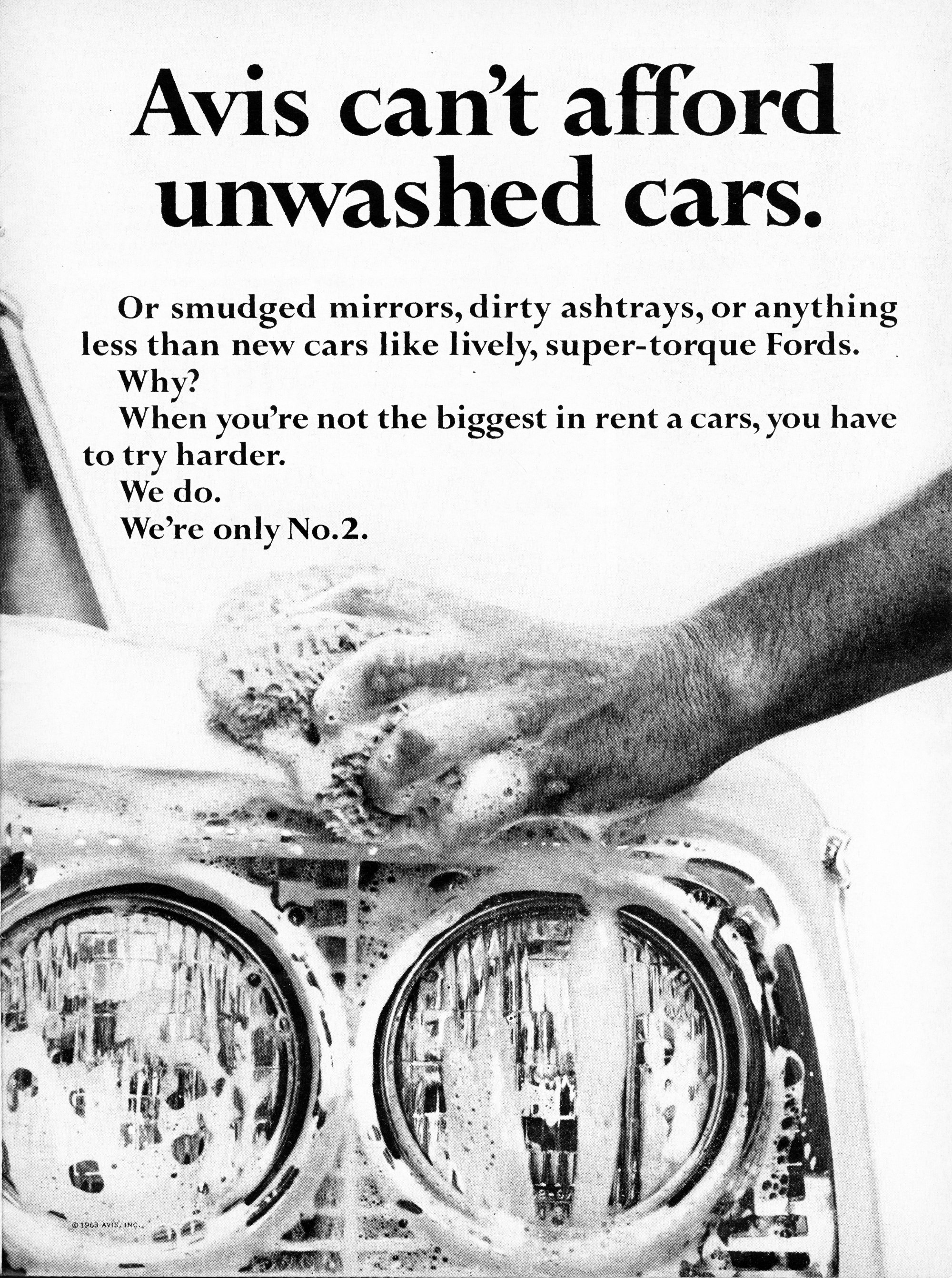
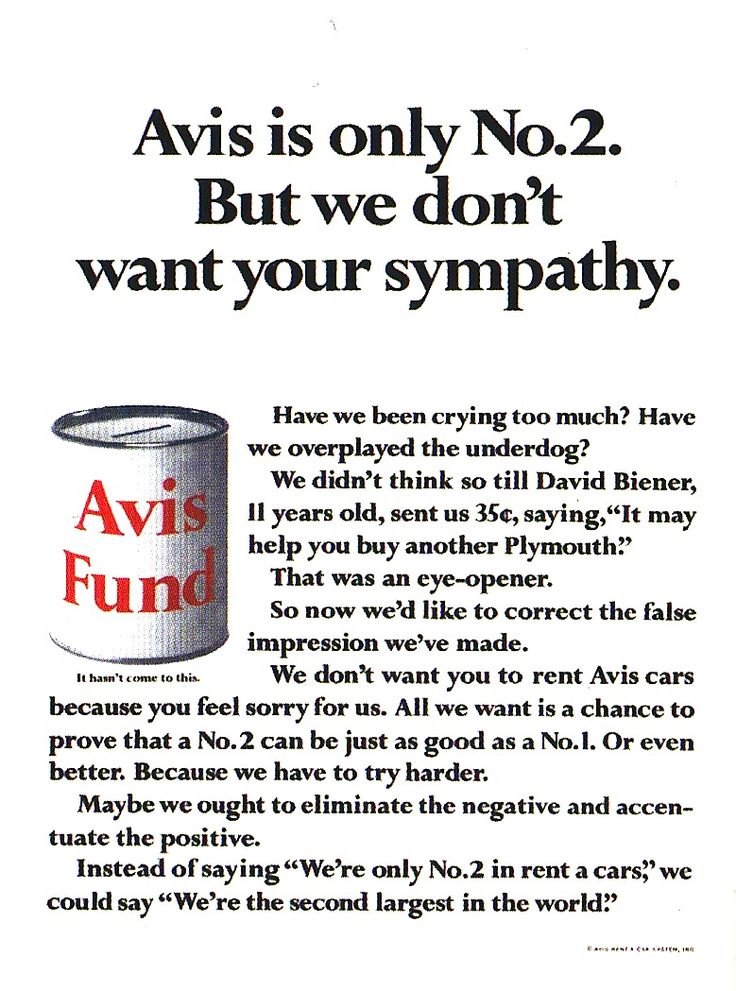
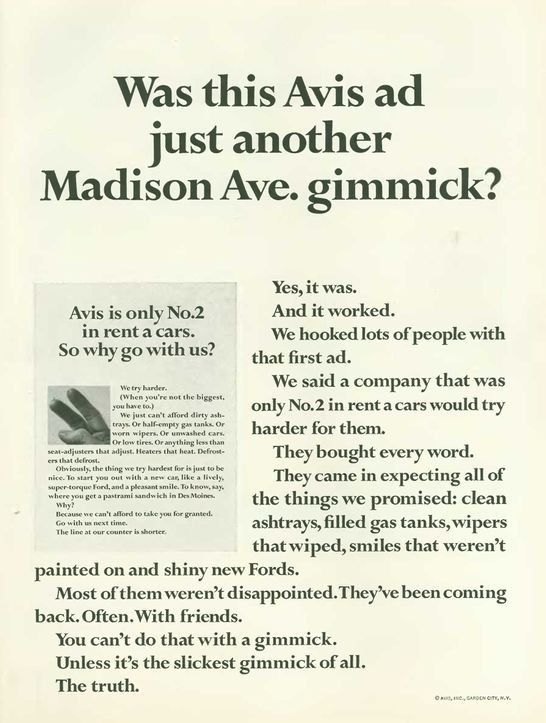
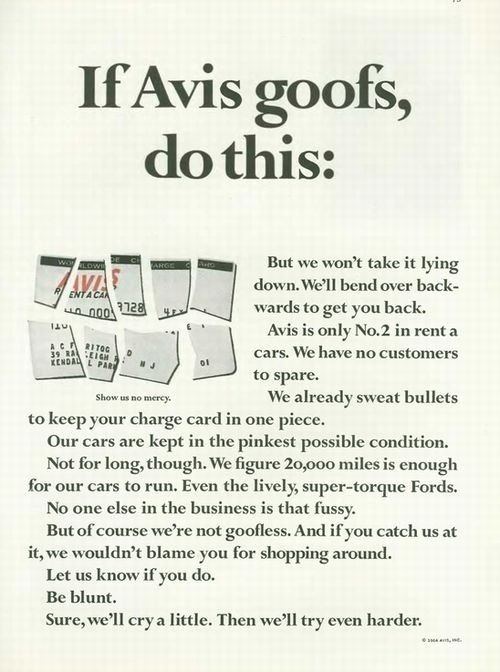
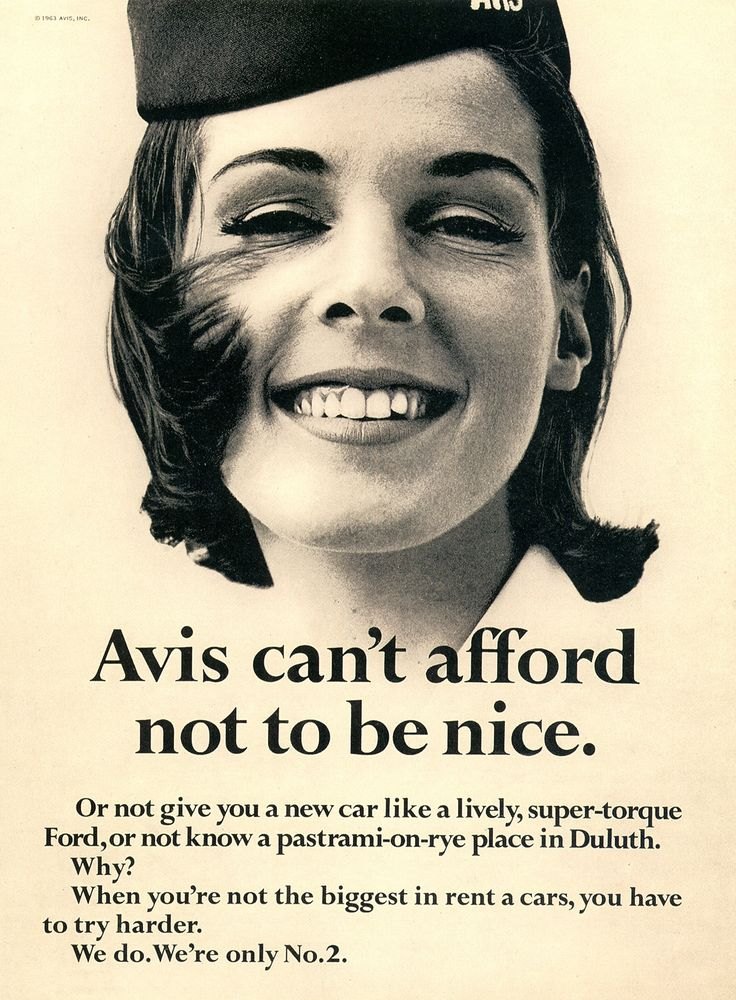
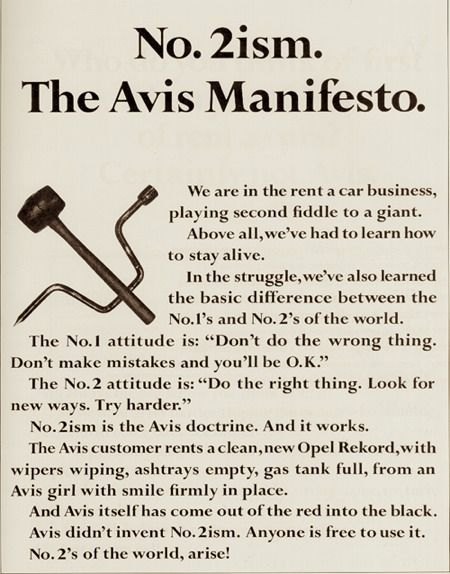
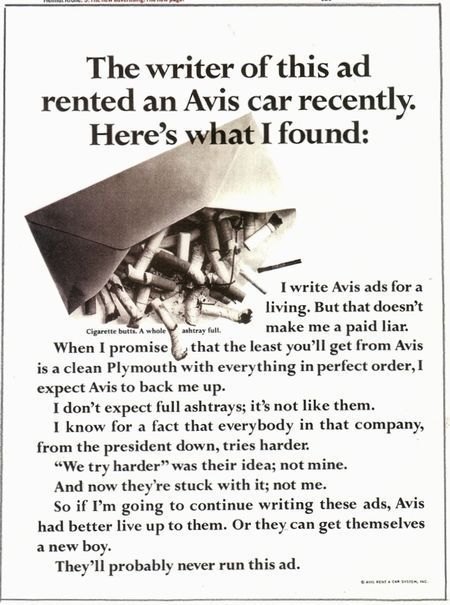
The first ad said it plainly: "Avis is only No. 2 in rent a cars. So why go with us?" The answer was "We try harder," and the copy listed what that meant in practice: clean cars, full tanks, wipers that work. Green said the early ads were "an operating manual for the company"; they read as promises the counter staff then had to keep. Bernbach ran the line despite the research. Within a year Avis went from a $3.2 million loss to a $1.2 million profit, and by 1966 Hertz was answering in print: "For years, Avis has been telling you Hertz is No. 1."
The work.
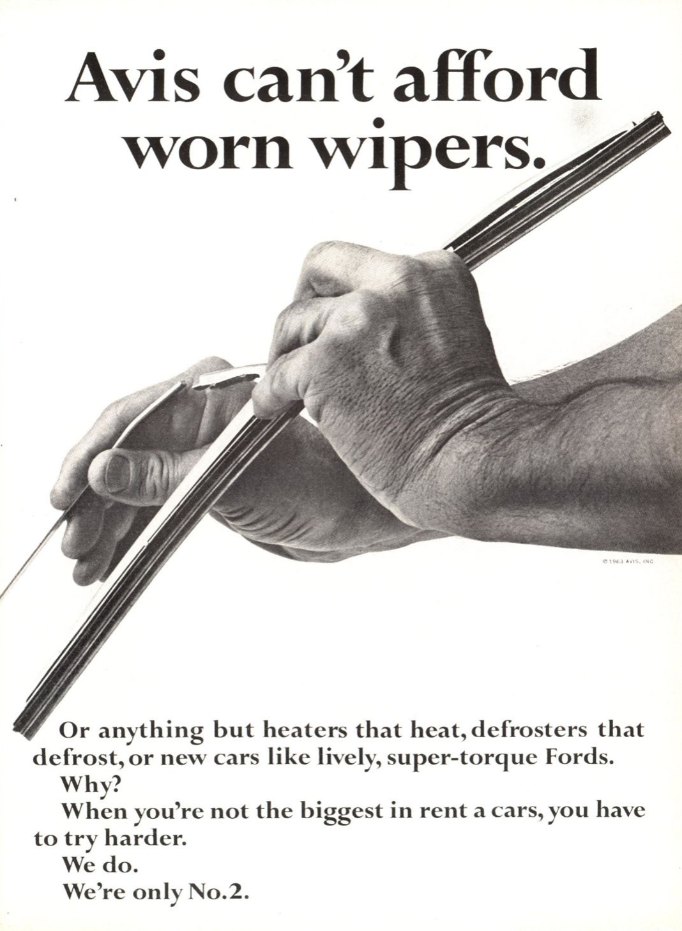
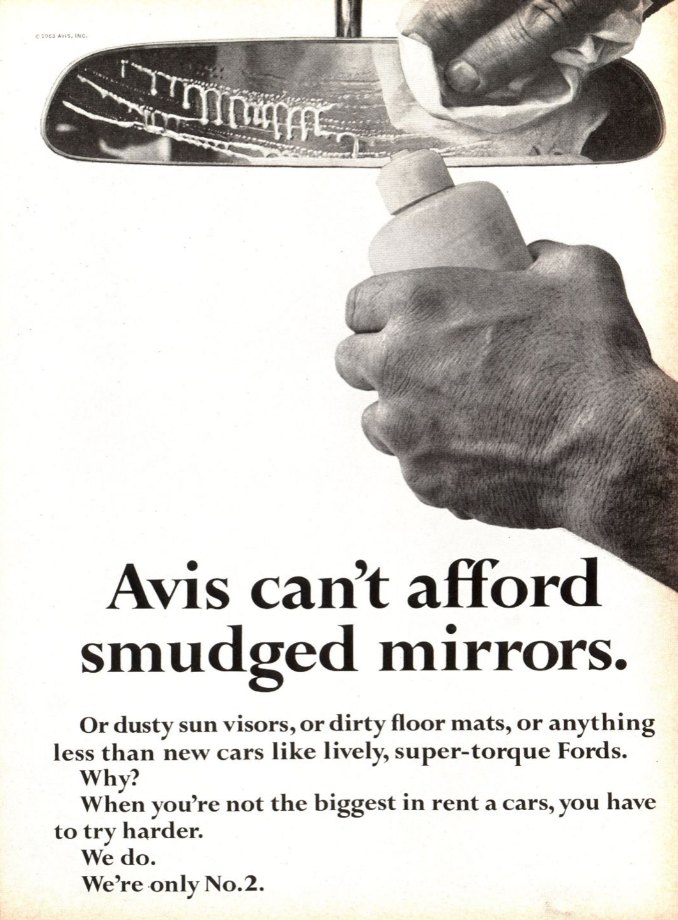
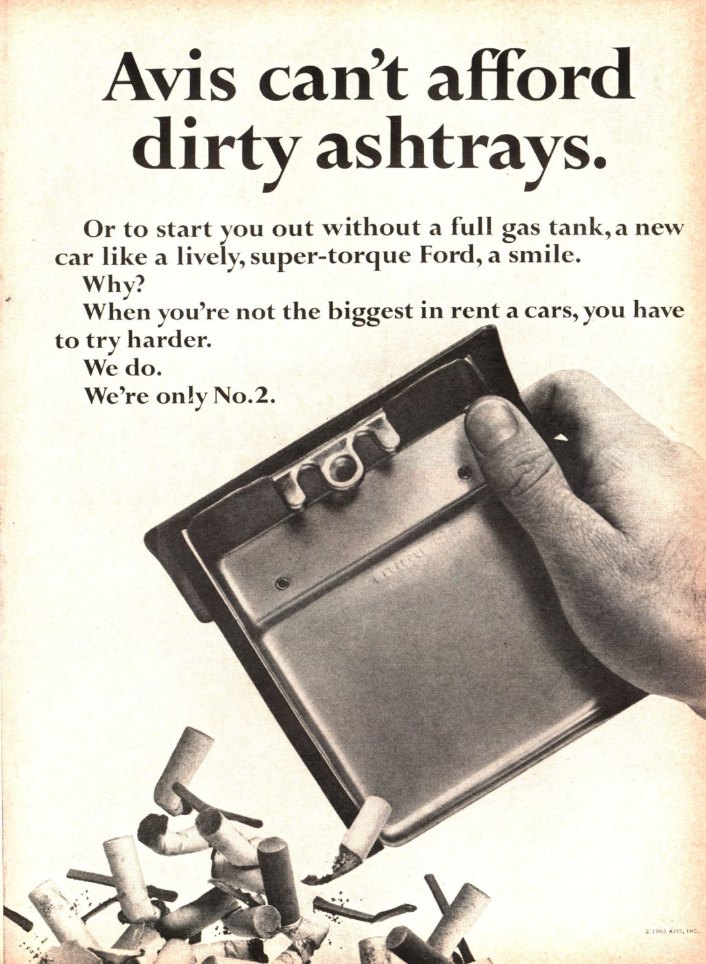
Film
Half the people in the research read "No. 2" as "not as good." Bernbach asked about the other half.
Back to the archive →