The Wall Street Journal · Fallon McElligott
The Wall Street Journal: The Daily Diary of the American Dream
A Minneapolis agency took the Journal from its agency of nearly forty years and recast a financial paper as the daily record of personal ambition.
The era.
The bull market that began in August 1982 was still running in the middle of the decade. Ronald Reagan won a second term in a landslide in November 1984. Share ownership, Wall Street pay and business-school applications all rose. Money and careers had become public subjects in a way they had not been ten years earlier.
The Wall Street Journal had the largest circulation of any American daily, but growth had stalled. Fortune reported in March 1985 that circulation stood at 1.96 million, down 3 percent from 1983. The paper had been built largely by direct mail, including Martin Conroy's 'two young men' subscription letter of the mid-1970s. Its general advertising had been with Batten, Barton, Durstine & Osborn for nearly forty years.
In January 1985 Fallon McElligott won the account, worth about $5 million, against Batten, Barton, Durstine & Osborn and Lord, Geller, Federico, Einstein. The Journal said the winning pitch offered 'a new, creative, and exciting approach.' The business took the Minneapolis agency's billings to about $48 million, with 65 employees. By September 1985 the new campaign was running.
The culture.
The American dream of the 1980s had changed shape. The postwar version was a house and a car. The new one was a career: promotion, a move to a bigger city, a business of one's own. The press named the people chasing it young urban professionals, and Newsweek called 1984 'The Year of the Yuppie.'
Advertisers took up the theme fast. In September 1985 the Los Angeles Times reported that Madison Avenue was pushing patriotism, with beer and ice cream ads stressing the American dream, and named the Journal's new campaign among them. Pride after the 1984 Los Angeles Olympics and the Reagan re-election ran through consumer advertising.
The challenge came from outside New York. Fallon McElligott worked from Minneapolis, in a plain print style built on a big headline and one image. Its art director Dean Hanson later said the agency proved New York was not the only place that mattered anymore. The Journal account was the clearest early sign.
The problem.
A paper with stalled circulation was pictured on the trading floor, while the readers it needed next were everyone in America who wanted to get ahead.
The Wall Street Journal had authority but had stopped growing. Its circulation stood at 1.96 million in early 1985, down 3 percent from 1983, and the mailings that built it could reach only so far.
The paper's public image was tied to stock tables and the financial district. The readers it needed next were ambitious managers and professionals in every industry, most of whom had no habit of buying it. The campaign had to widen what the paper meant without cheapening the authority that made it worth reading.
In January 1985 the Journal invited Fallon McElligott to submit a circulation-building campaign, against Batten, Barton, Durstine & Osborn, its agency for nearly forty years, and Lord Geller Federico Einstein. Fallon McElligott won, and the Journal said its campaign offered 'a new, creative, and exciting approach.'
The solution.
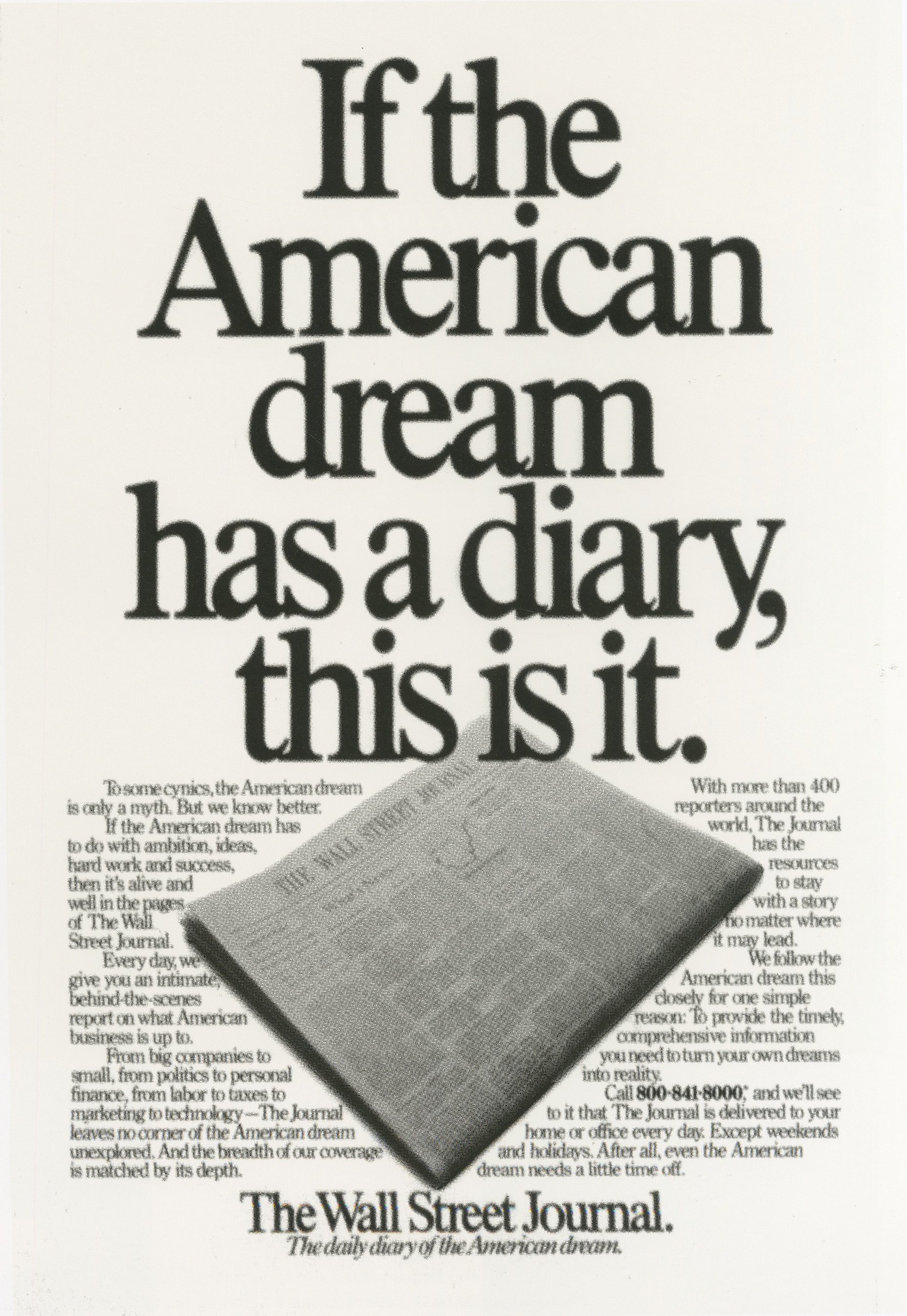
Move the paper from the market to the reader: the Journal as the daily diary of the American dream.
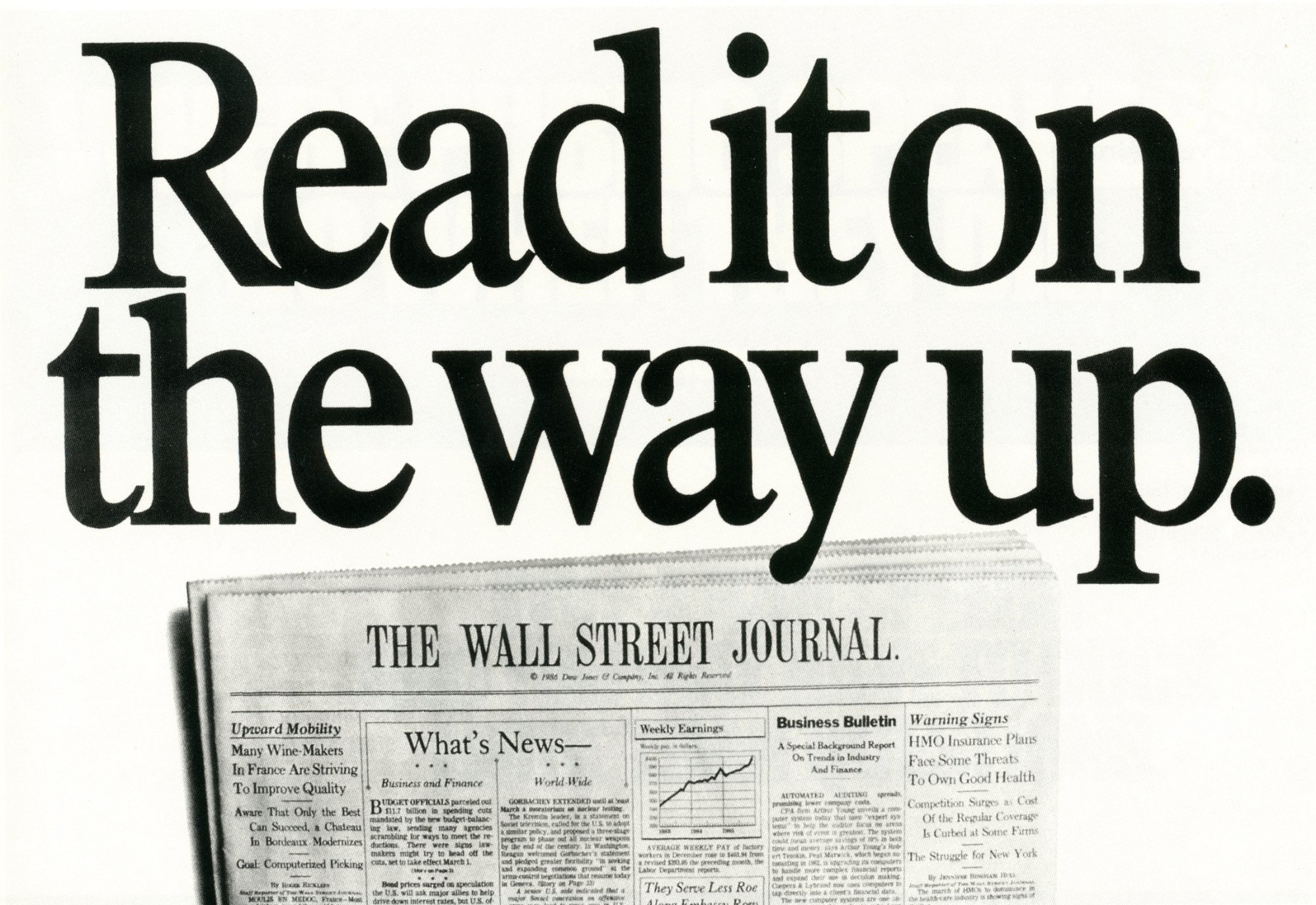
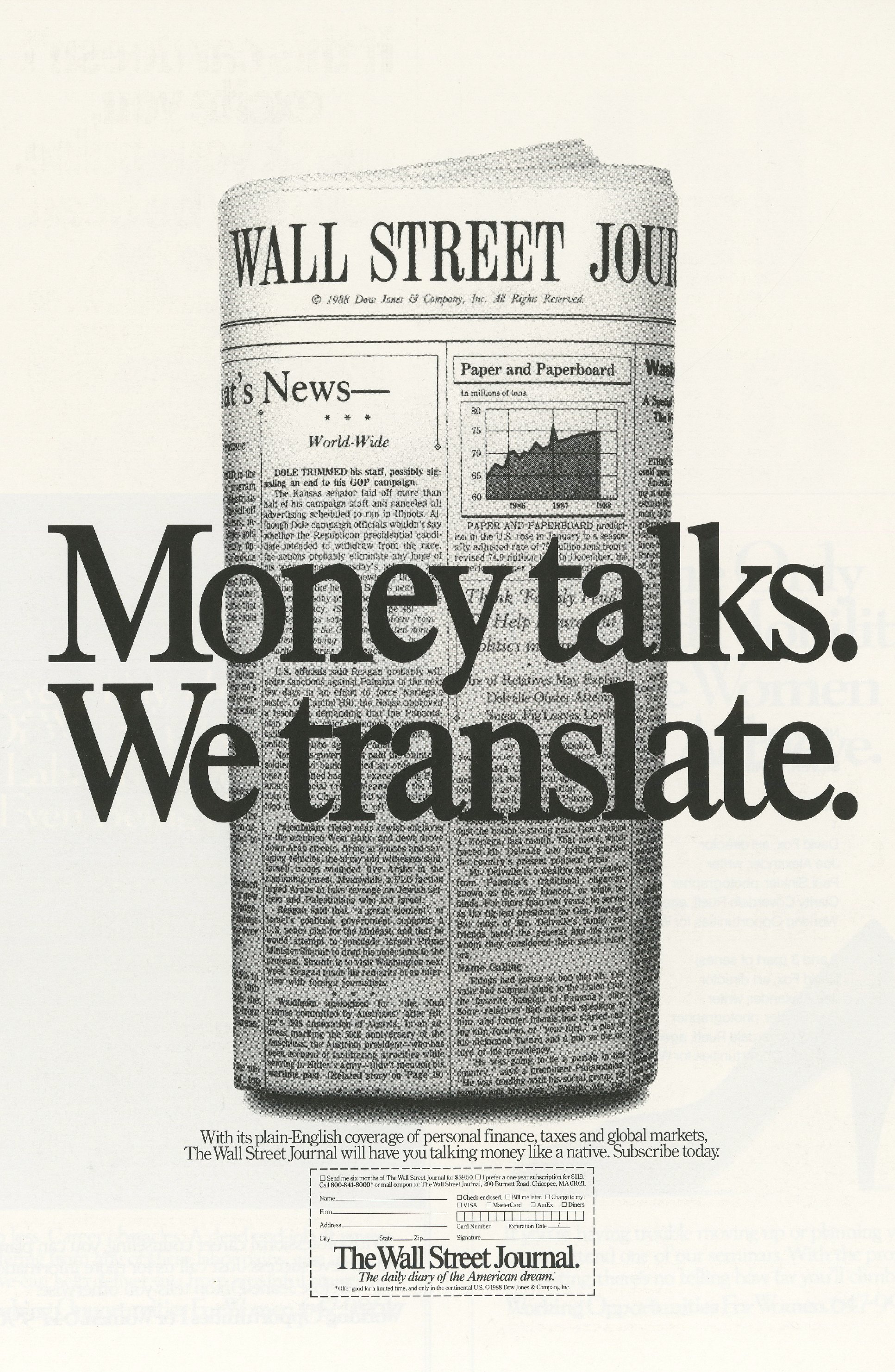
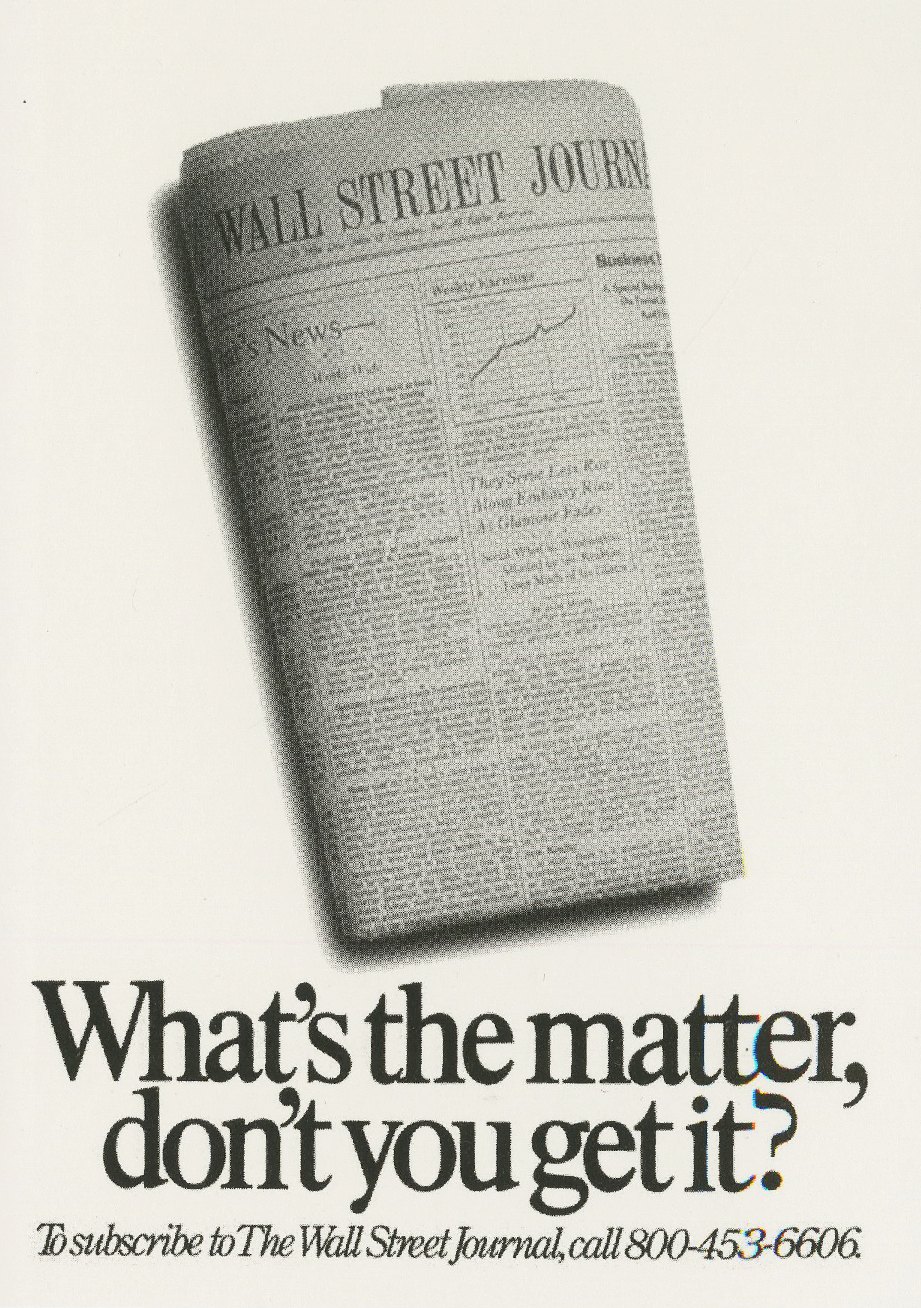
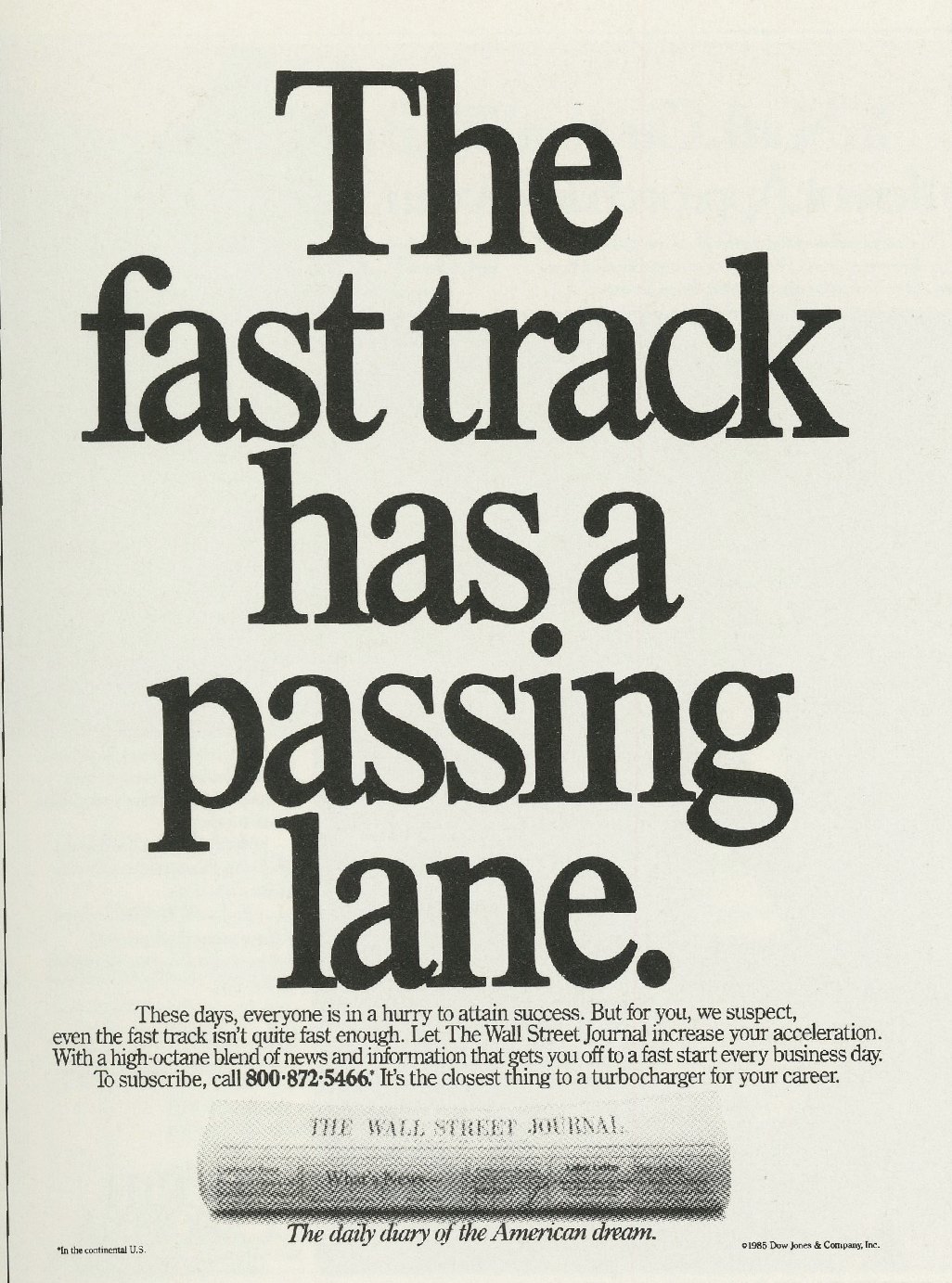
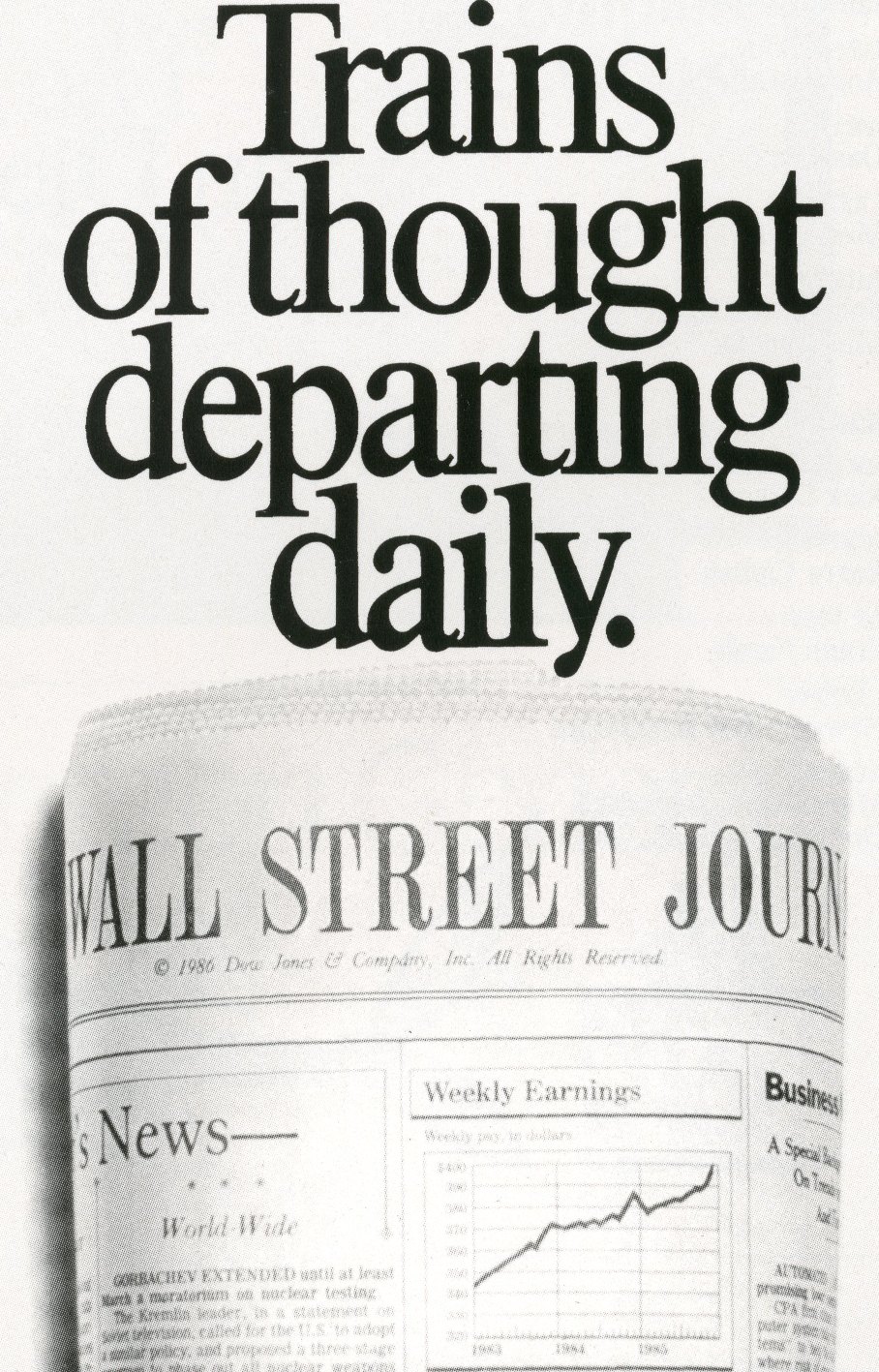
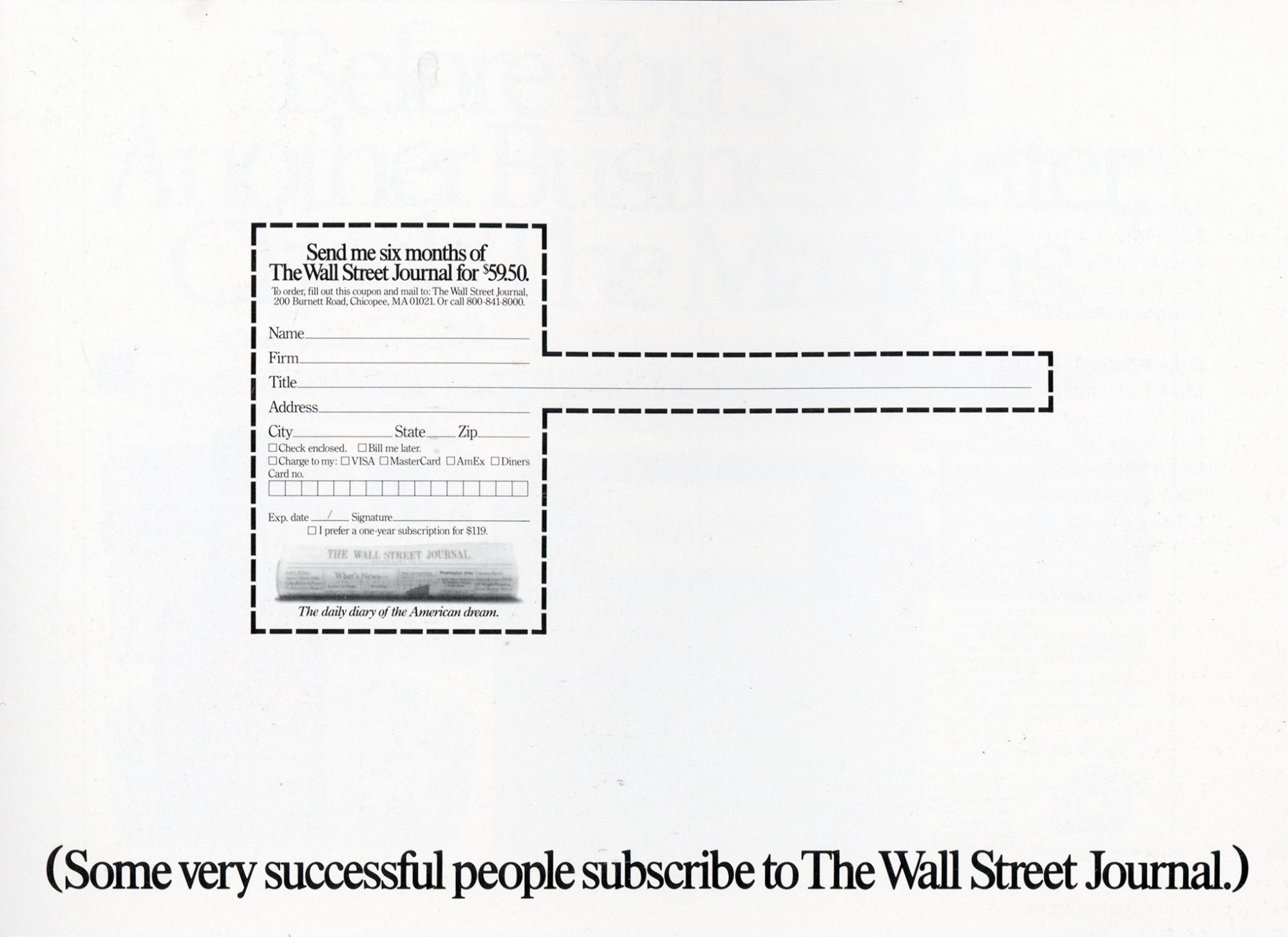
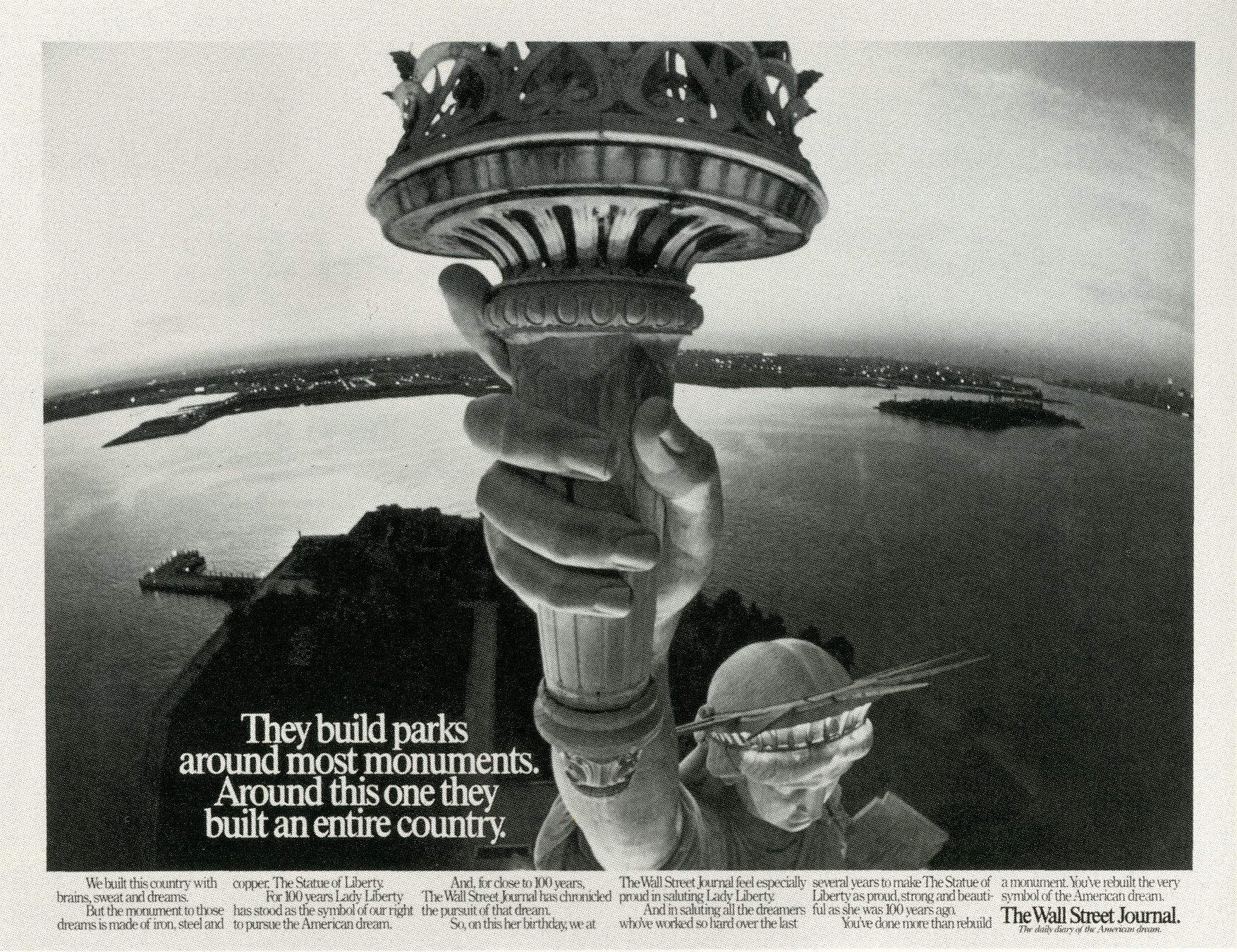
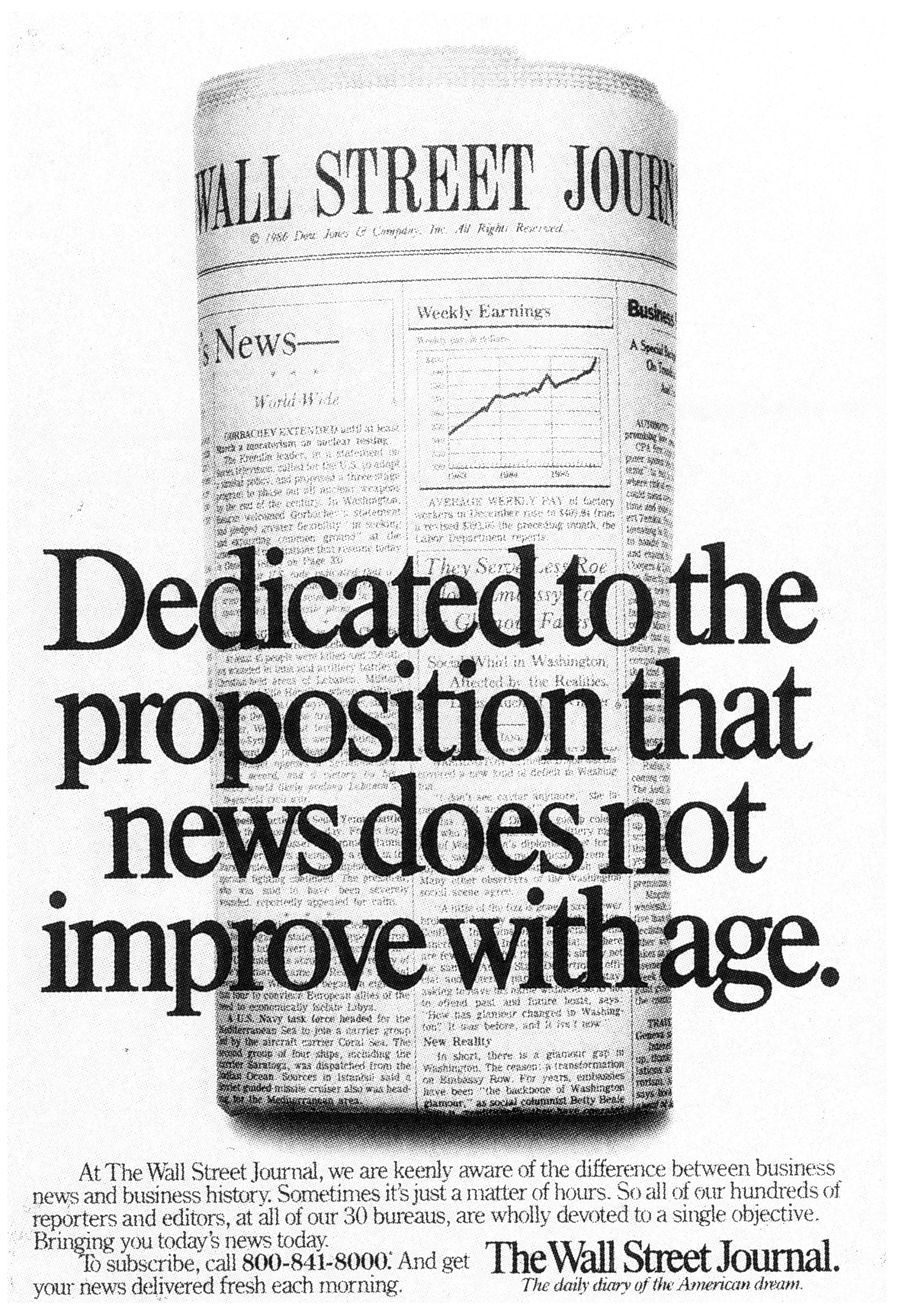
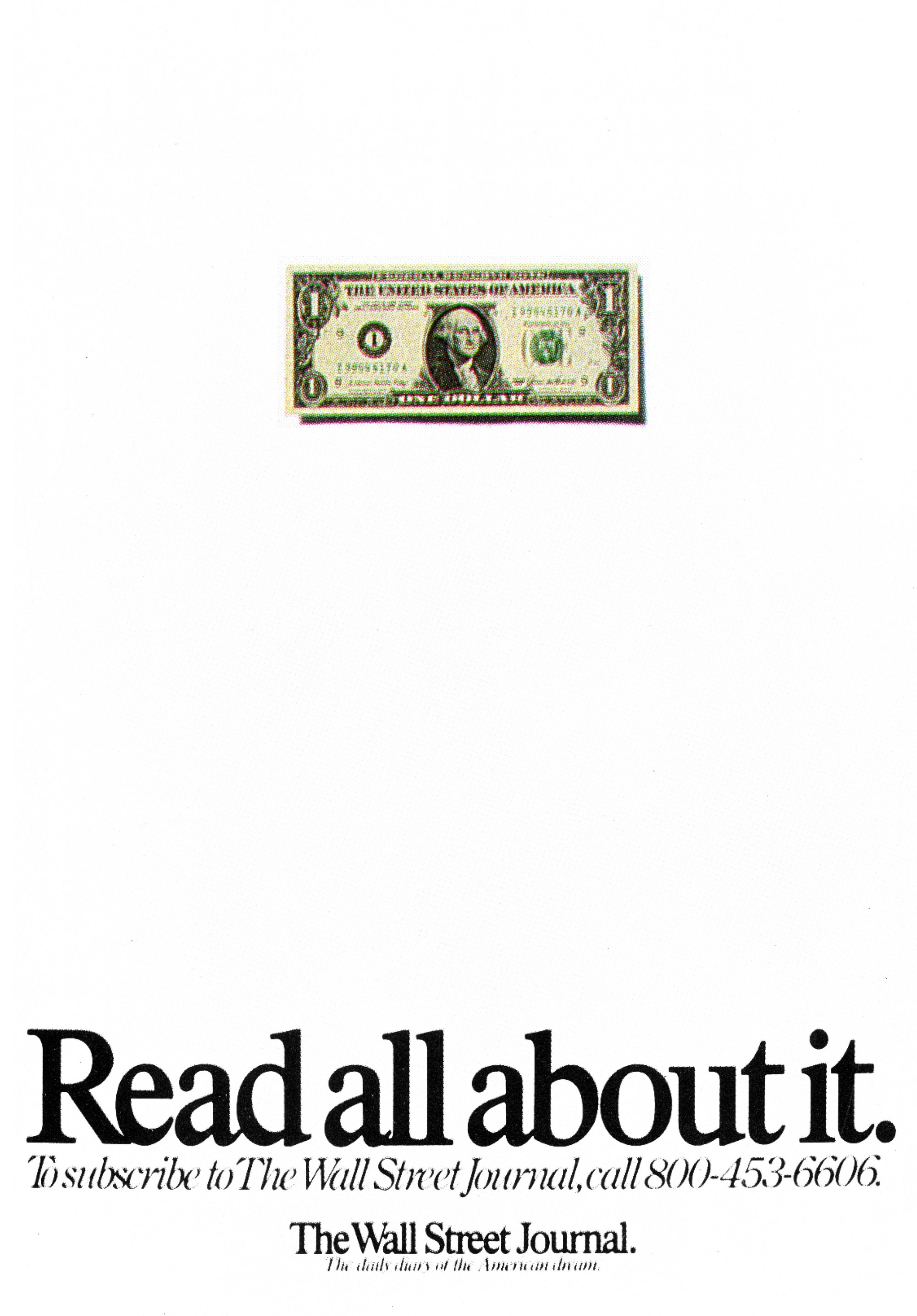
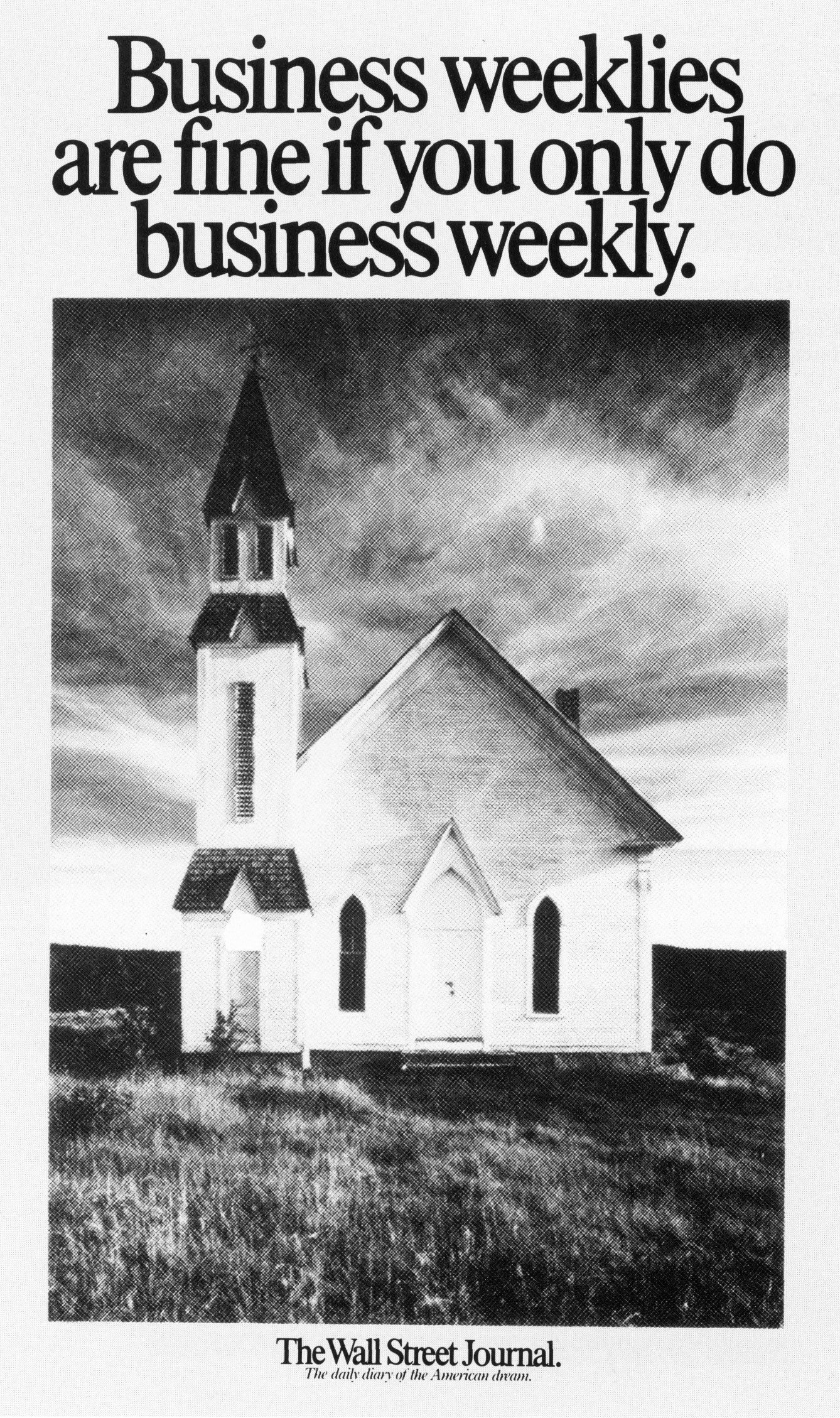
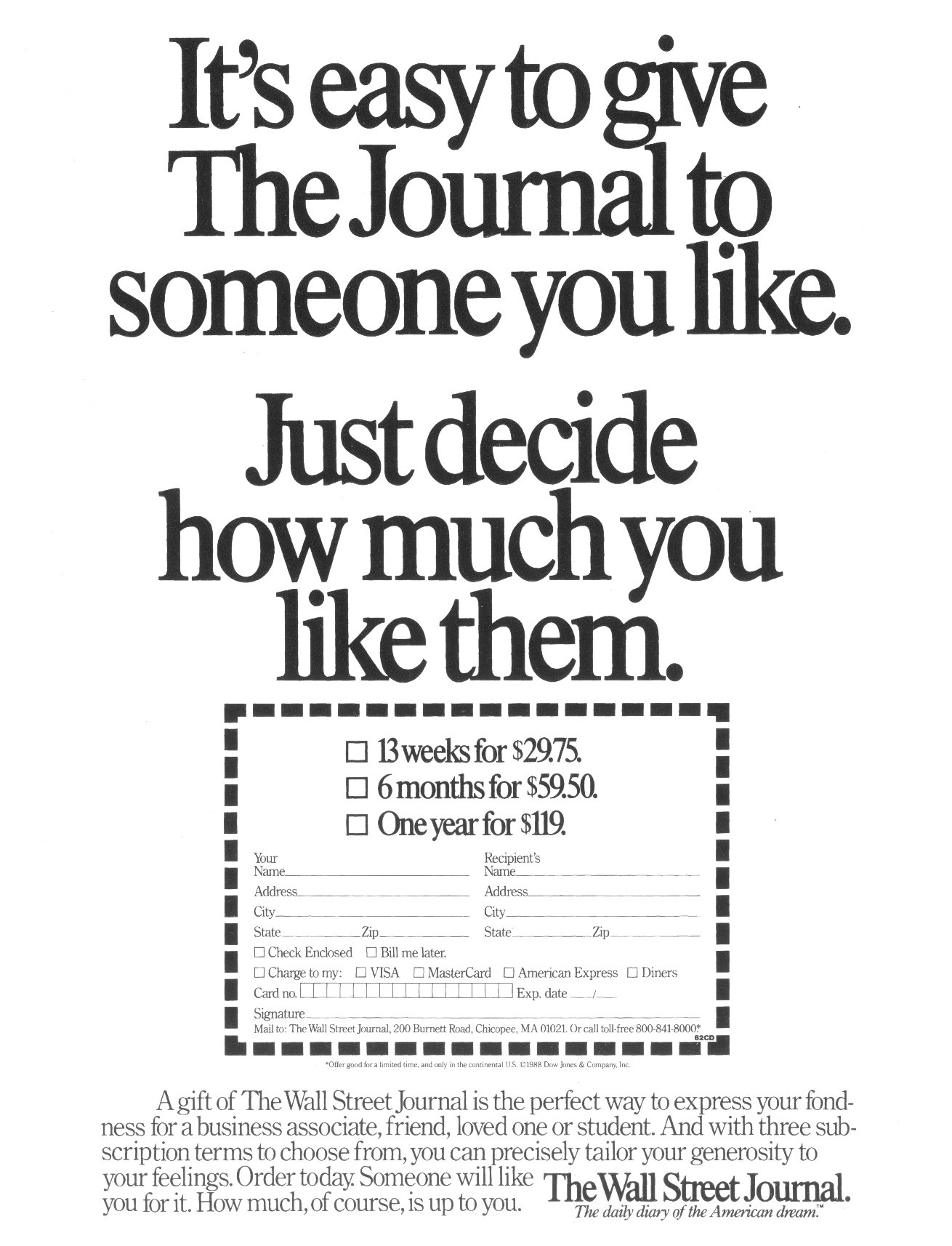
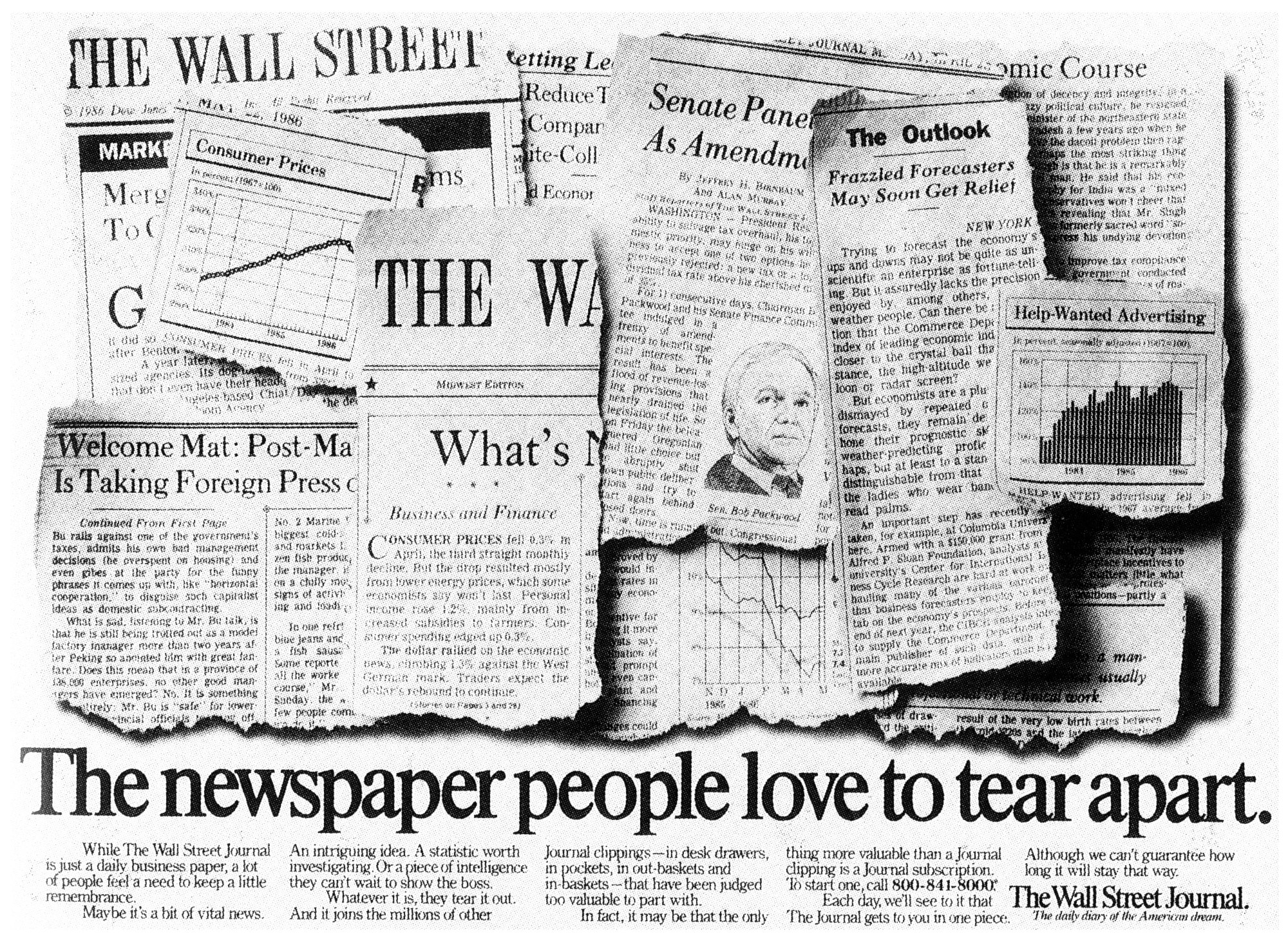
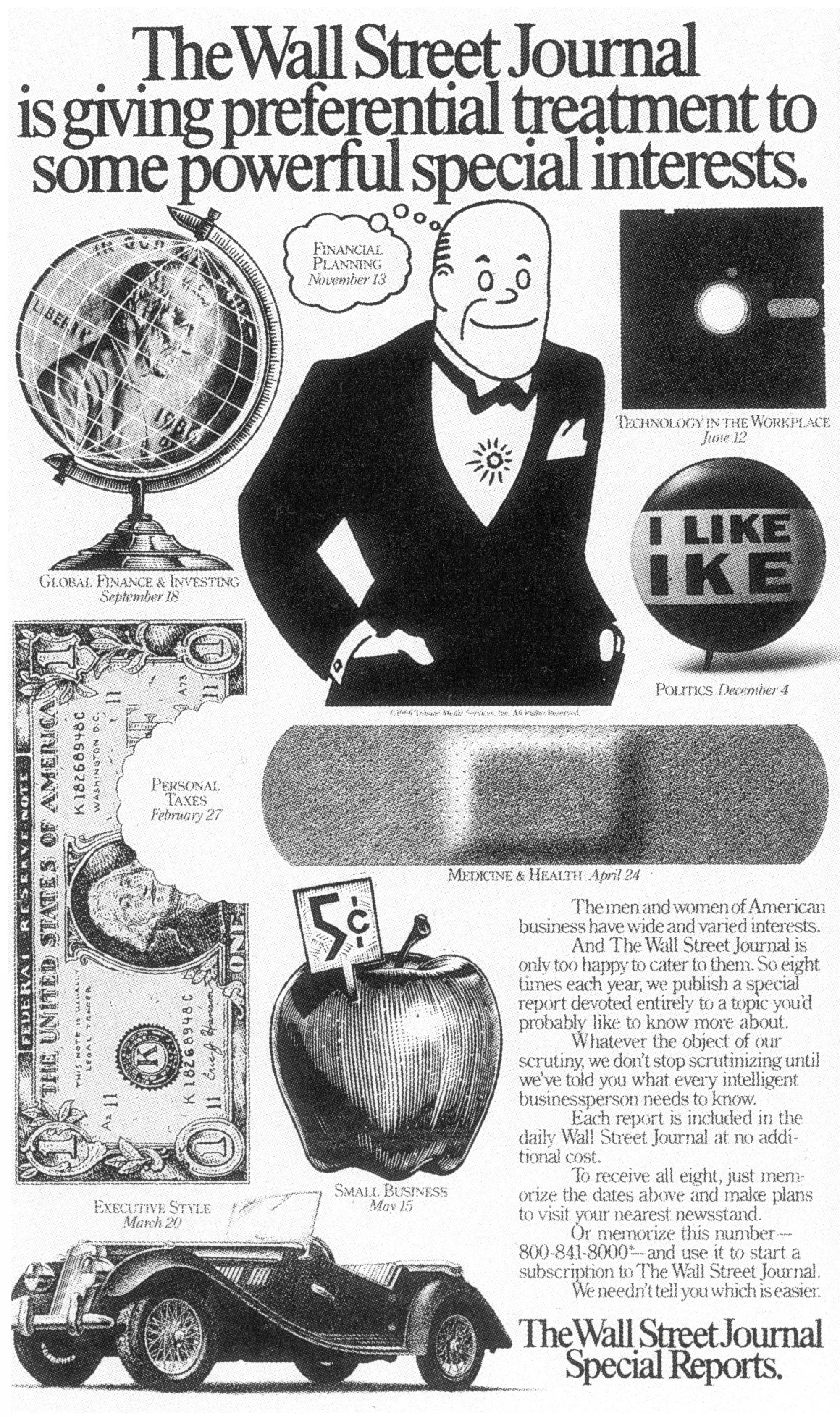
Fallon McElligott tied the Journal to the reader's own story. The line 'The daily diary of the American dream' made the paper the record of anyone's rise, in any industry, and kept its seriousness. The executions used the agency's plain print style: a large headline and a single image. Dave Dye's archive holds about a dozen, filed under labels such as 'Fast Track', 'Trains', 'President' and 'Fabric'. Dow Jones registered the line as a trademark in January 1989. The filing gave November 25, 1985 as its first use, though the Los Angeles Times had described the campaign on September 9, 1985. The account ended after a mocking 1987 letter to a critic of one of the agency's house ads, signed by another designer and widely attributed to McElligott, led US WEST, then the Journal and Federal Express, to leave.
The work.
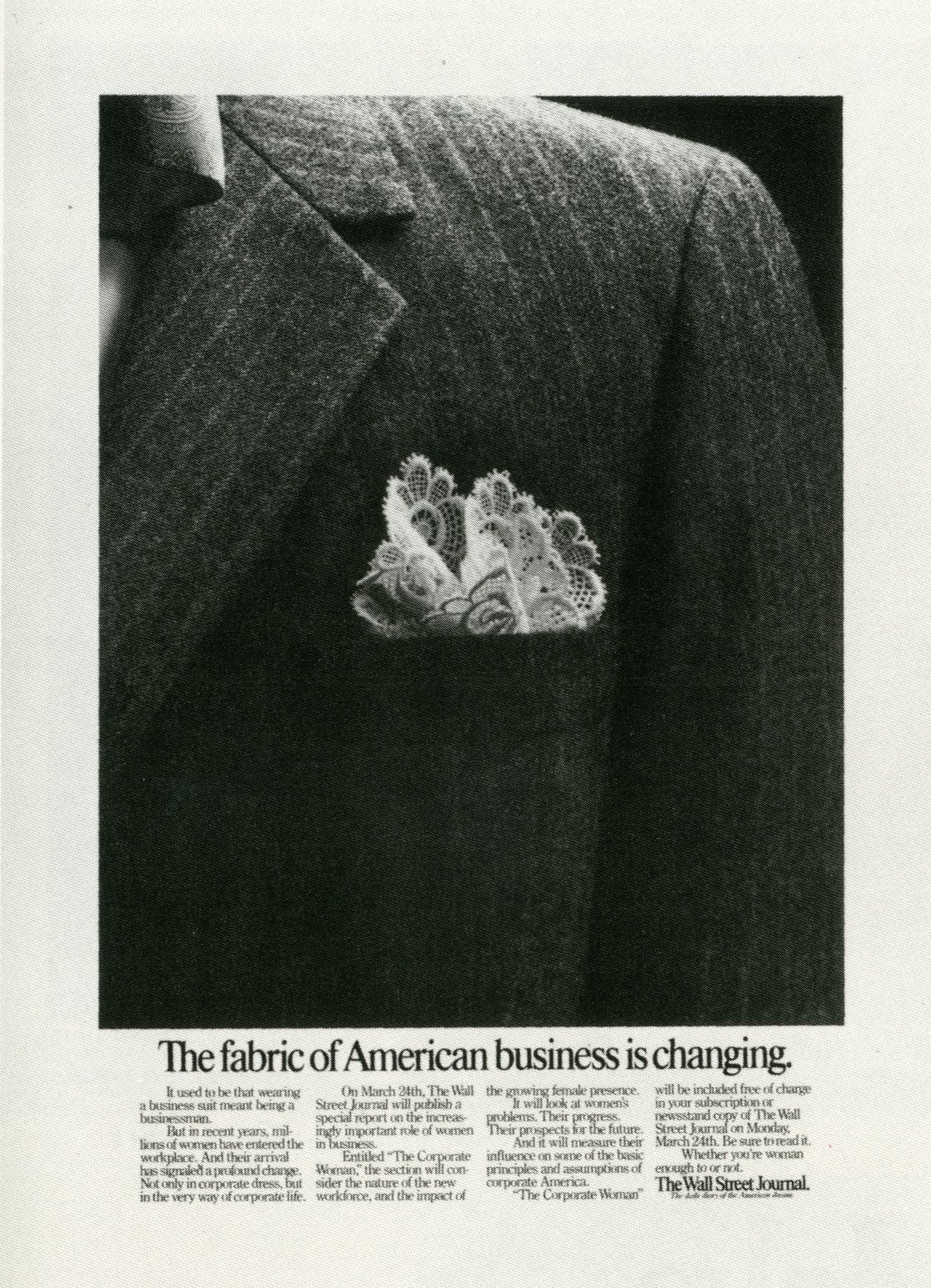
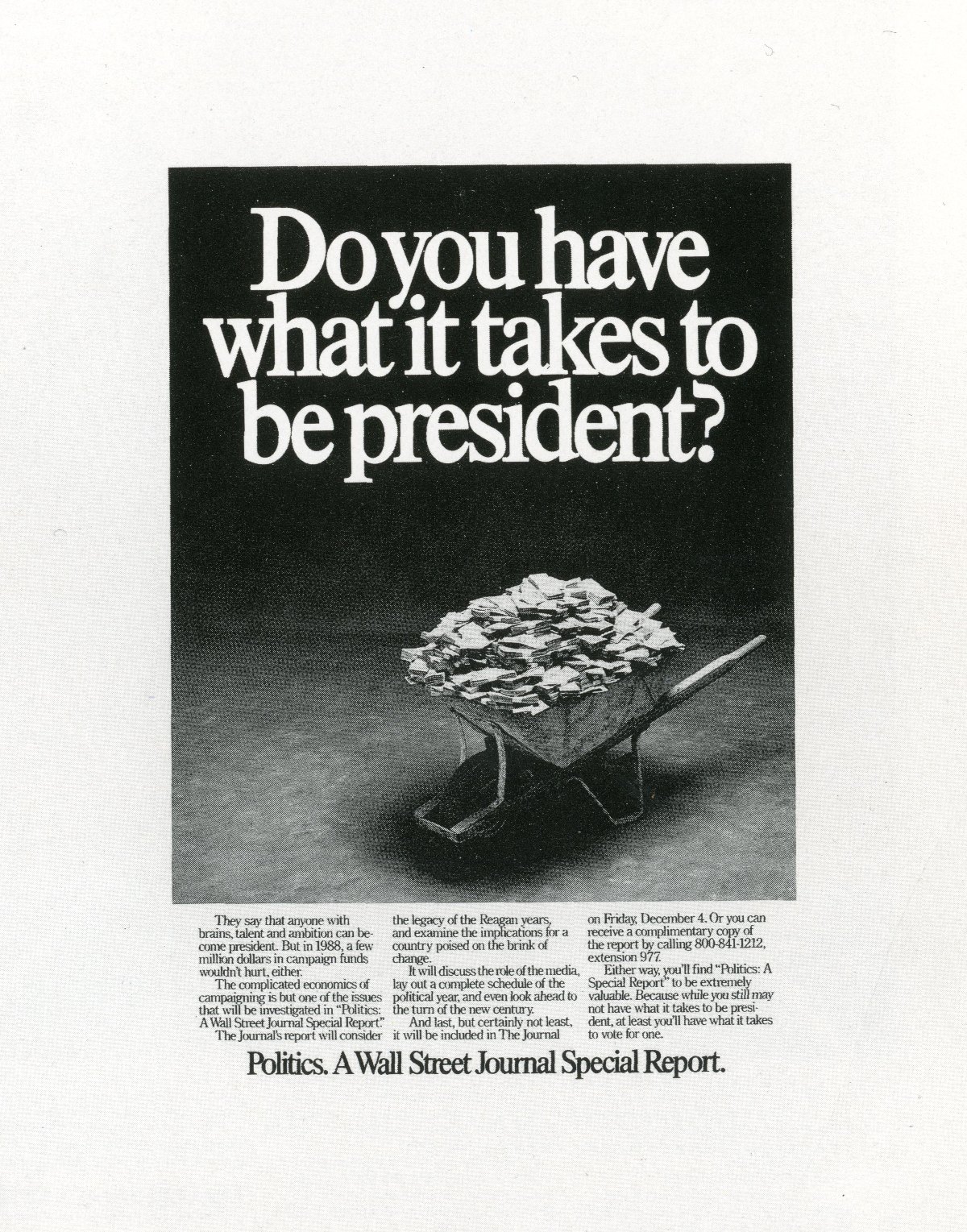
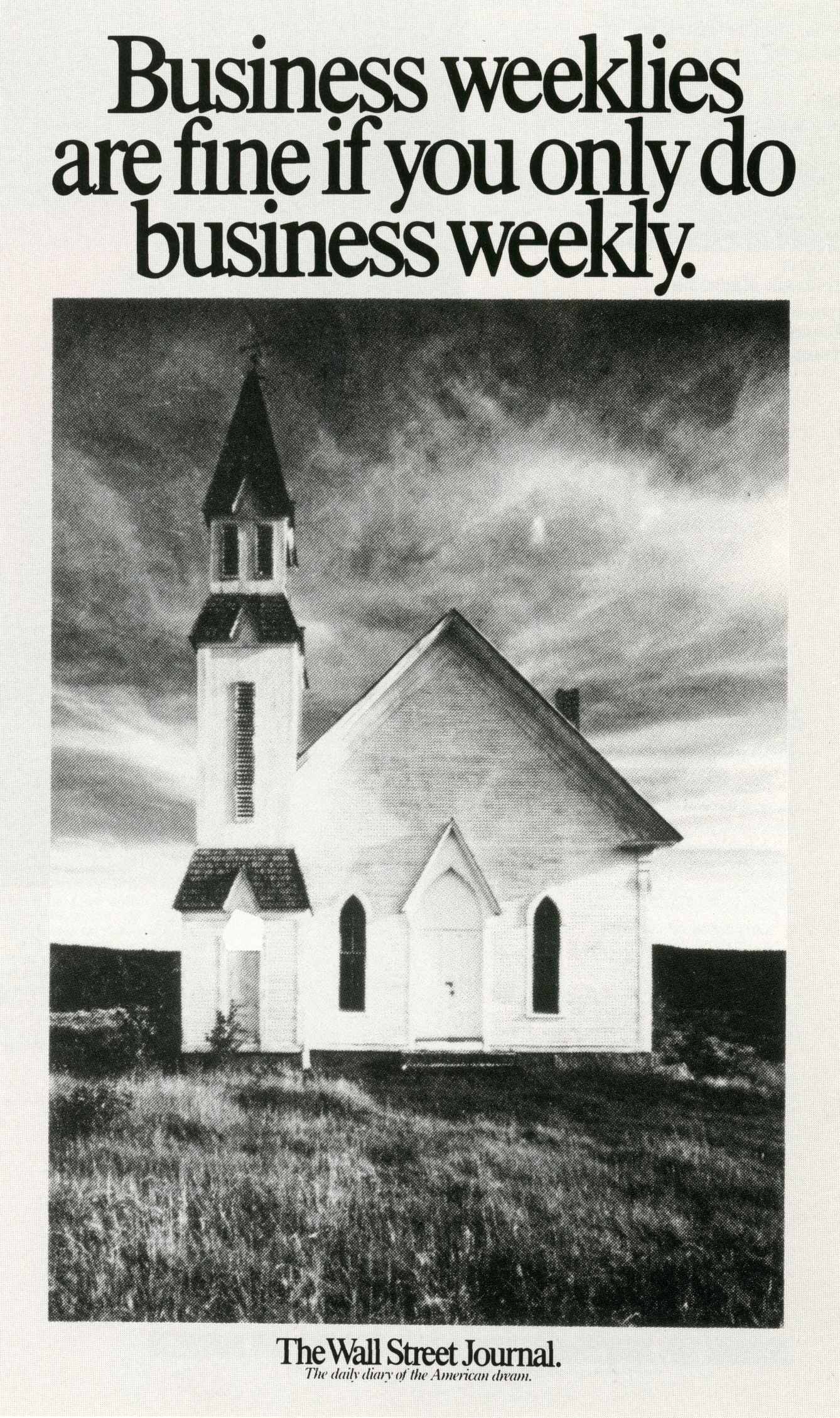
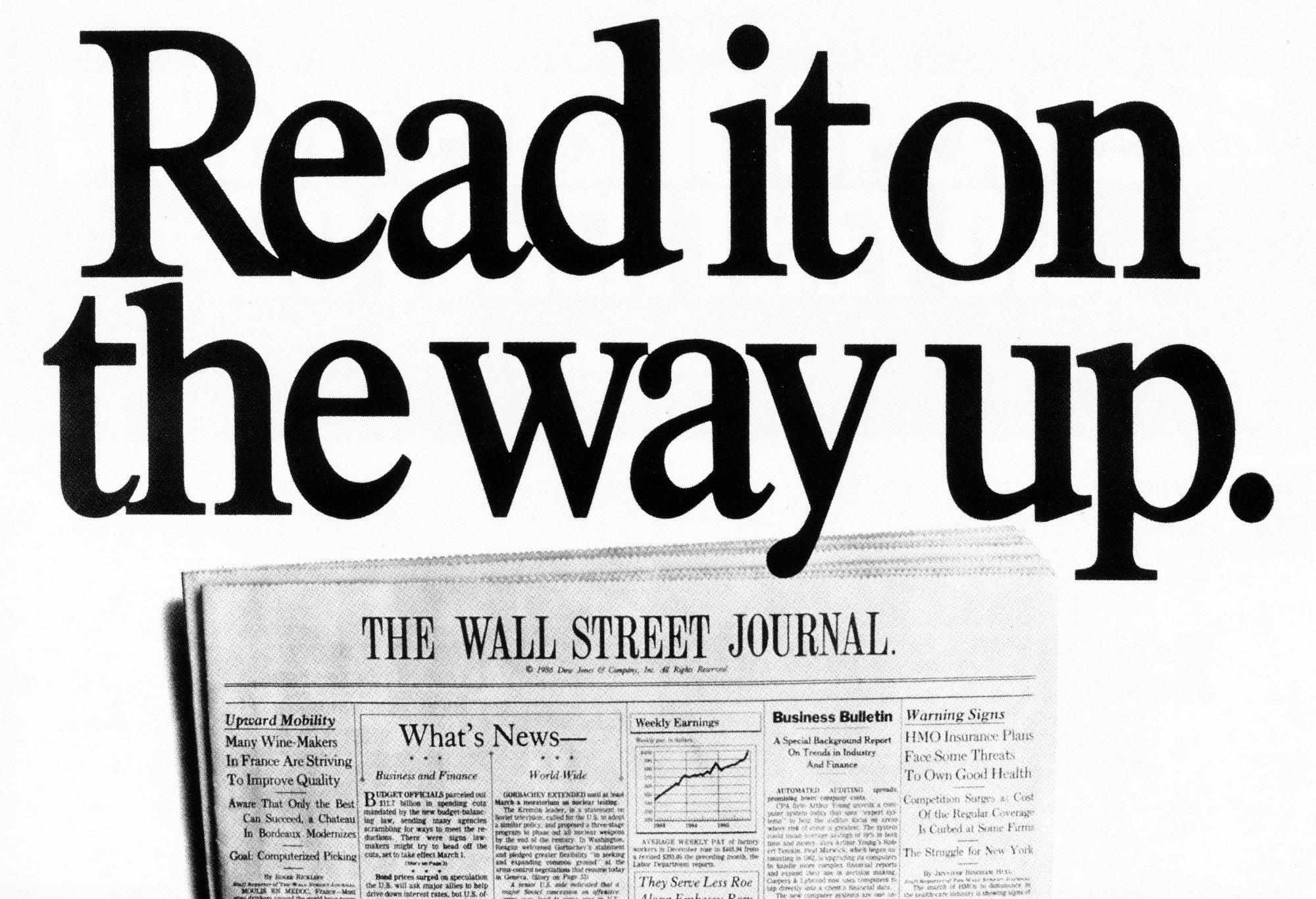
Same shape of problem.
A Minneapolis shop took the Journal from its agency of forty years and sold it as a diary.
Back to the archive →