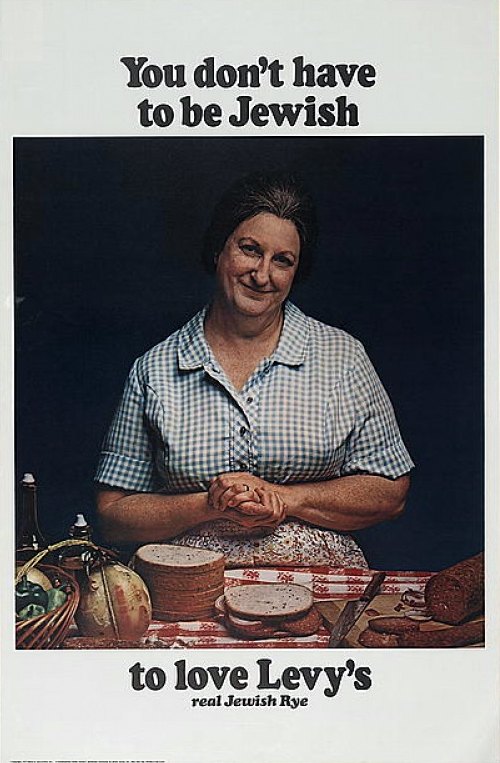
You Don't Have to Be Jewish to Love Levy's
The clearest proof in the Doyle Dane Bernbach canon that a brand's narrowest attribute can be the thing that opens it up.
The era.
By 1961 Doyle Dane Bernbach had been arguing its case on Madison Avenue for twelve years. Ohrbach's was behind it, Volkswagen was running, and the house method was fixed: one photograph, one line, no decoration, and a reader assumed to be intelligent. The agency was also an outsider shop by construction — Bernbach hired Jewish, Italian and Greek writers and art directors into a business that had largely kept them out, and the work carried the accent of people who had spent their lives outside the room.
The medium mattered as much as the method. Levy's ran on New York subway platforms and car cards, read at arm's length by a captive, mixed, unhurried audience with nothing else to look at. That format does not permit body copy or a second thought. It gave Doyle Dane Bernbach a discipline it already wanted: a face, a line set in Cooper Black, and the loaf.
The culture.
Post-war Brooklyn was emptying of the people Levy's had been built for. Jewish families were leaving Williamsburg and Brownsville for Long Island and Queens, and the ones who stayed were increasingly buying mass-produced sliced bread. The account's problem was demographic before it was creative: the neighbourhood the bakery depended on was moving out of range, and the trade press it advertised in reached only the customers it already had.
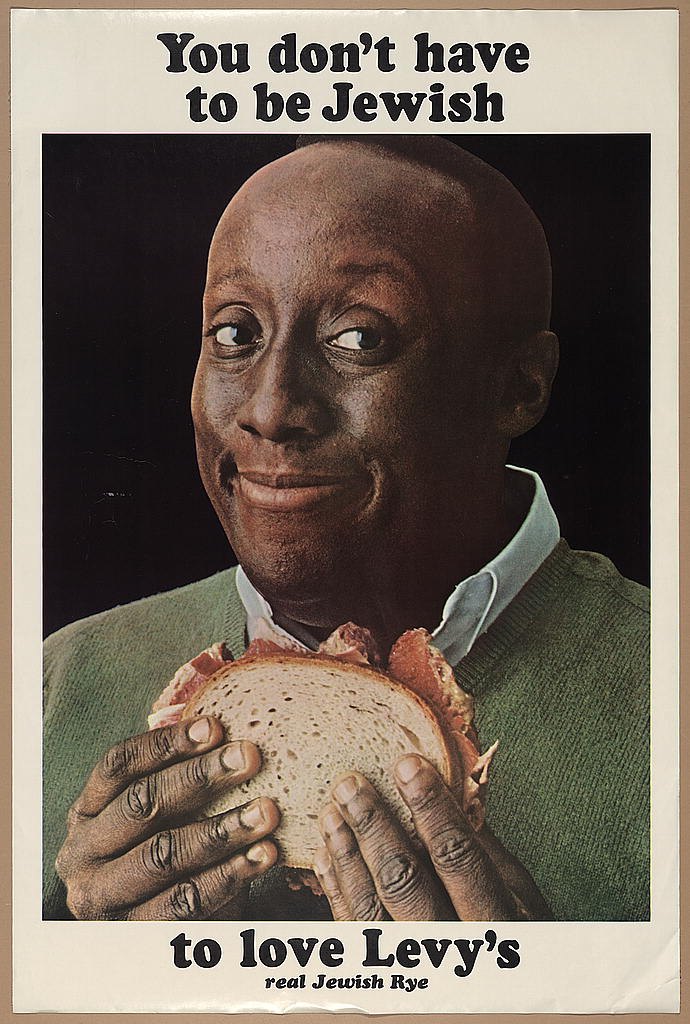
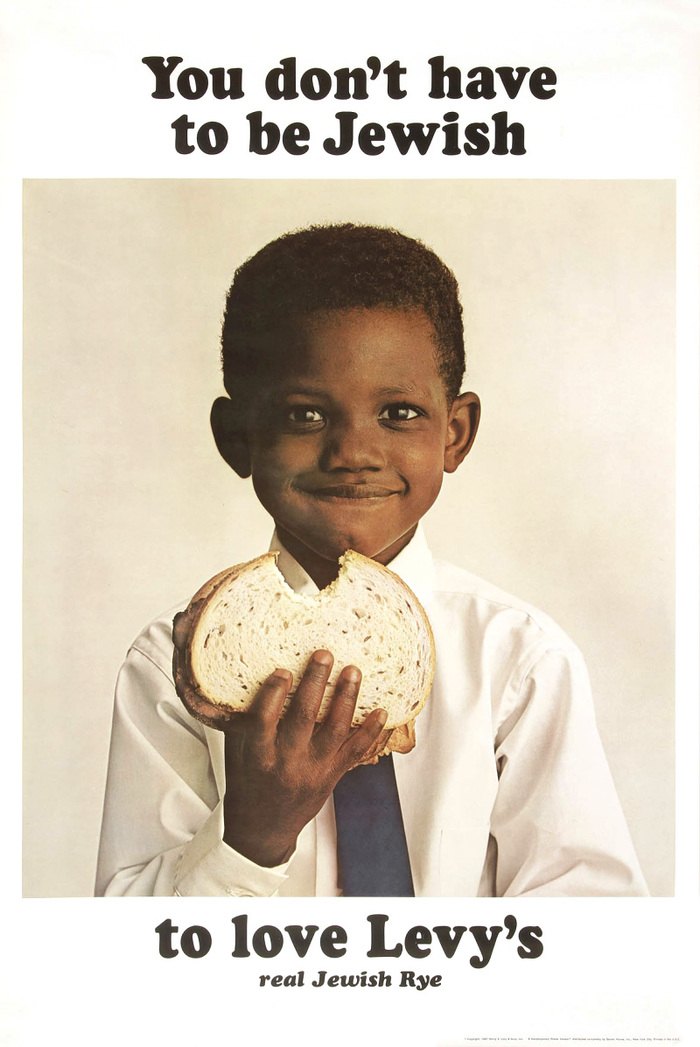
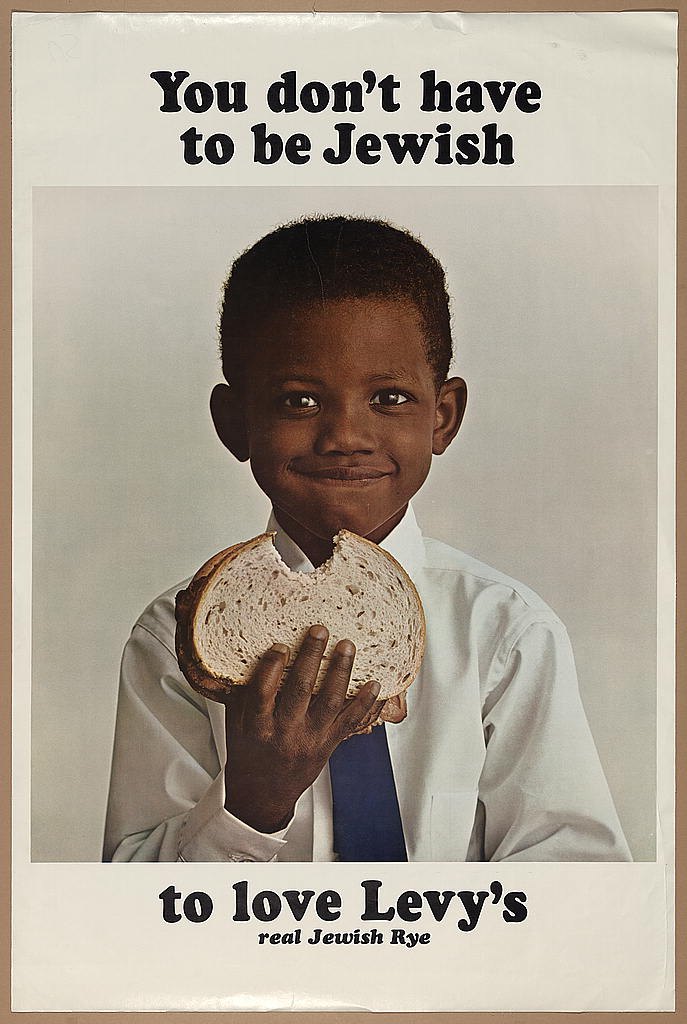
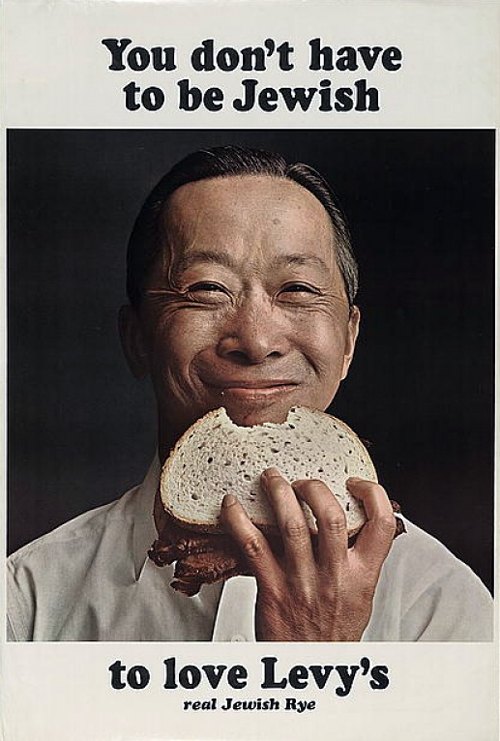
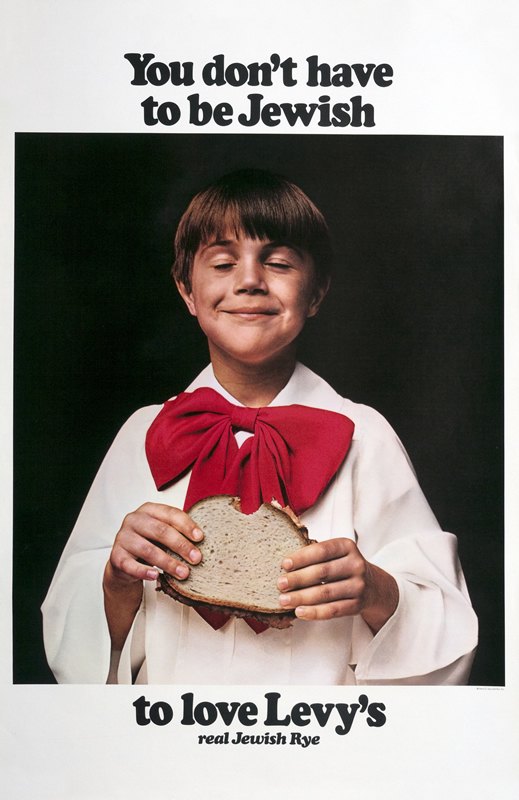
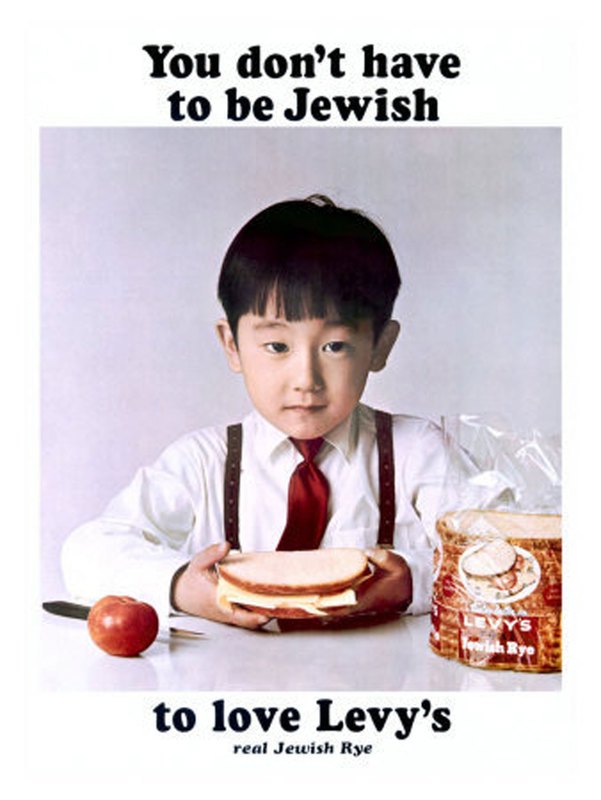
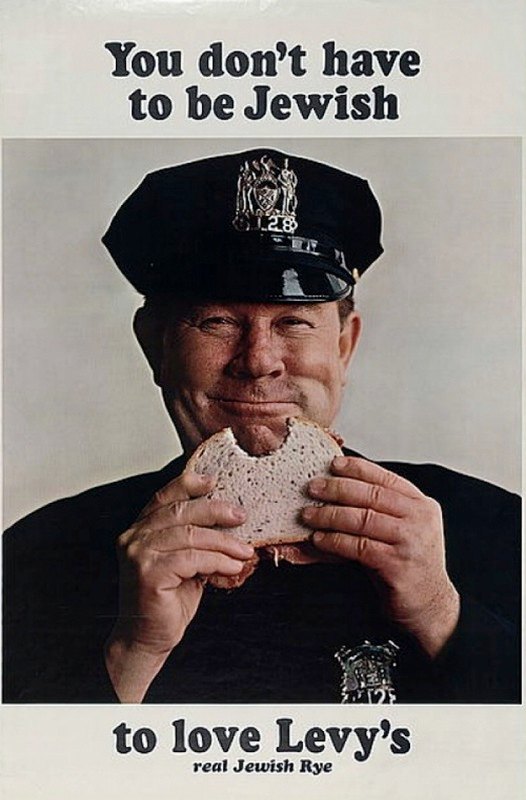
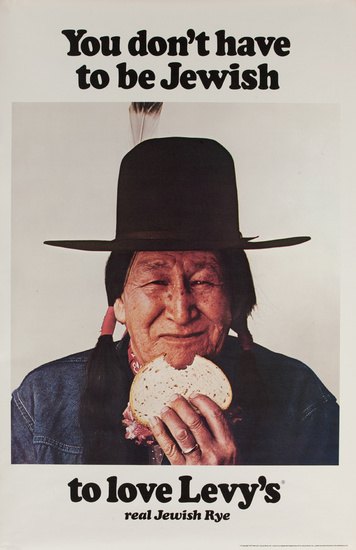
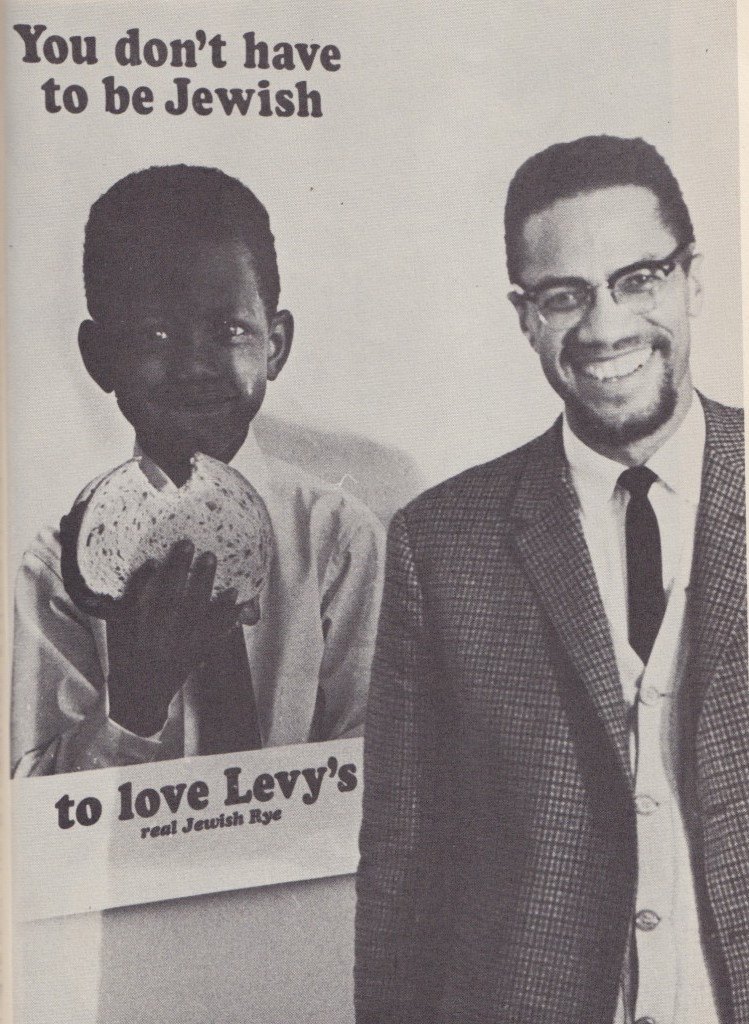
At the same time American advertising's default face was white and suburban, and ethnicity, where it appeared at all, was usually a joke. Putting a Black child, an Asian man, an Irish policeman and a Penobscot railroad engineer named Joseph Stanley Attean on New York subway platforms in the early 1960s was not styling. It was a statement about who counted as a New Yorker, made in the years the civil rights movement was forcing that same question. Malcolm X was photographed standing beside the poster of the Black boy.
The problem.
A bread with a loyal ethnic base needed the rest of the city, and the rest of the city thought it was someone else's food.
Henry S. Levy & Sons had baked a heavy seeded rye in Brooklyn since 1888, from the founder's own sour starter. It sold almost entirely to Jewish New Yorkers within a short delivery radius.
Through the 1950s that base thinned. Customers moved to the suburbs and switched to factory bread, and the brand's media stayed in titles that reached the people already buying. Growth could only come from people who had never tried it. Every one of them read the loaf as somebody else's food.
Levy's hired Doyle Dane Bernbach to sell its rye beyond the Jewish customers who already bought it. The work ran as subway posters across New York in the 1960s.
The solution.
They put the word 'Jewish' into the brand name, and everyone who wasn't Jewish onto the poster.
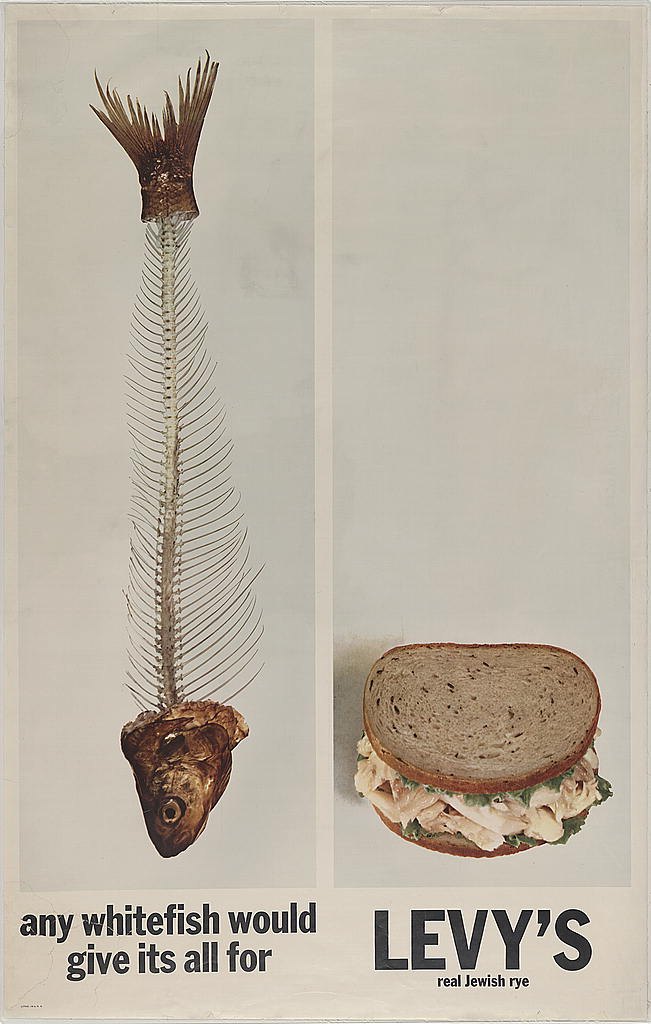
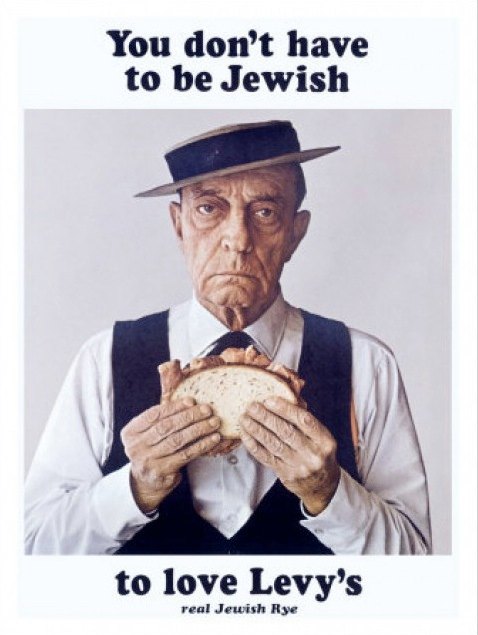
Bernbach's recommendation ran against the obvious move. He kept the Jewishness and put it in the name, Levy's Real Jewish Rye, talking the company's president past his fear of antisemitism by pointing out that the name on the label already said it. Judy Protas then wrote the line that gave the rest of the city permission to buy, and William Taubin built each poster as a single photograph with the headline underneath. Howard Zieff photographed people who were plainly not Jewish, among them a choirboy, a police officer and a Penobscot man, Joseph Attean, so the faces read as neighbours. The campaign made Levy's the best-selling rye in New York.
The work.
Around the work
Same shape of problem.
A Brooklyn bakery was losing the only customers it had. Doyle Dane Bernbach's answer was to make the bread sound even more Jewish.
Back to the archive →