Braniff International · Lois Holland Callaway
When You Got It, Flaunt It
An airline already famous for how it looked made its next campaign about who you might sit next to, and left the language a phrase.
The era.
Harding Lawrence became president of Braniff International in May 1965. He hired the agency Jack Tinker and Partners to change the airline's image, and Tinker put Mary Wells in charge of the account. The result was 'The End of the Plain Plane': aircraft painted in single bright colors by the designer Alexander Girard, and hostess uniforms by Emilio Pucci, including the 1966 'Air Strip.'
The airline grew fast. Braniff's revenue passenger miles rose from 1,804 million in 1965 to 4,262 million in 1970. It merged with Panagra in February 1967, adding South American routes, and opened a 'Terminal of the Future' at Dallas Love Field in December 1968.
Wells founded her own agency, Wells Rich Greene, in April 1966, and married Lawrence in November 1967. By 1968 the Braniff account was at Wells Rich Greene. On December 1, 1968, Braniff moved its account from Wells Rich Greene to Lois Holland Callaway, the agency George Lois had founded in 1967 with Ron Holland and Jim Callaway.
The culture.
Celebrity endorsement was routine in 1960s advertising, and it was earnest. Sean Connery stood behind Jim Beam in 1966; Sid Caesar sold Smirnoff the same year. One famous face, one product, one sincere recommendation.
At the same time the walls between high and low culture were coming down. Andy Warhol had made Campbell's soup cans into art. Salvador Dali was famous well beyond the art world. Lois's pairings drew on that mix: a pop artist with a boxer, a surrealist with a pitcher.
Jet travel had its own glamour. First class on a long flight was a public room where anyone might be sitting across the aisle. Lois's own description of the campaign says it played on exactly that idea: on Braniff you might find yourself next to someone famous.
The problem.
The airline had sold itself on paint and fashion, and once everyone had seen the colors it needed a new reason to be talked about without losing its swagger.
Braniff had built its image on looks. From 1965, under its president Harding Lawrence, Jack Tinker and Partners and Mary Wells had painted the planes in single bright colors and dressed the hostesses in Pucci. The look had done its work, and it could not be launched twice.
By 1968 every rival flew jets on the same routes, and color alone no longer set Braniff apart. The airline had a new agency and a reputation for style that would fade unless it was renewed. The new work had to keep Braniff glamorous and get people talking about it again, quickly.
In 1968 Braniff moved its advertising from Wells Rich Greene to Lois Holland Callaway, the agency George Lois had founded the year before with Ron Holland and Jim Callaway. The job was to keep the airline's glamour alive after the colored planes and Pucci uniforms had stopped being news.
The solution.
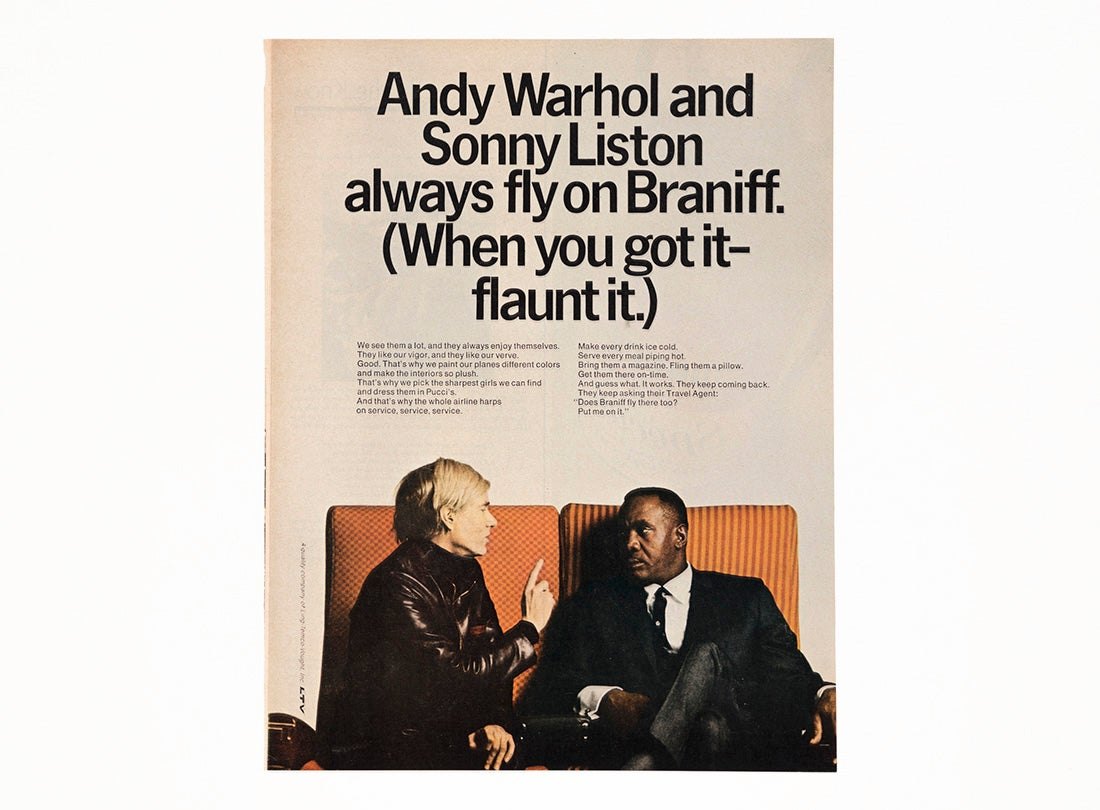
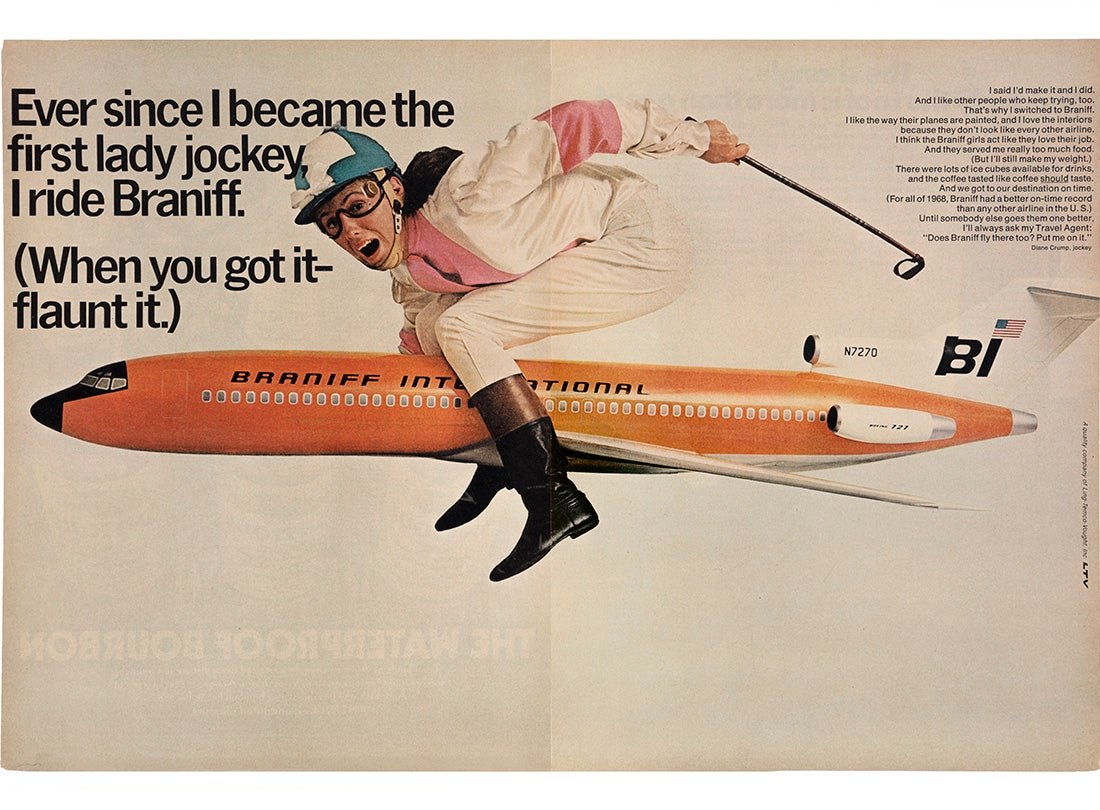
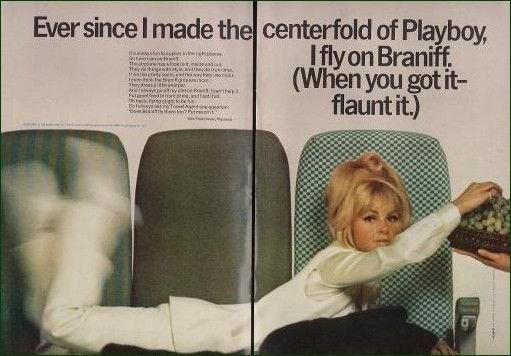
Seat two famous people with nothing in common side by side in first class, let them talk, and end on a line the customer could borrow: when you got it, flaunt it.
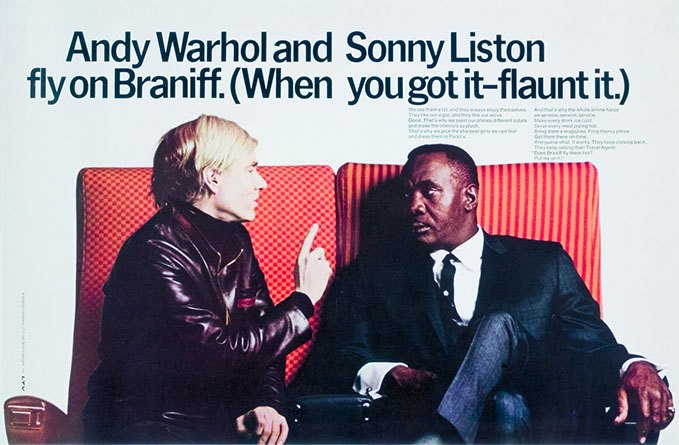
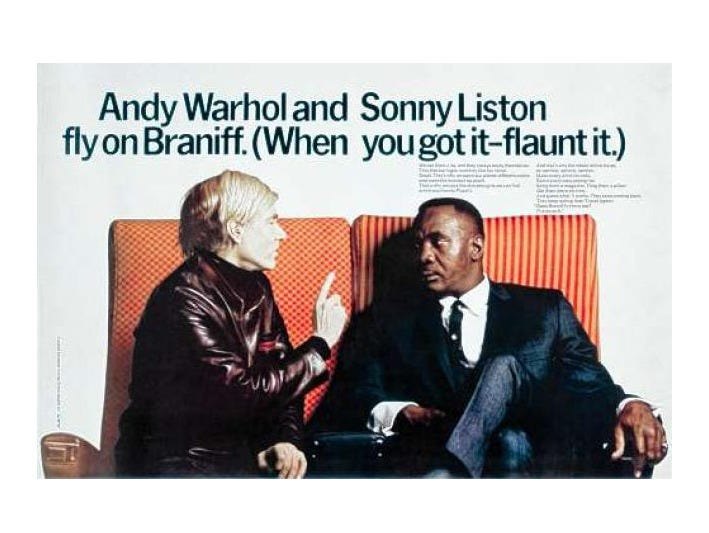
Lois cast pairs who should never have met. Andy Warhol explained the beauty of soup cans to the heavyweight Sonny Liston, who was not interested. Salvador Dali and the Yankees pitcher Whitey Ford compared notes on pitches. Other spots paired Satchel Paige with Dean Martin Jr. and Rex Reed with Mickey Rooney, and one showed a hostess greeting a procession of famous passengers including Joe Namath, Emilio Pucci and Gina Lollobrigida. The work also ran in national magazines and, from March 1969, in newspapers in 23 markets. Braniff's management reported an 80 percent increase in business during the campaign, and 'When you got it, flaunt it' entered everyday speech.
The work.
Film
Same shape of problem.
More from Braniff International.
Every Braniff Internationalcampaign →Andy Warhol tries to talk art with Sonny Liston at thirty thousand feet, and gets nowhere.
Back to the archive →