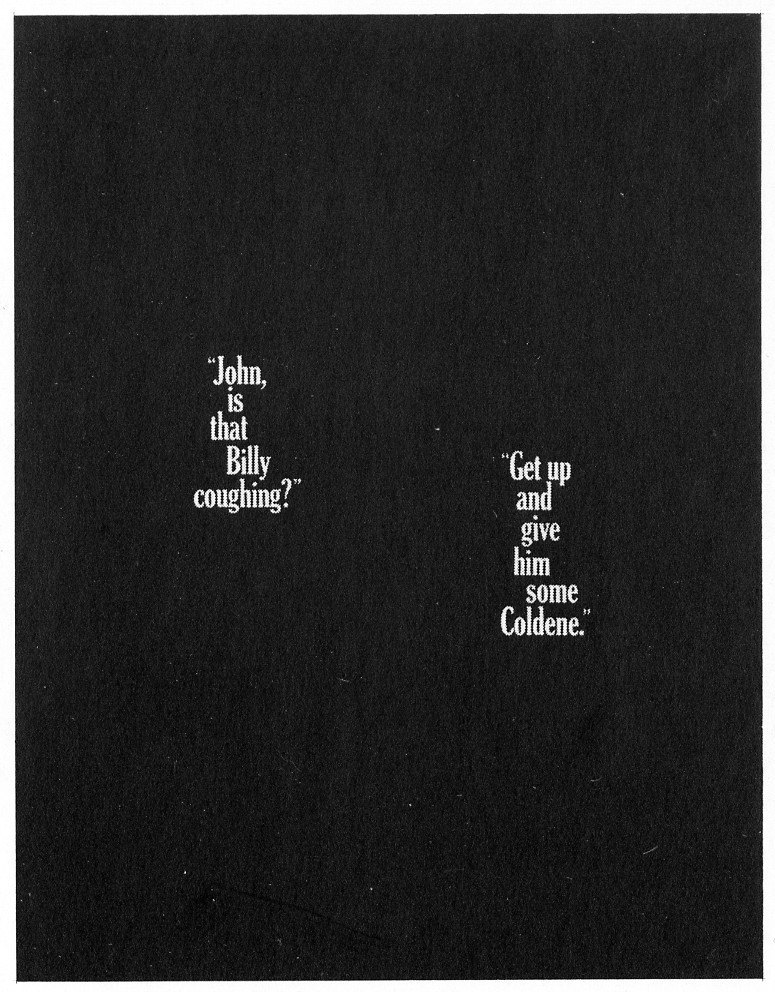
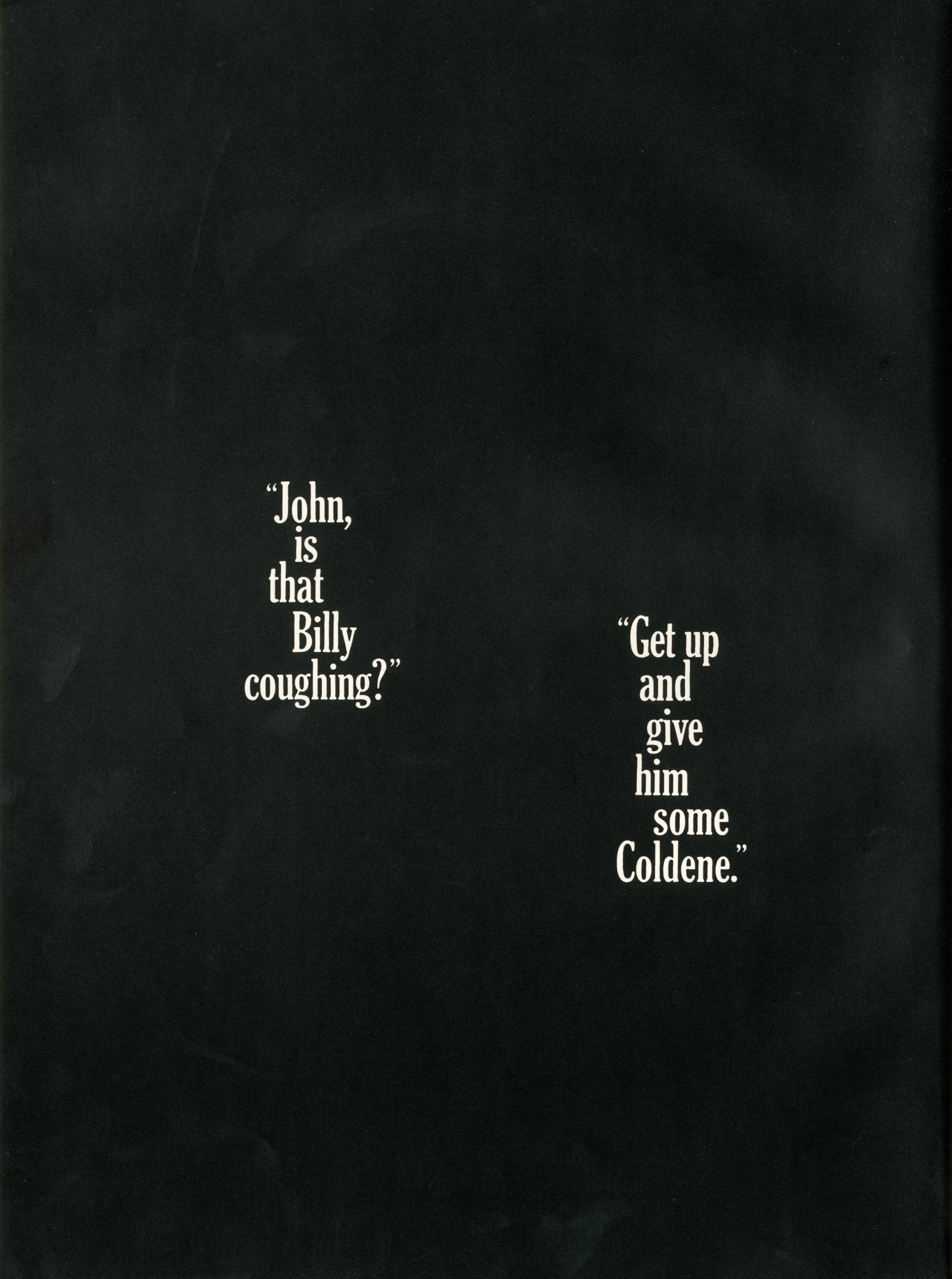
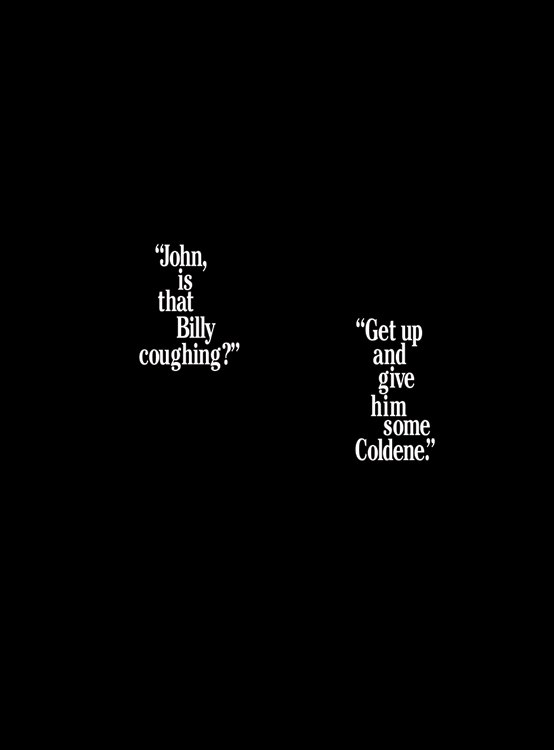
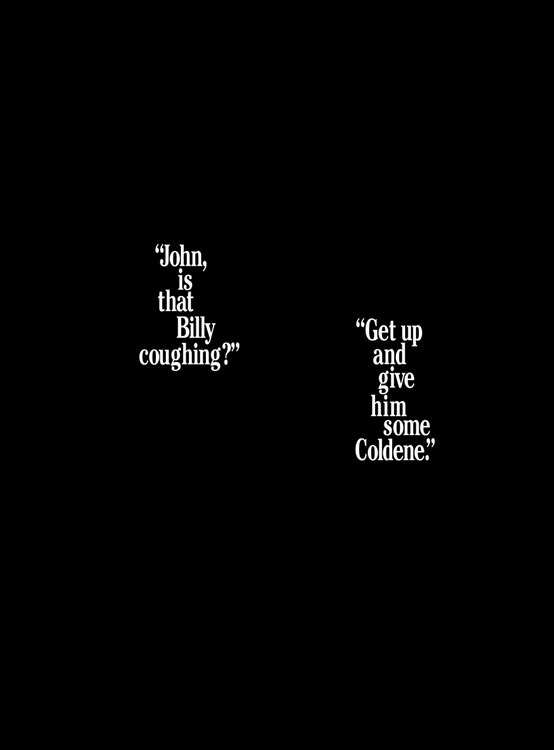
John, is that Billy coughing?
A cough remedy ad with no product, no ingredients, no diagram and no logo: a black page and two lines of dialogue in the dark.
The era.
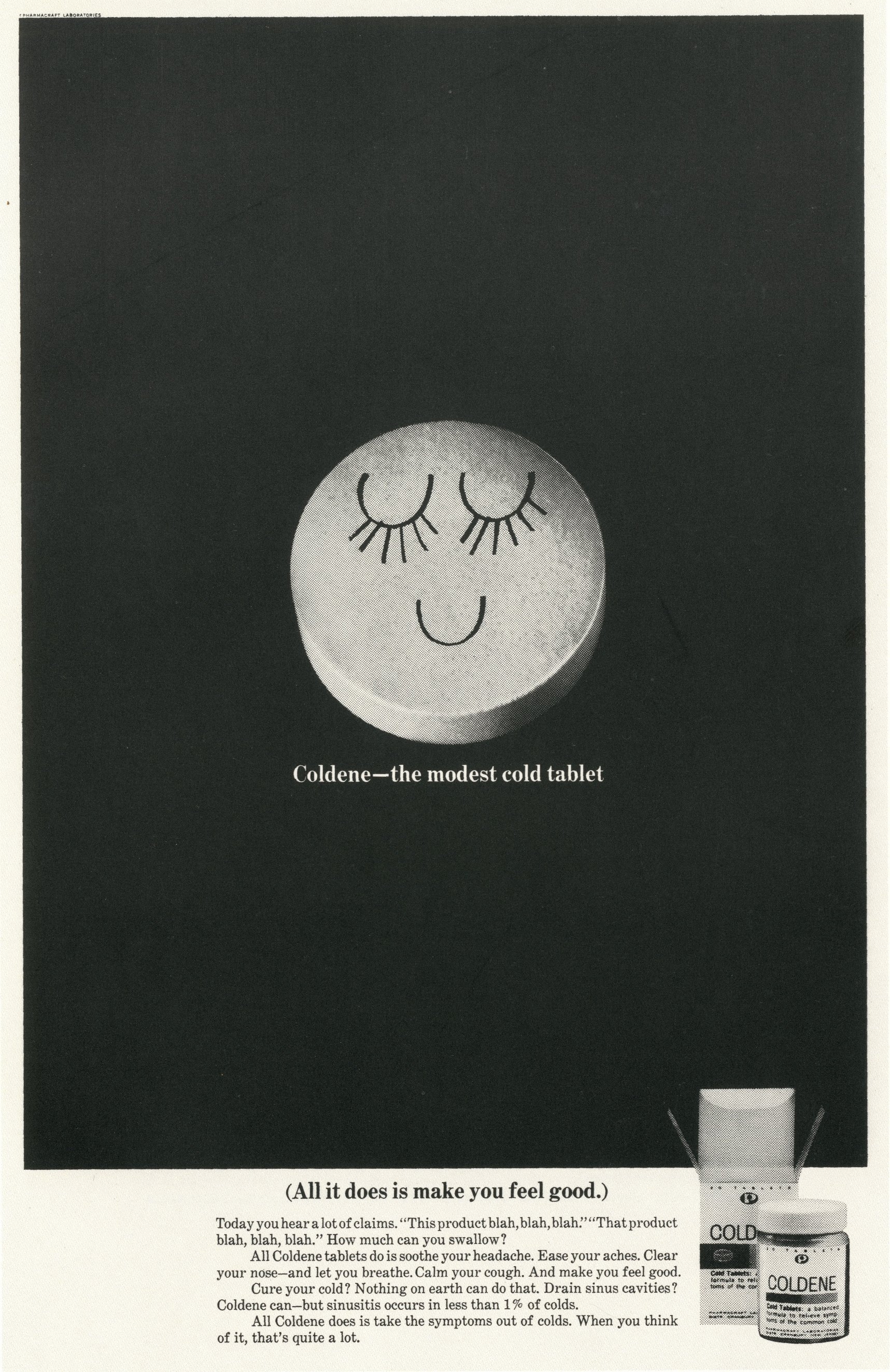
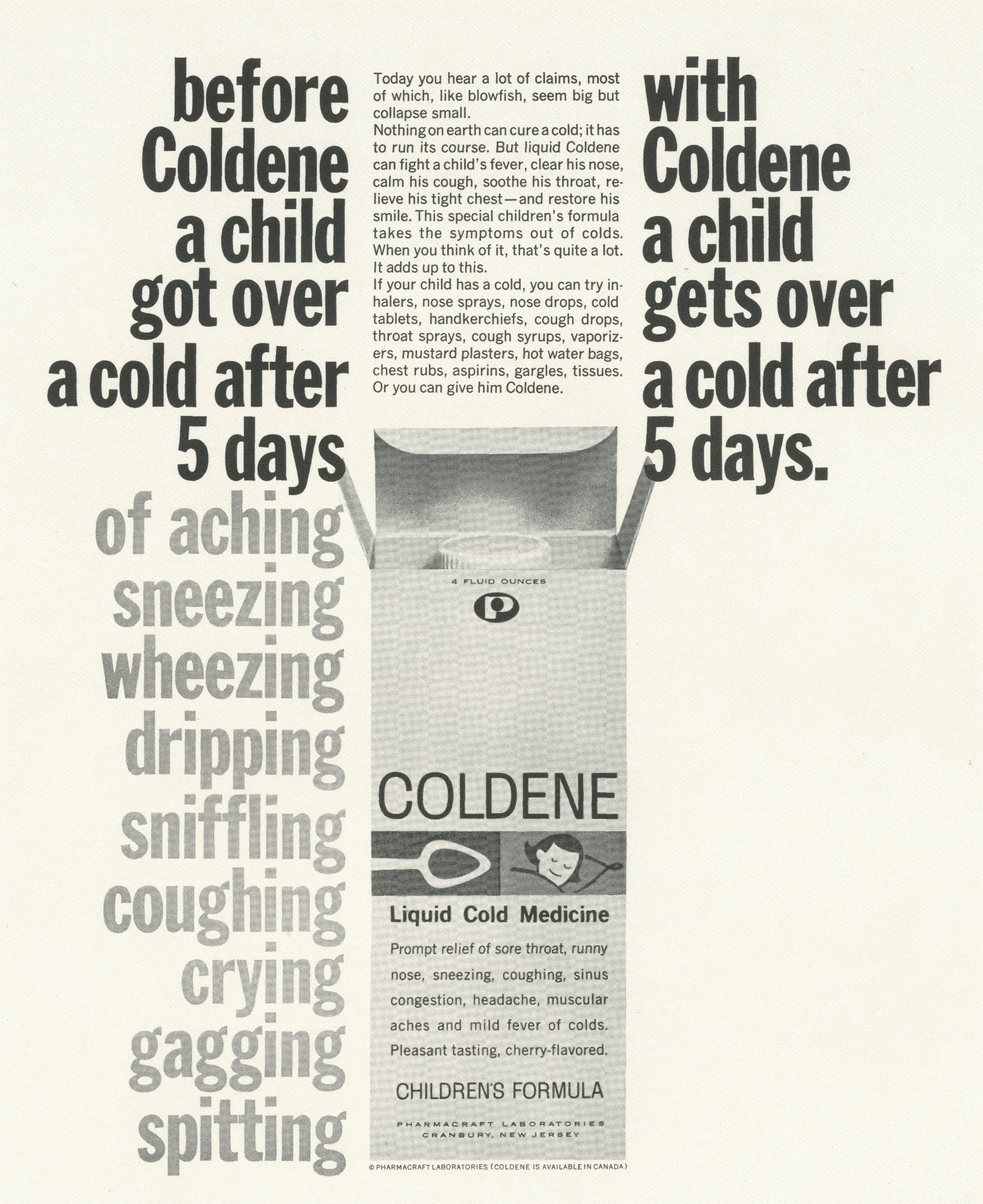
Over-the-counter drug advertising in 1960 argued in claims. Ads showed the bottle, named the ingredients, drew a diagram of the nose or throat and promised relief. Celebrities added reassurance. In 1962 Listerine had the broadcaster Arthur Godfrey telling readers that gargling at the first sign of a cold killed germs on contact and meant fewer, milder colds.
Every brand used the same parts. If one remedy claimed faster relief, the next one claimed it too. The result was a category of pages that looked alike and read alike. Lois later described the style he was reacting against as crude and sinus-focused.
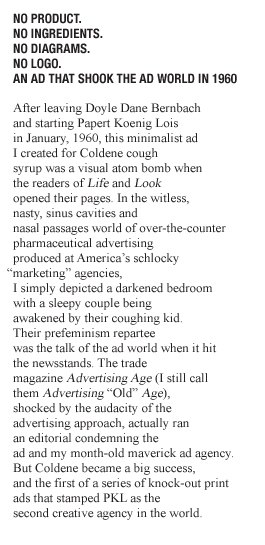
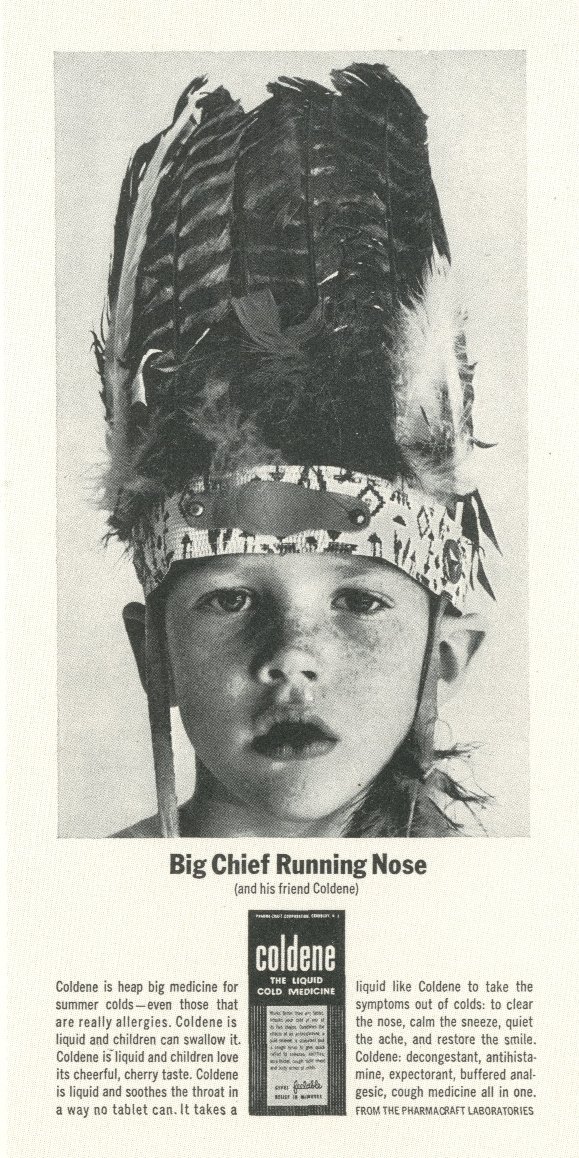
Papert Koenig Lois opened in January 1960. Its partners were Fred Papert, the copywriter Julian Koenig and the art director George Lois, both recently of Doyle Dane Bernbach. Coldene was one of the accounts of its first months. Lois says that Advertising Age ran an editorial criticizing the Coldene ad and his one-month-old agency.
The culture.
The postwar American household was organized around young children. Benjamin Spock's 'Baby and Child Care', first published in 1946, had made child-rearing something parents discussed openly, and women's magazines were full of it. Papert Koenig Lois's own first-year work for the Ladies' Home Journal used Dr. Spock as a hook.
The night a child coughs was a shared experience among the readers of those magazines. It was also the moment a parent actually reached for a remedy. Drug advertising rarely showed it. It showed the product and the germ.
In design, the Doyle Dane Bernbach school had made white space and one idea per page respectable. Lois came out of that school and out of corporate typography; at the Columbia Broadcasting System he had redrawn Didot lettering by hand for the network's identity. He knew how much a page could do with type alone.
The problem.
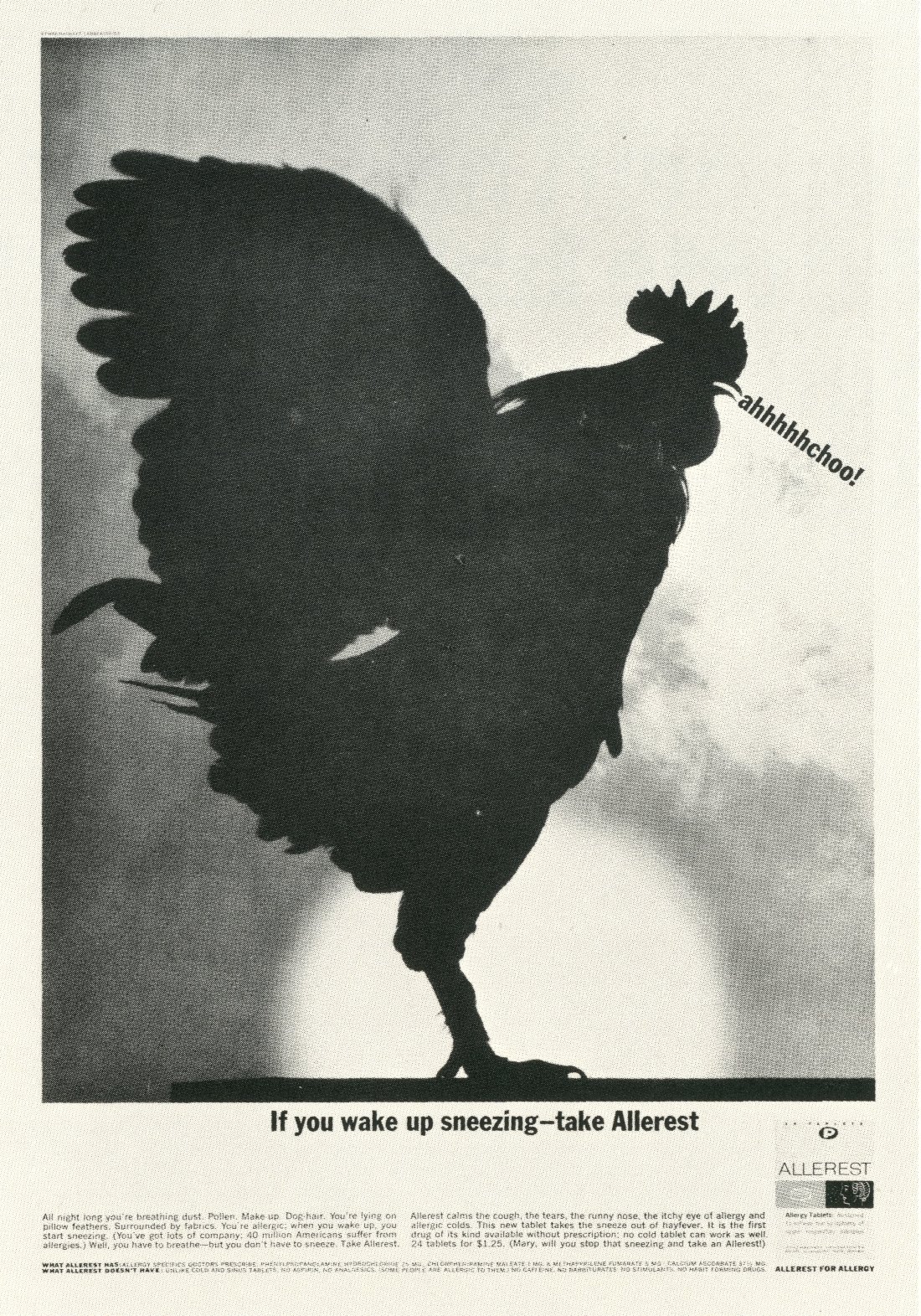
Every cold remedy made the same claims in the same layout, so a new claim from Coldene would be matched by the next page and forgotten.
Coldene was a cough remedy in a crowded category. Every brand argued about germs, ingredients and speed of relief, and any argument one of them made could be copied by the next.
The pages looked alike as well: product shot, claim, diagram. Readers had learned to turn past them, so even a better claim would have been lost in the same layout as everyone else's. Papert Koenig Lois was a month old and also needed work that people in the business would notice.
Coldene was one of the first accounts at Papert Koenig Lois, which Fred Papert, Julian Koenig and George Lois opened in January 1960. The ad ran in Life and Look that year.
The solution.
Show the moment the parent needs the product, in the dark, and let the reader supply everything else.
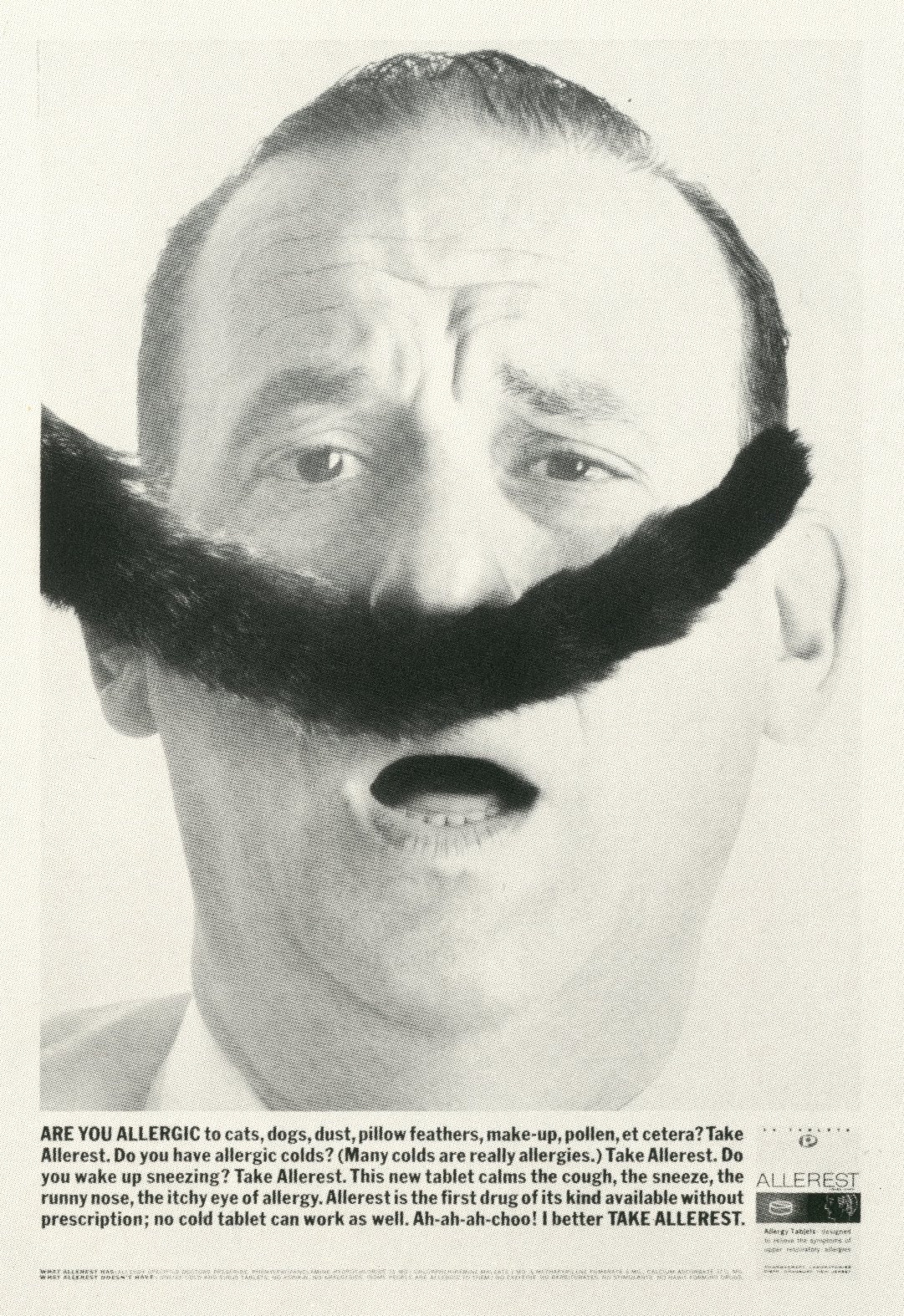
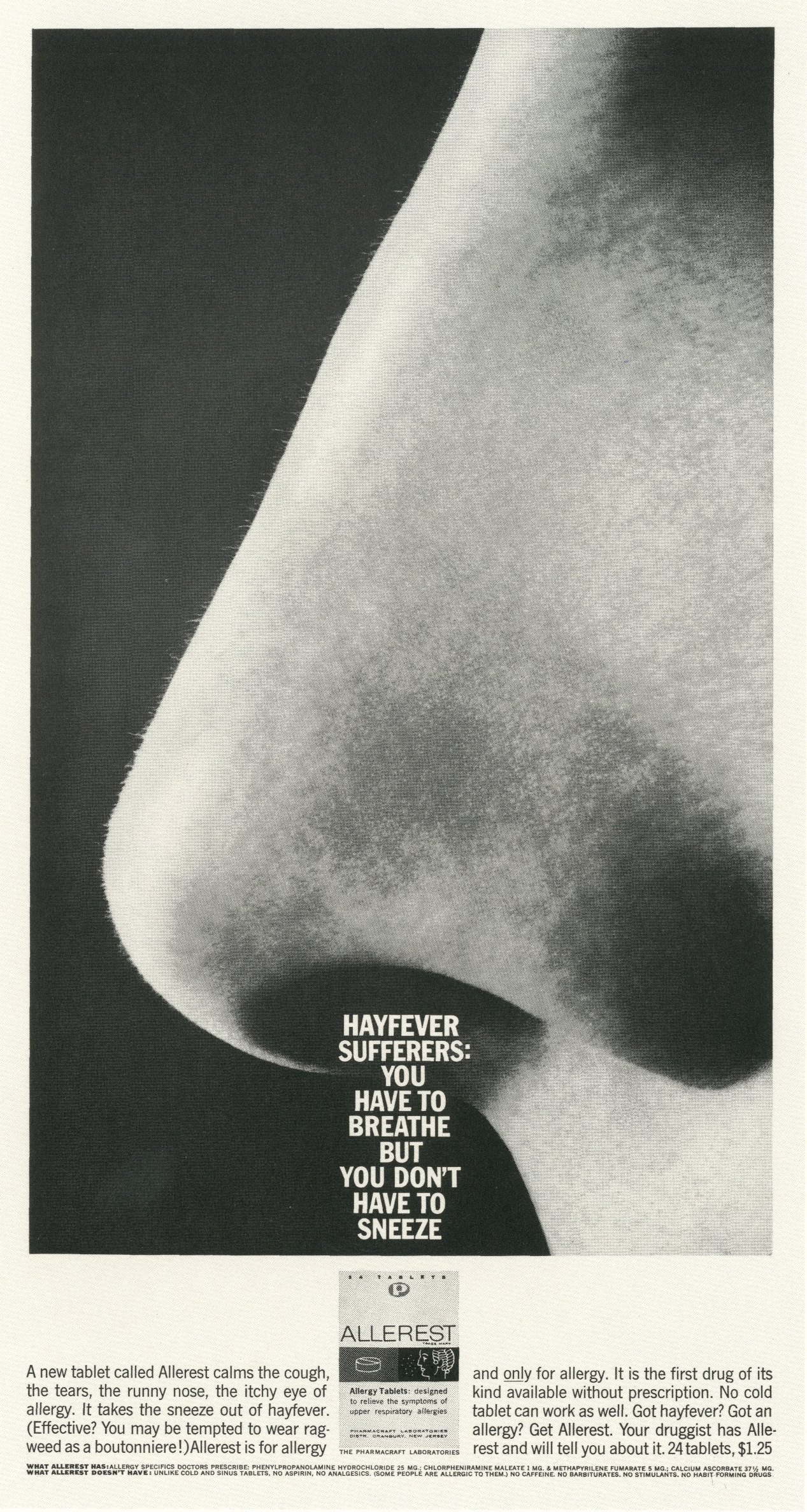
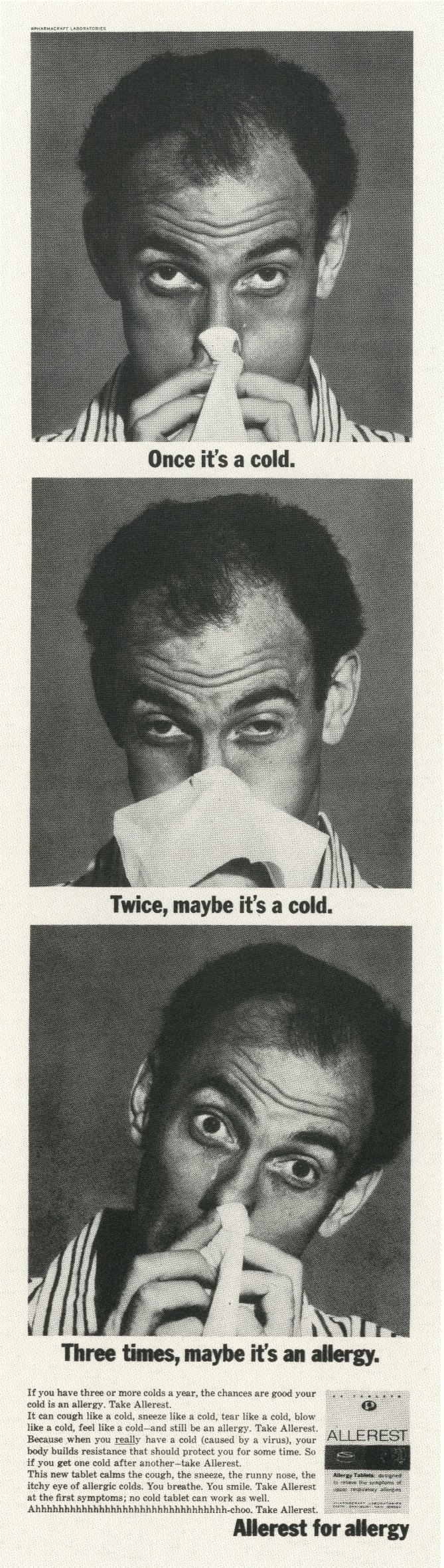
The page is almost entirely black. Two lines of dialogue sit at different heights, a husband and wife in bed. 'John, is that Billy coughing?' 'Get up and give him some Coldene.' Lois summed it up as 'No product. No ingredients. No diagrams. No logo.' The reader recognizes the scene from their own life and fills in the rest, and the brand name lands as the answer to a real problem. The same voice device carried into the agency's 1961 Allerest ad, which spelled out a stuffed nose: 'I dode hab a code?'
The work.
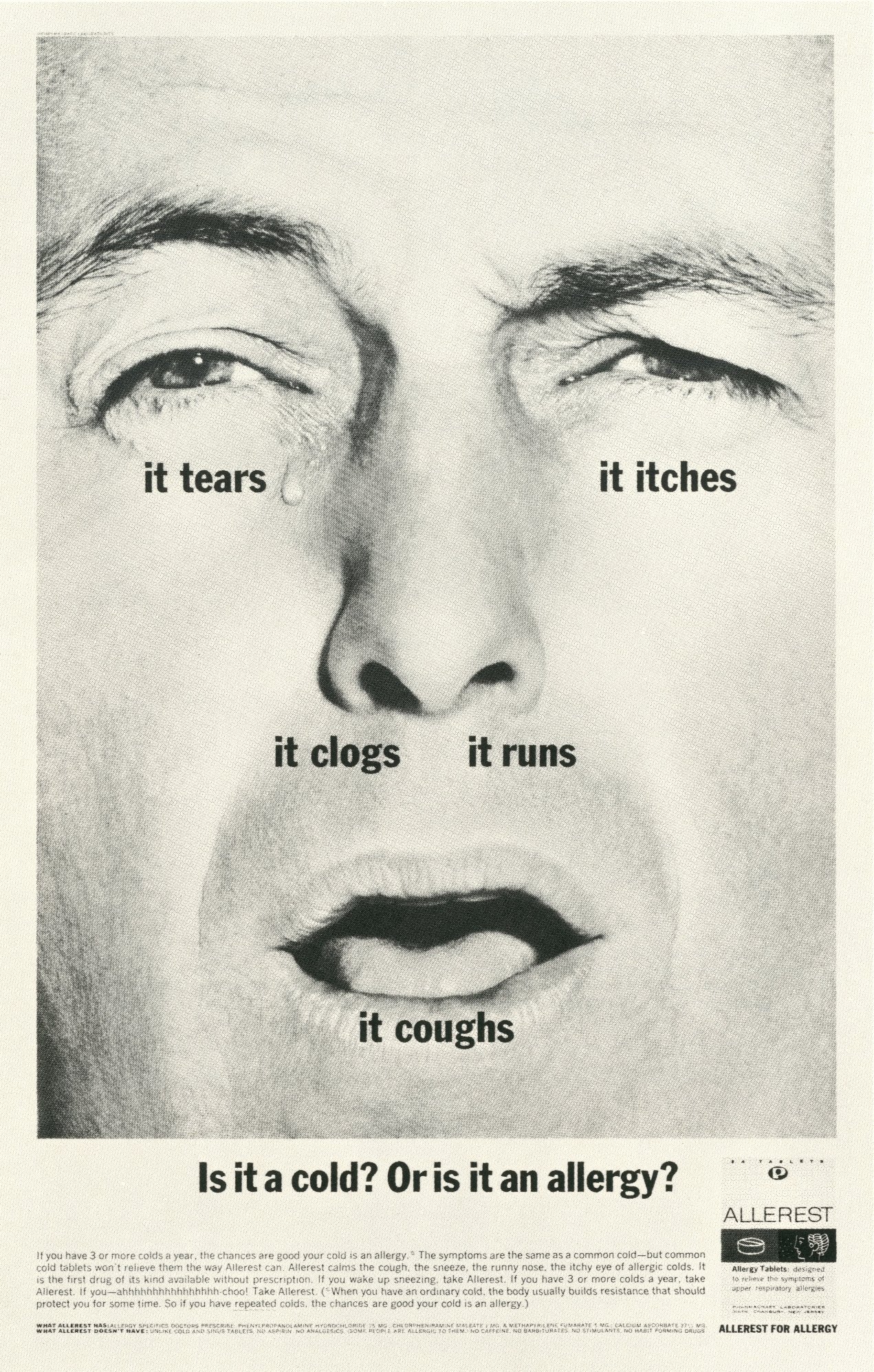
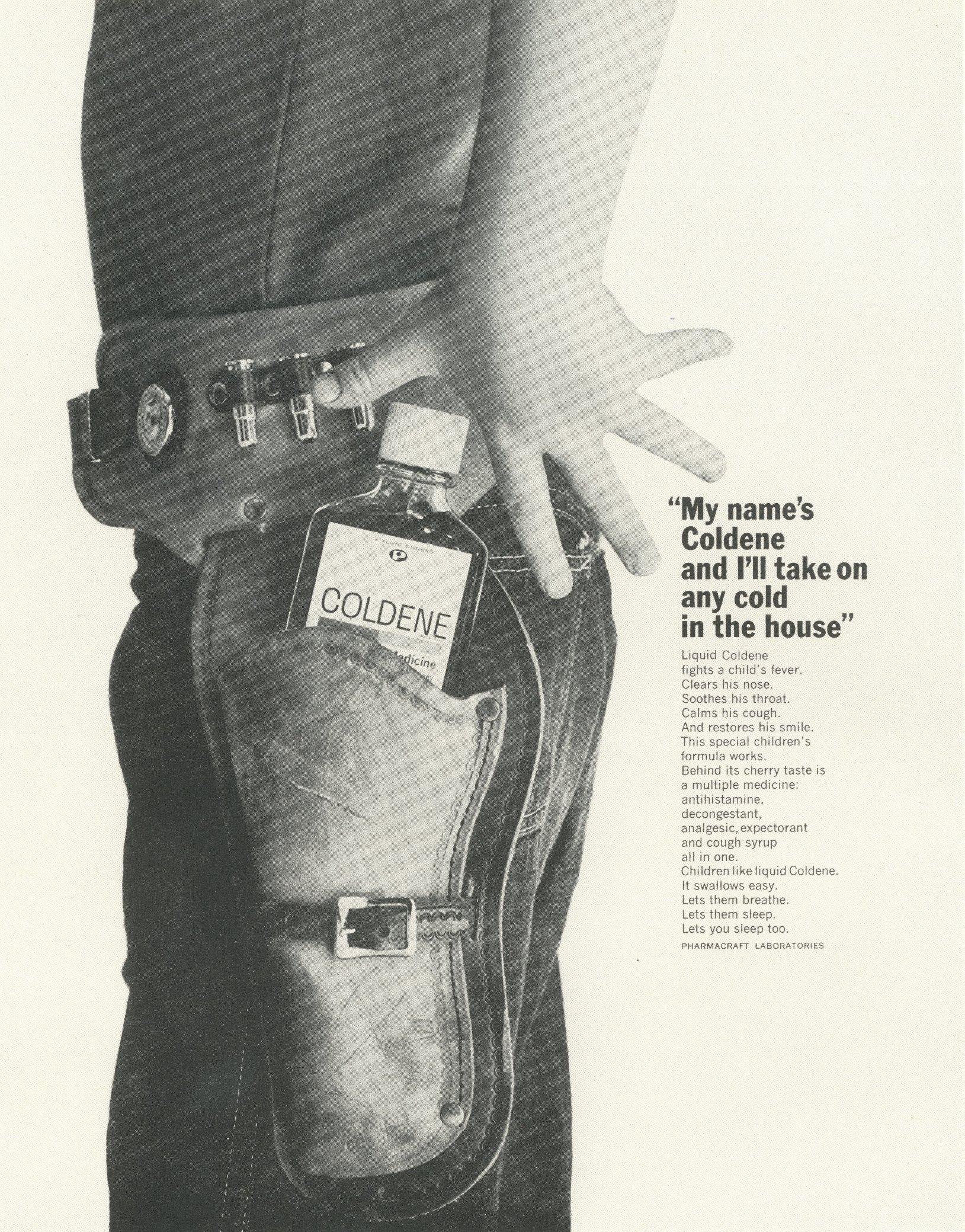
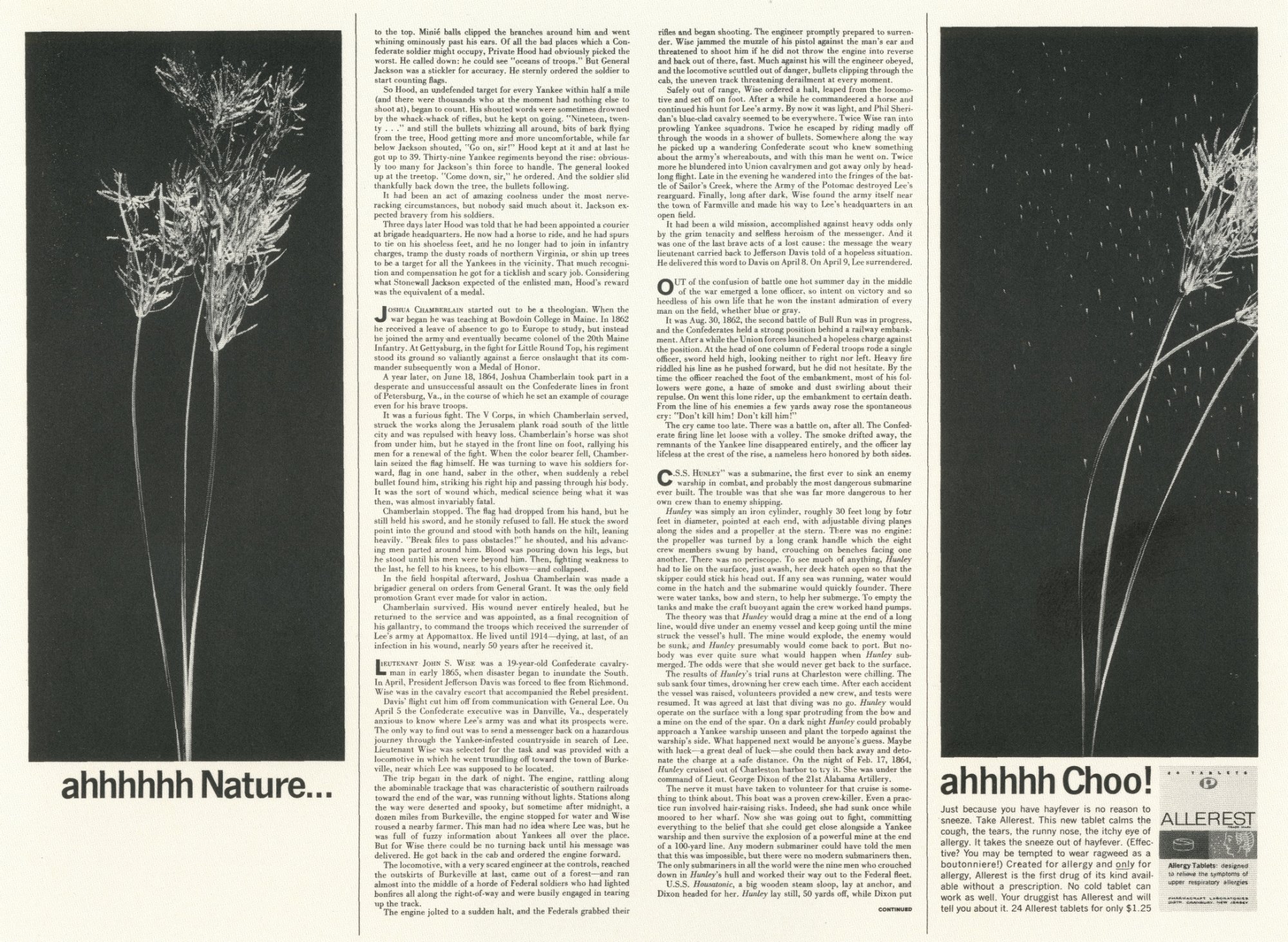
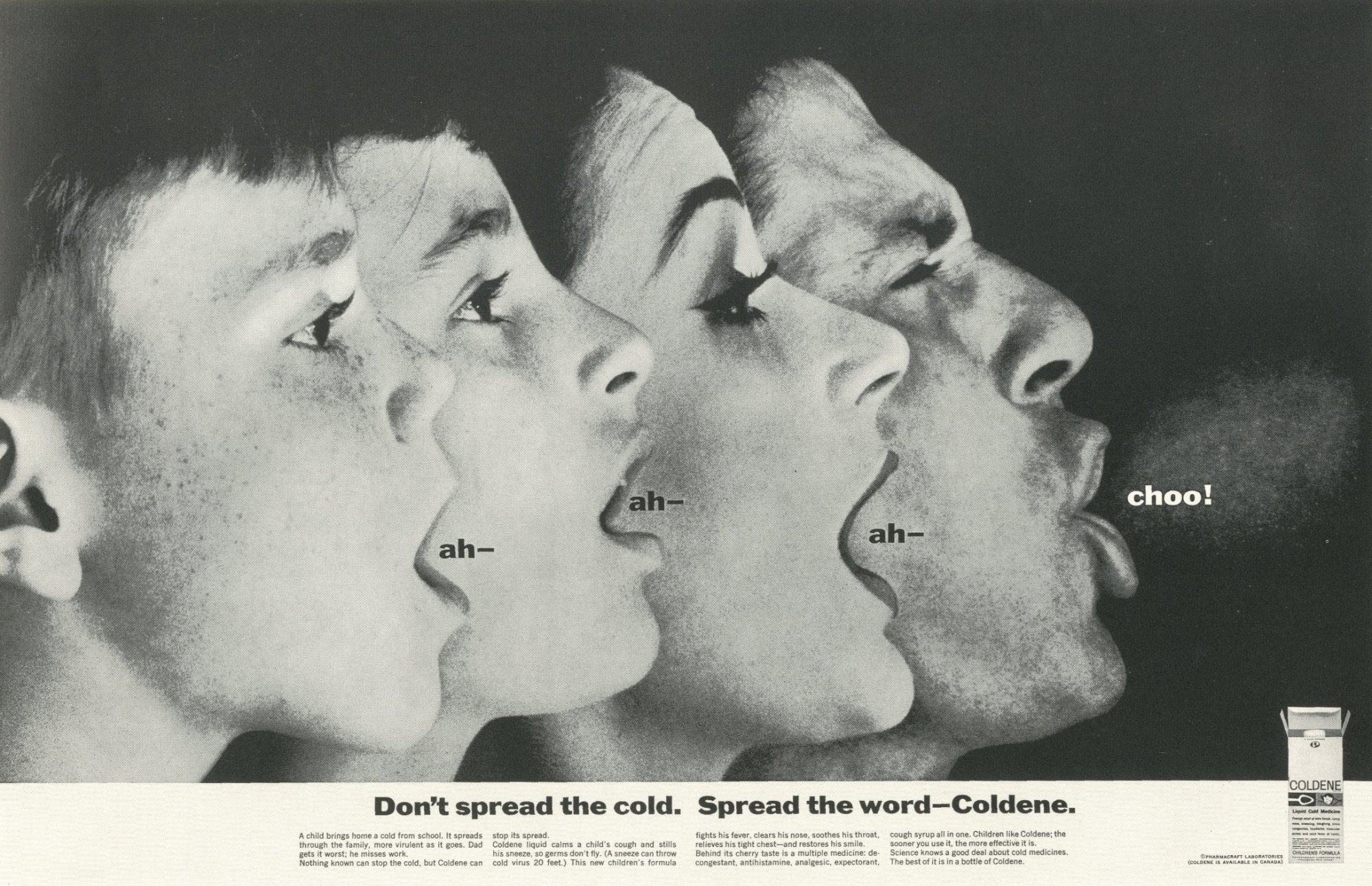
Same shape of problem.
The cough syrup ad that showed no cough syrup, and an advertising trade paper wrote an editorial against it.
Back to the archive →