Wolfschmidt Vodka · Papert Koenig Lois
The Talking Bottle
A follower vodka made its own bottle the spokesman and ran the ads as a serial, each one answering the last.
The era.
In 1960 American liquor advertising sold the setting more than the drink. Canadian Club put its bottle on a terrace 'In Monaco' in 1959. Seagram's 7 Crown offered readers a 'calm hour' in 1960. Plymouth Gin told them that 'a man can't be jostled about his gin.' The bottle was a prop in somebody else's good life.
Vodka was the newcomer in that market. Smirnoff had spent the 1950s teaching Americans what vodka was for. Its 1953 pages promised that it 'leaves you breathless' and listed summer drinks to make with it: vodka and tonic, the vodka martini, the vodka Collins. By 1961 Smirnoff was photographing the model Suzy Parker in a Christian Dior original. The category leader could afford glamour, and the rest of the shelf followed it.
Papert Koenig Lois opened in January 1960, with its first office in the Seagram Building on Park Avenue. Its partners were Fred Papert, the copywriter Julian Koenig, who had worked on Volkswagen at Doyle Dane Bernbach, and the art director George Lois, who had also come from Doyle Dane Bernbach. Wolfschmidt was one of its first accounts. The agency's own book of its first year, 1960 to 1961, carries six Wolfschmidt ads.
The culture.
At the start of the 1960s Americans were mixing drinks at home. Heublein sold ready-made bottled cocktails and in 1961 cast the actor Tony Randall as the husband in its ads. Smirnoff advertised the drinks vodka went into as much as the vodka itself. The mixer was becoming the point of the drink.
Advertising was changing at the same time. Doyle Dane Bernbach's Volkswagen work had shown in 1959 that a plain layout and a joke at the product's own expense could sell. A new kind of agency, run by the people who made the ads, was winning business by being talked about. Papert Koenig Lois became known for what was called 'creative outrage.'
Liquor advertising did not flirt. Its tone was respectful and its pictures were aspirational. The Creative Hall of Fame later described the convention Lois broke as beautiful people in penthouses, and called the Wolfschmidt work the first liquor advertising to rely on simple, suggestive symbols.
The problem.
Wolfschmidt was a follower vodka in a market where the leader owned glamour, and its real virtue, that it tasted of almost nothing, was not a story anyone would stop for.
Smirnoff had defined vodka for American drinkers. It spent the 1950s teaching them what vodka was for, and by 1961 it could photograph a fashion model in a Dior gown. Wolfschmidt could not outspend it and had no heritage that Americans knew.
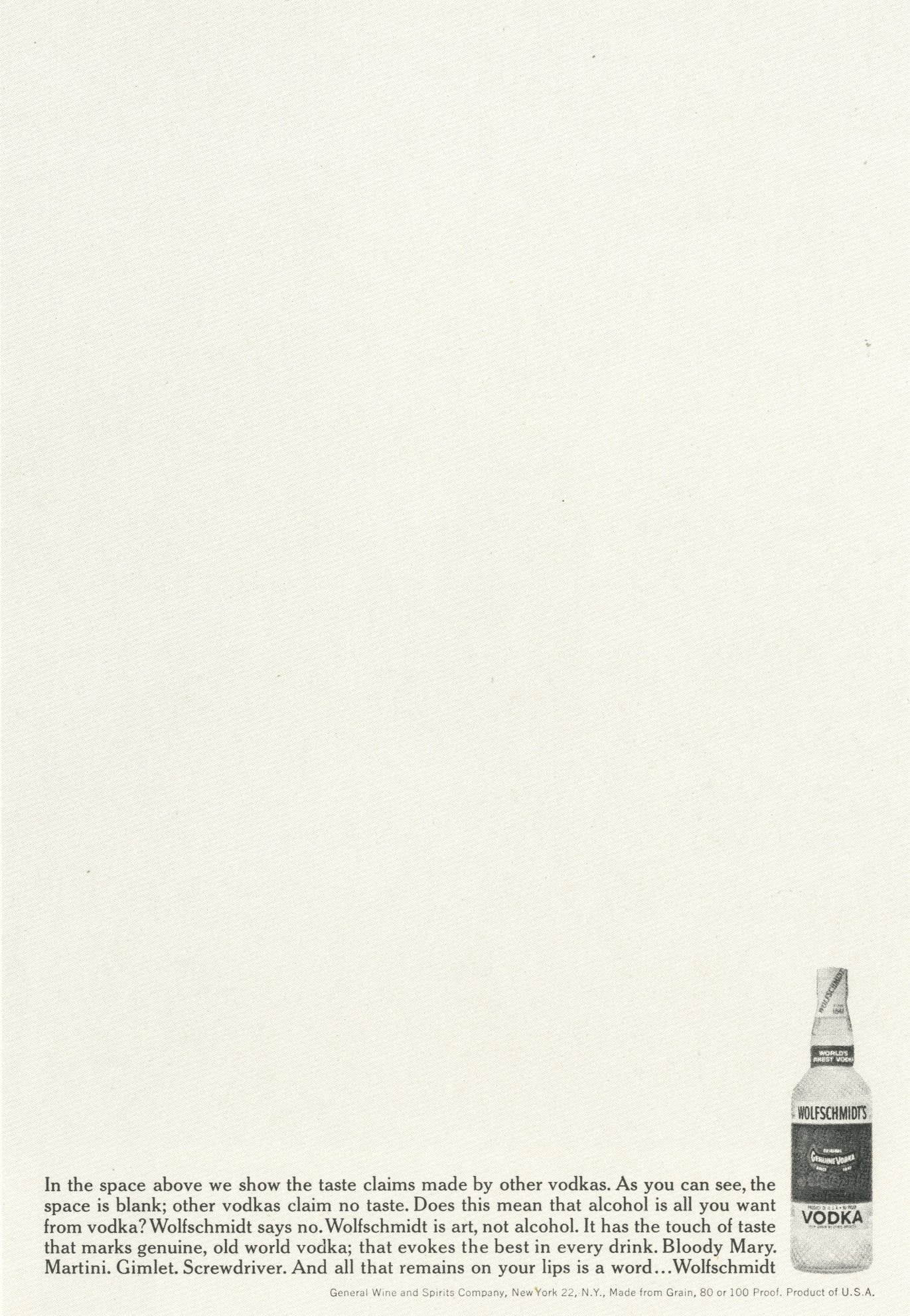
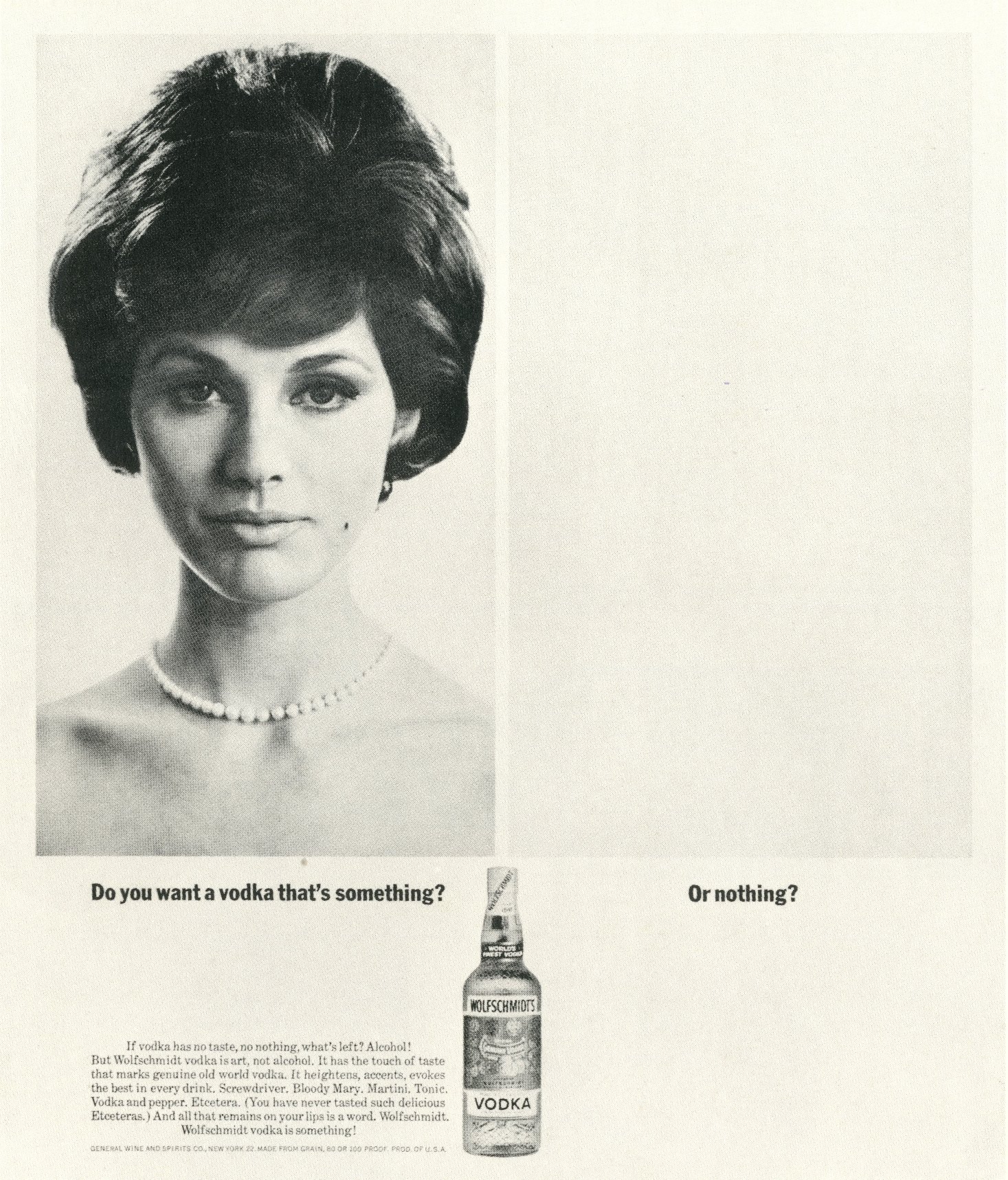
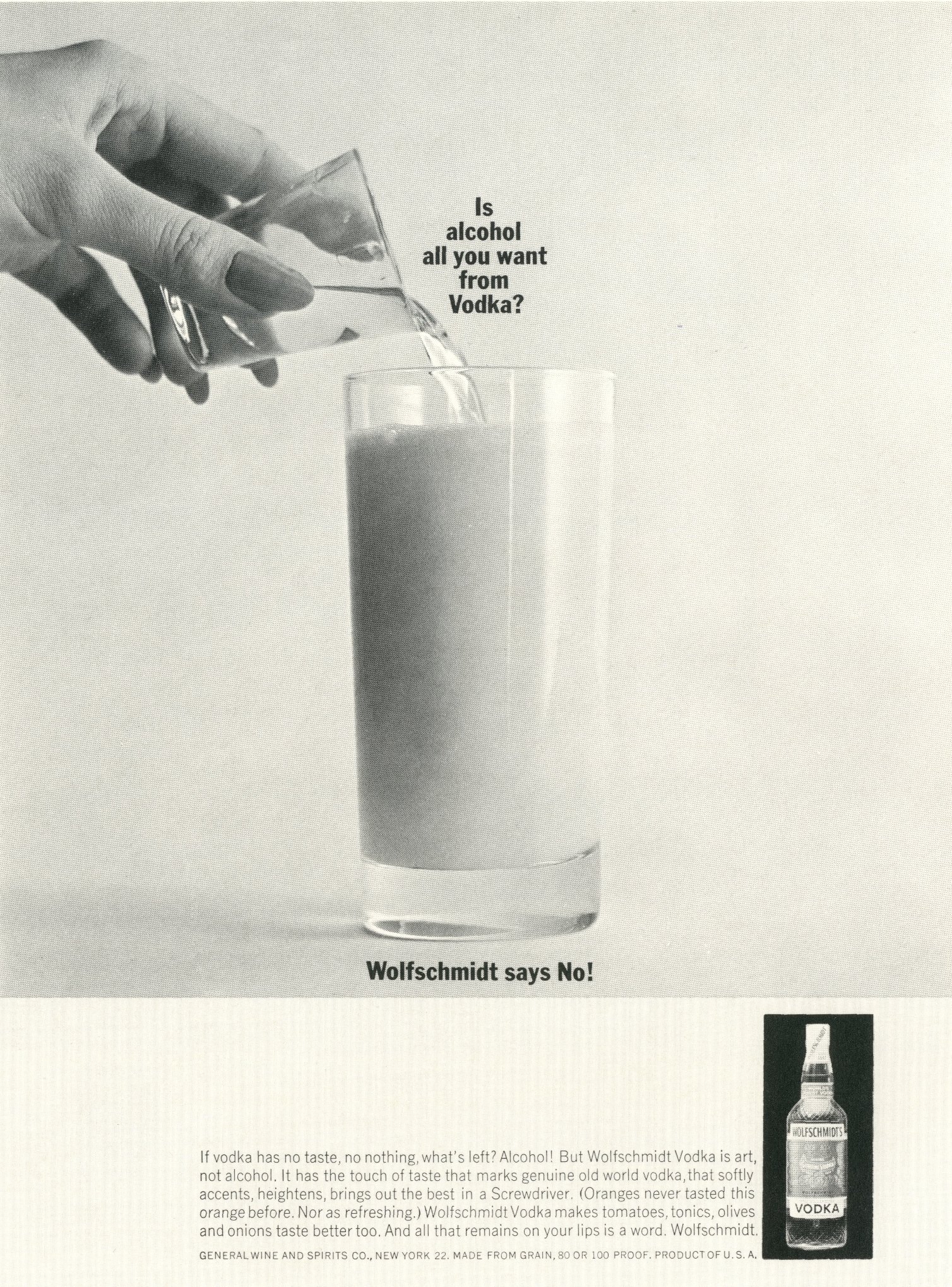
The honest product benefit was close to invisible: vodka takes on the taste of whatever it is mixed with. Lois said later that his idea was to position Wolfschmidt's as a 'tasteless' vodka. A tasteless product is hard to show in a still photograph. And a single clever page would be forgotten by the next issue.
Wolfschmidt was one of the first accounts at Papert Koenig Lois, which opened in January 1960 in the Seagram Building. The agency had to sell a vodka with no money to match Smirnoff and no heritage Americans knew.
The solution.
Make the bottle the hero and the mixer the love interest, then run it as a serial so each ad sets up the next.
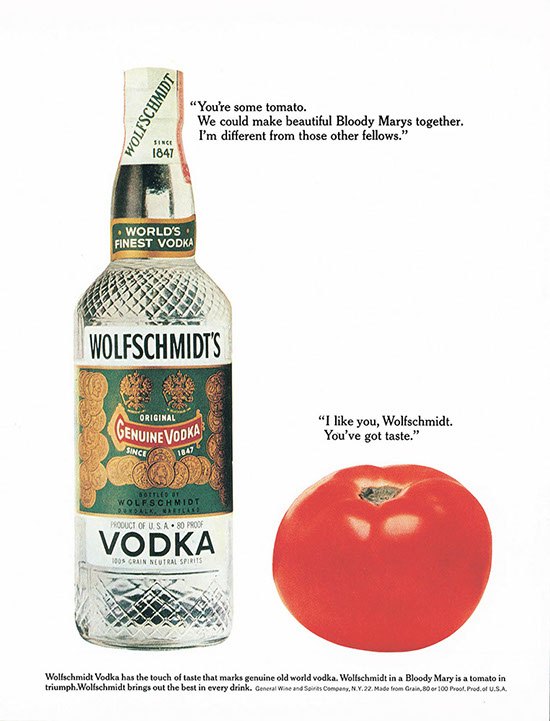
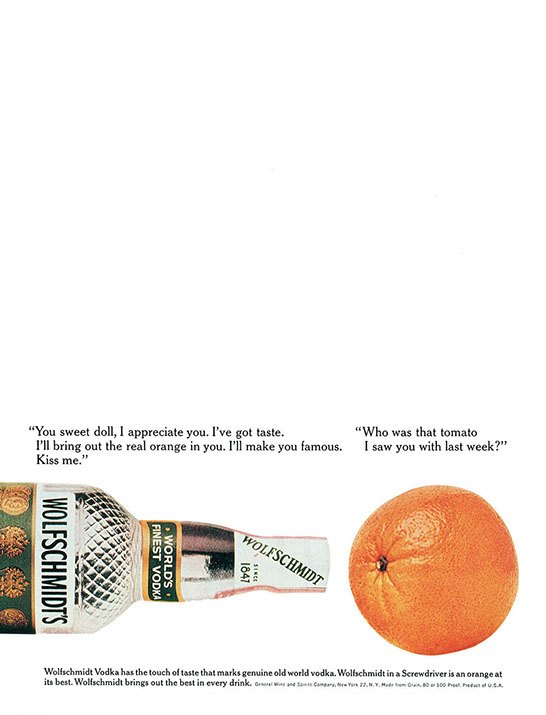
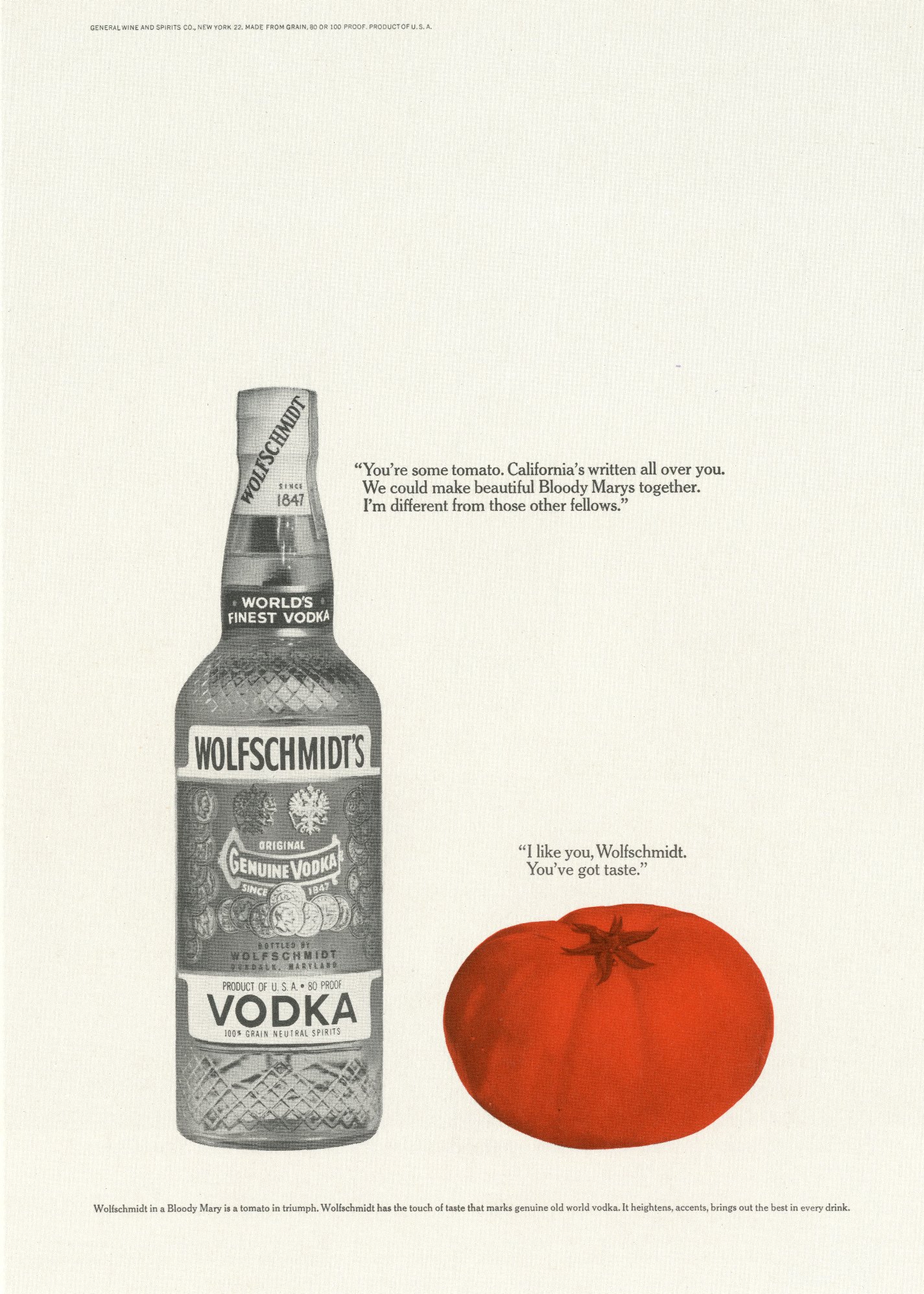
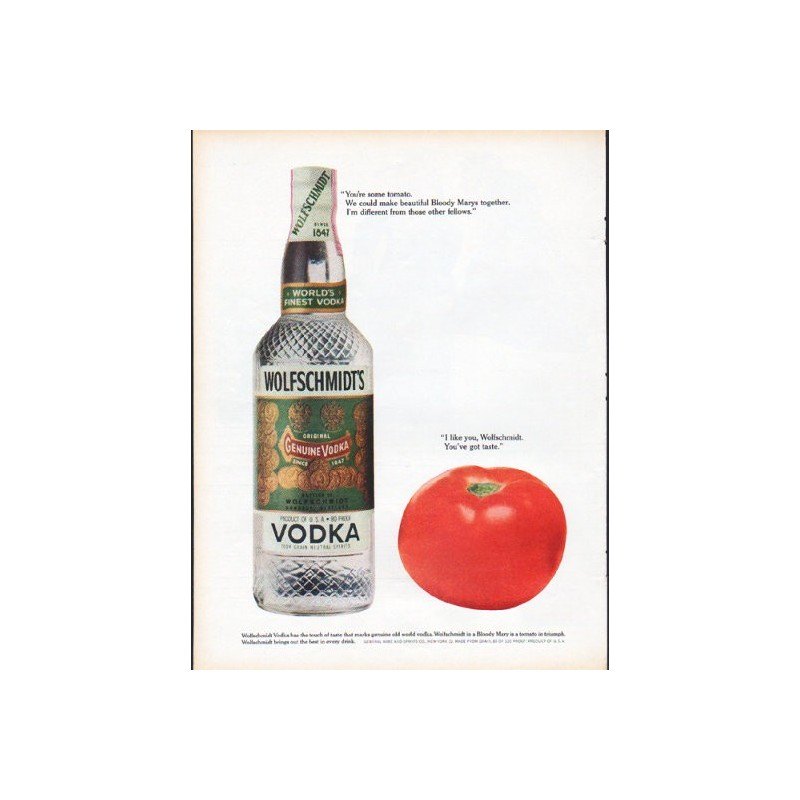
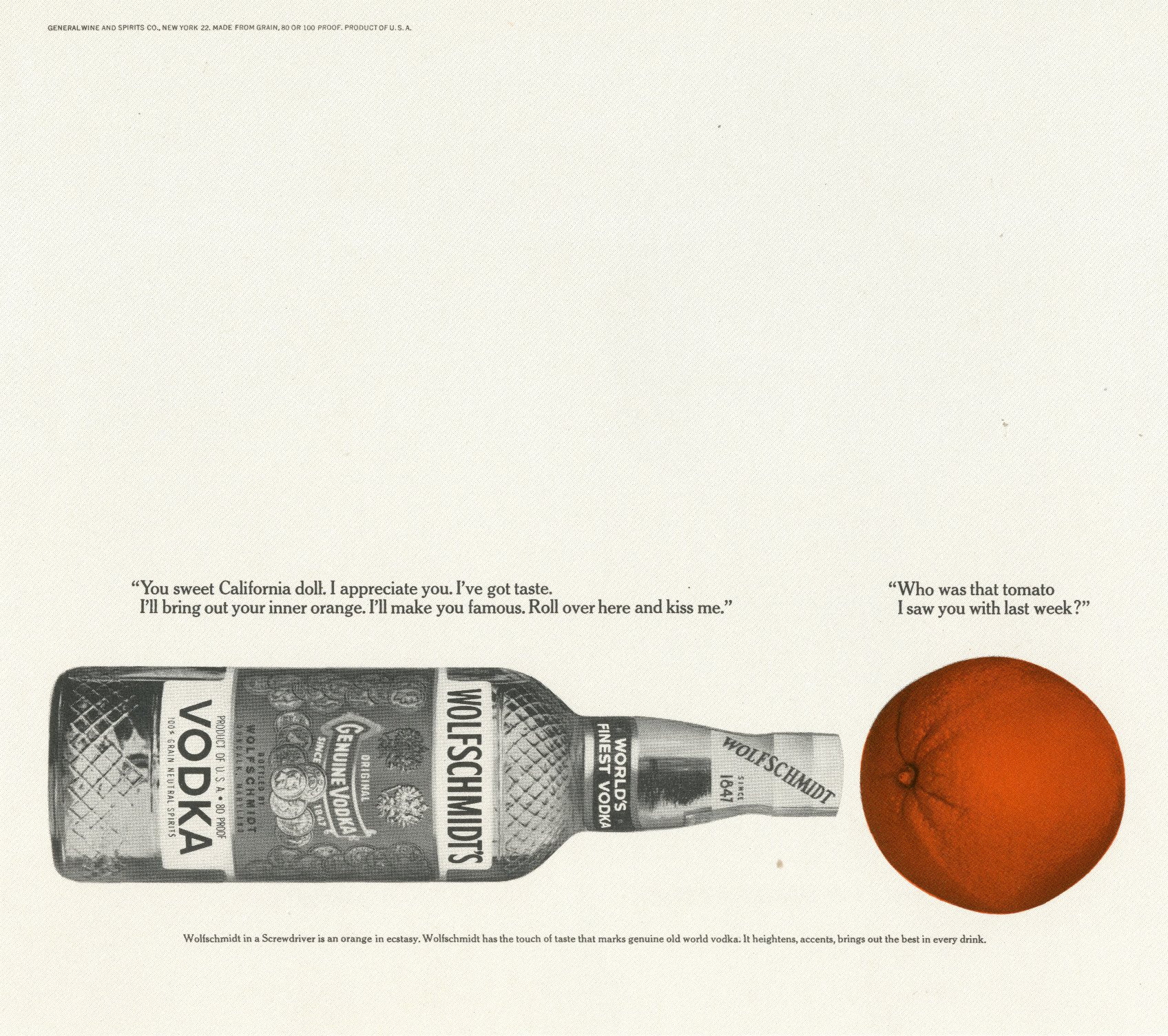
Lois laid the bottle on its side and gave it a voice. It talked to a tomato: 'You're some tomato. We could make beautiful Bloody Marys together. I'm different from those other fellows.' The tomato answered, 'I like you, Wolfschmidt. You've got taste.' The next ad turned the bottle's attention to an orange and referred back to the tomato, so readers followed a story from page to page. A vodka with no taste of its own became a character that went with everything, and the double meanings made people talk about it.
The work.
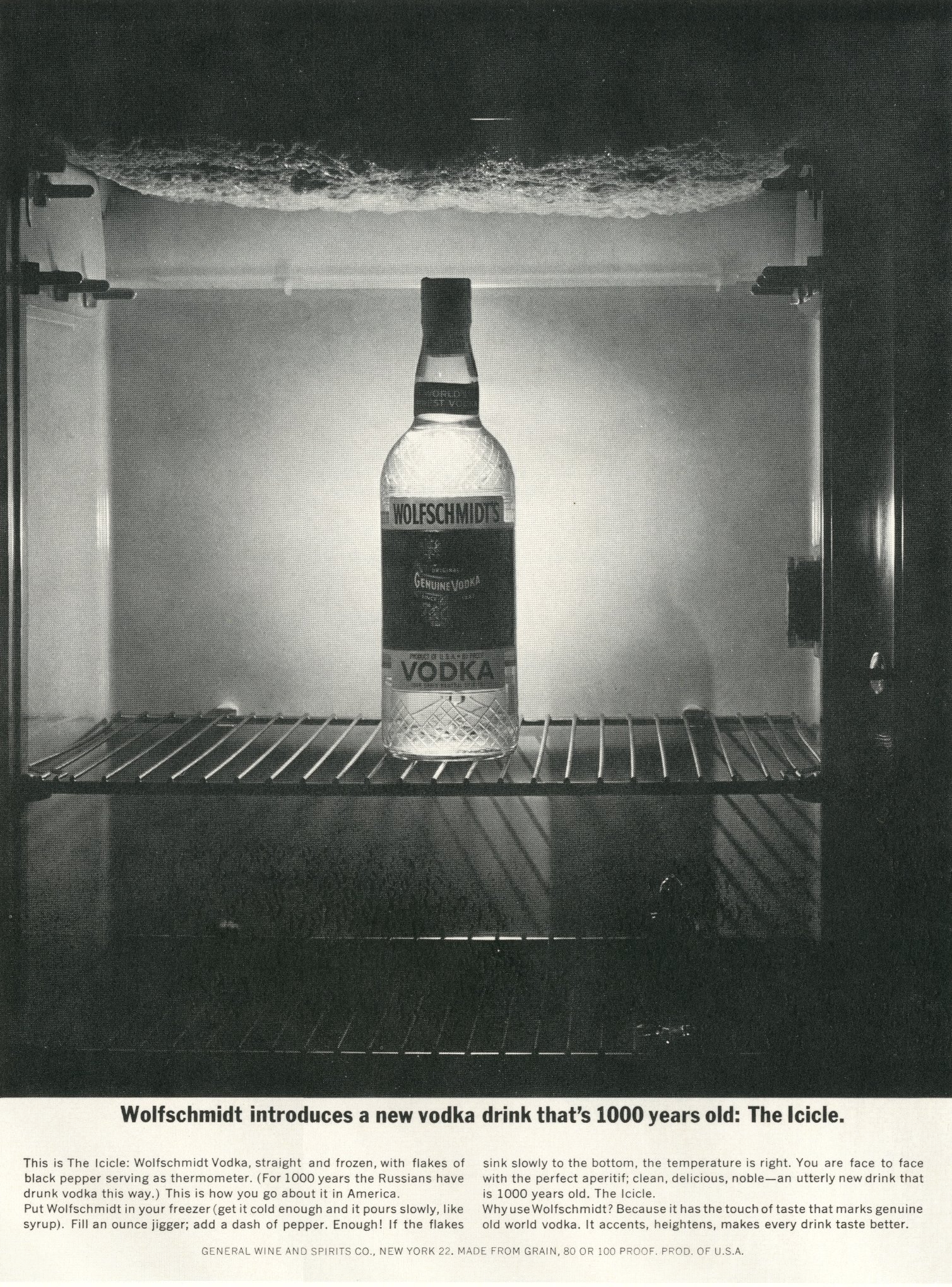
Same shape of problem.
The bottle that propositioned a tomato, then came back the following week with an orange.
Back to the archive →