Vorsprung durch Technik
A car Britain could not place was given a nationality by signing every ad with a German line nobody translated.
The era.
Britain in 1982 was coming out of a deep recession. Unemployment passed three million that January, and the Falklands War ran from April to June. Margaret Thatcher was re-elected in June 1983, and spending on cars recovered with the economy.
More than half the new cars sold in Britain were now imported. A large share were bought by companies for their staff, so the car a manager was given said where he stood in the firm. Mercedes-Benz and BMW held the top of that ladder.
Audi had the engineering to join them. The four-wheel-drive Quattro arrived in 1980 and its rally cars won world championship titles in 1982, 1983 and 1984. The Audi 100 of 1982 had a drag figure of 0.30, the lowest of any production saloon of its day. The cars had moved ahead of the brand's reputation.
The culture.
The war was still part of British popular culture forty years on. Television comedy returned to it often, and the German on screen was usually a figure of fun. A German phrase in a British commercial break was a risk.
German goods had a different reputation from German people. A Mercedes or a BMW stood for engineering that could be trusted, and buyers paid extra for it. Audi, owned by Volkswagen since the 1960s, had none of that standing. Creative Review records that it was seen as a vague Euro-car.
Car advertising in the British press was a copywriter's medium. Double-page spreads carried a headline, a photograph and several hundred words of argument. Readers choosing a car for three years were expected to read them.
The problem.
Audi made cars as good as BMW and Mercedes, and British buyers did not know which country they came from.
In 1982 Audi was the German make with no picture attached. Contagious describes it as an unloved Volkswagen sub-brand, more likely to be compared with Renault than with BMW. Mercedes owned prestige and BMW owned driving. Audi had four-wheel drive, rally wins and the most aerodynamic saloon on sale, and none of it added up to a reason to pay a premium price.
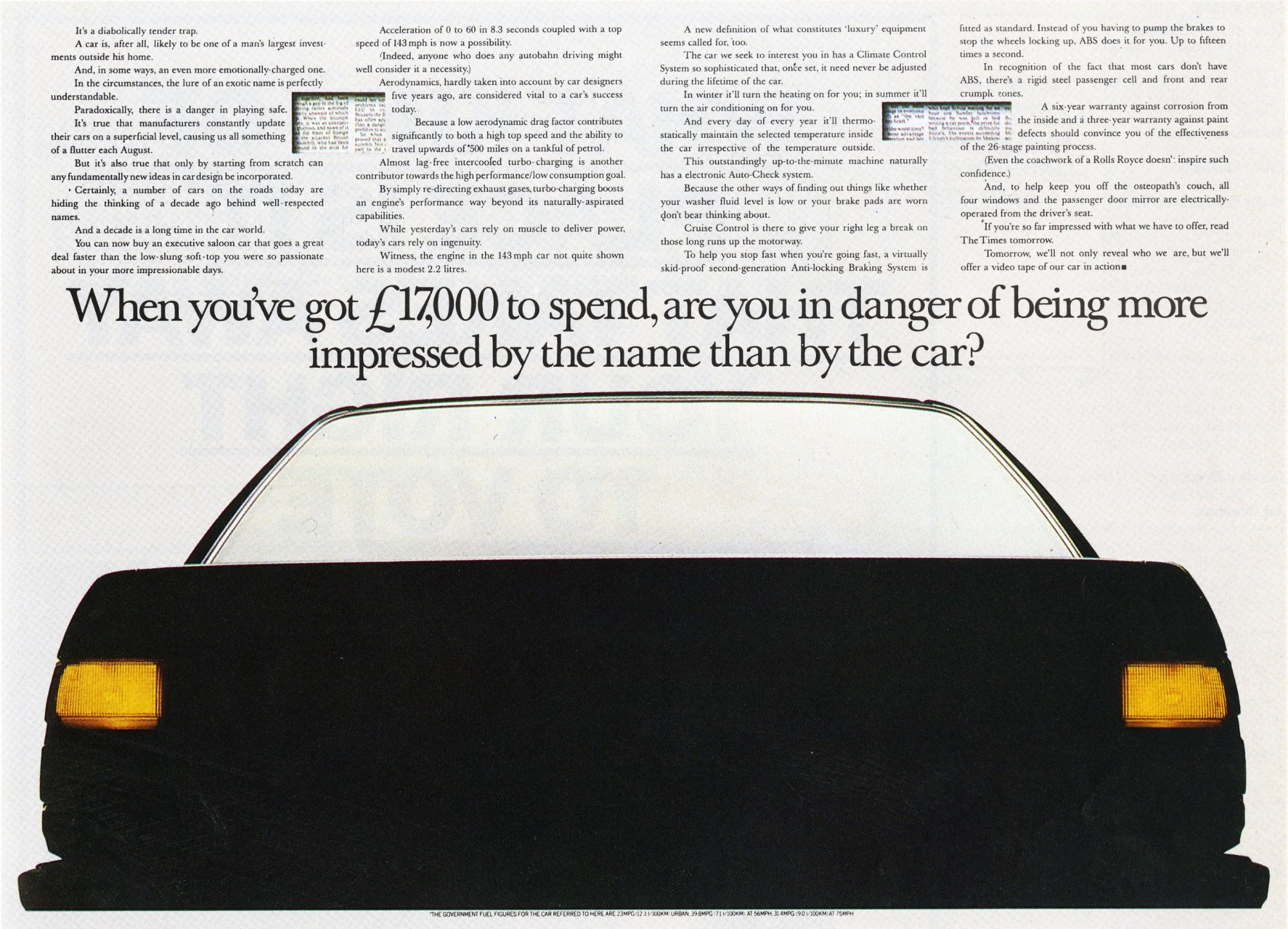
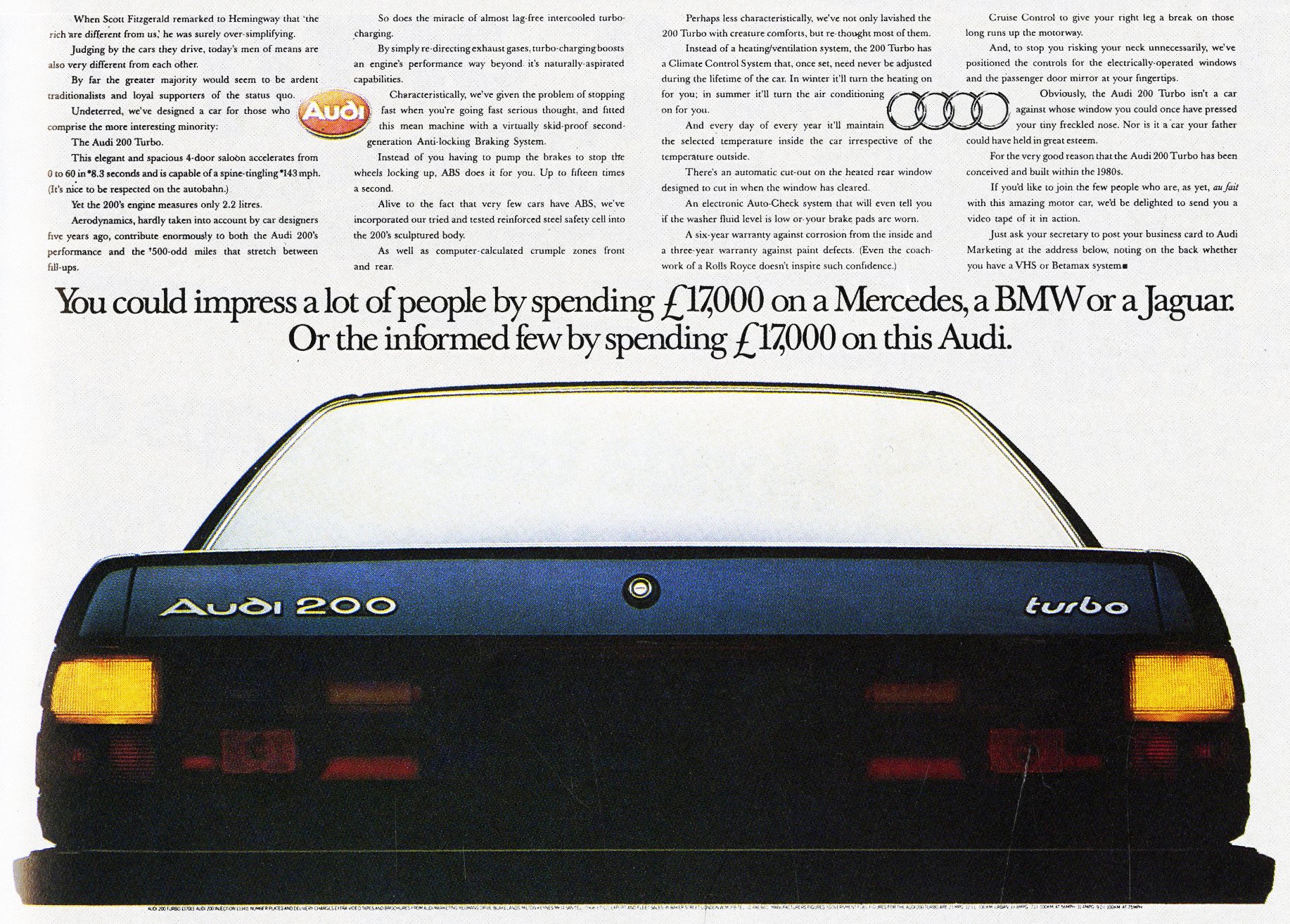
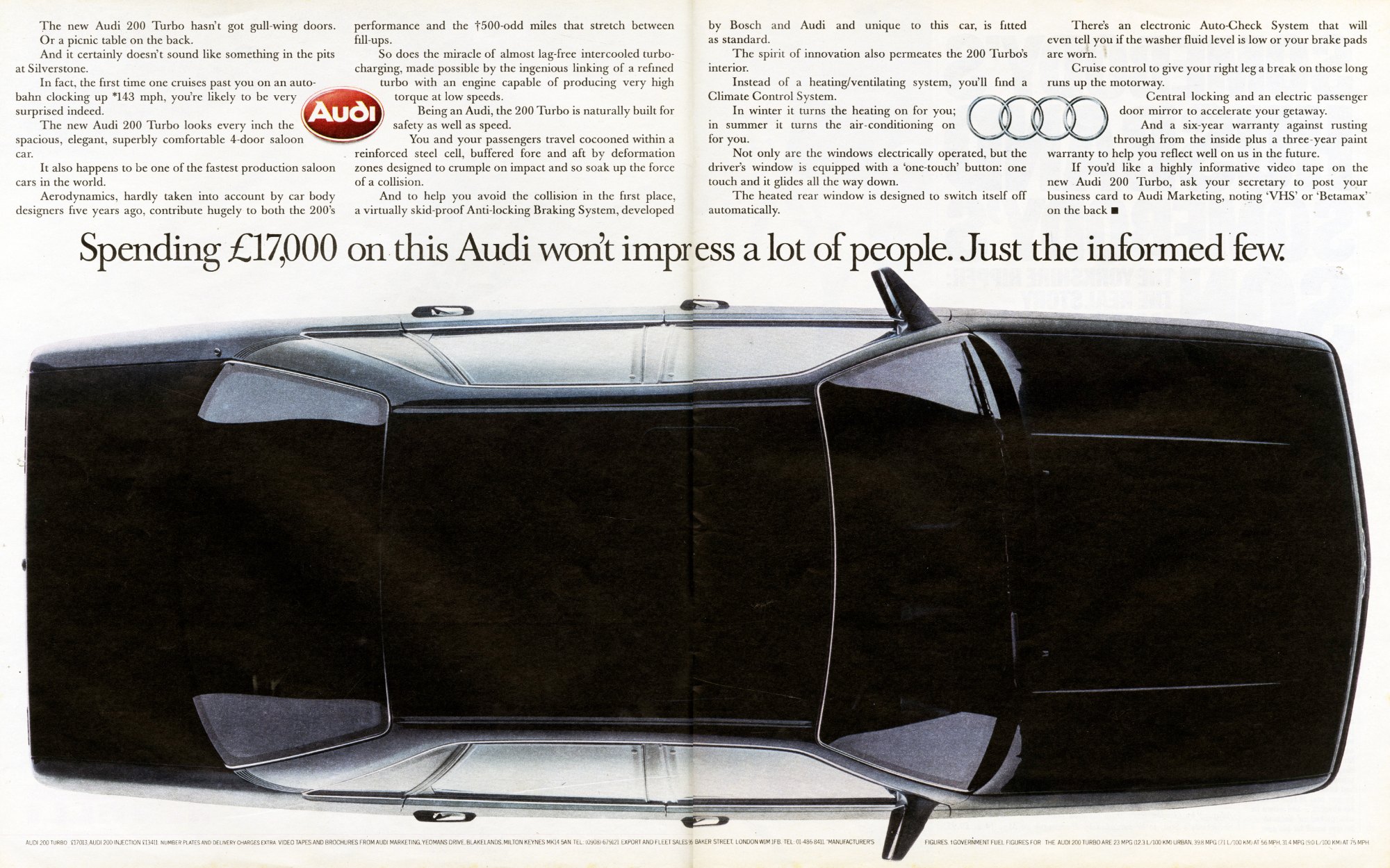
The ads later put the difficulty in their own headline: "When you've got £17,000 to spend, are you in danger of being more impressed by the name than by the car?" A buyer spending that much wanted a badge his colleagues understood. Audi needed one idea that tied the engineering together and told people where it came from.
Audi appointed Bartle Bogle Hegarty in 1982, the year the agency opened, to build its first brand campaign in Britain and lift the name to the level of BMW and Mercedes. Nigel Bogle is reported to have asked the client which part of the German engineering pinhead it would like the agency to dance on.
The solution.
Sign everything with the factory's own German slogan, leave it untranslated, and let each ad prove one piece of engineering.
John Hegarty saw the words Vorsprung durch Technik on an old piece of publicity while touring the Audi factory at Ingolstadt. The line had first been used in Germany in 1971. He proposed it as the sign-off for every British ad, in German. Research said it was too German and would put people off. Brian Bowler and John Meszaros of Audi overruled the research.
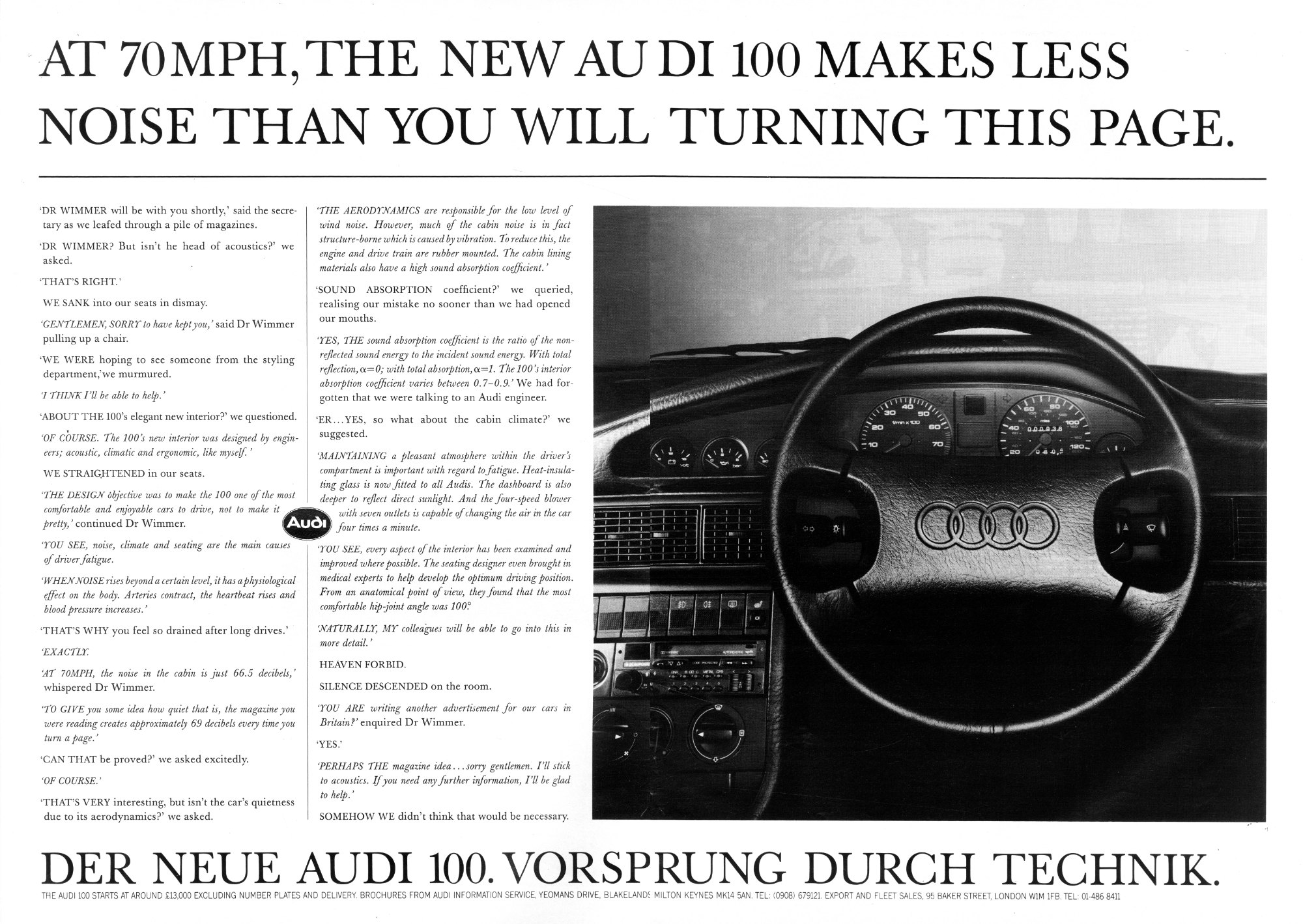
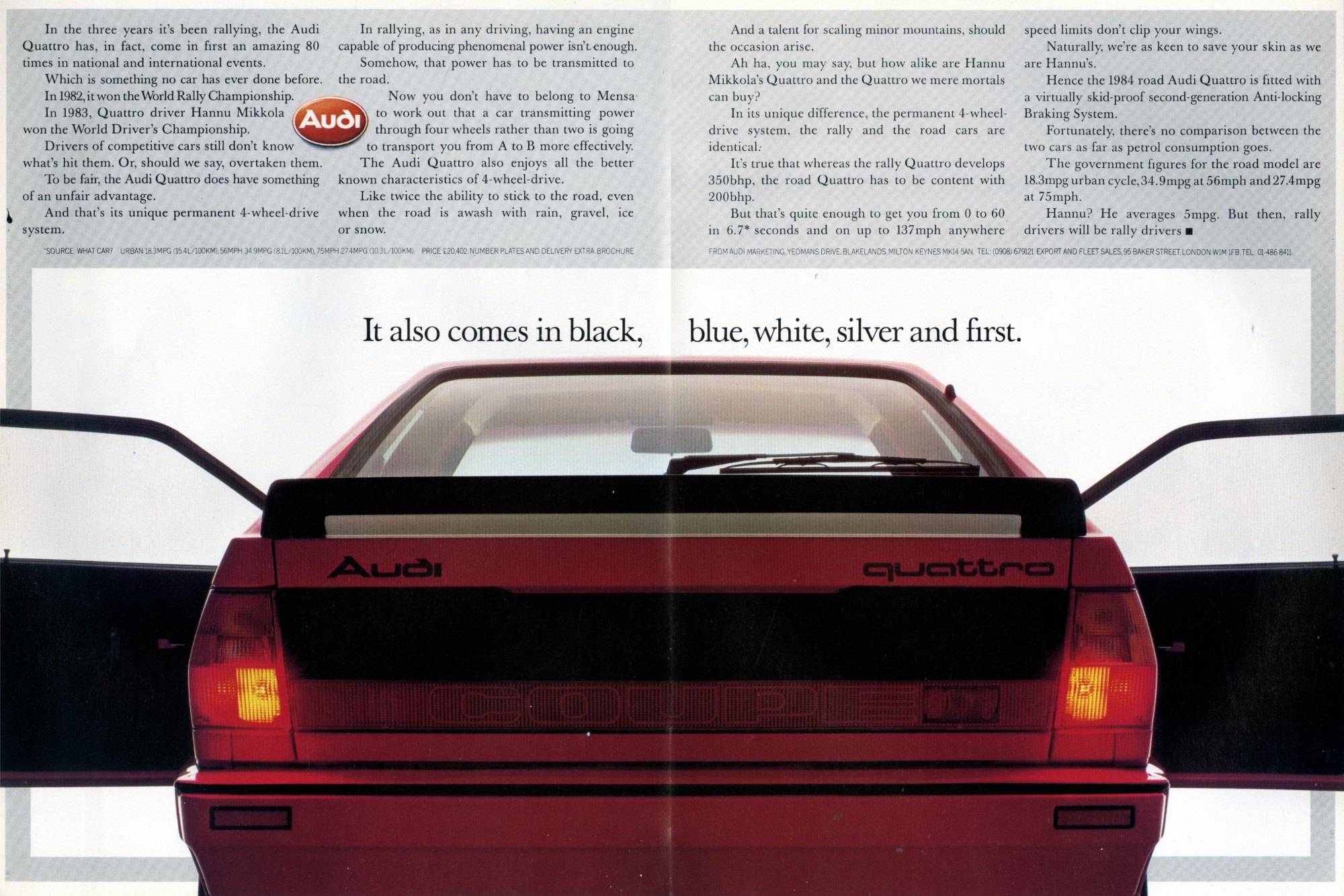
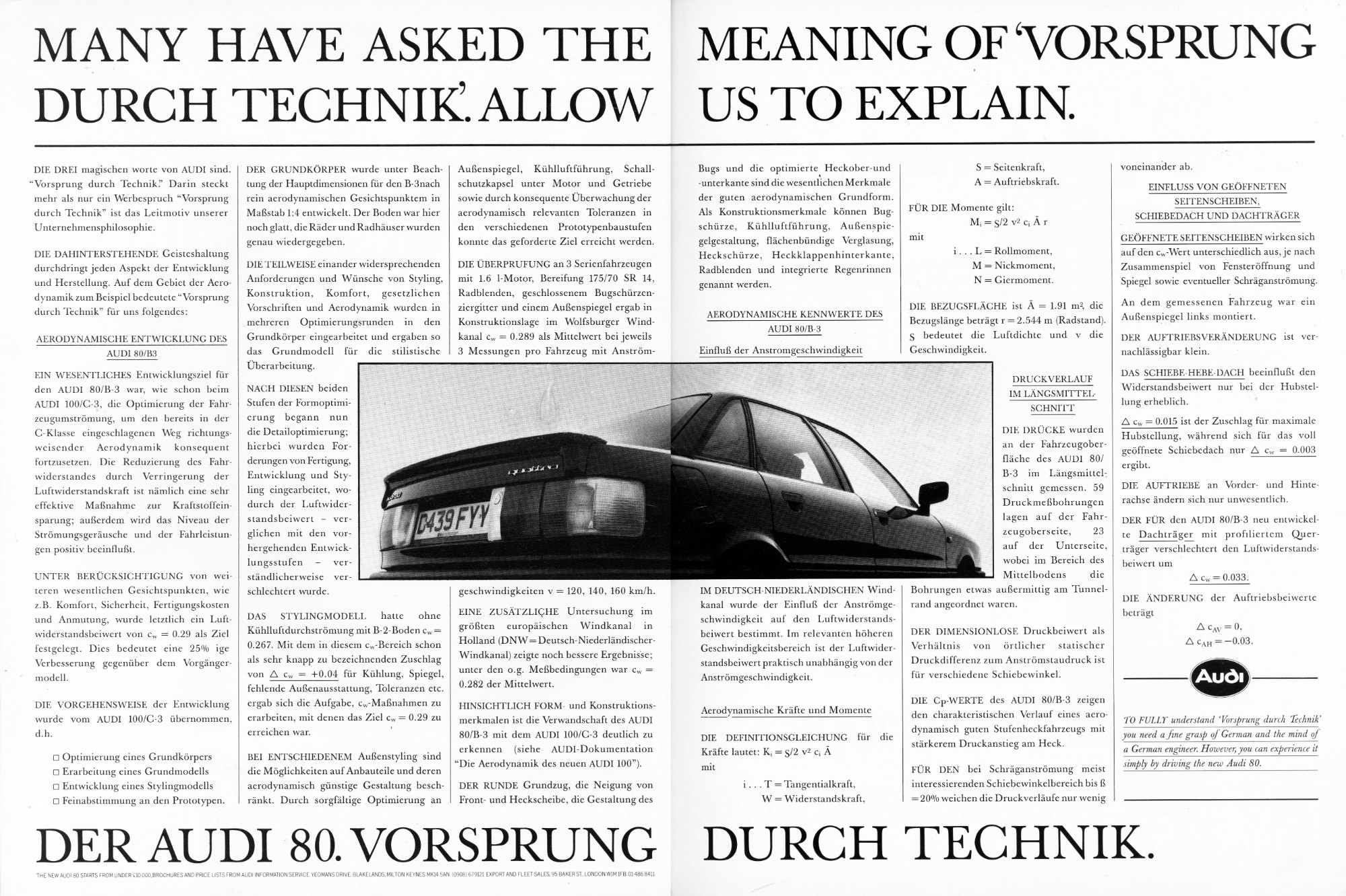
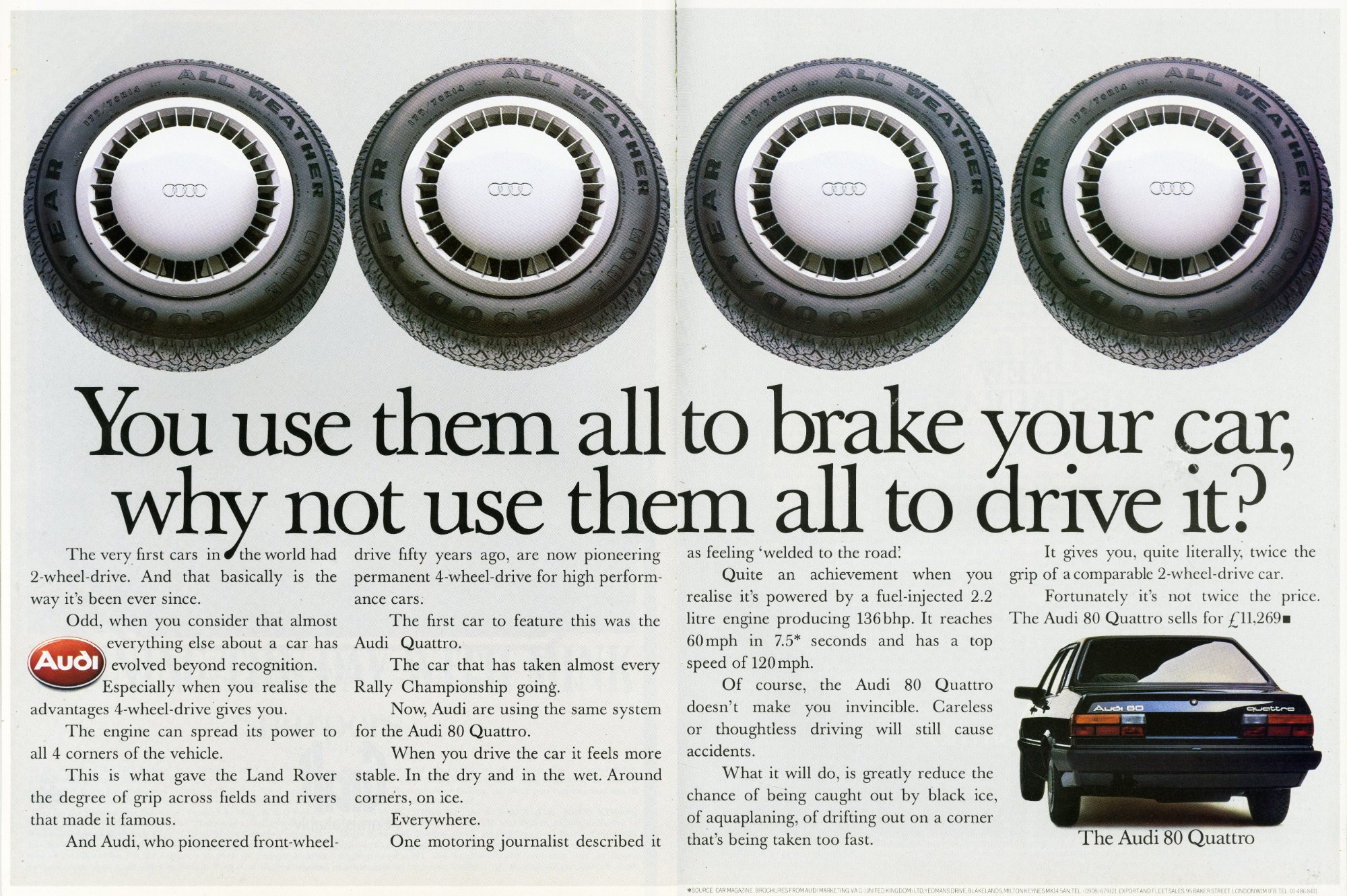
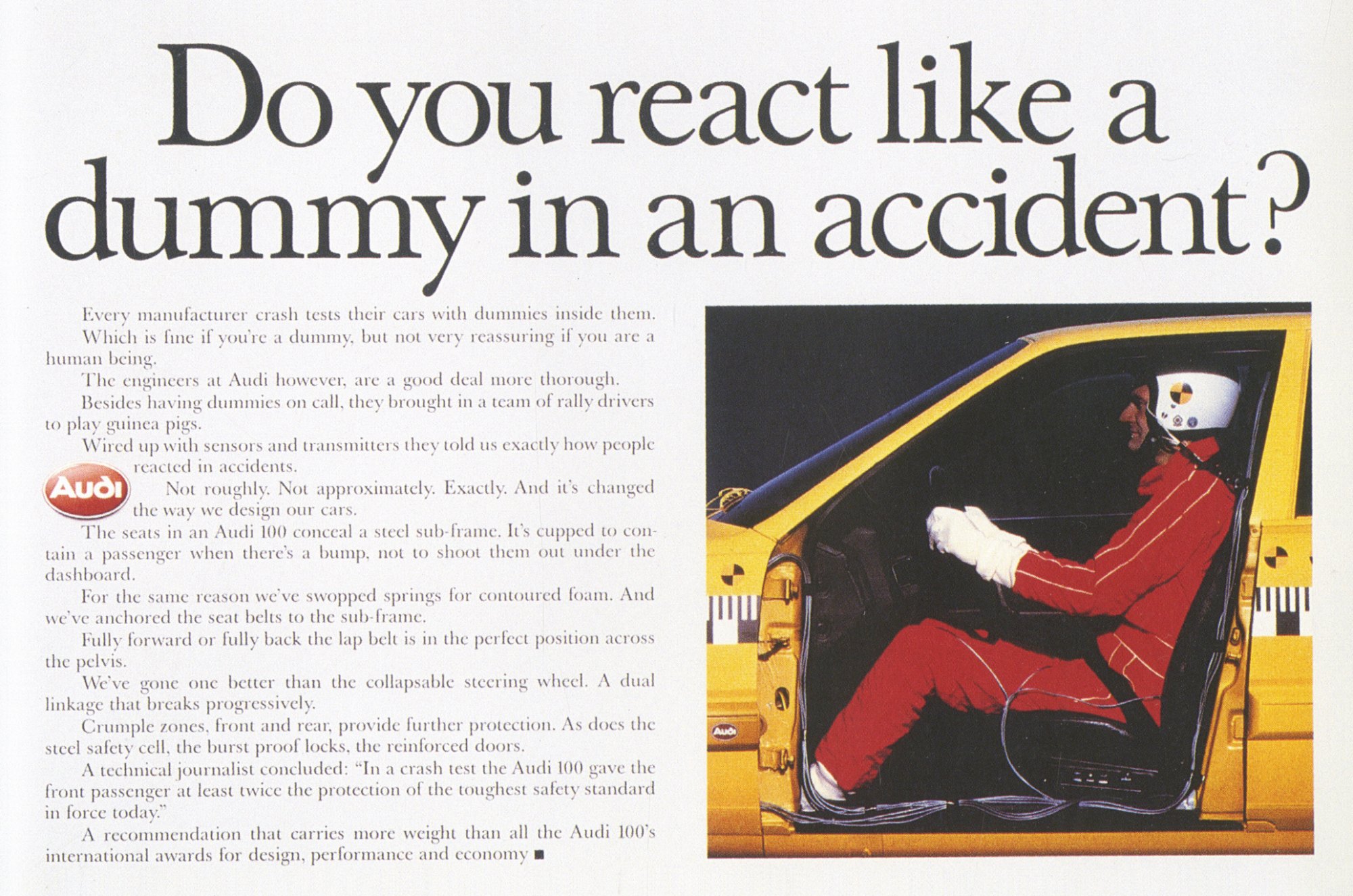
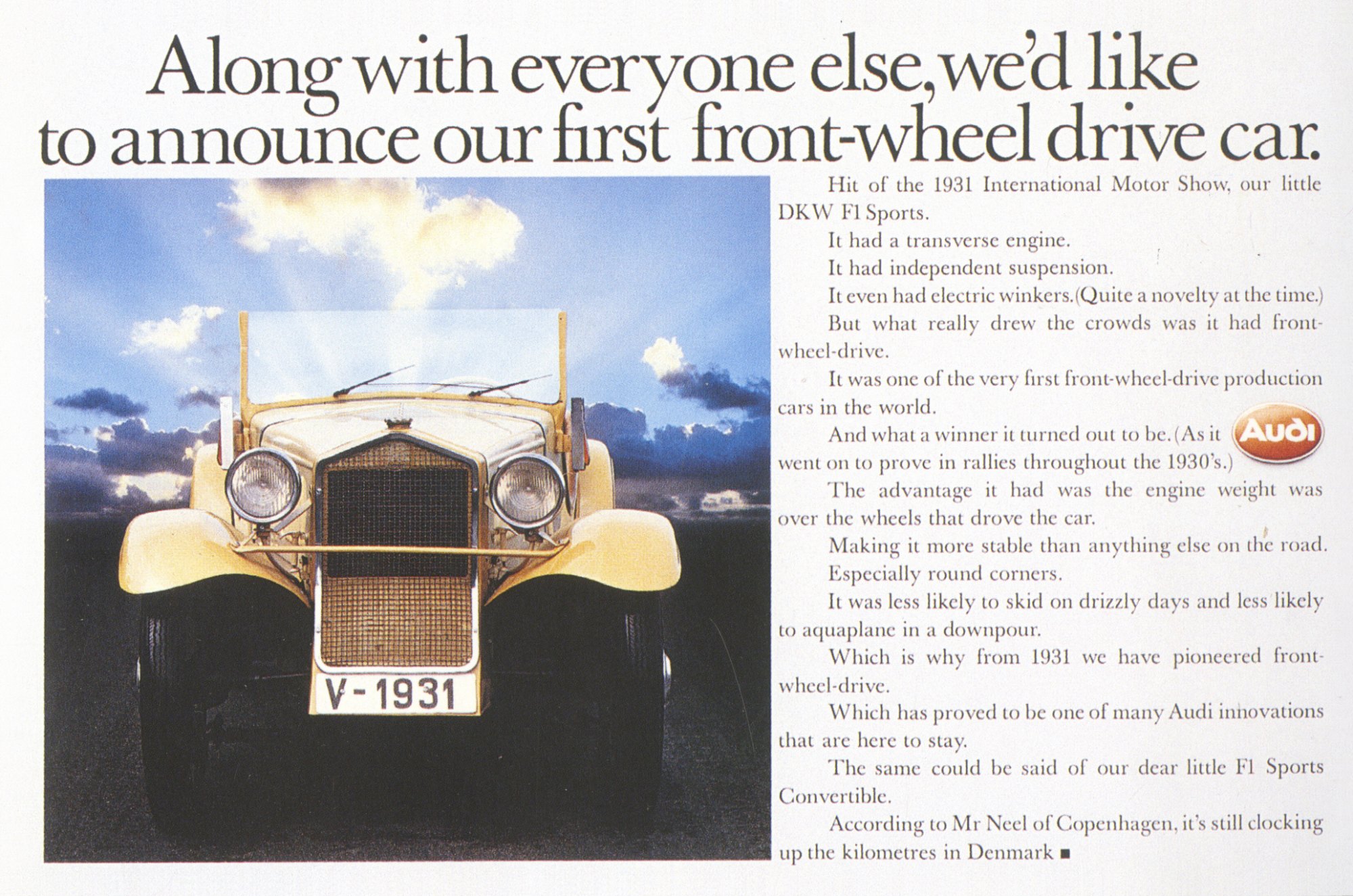
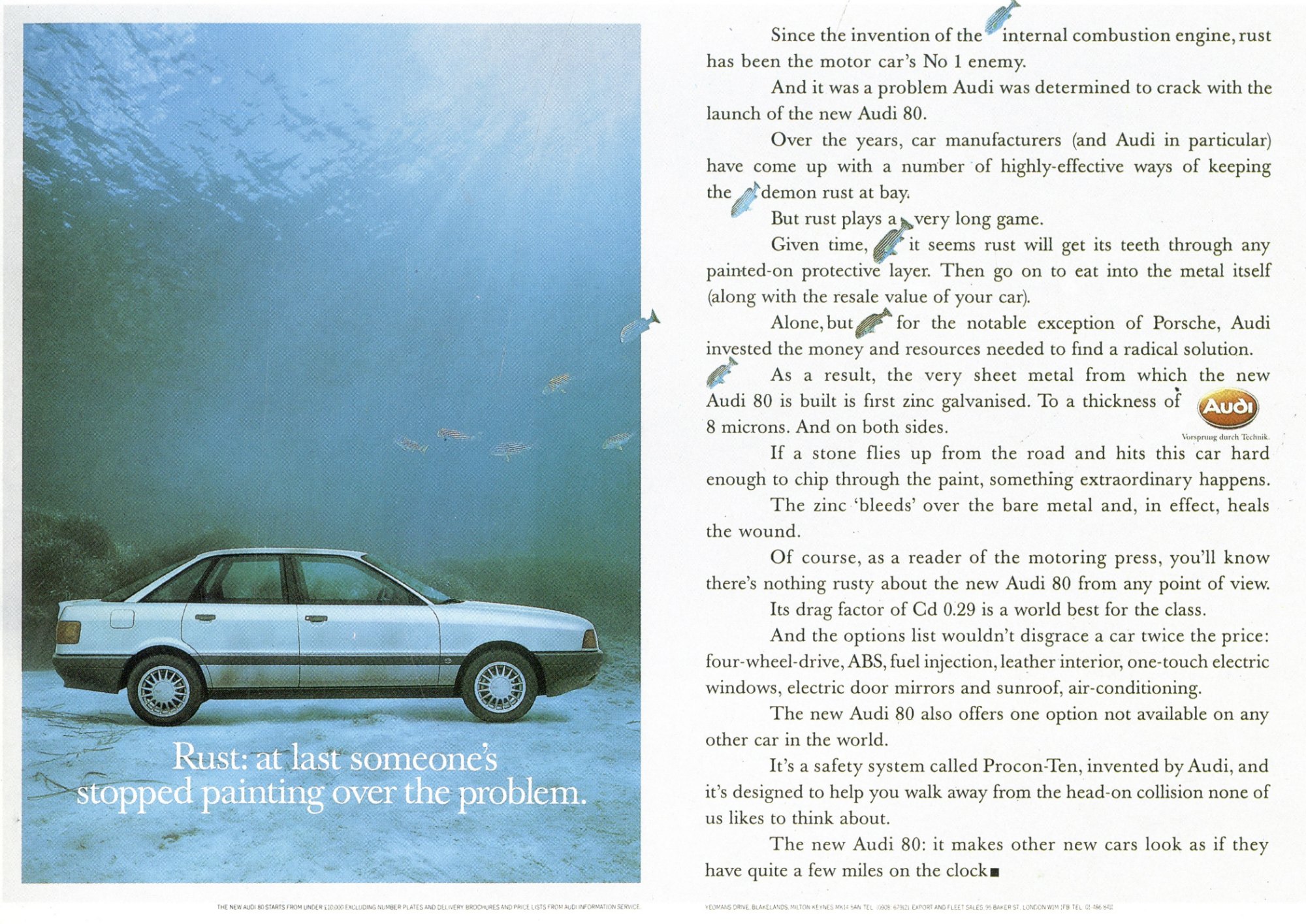
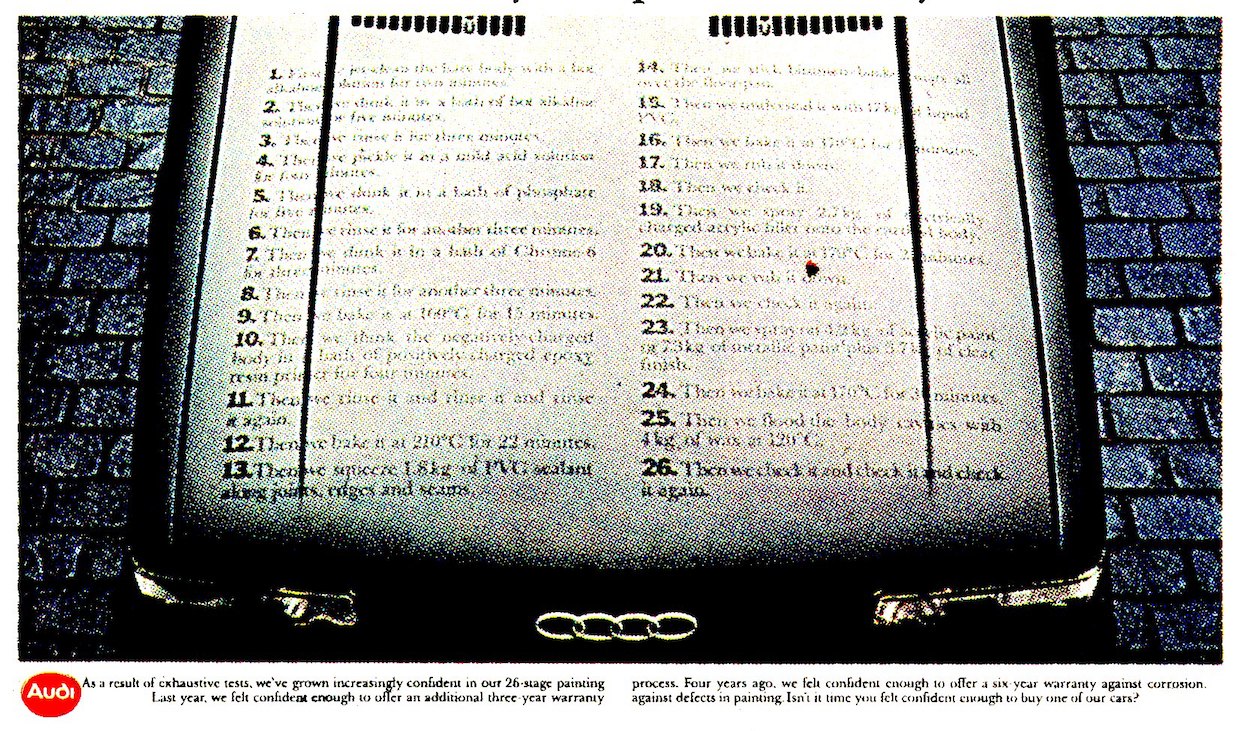
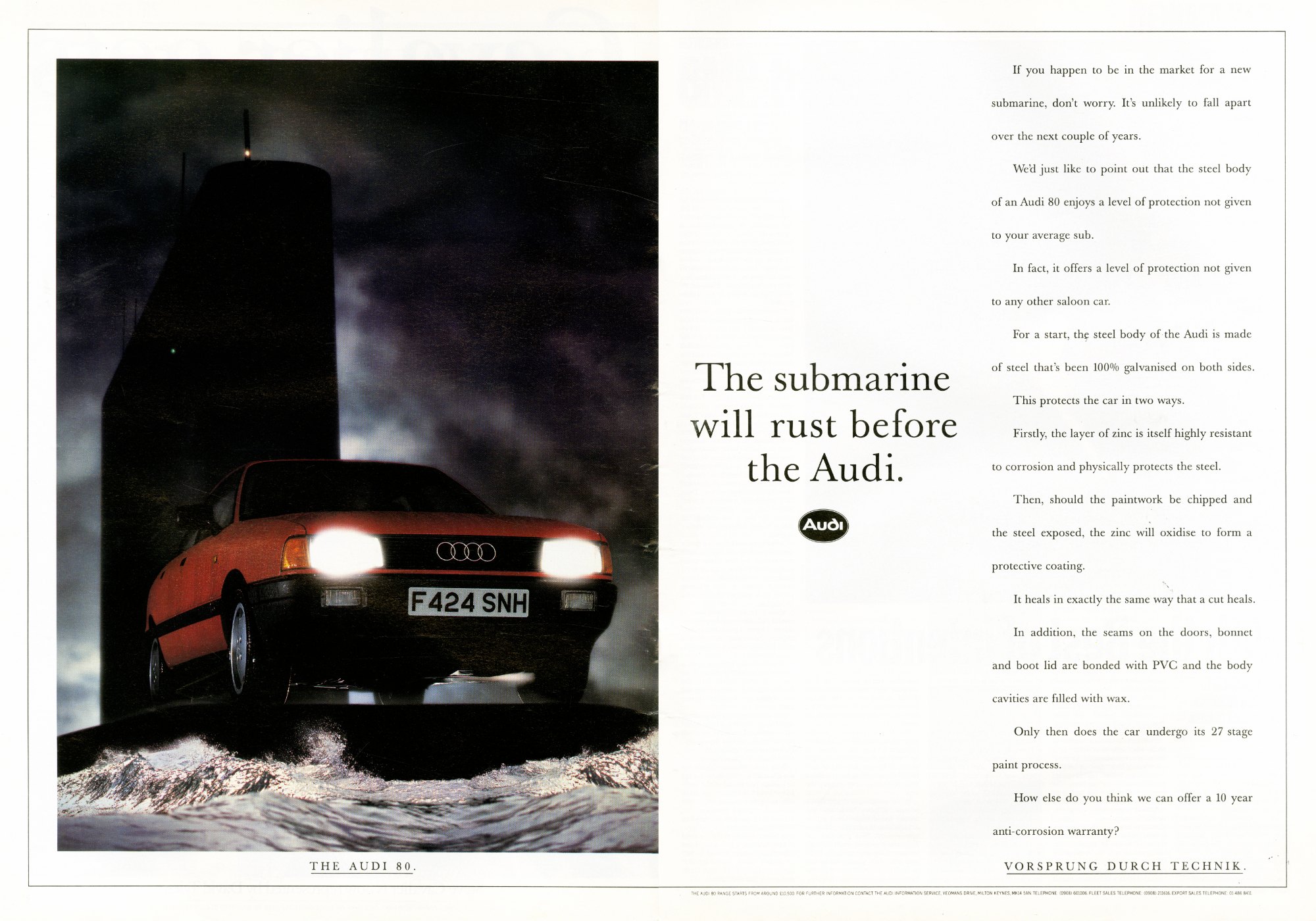
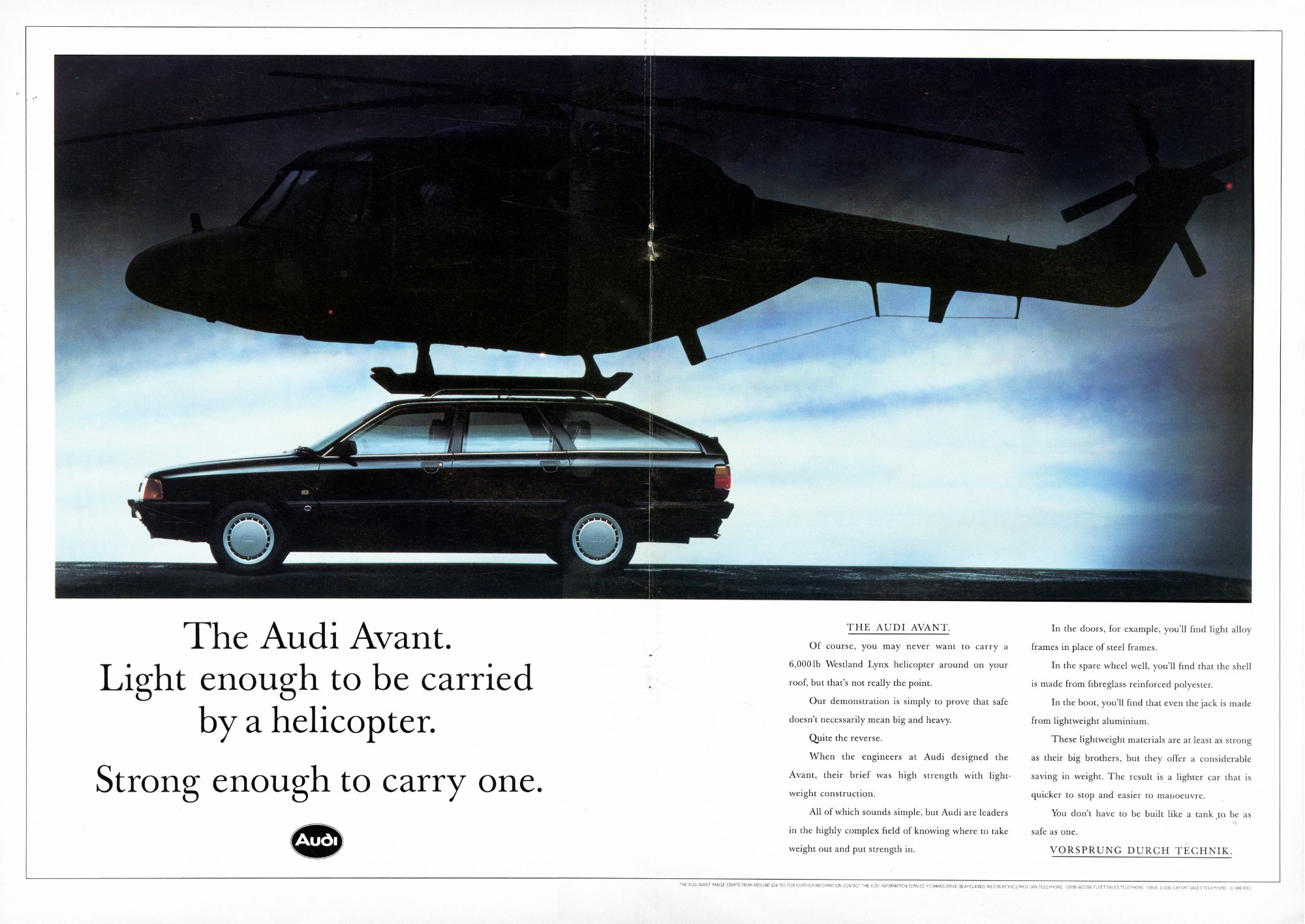
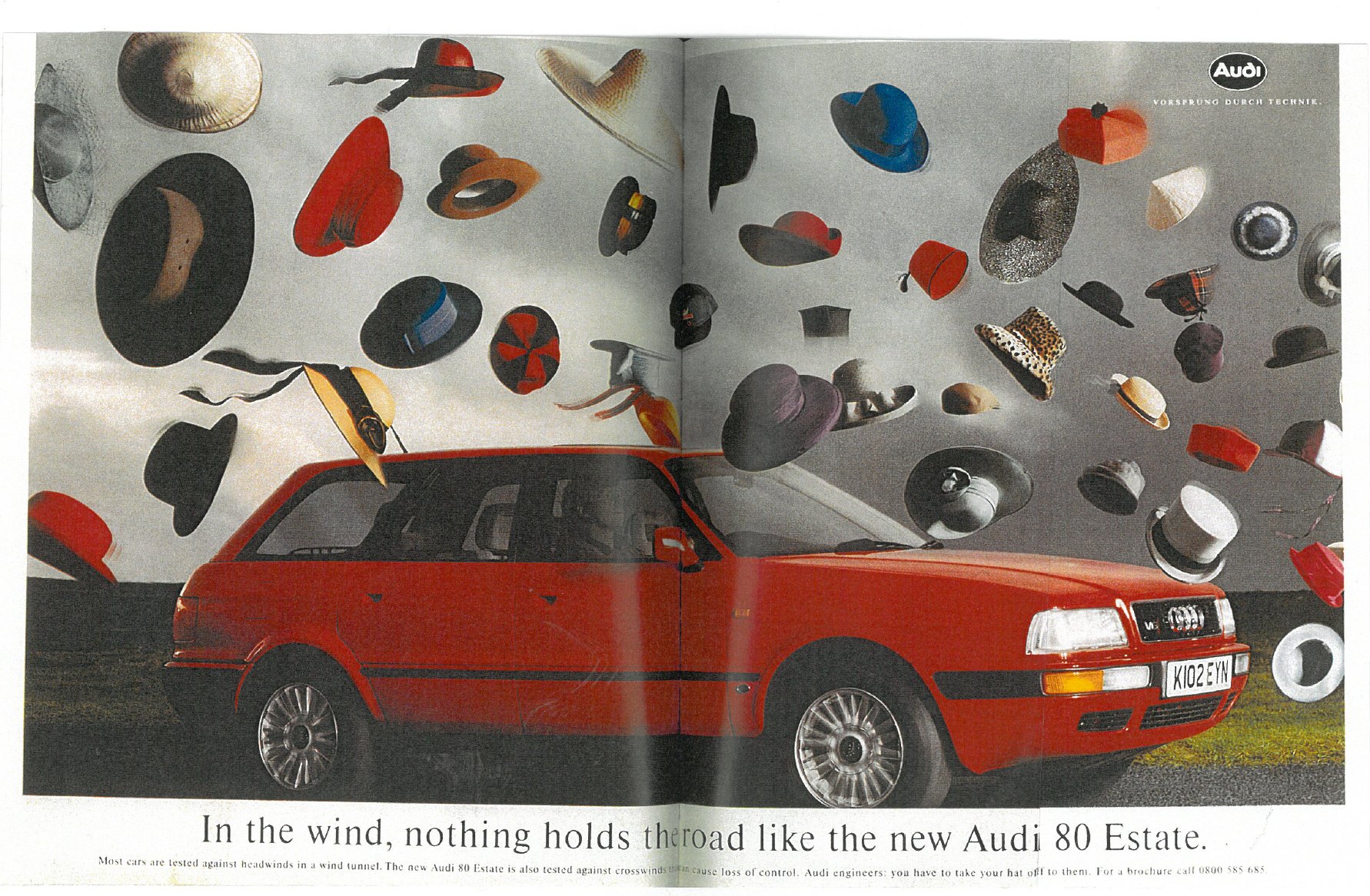
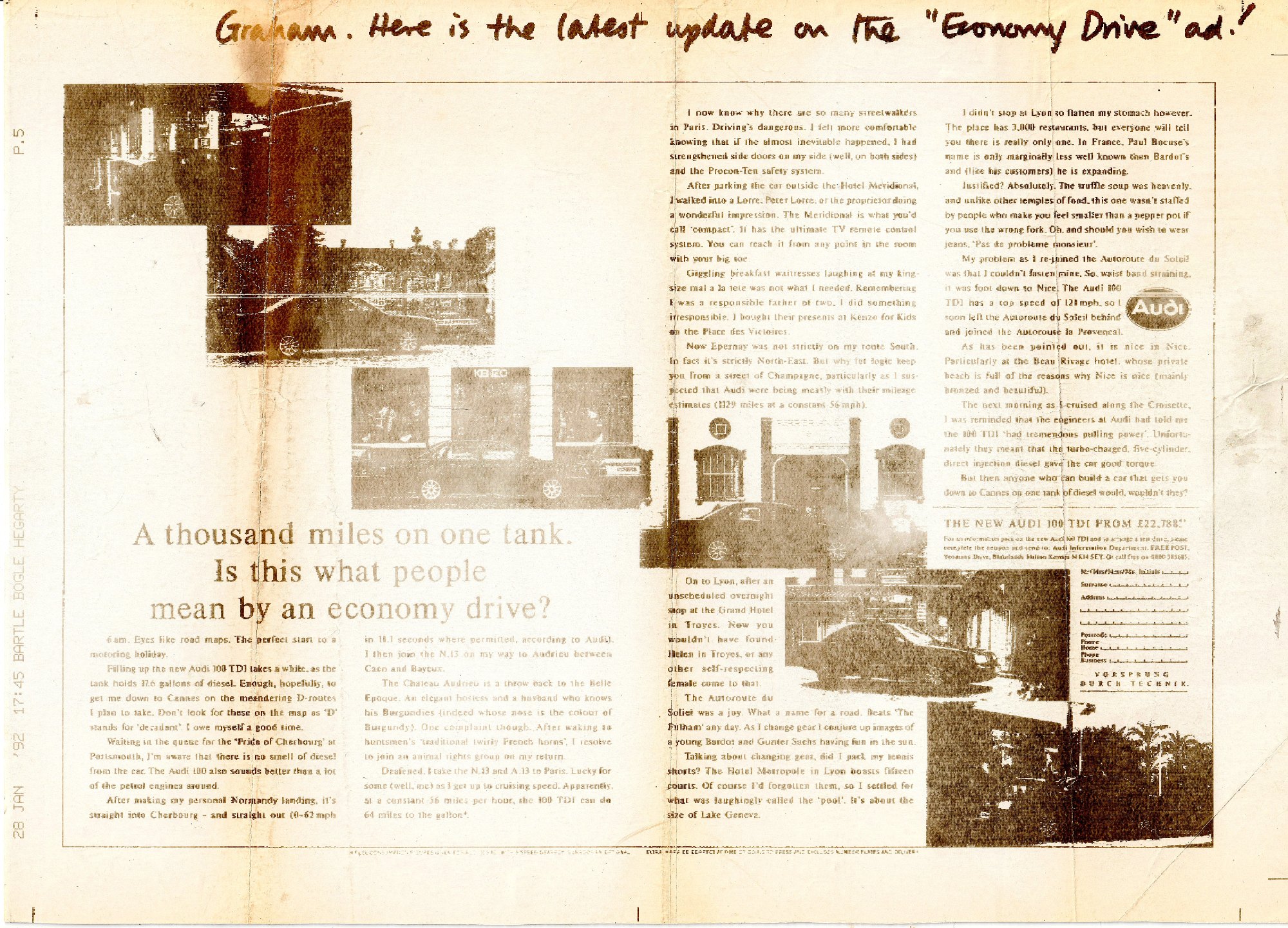
The press ads gave the line something to stand on. Each spread took one fact and argued it at length: a zinc-coated body under "Rust: at last someone's stopped painting over the problem", wind noise under "At 70mph, the new Audi 100 makes less noise than you will turning this page", four-wheel drive under "You use them all to brake your car, why not use them all to drive it?" One spread printed its entire copy in German and offered a single line of English: to understand the phrase fully you need the mind of a German engineer, or you can drive the car.
On television Barbara Nokes added "as they say in Germany" and the actor Geoffrey Palmer read it. Hegarty said dealers soon reported customers asking to see a bit of that vorsprung. The line gave Audi a country and a character in three words, and Audi still uses it. An Institute of Practitioners in Advertising paper in 2020 put the return at £2.33 for every £1 spent since 1982.
The work.
Same shape of problem.
Research said the line was too German. The client ran it anyway.
Back to the archive →