Rolls-Royce · Ogilvy, Benson & Mather
At 60 Miles an Hour
The clearest case for selling luxury with facts instead of adjectives, written by the man who built a school of advertising on research.
The era.
In 1958 the American luxury car was a Cadillac. It was long, finned and new every autumn, and its advertising sold it as a badge of arrival. Lincoln and Imperial chased the same buyer with the same language: elegance, prestige, the good life.
Rolls-Royce sold very few cars in the United States. Its Silver Cloud, introduced in 1955, was built by hand at Crewe in England and cost $13,550 in 1958. It was known by reputation to almost everyone and by experience to almost no one.
The magazine page was still the main stage for serious advertising. Television was taking over mass selling, but for an expensive product aimed at a small, educated audience, The New Yorker and The New York Times reached the right readers. Those readers were used to reading long pieces.
The culture.
David Ogilvy was born in England in 1911. He had been a cook in Paris, a door-to-door salesman of cooking stoves and a researcher for George Gallup before he opened Hewitt, Ogilvy, Benson & Mather in New York in 1948. Anderson Hewitt left in 1953, and the agency became Ogilvy, Benson & Mather. He had no experience selling cars.
Ogilvy believed advertising should inform. He read research, tested headlines and argued that long copy sold better than short copy when the product was worth the reader's time. His Hathaway shirt man with the eye patch and his Schweppes ads had already made his name.
Rolls-Royce advertising before him had leaned on aspiration. A 1929 Young & Rubicam ad addressed "the man who is afraid to let his dream come true." Ogilvy's view was blunt: "When I advertised Rolls-Royce, I gave the facts — no hot air, no adjectives, no gracious living."
The problem.
Sell a car everyone has heard of and almost no one has driven, with a fraction of the competition's money.
Rolls-Royce had a reputation in America and almost no presence there. Its budget, Ogilvy said, was $50,000, less than two percent of what Cadillac spent.
It could not match Detroit's volume of pages, and it could not out-glamour Cadillac on Cadillac's terms. The company already called itself the best car in the world, but words like "finest" and "best" were used by every luxury maker and believed by no one. The car needed a reason to believe that a reader could check.
How Rolls-Royce came to Ogilvy is not recorded in the sources checked. The brief was to sell the car in America on $50,000, against Cadillac's far larger budget; Ogilvy presented 26 headlines.
The solution.
Replace every adjective with a fact the reader can check, and lead with the one they will remember.
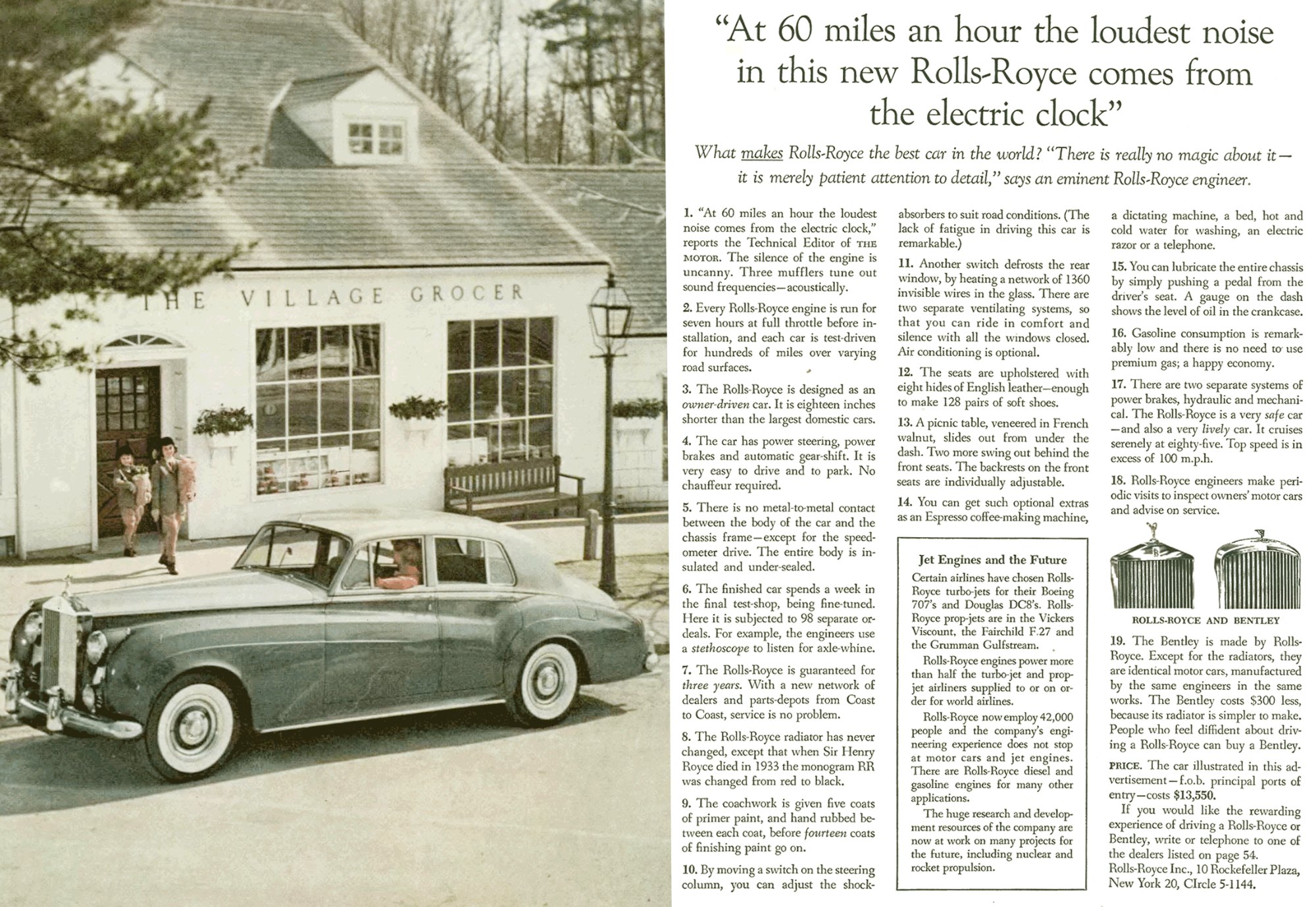
Ogilvy spent three weeks reading about the car. The headline came, he said, from a road test in the British magazine The Motor: "At 60 miles an hour the loudest noise in this new Rolls-Royce comes from the electric clock." Under it, numbered facts set out what the reputation rested on, and he said the copy ran to 719 words. It closed: "People who feel diffident about driving a Rolls-Royce can buy a Bentley." The ad ran in The New Yorker and The New York Times, and the campaign kept the same three-column format for the ads that followed. Ogilvy later called it the best headline he ever wrote.
The work.
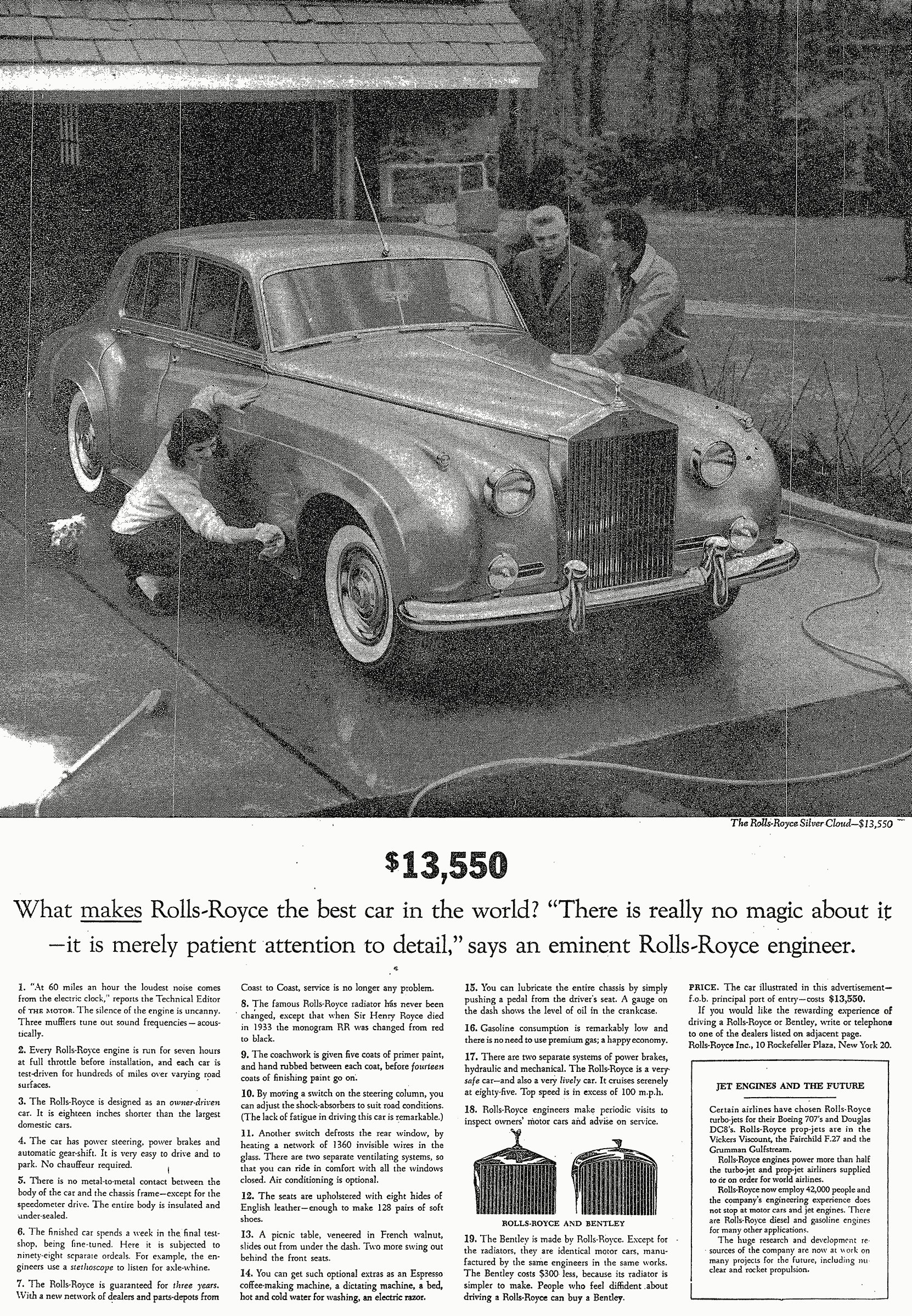
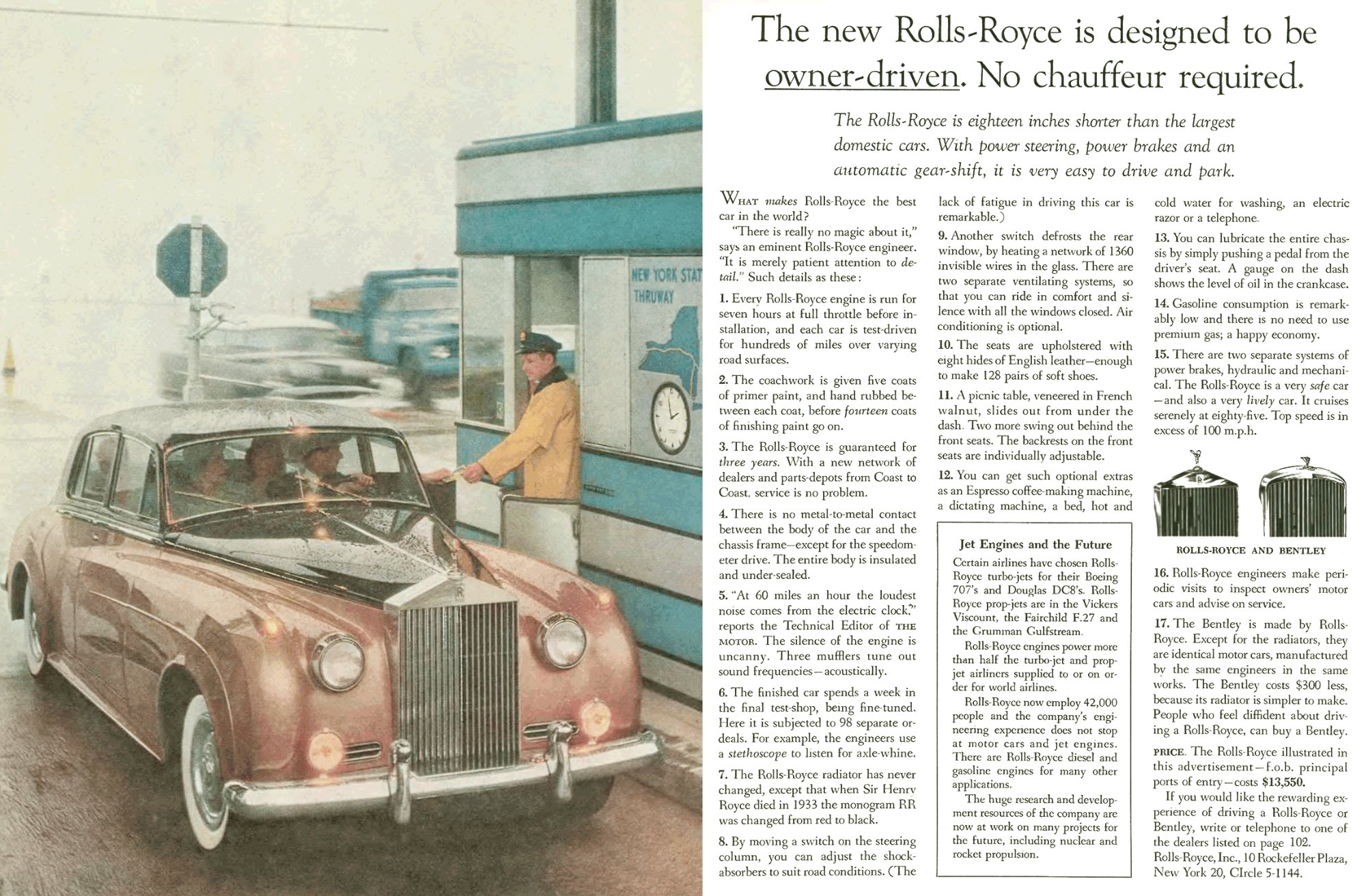
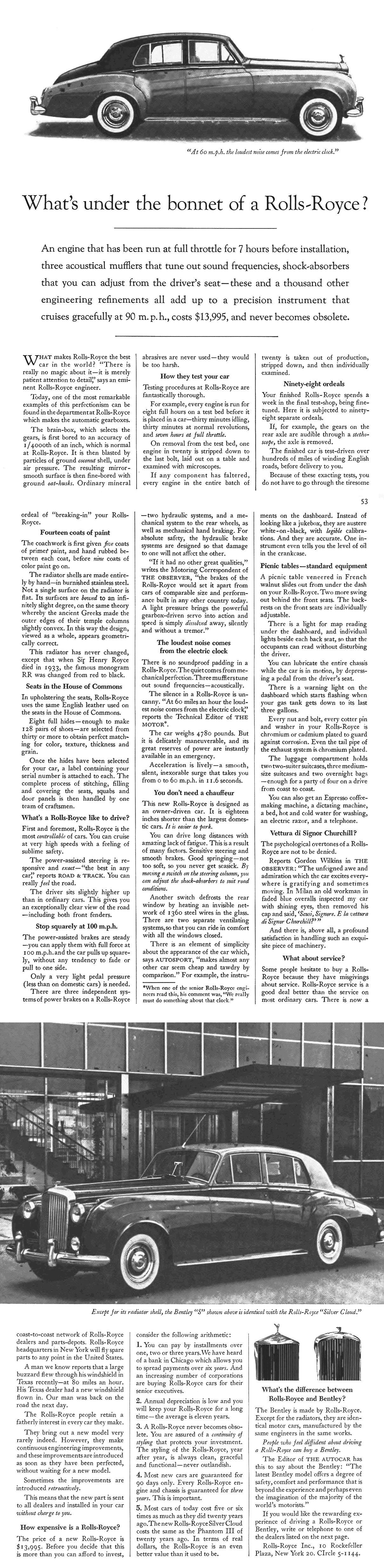
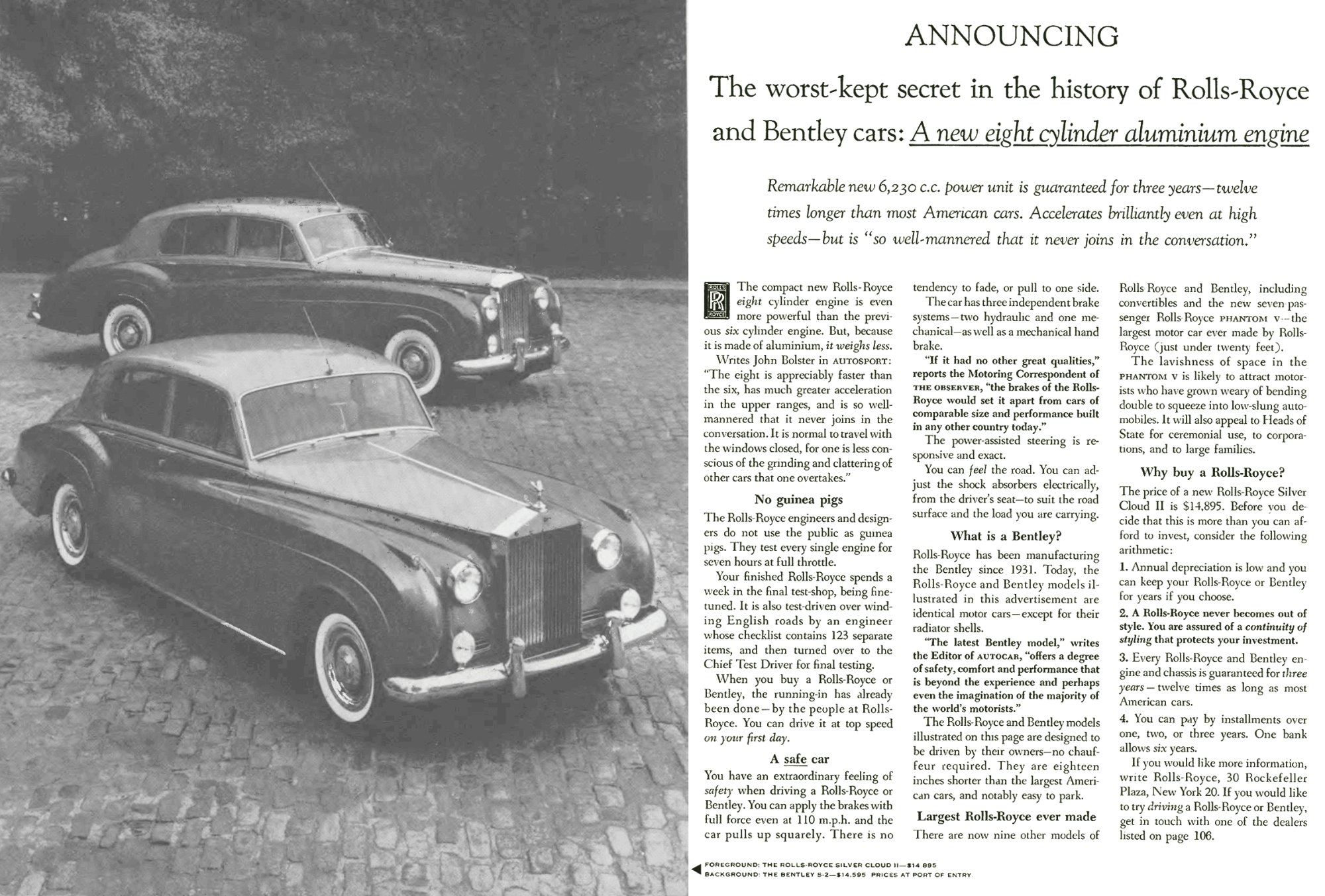
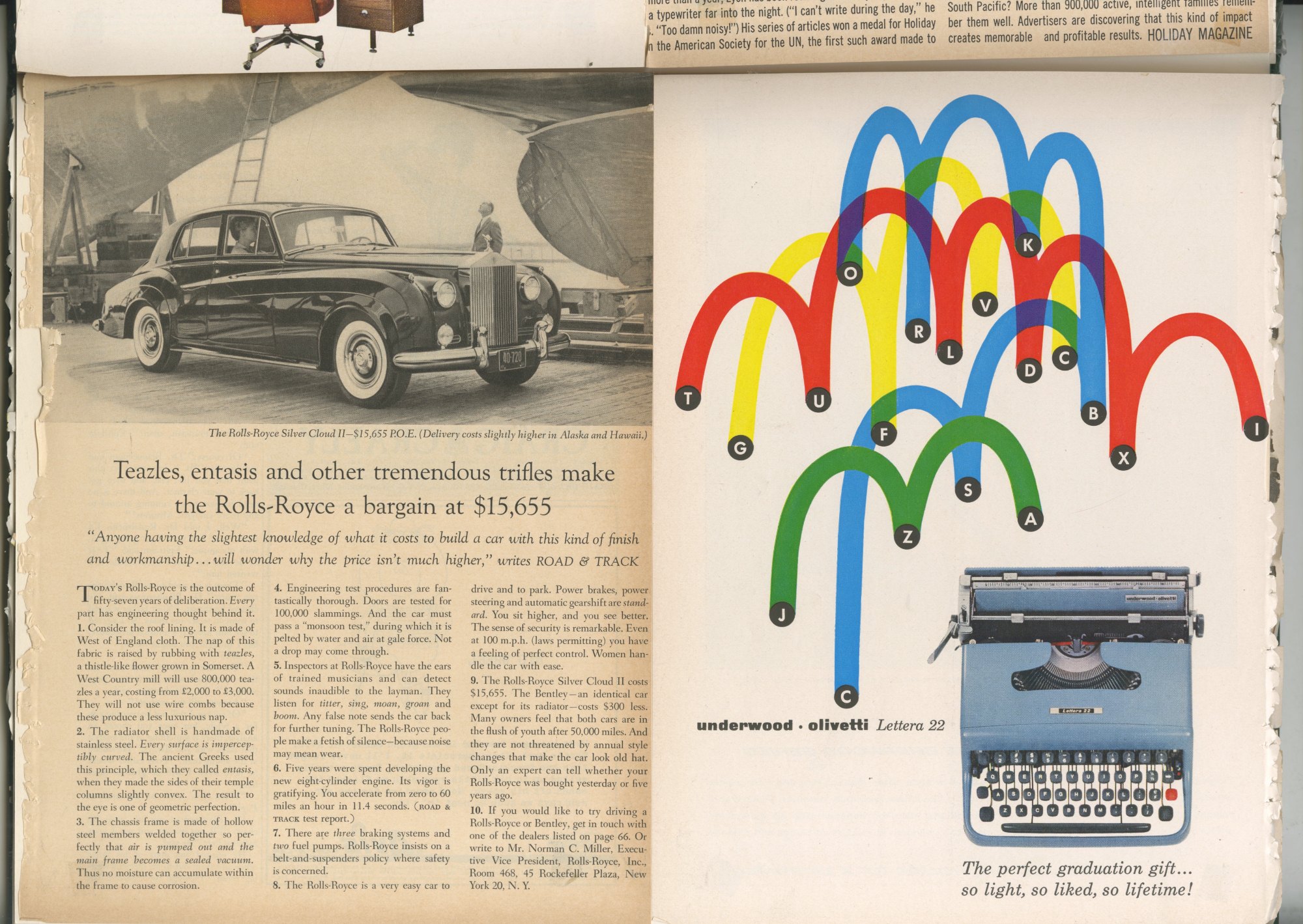
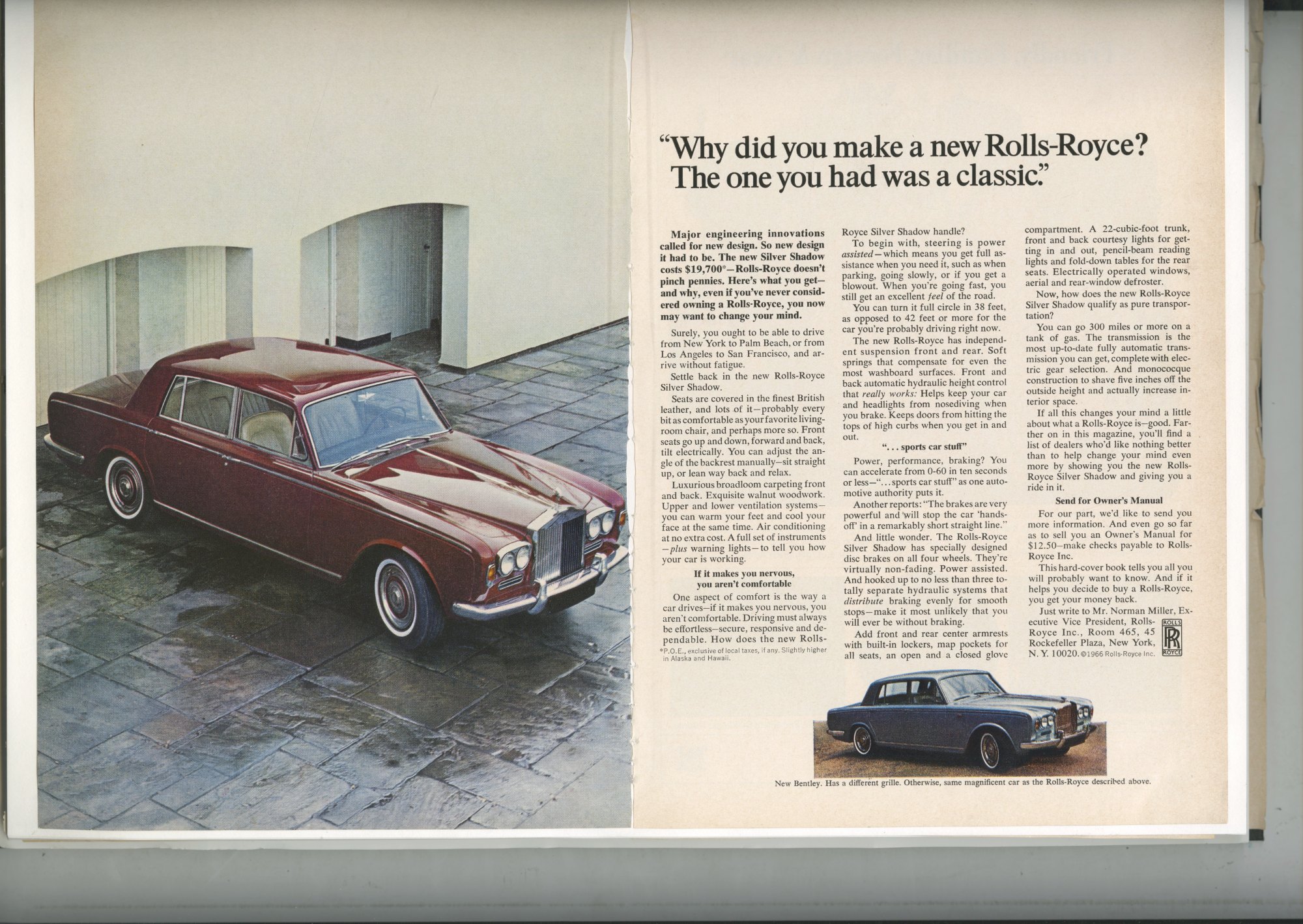
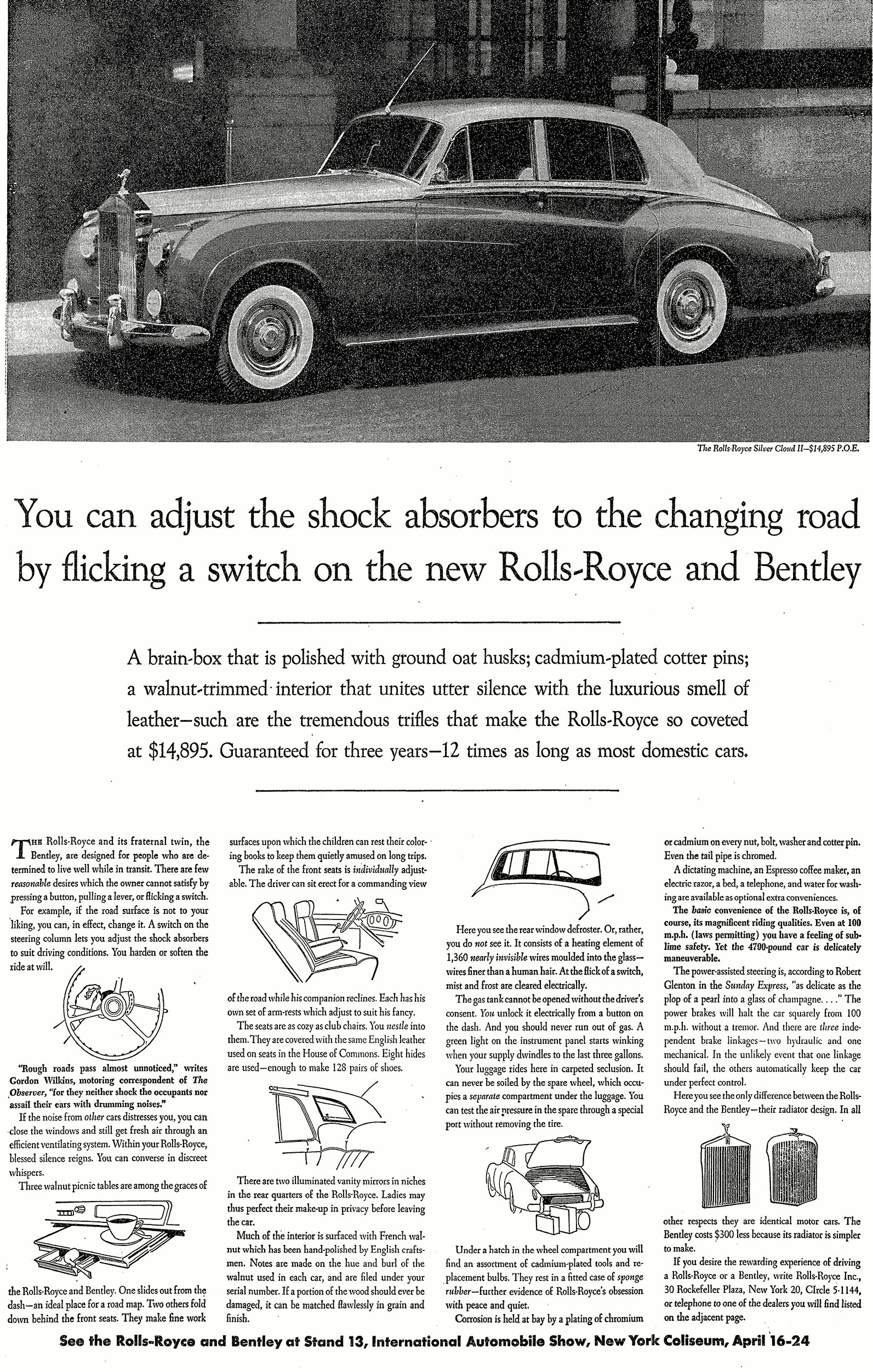
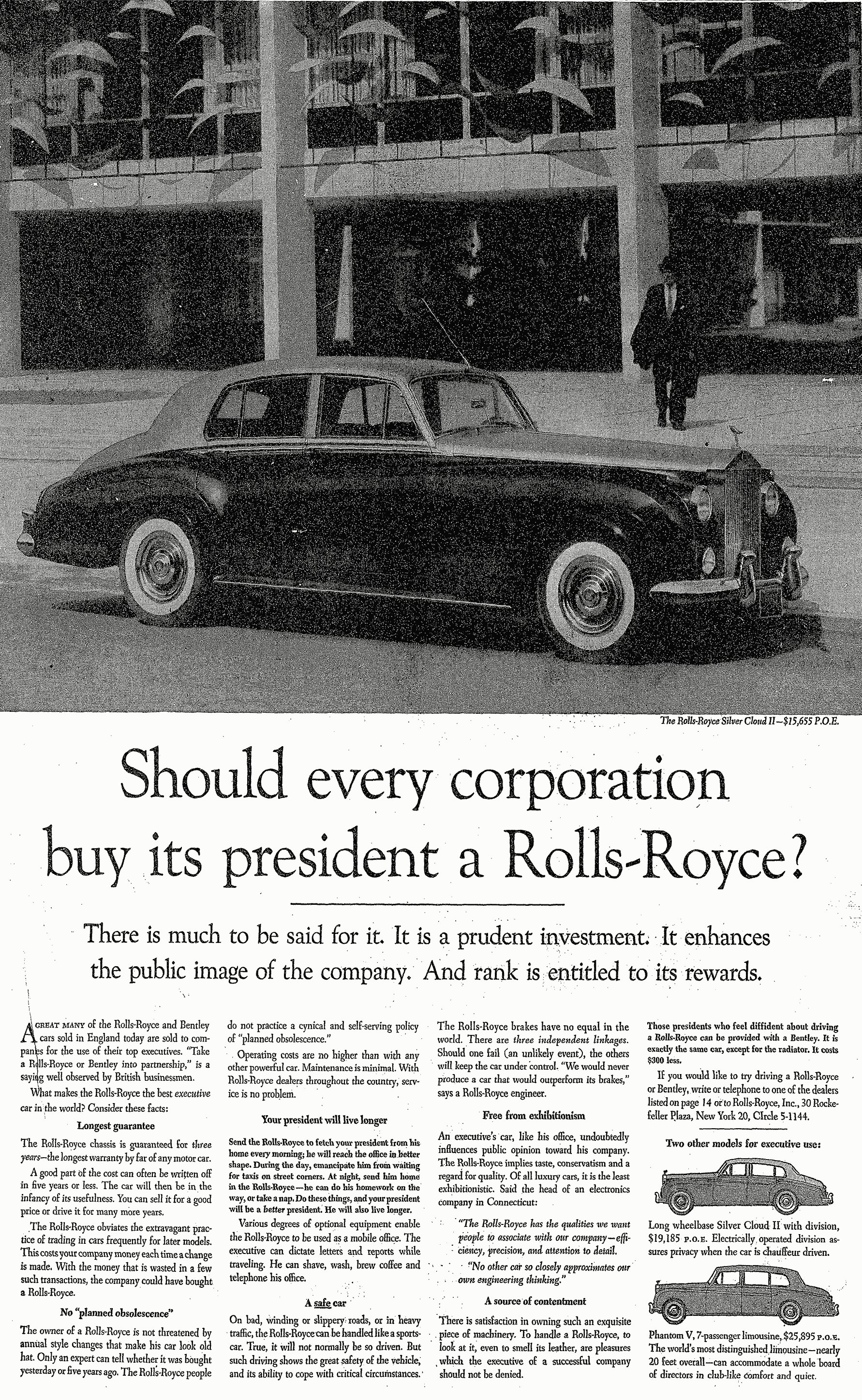
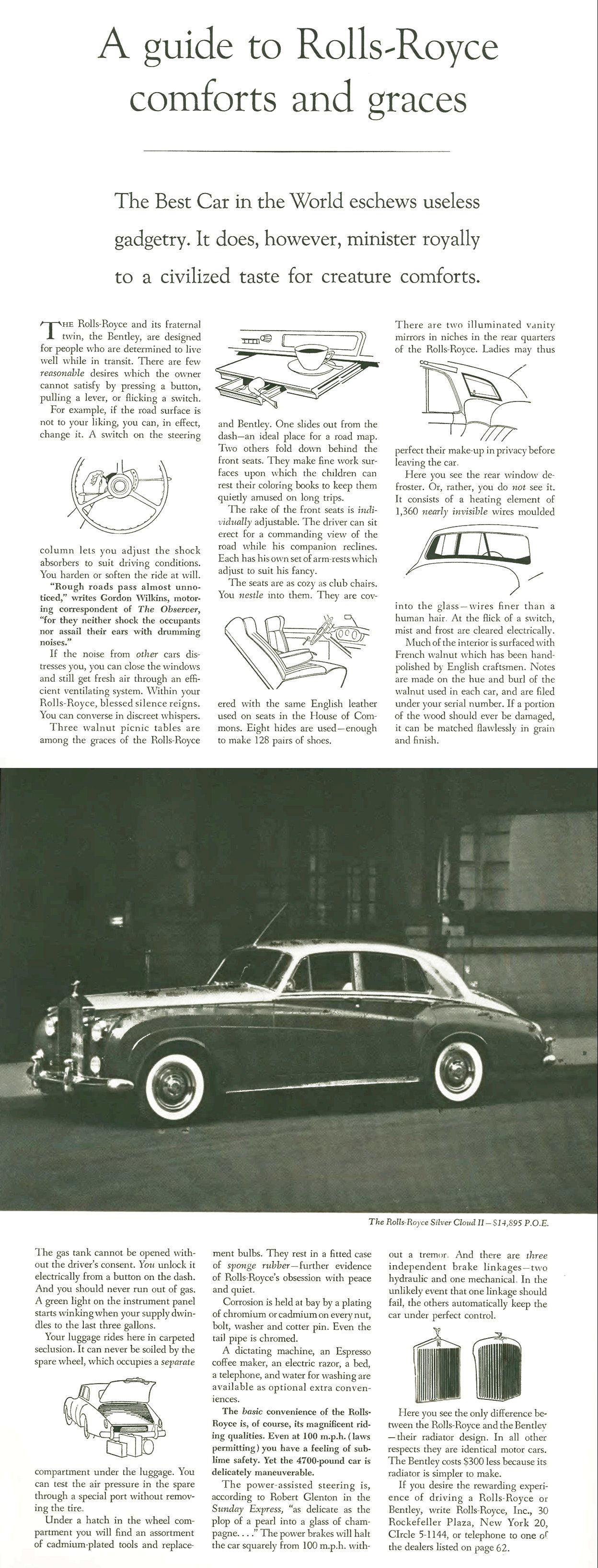
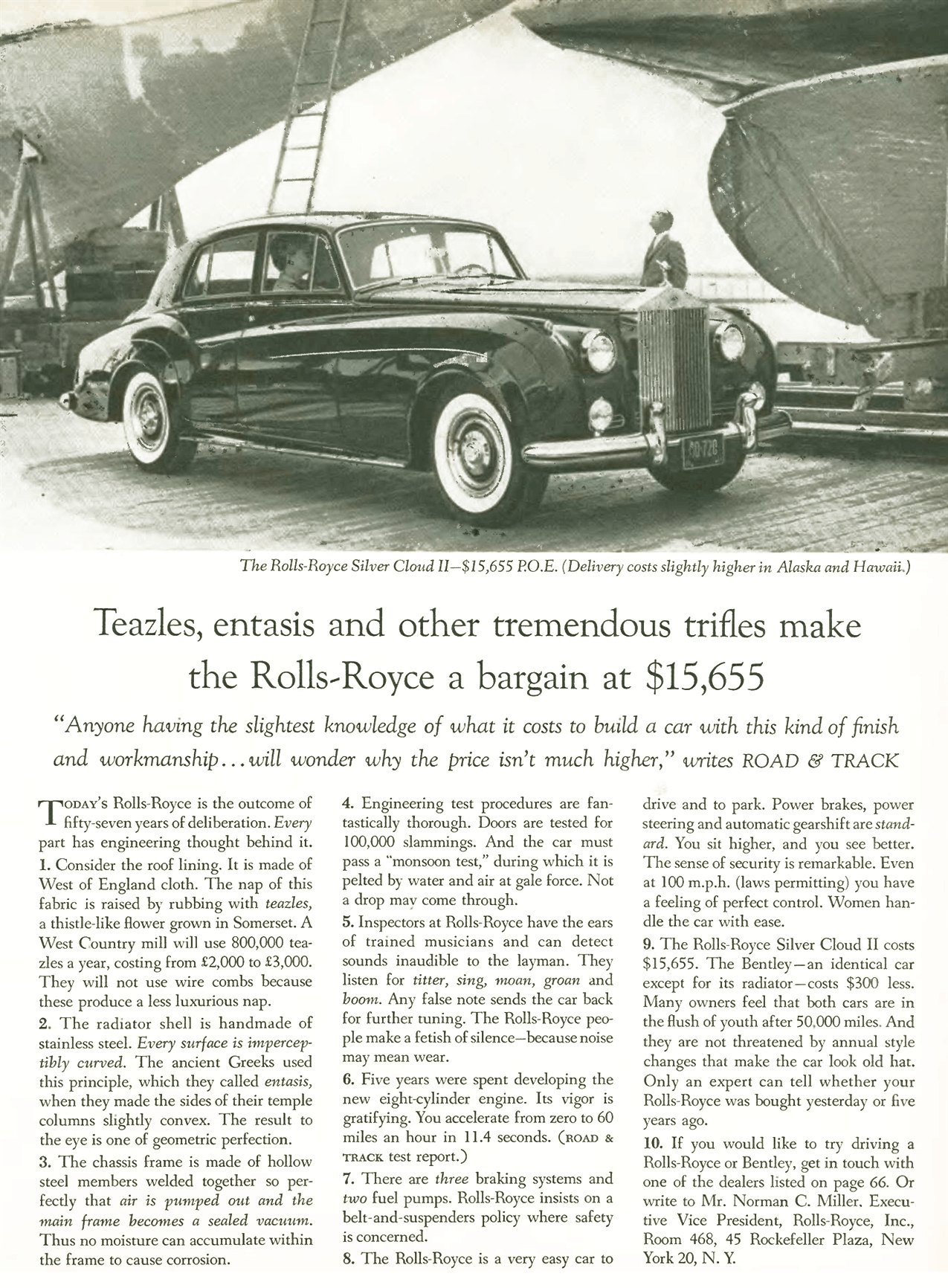
David Ogilvy spent three weeks on the facts, then took his headline from a road test.
Back to the archive →