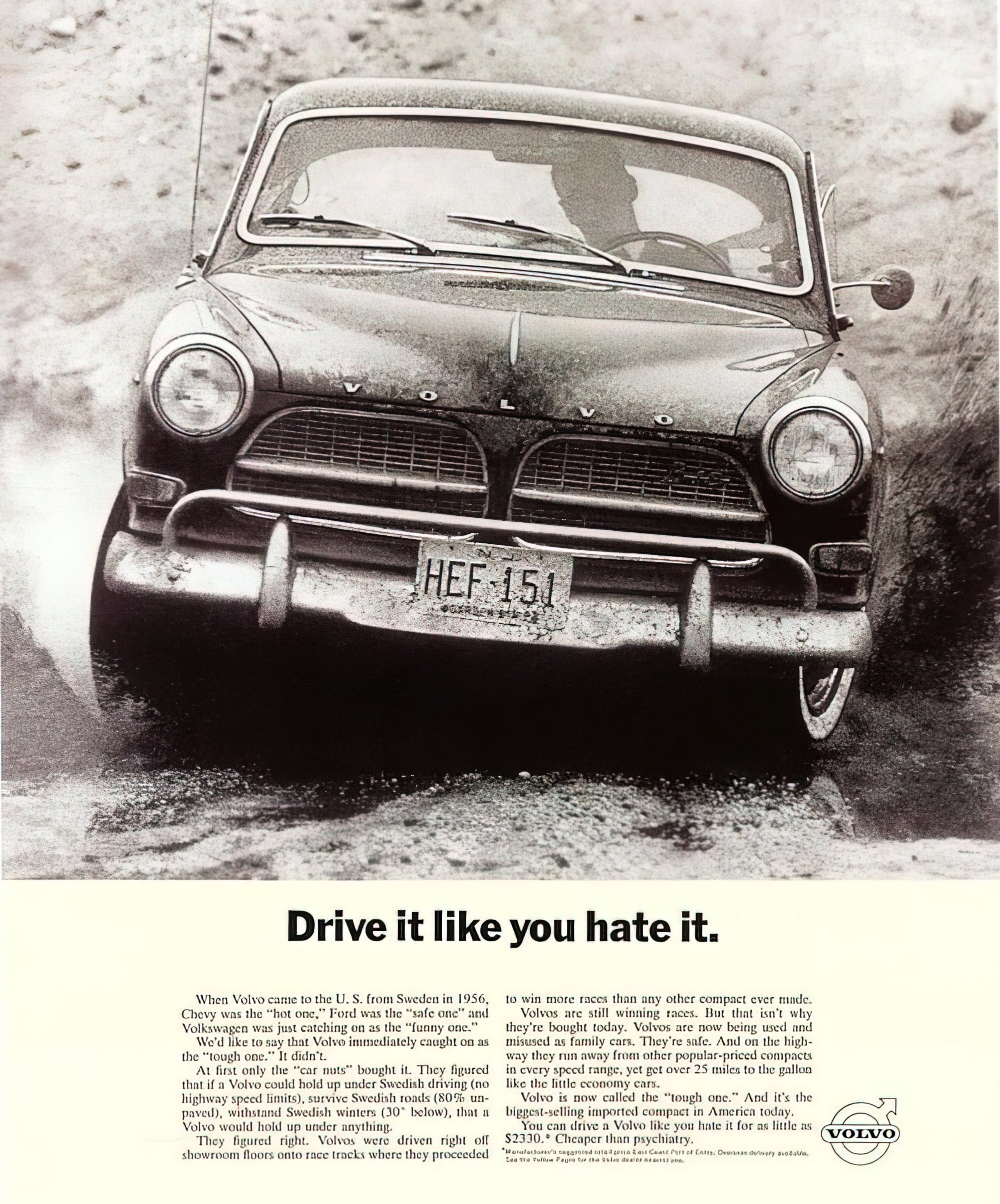
Drive It Like You Hate It
An unknown Swedish car sold itself in Detroit's home market by daring owners to punish it.
The era.
In 1962 the American car market belonged to General Motors, Ford and Chrysler. Each autumn they unveiled new styling, and last year's car was meant to look old. Detroit had added compact cars in 1960, the Chevrolet Corvair, Ford Falcon and Plymouth Valiant, to answer the small imports.
Imports were still a small slice of the market, led by the Volkswagen Beetle. Doyle Dane Bernbach's Volkswagen ads, running since 1959, had shown that an odd foreign car could be sold with honesty and wit. Other importers were now looking for agencies that could do the same.
Madison Avenue was changing too. A wave of small agencies opened in the early 1960s, led by writers and art directors who wanted to do their own work. Carl Ally Inc. opened in New York on 26 June 1962 with a single client: Volvo.
The culture.
Doubts about the American car were growing. Vance Packard's book The Waste Makers, published in 1960, attacked planned obsolescence, the habit of building products to be replaced. Many buyers suspected that the yearly model change was a way to sell them a new car before they needed one.
At the same time a small but loud group of enthusiasts raced and rallied their own cars at weekends. Sports car clubs, hill climbs and road rallies gave ordinary family cars a chance to prove themselves. Toughness and endurance were things a driver could test for himself.
By the middle of the decade the questions turned to safety and quality. Ralph Nader's Unsafe at Any Speed came out in 1965 and put Detroit on the defensive. A car that claimed to be built to last was arriving at the right moment.
The problem.
An unknown, plain-looking Swedish car had to persuade Americans to pay for something Detroit did not sell: a car built to last.
Volvo began selling cars in the United States in the 1950s. Few Americans knew the name. Carl Ally later presented his first layouts to Volvo with the name spelled "Valvo", a stunt that made the point that the public could not even spell it.
The cars were the PV544, the 120 series and the P1800 sports car. The family cars were solid and plain, and the PV544 barely changed in looks from year to year, in a market where looks changed every autumn.
Volvo needed a reason for an American to choose a small foreign car over a big domestic one. Volkswagen had already taken the role of the honest, economical import. Volvo had to find a different place to stand.
Volvo was the first and only client when Carl Ally Inc. opened in June 1962, won in a competition against other agencies. Ally presented layouts with the name misspelled "Valvo" to show how little Americans knew the brand.
The solution.
Turn the car's toughness into a dare: tell owners to drive it as hard as they like, because it can take it.
Carl Ally, the art director Amil Gargano and the copywriter Jim Durfee built the campaign around abuse. The line was "Drive it like you hate it." The ads and the television commercial showed a Volvo pushed to its limits, and the print copy joked that doing so was cheaper than psychiatry.
The move took Volvo's weakness, a car that did not change, and made it the selling point. A car that would survive years of hard driving answered Detroit's yearly model change directly. The Creative Hall of Fame describes the work as taking on Detroit's planned obsolescence head on, with comparative advertising before most agencies would try it.
The agency held Volvo from 1962 to 1967. Graphis reports that Volvo's American sales nearly tripled within five years.
The work.
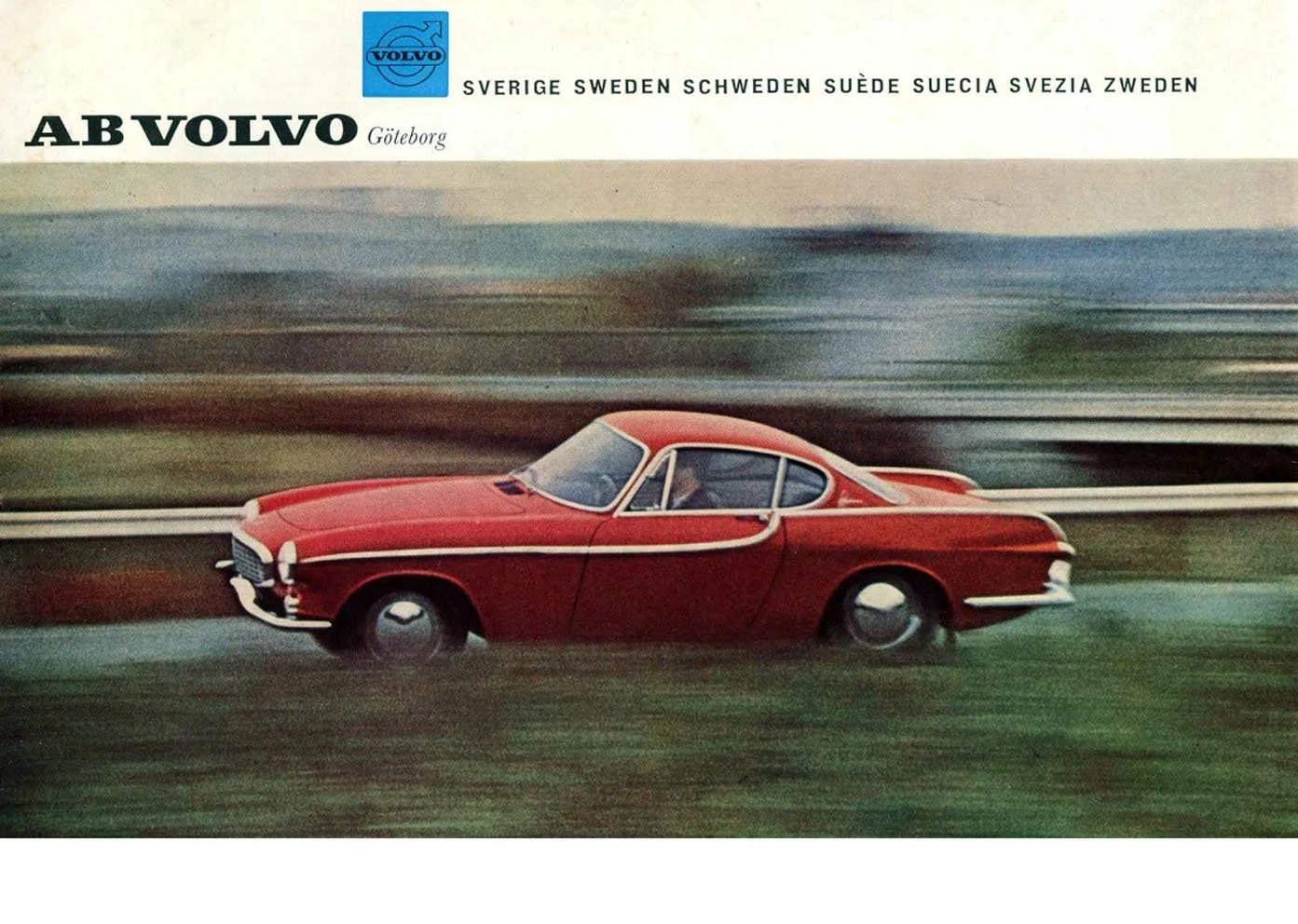
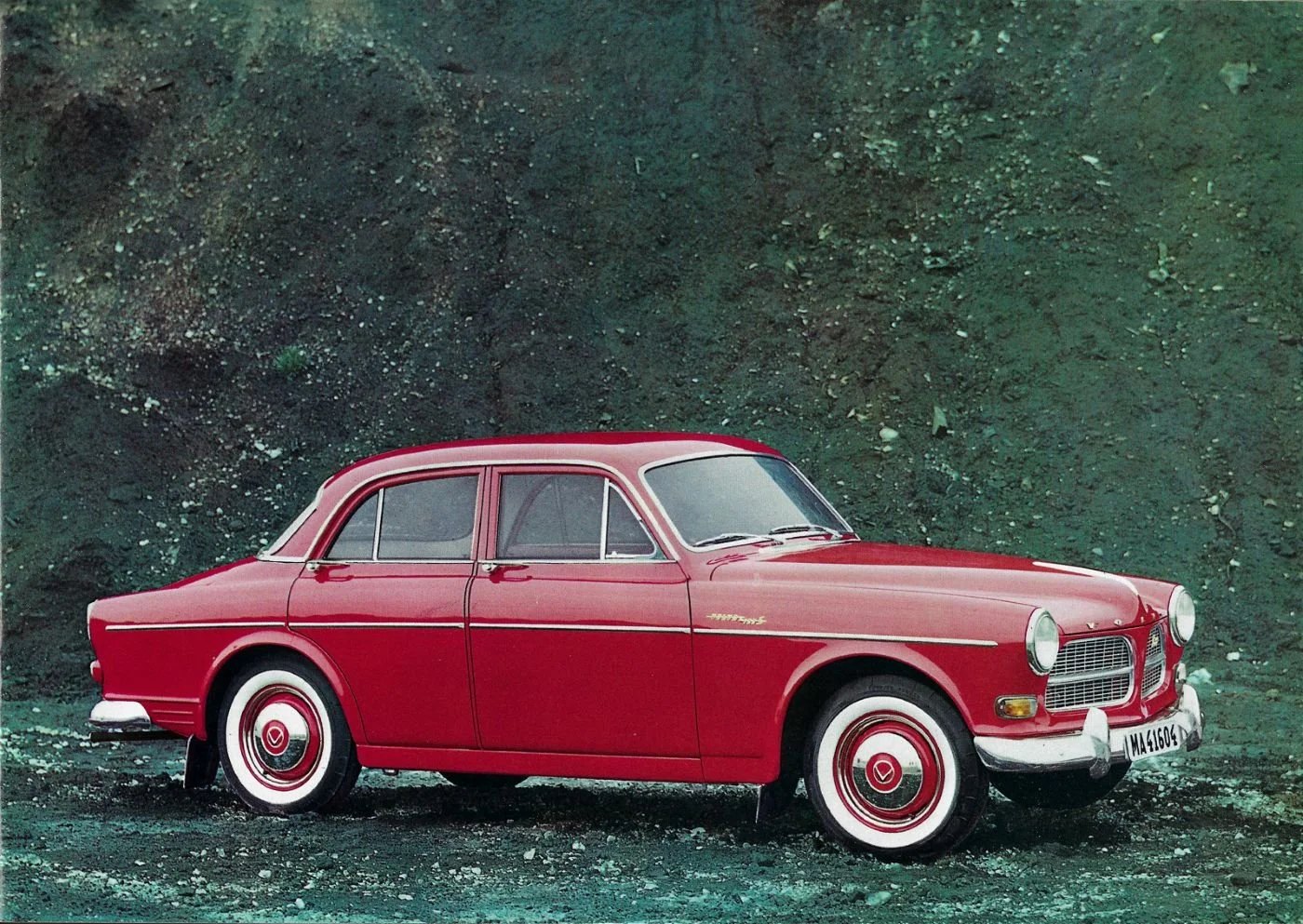
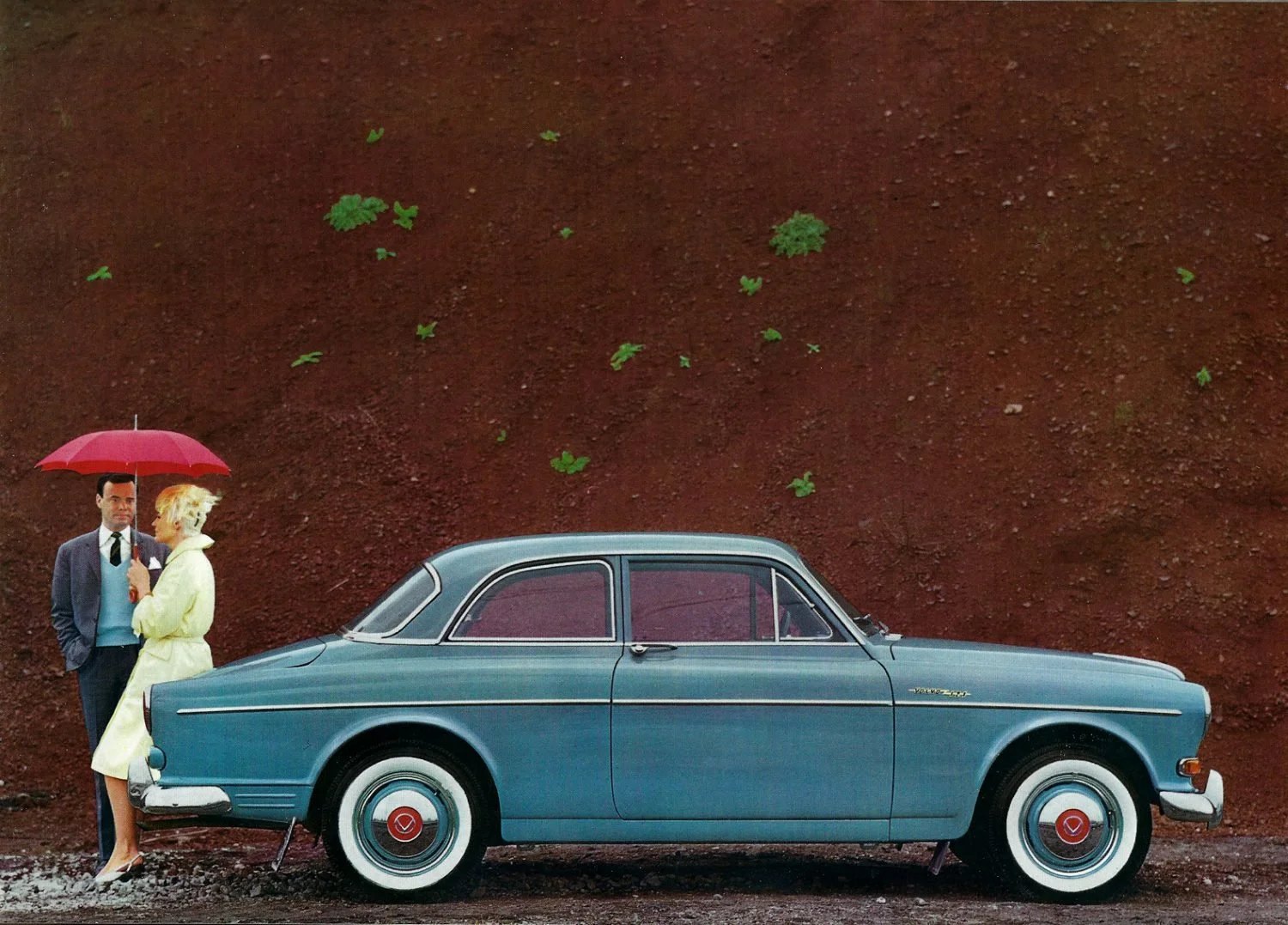
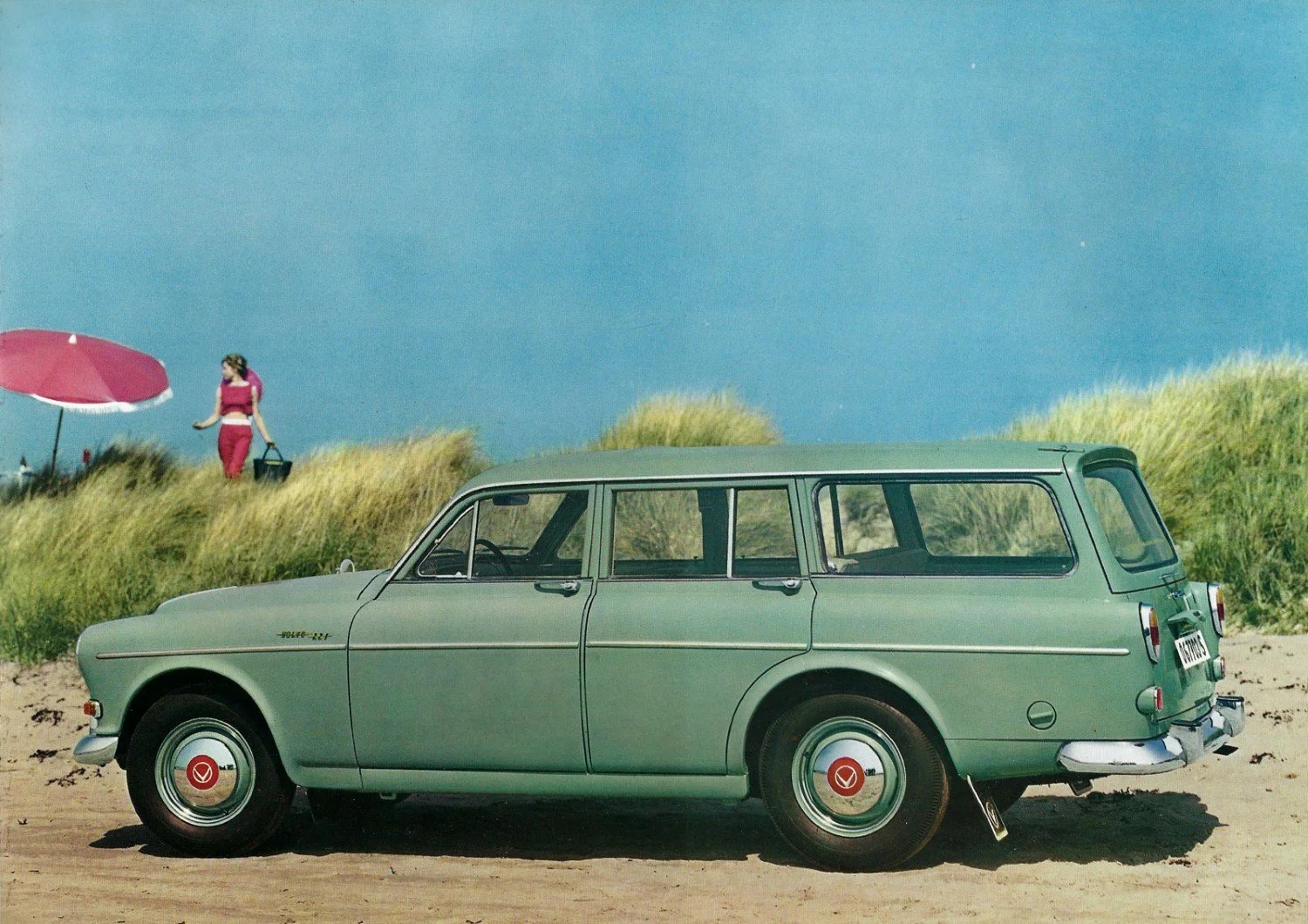
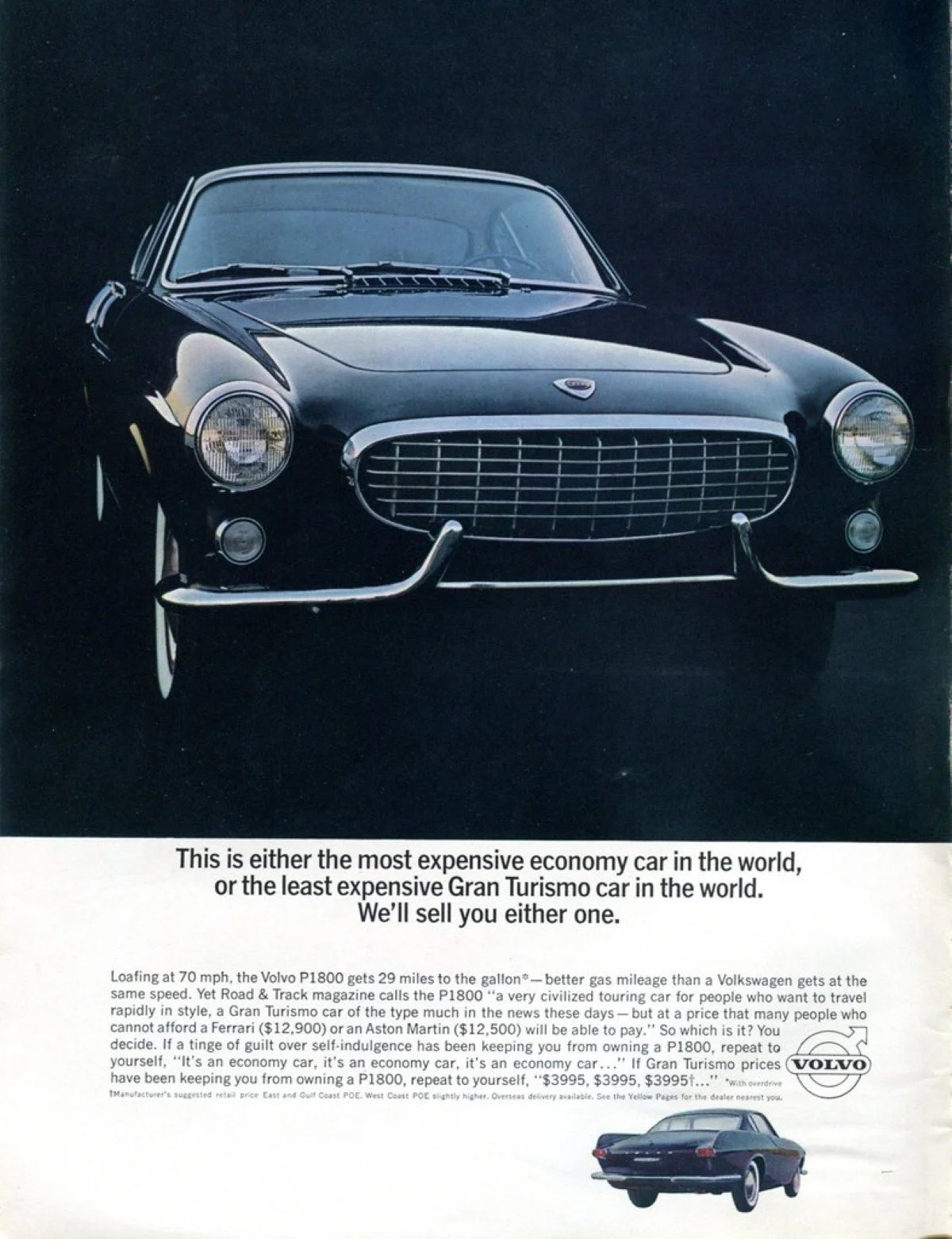
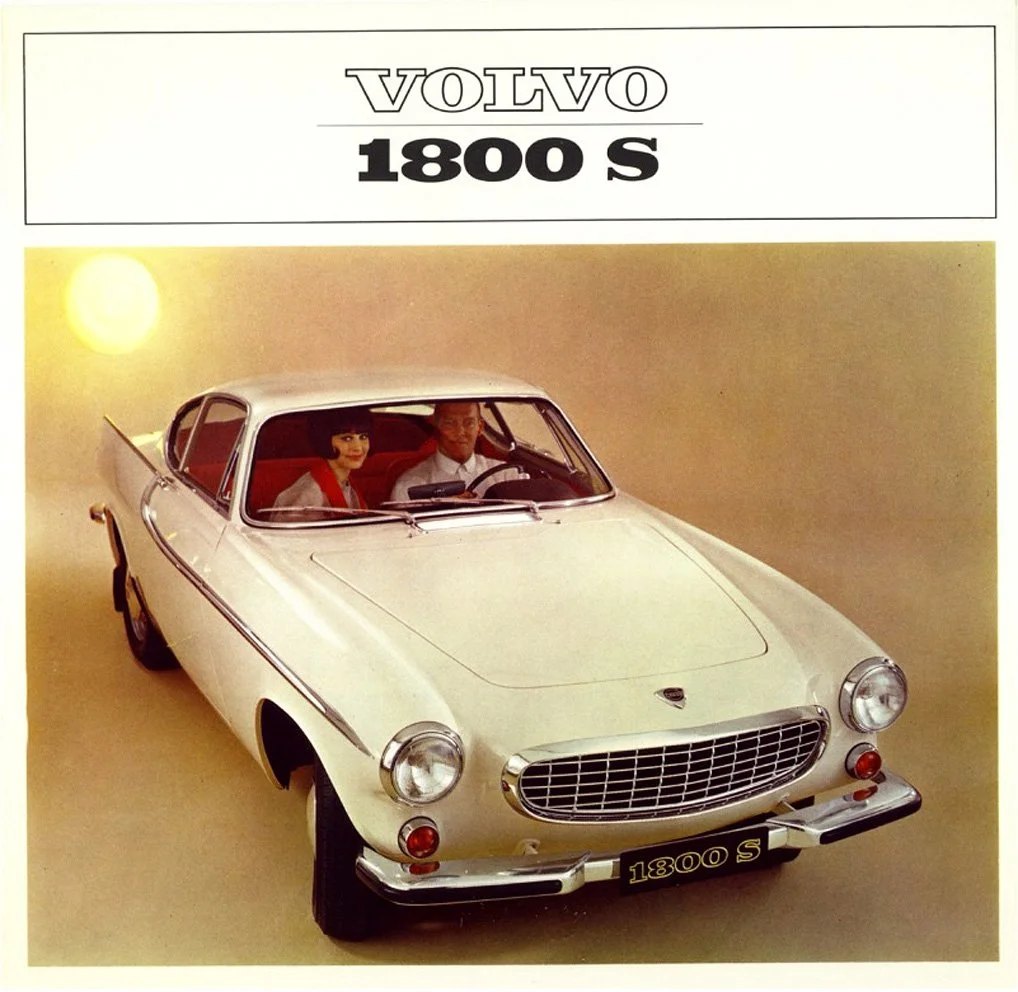
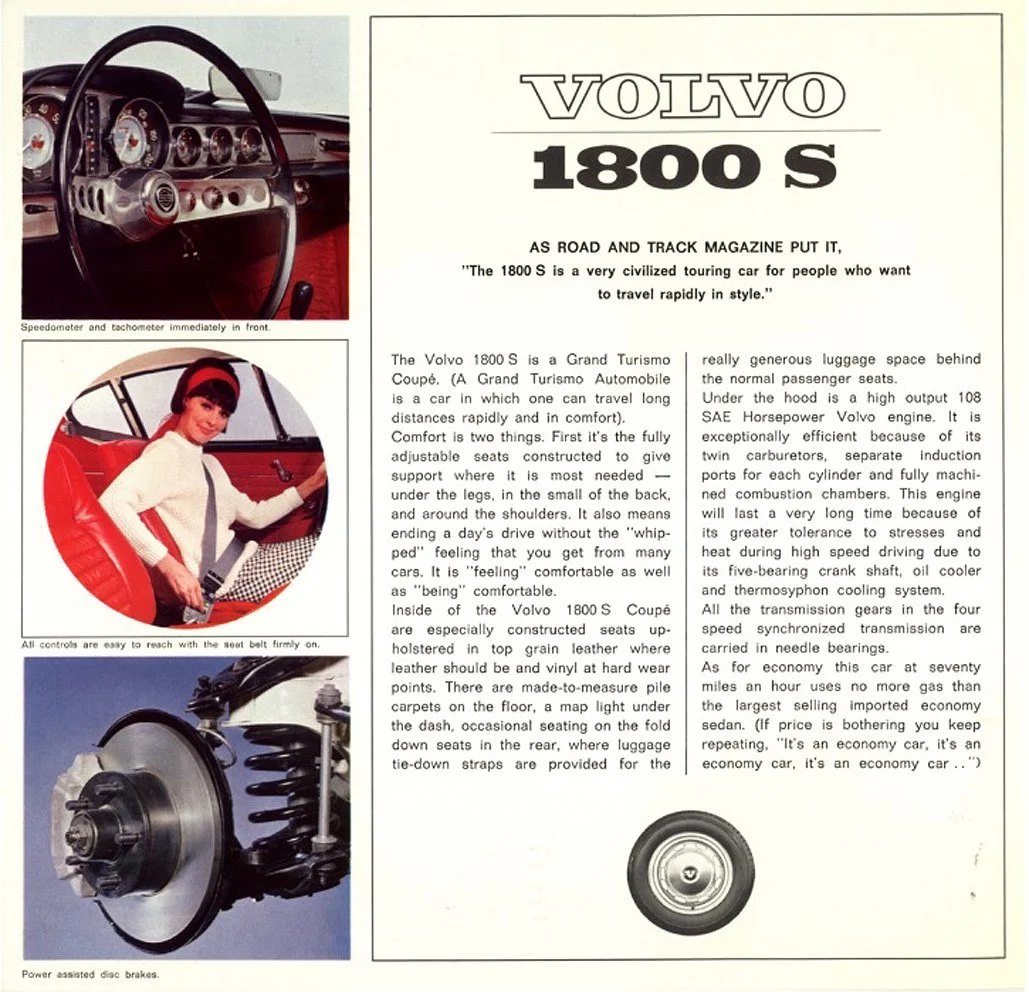
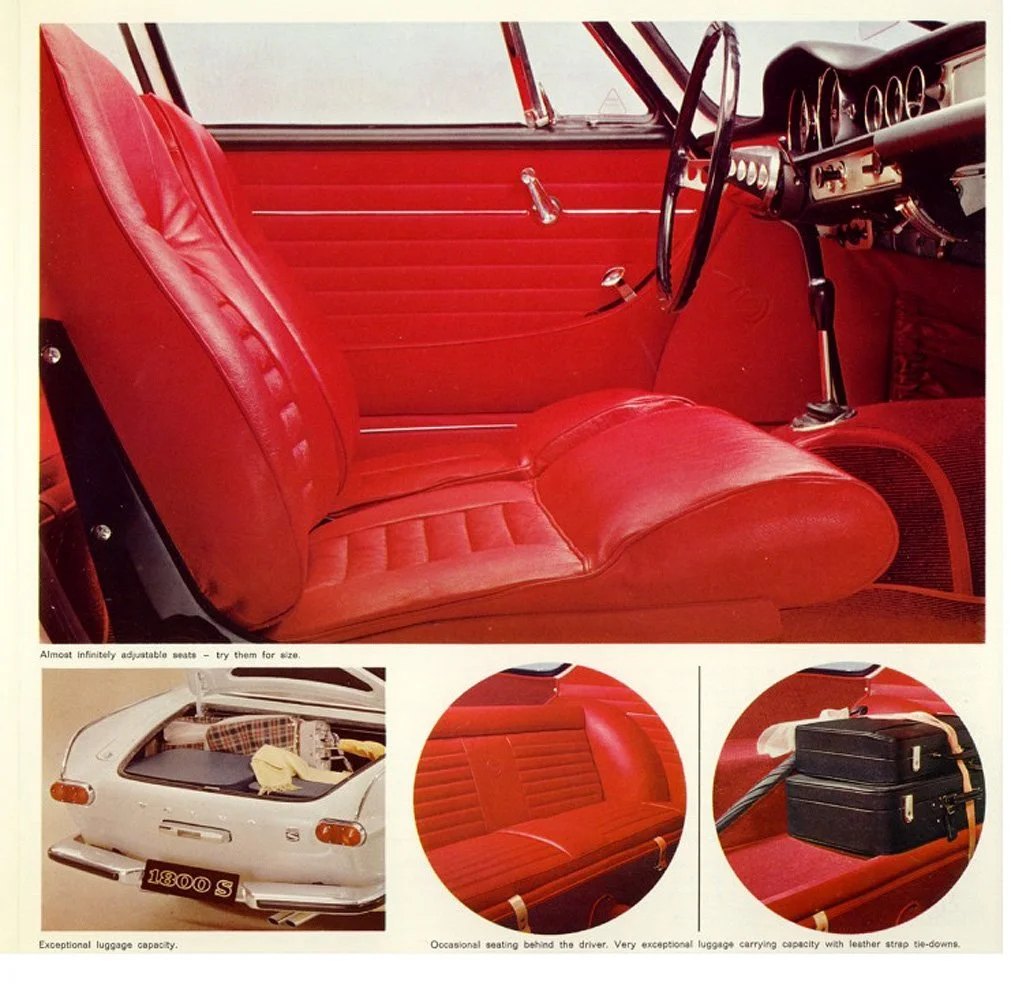
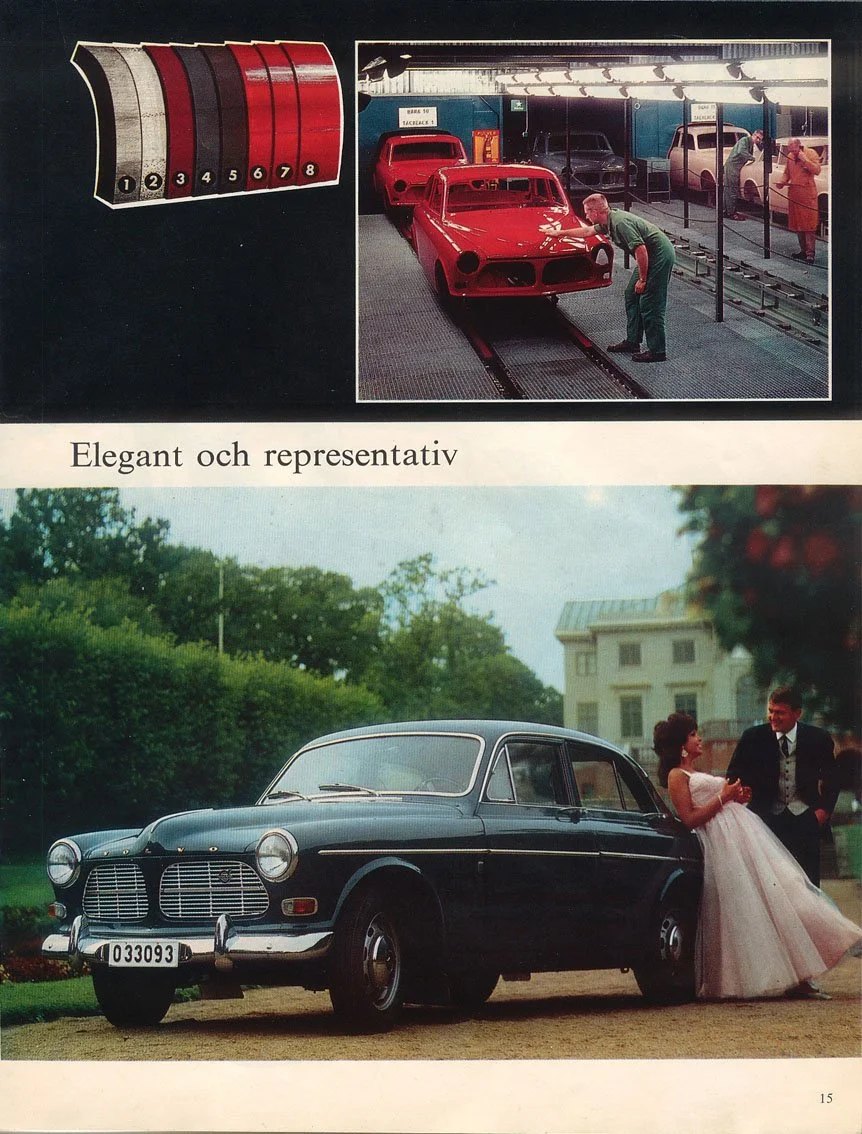
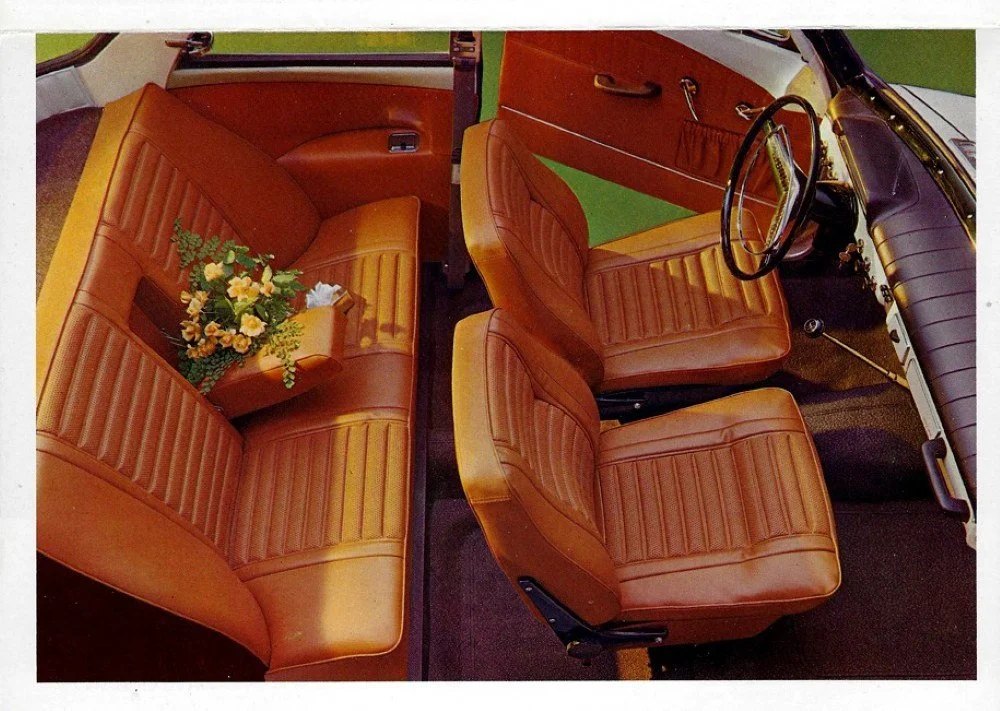
A new agency told Americans to punish a Swedish car, and it sold.
Back to the archive →