The Creative Revolution.
American magazine advertising in 1958 was the best-funded and least interesting work in the country. Detroit alone spent close to $200 million a year on illustrated, foreshortened car drawings parked outside country clubs, sold in the second person and the future conditional — you will feel, you will arrive. The copy assumed the reader was a mark. Four campaigns dismantled that assumption, and the people who did the work called the result the Creative Revolution.
It begins not with a rupture but with a research desk. In April 1958, David Ogilvy cleared three weeks, read Rolls-Royce engineering reports until he found a line in a back issue of The Motor, and ran 607 words of flat fact under it. No adjectives, no exhortation — an engineering report set in publication type. The premise underneath was the one everything here shares: the reader is intelligent, and will reward being treated that way.
Then Doyle Dane Bernbach made it a doctrine. Bill Bernbach, Helmut Krone and Julian Koenig put a postage-stamp Beetle in a sea of white in 1959 and spoke to the reader adult to adult about a small, foreign, honest car. Three years later Krone and Paula Green turned the same posture into a competitive weapon — Avis admitting it was only number two, and making the admission the reason to choose it. Self-deprecating truth became the most disarming move on Madison Avenue.
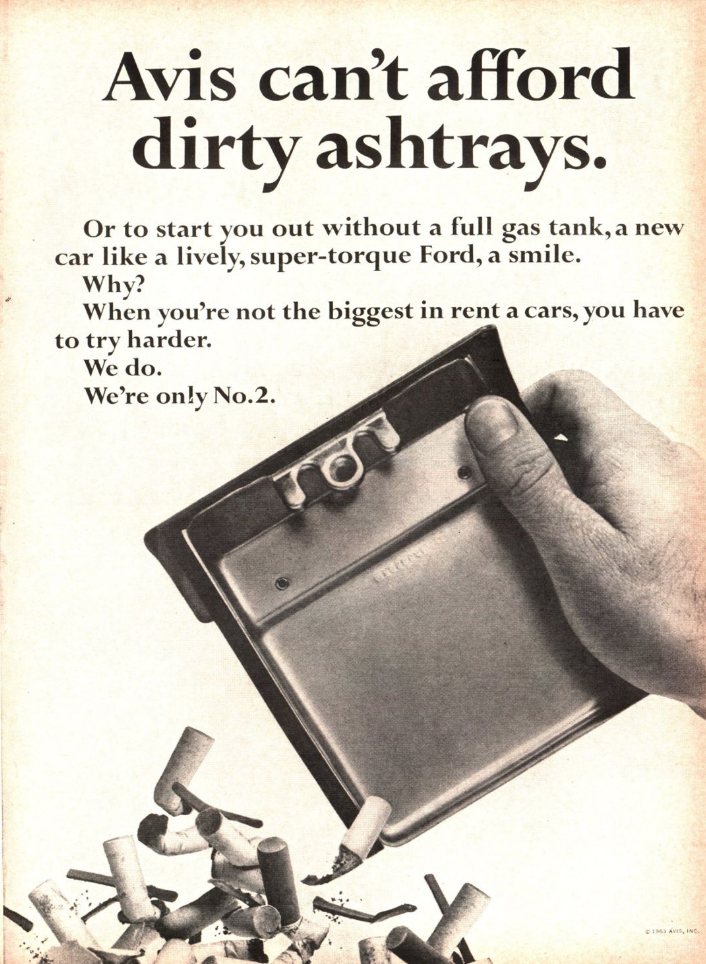
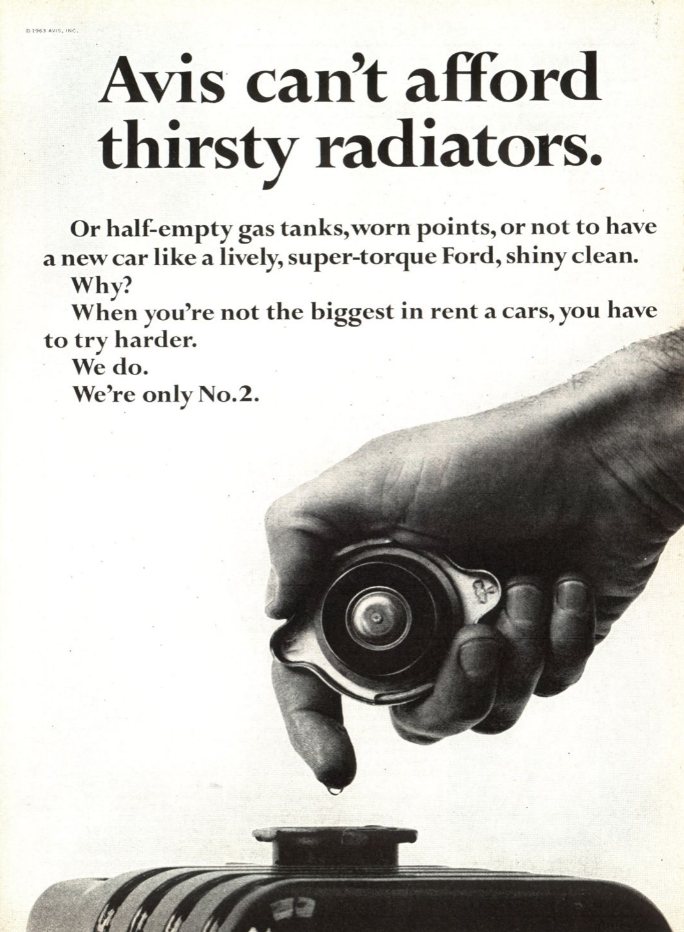
The line runs forward. When Chiat/Day aired Apple's '1984' once, during Super Bowl XVIII, it inherited the same wager Krone had made twenty-five years earlier: trust the reader to do the joining-up. The Volkswagen account team panicked at four words on a layout pad. The Apple board tried to kill the spot. In both rooms, the people who held their nerve were betting on the audience. This collection is that bet, four times, in order.
The campaigns
- “At 60 miles an hour the loudest noise in this new Rolls-Royce comes from the electric clock.”1958Rolls-Royce · Ogilvy, Benson & Mather1958–1961
At 60 Miles an Hour
The prelude: Ogilvy proves a luxury car can be sold on 607 words of engineering fact, not aspiration — the reader treated as an adult, one year before Doyle Dane Bernbach.
Open the record → - Think small.1959Volkswagen · Doyle Dane Bernbach1959–1969
Think Small
The rupture: a postage-stamp Beetle in a sea of white abandons illustration, aspiration and visual loudness at once — and assumes an intelligent reader.
Open the record → 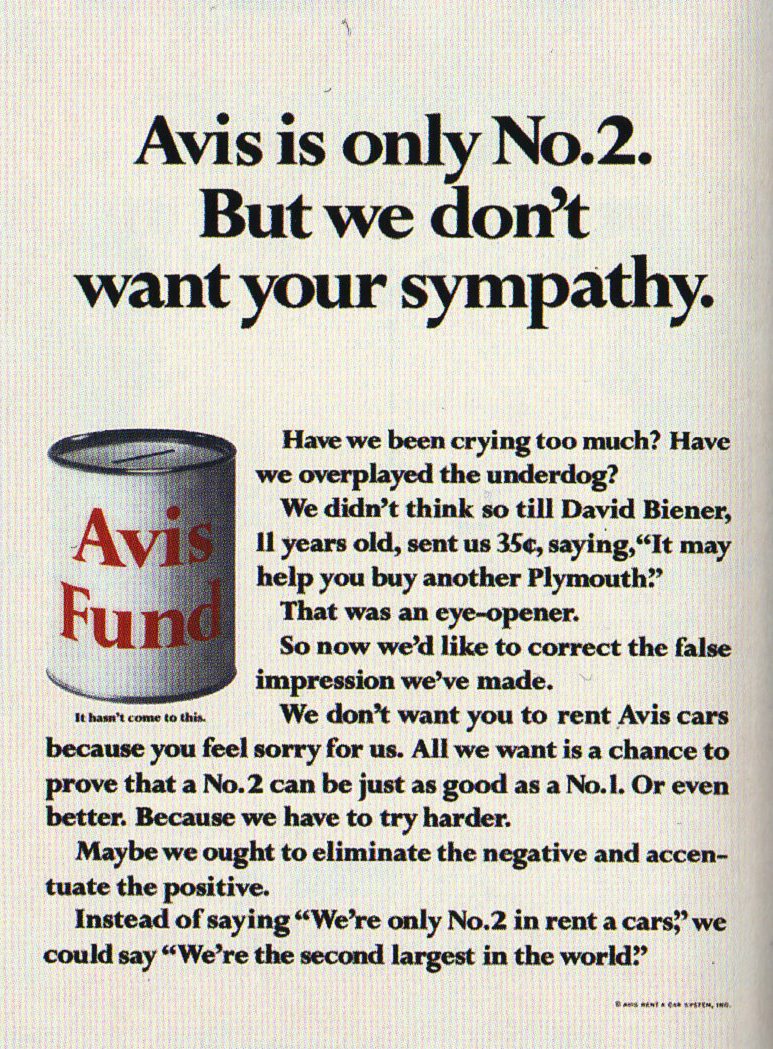 Avis · Doyle Dane Bernbach1962–1966
We Try Harder
The doctrine weaponised: Krone and Green turn self-deprecating truth into challenger positioning — admitting second place becomes the reason to choose Avis.
Open the record →- Why 1984 won’t be like ‘1984.’1984Apple · Chiat/Day1984
1984
The inheritance: Chiat/Day makes the same wager twenty-five years on — trust the reader to do the joining-up — and invents the Super Bowl ad as cultural event.
Open the record →