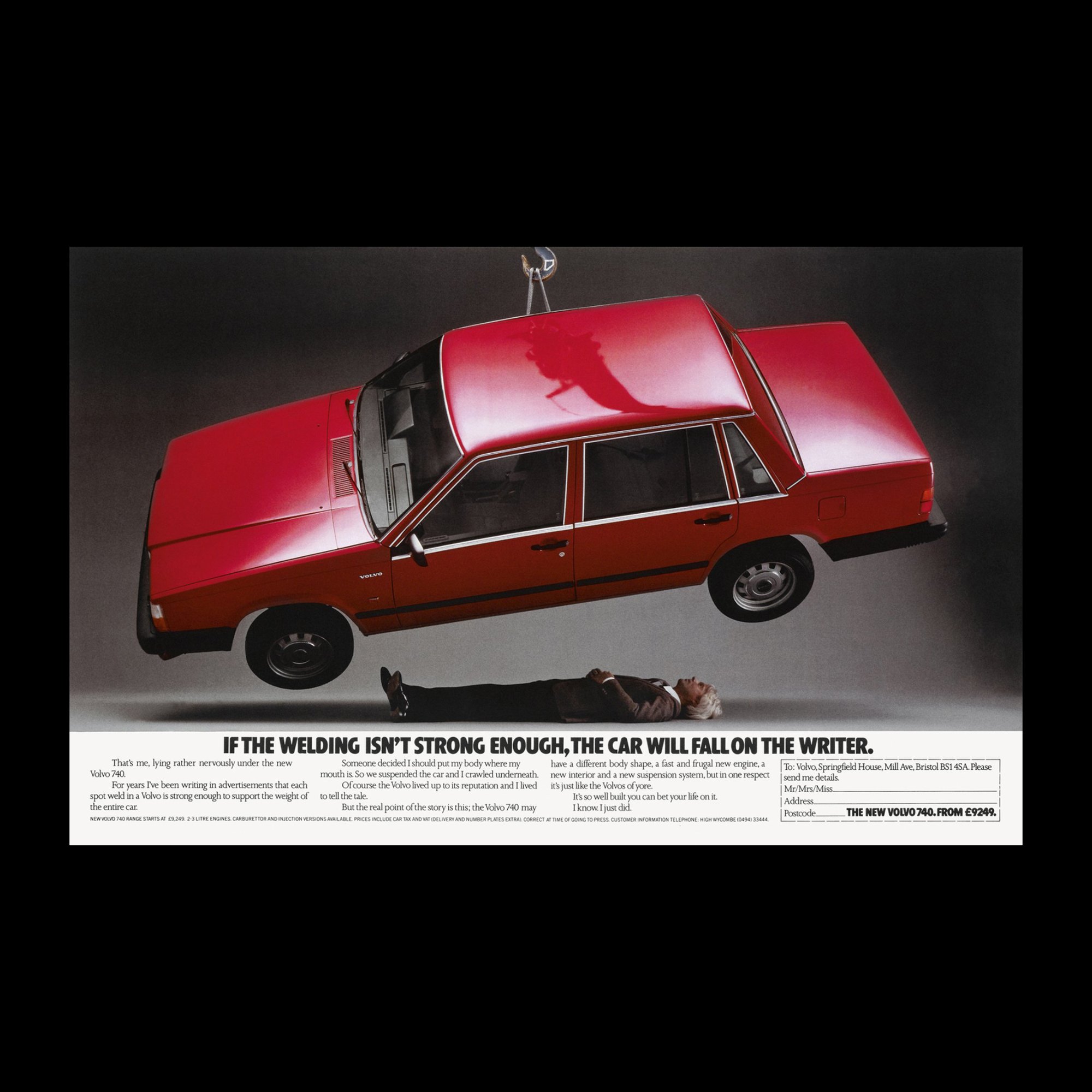
The Car Will Fall on the Writer
A safety claim everyone had stopped hearing was turned into a photograph nobody could ignore, with the writer's own body as the proof.
The era.
Lee Iacocca's line that safety doesn't sell had been the car industry's working assumption since the 1950s. Cars were sold on speed, style and status, and the manufacturers who talked about crumple zones were thought to be reminding buyers of the one thing they did not want to think about.
Volvo had taken the other side of that bet for twenty years and was slowly winning it. In Britain the 760 arrived in July 1982, the 740 in 1984, and the company reported growth in Britain while the wider market was flat. The 240 estate was already the car of a certain kind of family, the sort that had children, a dog and no interest in a Jaguar.
Abbott Mead Vickers held the Volvo account for about twenty years, and in the early 1980s its creative department was two men: David Abbott writing, Ron Brown art directing, with Joe Hoza setting the type and Bob Miller behind the camera on the brand posters.
The culture.
The company car was Britain's status object. The letters BMW and the badge on a Ford Granada decided where a salesman stood in the car park, and advertising spoke to that ladder. Volvo's buyer was somewhere else, a parent or a professional who would rather be thought sensible than fast, and nobody was writing to that person with any wit.
British press advertising was in its confident years. A full page in the Sunday Times could carry three hundred words and expect them to be read. The agencies that had come out of Doyle Dane Bernbach London believed the reader was intelligent and the product had to be true, and Abbott, who had been managing director there, was the most literal believer of the lot.
The industry was also enjoying its own jokes. Saab's television commercials boasted that the company made jets; Audi's estate was shaped like a coupé. A rival that could answer with a straight face and a plain fact had a way in.
The problem.
Volvo's whole argument was that it was built to keep you alive, and a claim like that reads as boasting until someone proves it.
Every Volvo had been sold on safety, and by the early 1980s the claim had worn smooth. A reader who had seen a hundred ads about strong steel and roll cages did not disbelieve them; they simply stopped noticing. Rivals were adding safety features of their own, and a planning review the agency ran later in the decade found competitors catching up on exactly the ground Volvo had owned. Worse, safety was a claim about disaster. To talk about it was to make the reader picture the crash.
For years Abbott had written in Volvo's copy that each spot weld on the car could bear its whole weight. It was true and it was an engineer's fact, the kind that sits in body copy and persuades nobody. The question the agency faced was how to make a safety claim arresting without making it morbid, and how to say strong in a way a reader could not shrug off.
Volvo's UK business came to Abbott Mead Vickers in the agency's early years and stayed about twenty years. No individual on the client side is named in any accessible source. The 1983 welding ad was conceived by Abbott and Ron Brown for the Volvo 740; by one account Abbott first proposed putting a Volvo engineer under the car, then a dealer, and when both were refused volunteered himself.
The solution.
Turn each safety claim into a demonstration a reader can check with their own eyes, and let the writer stake his body on it.
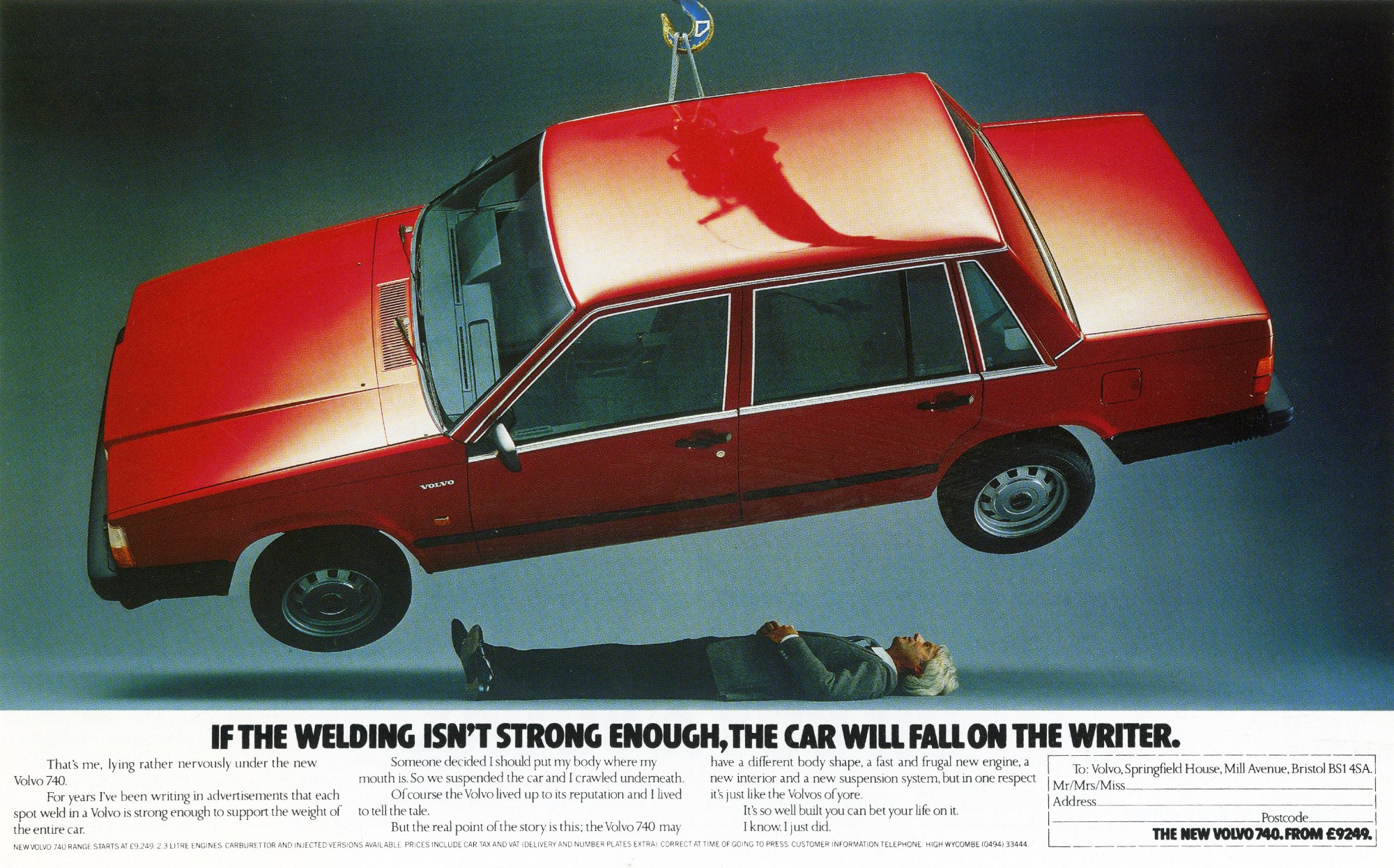
The answer was to stop stating the claim and stage it. For the 740 in 1983, Ron Brown and Abbott suspended the car from a single B-pillar spot weld with a jack under it and photographed it hanging in the air. Under the car lay David Abbott. The headline read: If the welding isn't strong enough, the car will fall on the writer. The copy admitted that for years he had written the weld could hold the car, that someone had decided he should put his body where his mouth was, and that he had lived to tell the tale. There was no endline. The logo was small. The shape of the car and the price did the rest.
It worked because it moved the proof from the engineer to the reader. You did not have to believe a figure about tensile strength; you could see a man lying under a tonne and a half of Swedish steel, and you could see he was still there. It also did something Volvo advertising had struggled with: it made safety funny without making it light. The joke was on the writer, the fact was on the car, and the reader was let in on both.
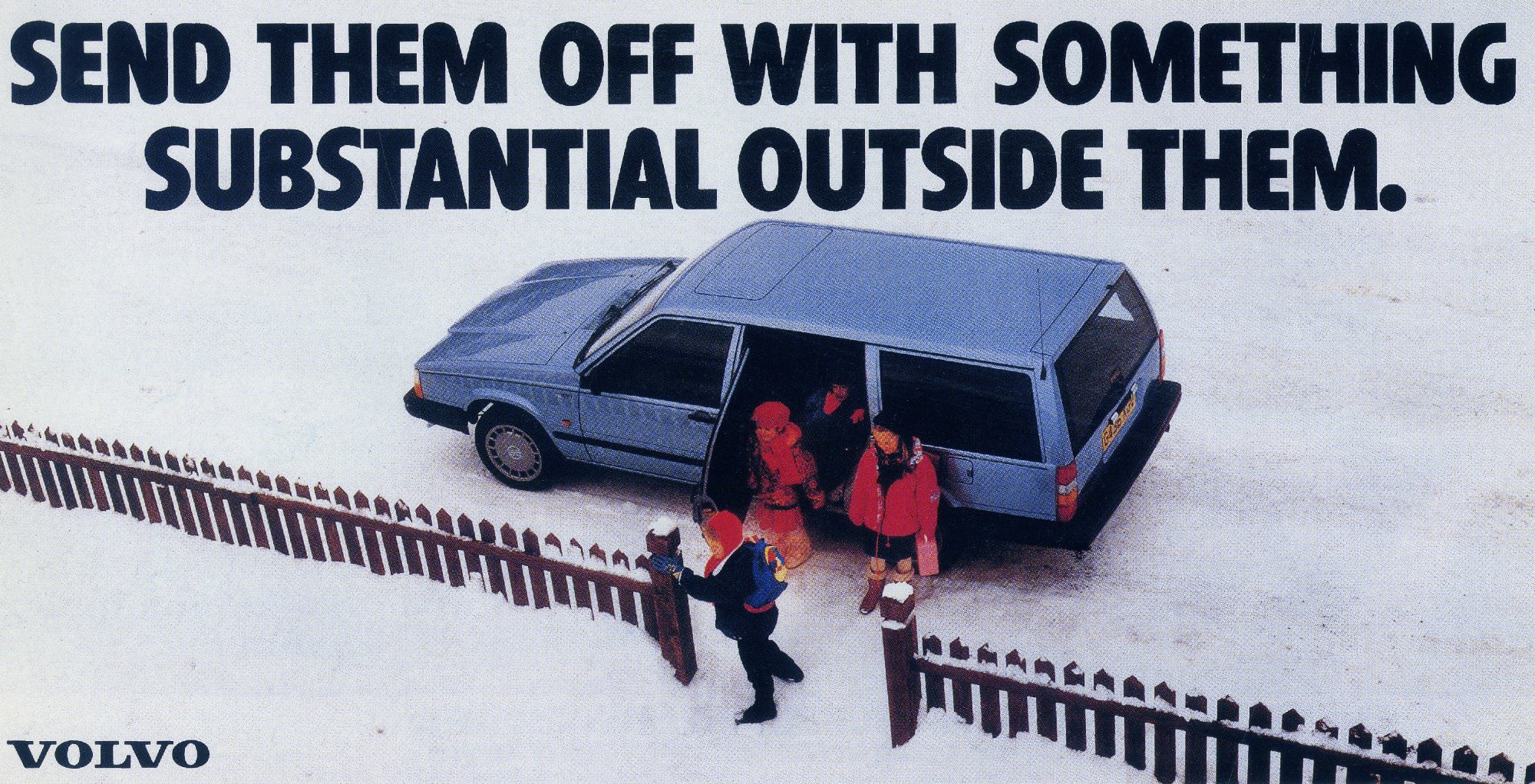
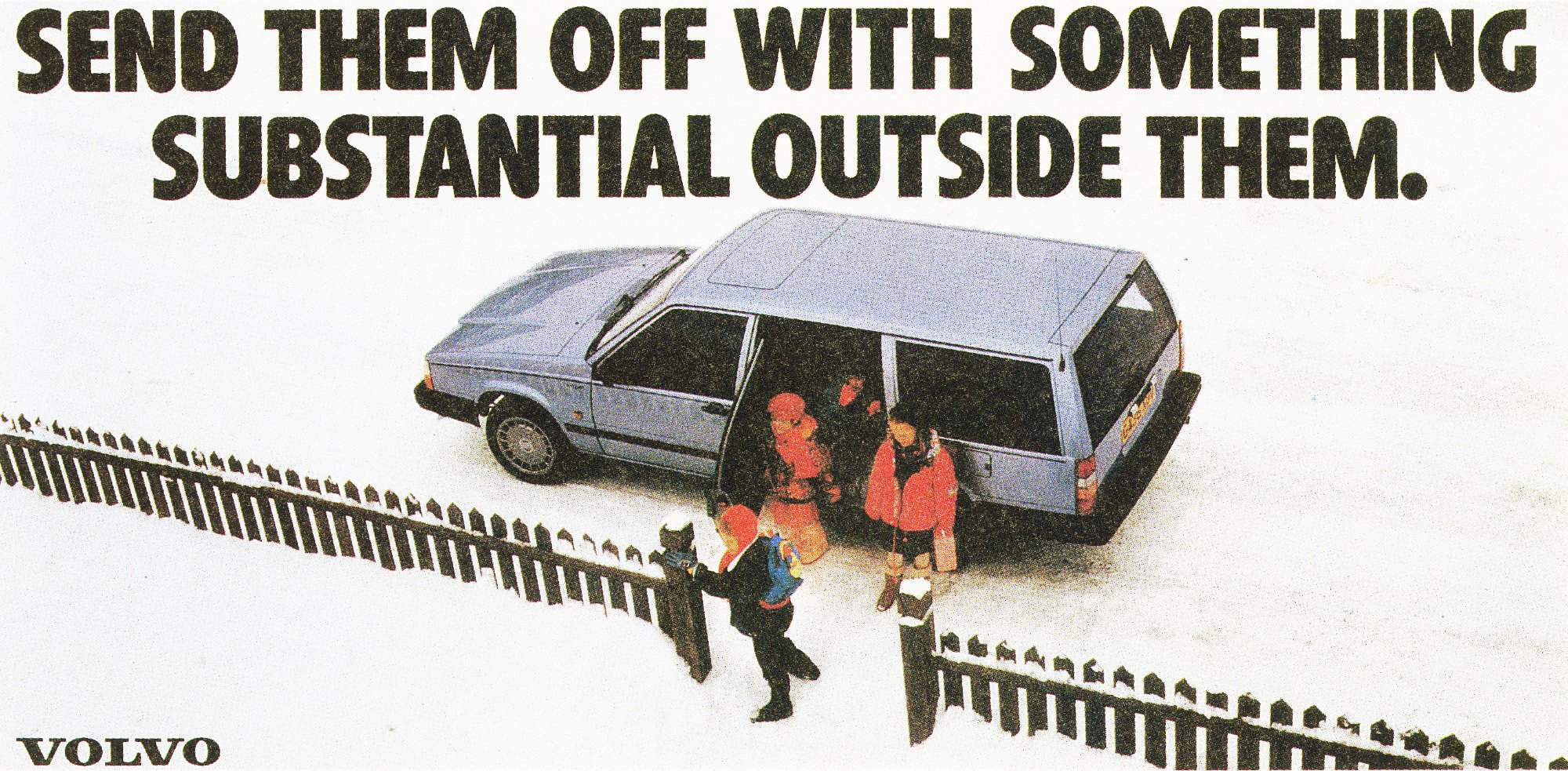
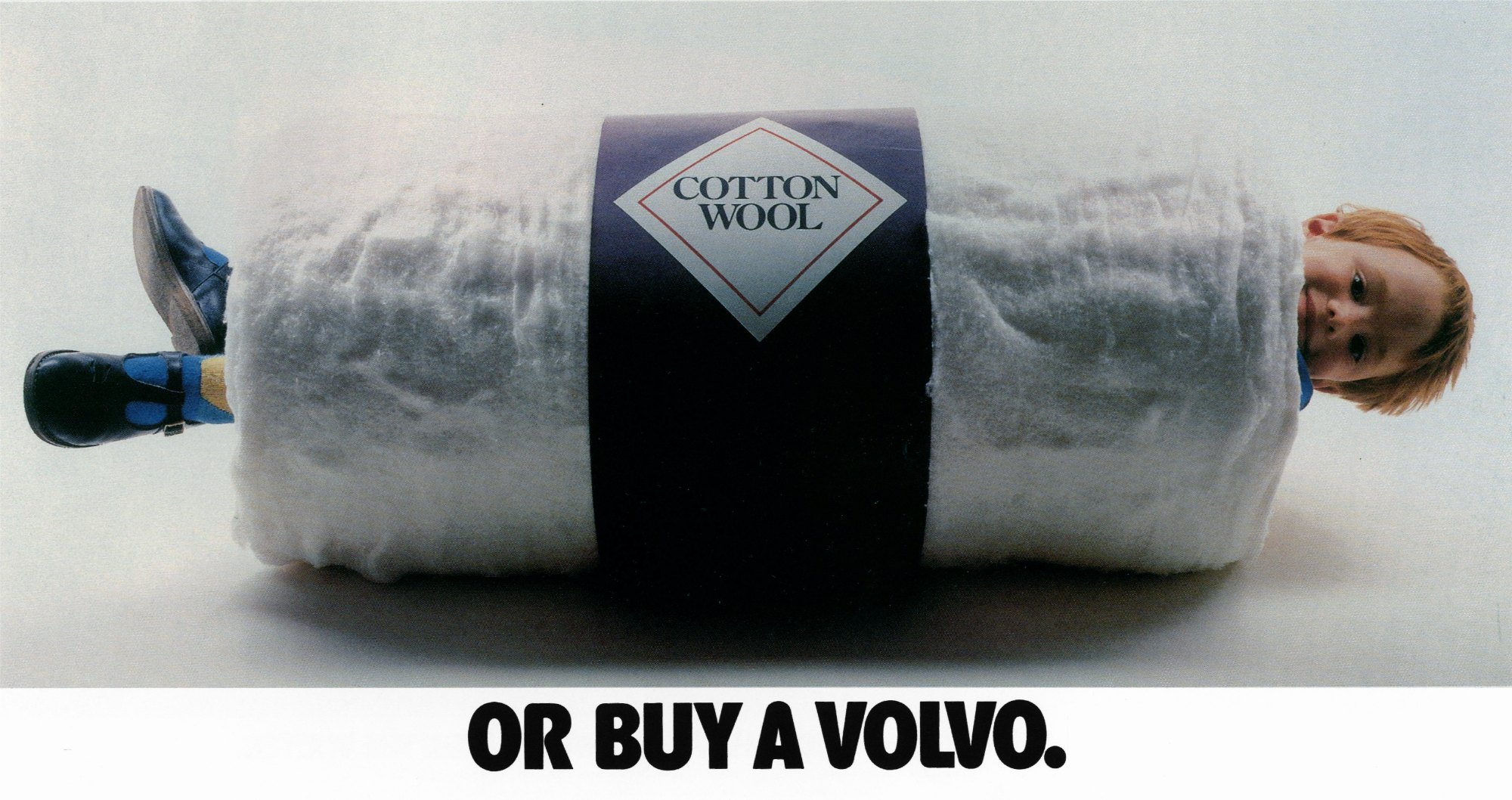
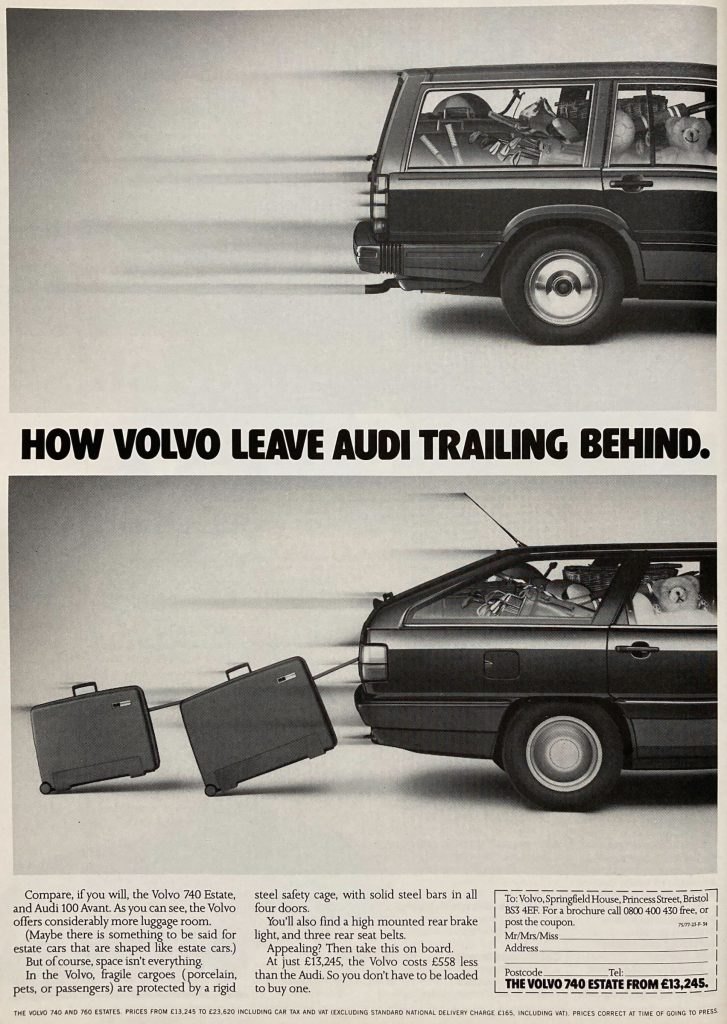
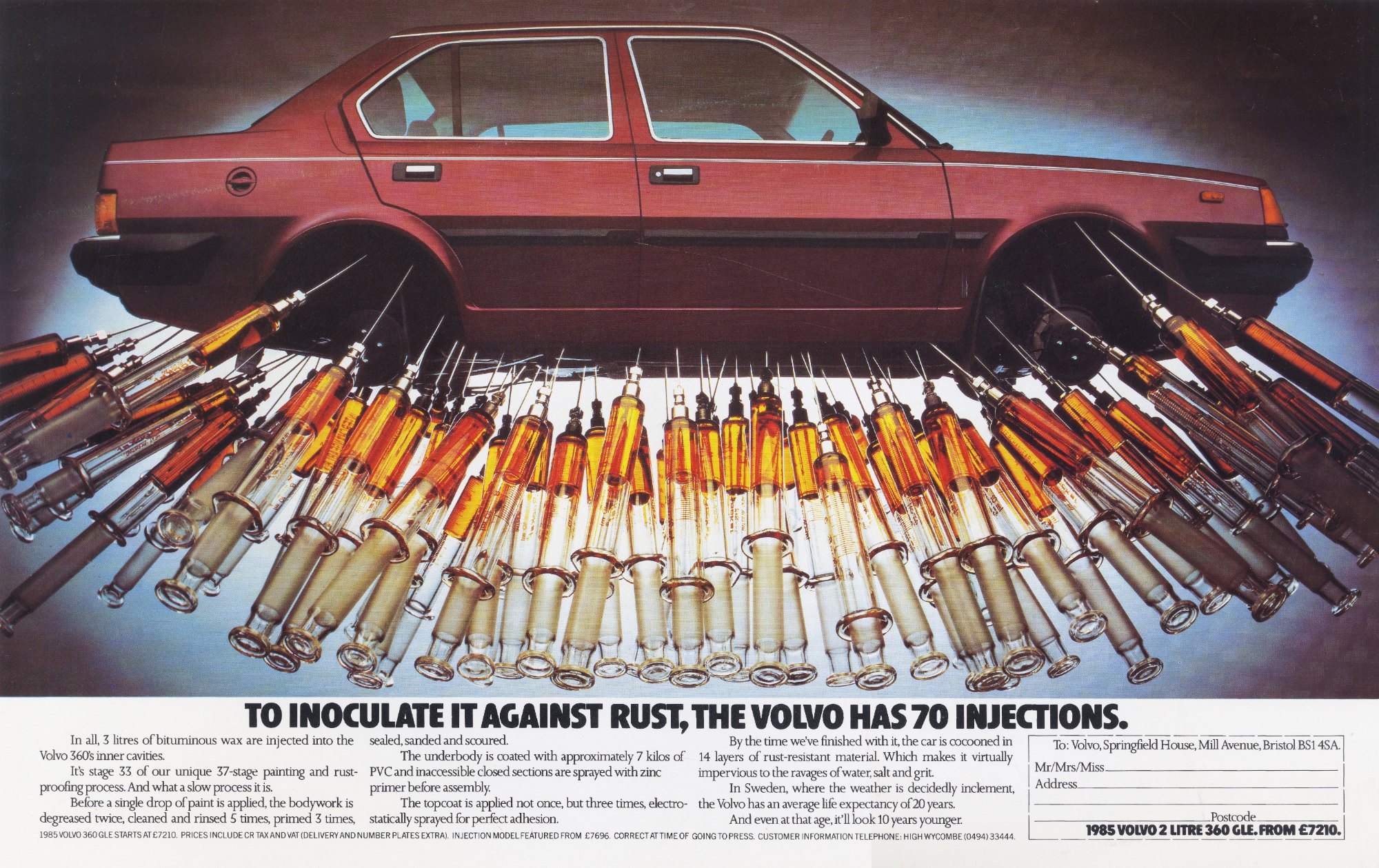
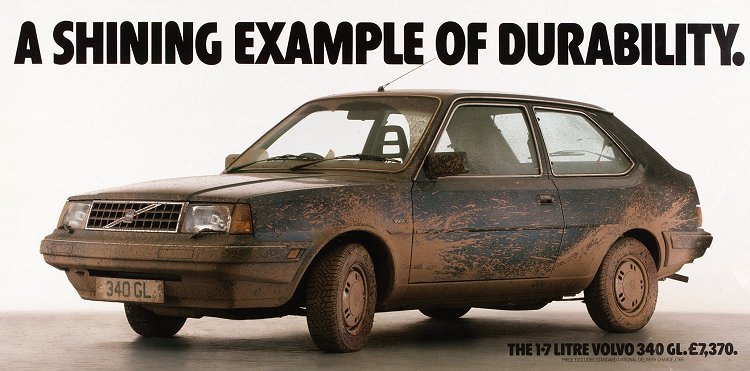
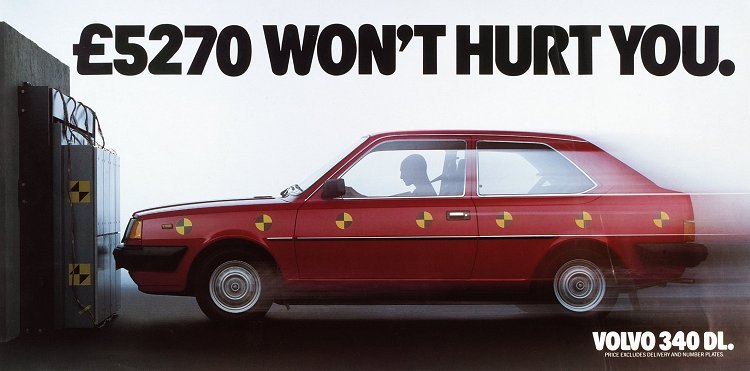
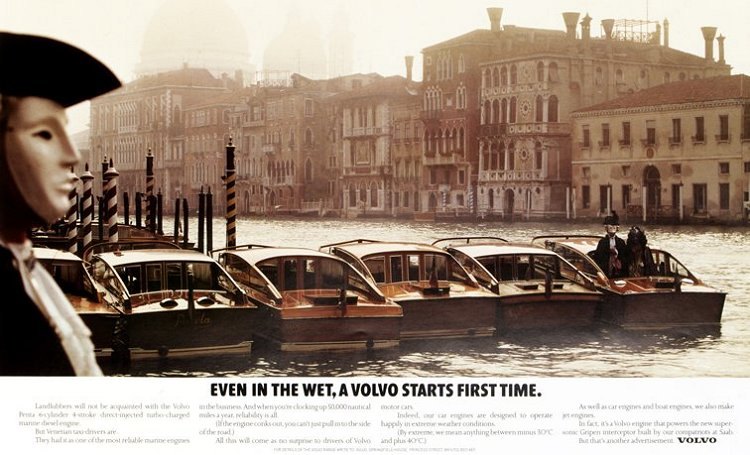
The rest of the campaign kept the method. Send them off with something substantial outside them put children at the open door of an estate car in the snow and let the picture carry the argument; Always keep your valuables in a safe place did the same. The Cotton Wool poster wrapped a child in cotton wool over the line Or buy a Volvo. Later writers inherited the format whole. Richard Foster answered Saab's jets with a single press ad the week after the commercials ran, and a 740 Estate ad noted that there might be something to be said for estate cars shaped like estate cars. The engineering stayed in the copy. The demonstration moved to the headline.
The work.

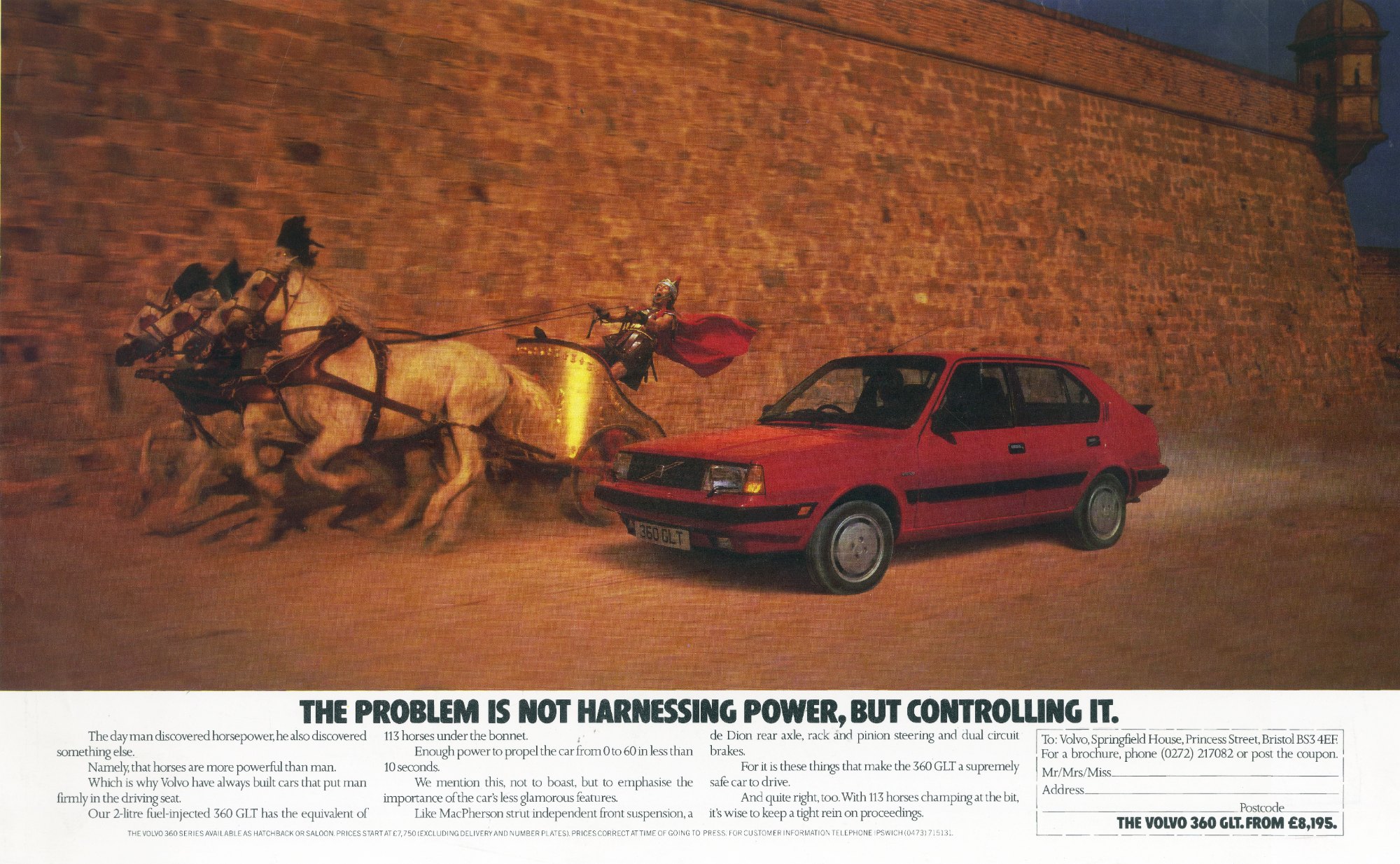
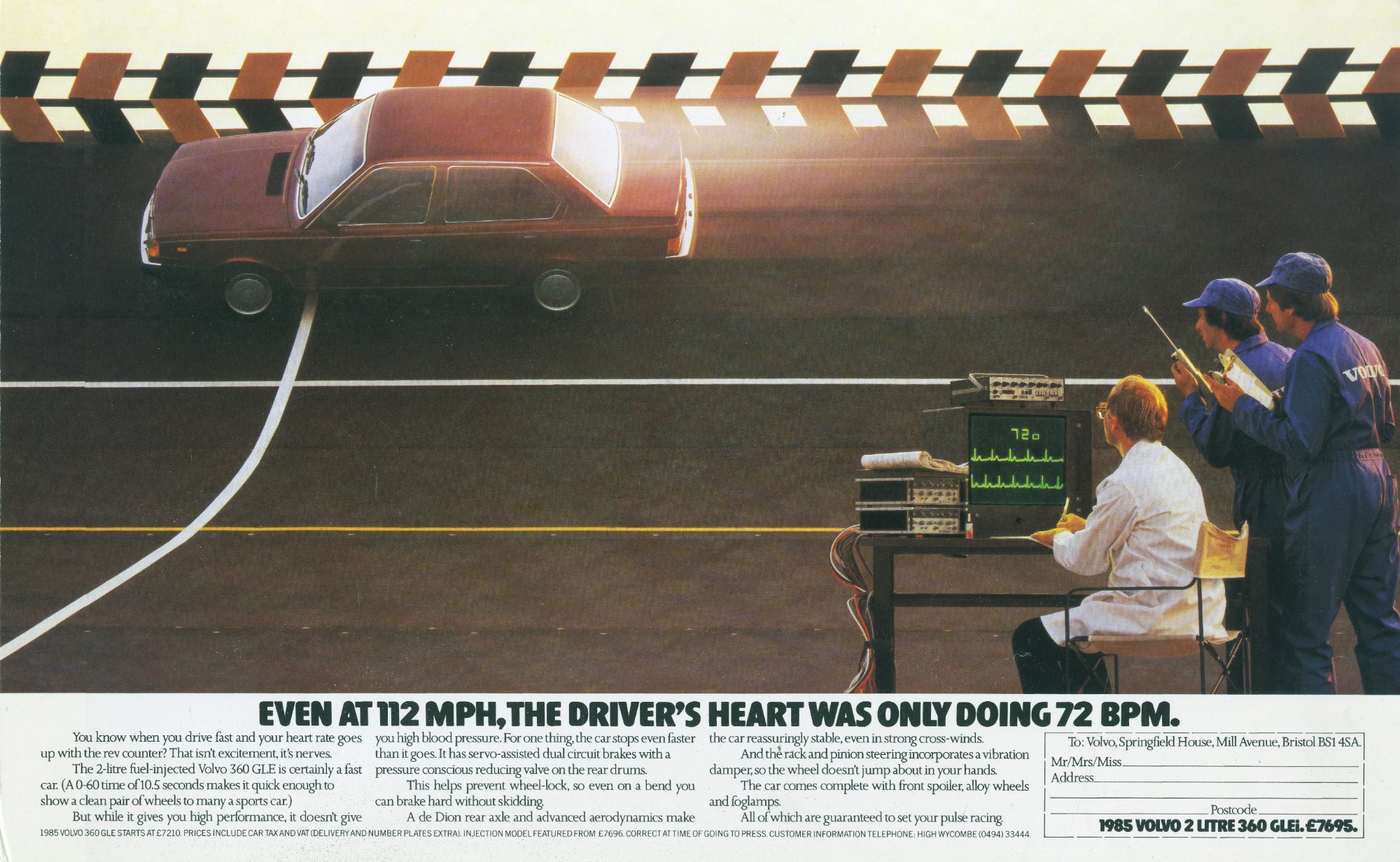
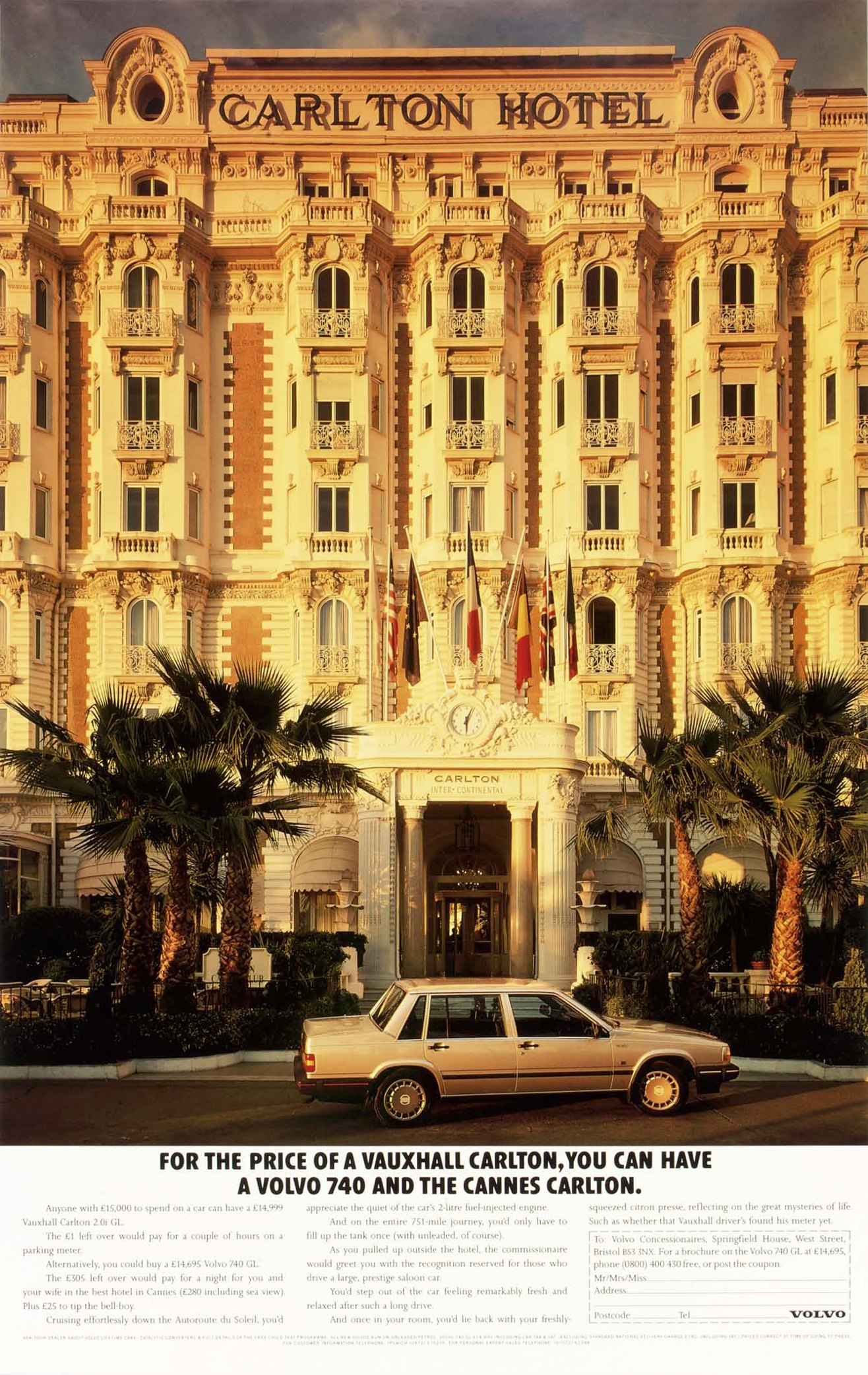
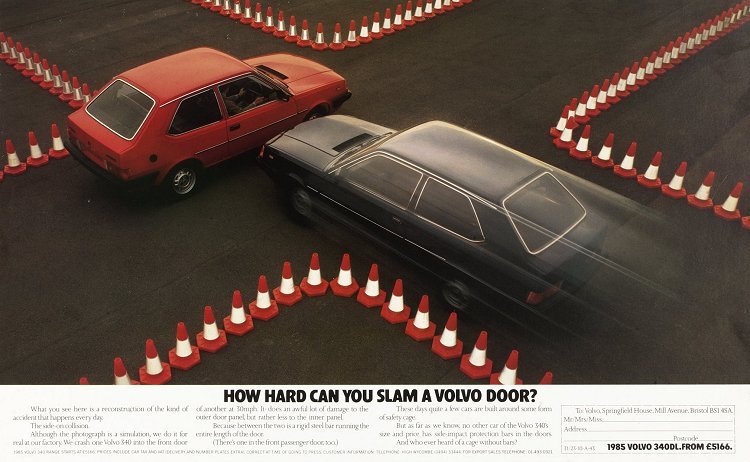
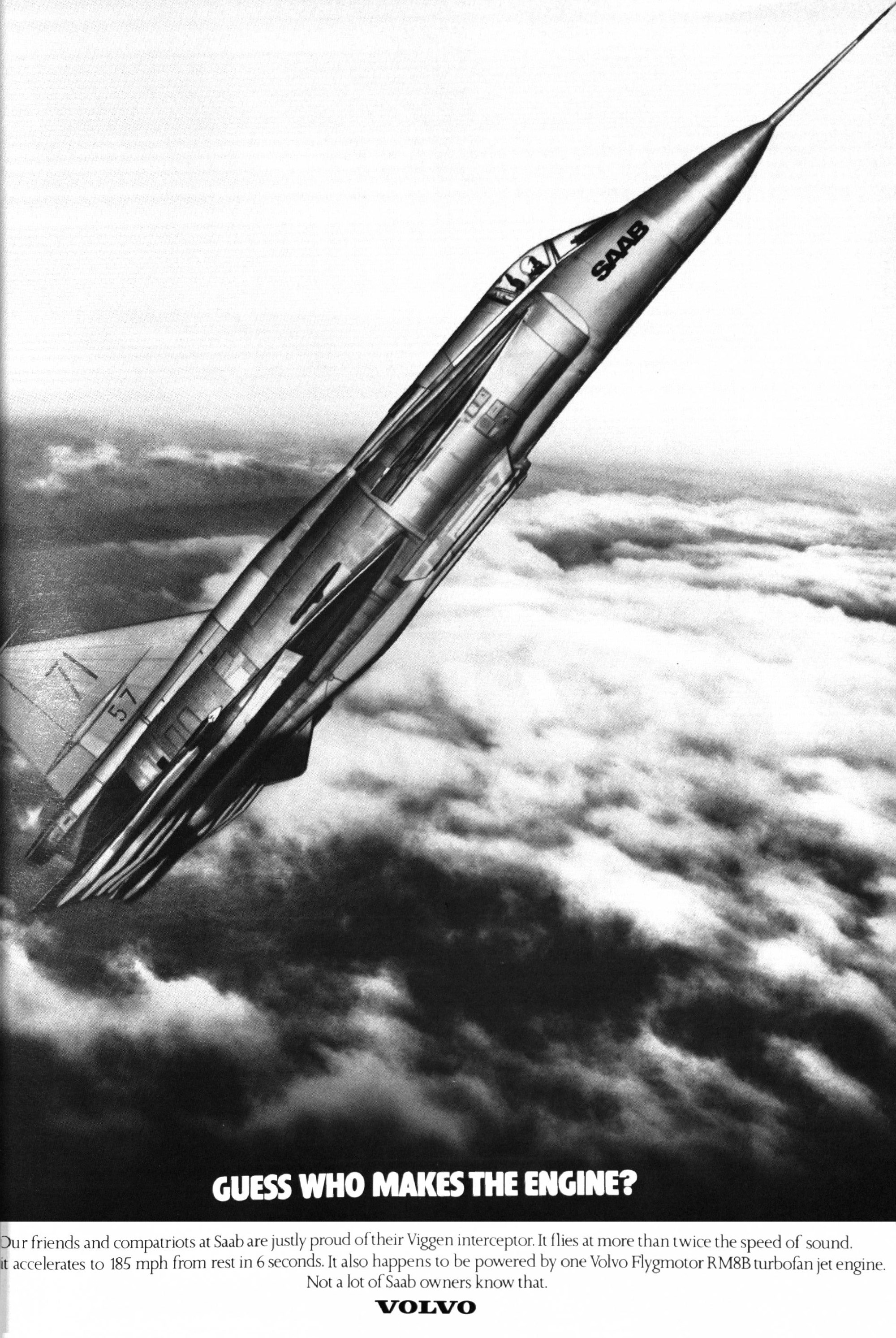
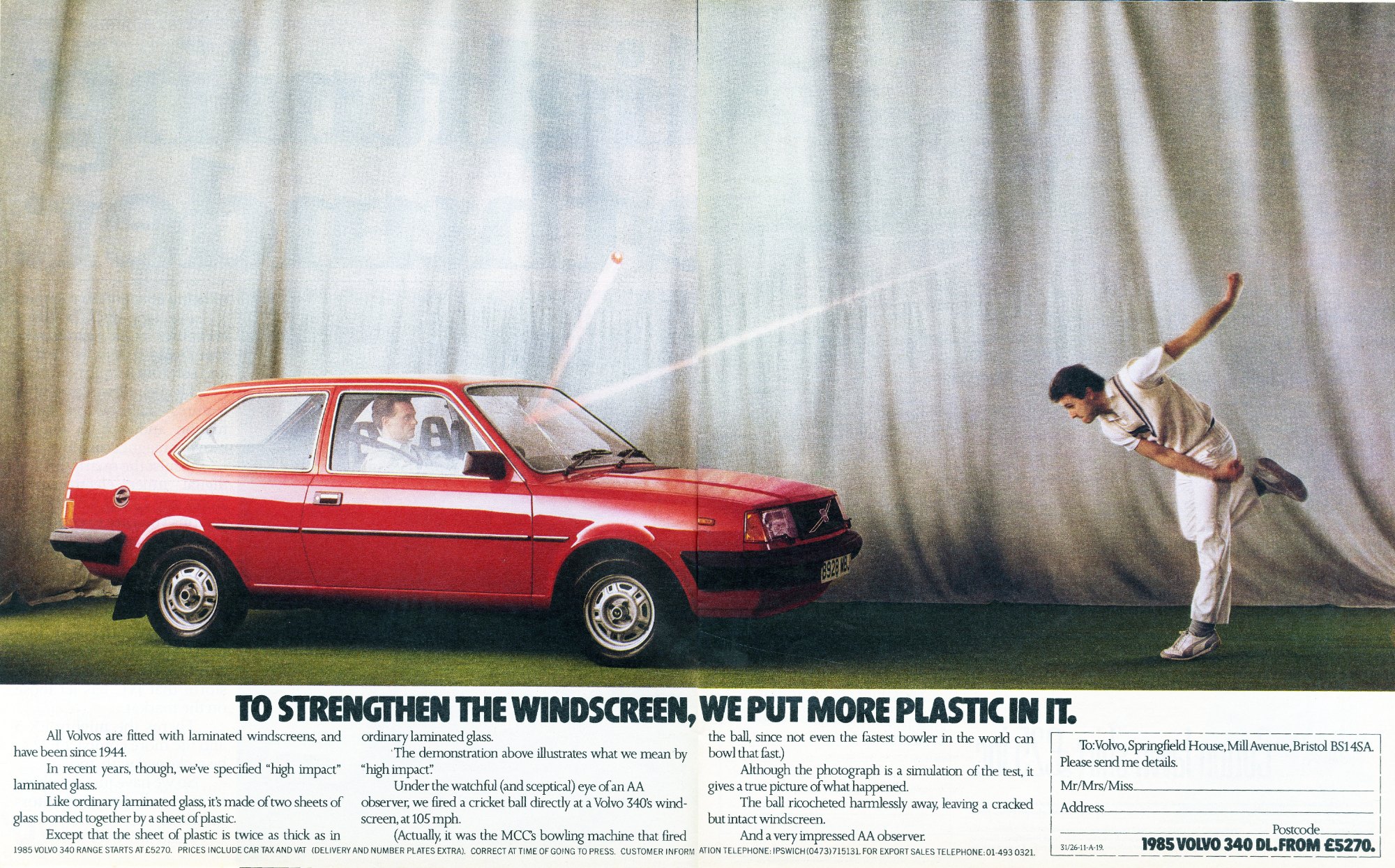
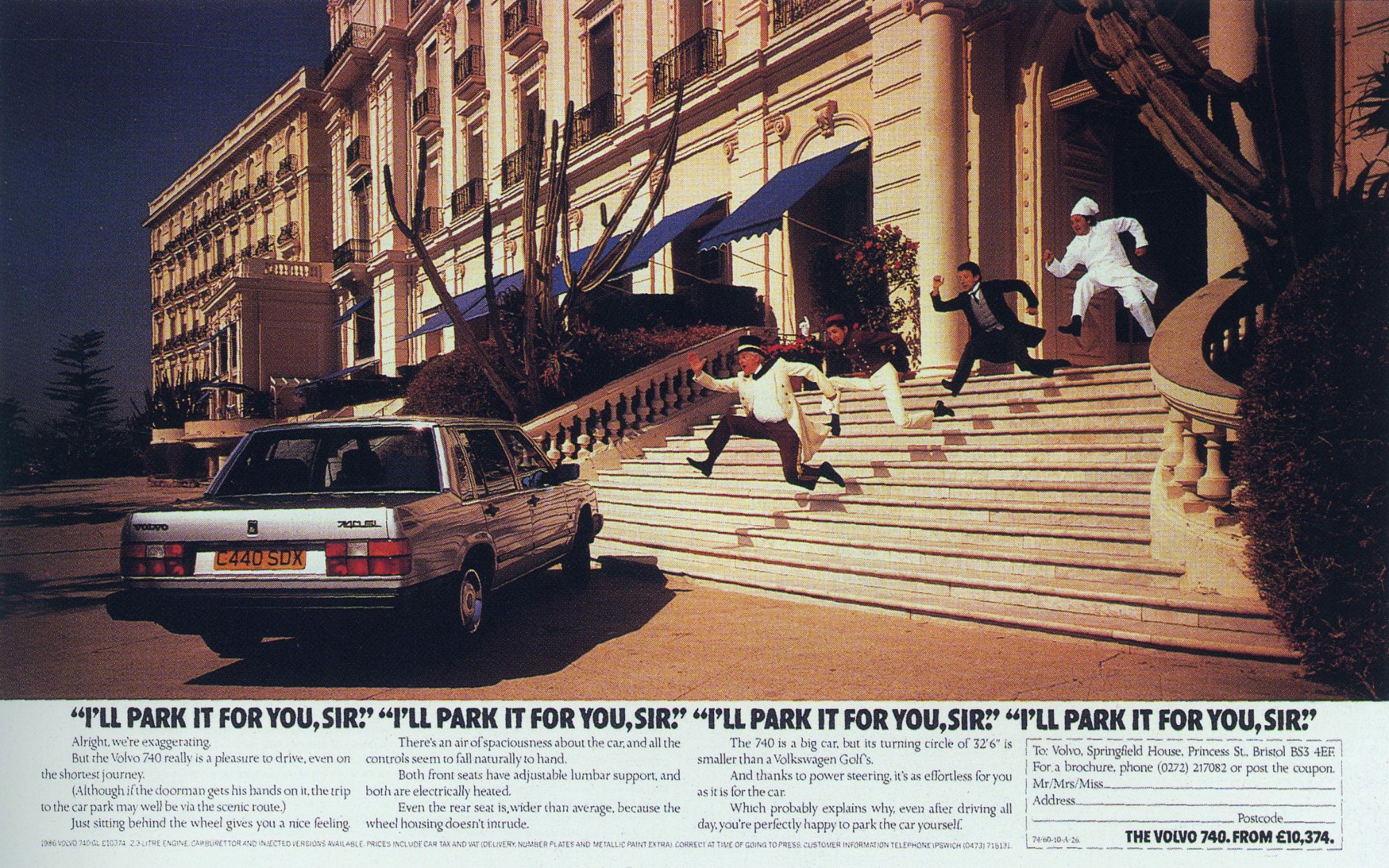
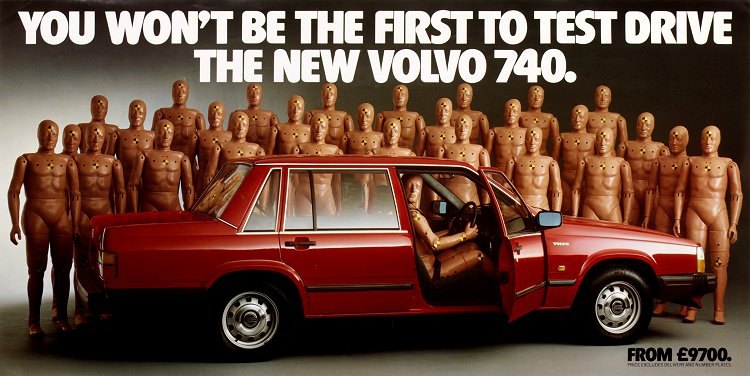
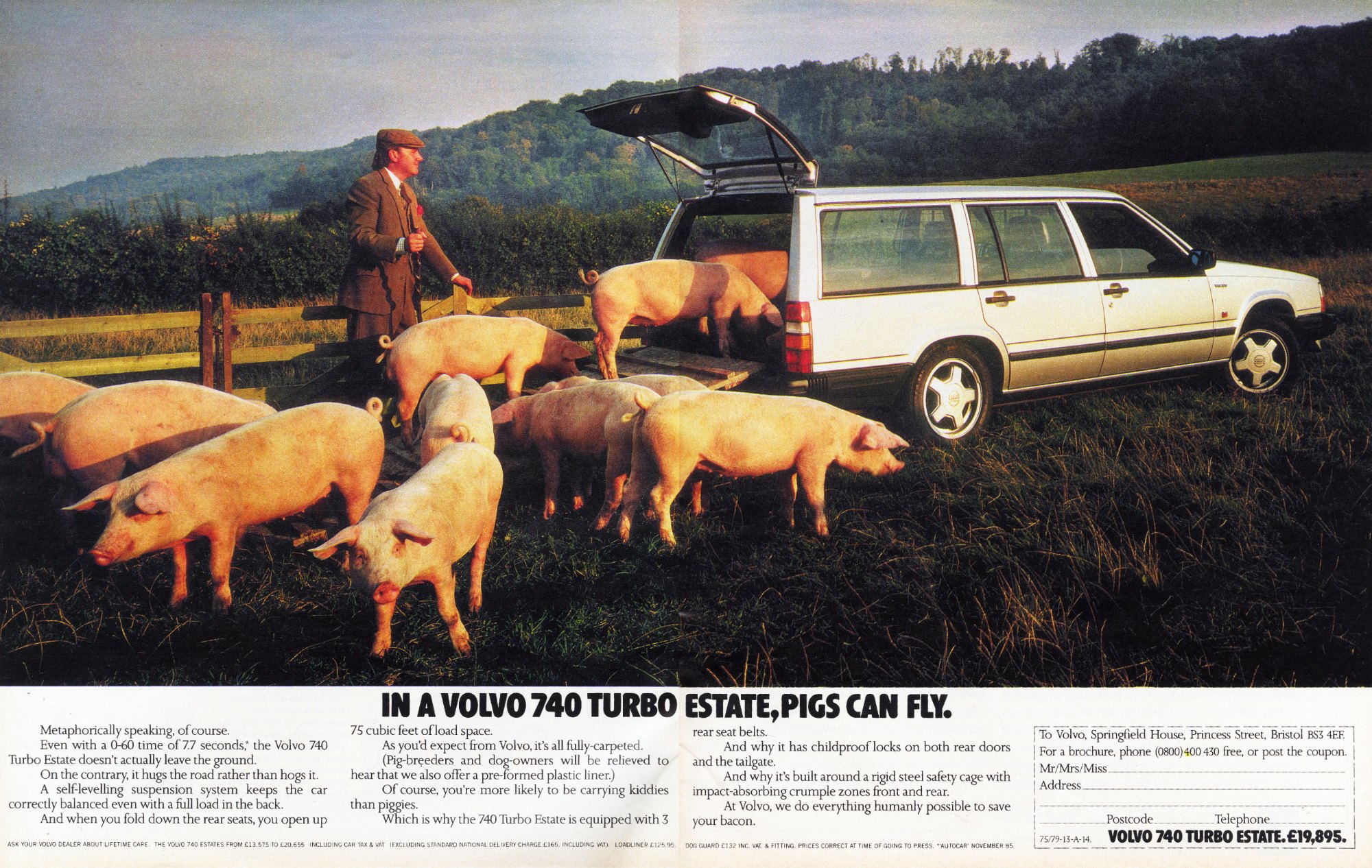
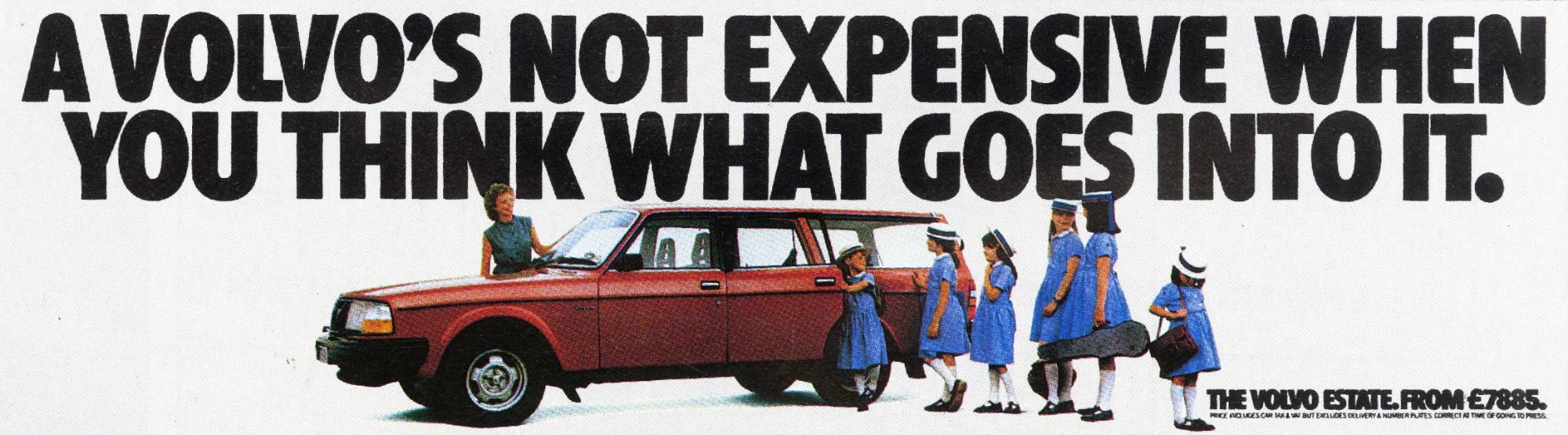
Same shape of problem.
Volvo had been told for years that safety doesn't sell, so its copywriter lay down under a car hanging from one weld and let the photograph make the claim for him.
Back to the archive →