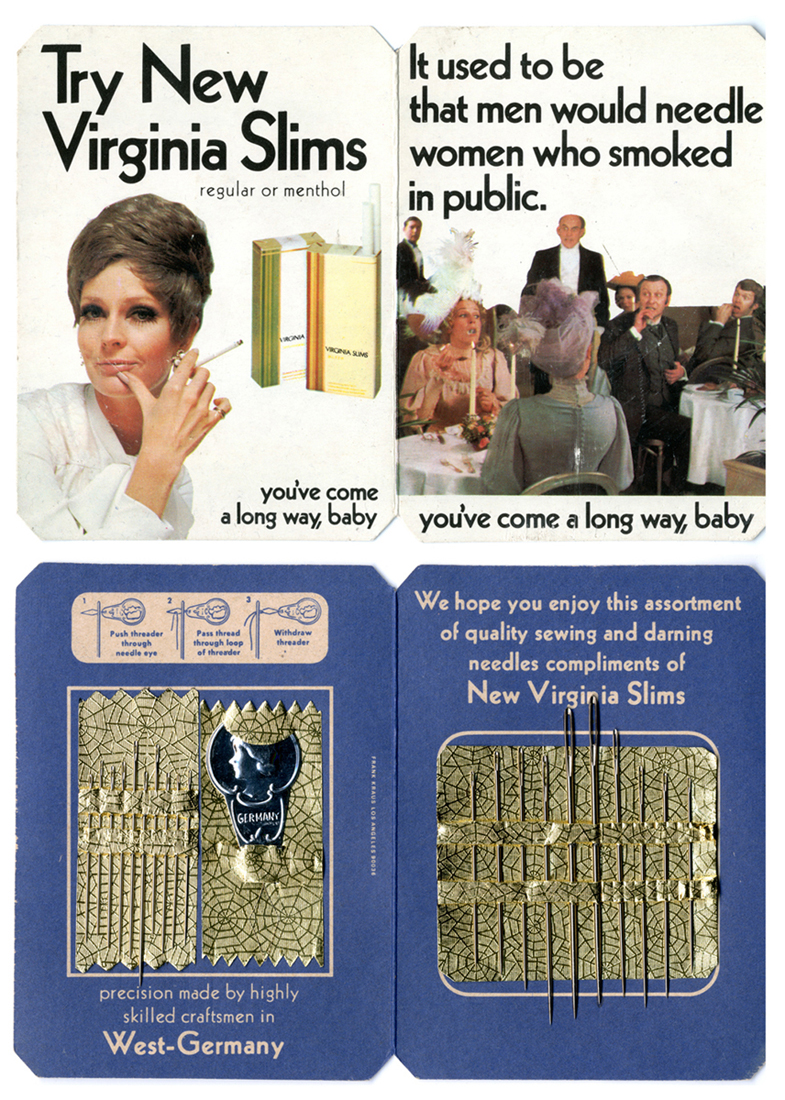
You've Come a Long Way, Baby
The first cigarette built for women, sold not on taste but on permission.
The era.
In 1968 the magazine was still where America met its advertising. Life, Look, McCall's, Ladies' Home Journal and Cosmopolitan carried the national conversation, and a double page in one of them reached more women in a week than anything else could. Cigarettes were sold there heavily, and on television, and on billboards, with no restriction beyond the small caution printed on the pack since 1965.
Smoking was ordinary. About four in ten American adults smoked, 53 per cent of men and roughly a third of women. Consumption per head had peaked at about 4,400 cigarettes a year in the early 1960s and was drifting down, from 4,197 in 1966 to 3,969 in 1970. The habit was in offices, hospitals, aeroplanes and living rooms, and nobody had to ask permission for it.
Philip Morris was the ambitious one in the category. It had taken Marlboro, introduced in the 1920s as a cigarette for women with lines about red tips for pretty lips, handed it to Leo Burnett in the 1950s and turned it into a cowboy. Benson & Hedges was its other Leo Burnett success. The company had learned that a cigarette is a choice made almost entirely on who the smoker becomes by holding it.
The culture.
The second wave of the women's movement was arriving in public. On 26 August 1970, the fiftieth anniversary of the vote, women marched down Connecticut Avenue in Washington in the first national women's rights demonstration in over fifty years, calling for an Equal Rights Amendment and for changes to abortion law. Groups from the League of Women Voters to the Black Panther Party took part. The Amendment was still being fought over, and picketed against, seven years later.
Women were entering paid work in numbers, and tennis gave the argument a stage. In 1970 Gladys Heldman, with help from the Philip Morris chairman Joseph Cullman III, put up five thousand dollars of her own money so nine players could sign one-dollar contracts for an eight-tournament tour under the Virginia Slims name. The circuit grew from nine players to forty inside a year and became the basis of the Women's Tennis Association in 1973. Philip Morris had bought the most visible argument for equal pay in America and put its cigarette on it.
The campaign was attacked from the start and the attacks got harder. Gloria Steinem argued that smoking as emancipation would be unacceptable in any other context, and in 1986 she was herself challenged over her magazine's dependence on cigarette revenue. Constance Battle of the American Medical Women's Association wrote to seventeen women's magazines in November 1986 asking them to cover teenage smoking. By 1985 lung cancer had passed breast cancer as the leading cause of cancer death among American women. Joseph Califano, who had run the federal health department, put it in one line: women who smoke like men, die like men.
The problem.
Half the smokers in America were women, and every cigarette on the shelf had been built, sized and sold for a man.
The Surgeon General's report of 1964 tied smoking to lung cancer, the labelling act of 1965 put a caution on every pack, and the category stopped growing. Consumption per head slid from about 4,400 cigarettes a year in the early 1960s toward 3,969 by 1970. Growth would have to come from taking share, because the market was not going to get any bigger.
About 38 million American women smoked, more than four in ten of all smokers, and no brand was theirs. They smoked men's cigarettes out of men's packs in men's sizes, and the one brand ever aimed at them had been turned into a cowboy a decade earlier. Women also leaned heavily to menthol, roughly 35 per cent against 20 per cent of the market, so the segment behaved differently as well as being large.
In the autumn of 1967 American Tobacco launched Silva Thins, and Philip Morris asked Leo Burnett how it would handle a thin cigarette. The agency started in late December 1967 with no name, no slogan and no pack. The question was never whether a cigarette for women could be made. It was what a woman would be buying.
After American Tobacco launched Silva Thins in the autumn of 1967, Philip Morris asked Leo Burnett how it would handle a thin cigarette. The agency began in late December 1967 with no name, no slogan and no pack design, and presented about four weeks later. The brand went into test in San Francisco in July 1968 and was national by the end of September.
The solution.
Put the customer's past next to her present, and let the product stand for the distance between them.
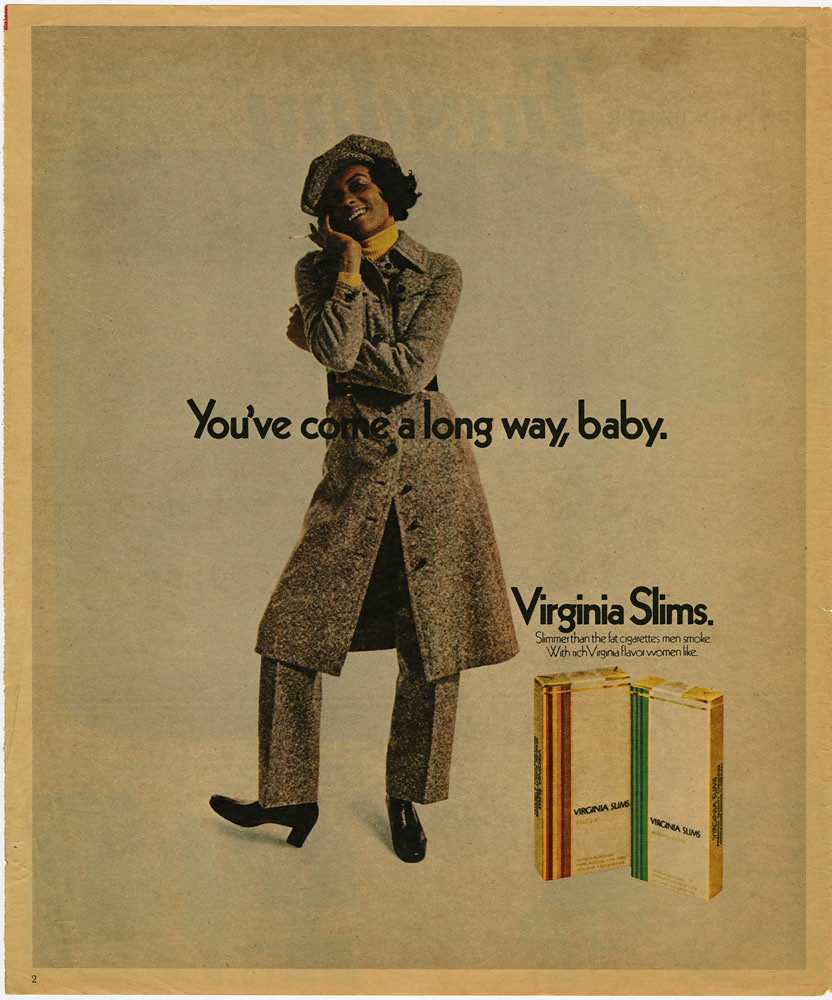
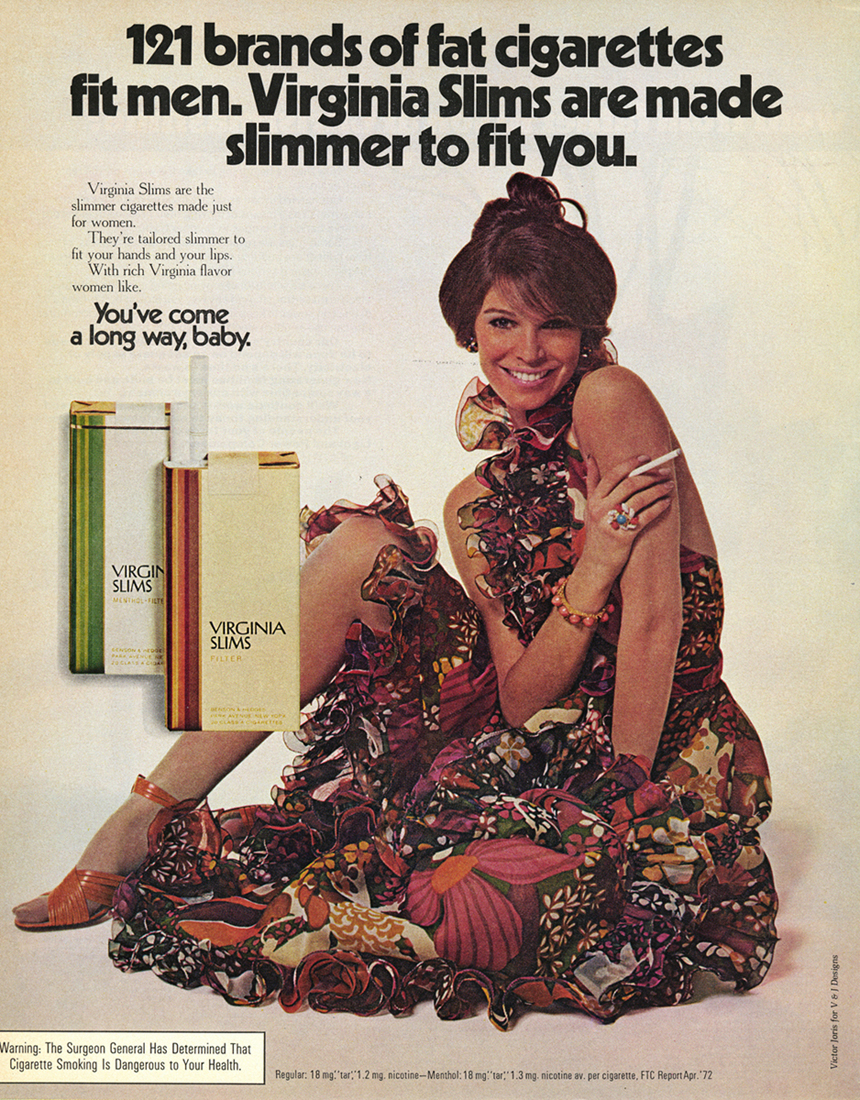
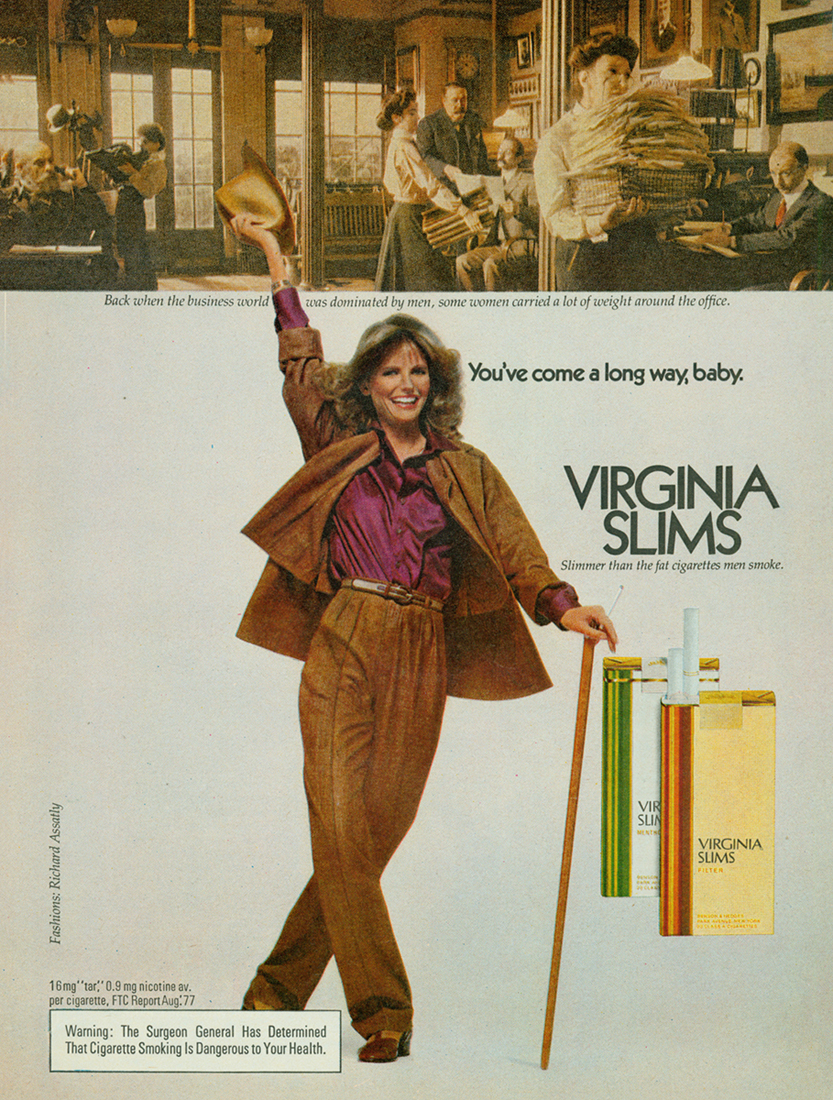
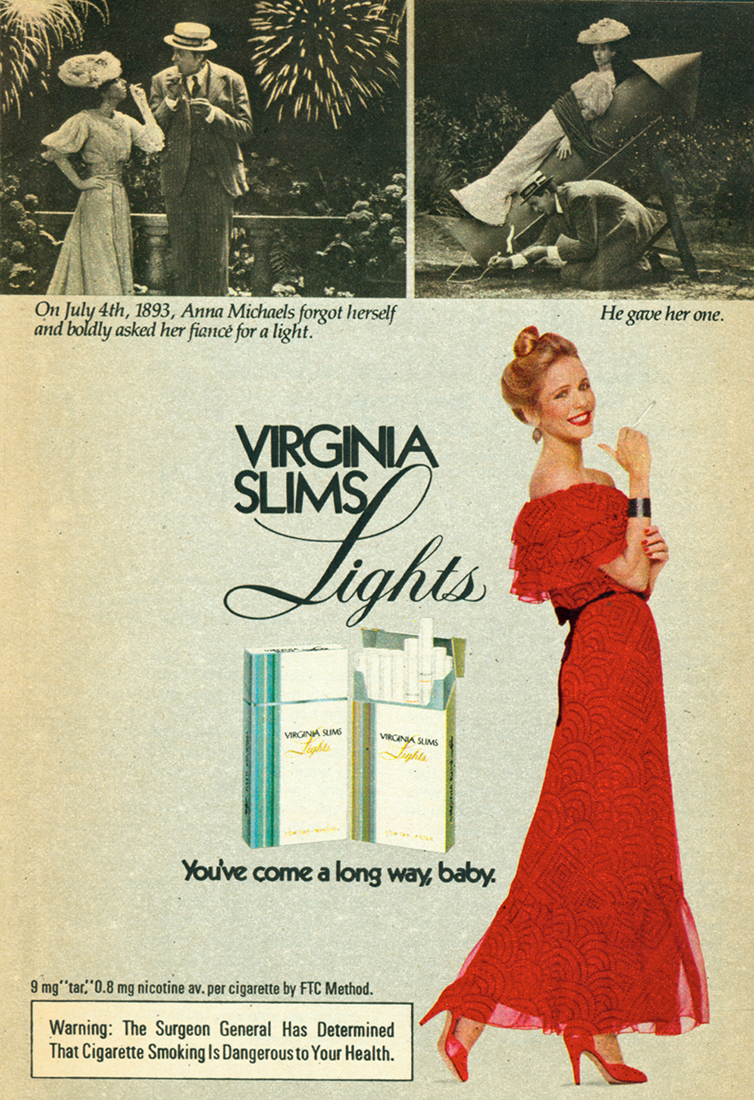
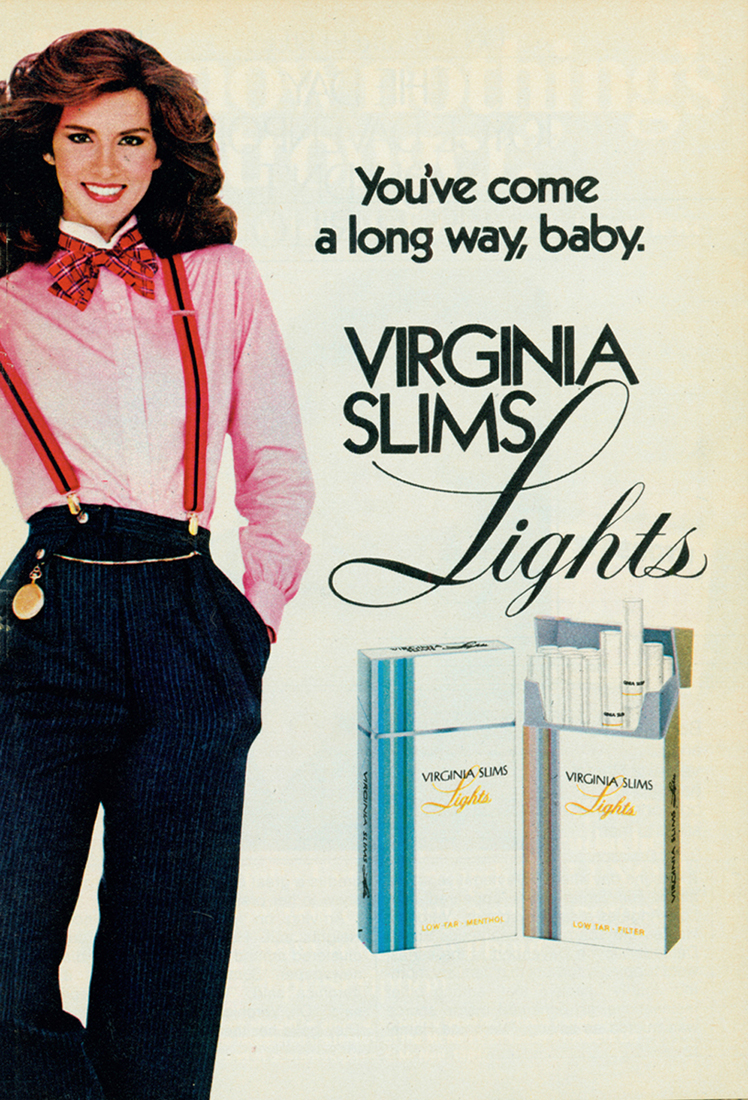
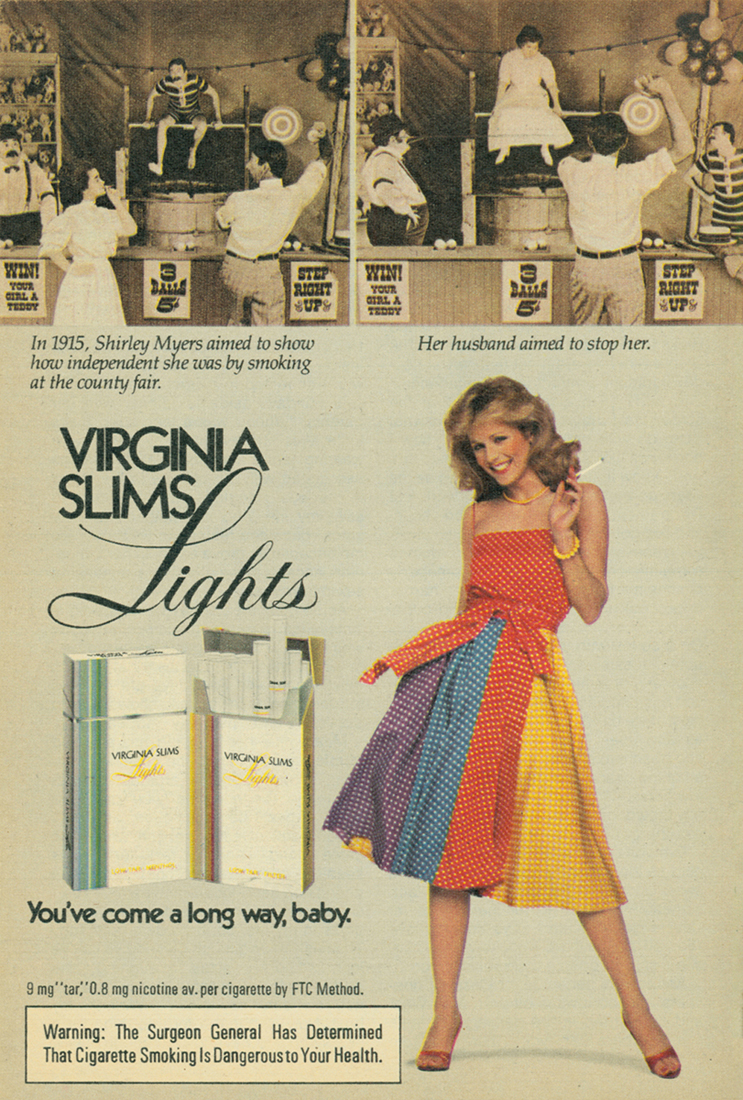
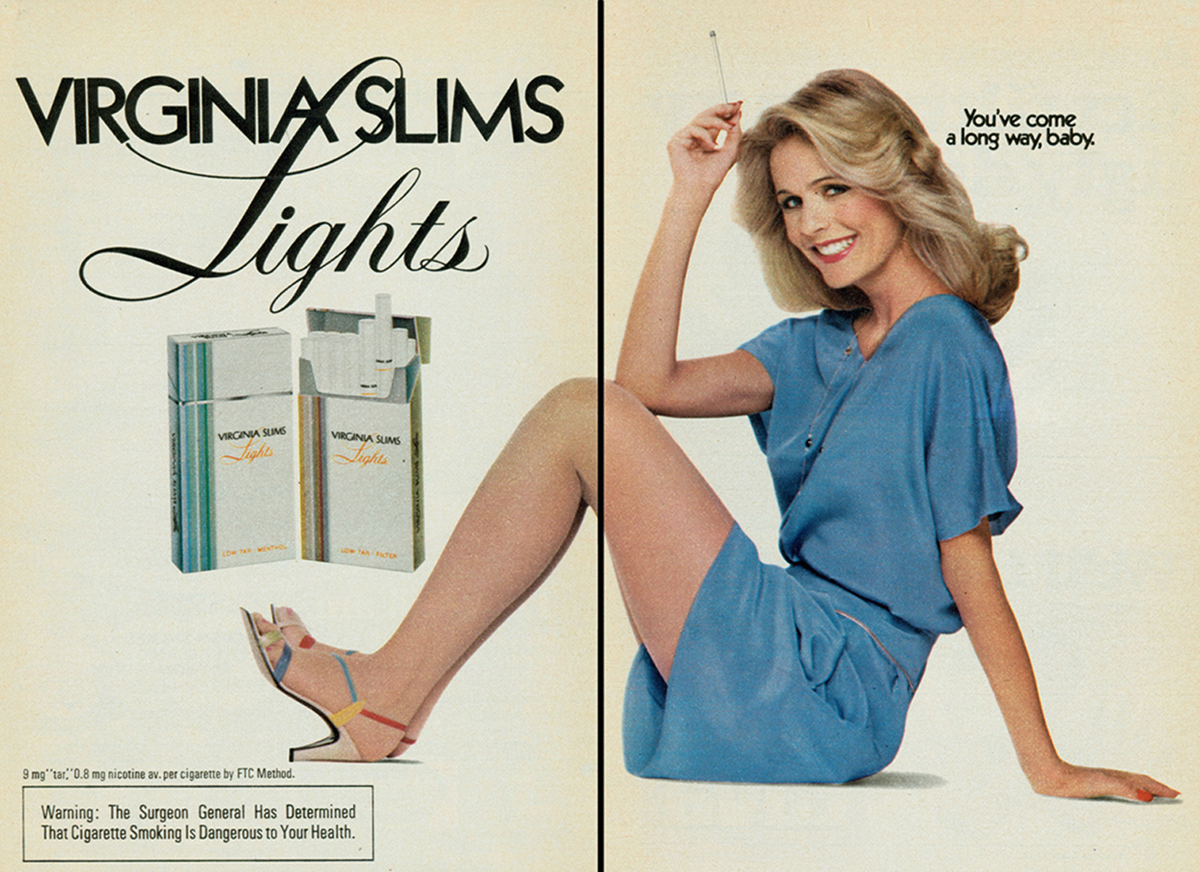
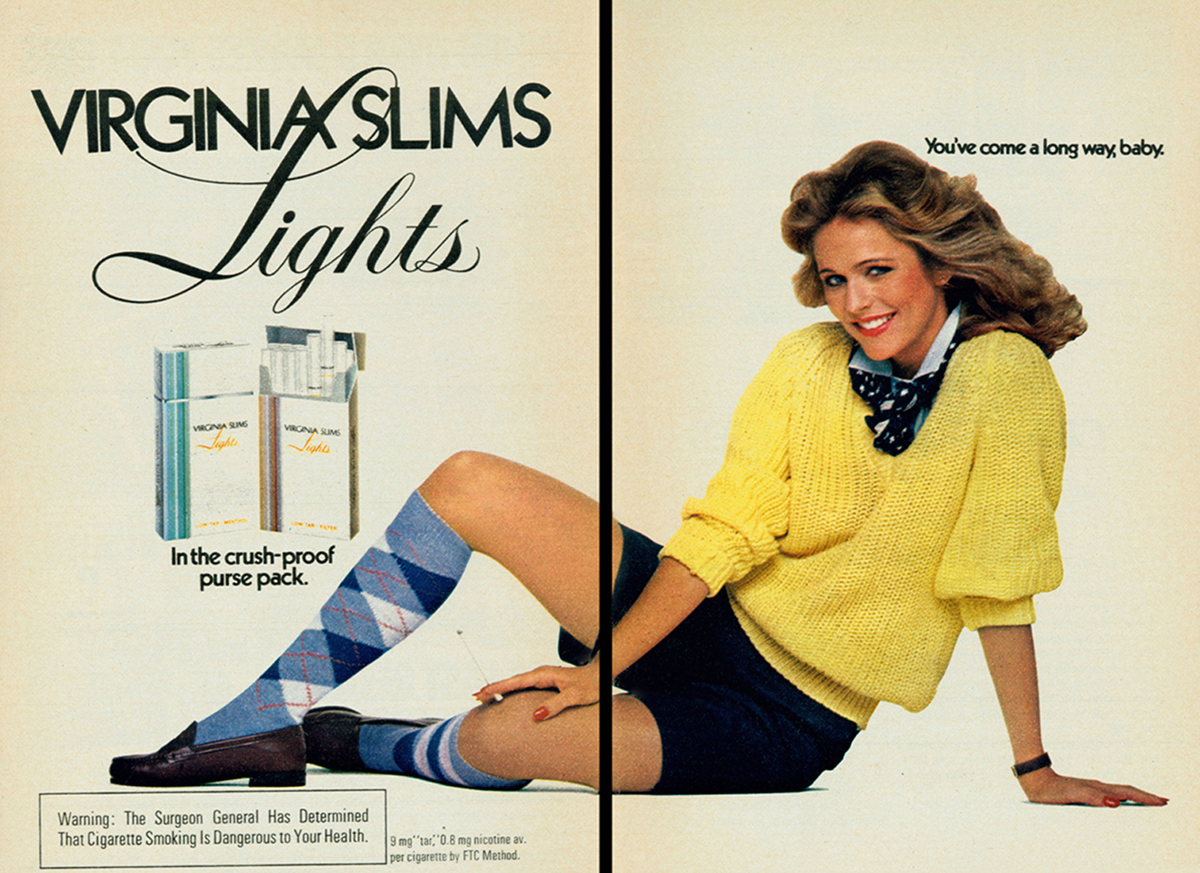
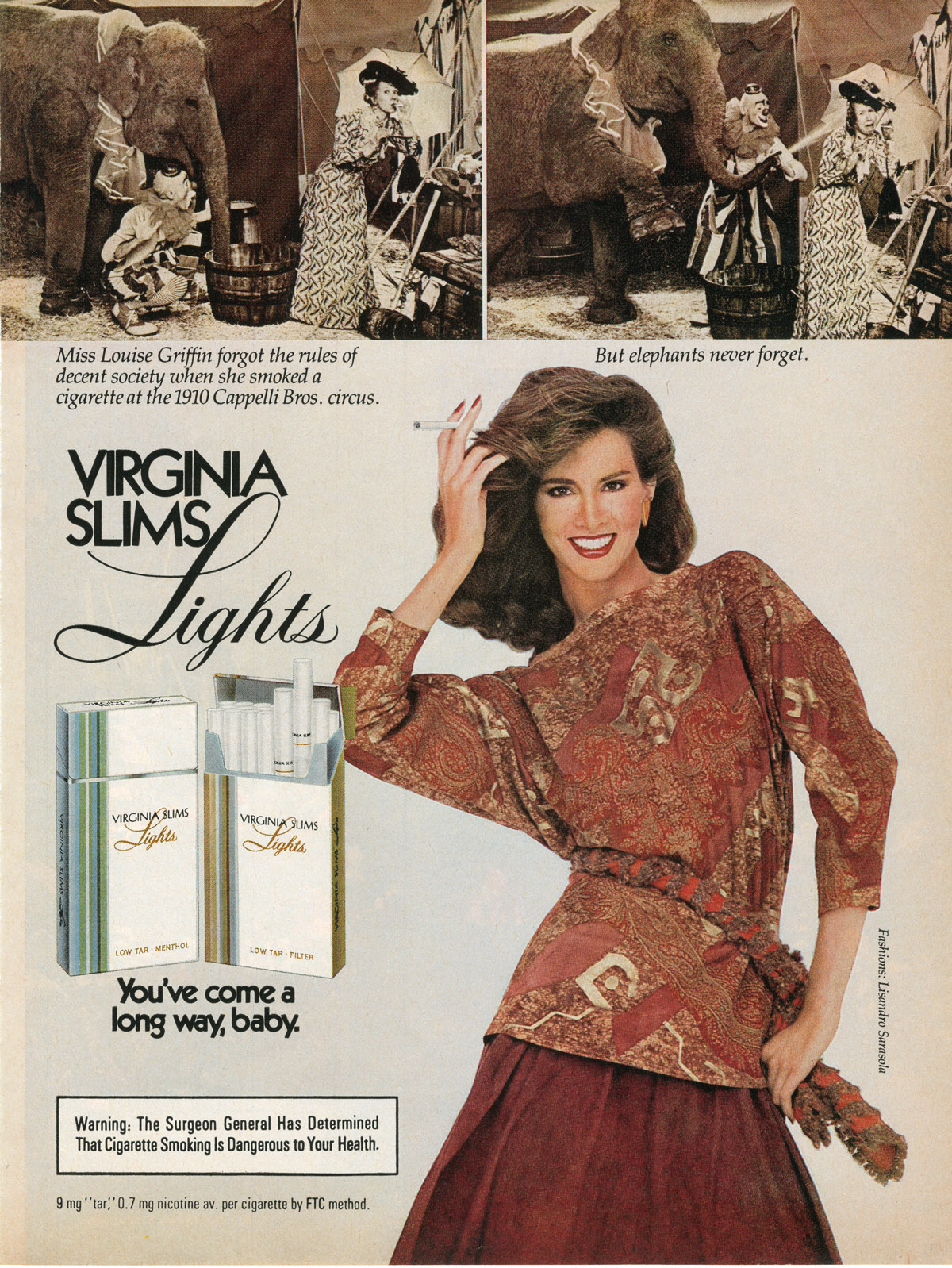
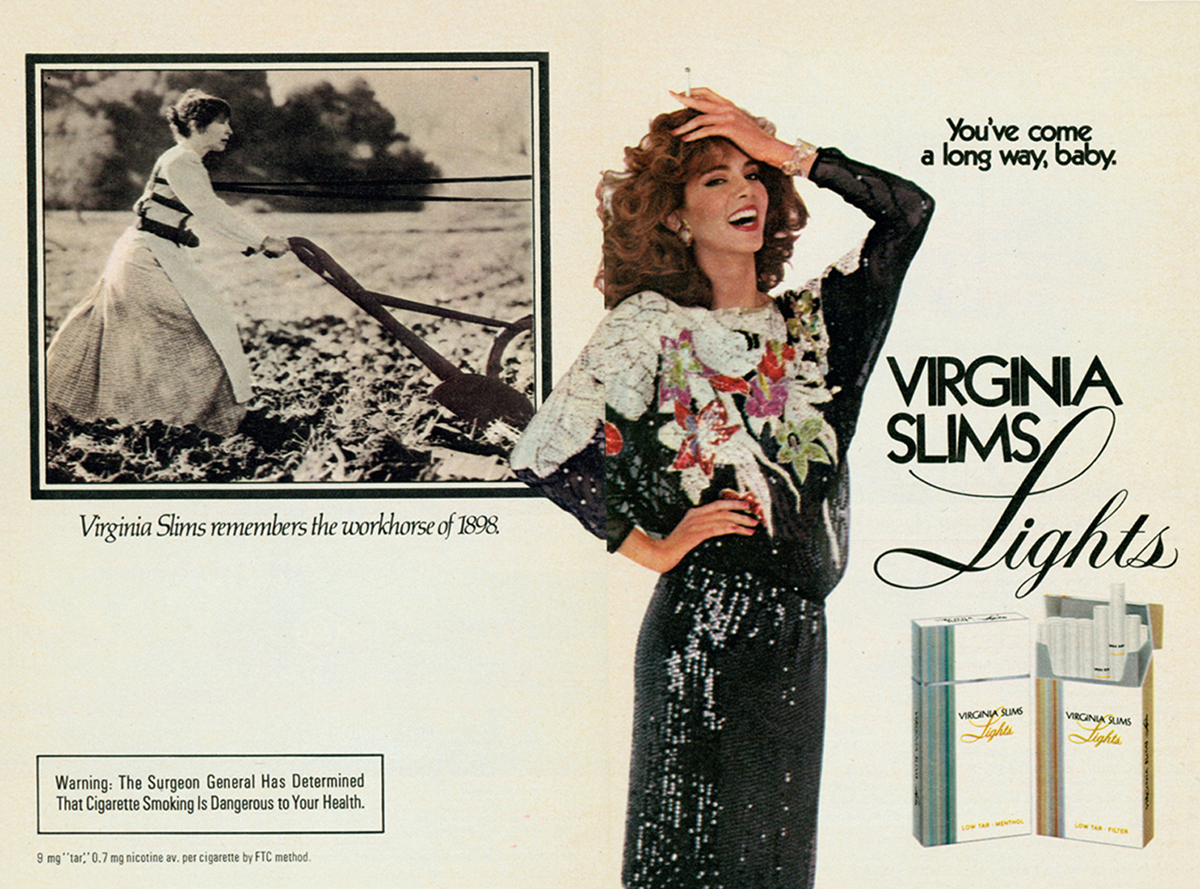
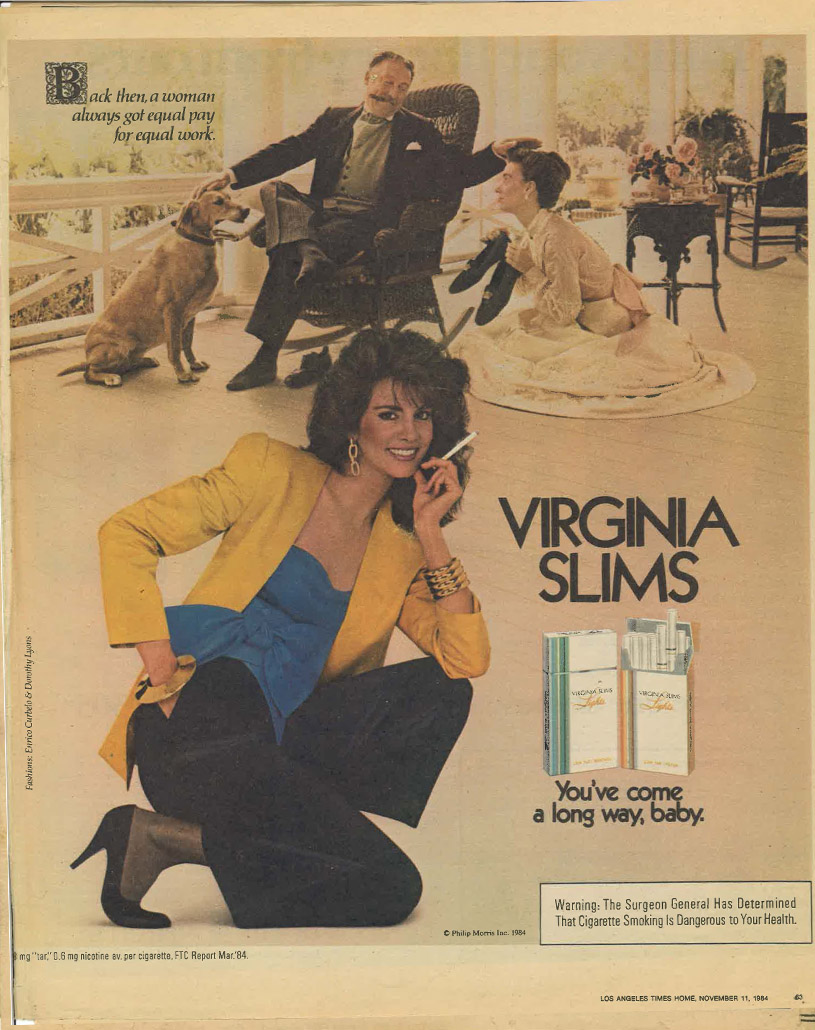
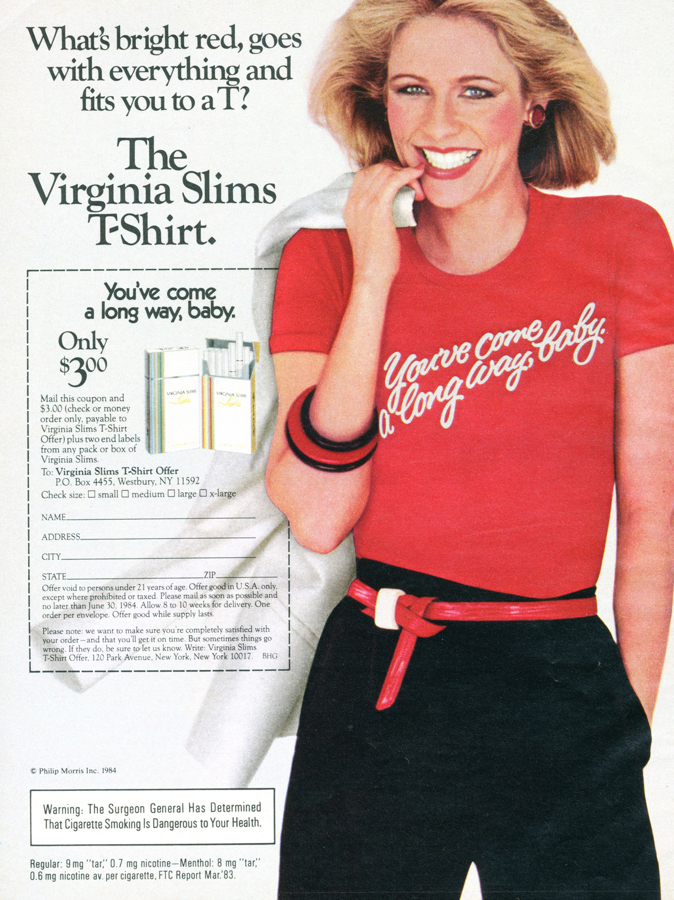
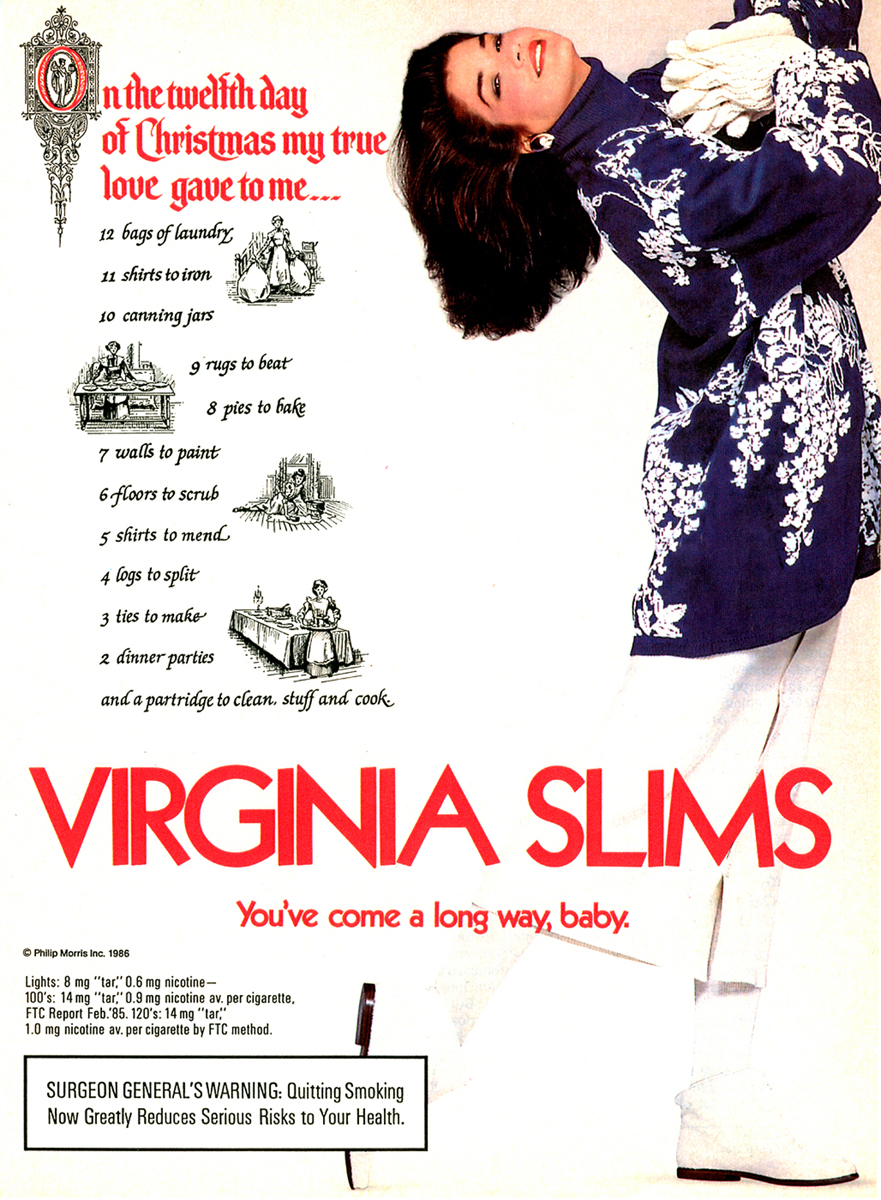
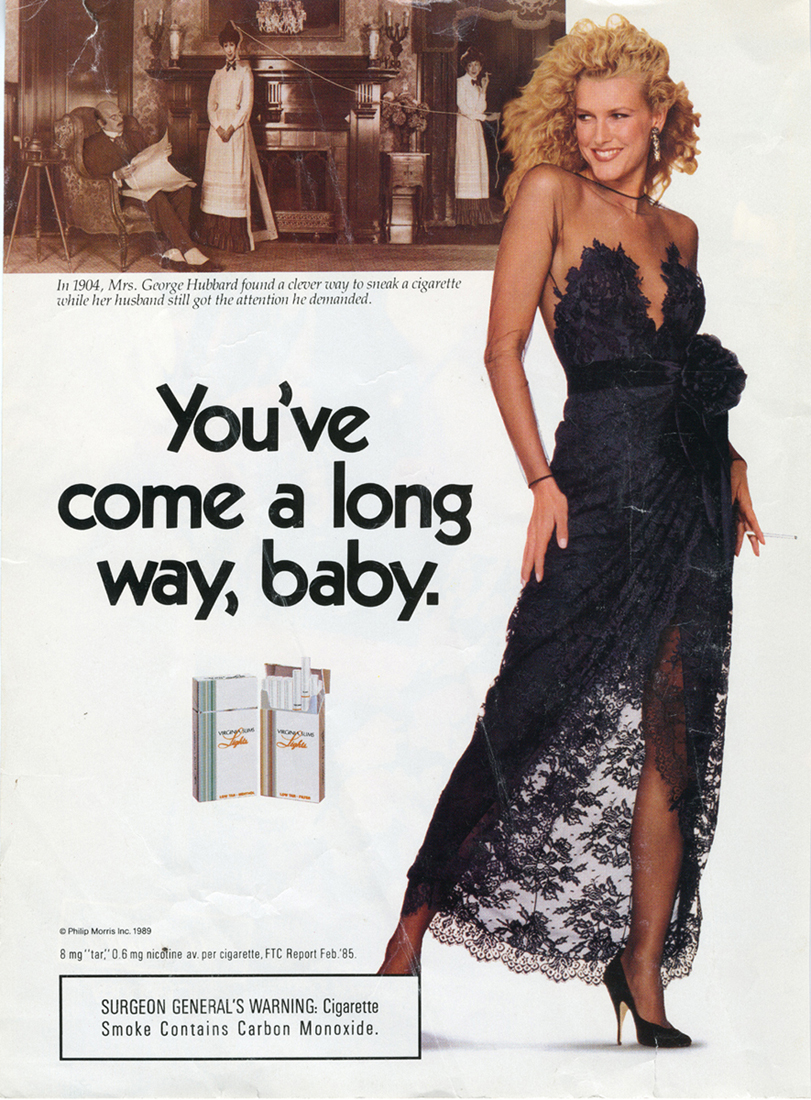
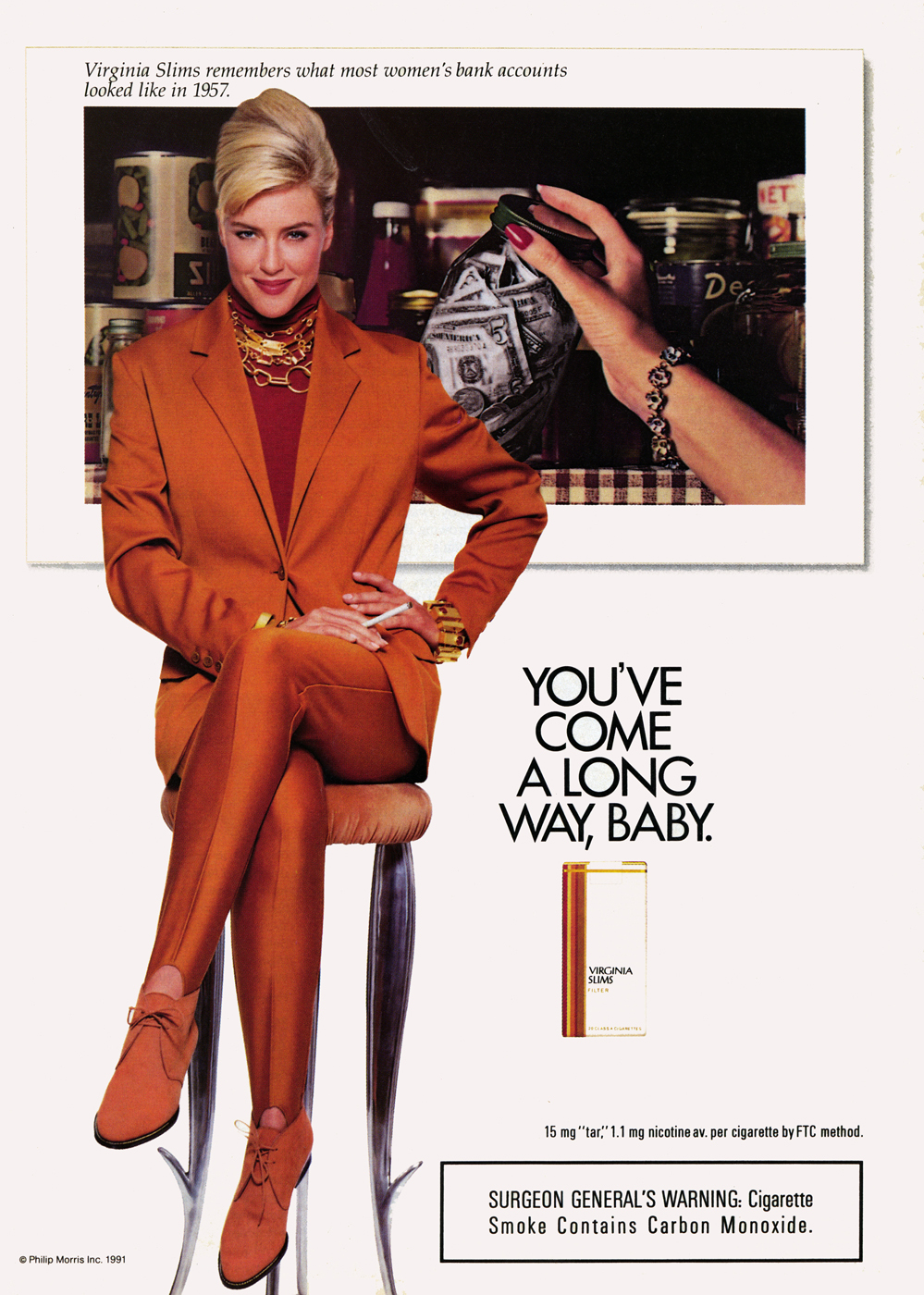
Leo Burnett had the whole thing in about four weeks. The product was slim where other cigarettes were fat, 23 millimetres around, and Walter Landor's pack was white with lengthwise stripes, narrow enough to drop into a handbag. The advertising paired a sepia photograph of a woman caught smoking in about 1900 and punished for it with a bright modern photograph of a woman dressed for the present, holding the new cigarette.
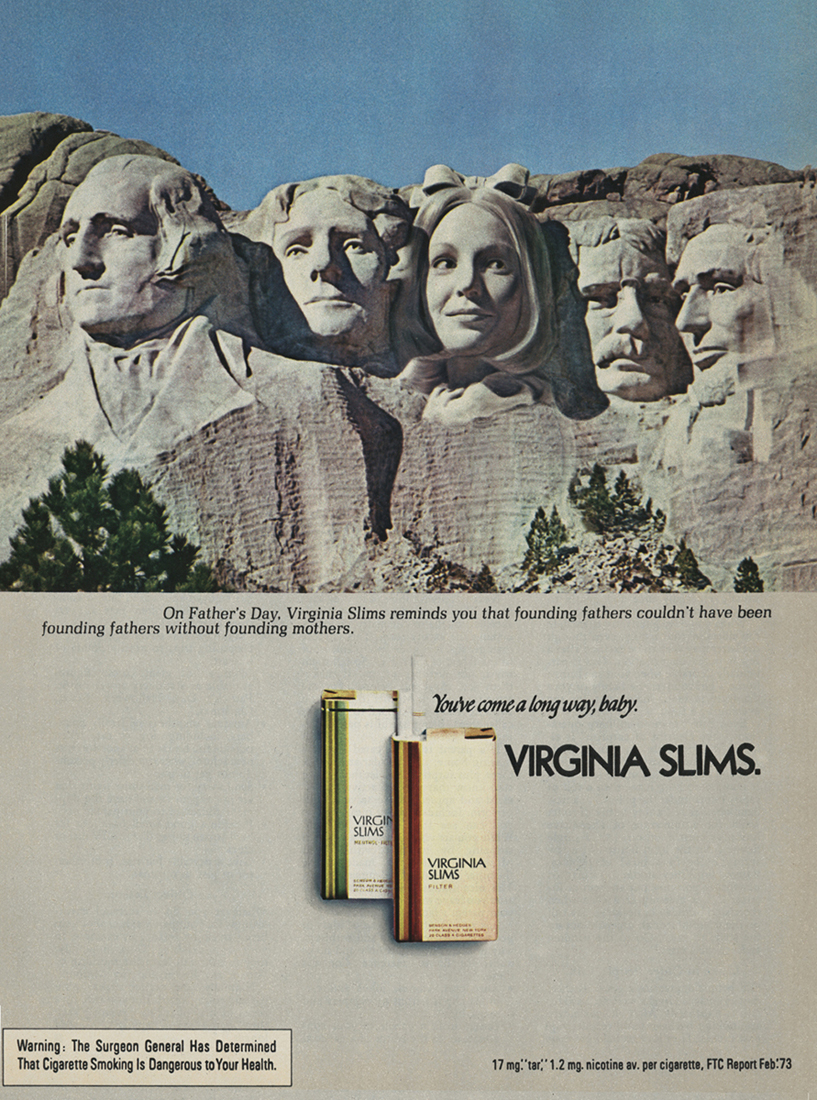
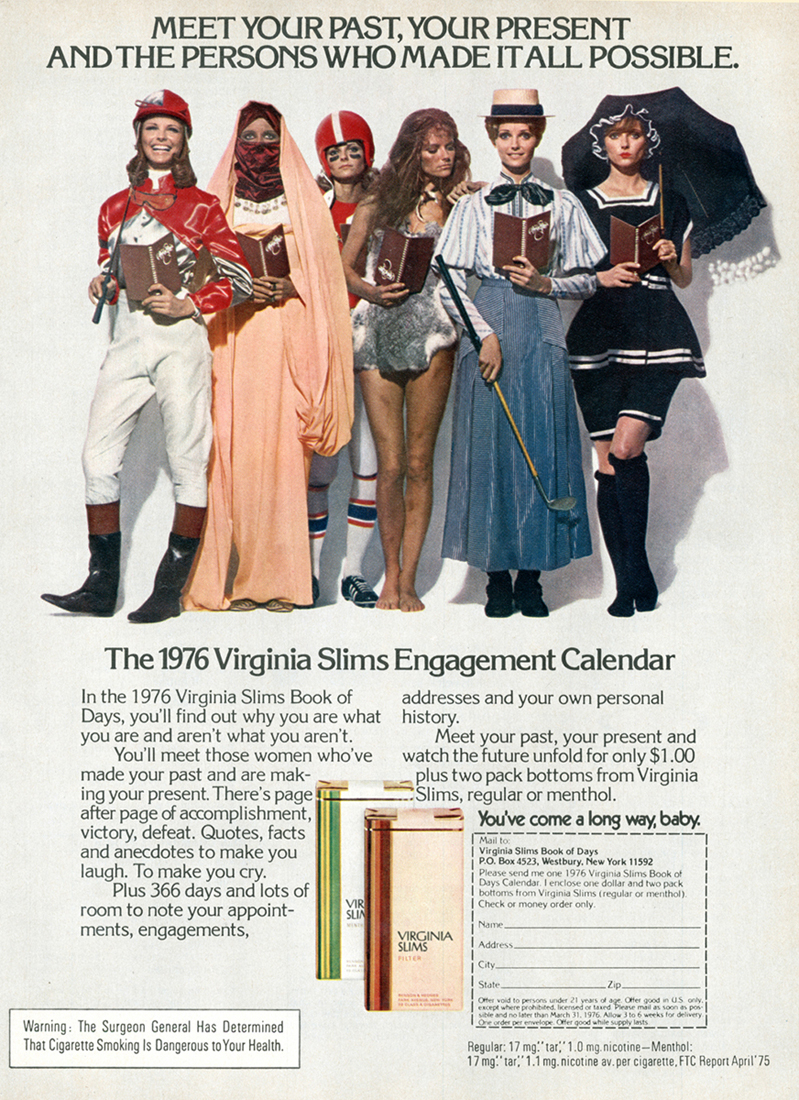
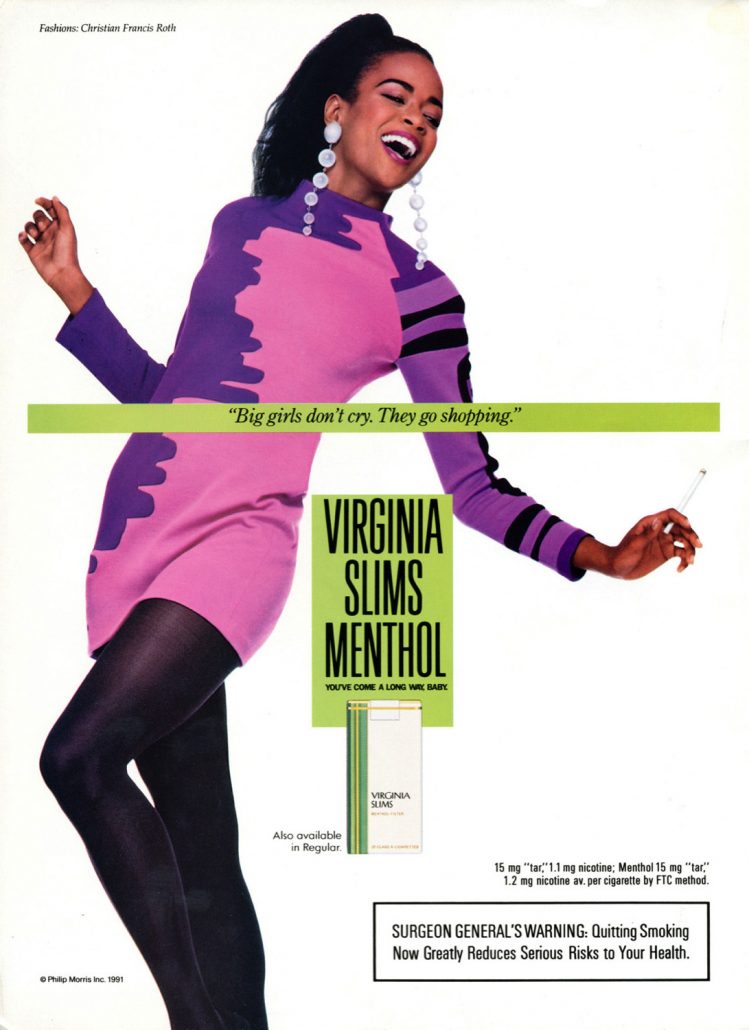
The line read You've come a long way, baby. In 1968 the copy ran only as far as you have come a long way. Baby was added in 1969, and the diminutive is both the part that has aged worst and the part that made it stick.
The structure is the whole move. The sepia half supplies an enemy, which is the past, and turns the product into evidence that the past is over. The campaign never argues that smoking is good or pleasant or harmless. It argues that she is allowed, and it sells the permission.
It worked commercially. The brand took about 1.75 per cent of the whole American market by 1978 and peaked at 3.1 per cent, near 7 per cent of women smokers, in 1989. Inside the women's category its share went from 59 per cent in 1970 to 80 per cent in 1980. The broadcast ban of January 1971 pushed tobacco money into print, sponsorship and billboards, which is exactly where this campaign had been built to live.
The work.
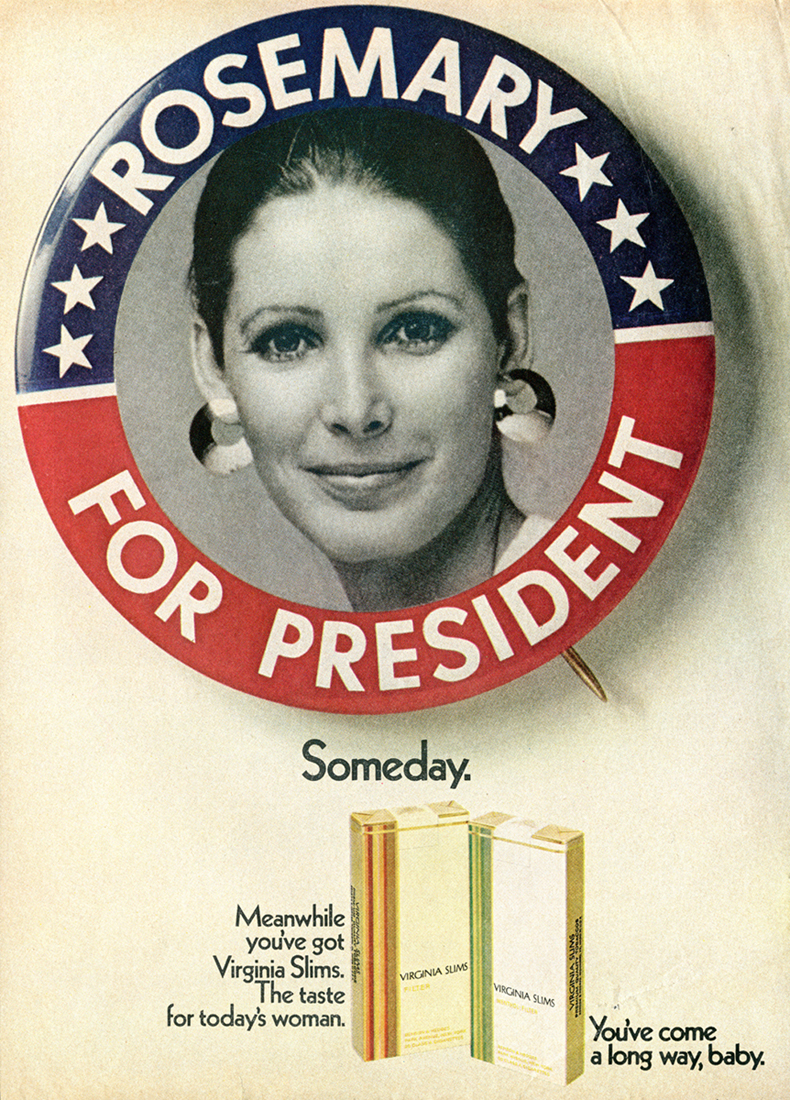
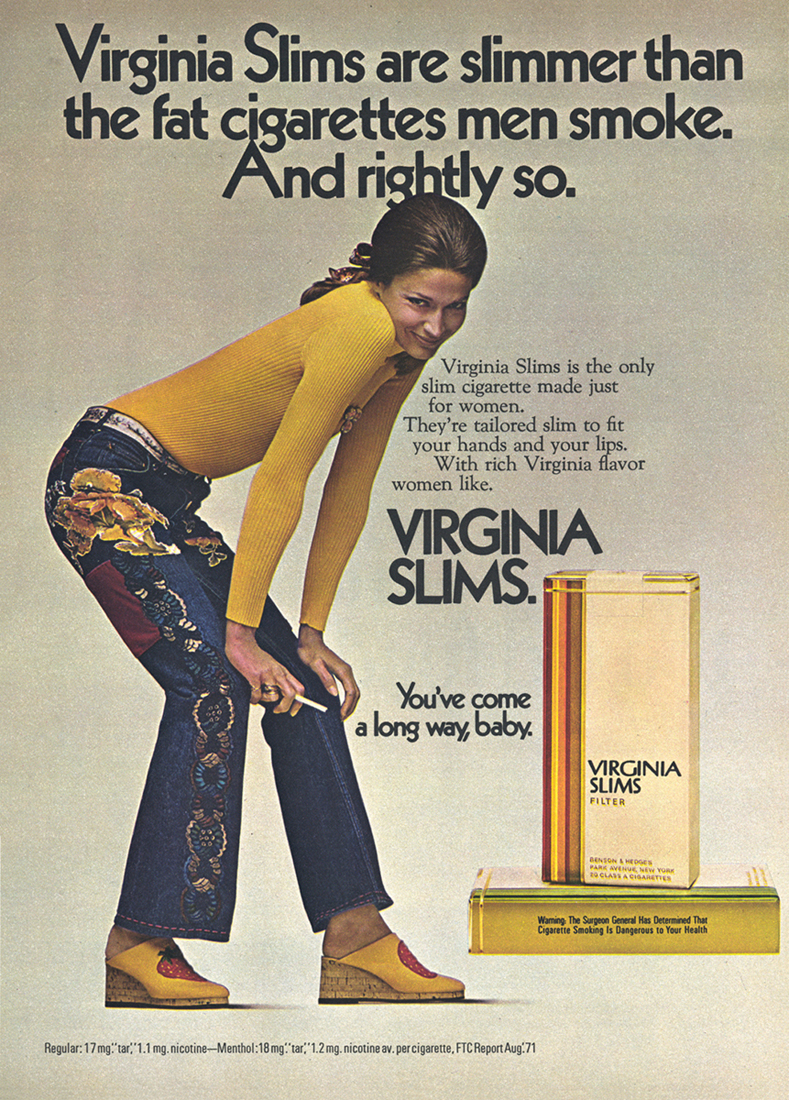
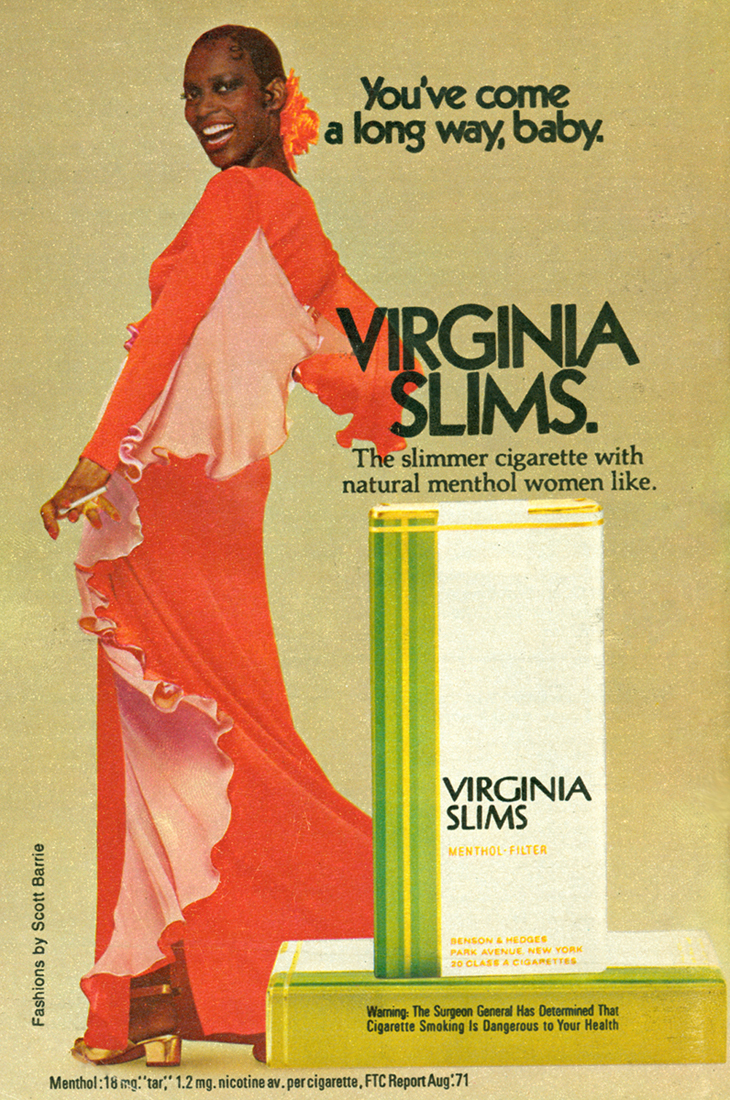
Same shape of problem.
Philip Morris had already taken a cigarette made for women and turned it into the Marlboro cowboy. This time it built one for women and kept it.
Back to the archive →