Benson & Hedges · Wells Rich Greene
The Disadvantages of Benson & Hedges 100s
The case for selling a product's single feature by acting out its drawbacks.
The era.
By the mid-1960s the American cigarette business was selling under growing official scrutiny. The Federal Trade Commission ran machines that smoked cigarettes to measure tar and nicotine, and public health posters told people to stop. Cigarette commercials were still allowed on television, and the big brands spent heavily there. That ended with a federal ban on cigarette advertising on television and radio in 1971.
Benson & Hedges belonged to Philip Morris. It had long been sold to a smoker who would pay more for quality, and practical arguments had never been its style. In 1965 it brought out one of the first notable cigarettes longer than king size, sold as the Benson & Hedges 100s and priced like a king-size pack. King size had been the long cigarette until then.
On Madison Avenue a new agency was opening. Mary Wells, Dick Rich and Stewart Greene left Jack Tinker & Partners in the spring of 1966, after Marion Harper Jr. refused Wells the title of president. Wells Rich Greene opened in April 1966 in a suite at the Gotham Hotel, with Braniff International Airways as its first client. By the end of its first year it billed $39 million and had about 100 staff at 575 Madison Avenue.
The culture.
Television comedy was moving into the commercial break. Dick Rich's early spots for the new agency showed ordinary people doing everyday things and were funny enough that people wanted to see them again. The style ran against the earnest product demonstration that had filled the decade's airtime.
Wells Rich Greene became news in its own right. Newsweek called it "the agency of today" in a profile on 3 October 1966. Advertising Age described Mary Wells as "advertising's most widely publicized symbol of glamour-success-wealth-brains-and-beauty." Her partners ran the craft: Rich was copy chief and Greene was art director.
The music outgrew the commercial. Mitch Leigh, who also wrote the score for Man of La Mancha, composed the theme, "The Disadvantages of You." Billboard listed a version by The Answer as a possible breakout in its issue of 11 February 1967. A separate recording by Phil Bodner's studio group The Brass Ring reached number 36 on the charts.
The problem.
The new cigarette's only difference was its length, and every sensible way to sell length was dull.
Benson & Hedges had a new product whose single point of difference was that it was longer than king size. The rational arguments were easy to list: more puffs, more smoking time for the price of a king-size pack. Dave Dye later summed up those arguments: "They all make total sense, but they're dull."
The brand was small, at about 1 billion cigarettes in 1966 by one count. Philip Morris gave the launch to an agency that had opened that spring in a hotel suite.
Wells Rich Greene opened in April 1966 with Braniff as its first client and soon won Benson & Hedges from Philip Morris. The job was to sell the 100s, a cigarette whose only difference was its length.
The solution.
Sell the one feature by acting out its drawbacks: a cigarette so long it gets caught in the elevator doors.
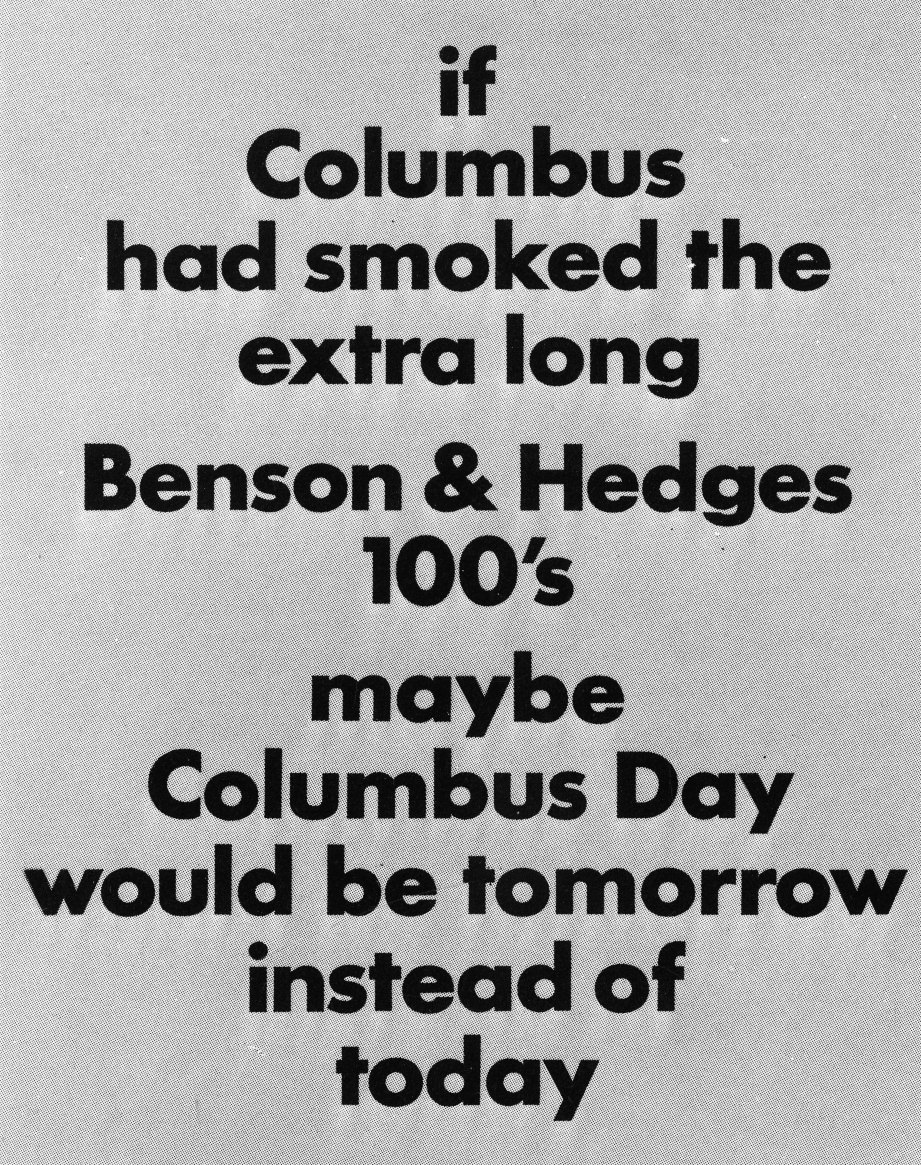
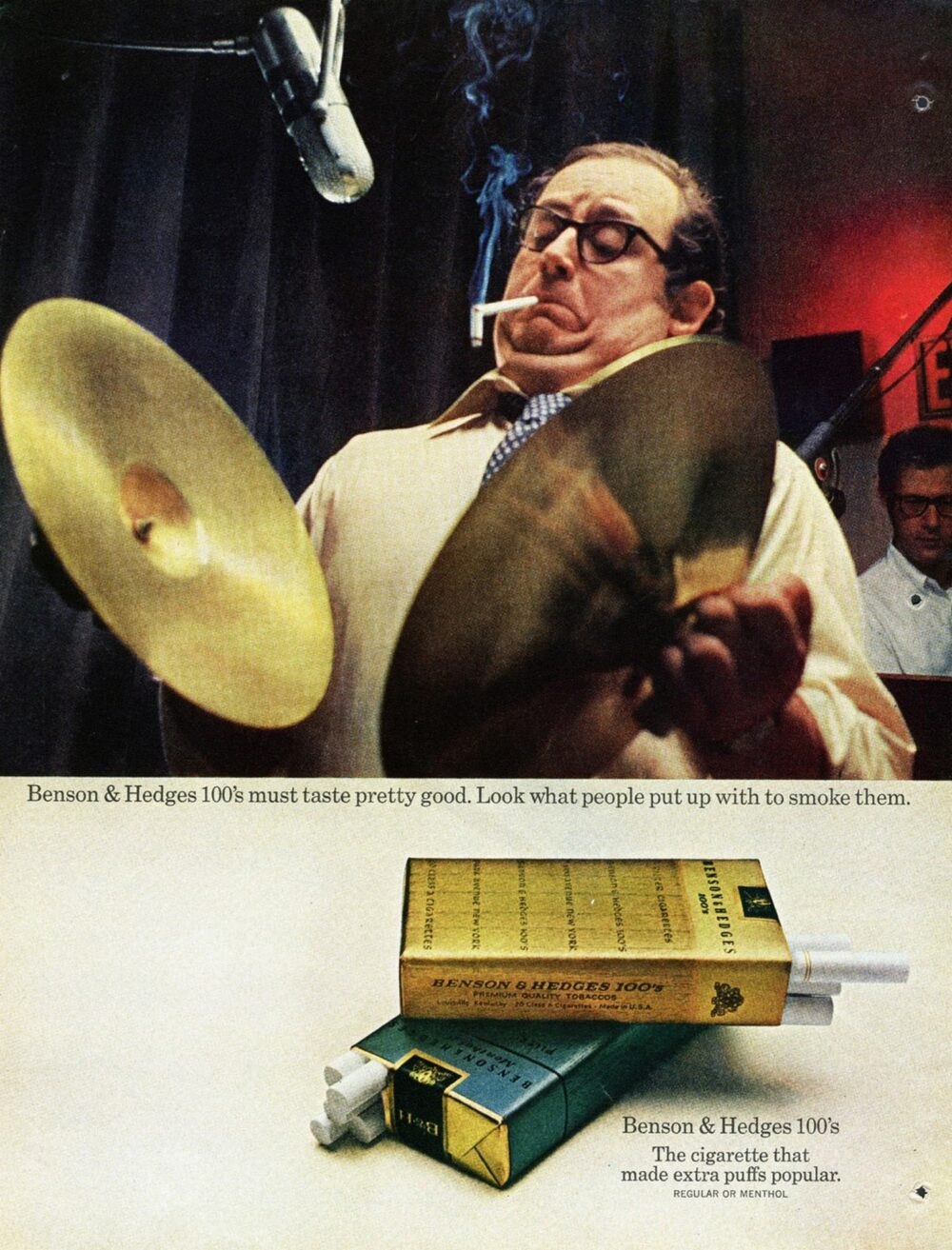
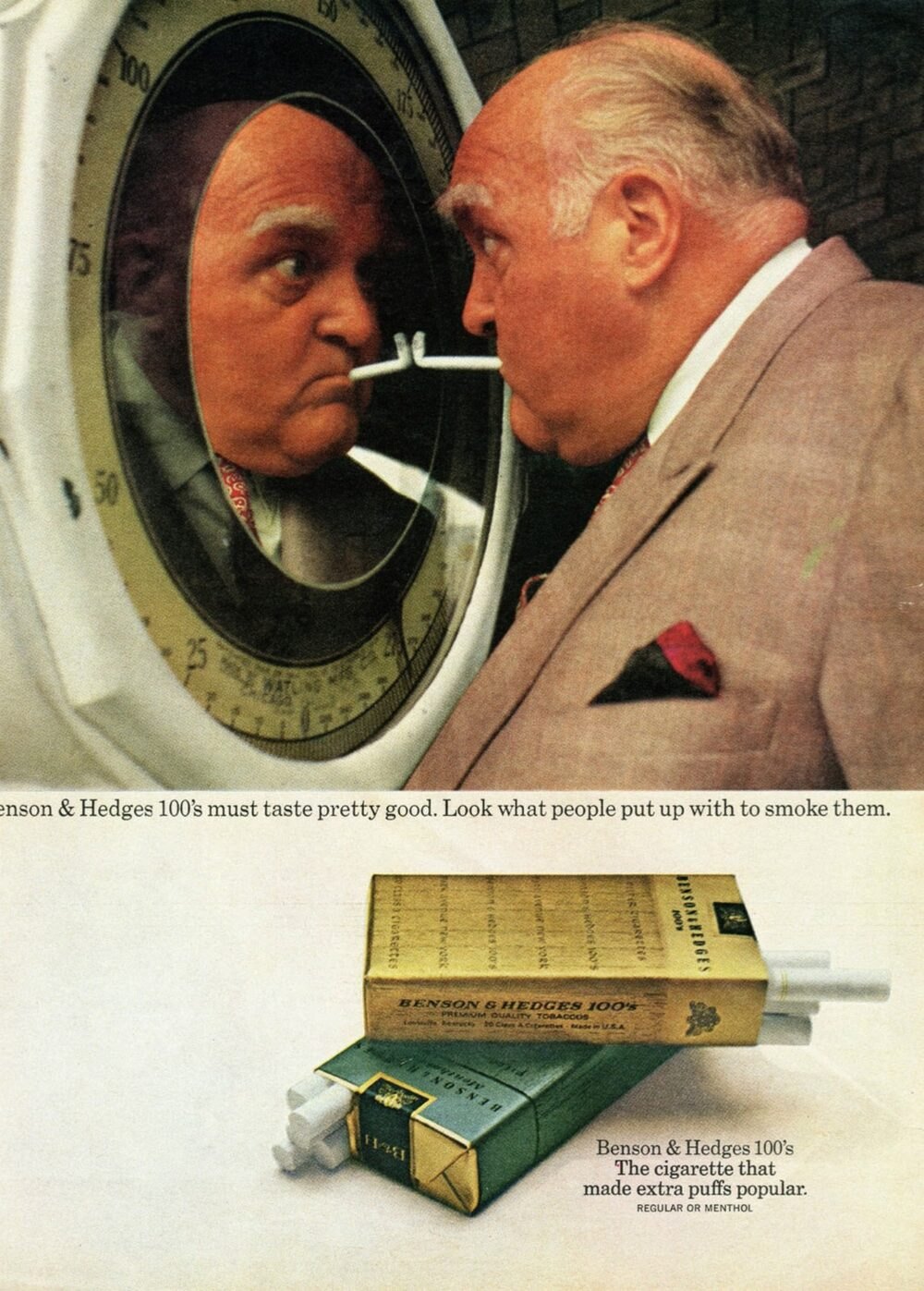
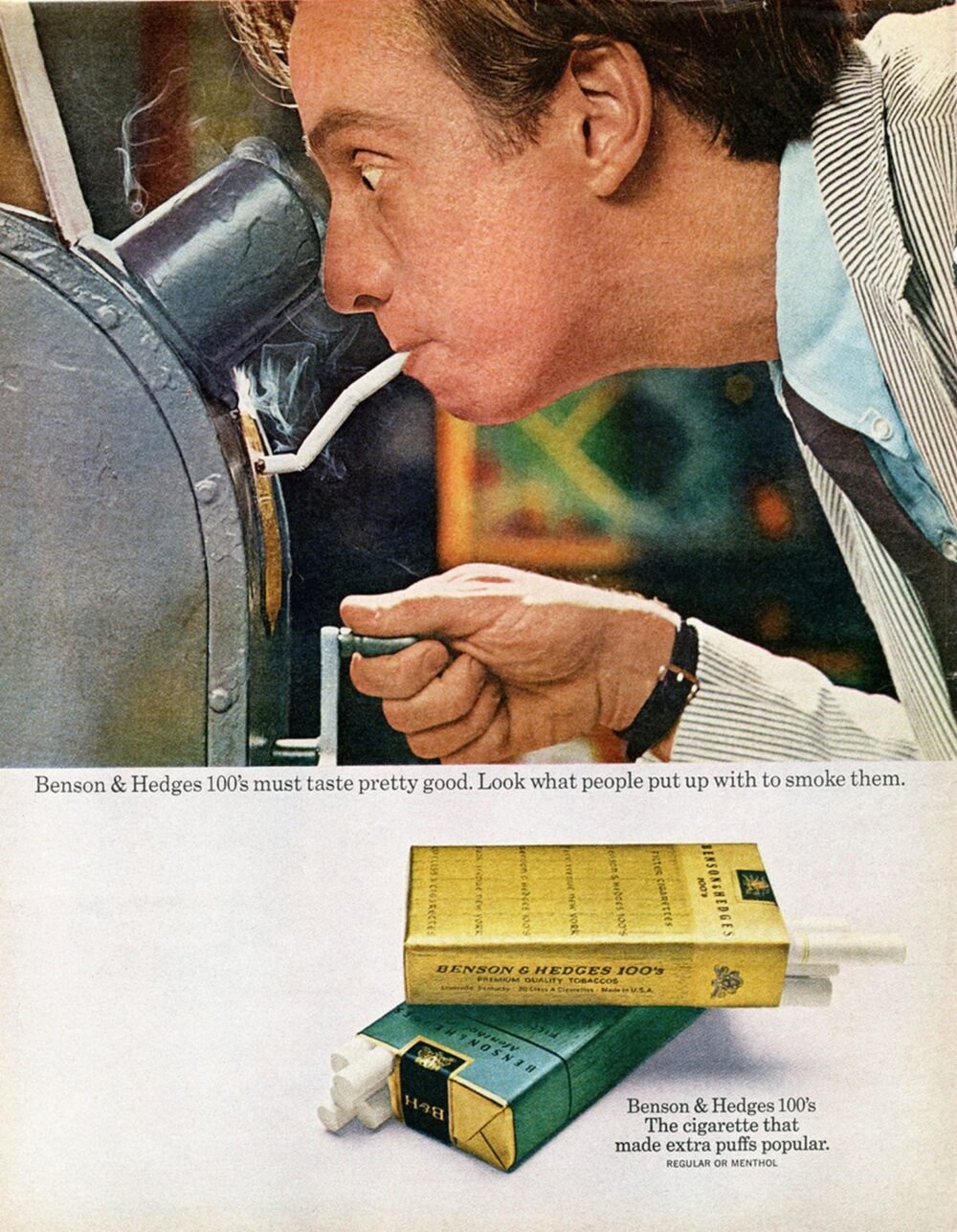
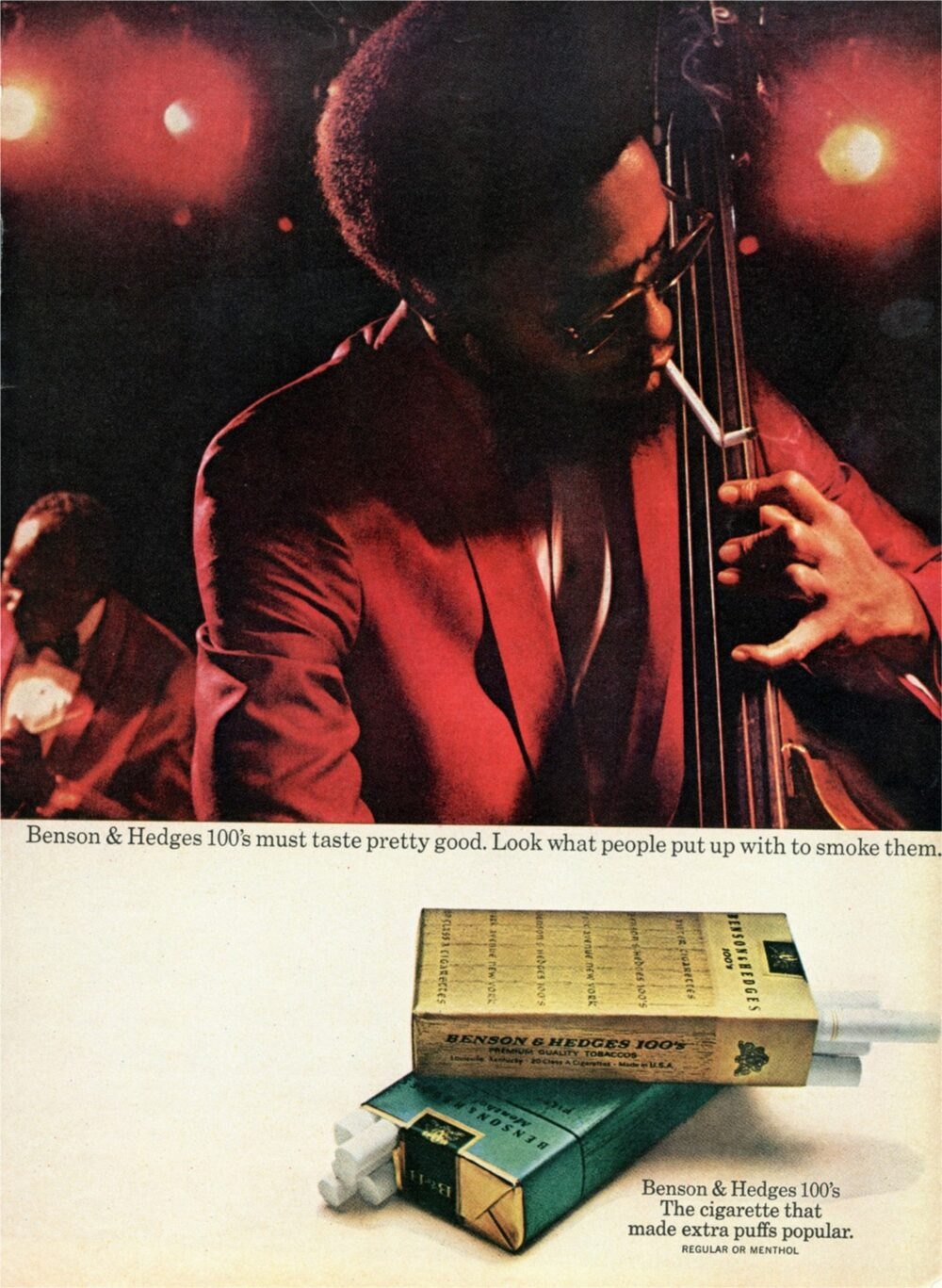
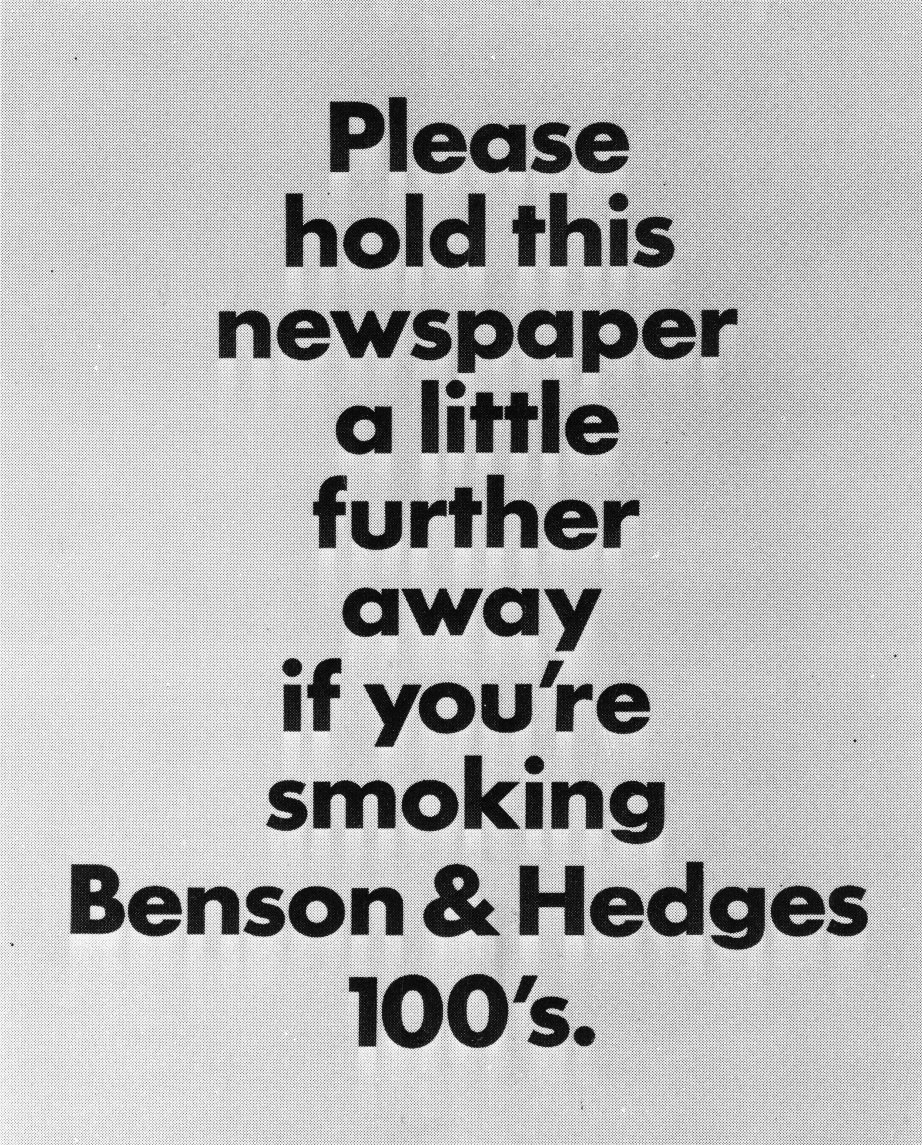
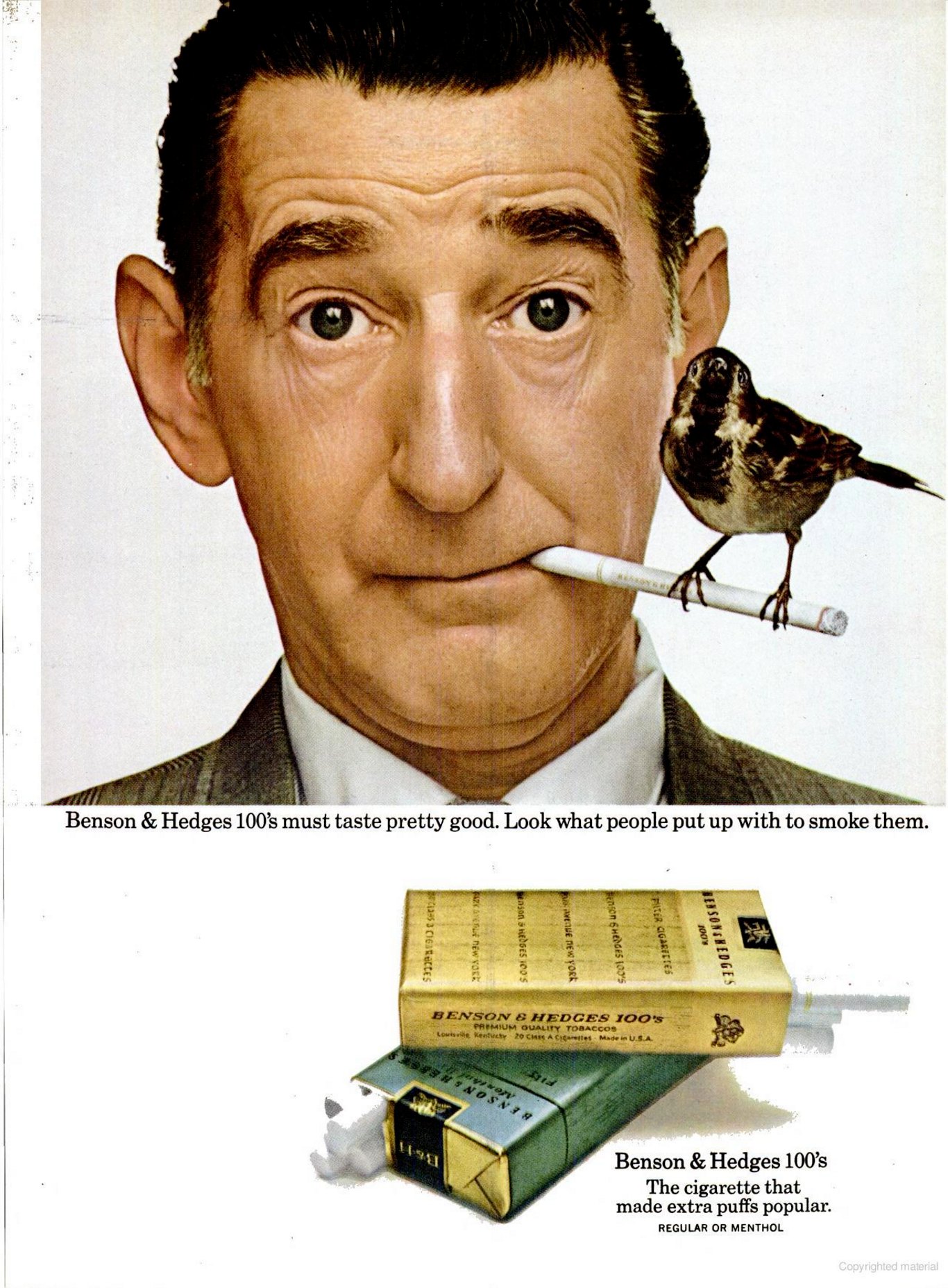
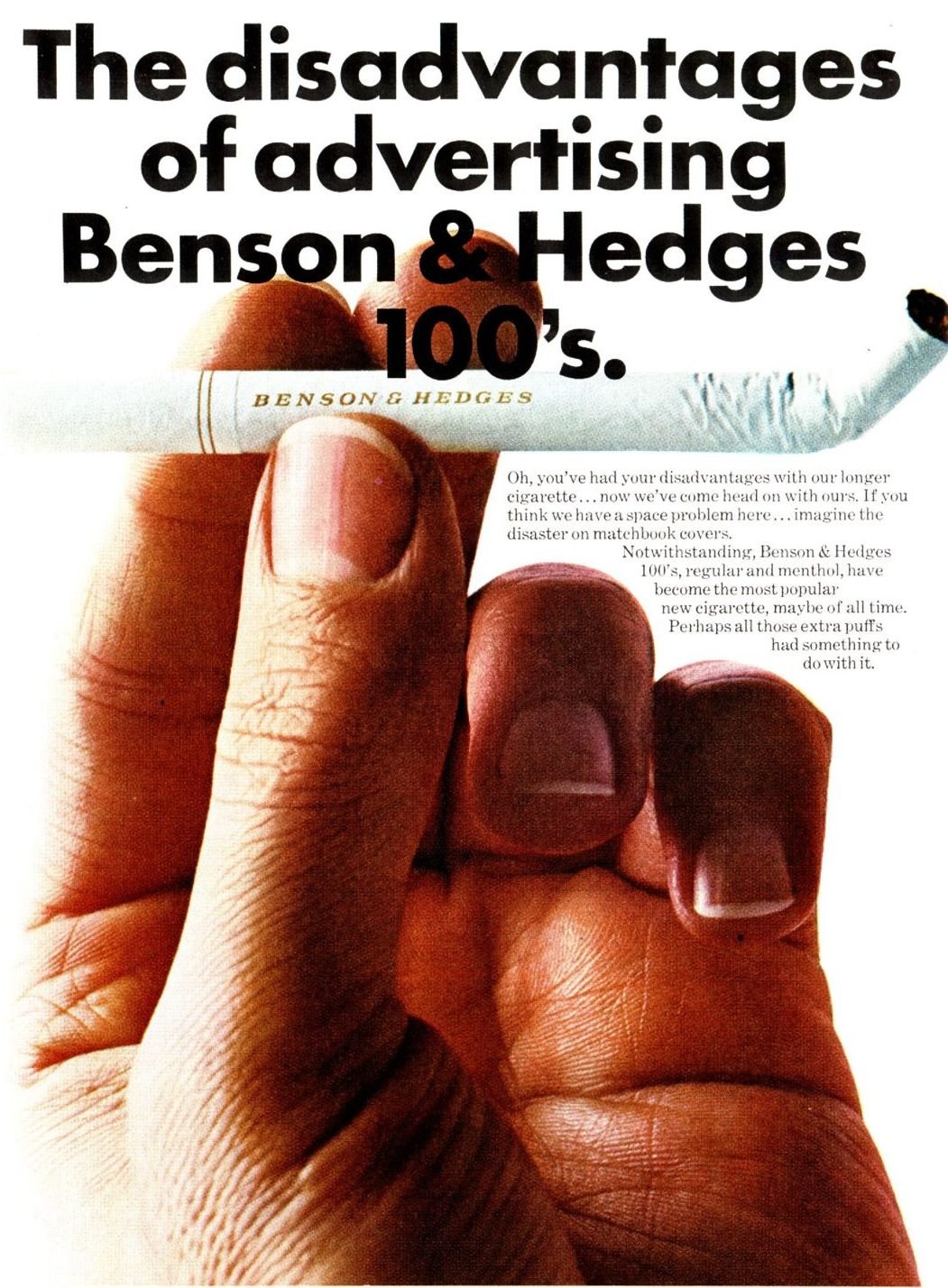
Mary Wells, Dick Rich and Stewart Greene turned the length into a running joke. The commercials opened with "Oh, the disadvantages of the new Benson & Hedges 100s" and showed smokers caught out by their cigarettes: one trapped in closing elevator doors, one bursting a balloon, one setting fire to a man's beard, a driver who turns his head and hits his cigarette on a closed car window. Each gag repeats the product's one claim without stating it.
The print ads carried the same idea onto magazine pages and kept running after cigarette commercials left television in 1971. One count puts sales at about 1 billion cigarettes in 1966 and 14 billion in 1970; the World Advertising Research Center records an increase of more than tenfold.
The work.
Film
Same shape of problem.
More from Benson & Hedges.
Every Benson & Hedgescampaign →The brand sold its longer cigarette by showing everything that went wrong with it.
Back to the archive →