Pepsi-Cola · Batten, Barton, Durstine & Osborn
The Pepsi Generation
A brand losing on price stopped describing the drink and started describing the drinker.
The era.
The United States at the start of the 1960s was richer and younger than it had ever been. The children born in the years after the Second World War were reaching their teens in numbers no consumer market had seen before. Incomes were rising, the suburbs were still filling, and the self-service supermarket had replaced the grocer's counter as the place where a brand was won or lost. Television stood in the corner of almost every living room, and a national advertiser could reach most of the country in a single evening.
Soft drinks were a mature business built on local franchise bottlers. The bottler owned the territory, the trucks, the coolers and the relationships with grocers, so a national campaign had to work twice: once on the public, and once on the bottlers who paid for a share of it. Coca-Cola held the ground and had held it for decades. Its advertising spoke in a steady, small-town register about refreshment and good company, and it had the shelf space, the signage and the fountain accounts to make that voice sound like the natural order of things.
Pepsi-Cola had grown fast through the 1950s under Alfred Steele, who arrived from Coca-Cola in 1949 and set about raising the brand's standing. He thinned the syrup, cut the sugar, financed bottlers' trucks and equipment, pushed vending machines and expanded abroad. Net earnings more than tripled between 1950 and 1959, a record the company said was unequalled in the industry. Steele died in 1959. Herbert Barnet became chairman, Donald Kendall was running international operations and would take the chief executive's chair in 1963, and the company moved into a new modernist headquarters on Park Avenue in New York in 1960.
The culture.
The word teenager was barely twenty years old and the people it described had money of their own for the first time. They bought records, clothes, film tickets and soft drinks, and they bought them without asking a parent first. Advertisers had always sold to households, and here was a group inside the household with its own taste, its own music and its own reasons for choosing one thing over another. No mass-market brand had yet been built on the idea that a buyer's age might be a position rather than a footnote on a media plan.
The political weather helped. A young president took office in 1961 and the public language of the moment prized energy, motion and the new over the settled and the proven. Thinking young was in the air as a general attitude before it was a line in an advertisement. Pepsi-Cola's own look moved with it: a sans-serif wordmark, a redrawn bottle cap, a glass office building by Skidmore, Owings & Merrill.
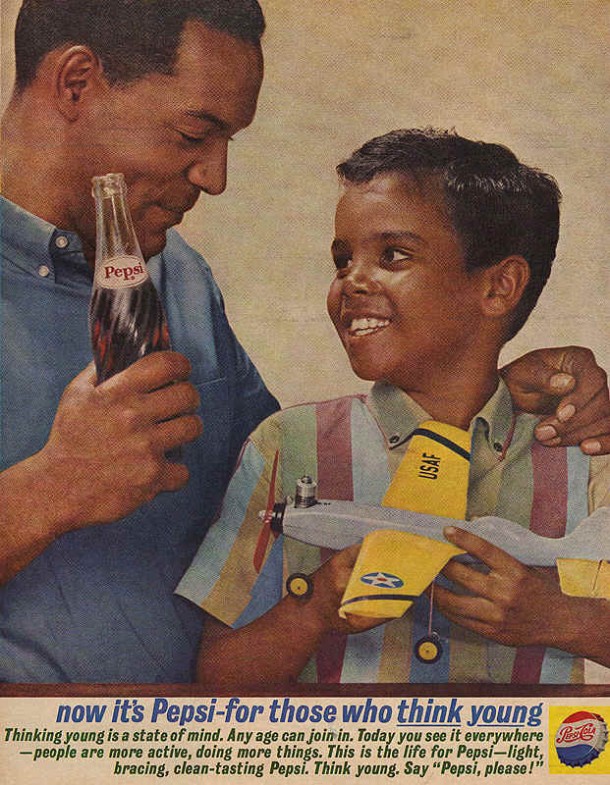
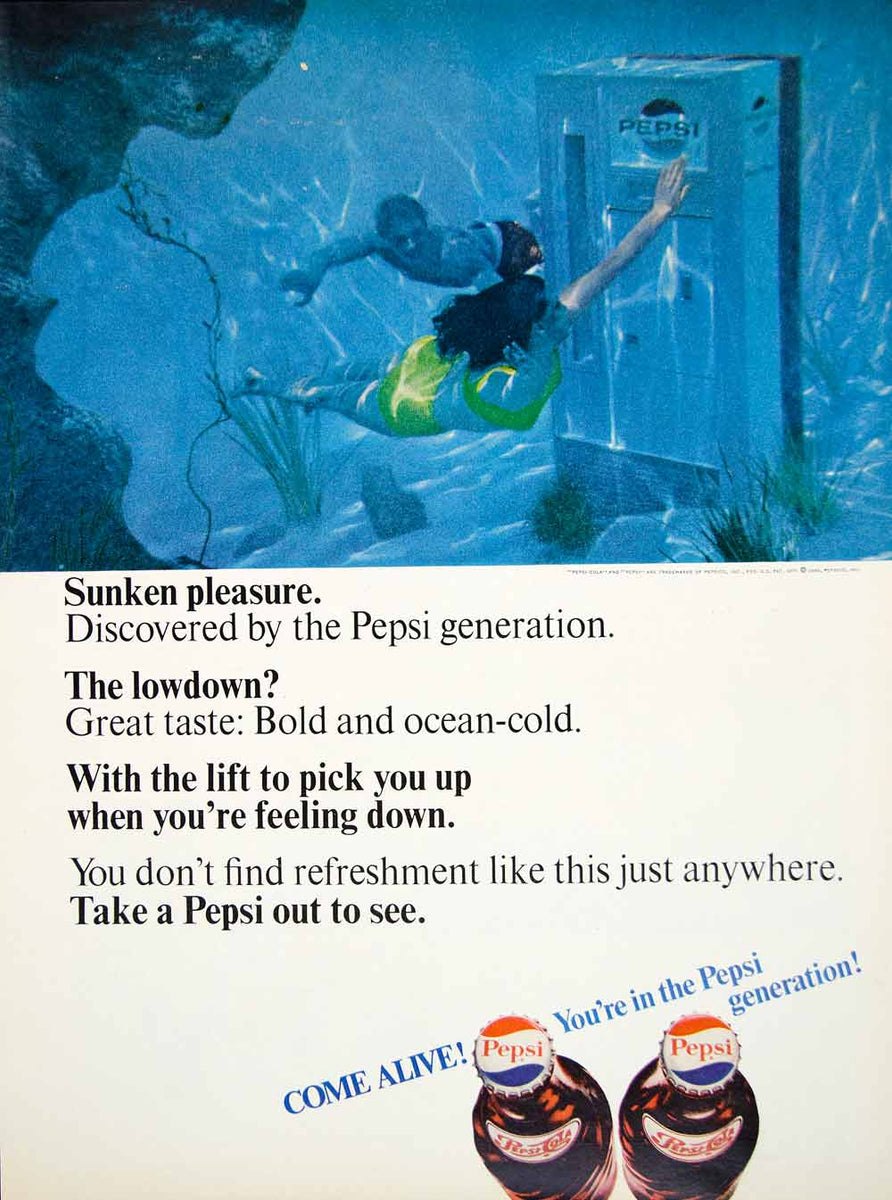
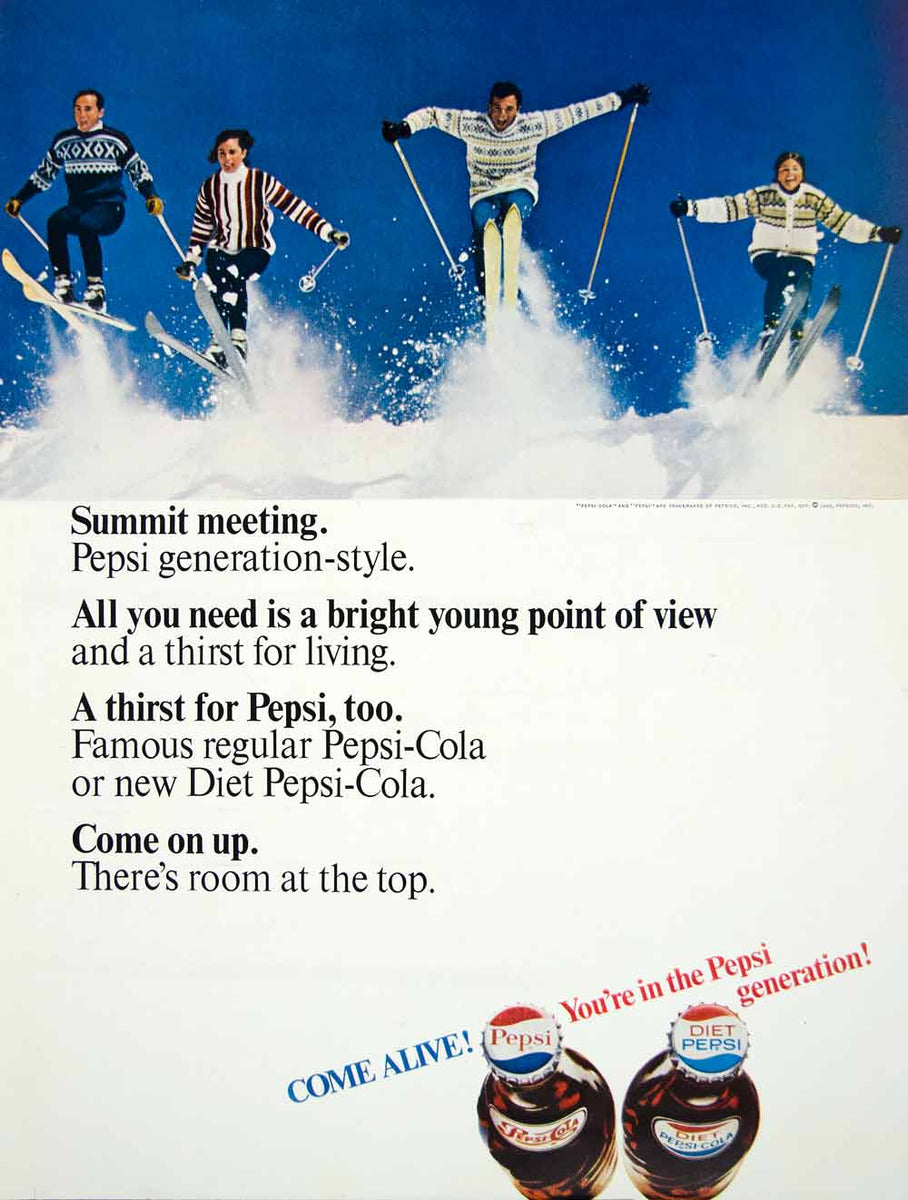
Then the audience changed under the campaign's feet. What began as beach balls, water skis and convertibles turned by about 1966 toward surfers, skiers, climbers and the first signs of the counterculture, and the work followed the audience rather than leading it. One limit belongs in the record plainly: Pepsi-Cola's general-circulation advertising used only white models until 1967, when the company ran an integrated cast in what was described as one of the first national campaigns to do so. Harvey Russell had by then become the first Black officer of a major American multinational, at Pepsi-Cola.
The problem.
Pepsi-Cola had spent thirty years teaching the country that it was the cheap cola, and every attempt to be something else ran straight into the lesson it had taught.
Pepsi-Cola's modern identity had been built on arithmetic. From 1931 it sold twelve ounces for the nickel that bought six ounces of anything else, and the brand said so for a generation: twice as much for a nickel, then more bounce to the ounce. That argument saved the company and then trapped it. A drink chosen because it costs less cannot easily ask to be chosen for any other reason, and it hands the premium ground to whoever declines to compete on price.
Coca-Cola was outselling Pepsi-Cola by better than two to one through the 1950s and owned the territory of taste, refreshment and good company. Alfred Steele had already tried to climb out, dropping twice as much for a nickel as a liability and moving to quality and then to lower calories with The Light Refreshment in 1953. Kenyon & Eckhardt's Be Sociable, Have a Pepsi, from 1958, reached for class and cocktail-party sociability instead. None of it moved the comparison, because all of it still argued about the drink, and on the drink the leader was always going to win.
Alan Pottasch joined Pepsi-Cola in 1957 from Kenyon & Eckhardt, the agency behind Be Sociable, bringing eight years of television production at a New York network with him. Batten, Barton, Durstine & Osborn won the seventeen-million-dollar account in April 1960 against seven other agencies. Pottasch, who worked for Pepsi-Cola rather than for the agency, set the brief: stop selling the drink and name the people who drink it.
The solution.
Stop advertising the cola and start advertising the people drinking it, so the brand is bought as a membership rather than as a better or a cheaper product.
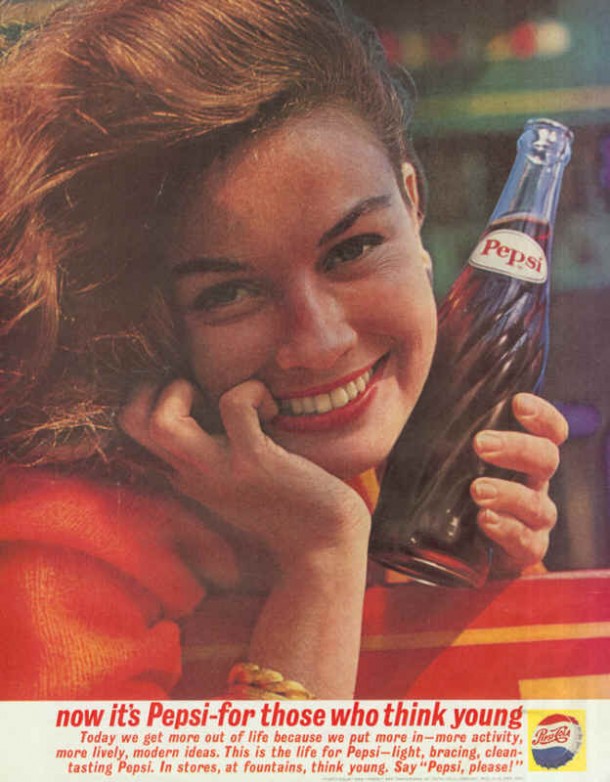
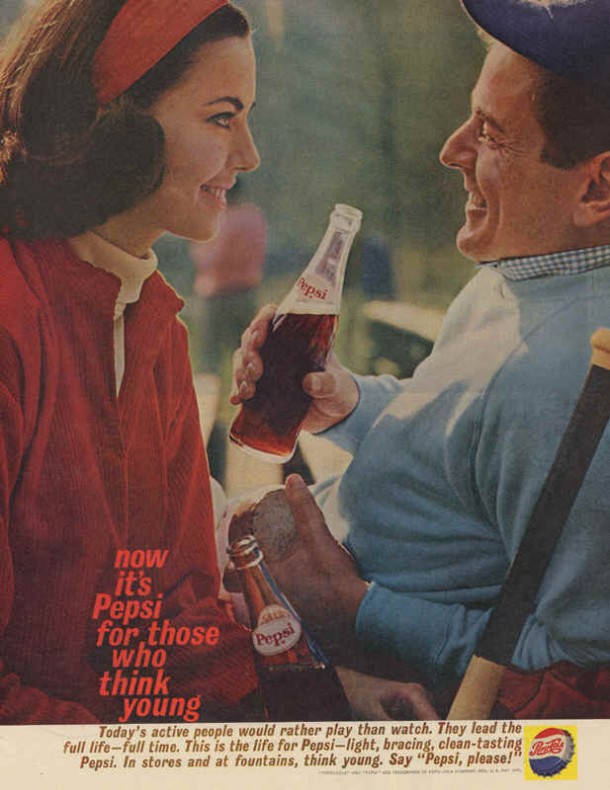
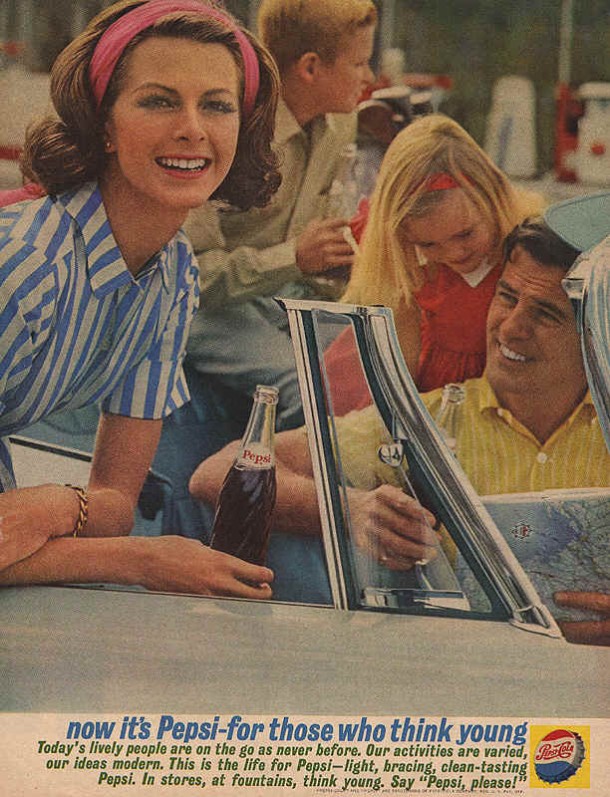
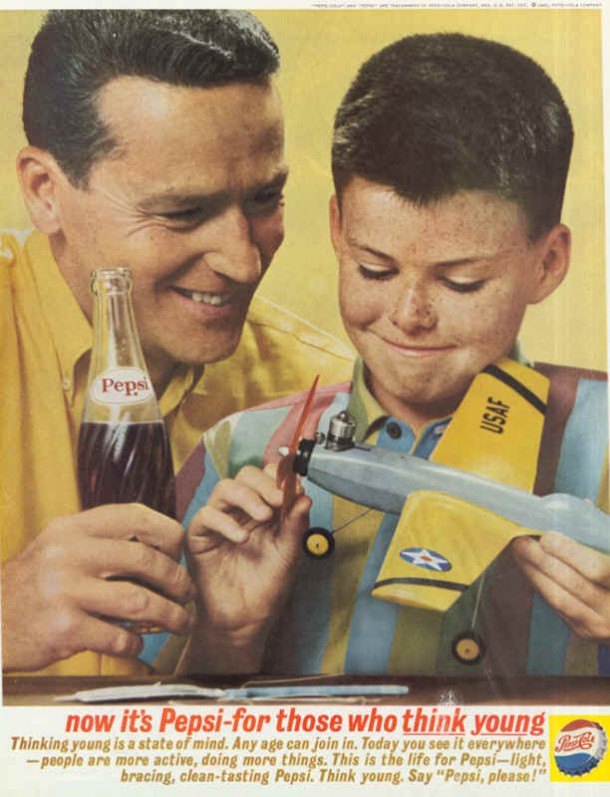
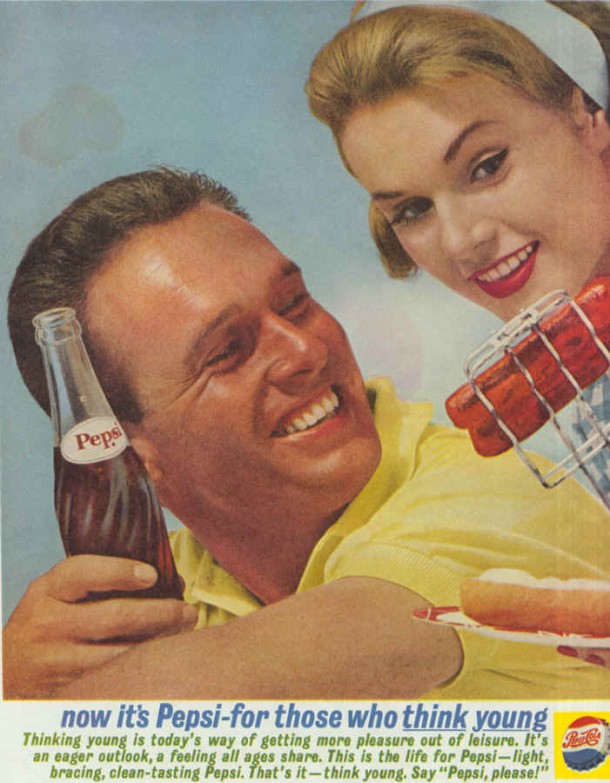
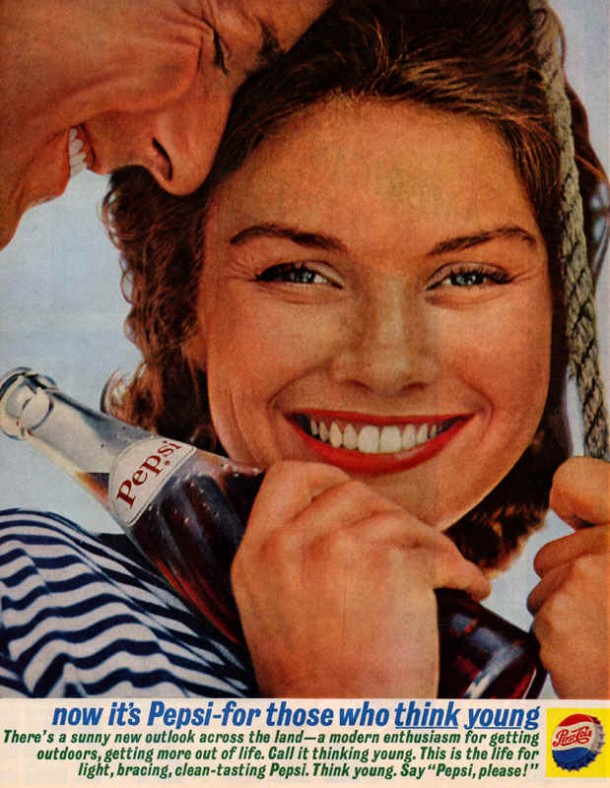
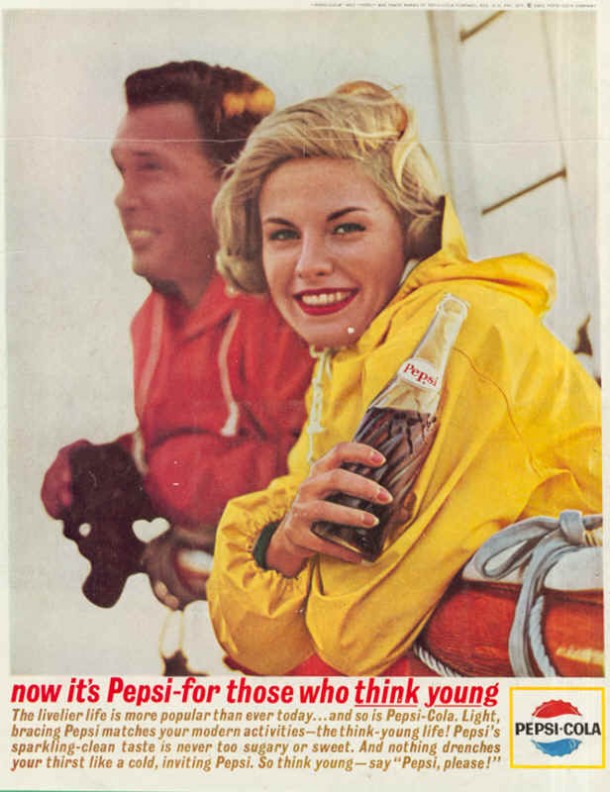
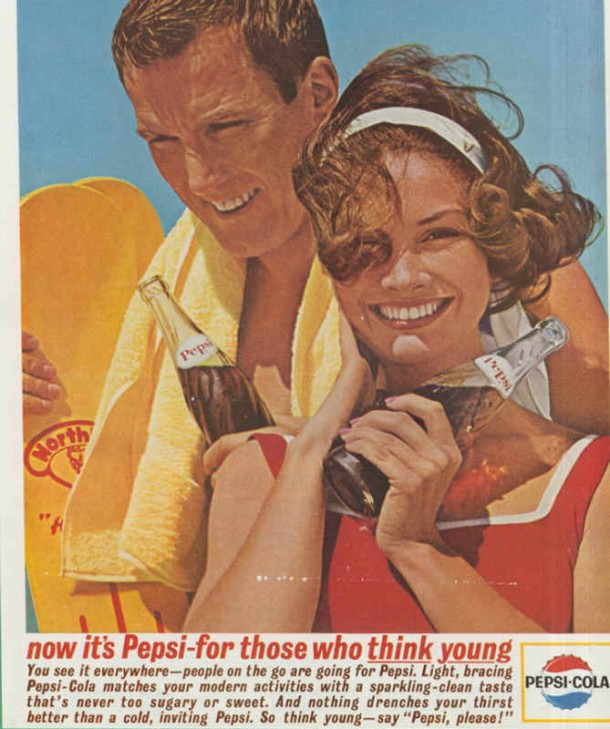
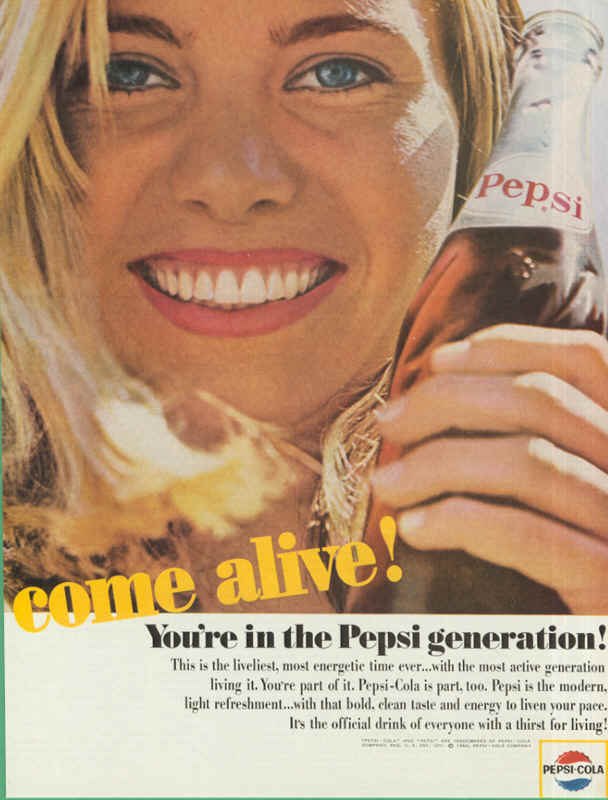
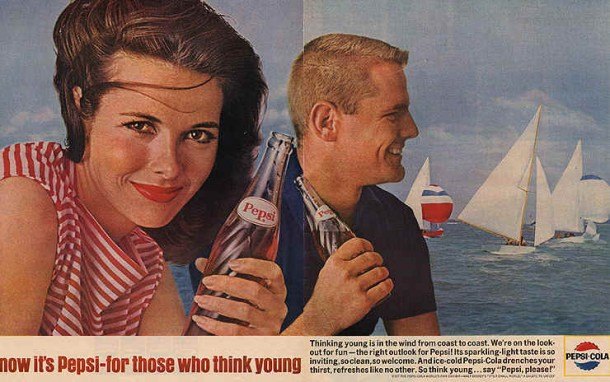
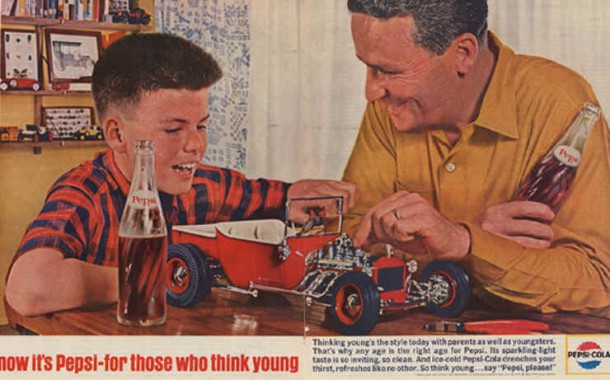
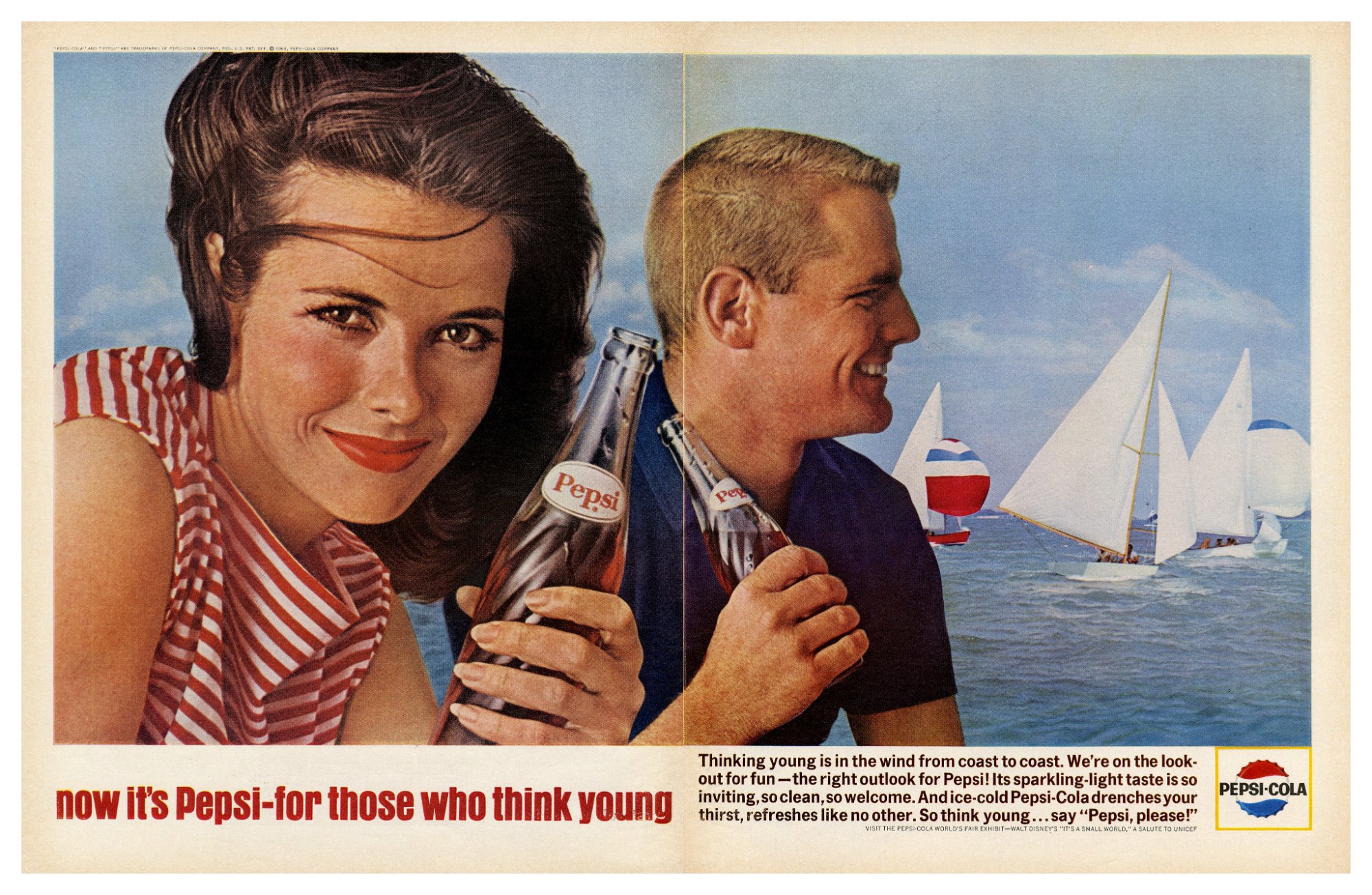
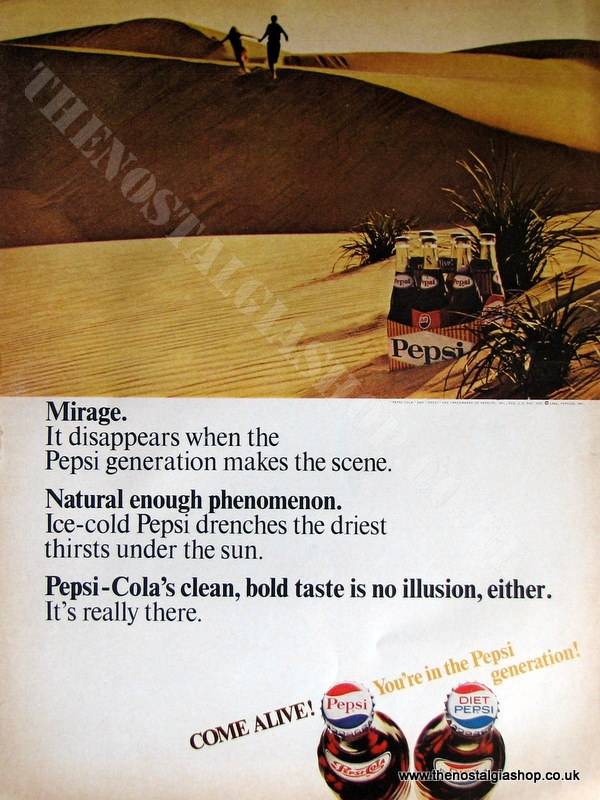
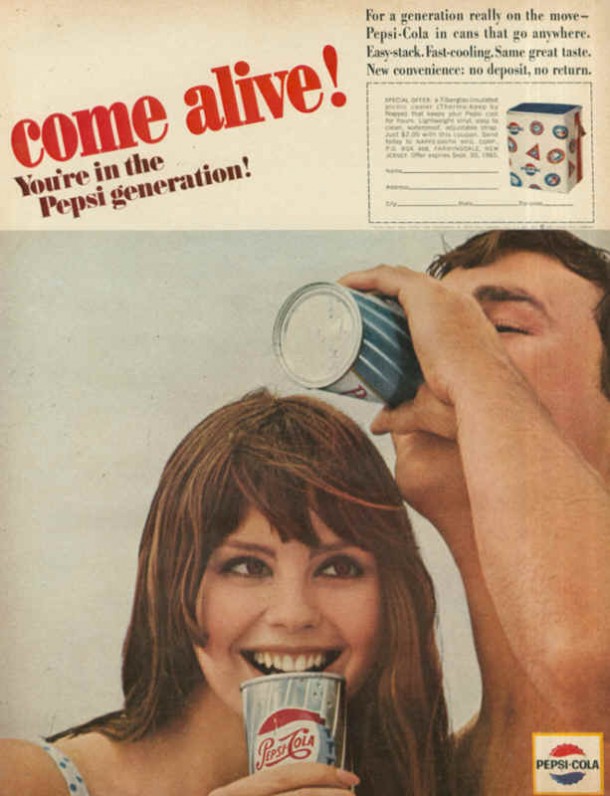
Batten, Barton, Durstine & Osborn won the account on 6 April 1960, in a pitch against seven other agencies, and the work that followed took the argument off the product altogether. Now it's Pepsi, for those who think young put the buyer in the headline and left the drink to be inferred. By 1963 the thought had hardened into a name for the audience: Come alive! You're in the Pepsi Generation! The advertisement stopped telling people what the cola did and told them who they were for drinking it.
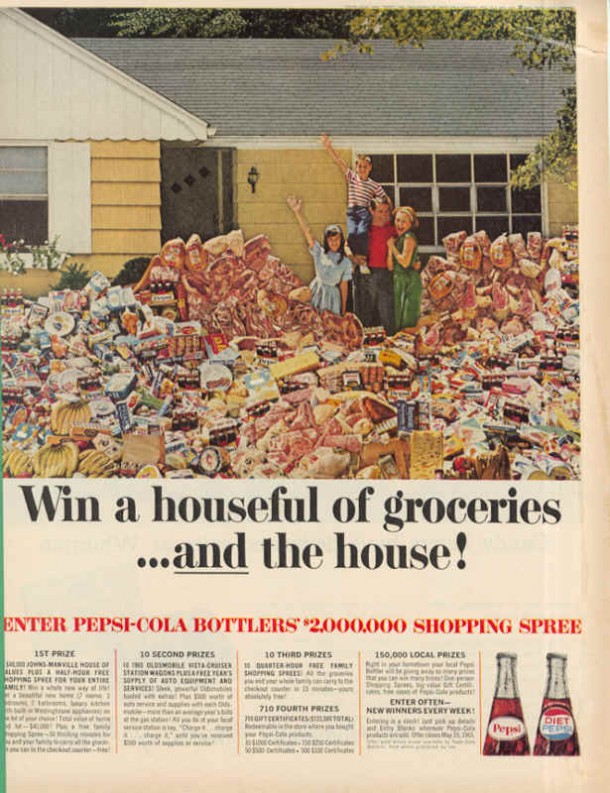
It worked because it refused the axis Pepsi-Cola had been losing on for thirty years. A taste claim invites a comparison the leader wins. A claim about the drinker invites no comparison at all, because the only proof is whether you see yourself in it. Coca-Cola's small-town nostalgia had been an asset and became a liability the moment somebody made age a position, and eight years later the leader had to answer in the same language. The idea also gave the bottlers something to sell: sweepstakes, coolers, cap signs and point-of-sale that carried the same membership argument into the aisle.
The work.
More from Pepsi-Cola.
Every Pepsi-Colacampaign →The company that had sold itself on being cheaper for thirty years stopped talking about the drink and named its customers instead.
Back to the archive →