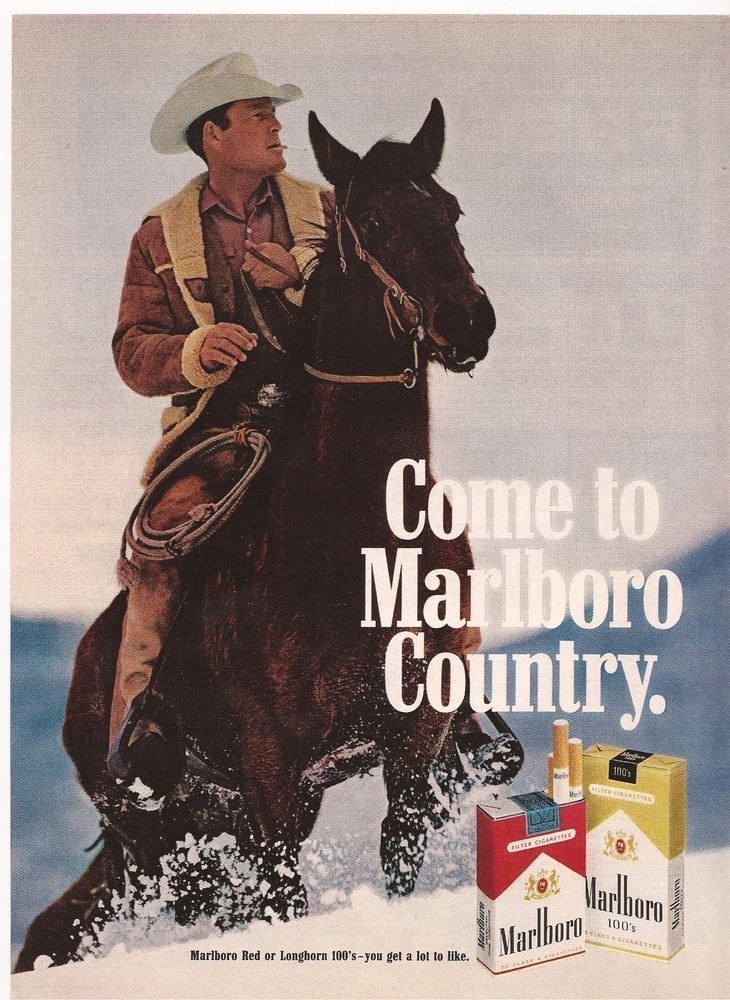
Marlboro Country
The most complete repositioning on record: a cigarette sold to women for thirty years was rebuilt around a single image of the American West, and the image became the brand.
The era.
Philip Morris launched Marlboro in 1924 as a premium cigarette. By the 1930s it was advertised to women with the line "Mild as May," and its paper carried a red "beauty tip" to hide lipstick marks. Before the Second World War it held less than one percent of American cigarette sales.
In the early 1950s research linking smoking to lung cancer reached the popular press. Smokers began moving to filter cigarettes, which were sold as the milder, safer choice. Filters had a problem with men: they were associated with women, and Marlboro already was.
Advertising in the period was moving toward brand image. Leo Burnett, who had opened his agency in Chicago in 1935, built characters that did the selling: the Jolly Green Giant, the Pillsbury Doughboy and Tony the Tiger. His agency believed a simple, repeated picture could carry a brand further than an argument.
The culture.
The cowboy was everywhere in postwar American culture. Westerns filled cinema screens and dominated the early years of network television. The figure stood for independence, open space and a kind of quiet competence that suburban, office-bound America admired from a distance.
Burnett's cowboy is generally traced to a 1949 Life magazine story on a Texas ranch foreman, Clarence Hailey Long. The first Marlboro ads after the change were not all cowboys; they used a range of rugged men, many with a tattoo on the back of the hand. In 1963 the campaign settled on real cowboys, rodeo riders and stuntmen in place of paid models.
Television carried the campaign through the 1960s, set to Elmer Bernstein's theme from The Magnificent Seven. On 2 January 1971 cigarette advertising was taken off American television and radio. From then on the campaign lived in magazines and on billboards, where the photography grew larger and the words fewer.
The problem.
Win men to a brand they already filed as a woman's cigarette, in the one product form they saw as feminine.
In the early 1950s filter cigarettes were the growing part of the market, and Philip Morris wanted one. It chose to use the Marlboro name, which came with thirty years of advertising to women, from 'Mild as May' to the red tip.
The filter itself read as soft to the men Philip Morris most wanted to reach. Market research found that men would consider a filter but did not want to be seen smoking a brand made for women. No claim about flavor or filtration would undo that on its own, and claims about filters drew attention to health worries. The brand needed an image strong enough to replace its whole history.
Philip Morris gave the relaunch of Marlboro as a men's filter cigarette to the Leo Burnett agency in Chicago in 1954. Burnett proposed a series of rugged, masculine figures in place of claims about the filter, beginning with the cowboy.
The solution.
Stop arguing for the product. Give it a place, and show the place until the place is the brand.
In 1954 Philip Morris and the Leo Burnett agency relaunched Marlboro as a filter cigarette in a red-and-white pack by Frank Gianninoto, sold to men through rugged, masculine figures. From 1963 the figure was almost always a working cowboy, and by 1967 the line read "Come to where the flavor is. Come to Marlboro Country." Over time the copy shrank to that line and the photographs grew into wide Western landscapes; Norm Clasen was among the photographers. In 1972 Marlboro became the best-selling cigarette brand in the world. The 1998 Master Settlement Agreement restricted billboard advertising, and the American campaign ended in 1999.
The work.
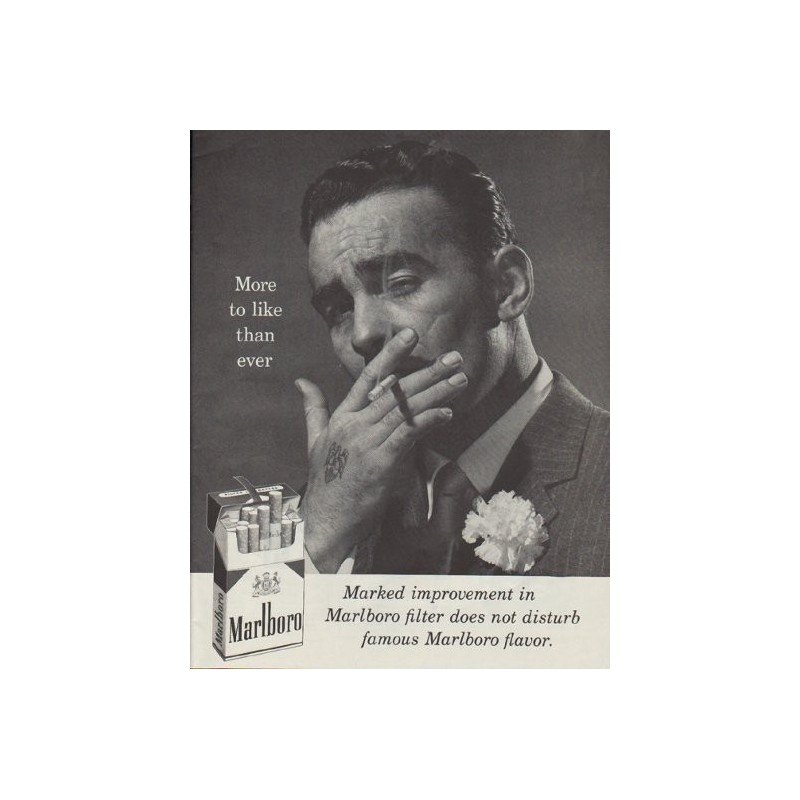
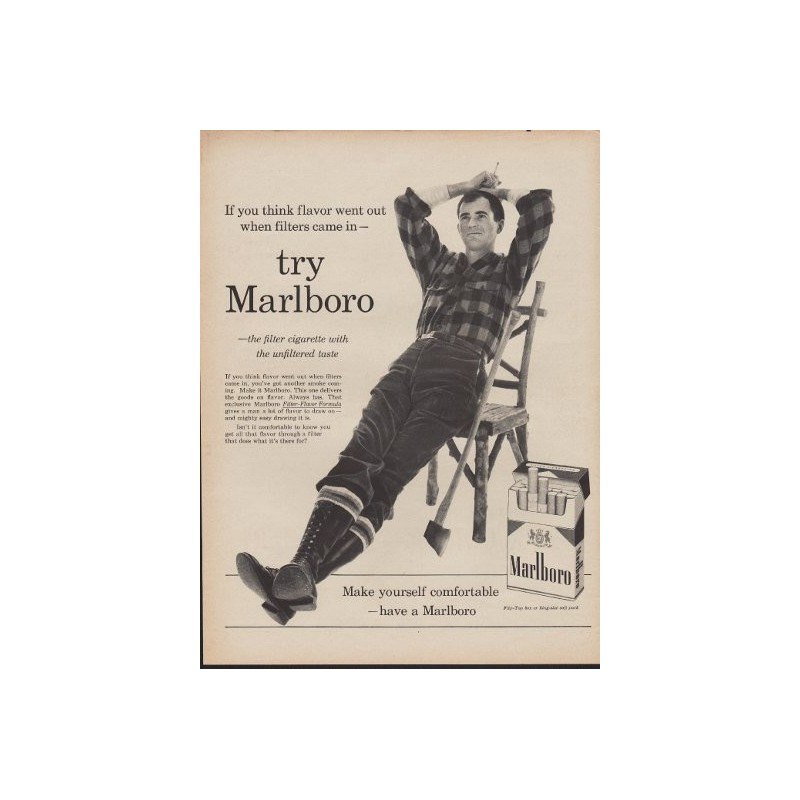
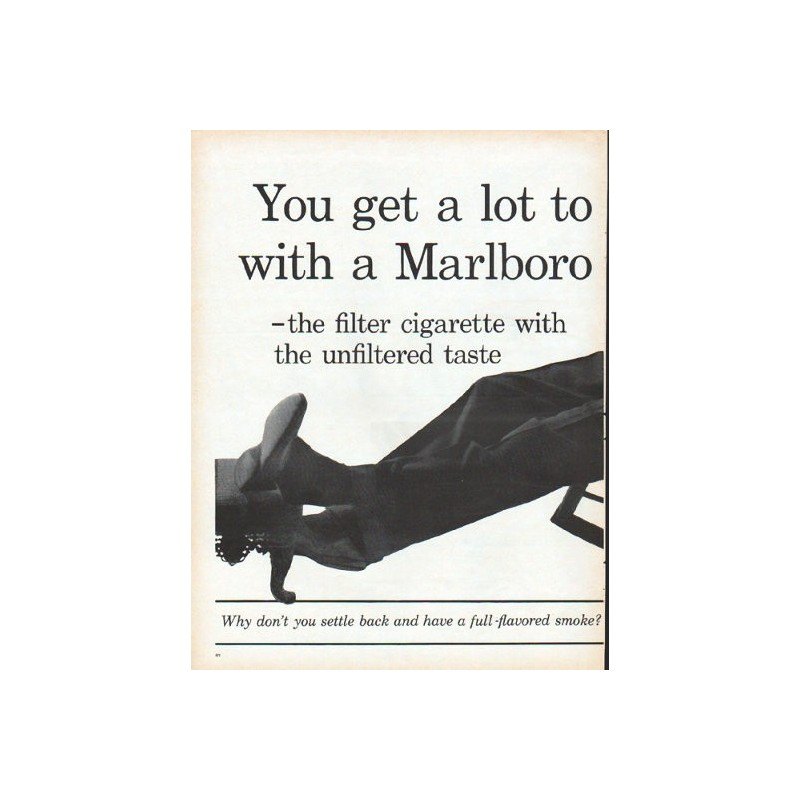
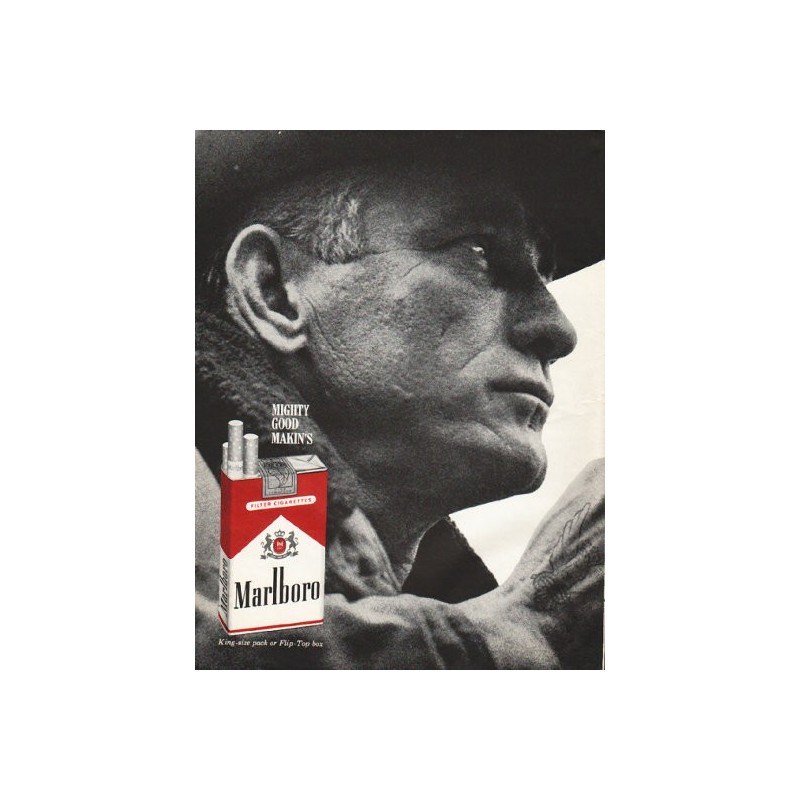
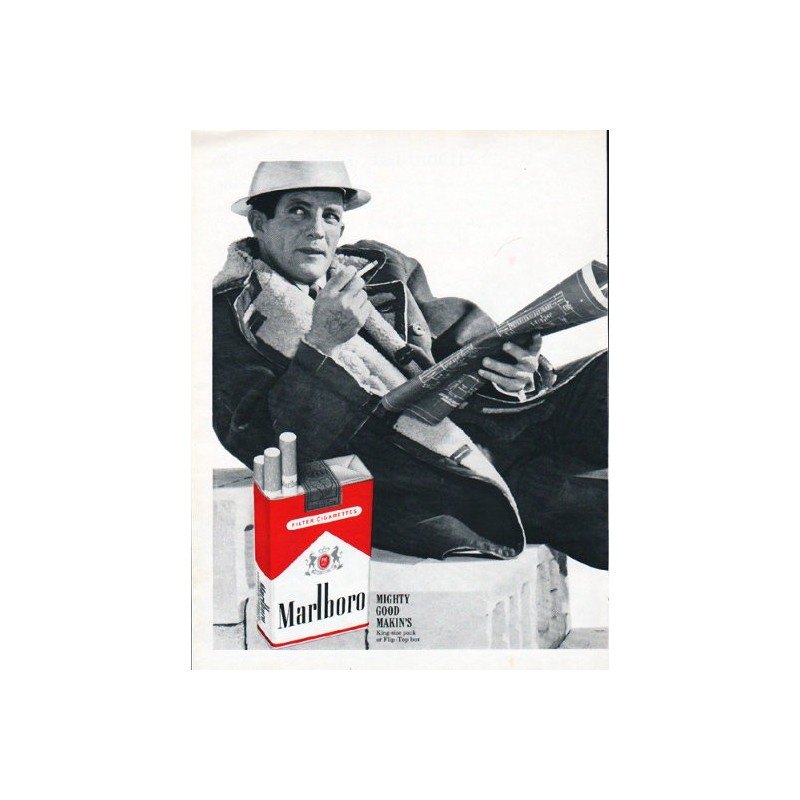
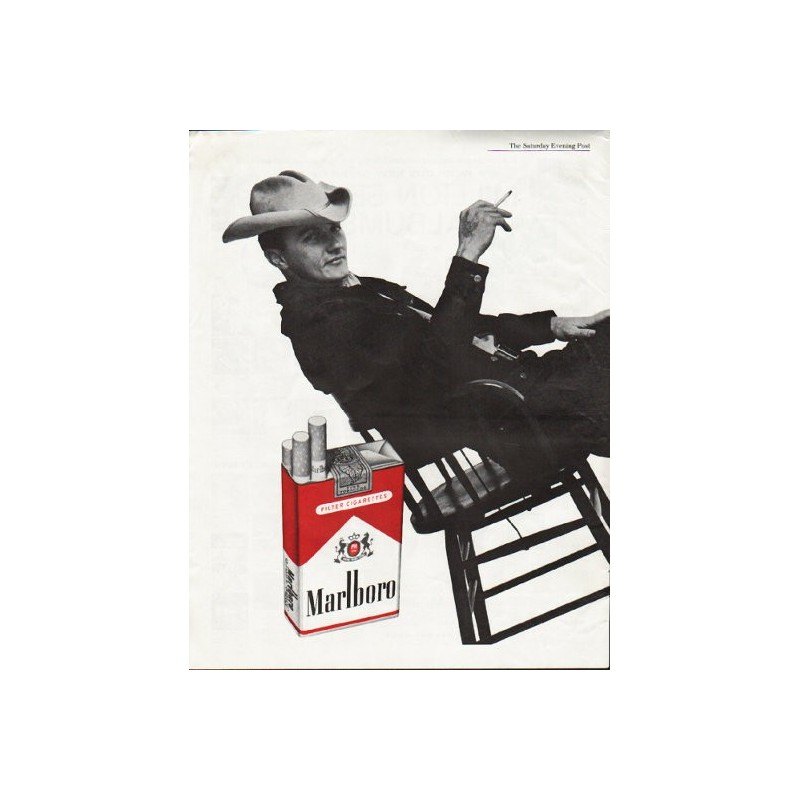
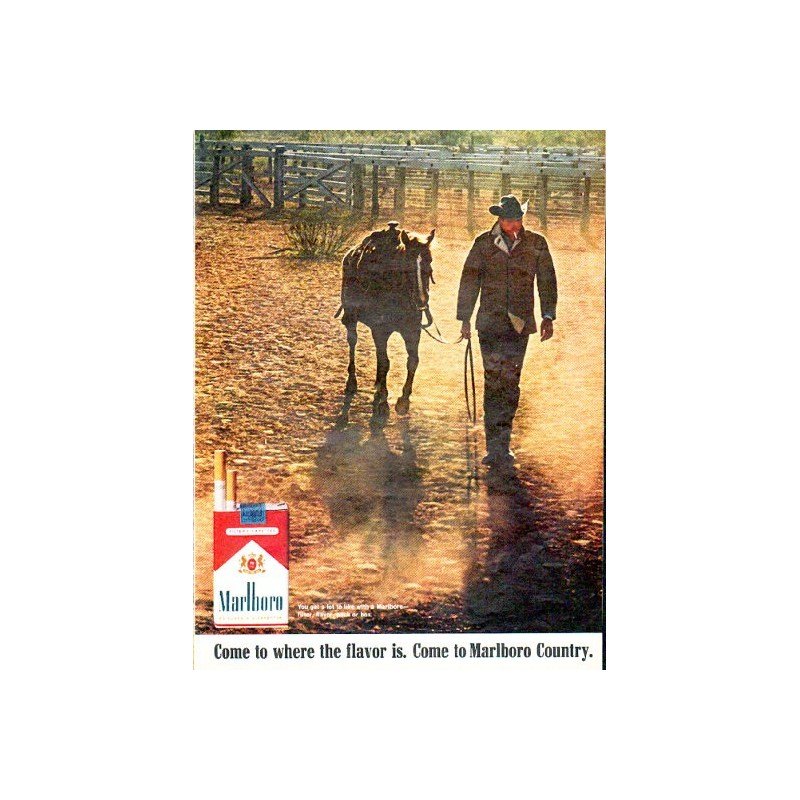
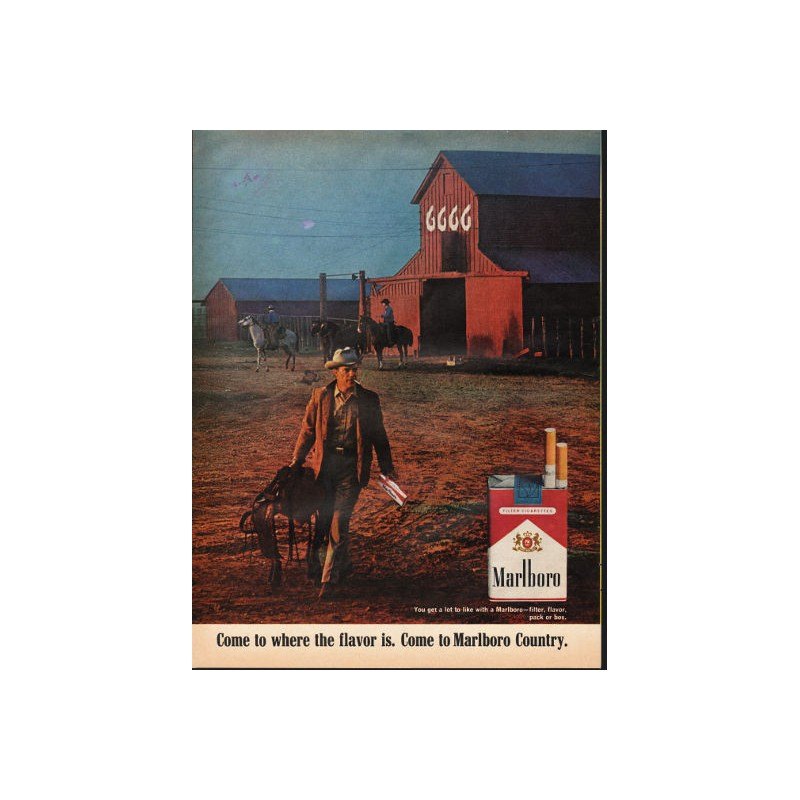
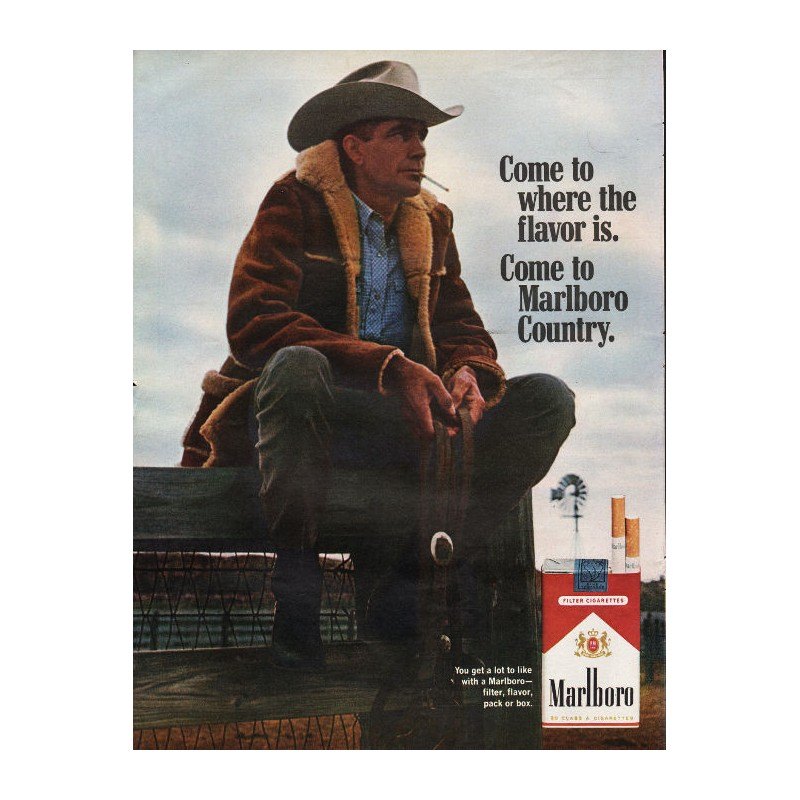
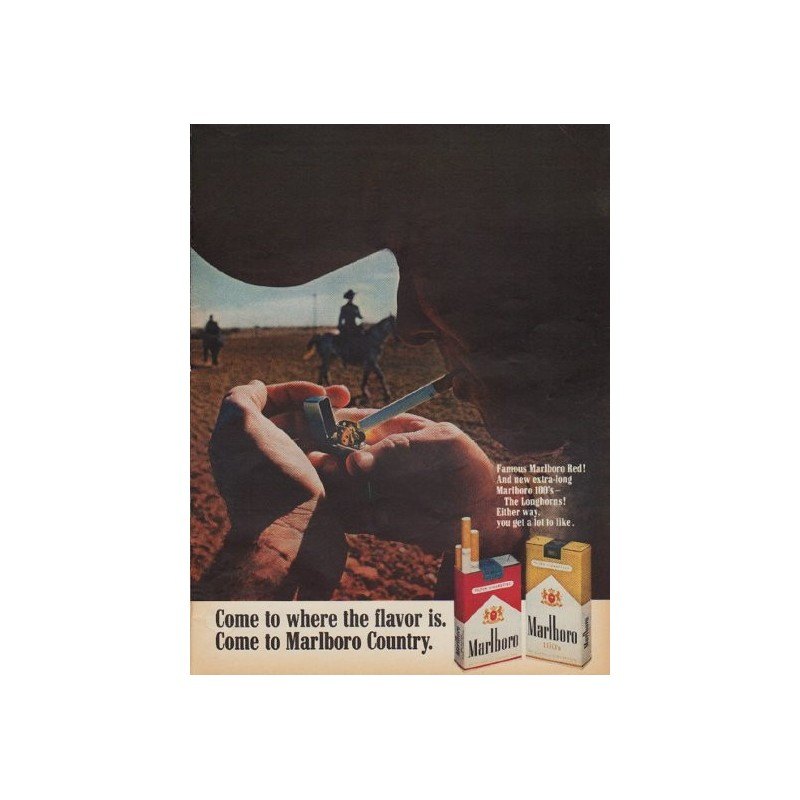
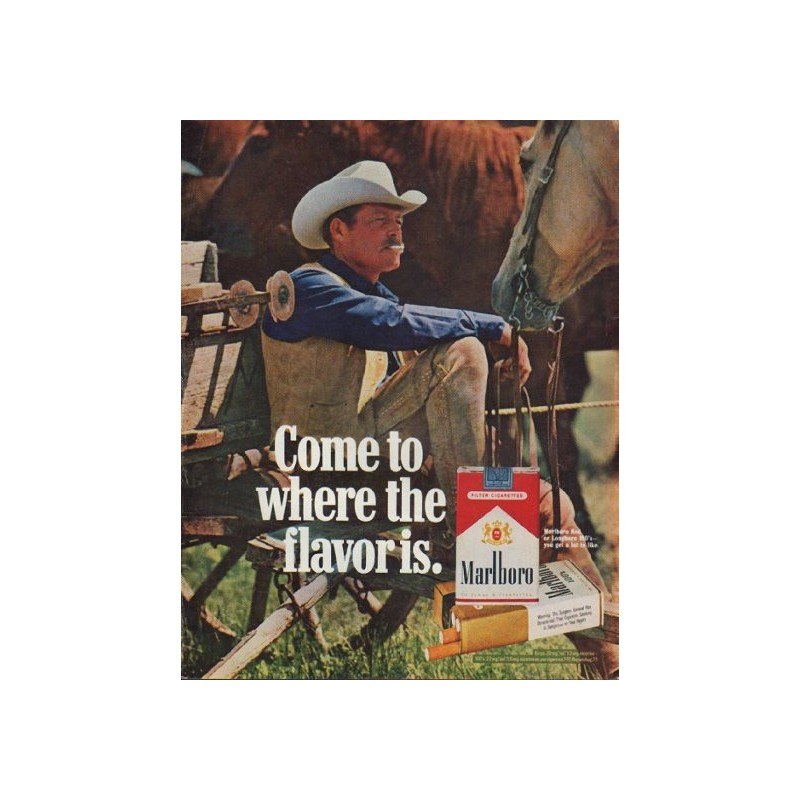
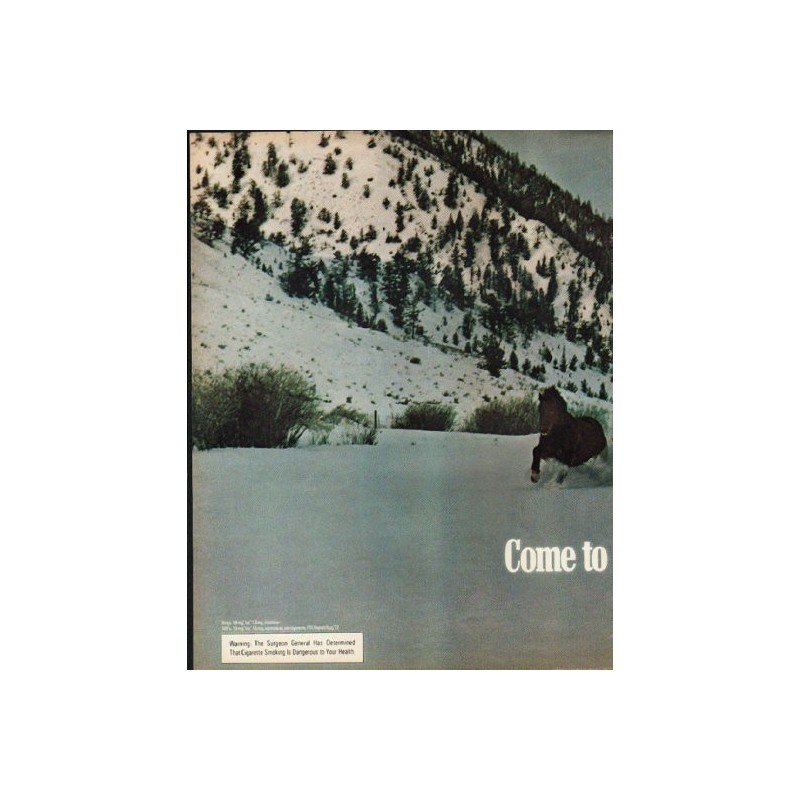
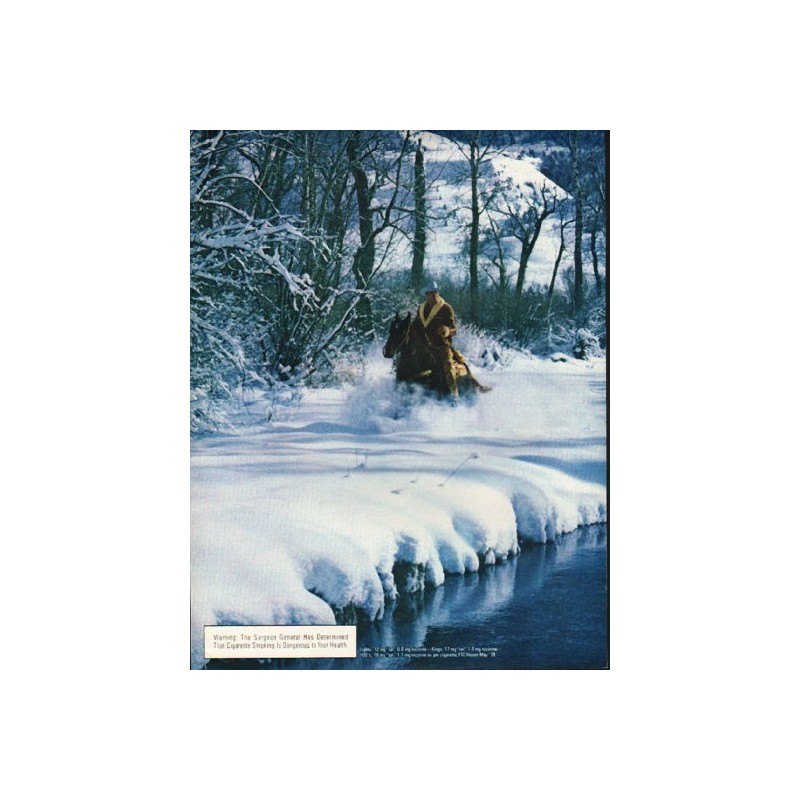
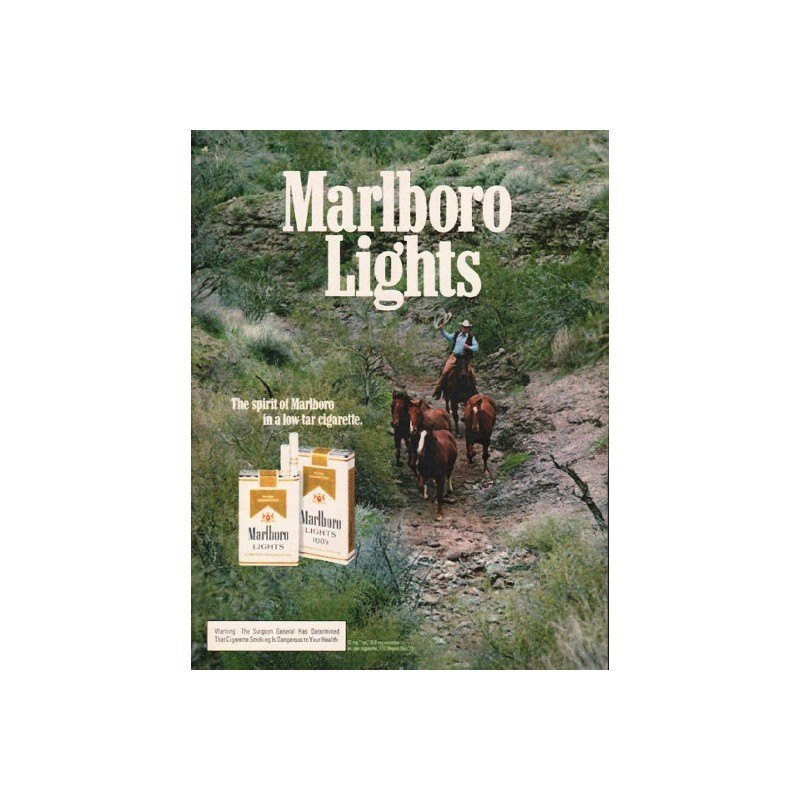
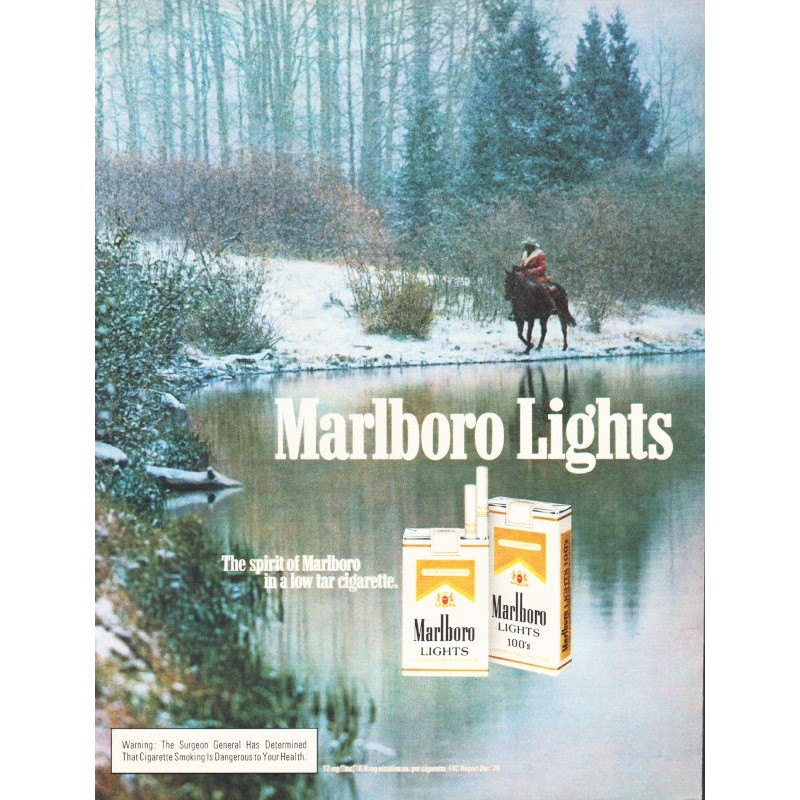
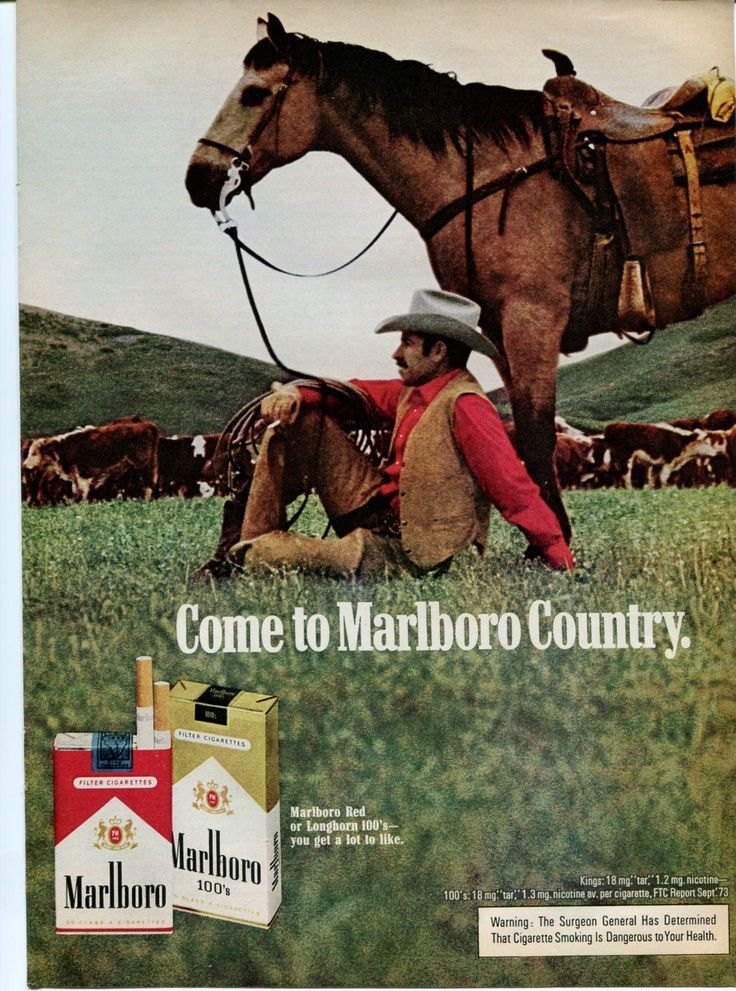
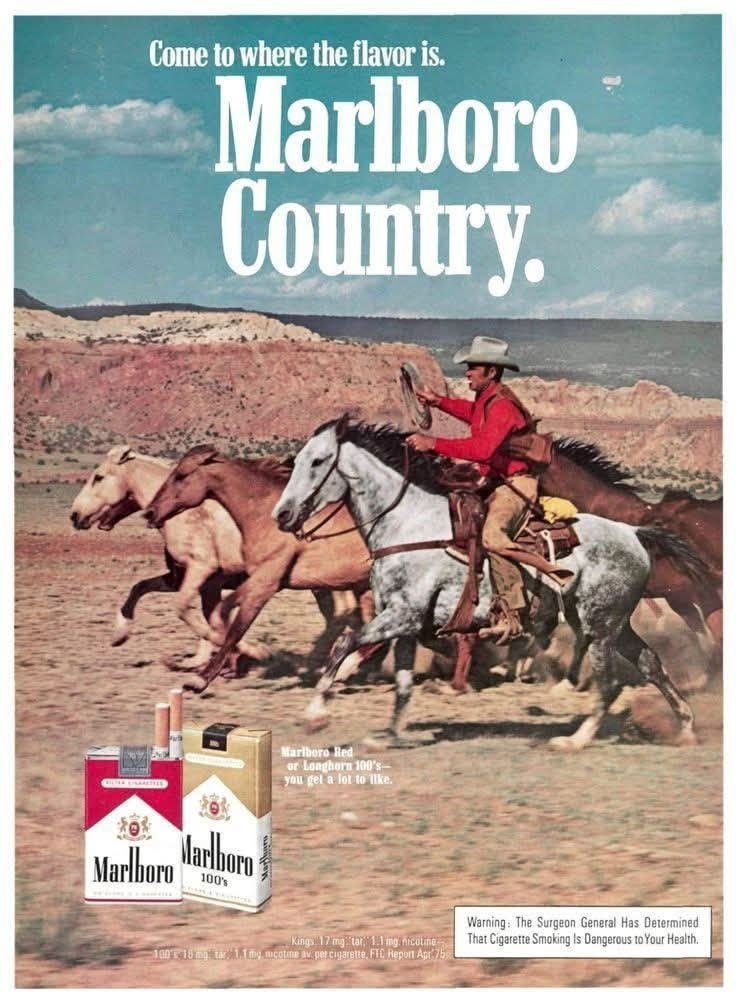
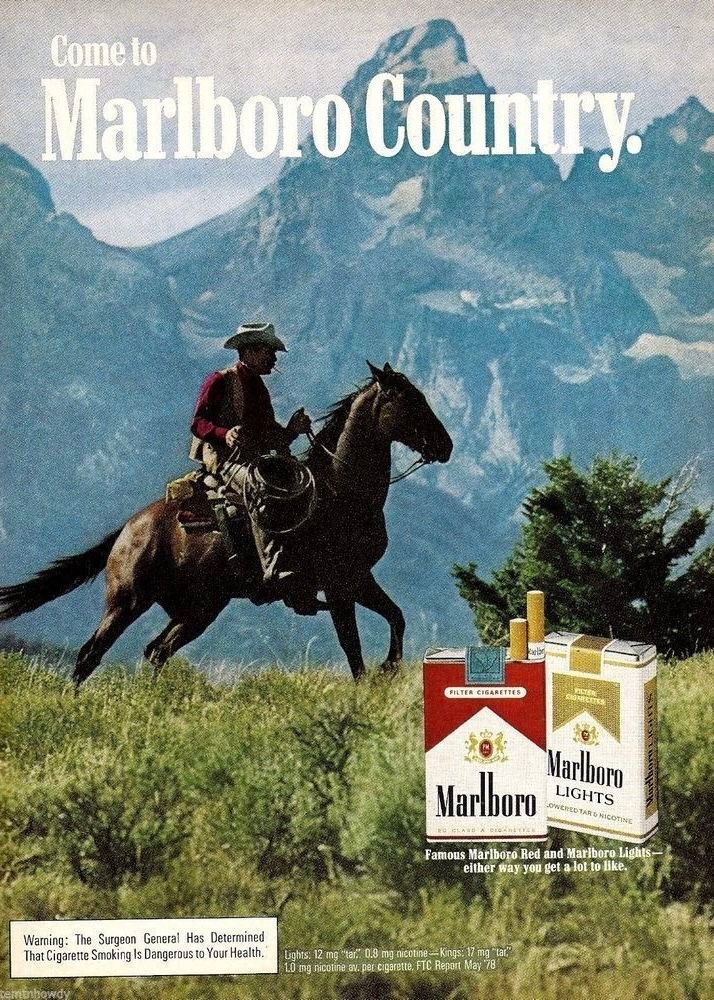
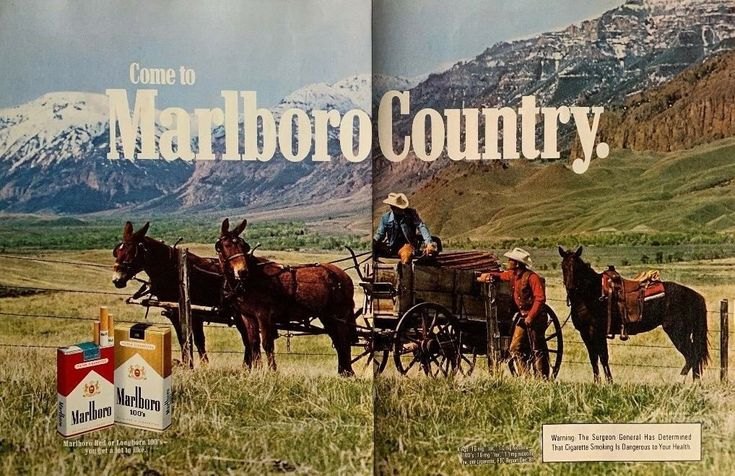
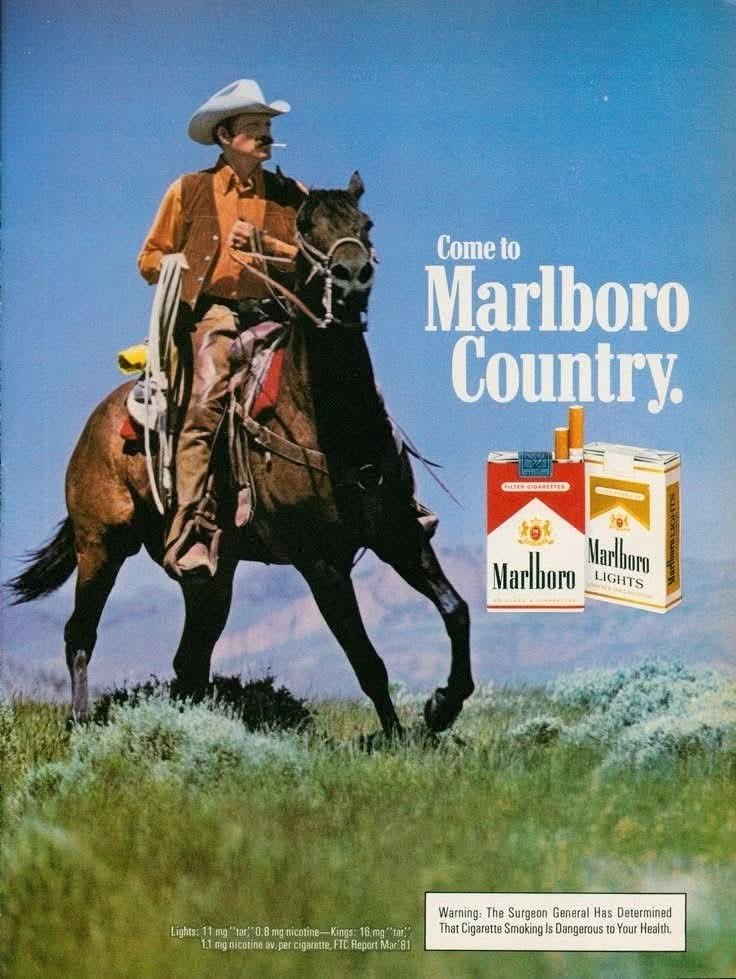
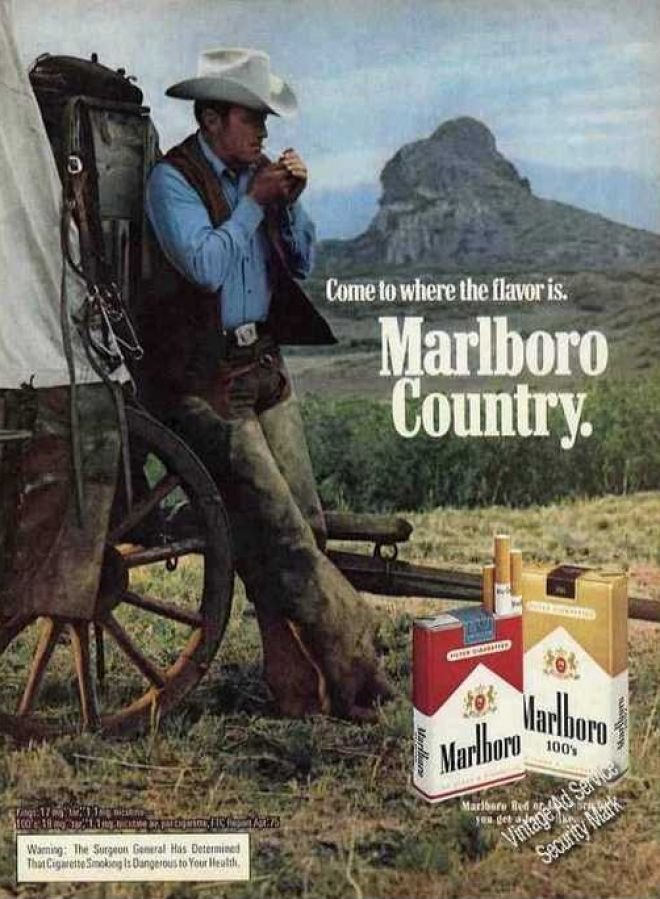
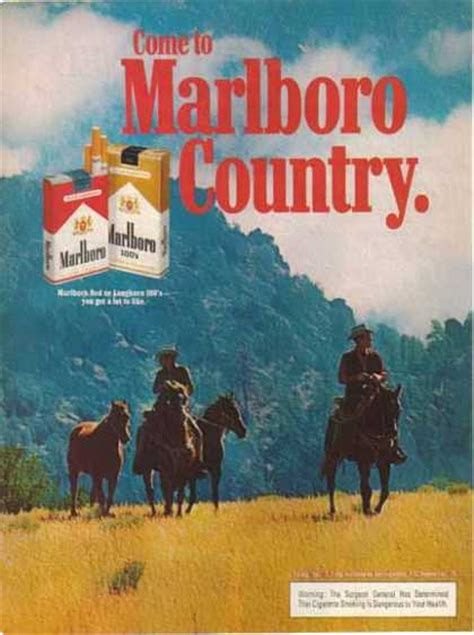
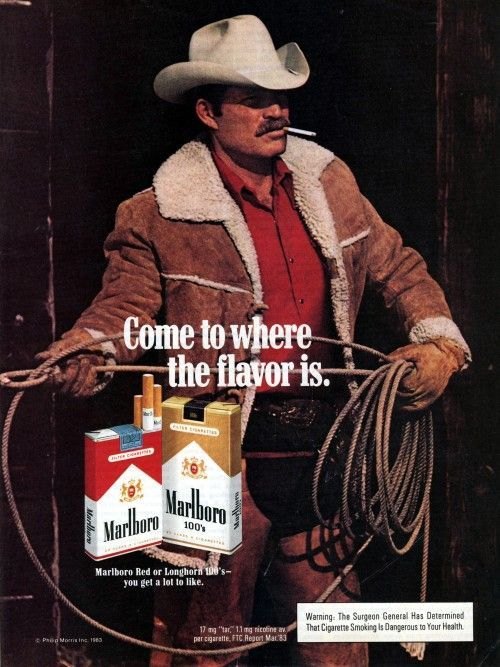
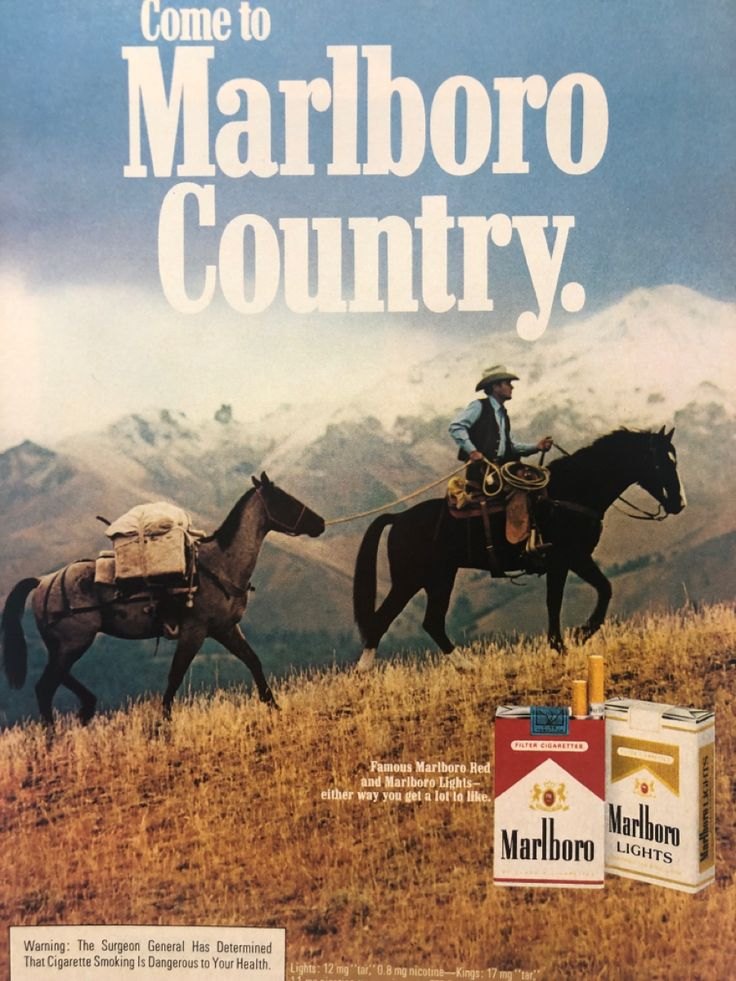
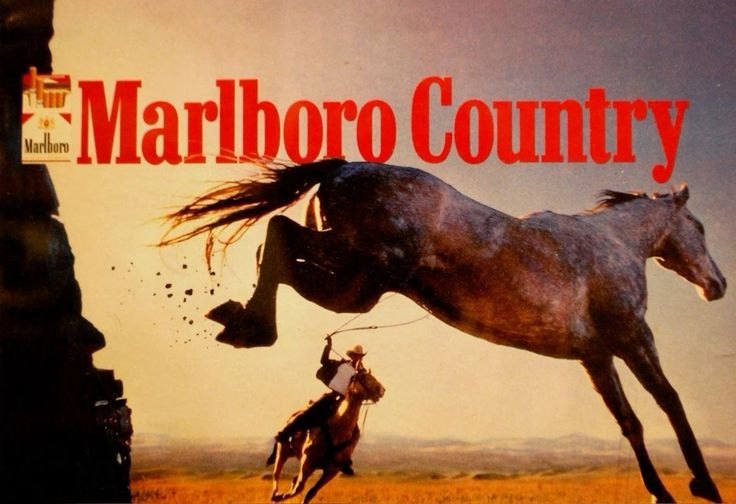
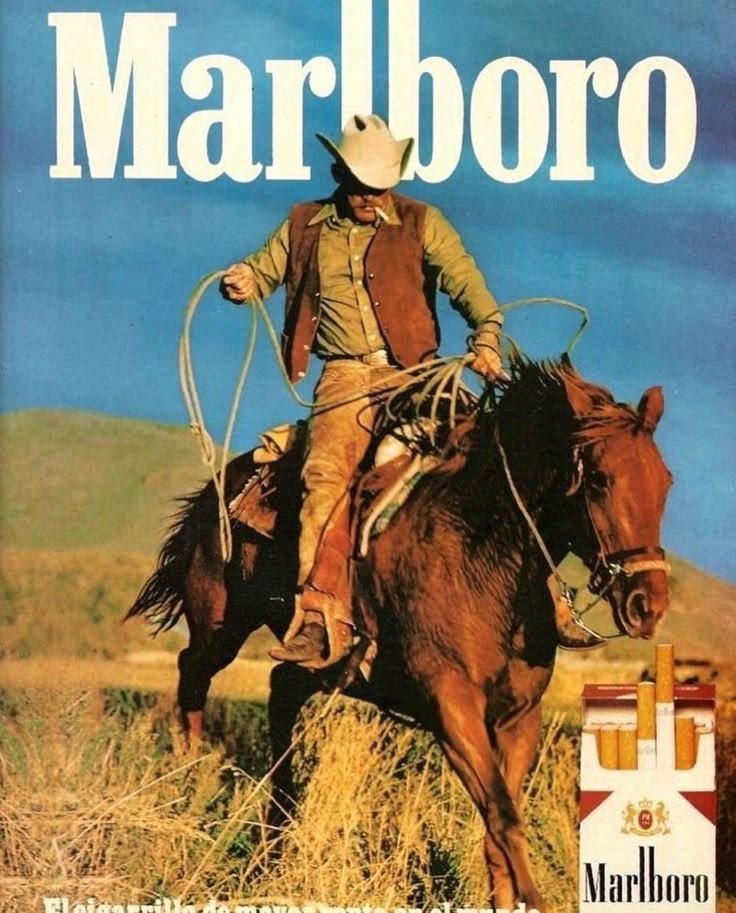
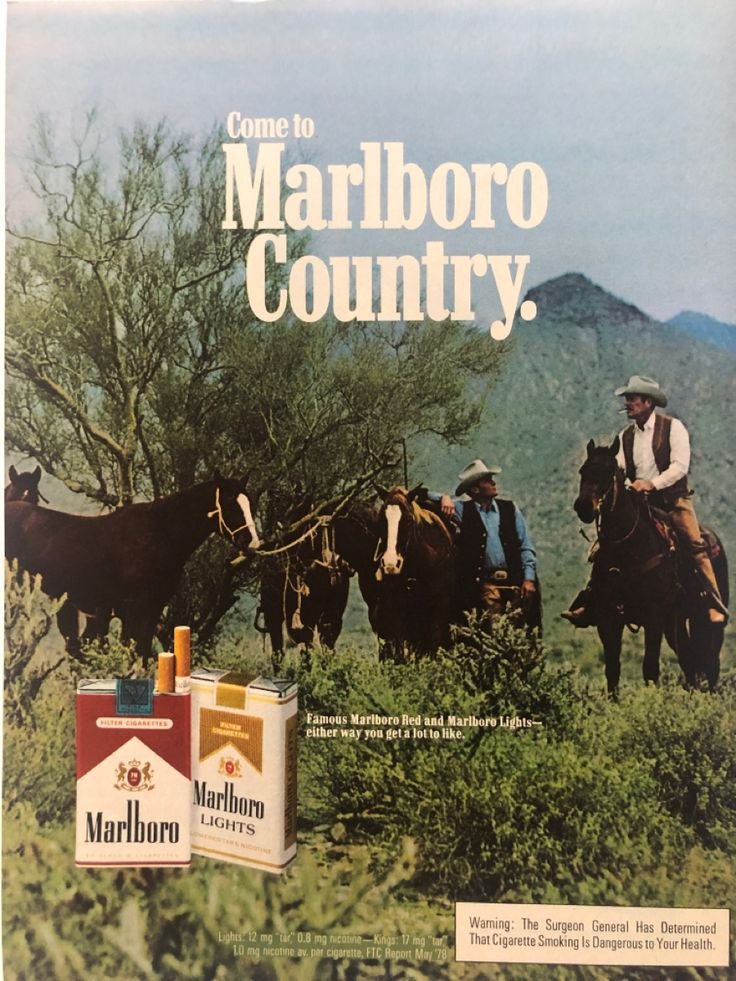
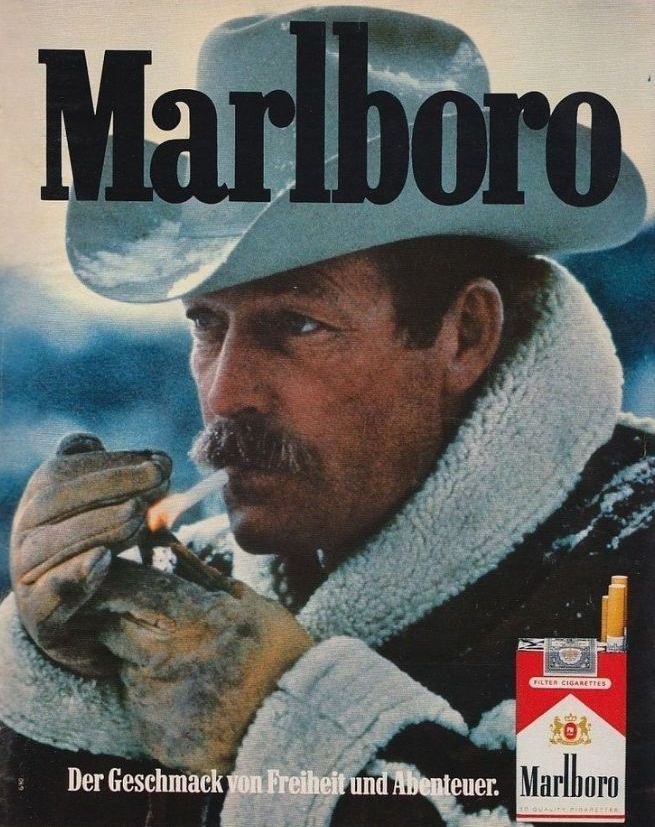
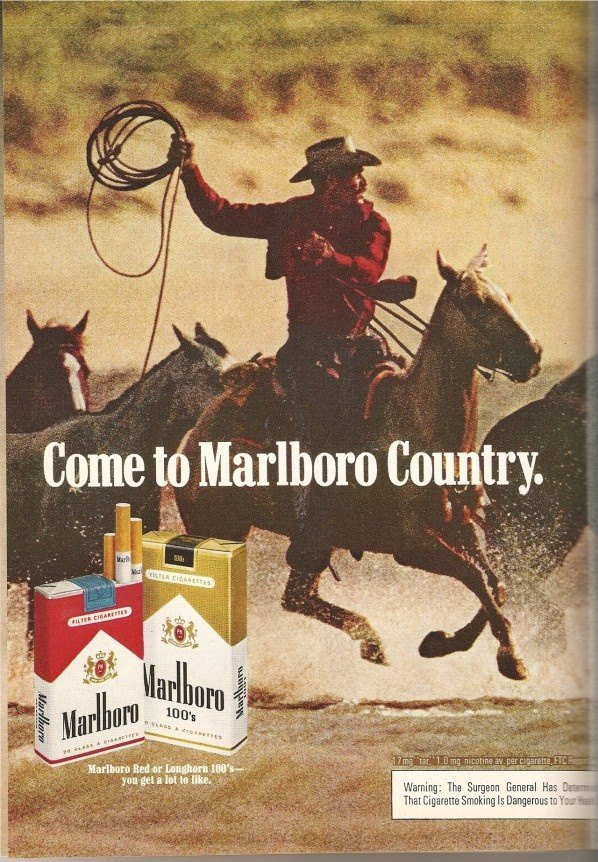
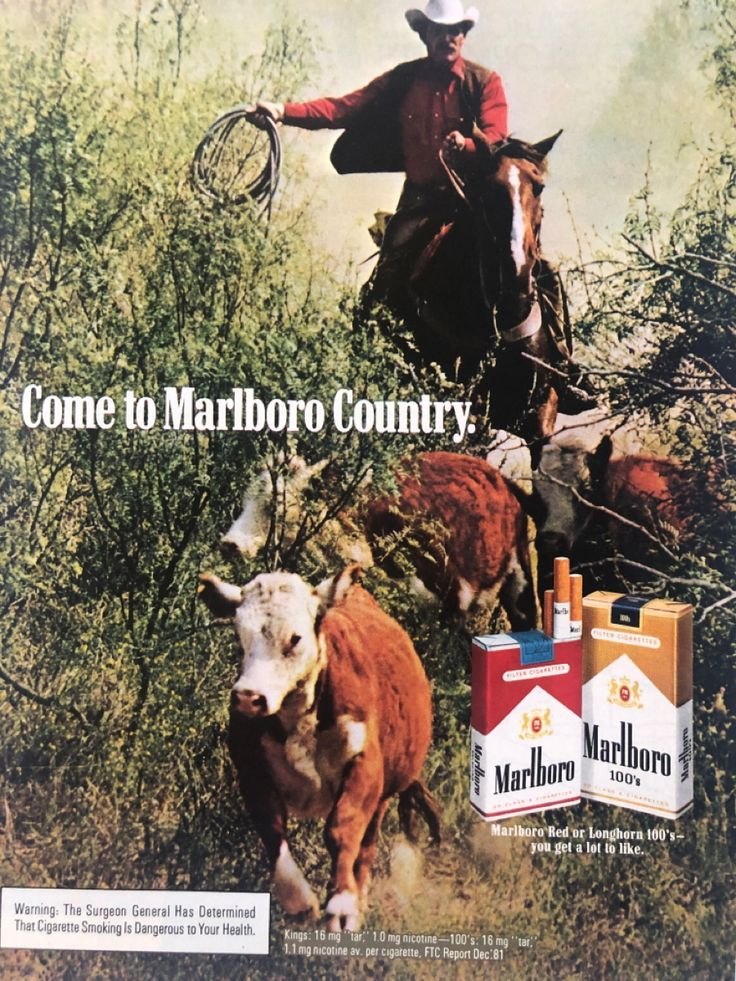
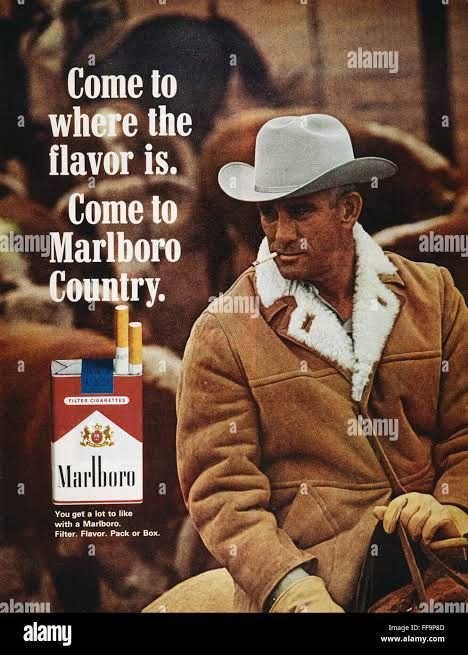
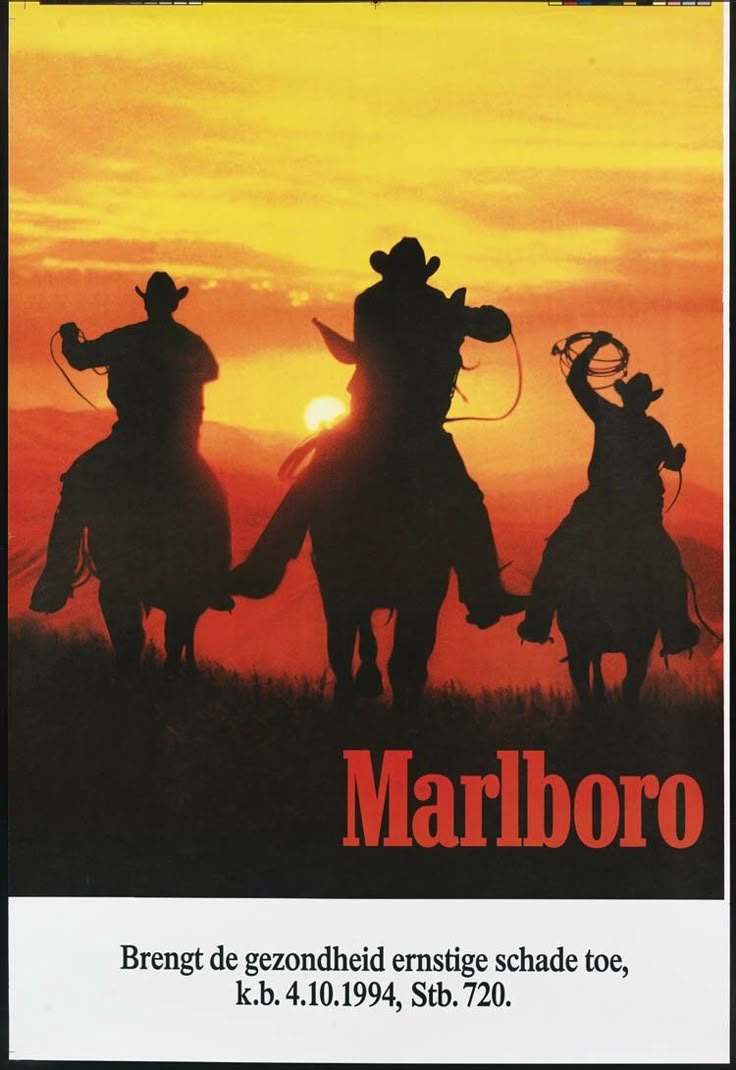
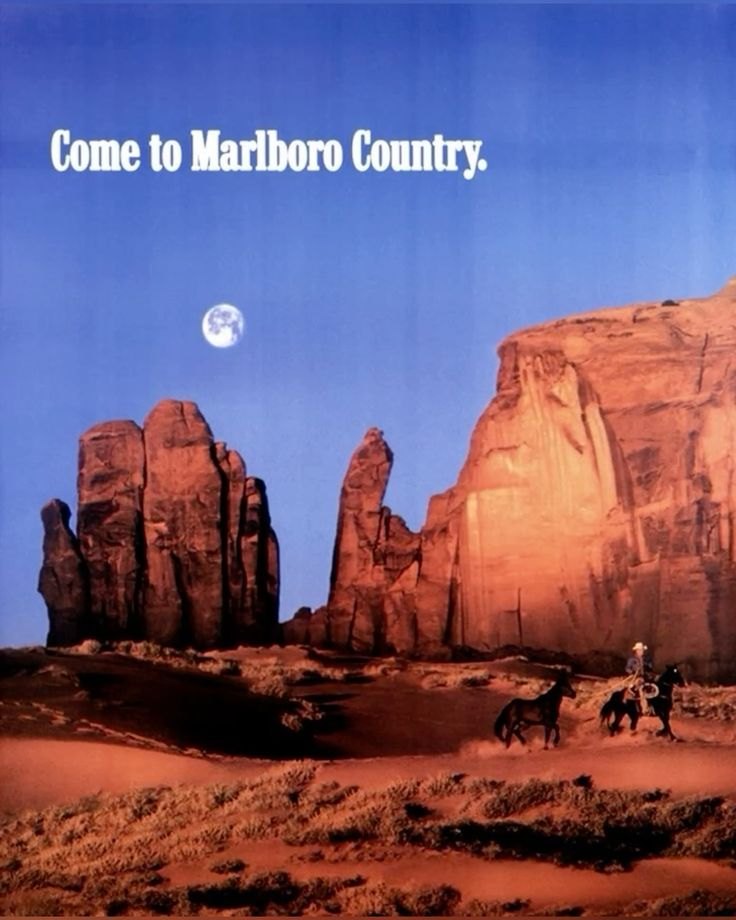
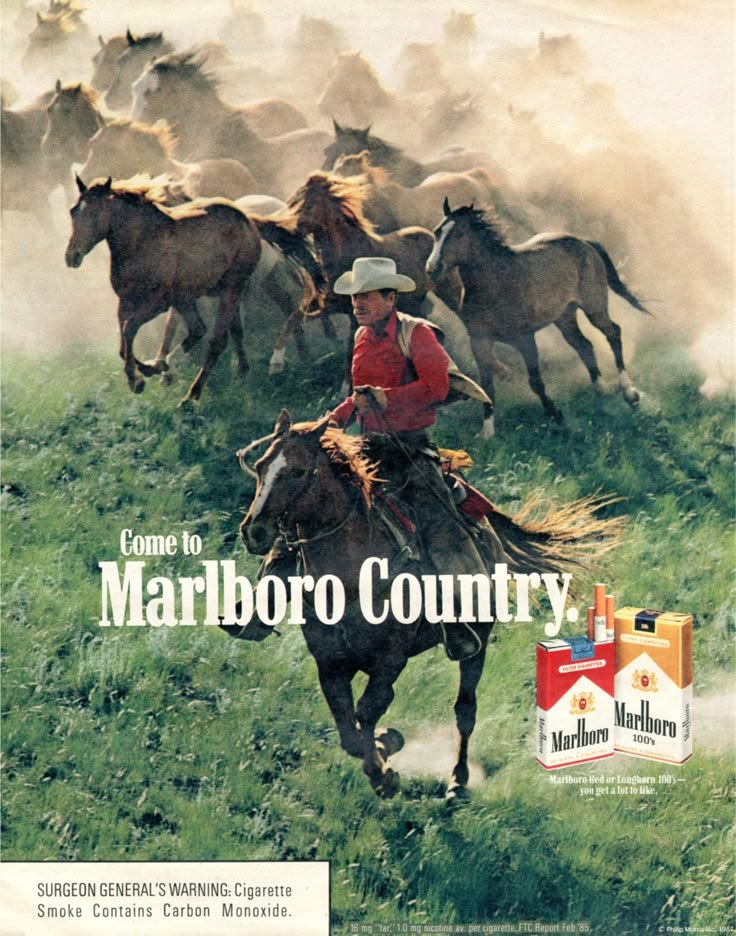
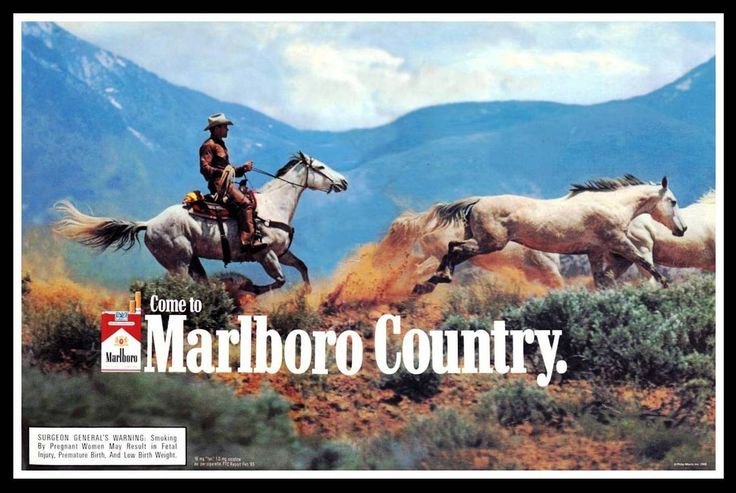
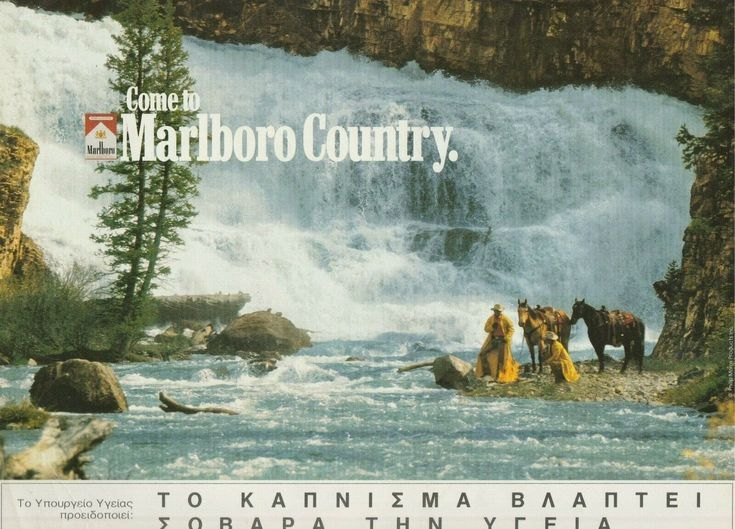
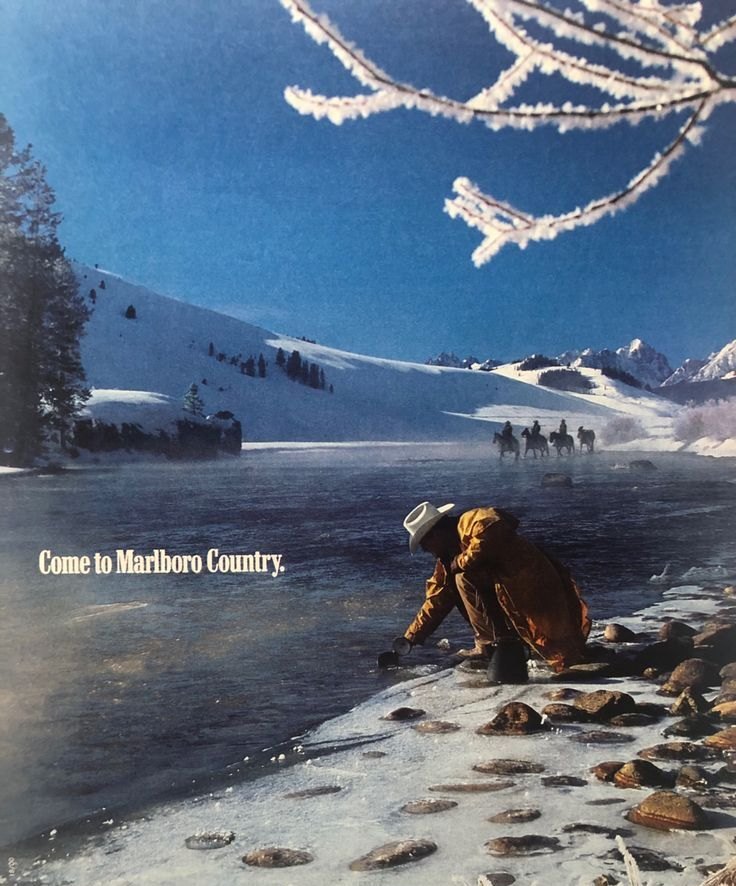
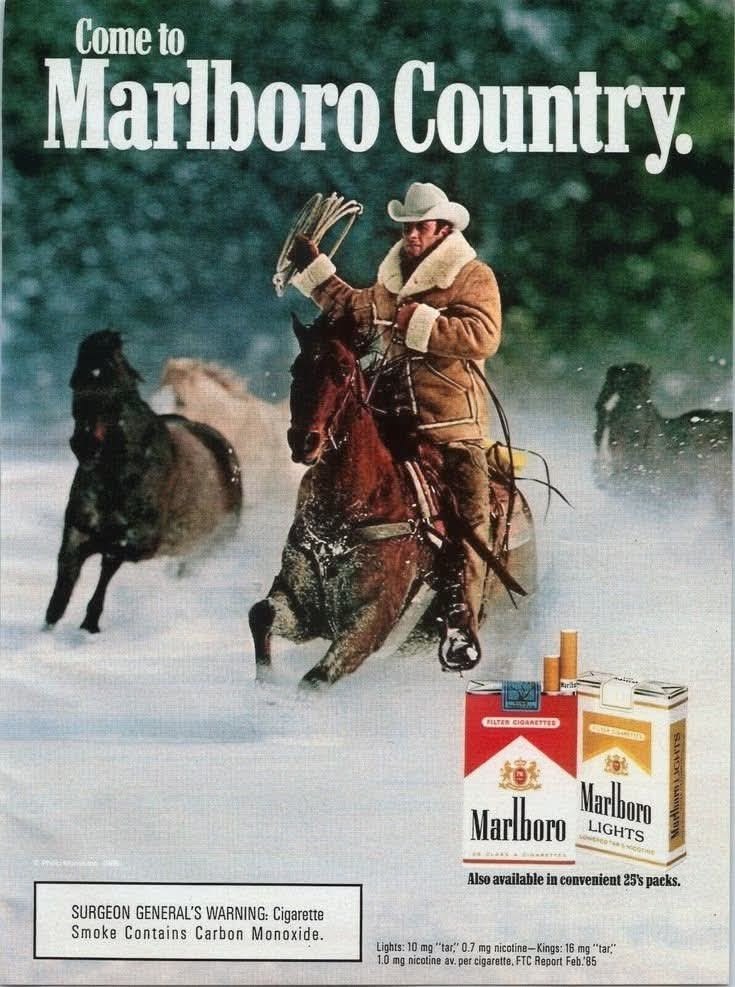
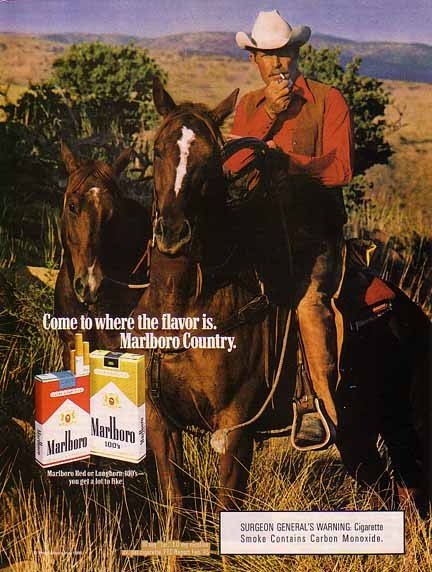
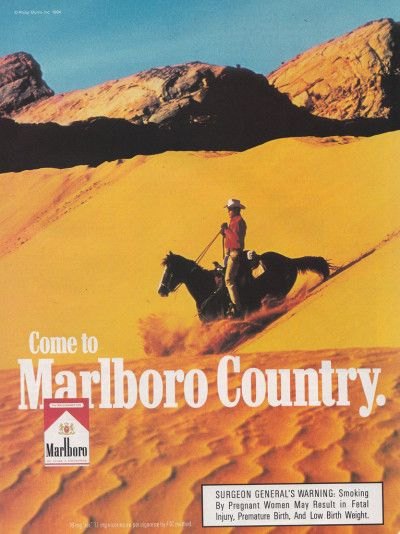
For thirty years Marlboro was sold to women as "Mild as May." Then Leo Burnett gave it a cowboy.
Back to the archive →