Clairol · Foote, Cone & Belding
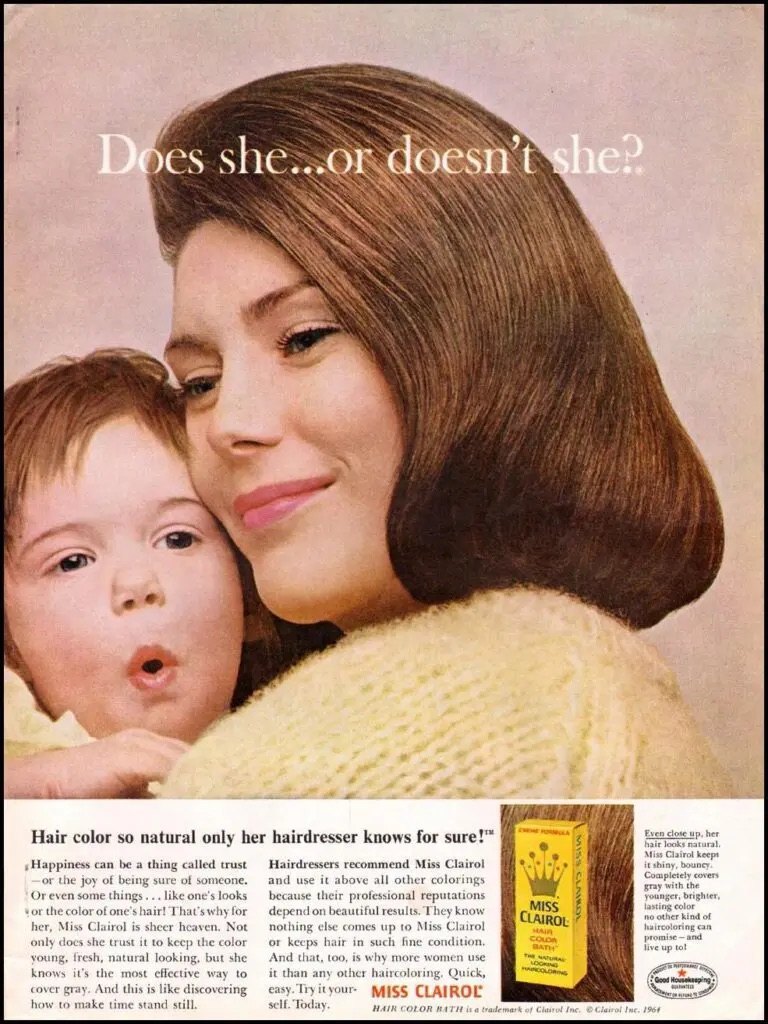
Does She or Doesn't She?
A product people were ashamed to be seen using was sold by promising that no one would ever know, and the question did the selling.
The era.
In the mid-1950s most American women who dyed their hair did it at a salon, and few admitted it. Estimates put the share of women who dyed their hair at about seven percent.
Clairol had sold hair dye in the United States since 1931, when Lawrence Gelb, a chemical broker, and his wife Joan brought a French preparation home and built a company around it. In 1949 Clairol introduced Miss Clairol Hair Color Bath for salons, a one-step formula that could lighten, tint, condition and shampoo at once. At the International Beauty Show in New York, salesmen rinsed models' hair with buckets of water in front of thousands of doubting hairdressers to prove the tint stayed.
In 1956 Clairol put a version of Miss Clairol on sale for use at home. It took about twenty minutes. The product was ready. The customer was not.
The culture.
Hair dye carried a reputation. A woman with obviously dyed hair, blonde above all, was assumed to be fast. Respectable women did not paint their hair, and if they did, they did not say so.
The magazines that reached those women, Life among them, were edited and run largely by men. Advertising was too. Foote, Cone & Belding, the agency that took on the Clairol account in the mid-1950s, had one woman writing copy.
That woman was Shirley Polykoff, born in Brooklyn in 1908 to immigrant parents. She had dyed her own hair since she was a teenager. Years earlier her future mother-in-law had remarked that she painted her hair, and the phrase stayed with Polykoff and her husband as a private joke.
The problem.
Women wanted the shade but feared being seen to want it, so every claim about how well the dye worked only reminded them what people would say.
Clairol had a home product that worked, but it was selling into a stigma. Dyed hair said something about the woman wearing it, and most women did not want to say it.
Talking up the shade made things worse. The brighter the promise, the more it sounded like the dyed look women were afraid of. Glamour models would have tied the product to exactly the kind of woman a housewife did not want to be mistaken for.
The advertising had to give permission without asking anyone to confess. And it had to get past the people who decided what ran in a family magazine.
Clairol gave its account to Foote, Cone & Belding in the mid-1950s, when its sales were small, with the job of changing how women felt about dyeing their hair. The agency handed it to Polykoff, then its only woman copywriter, ahead of the launch of the home version of Miss Clairol.
The solution.
Make the selling point that nobody can tell, and put it as a question no woman ever has to answer.
Polykoff turned the old family joke into a headline: "Does she or doesn't she?" The answer came underneath: "Hair color so natural only her hairdresser knows for sure." She said later that the second line began as "Only her mother knows for sure."
The question let a woman use the product and still deny it. Polykoff insisted the models look like the girl next door, not fashion models. Ads showed fresh-faced young mothers beside children with the same shade of hair, which argued the shade looked natural without saying a word about dye.
People at the agency thought the line was too suggestive, and Life's male managers turned it down. Polykoff had the women on Life's staff polled; none admitted seeing a double meaning. Clairol bought thirteen pages in Life in the autumn of 1956. Over the next decade the share of American women dyeing their hair went from about seven percent to about forty, and the market grew from about $25 million a year to about $200 million, with Clairol holding roughly half.
The work.
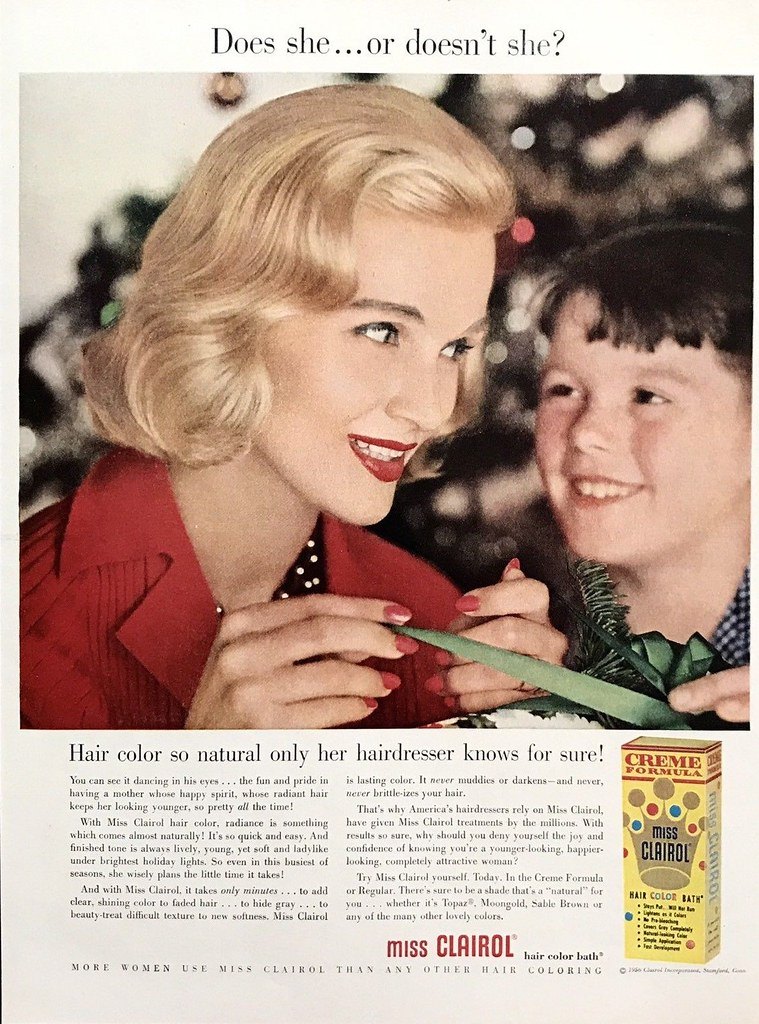
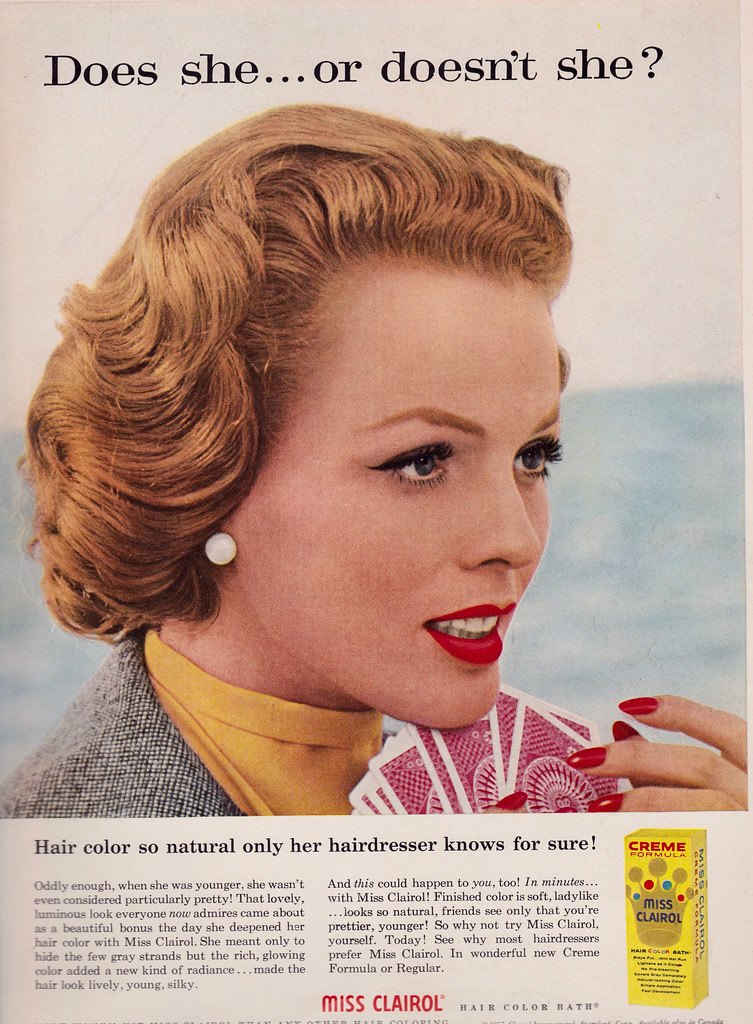
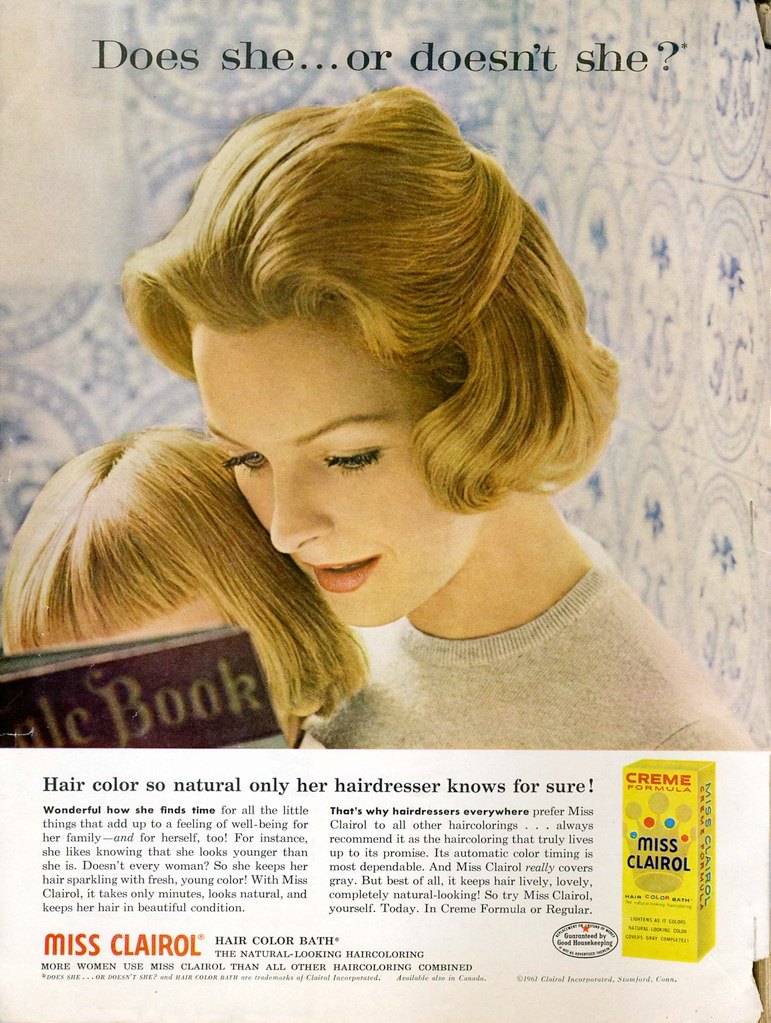
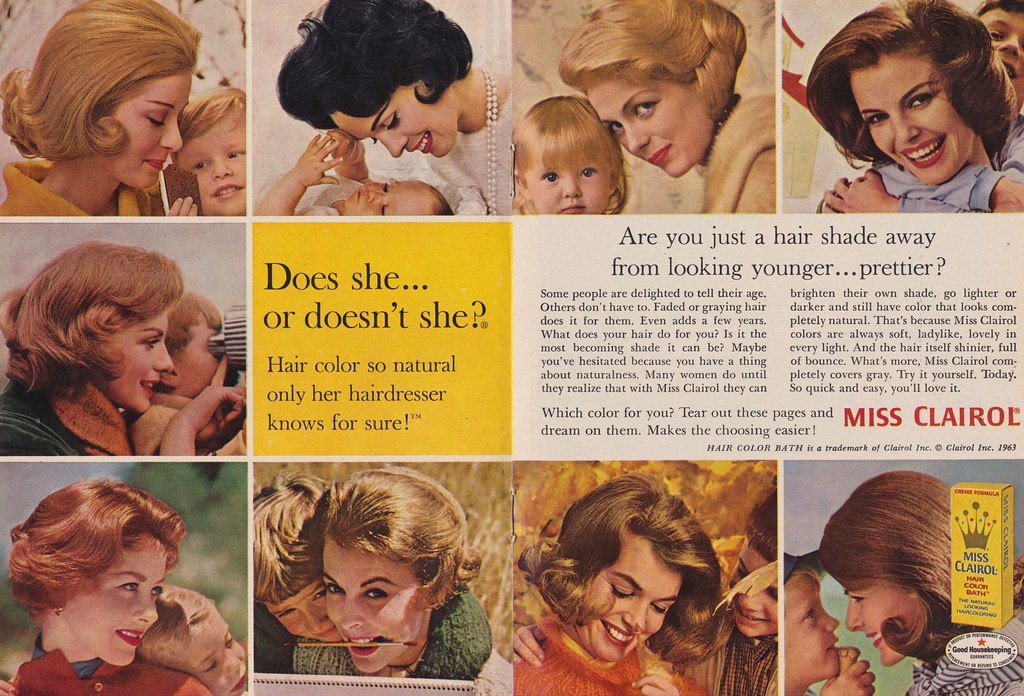
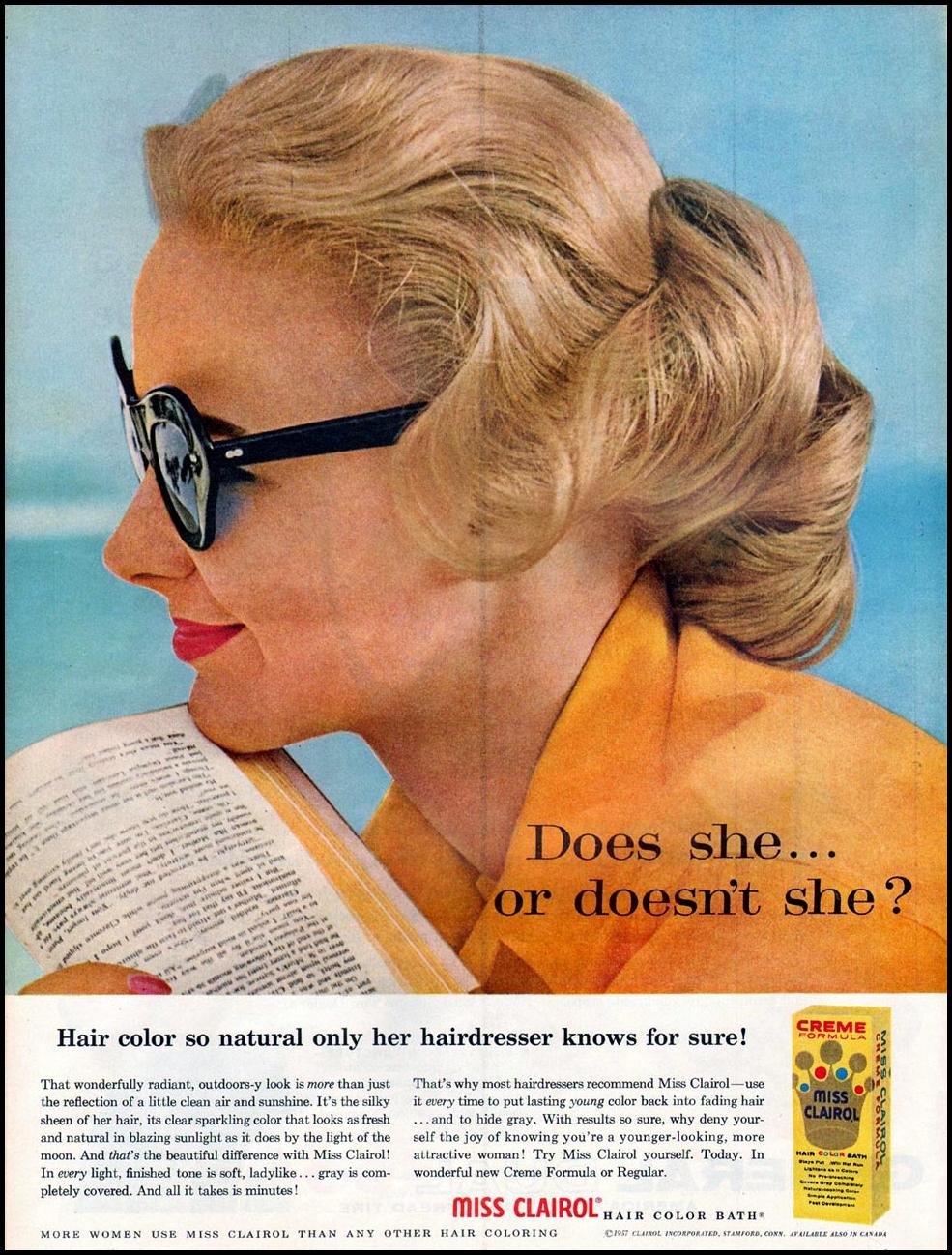
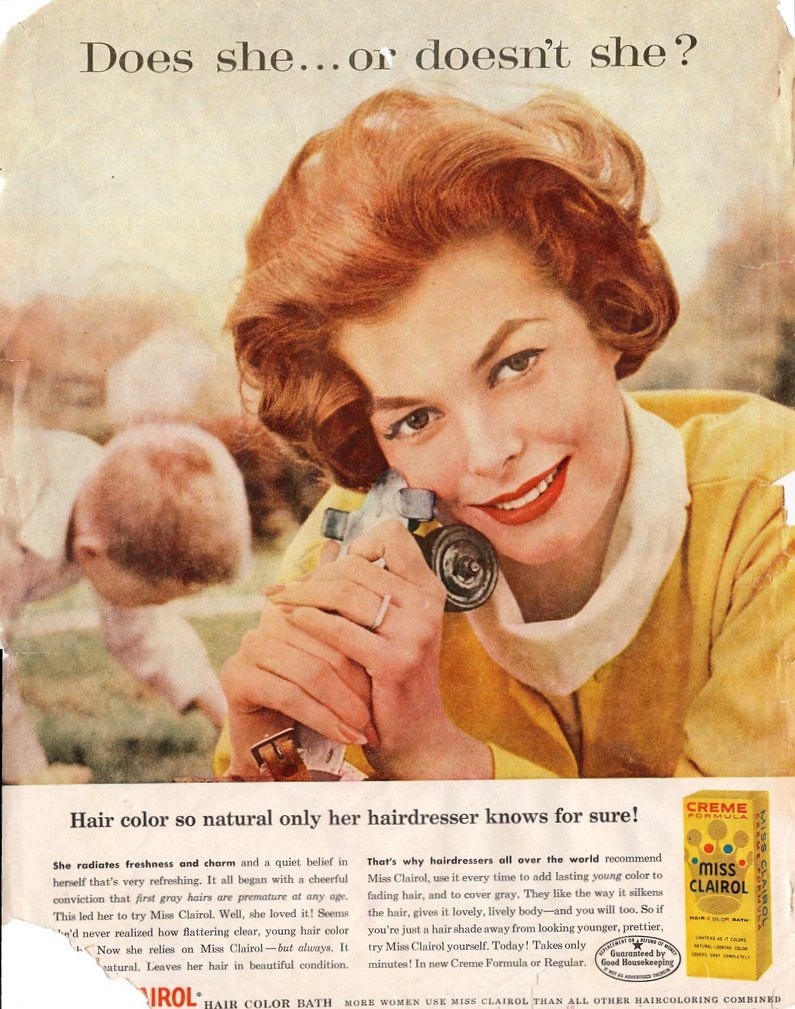
A private joke about a disapproving mother-in-law became the line that put hair dye in American bathrooms.
Back to the archive →