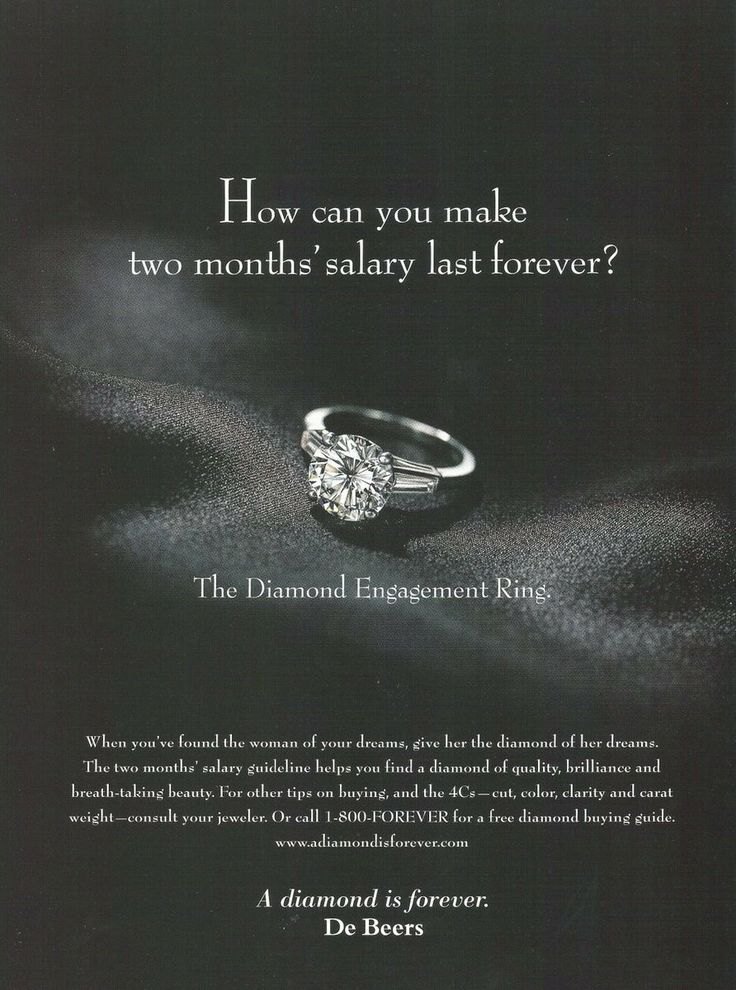
A Diamond Is Forever
The clearest case in the archive of advertising used as inventory control: a campaign whose commercial job was to stop the product coming back onto the market.
The era.
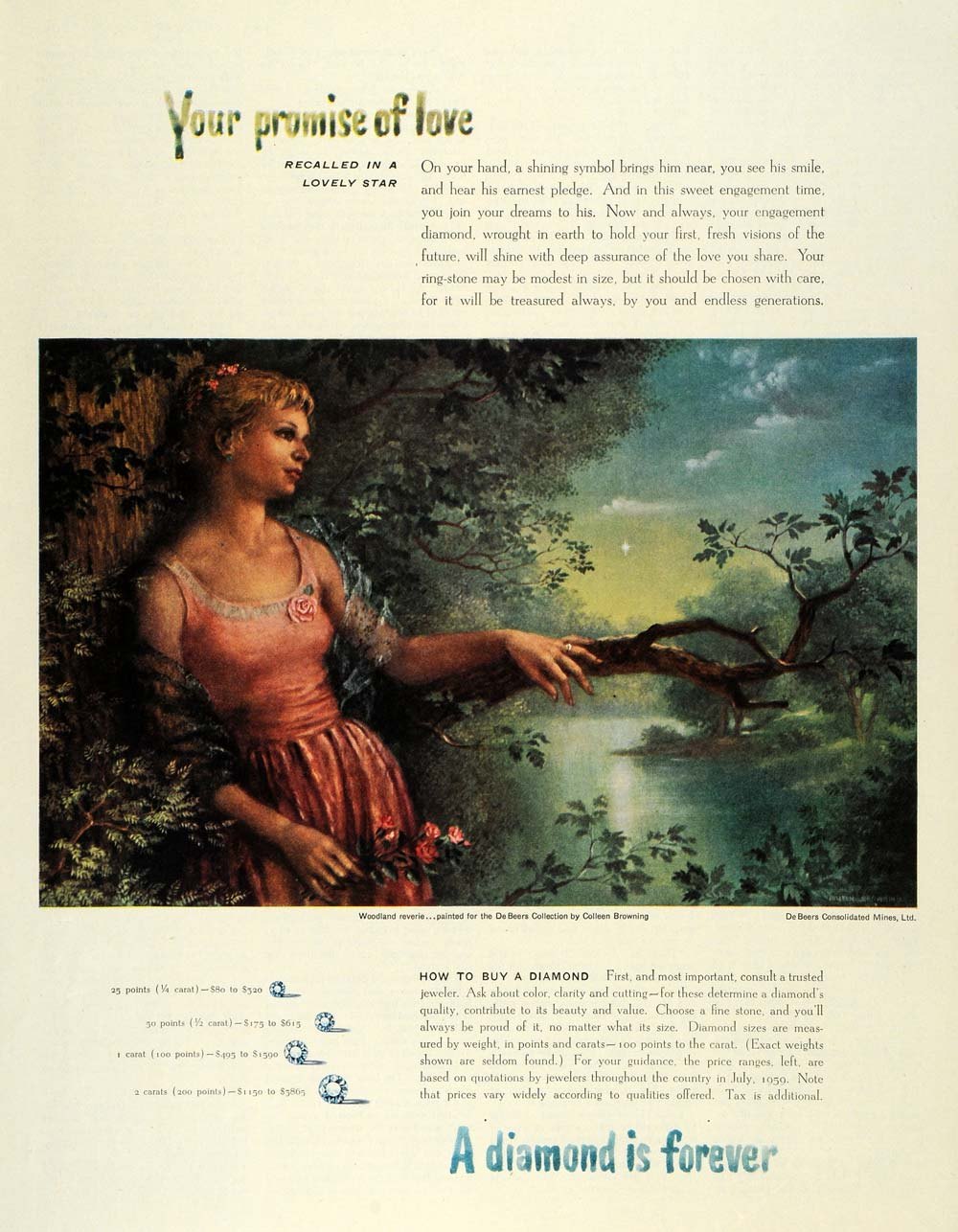
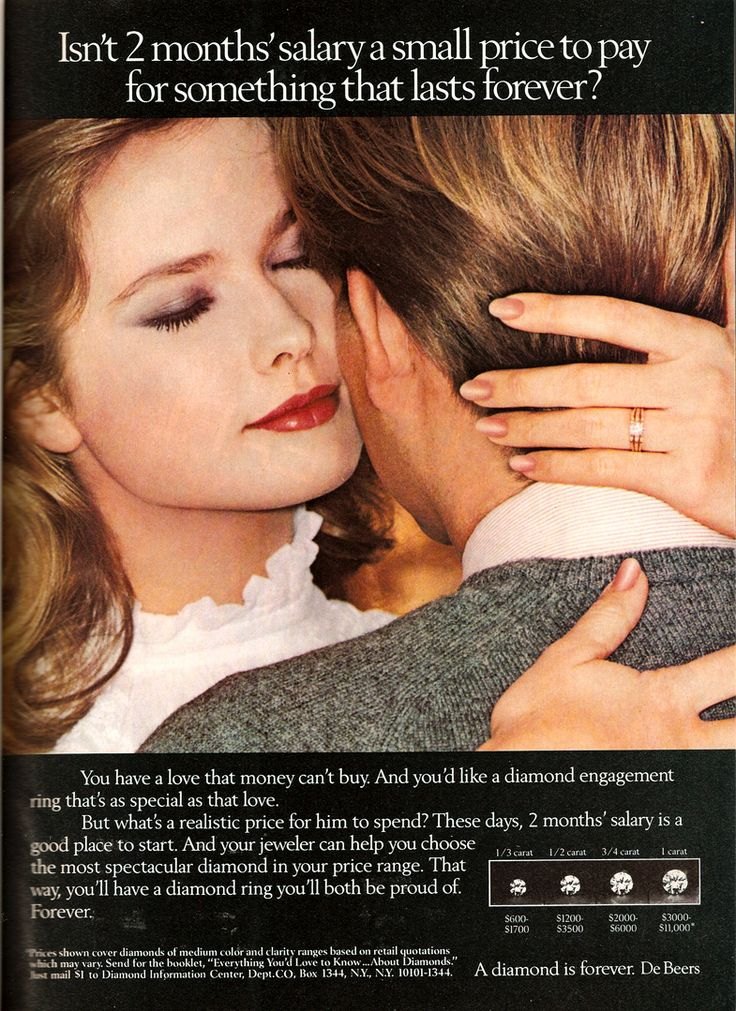
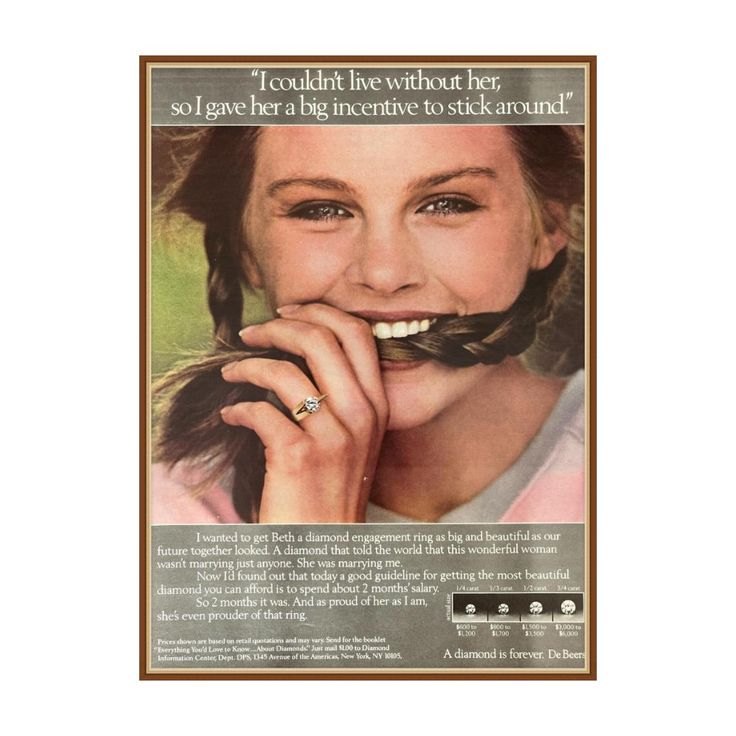
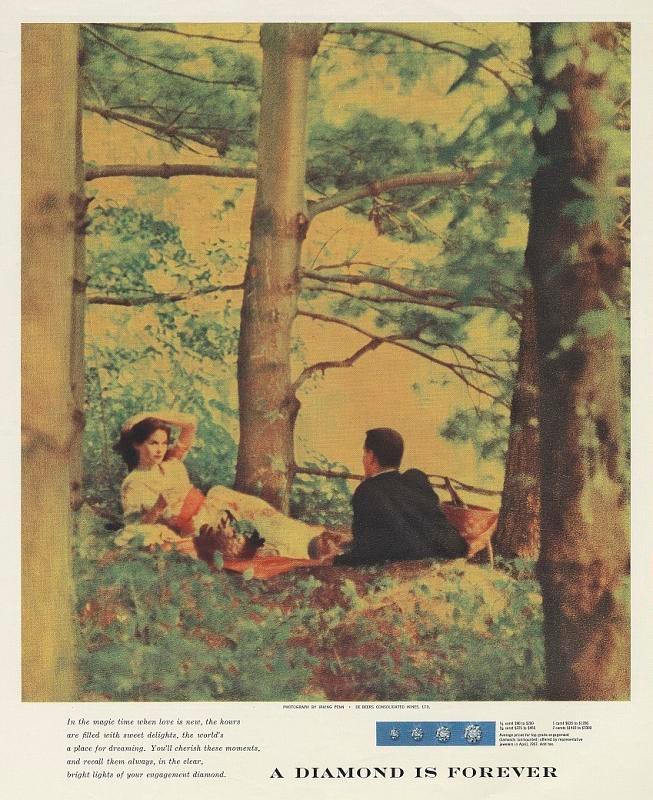
By 1958 the De Beers account at N.W. Ayer was twenty years old and had already done the difficult part. The diamond engagement ring, a minority habit in America before the war, had become close to a requirement. The early work did not argue that diamonds were beautiful. It taught a sequence of behaviour: what a man buys, when he buys it, and what it says about him if he does not. Ayer placed lecturers in high schools to describe the custom to girls who had not yet been proposed to, and worked the studios so that the object was seen on screen.
The window this record covers is the one where the problem inverted. In 1962 the Soviet Union agreed to sell effectively all of its rough gem production to De Beers, and the Siberian field at Mirny moved to open-pit working. The stones were small. De Beers now held a rising inventory of goods that its own advertising had spent twenty years teaching Americans to regard as insufficient. The task was no longer demand creation. It was absorption, and containment.
The culture.
The post-war marriage boom supplied the volume, but volume was never the difficulty. A diamond is not consumed. It is not worn out, used up, eaten or outgrown, and it does not break. Every stone the agency had ever helped sell still existed, in a drawer or on a hand, and each one stood as a competitor to the next stone sold. A functioning second-hand market would have set a price, and the price would have been low.
The same logic was exported. From 1967 De Beers ran Japan through J. Walter Thompson, where the diamond was positioned not as a Western import but as a marker of modern life: Western dress, Western settings, bicycling and yachting, the ring standing for a break with an older order. Edward Jay Epstein reported in The Atlantic in February 1982 that the share of Japanese brides receiving a diamond rose from about five per cent in 1967 to sixty per cent by 1981. Those figures come from De Beers' own unpublished market research by way of one journalist, and have never been independently published.
The problem.
A diamond never wears out, so every one ever sold is a future competitor for the next sale.
De Beers sold a durable good. A diamond does not wear out, is not used up and is not bought again. Its price rested on scarcity the cartel manufactured, not on anything a buyer could check.
That made the second-hand market the real threat. If owners routinely resold, the resale price would become public, and everyone would see the gap between what people paid and what a diamond actually fetched. From the early 1960s the Soviet supply agreement added a second pressure: a growing volume of small stones that the existing advertising had implicitly told the market to look down on.
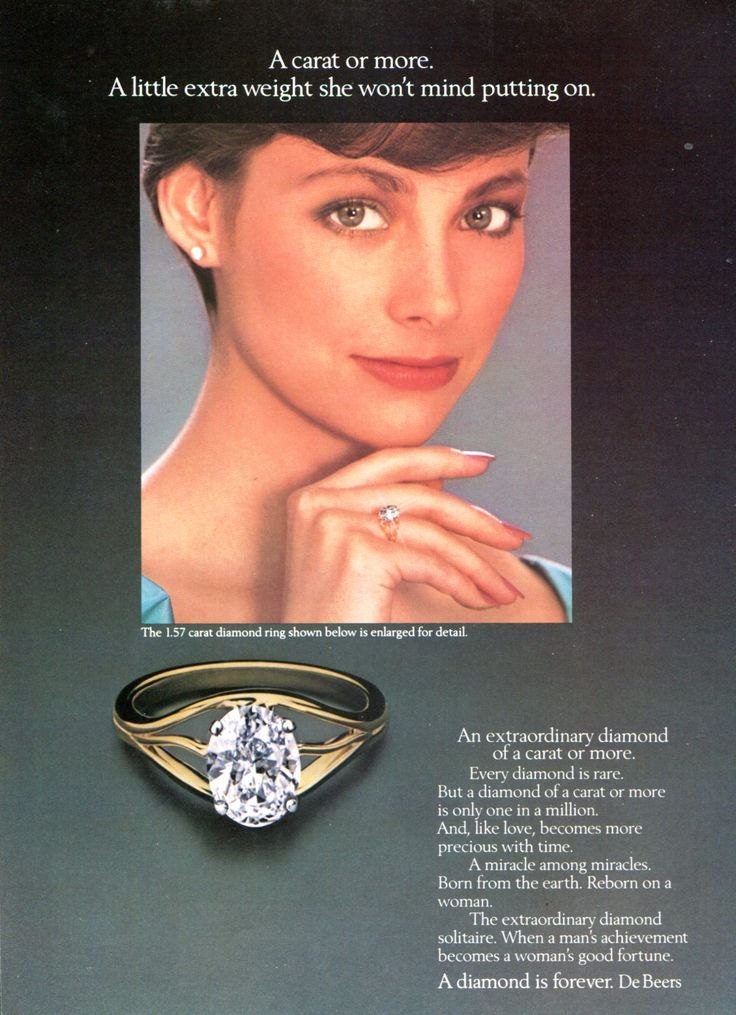
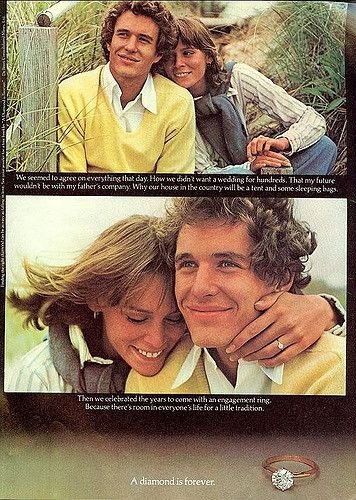
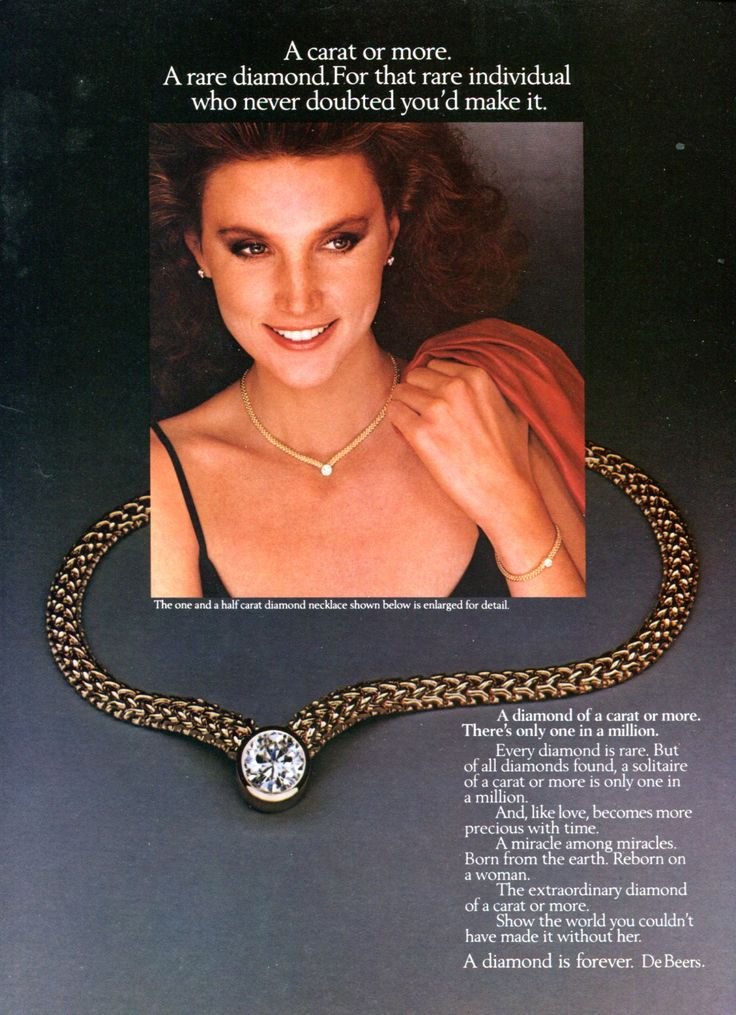
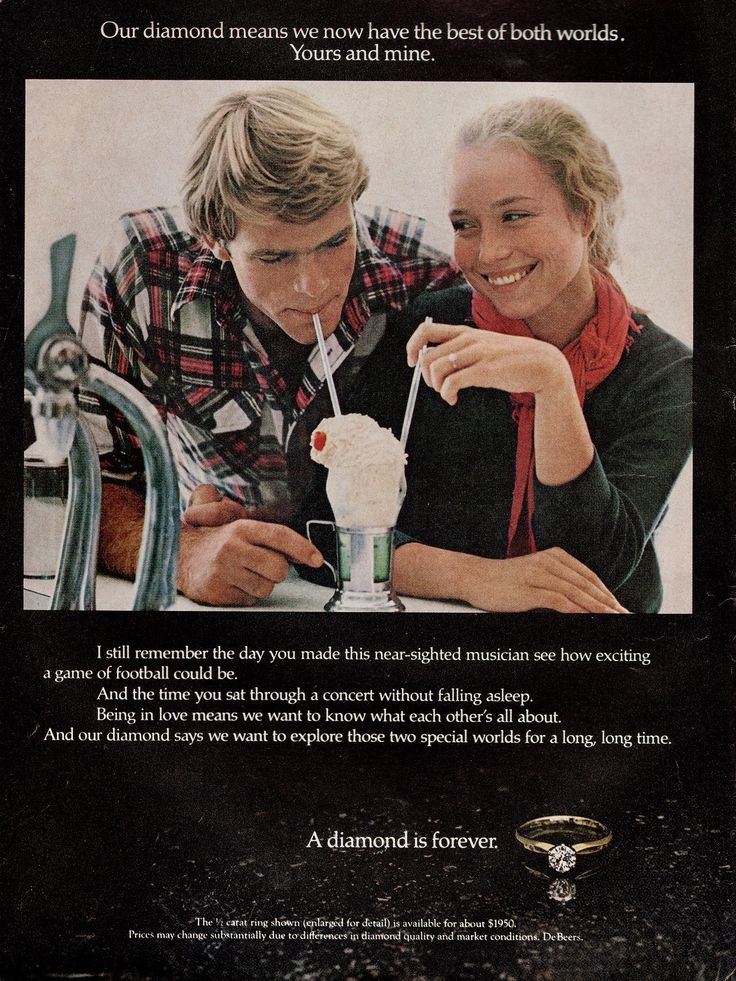
In 1938 Harry Oppenheimer of De Beers met Ayer's president, Gerold Lauck, to discuss a campaign to halt the falling price of diamonds in America. De Beers offered Ayer its exclusive American business if the plan worked. Ayer proposed tying diamonds to love and romance, and in 1947 Frances Gerety wrote the line.
The solution.
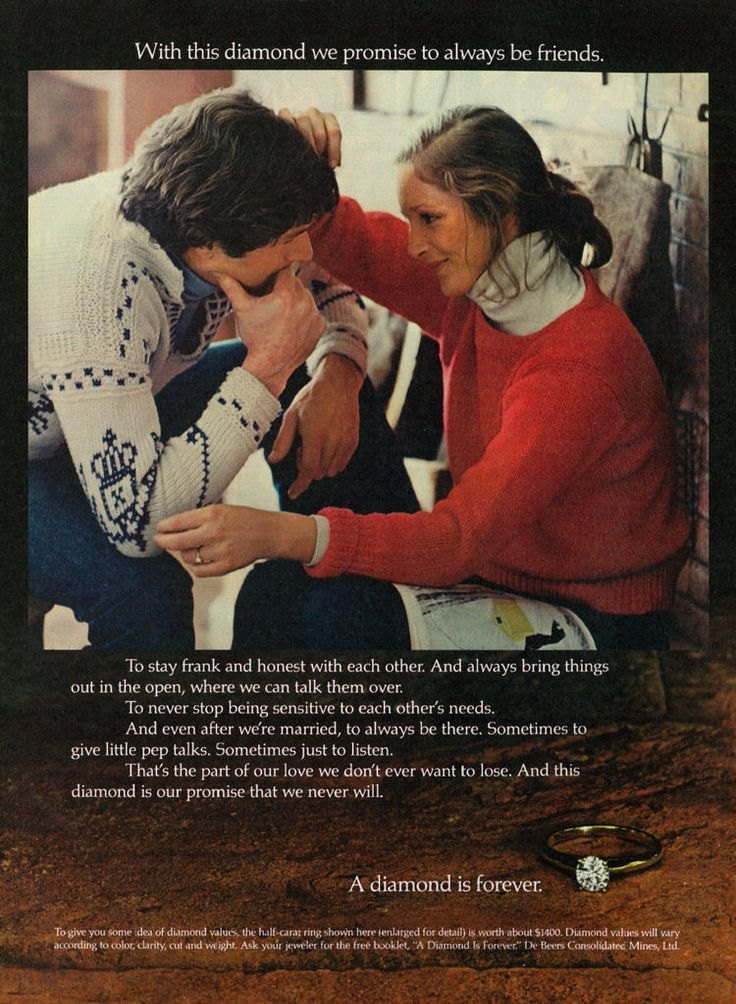
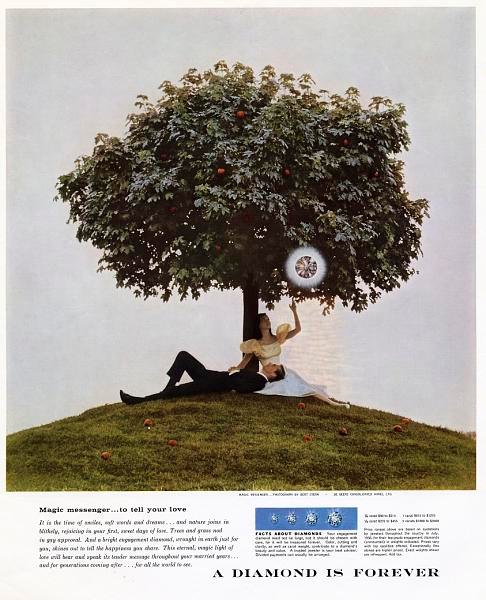
Forever was not a romantic promise. It was an instruction not to sell.
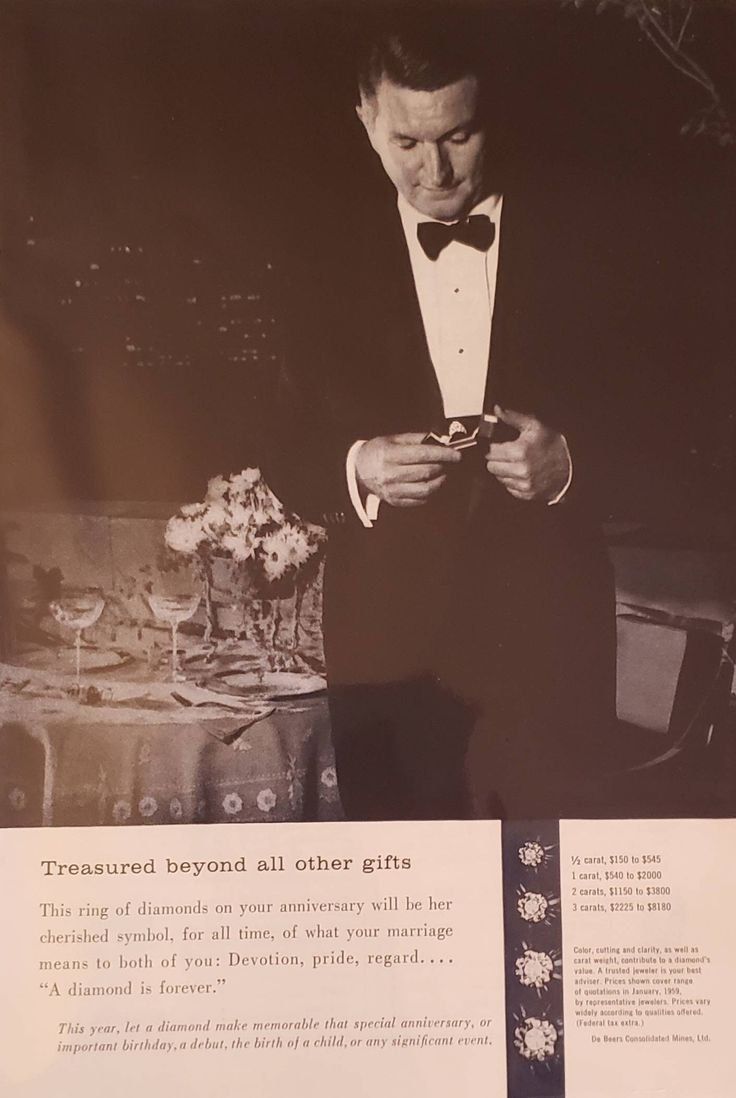
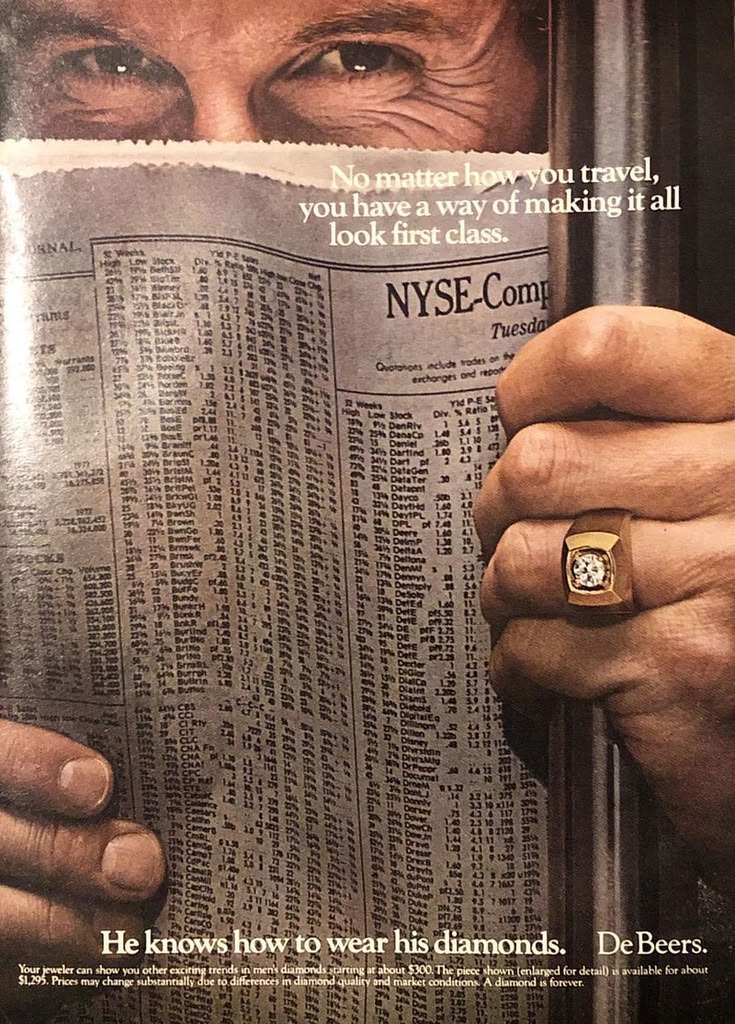
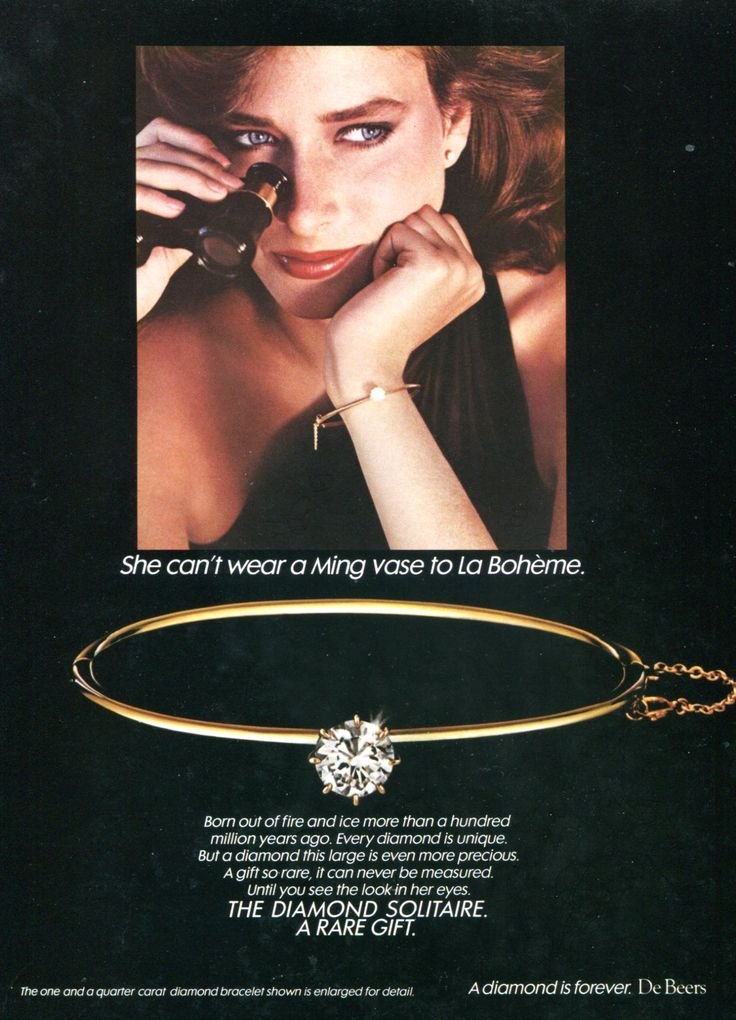
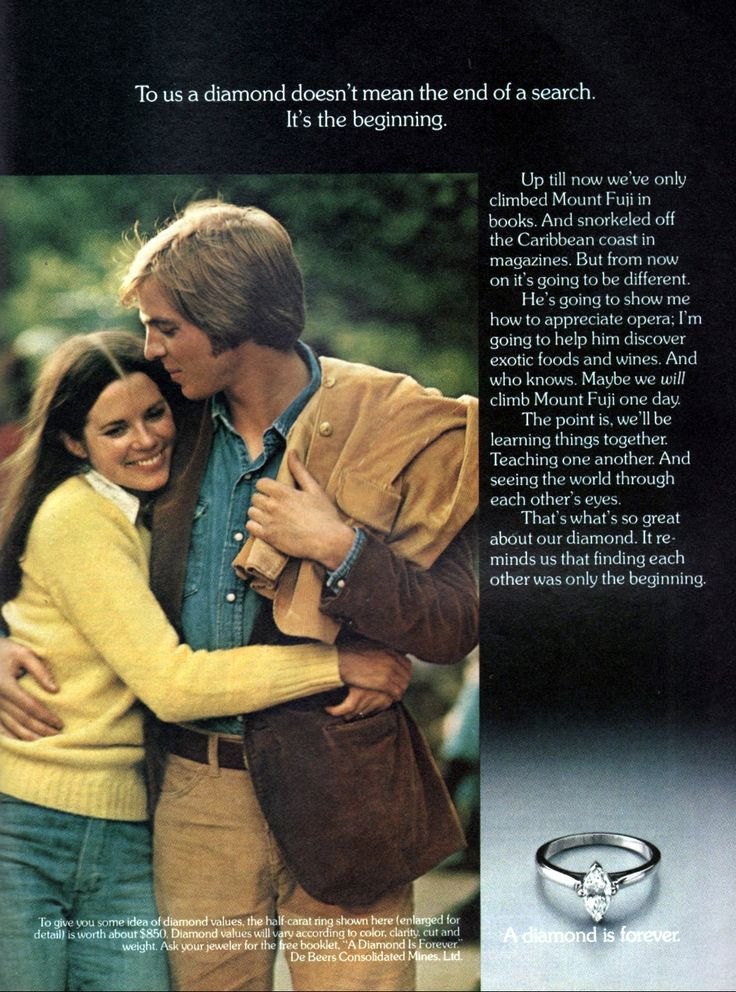
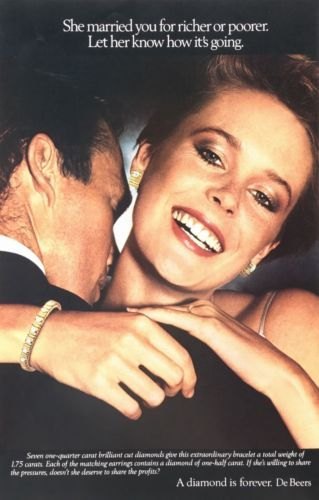
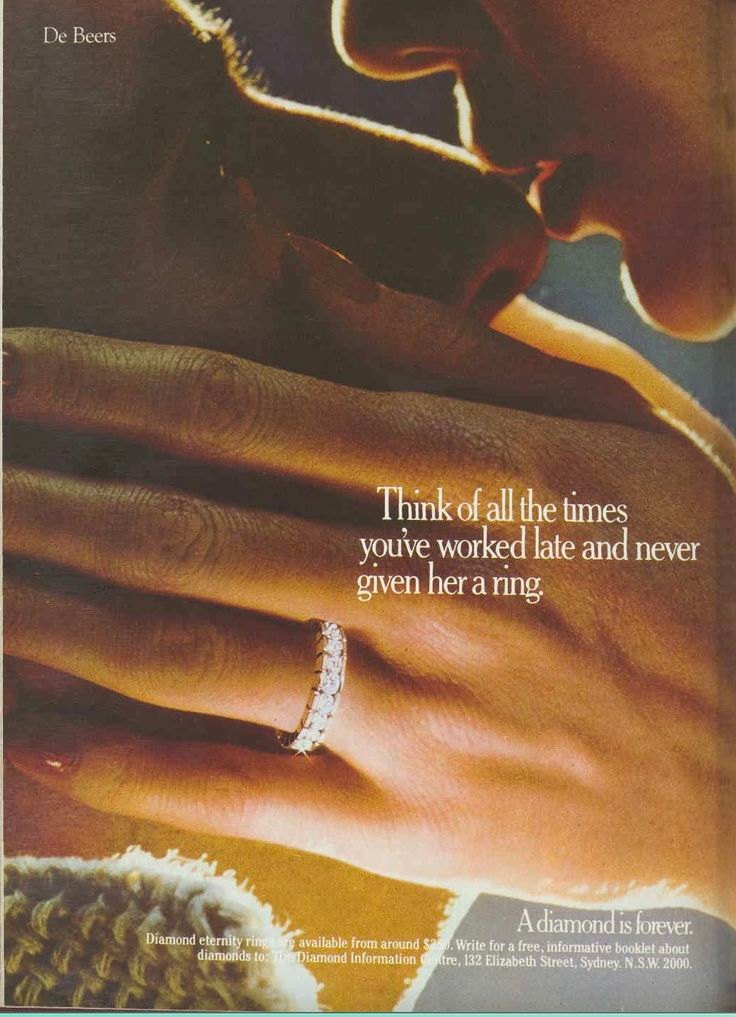
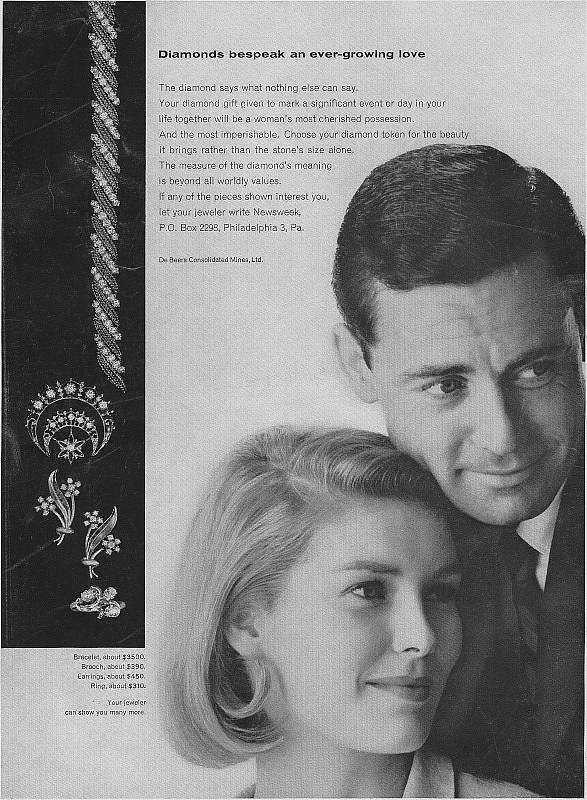
The campaign made permanence the point of the object. A diamond given is kept, keeping it is what the gift means, and selling it would say something about the marriage. Ayer put the commercial aim plainly in its own strategy papers: to keep previous production in the hands of the consumer and off the retail market. The romance was the mechanism that stopped a second-hand market from forming. The small Soviet stones were then absorbed by inventing a new occasion, the eternity ring, aimed at women who were already married.
The work.

Around the work
Same shape of problem.
The brief was not to make Americans buy diamonds. By 1958 they already did. It was to make sure they never sold them.
Back to the archive →