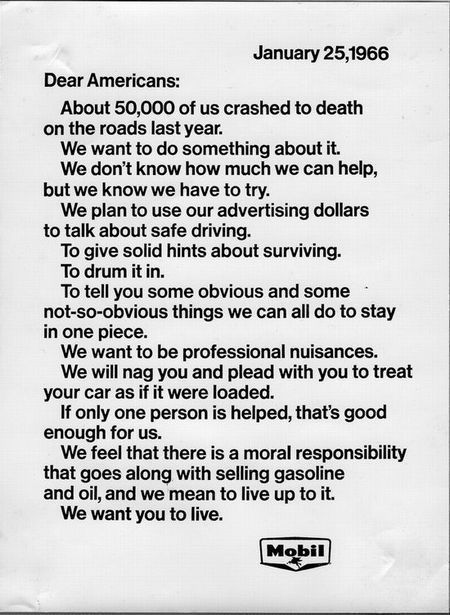
We Want You to Live
An oil company spent its centennial budget teaching Americans how not to die in their cars.
The era.
In 1966 the interstate highway system was ten years old and the car had stopped being a purchase and become the shape of the country: where people lived, how they shopped, what a Sunday looked like. Petrol was sold on every corner by five or six companies whose product was the same liquid. Competition ran on location, signage and service rather than on anything in the tank. Mobil ranked sixth on the Fortune 500 that year, ahead of Texaco, Gulf and Shell.
Road death was part of the weather. In 1965 the United States lost 47,089 people in motor vehicles. In 1966 the figure passed fifty thousand for the first time, at 50,894, and the rate per hundred million miles driven reached 5.50, its highest point of the decade. Newspapers printed holiday weekend forecasts of the dead the way they printed rainfall. Signing the safety act that September, President Johnson set 614 Americans killed over one Labor Day weekend against 29 American soldiers lost in the same days.
Mobil was new as a name. Socony Mobil Oil Company became Mobil Oil Corporation in 1966, finishing a change of face begun two years earlier when Tom Geismar at Chermayeff and Geismar drew the mark with the red O and Eliot Noyes designed the matching service station of discs and cylinders. The company turned one hundred in the same year. It had a new name, a new mark and an anniversary, and a product no driver could tell from the one across the road.
The culture.
Ralph Nader published Unsafe at Any Speed on 30 November 1965. Its argument was that the industry had built danger into the car and then blamed the driver for the consequences. Within months the question of who was at fault on the roads had moved from the person behind the wheel to the machine around them. General Motors had Nader followed, and its president, James Roche, apologised to a Senate subcommittee on 22 March 1966.
The law followed. President Johnson signed the National Traffic and Motor Vehicle Safety Act on 9 September 1966, giving Washington power to set binding standards for how cars were built. The Fair Packaging and Labeling Act arrived the same year. Consumer protection stopped being a campaign and became an agency with a budget. Nader won a court case against General Motors in 1970 and spent the money founding the Center for Auto Safety.
None of this had yet reached the driver. Seat belts were still being argued for rather than assumed, and state highway departments were still asking motorists to put them on as late as 1971. Meanwhile companies were working out that paid space could be used to speak as a citizen rather than as a seller. Mobil took that further than most, buying opinion pages in the New York Times from 1970 and sponsoring Masterpiece Theatre from 1971.
The problem.
Petrol is petrol, and a company turning one hundred is a fact about the company, not a reason to buy from it.
Mobil handed Doyle Dane Bernbach a centennial. The company had a new name, a new mark and a hundred years behind it, and the plan was to advertise all three.
The trouble is that none of it is a reason to pull in. Petrol from one pump is the same as petrol from the next, and a driver choosing a forecourt is choosing a corner. Esso had a tiger. Texaco had men in white. Mobil had an anniversary, which is a fact about the seller and of no use to the buyer.
In the first meeting Mobil showed a slide putting the dates 1866 to 1966 inside the red O of the new logo. Bill Bernbach said the dates read as an obituary. The device was dropped and the brief went with it, which left an agency with a budget, a client in the room and nothing to say.
Mobil gave Doyle Dane Bernbach a centennial to advertise and presented the dates 1866 to 1966 set inside the red O of its new mark. Bill Bernbach rejected the device in that first meeting. Len Sirowitz and Bob Levenson came back with road safety instead, and Mobil ran it.
The solution.
Spend the anniversary money on the reader's life instead of the company's history.
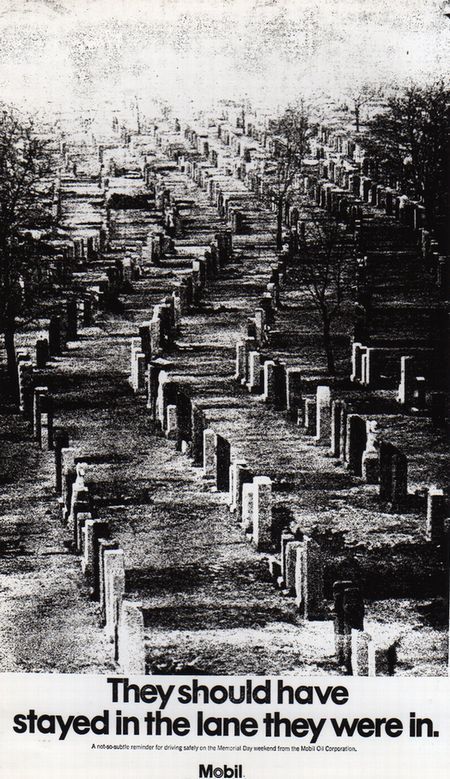
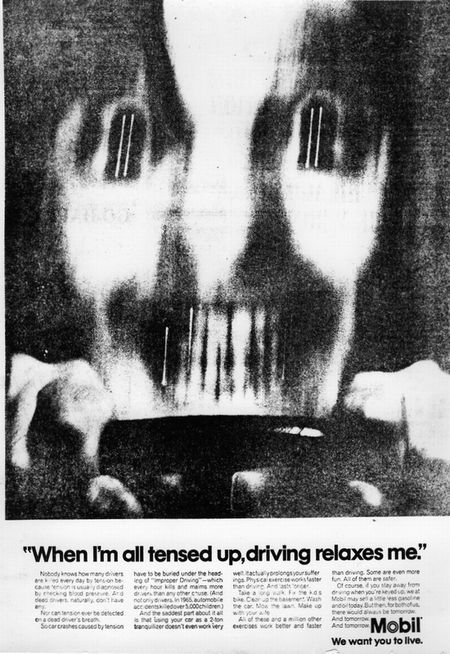
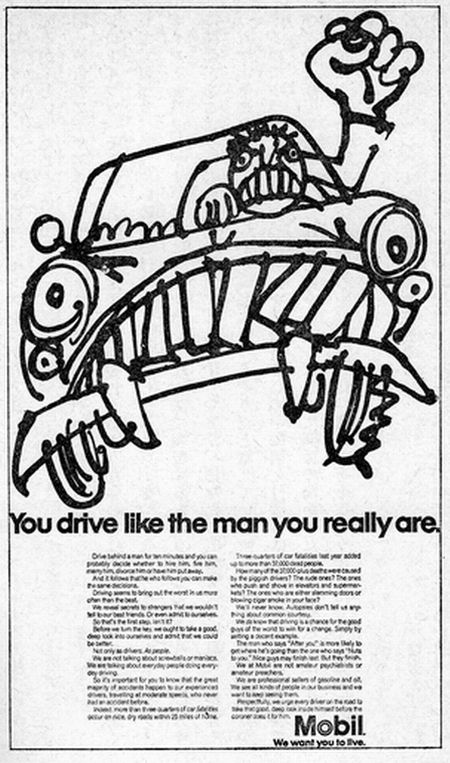
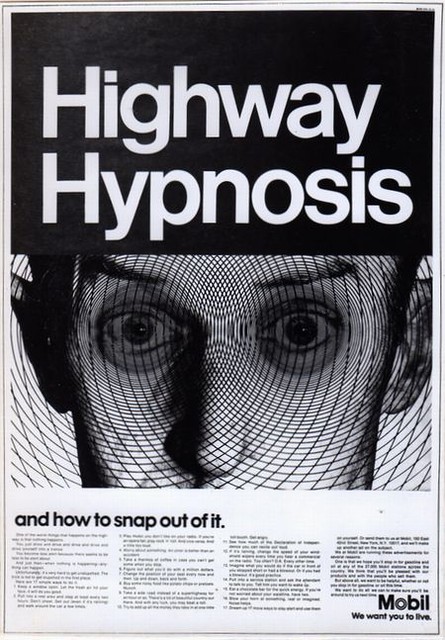
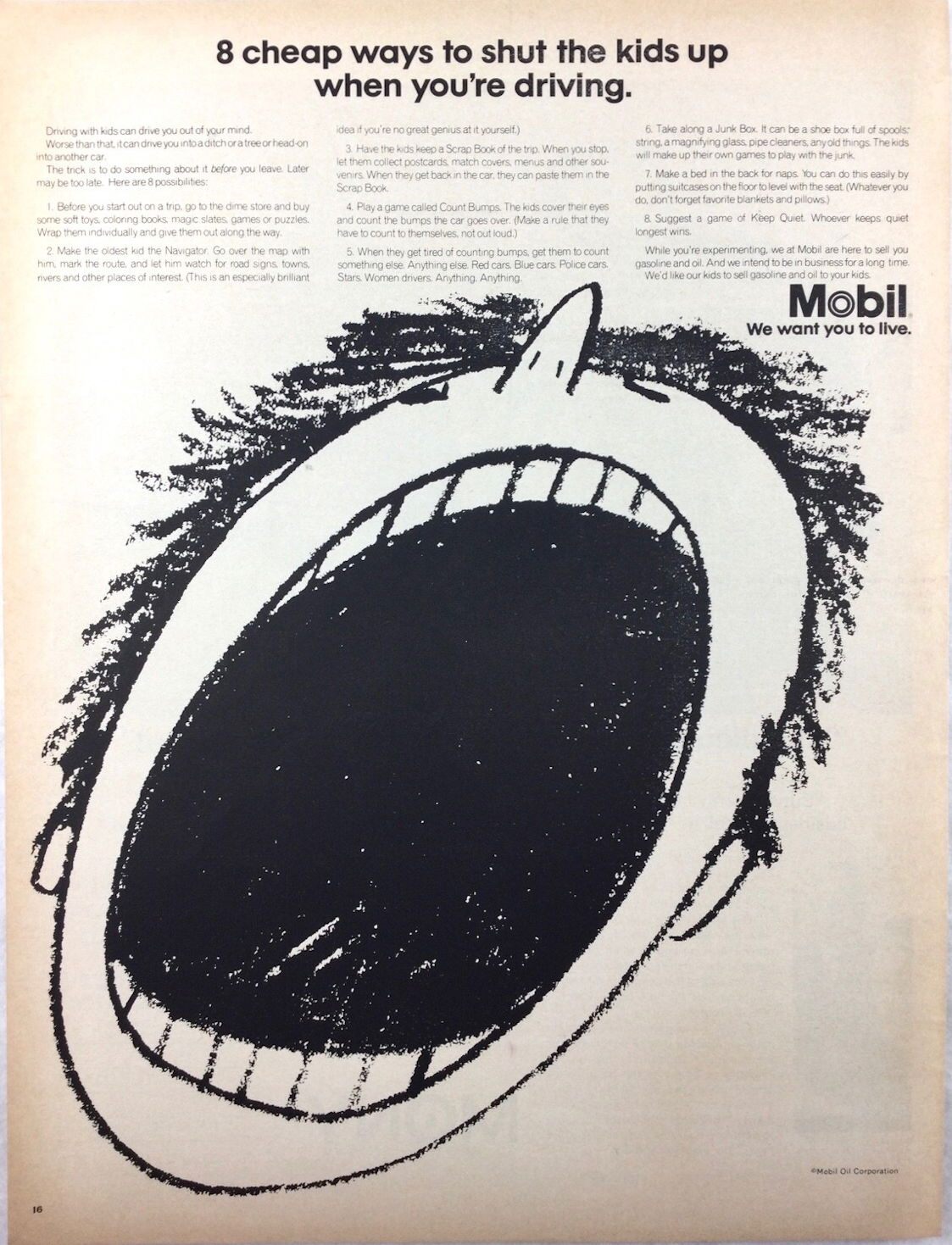
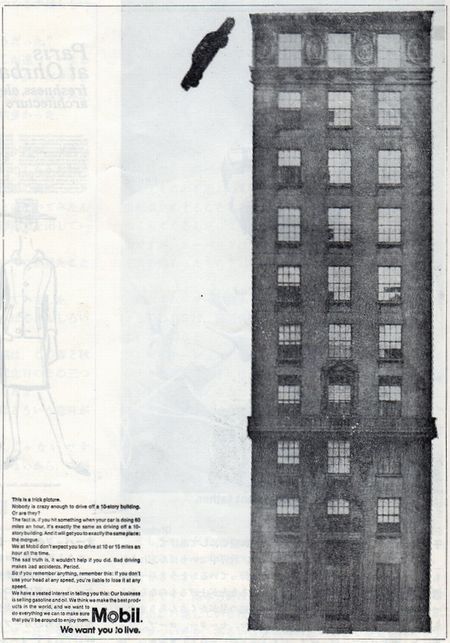
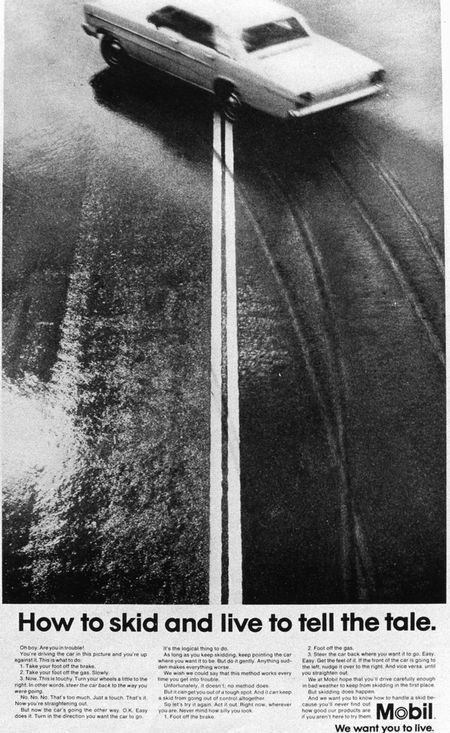
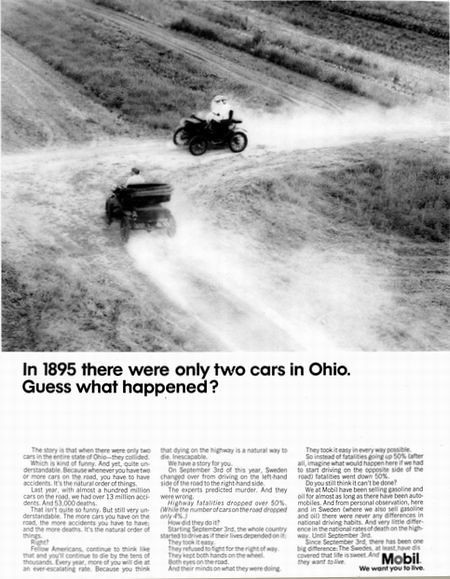
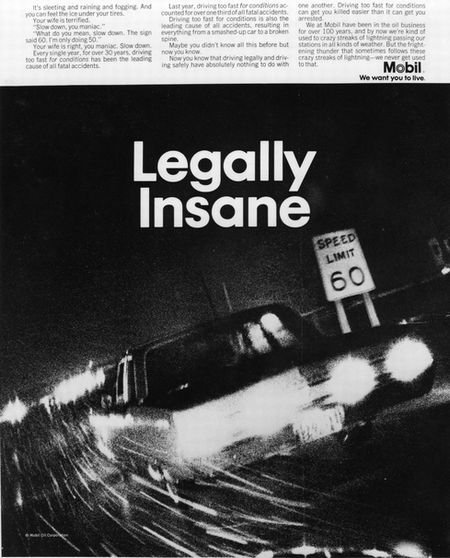
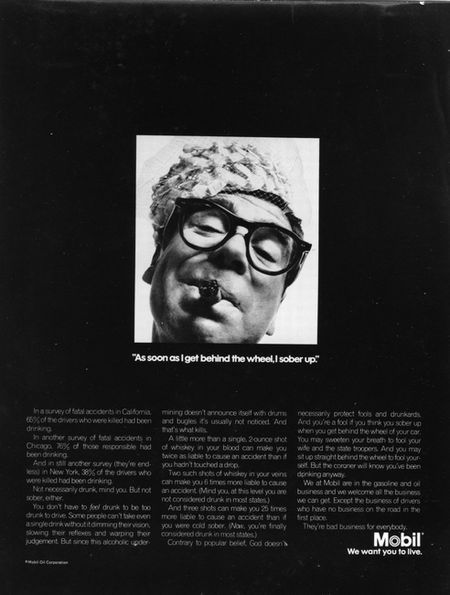
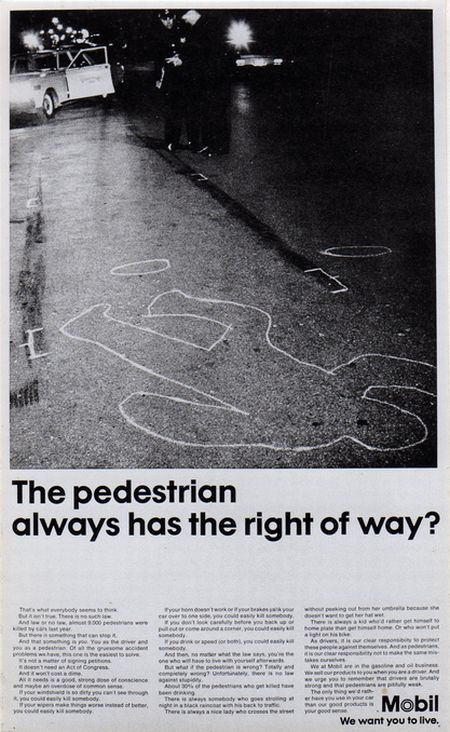
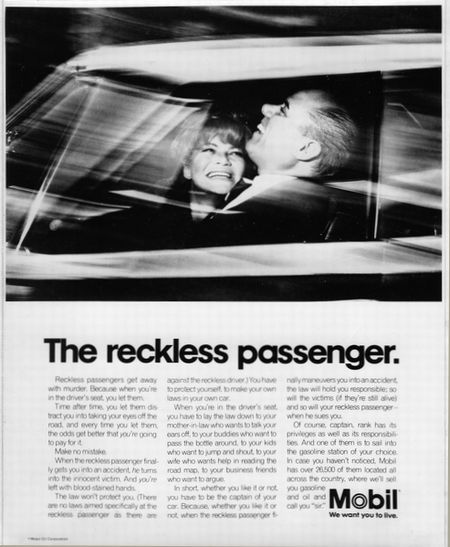
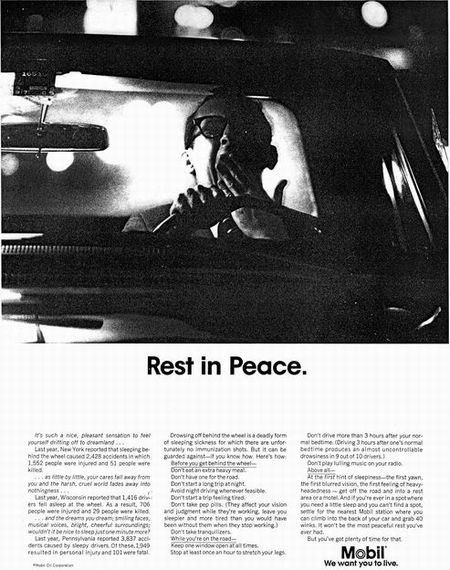
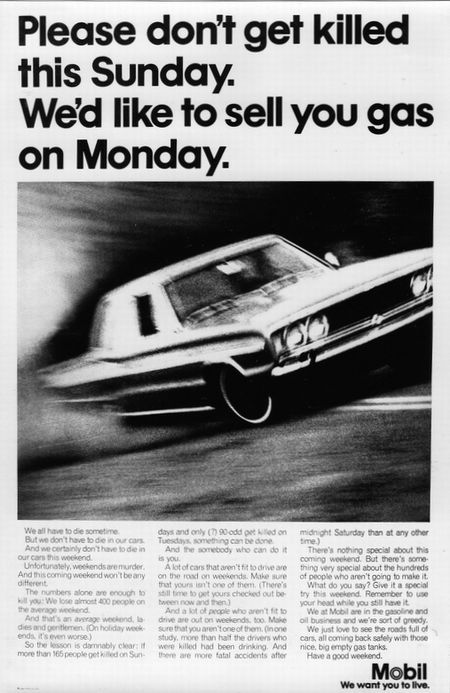
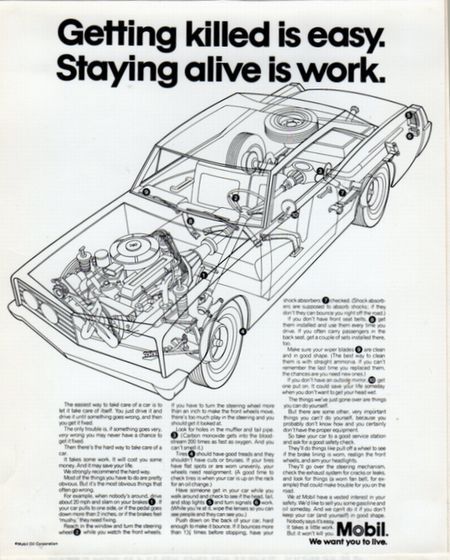
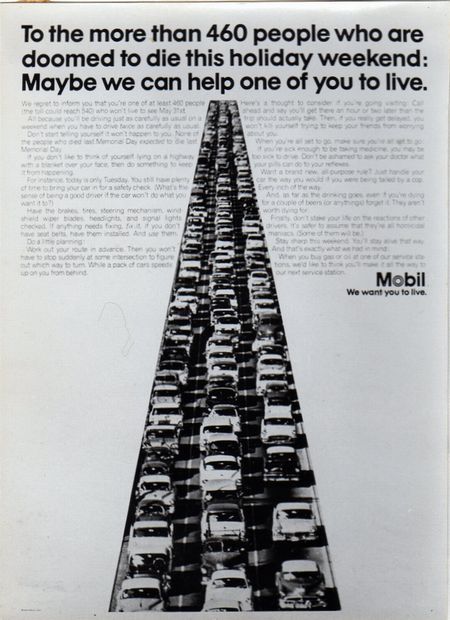
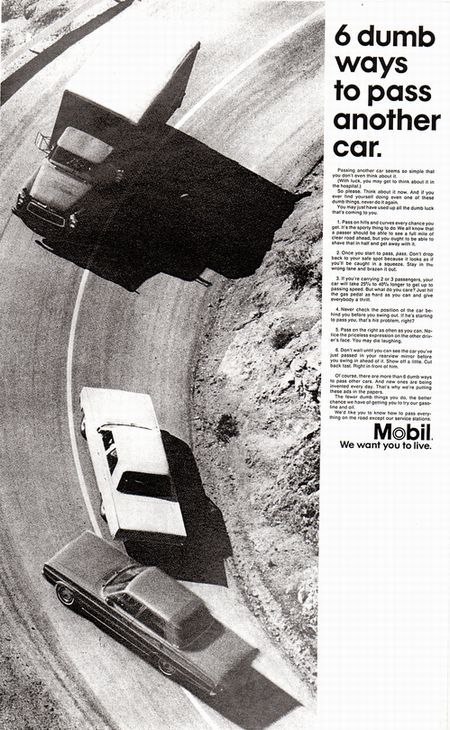
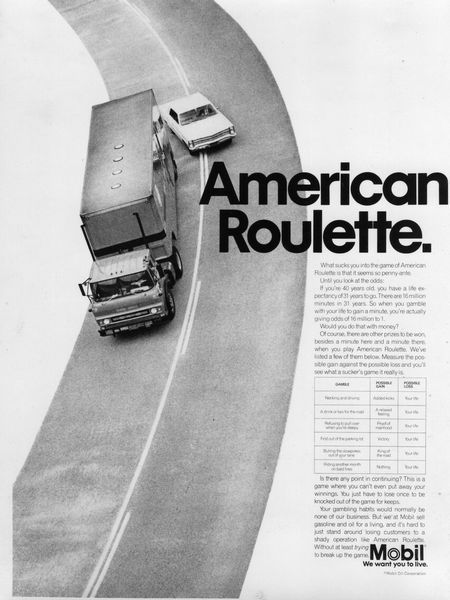
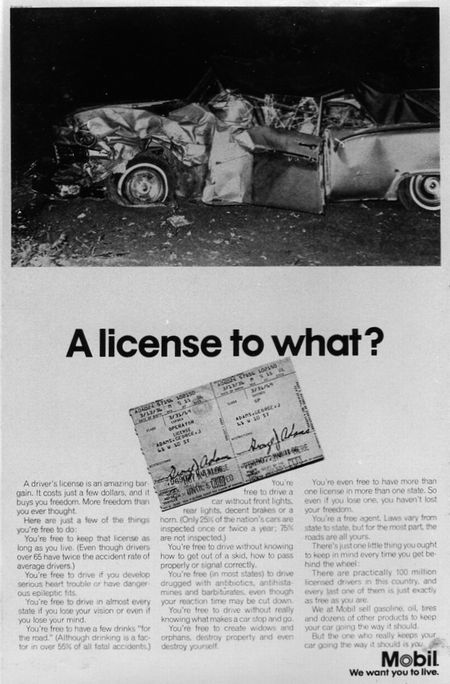
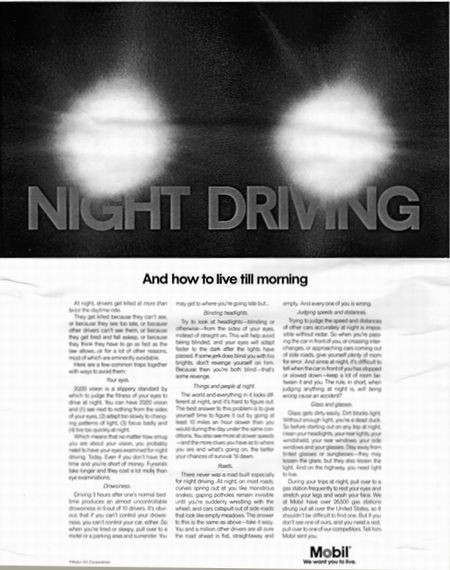
Len Sirowitz and Bob Levenson filled the gap with the thing killing fifty thousand Americans a year. The campaign ran as full newspaper pages of long copy that taught driving: how to come out of a skid, how to pass another car, how to drive at night, how to spot the trance of a straight road, how to keep children quiet in the back.
The headlines did the work of getting the page read. Rest in Peace. Legally Insane. American Roulette. Fresh-killed chickin. To the more than 460 people who are doomed to die this holiday weekend. Each page signed off the same way: we want you to live.
It worked because the advertiser had nothing to win. Every remedy in the copy cost Detroit money and cost Mobil none, and not one of them reduced the petrol a driver burned. Mobil wrote in its own copy that it was neither preacher nor teacher, that it sold petrol and oil, and that it wanted everyone to have many tomorrows. A seller with nothing to gain from the advice is the one a reader believes.
And the page was useful. A driver could act on it, which is more than an anniversary offers.
The work.
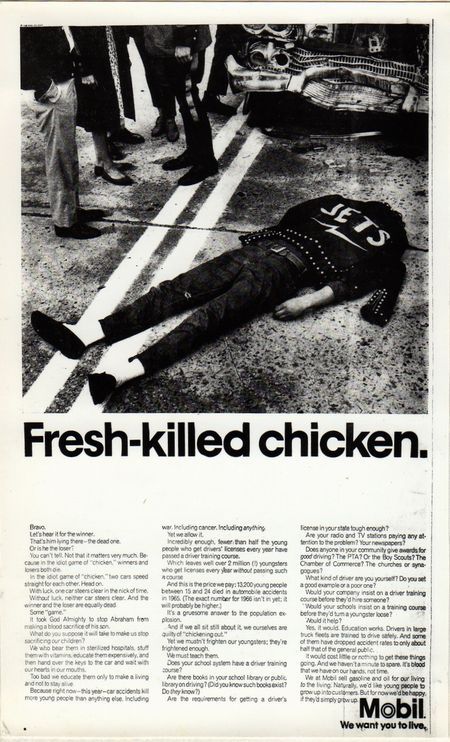
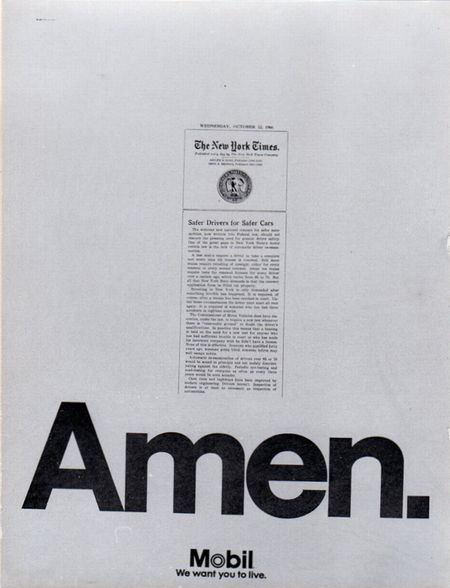
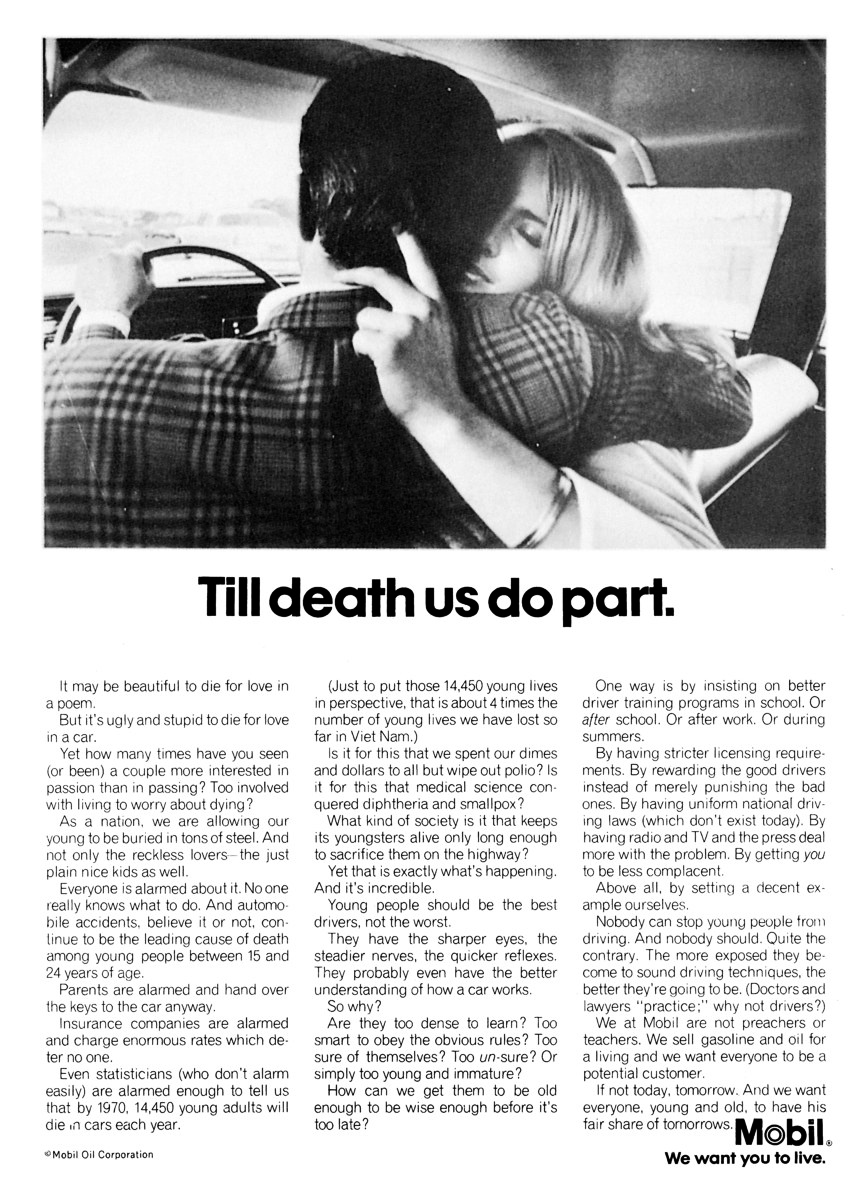
Same shape of problem.
Mobil put the dates 1866 to 1966 inside the red O of its new logo, and Bill Bernbach told the room it meant the company had just died.
Back to the archive →