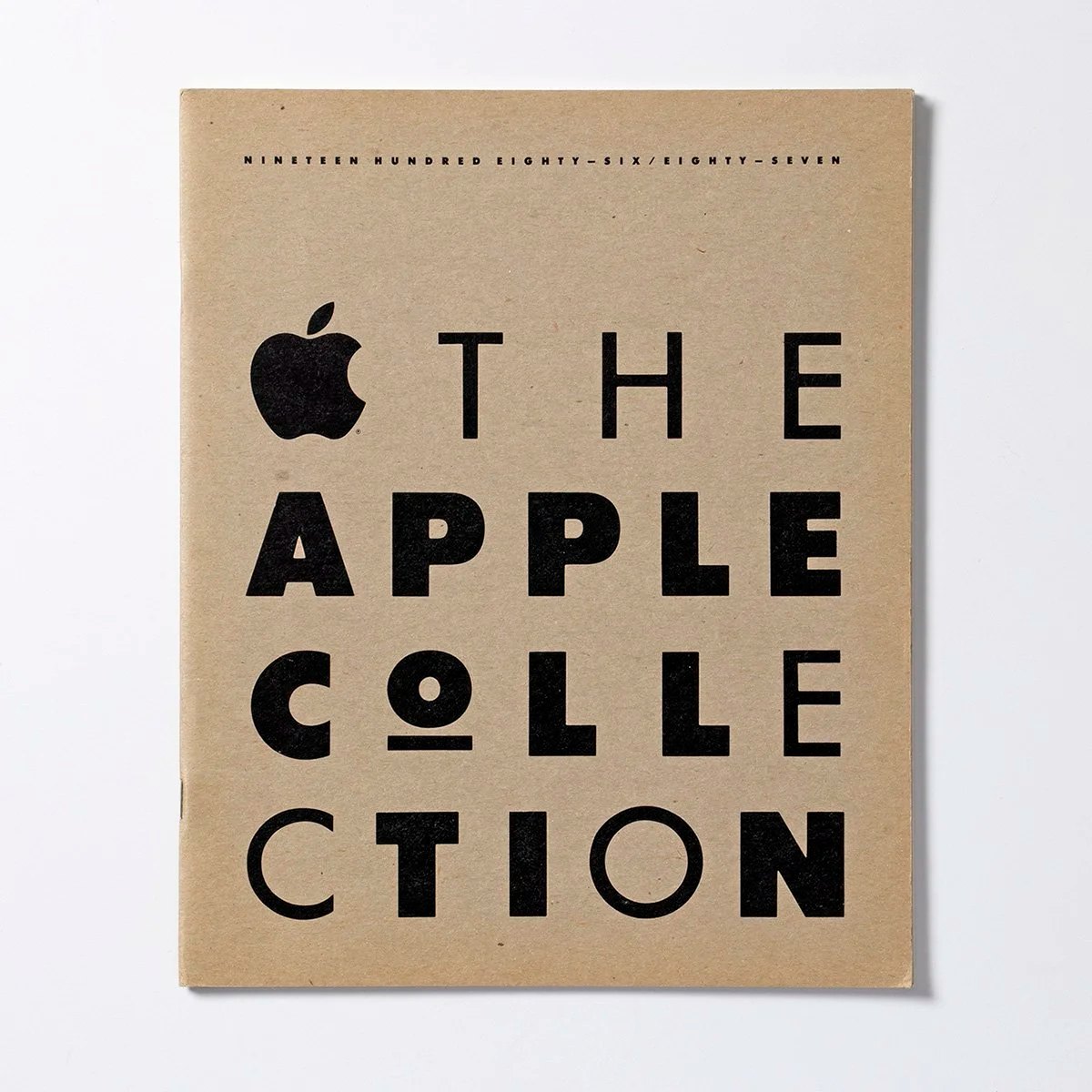
Apple · Batten, Barton, Durstine & Osborn
The Power to Be Your Best
How a four per cent computer company stopped arguing about the office and started arguing about the person sitting in it.
The era.
In the first quarter of 1985 Macintosh revenue came in at roughly a tenth of what Apple had forecast. Dealers stopped reordering, hundreds of millions of dollars of unsold machines sat in the channel, and Apple posted its first quarterly loss and laid off about a fifth of its staff. Steve Jobs, who had promised half a million Macintosh units for 1985, was stripped of operating control that June and resigned as chairman on 13 September 1985. The machine that had been launched as a revolution eighteen months earlier was now an inventory problem.
John Sculley's answer, announced on 20 May 1985 and in place by 5 June, was to collapse the separate Macintosh and Apple II divisions into one functional company and point the selling effort at two markets Apple could actually win: education, and small to mid-size business. Del Yocam took worldwide product operations. Bill Campbell was made executive vice president for all United States sales and marketing. The restructuring fixed the cost base, but it did not answer the question of how a computer the business world thought of as an art-school machine was supposed to get onto a corporate purchase order.
Apple's share of personal computer units was 4.2 per cent in 1986 and sat between five and six per cent through to 1990. That number changes what the advertising was for. The Macintosh had never been in the fight for business. Whatever came next had to persuade buyers who had no reason to consider Apple at all, in a category where the safe answer was already written down.
The culture.
The competitor was not really International Business Machines. Its 1981 decision to build the 5150 out of off-the-shelf parts had produced a clone industry that undercut it, and by 1991 International Business Machines held only 16.3 per cent of personal computer revenue. What survived was a habit of mind. To a buyer in 1987 the phrase stood for a category and a procedure rather than a company, and the procedure was: specify the standard, order it, and nobody asks you why.
The one place Apple was winning was print. Aldus PageMaker shipped in July 1985, the Apple LaserWriter arrived the same year at around seven thousand dollars, and Adobe built PostScript with Apple so that what appeared on screen matched what came off the printer. Adobe Illustrator 1.0 shipped for Macintosh only. QuarkXPress followed in April 1987 and Photoshop in February 1990. Desktop publishing was an entire profession that could only be carried out on one brand of machine, and it gave Apple a real business argument for the first time.
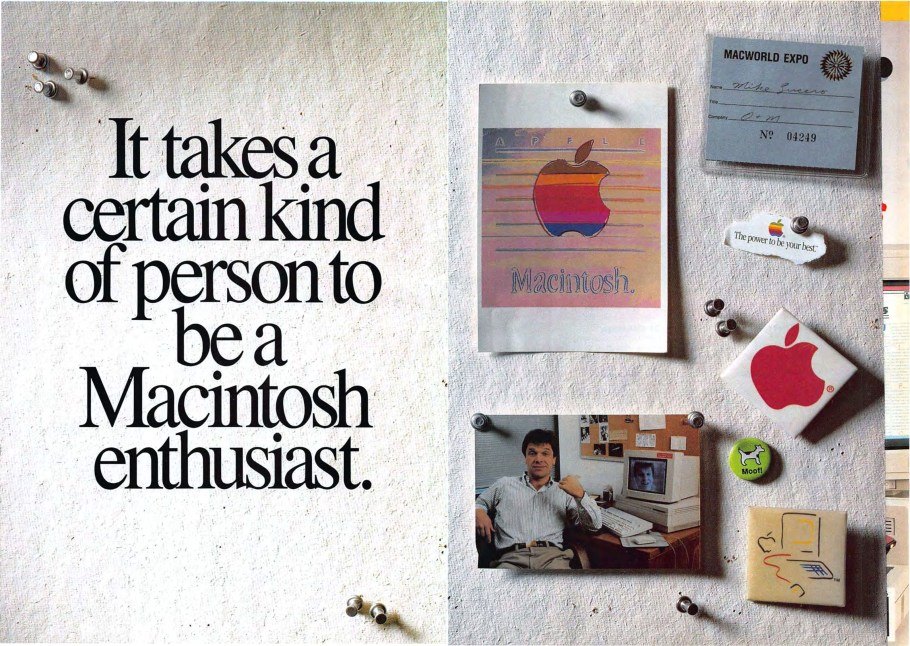
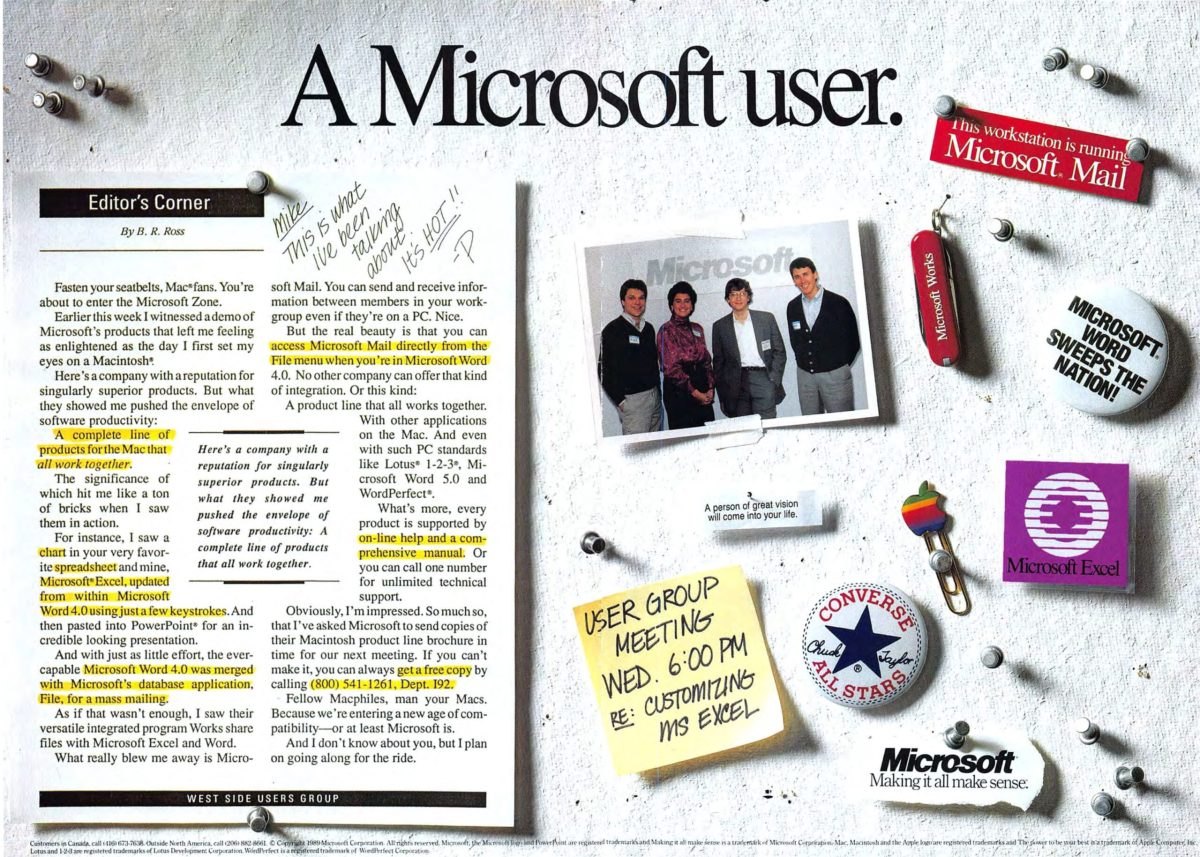
The decade's working language was already personal. American business talked about potential, ceilings and becoming your best self, and the Army had been running "Be All You Can Be" since 1981. Apple's own installed base — designers, art departments, teachers — was made of individuals rather than purchasing committees. By 1989 Apple was confident enough to run a double-page spread whose joke was that the real Macintosh enthusiast was a Microsoft customer, with Word, Excel and Bill Gates in the layout, arguing that the software case against the Macintosh had collapsed.
The problem.
Nobody ever got fired for buying International Business Machines, and everybody in the market knew it.
Batten, Barton, Durstine & Osborn inherited a brand with about four per cent of the market and a reputation for being charming and irrelevant. The business buyer Apple needed had a standard answer already written into the purchasing process, and choosing anything else meant volunteering to carry personal risk for a decision that offered no visible reward. Apple could not win that argument on specification, because for most office tasks the specification was not the point and the clones were cheaper.
Worse, the previous advertising had made the problem sharper. The 1984 work had positioned Apple as the opponent of institutional computing, which is a thrilling place to stand and a difficult place to sell from. A company that has spent two years telling the world it is the enemy of the conformist office cannot easily walk into that office and ask for a purchase order. Apple needed an argument that did not require the buyer to repudiate his own employer, and that did not require Apple to pretend it was ordinary.
After the Macintosh sales collapse of 1985 John Sculley put the account up for review, saying publicly that he doubted Chiat/Day could handle Apple's strategic complexity. Apple dismissed Chiat/Day on 27 May 1986 and appointed Batten, Barton, Durstine & Osborn, then asked the new agency to tear down the beliefs that made business buyers pick International Business Machines or a cheaper clone. Sculley also urged Phil Dusenberry to recruit Steve Hayden, the copywriter on Apple's 1984 commercial, out of the agency Apple had just sacked.
The solution.
Stop arguing about the institution. Make the purchase a statement about the buyer's own ceiling, and let the product proof be permission rather than proof.
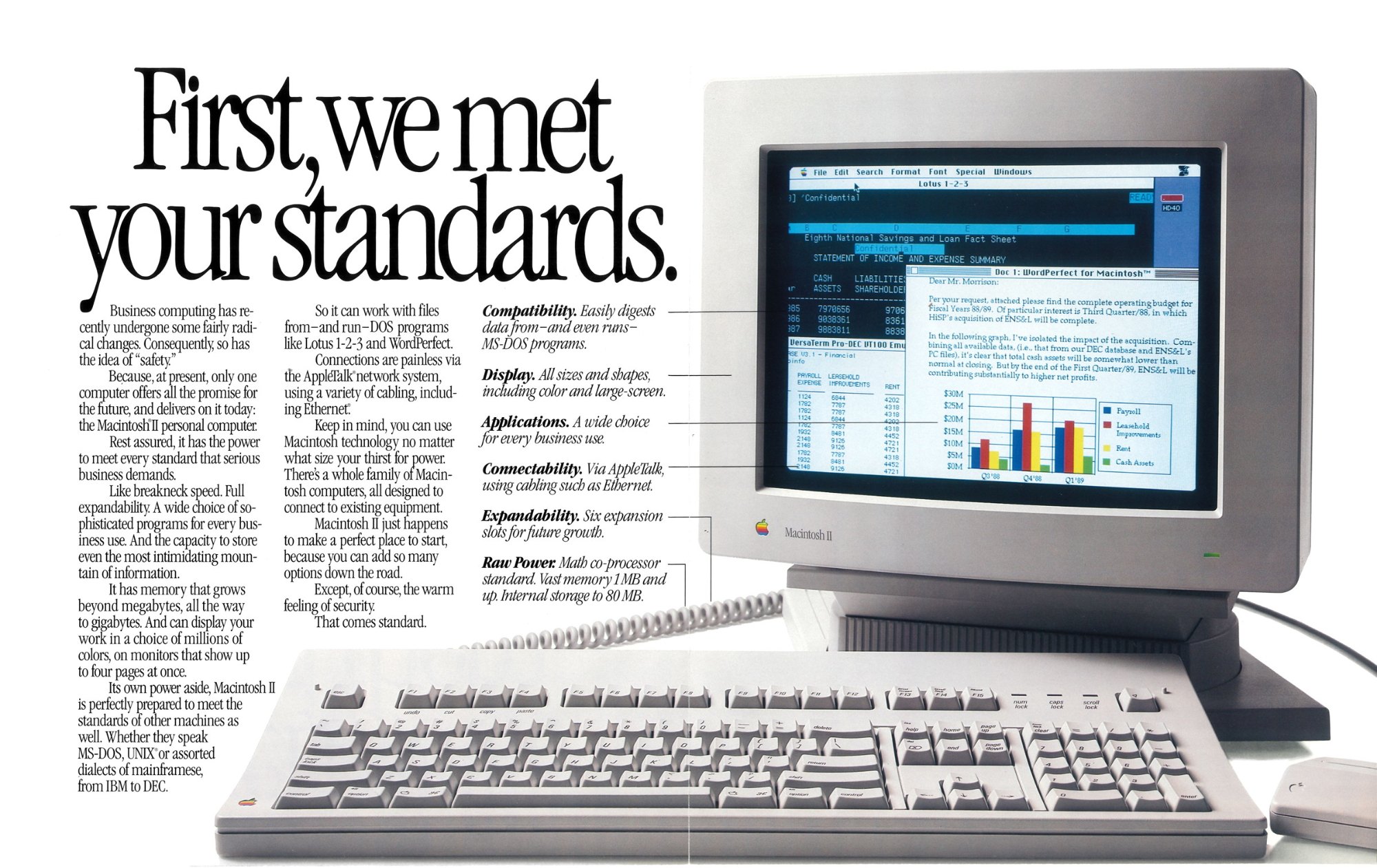
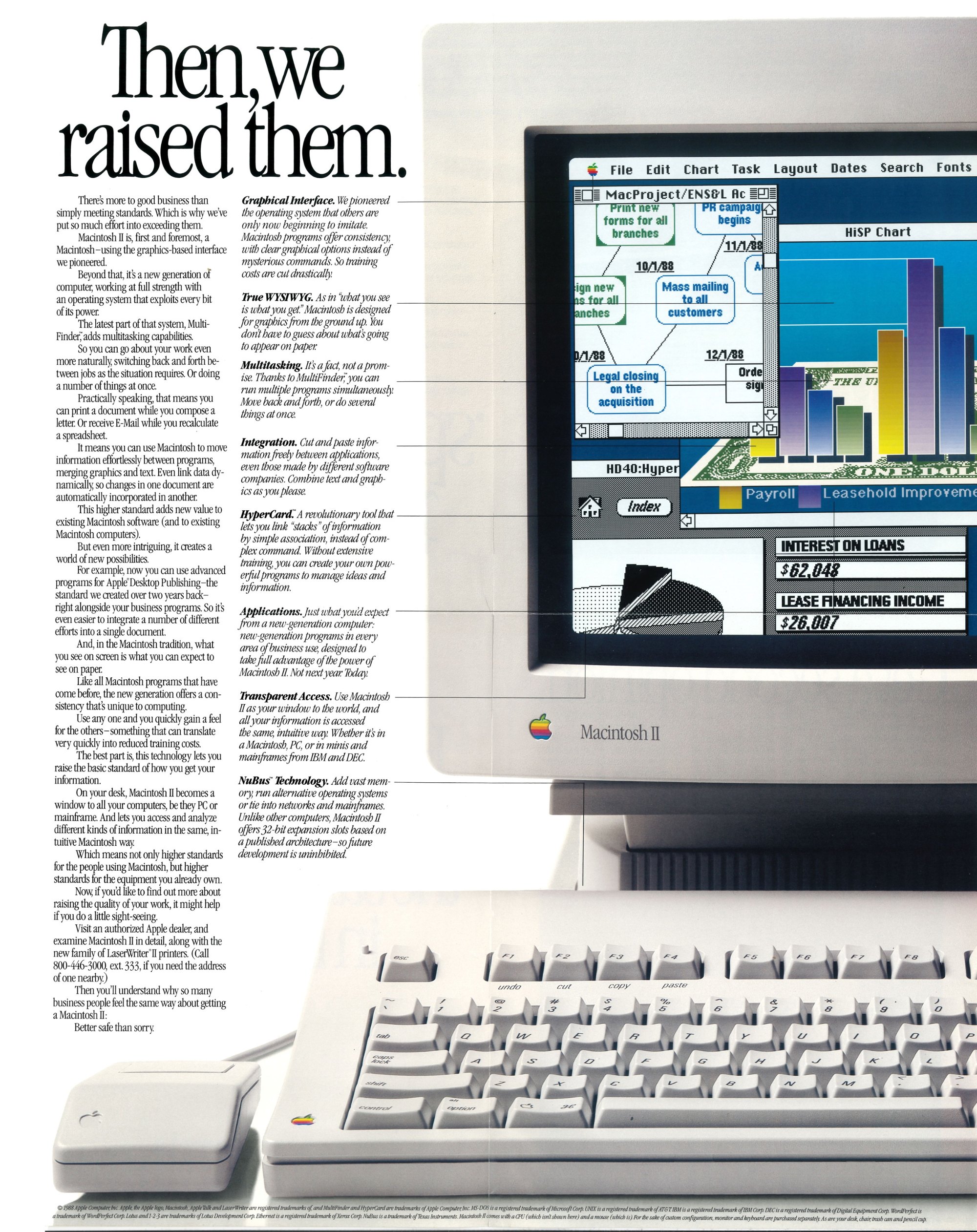
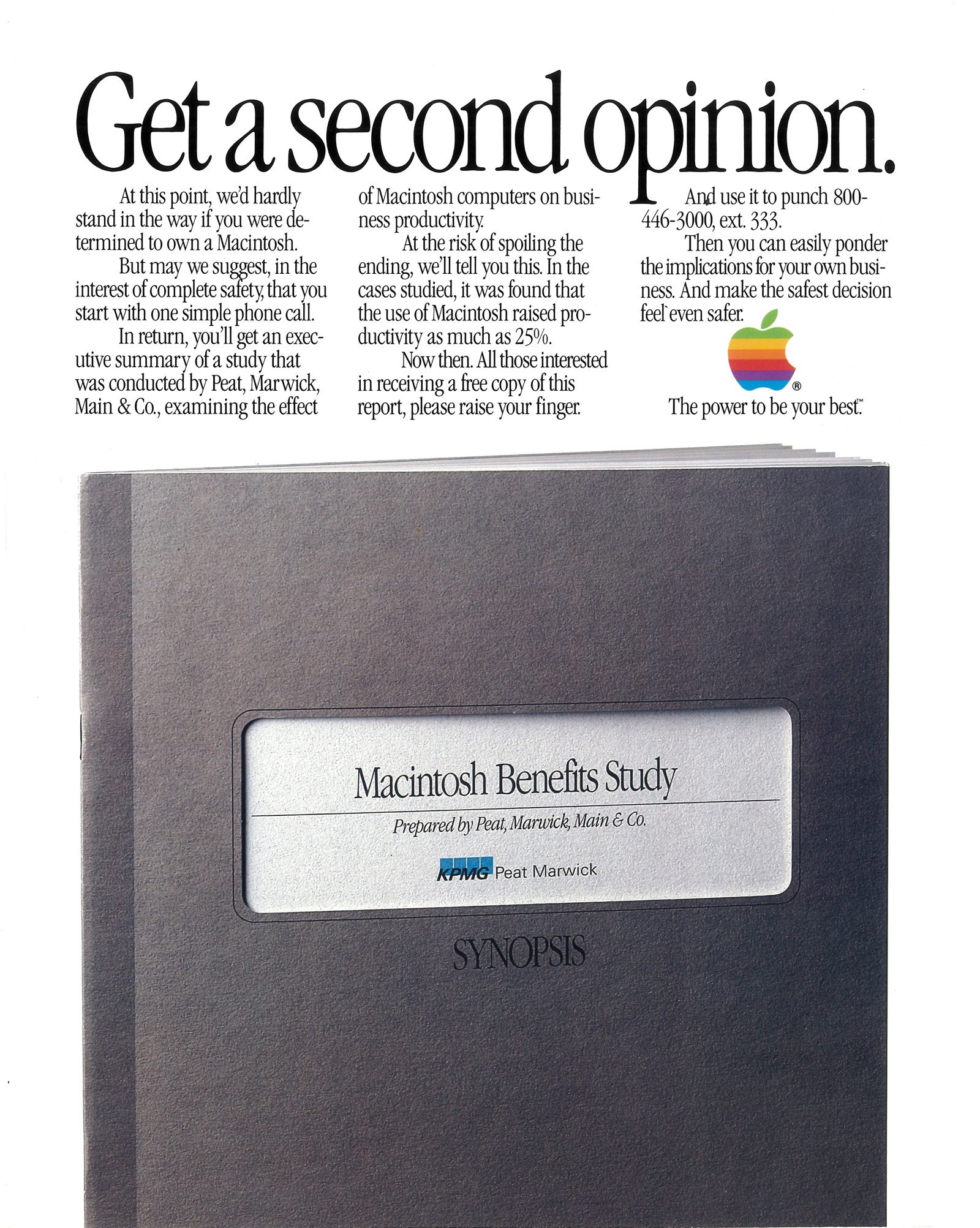
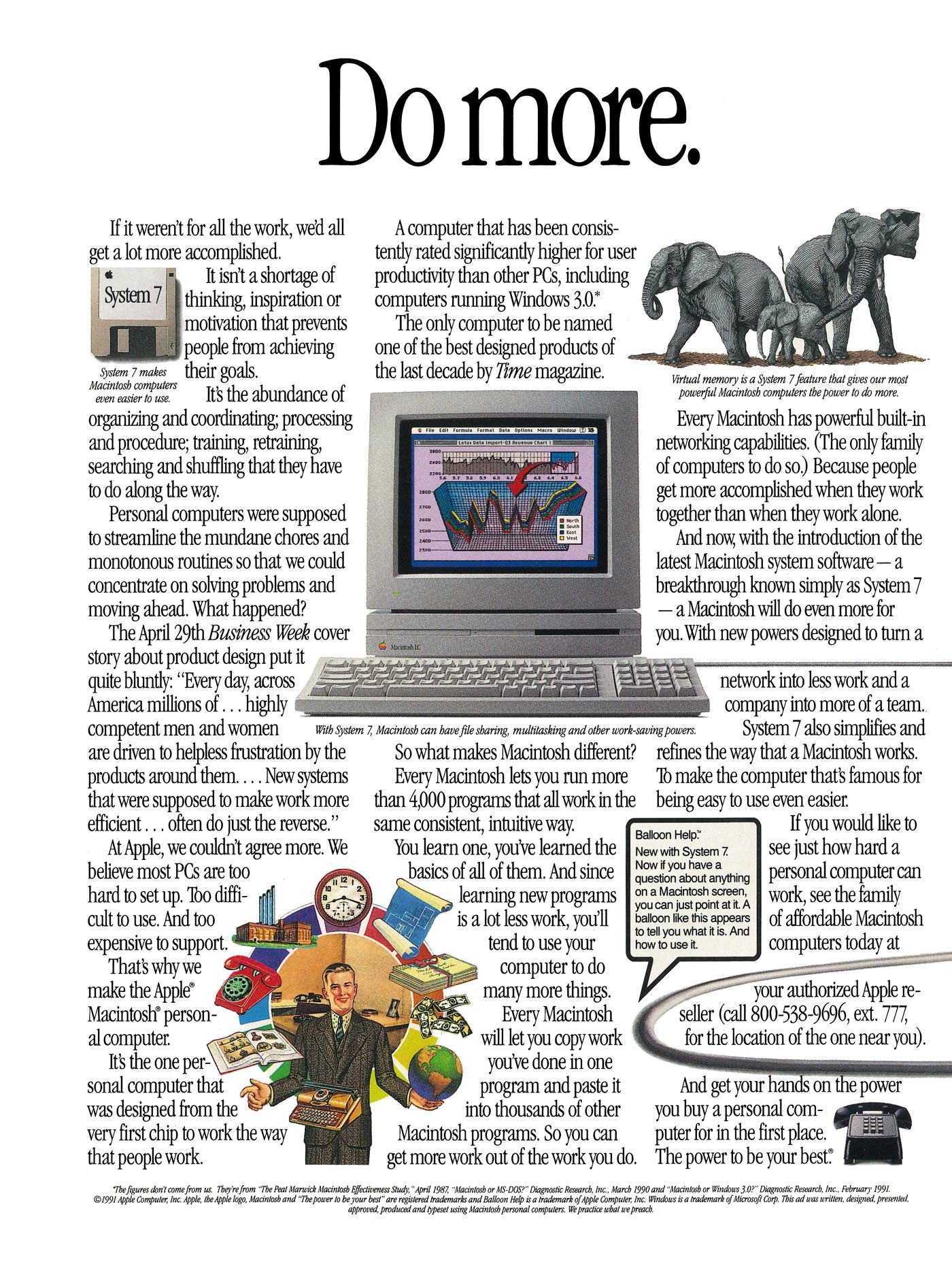
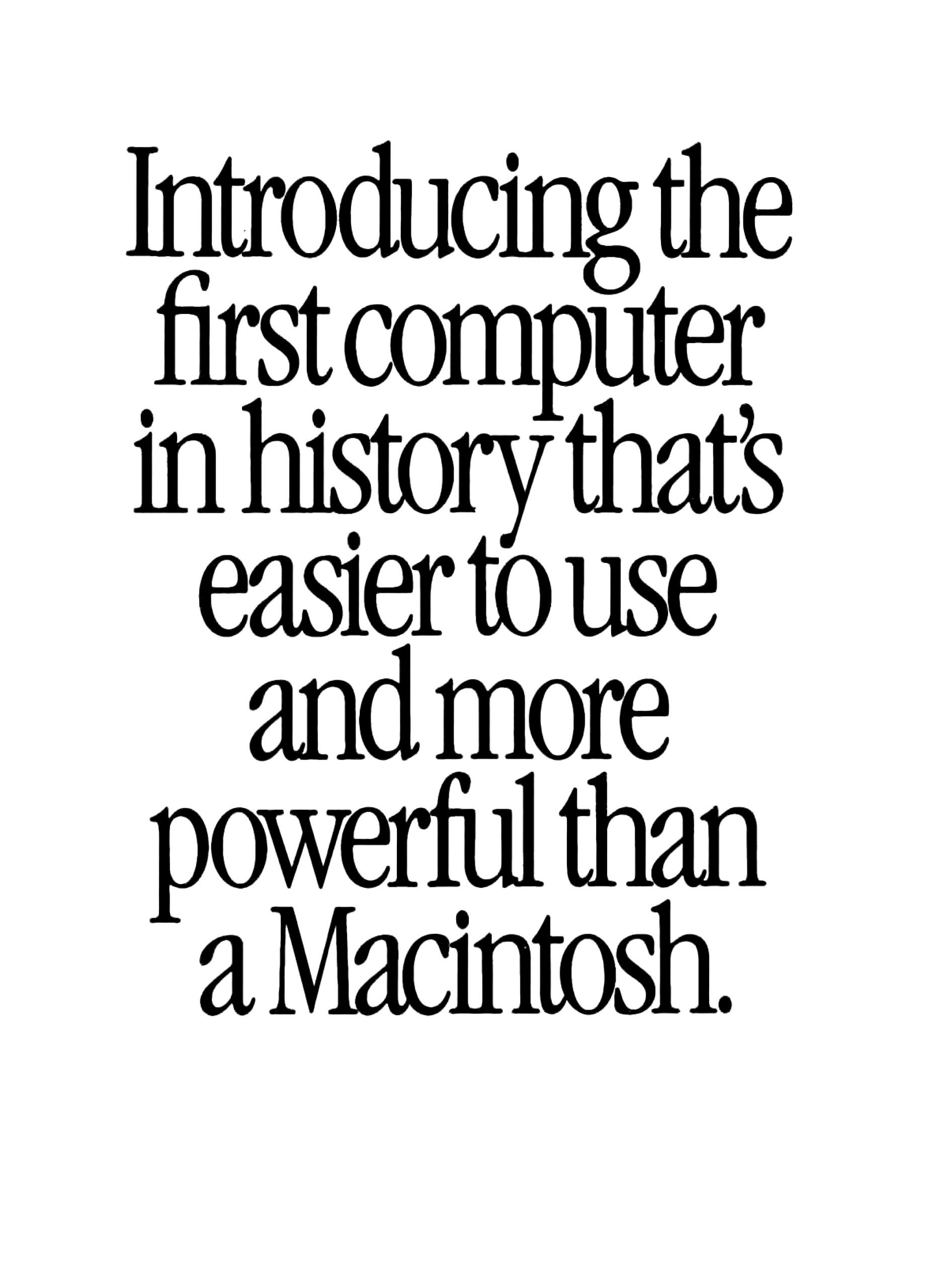
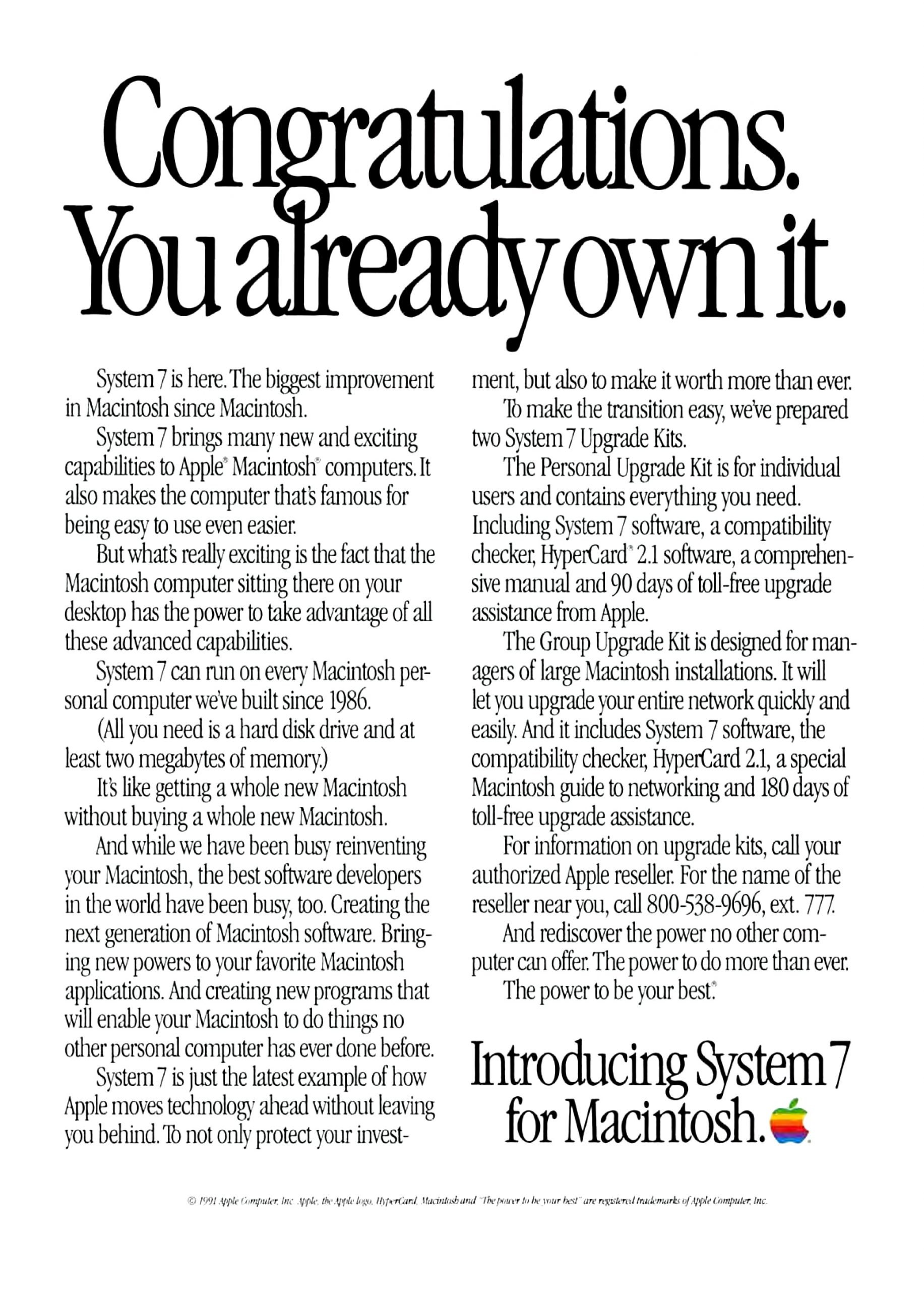
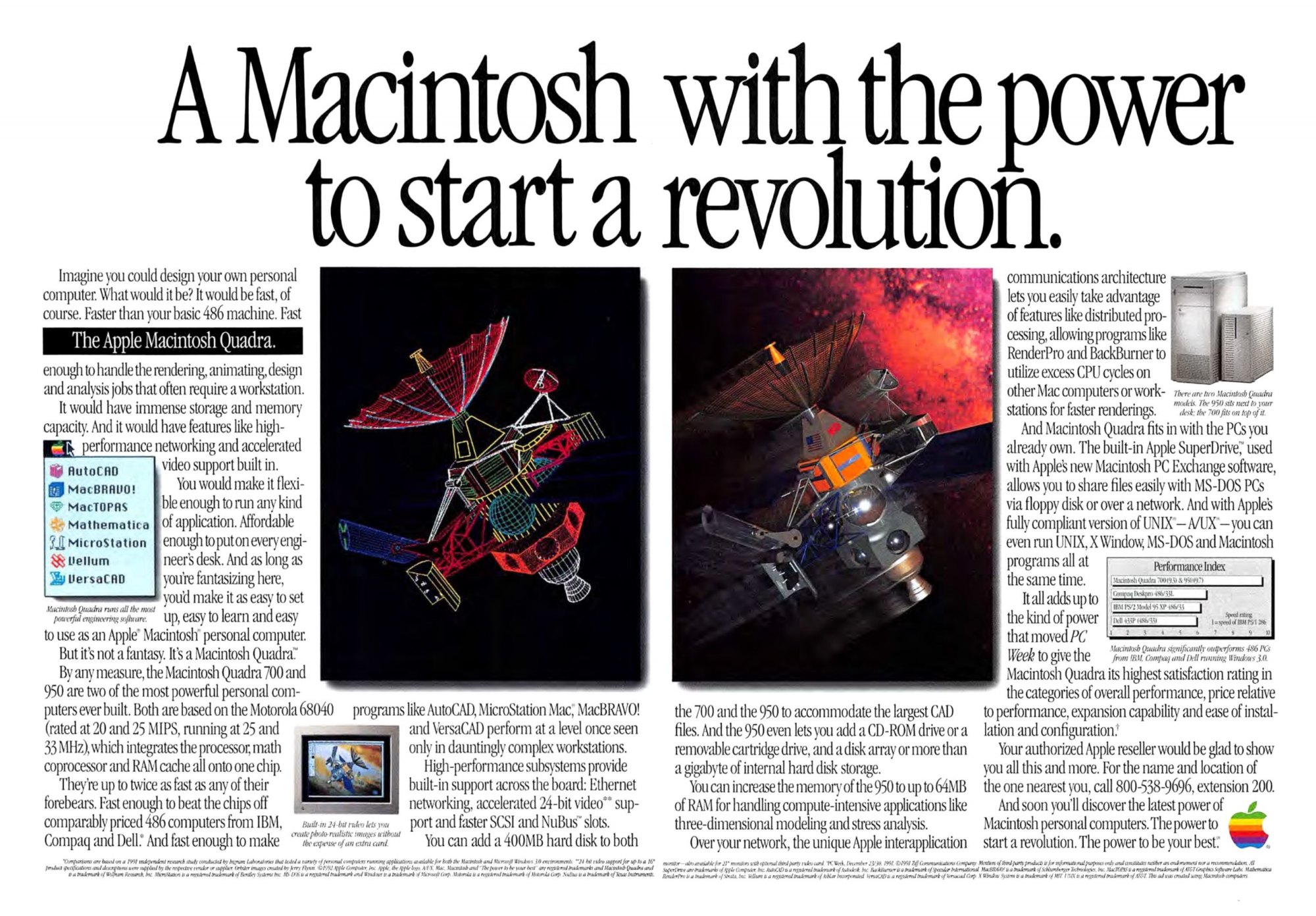
The line Batten, Barton, Durstine & Osborn arrived with was a personal promise rather than a product claim, and that single grammatical choice did the strategic work. Once the headline is about what you are capable of, every rational argument underneath it — a screen that showed more than black and white, networking, desktop publishing, a consultancy study claiming a twenty-five per cent productivity gain — reads as a service to the reader rather than a boast about the machine. Apple stopped asking buyers to reject their own employer and started offering them a way to be better inside it.
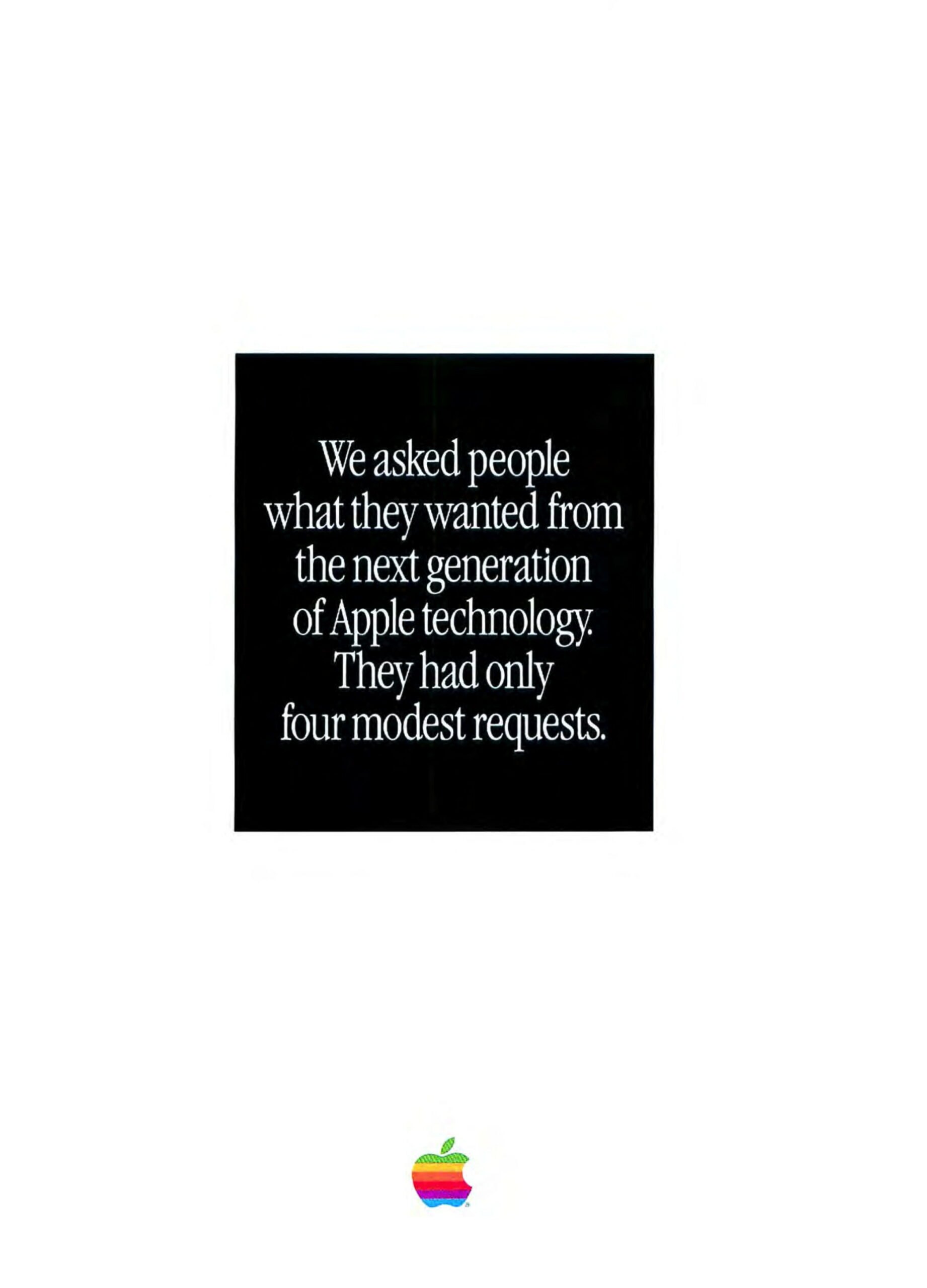
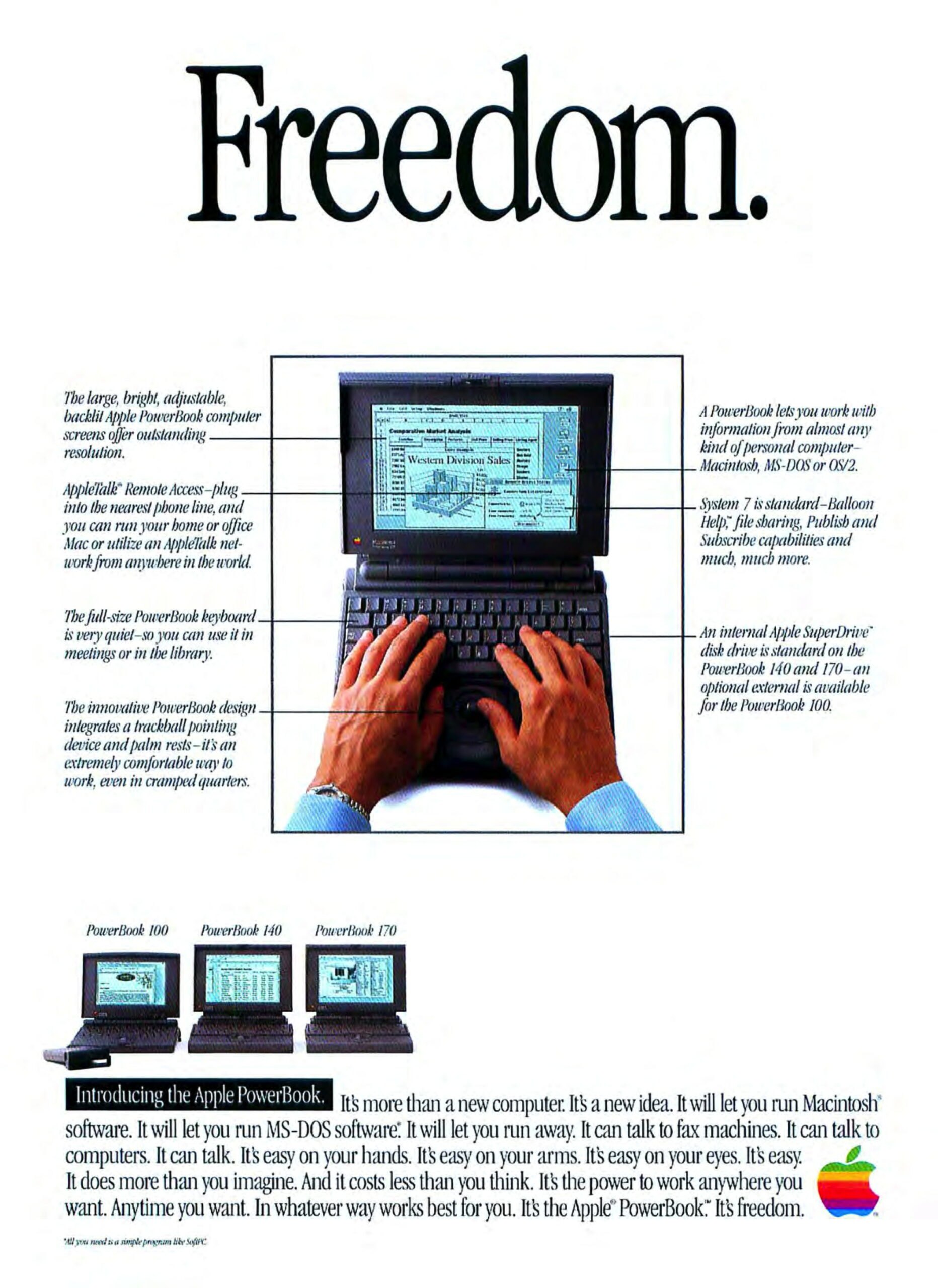
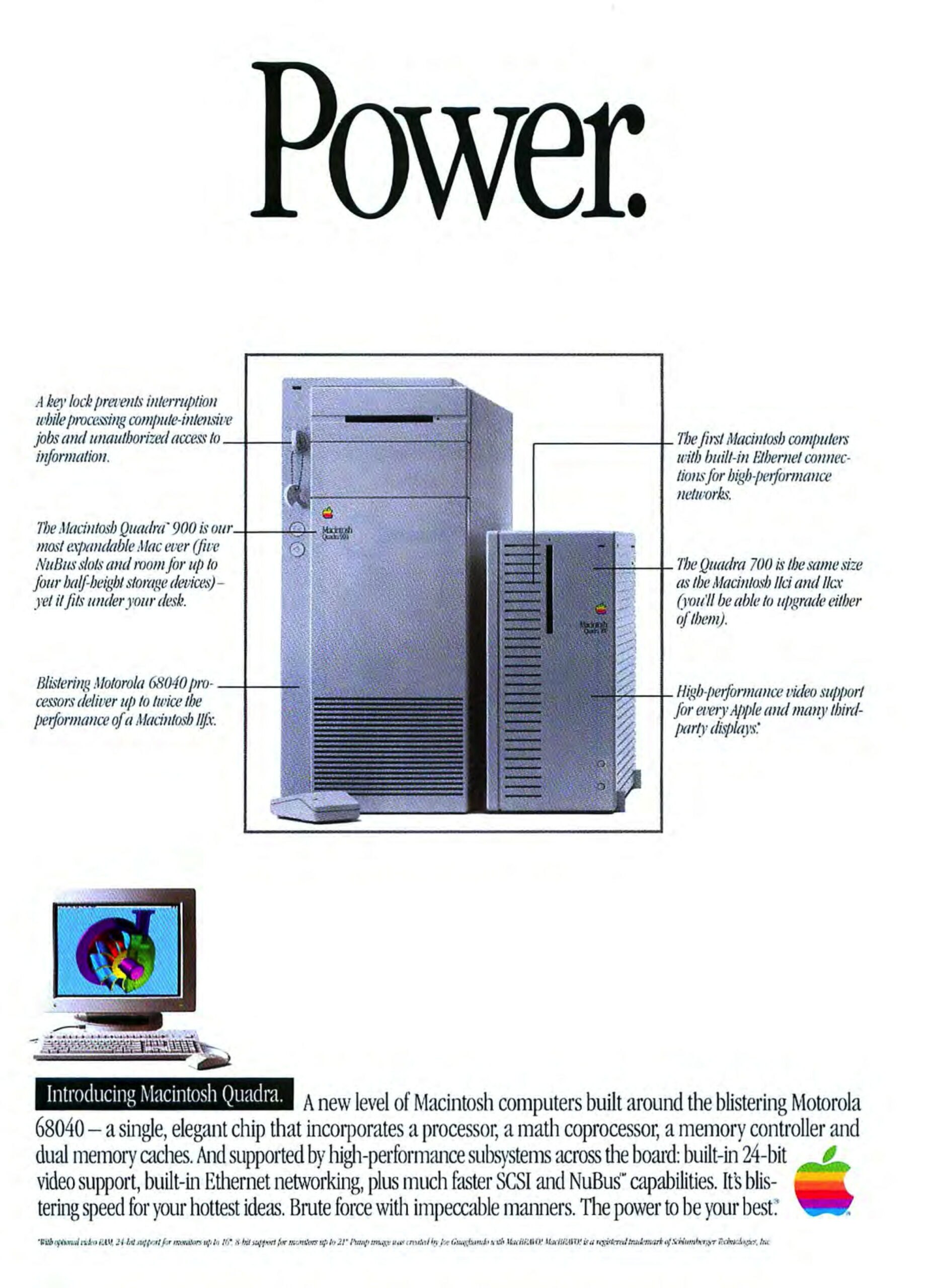
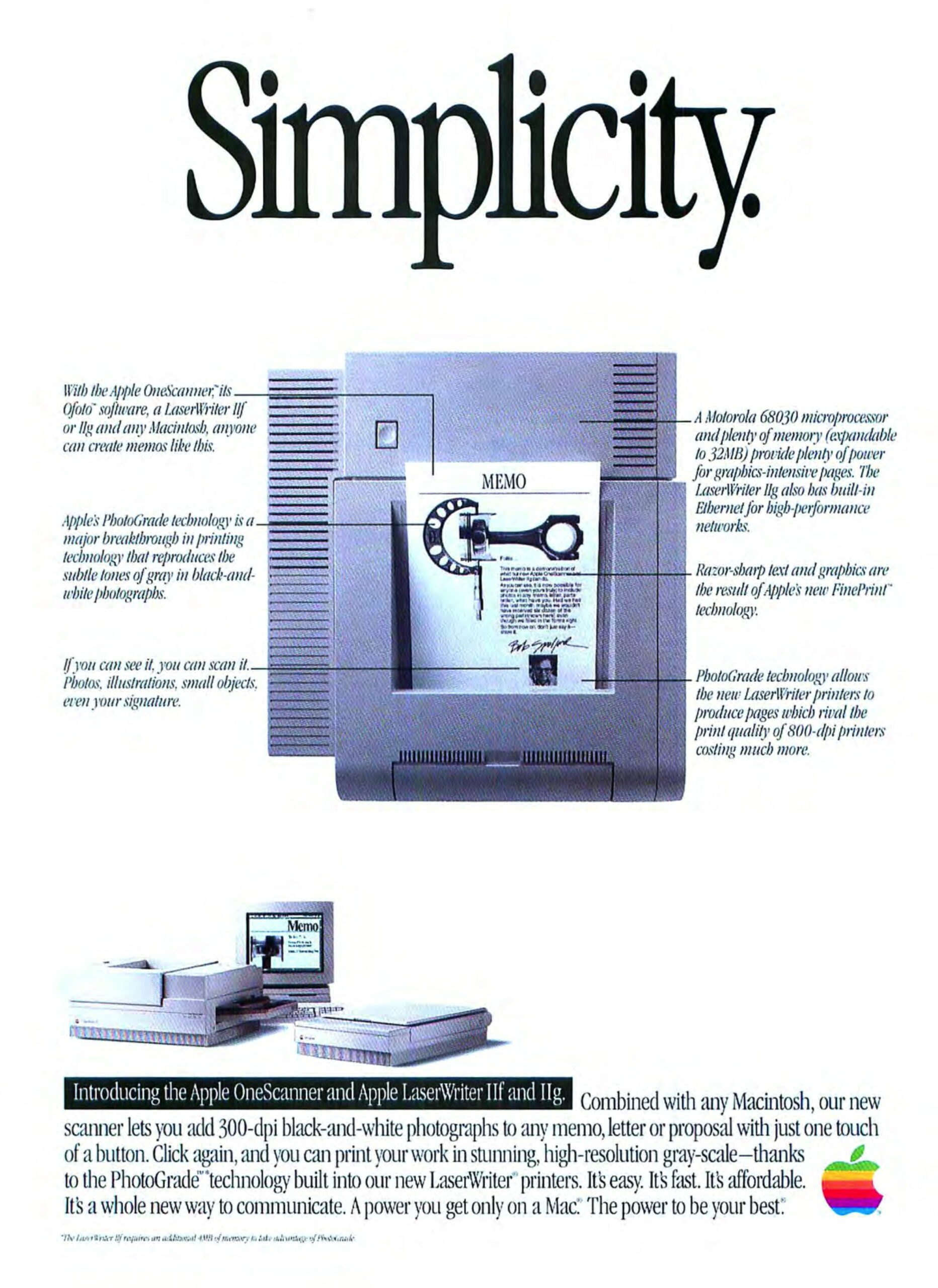
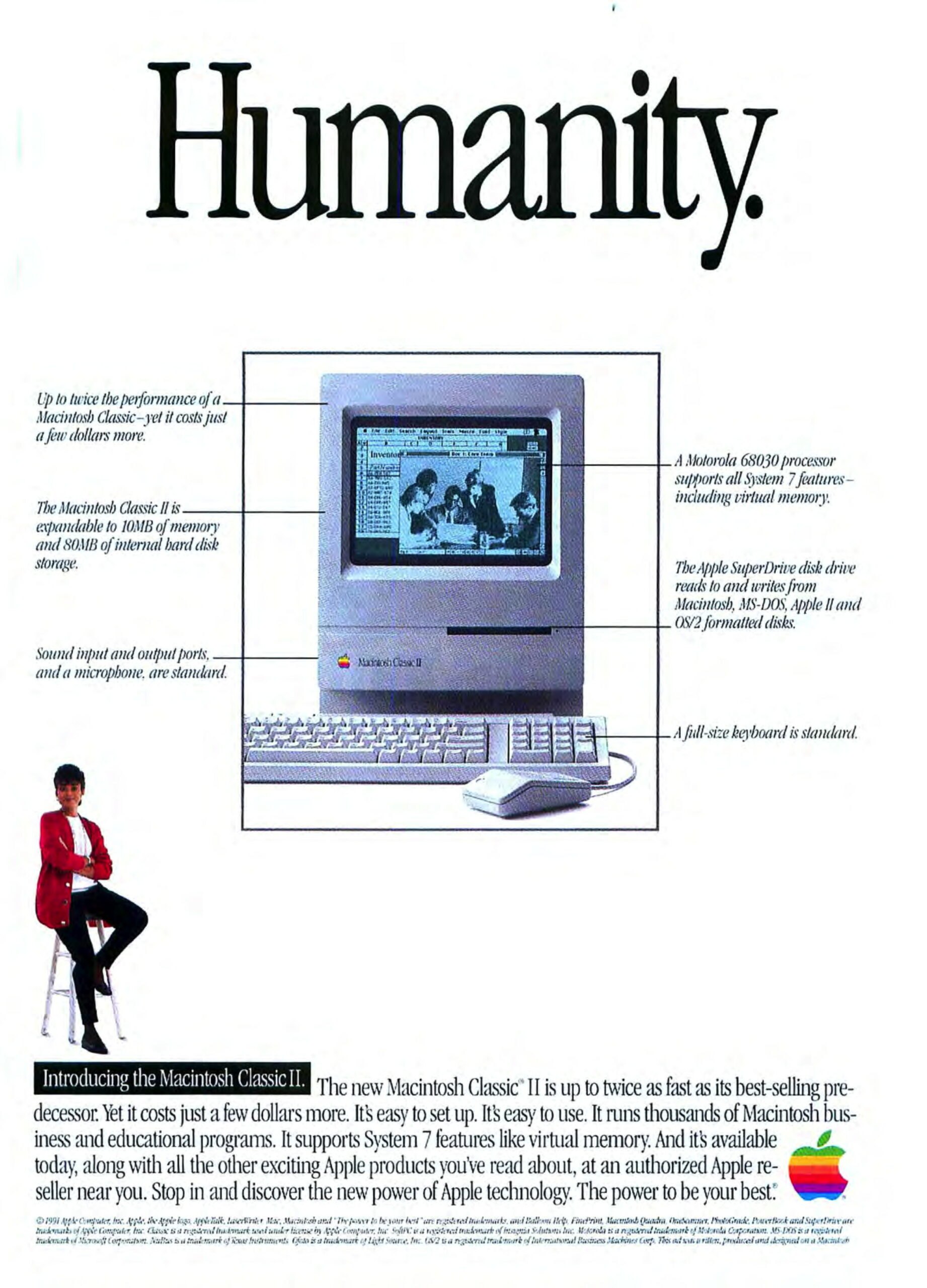
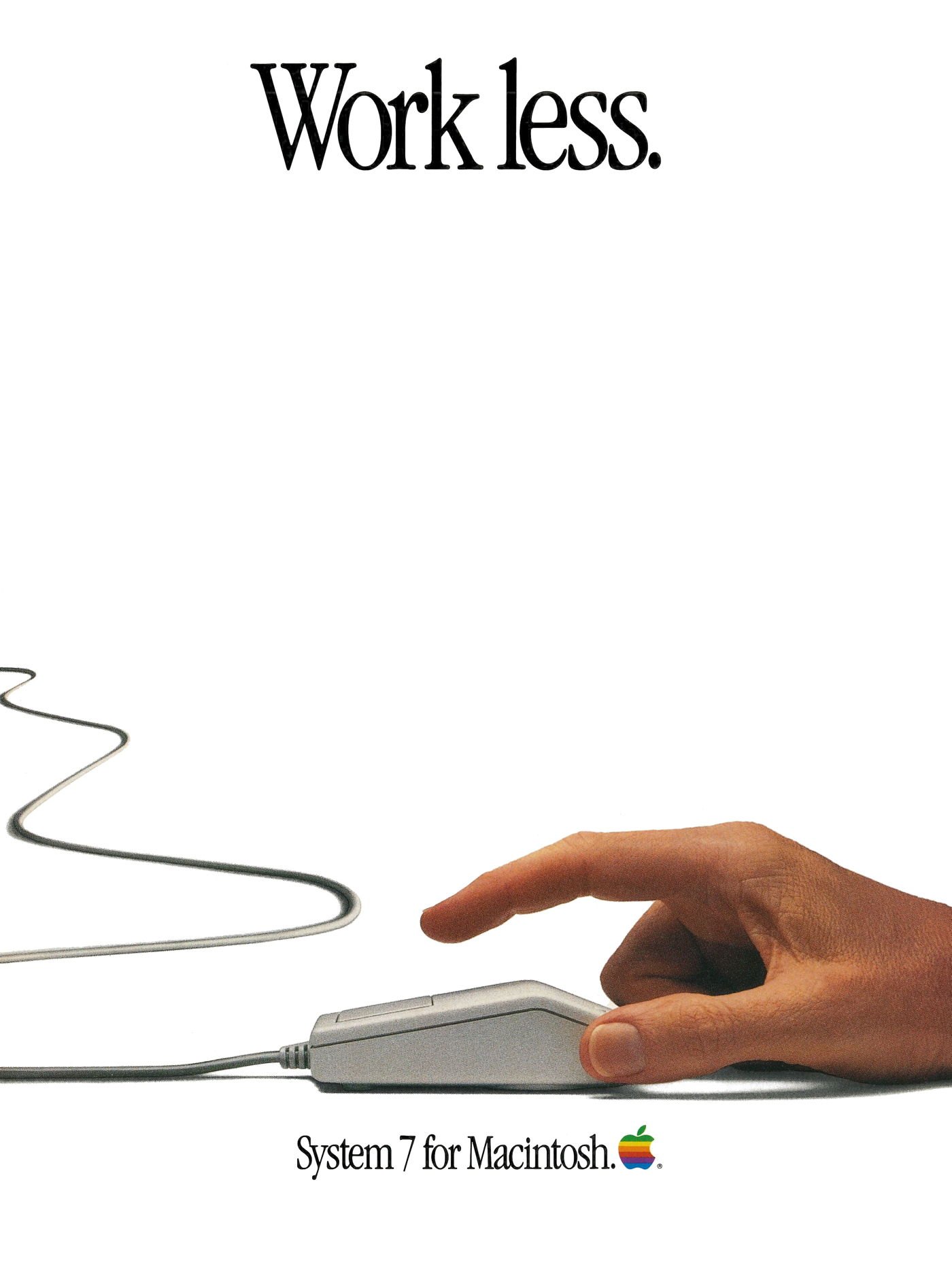
The sharpest execution inverted the competitor's strongest weapon. The unspoken rule in corporate buying was that nobody was ever sacked for ordering International Business Machines; one print ad ran a headline about a management information systems manager who bought Macintosh and kept his job. Career safety, the whole basis of the opposing case, became the Apple headline. The campaign did not turn the market — Macintosh share only reached about twelve per cent by 1992 — but it gave Apple a sentence it could say in a boardroom without flinching, and the five-page corporate insert that ran in MacWorld in December 1991 shows the finished architecture: freedom, power, simplicity, humanity, resolving into the line.
The work.
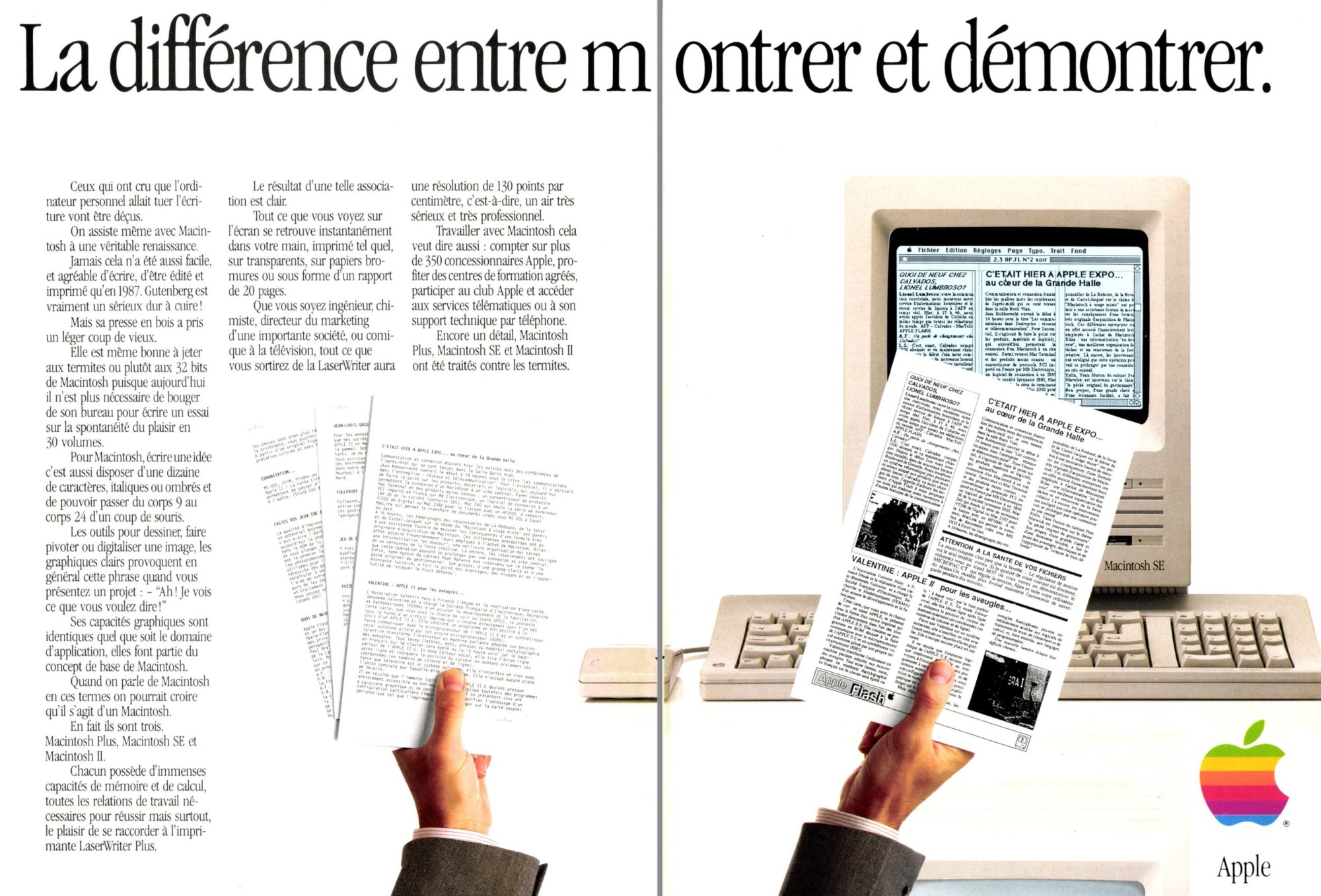
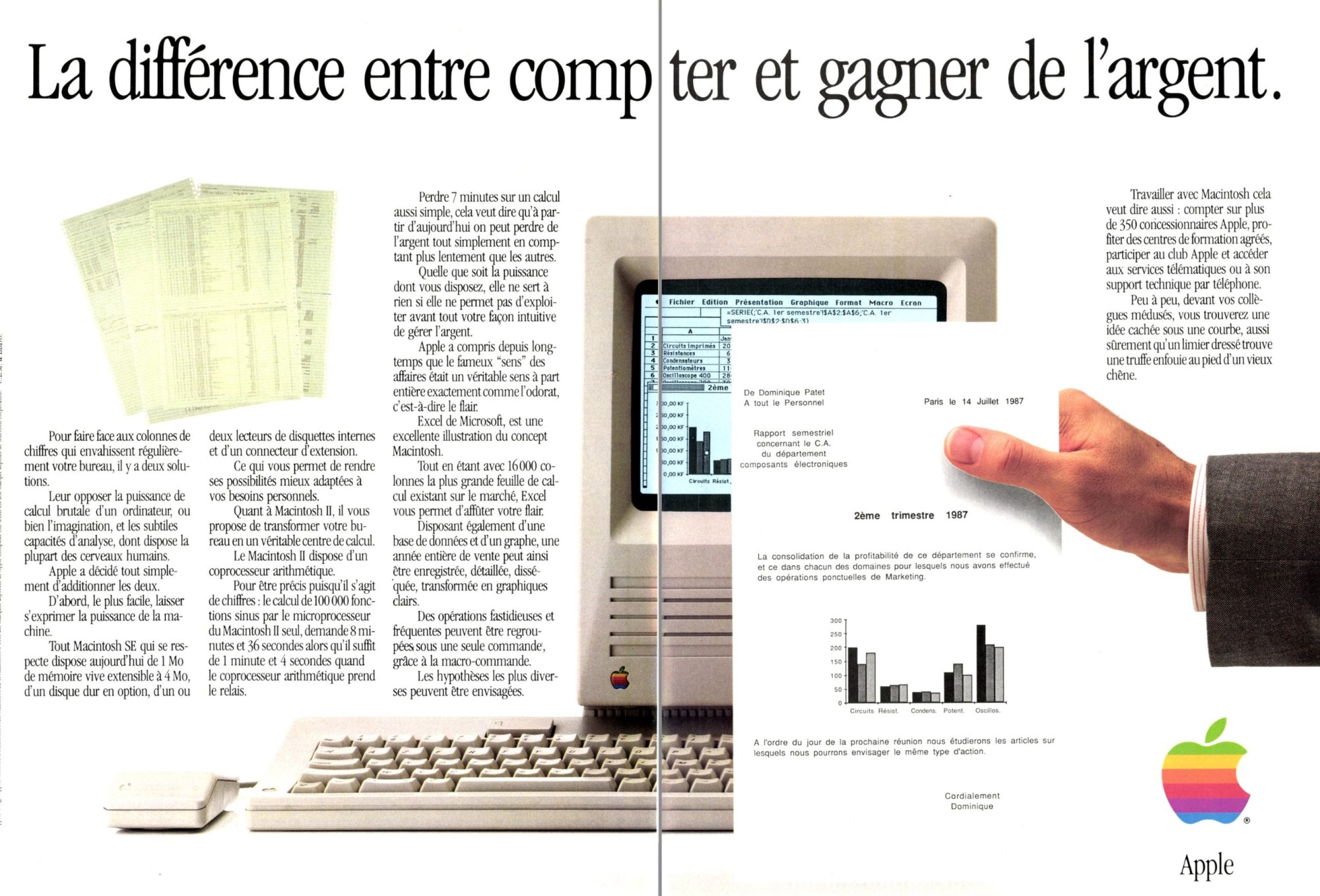
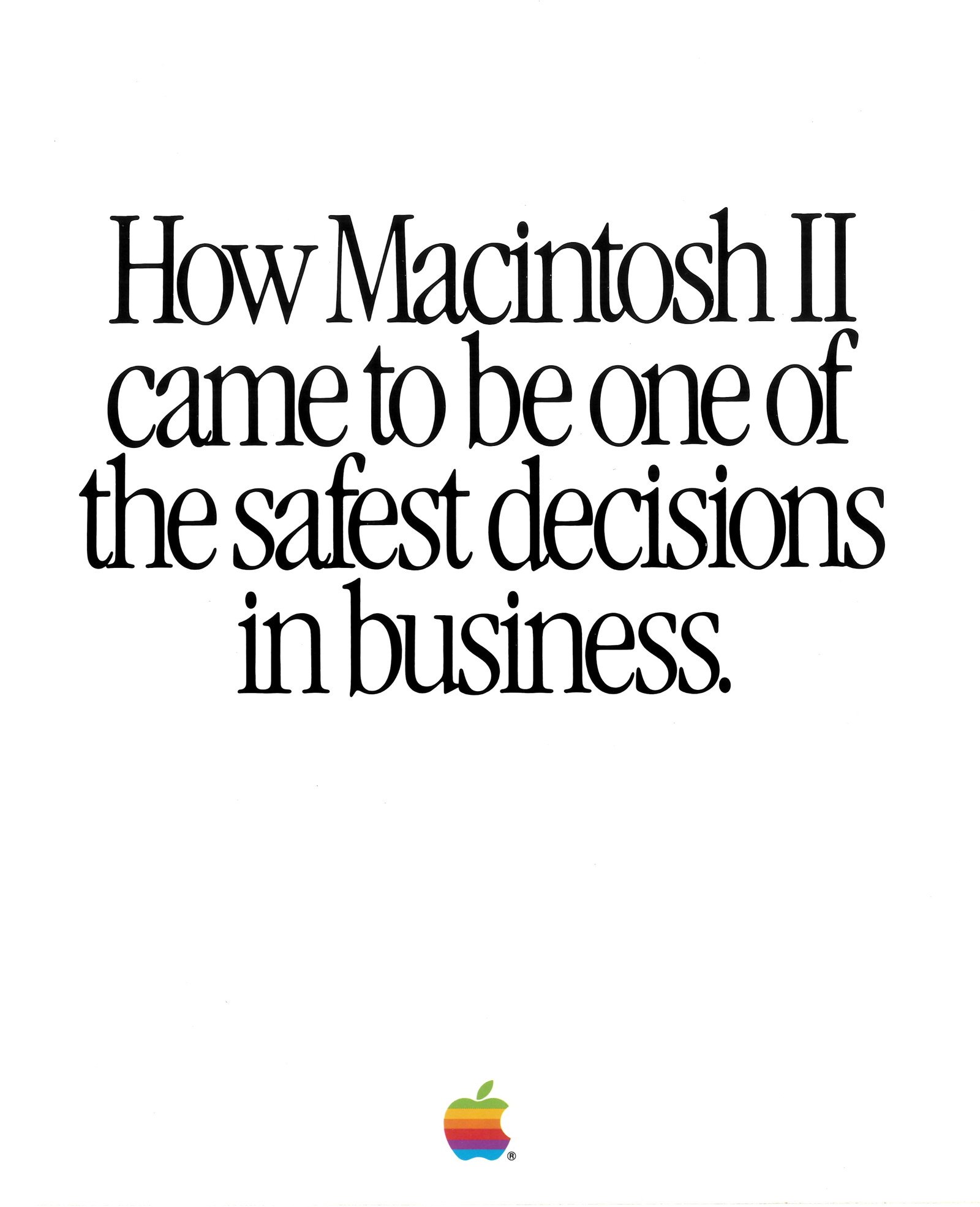
Same shape of problem.
More from Apple.
Every Applecampaign →Apple sacked the agency that made it famous, then hired the man who had written the famous work.
Back to the archive →