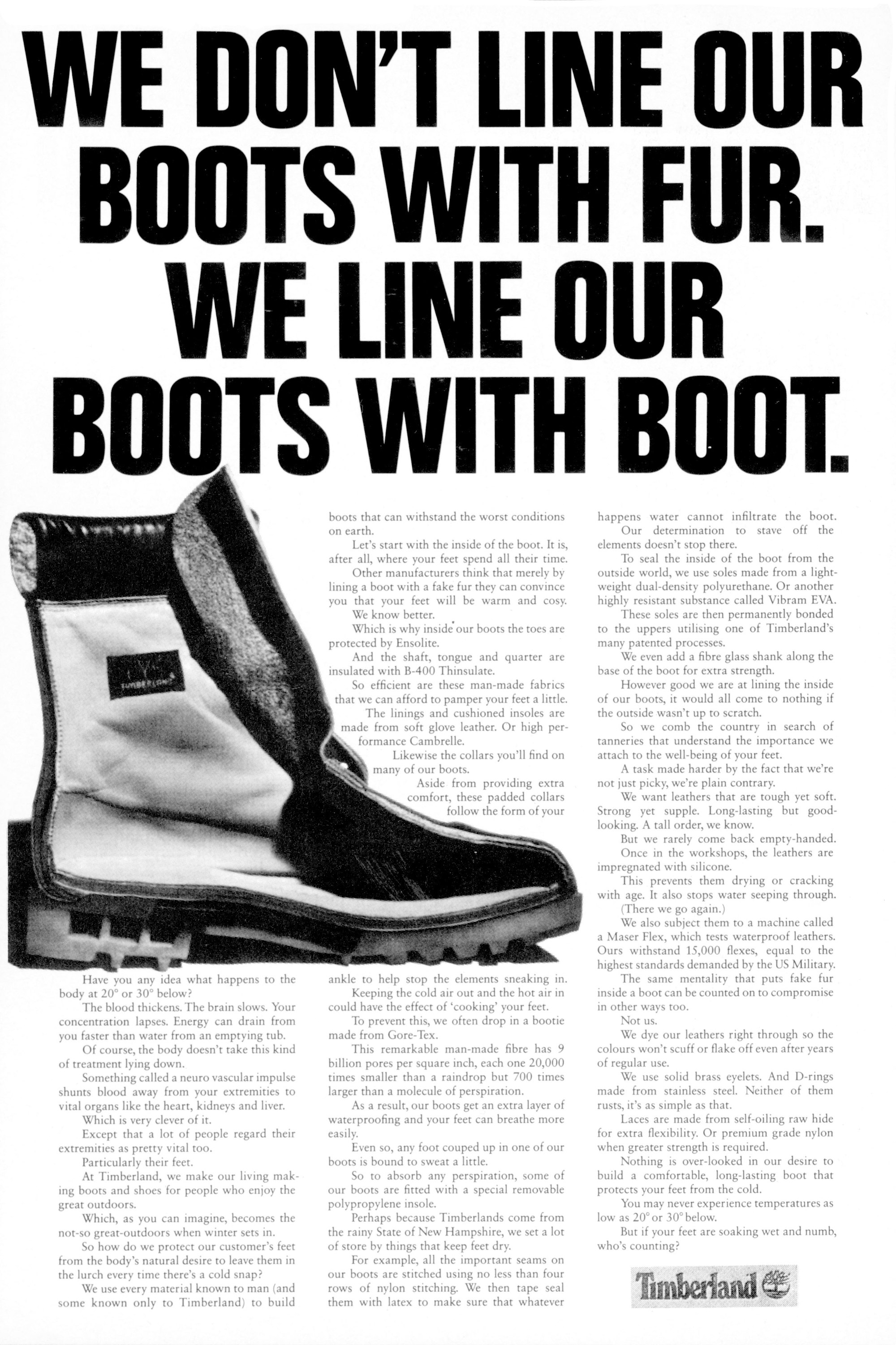
The Timberland Press Campaign
An unknown American boot at £110 a pair, sold to British newspaper readers with a loud headline and a full page of reasons.
The era.
Margaret Thatcher won a third term in June 1987. The City of London had been deregulated in October 1986, and the budget of March 1988 cut the top rate of income tax from 60 to 40 per cent. House prices in the south of England rose fast through 1988. For people with a salary in London there was money to spend and little embarrassment about spending it.
The mood did not hold. Share prices fell on 19 October 1987. Interest rates climbed to 15 per cent by October 1989, and by 1991 the country was in recession. The campaign ran across both halves of that story, first to buyers who felt rich and then to buyers who wanted to know a purchase would last.
Newspapers were changing at the same time. News International moved its titles to Wapping in January 1986, and The Independent launched that October. New presses allowed more pages and more sections, and the broadsheets competed for the same educated, well-paid reader. A full page in black and white was a place where a brand could talk to that reader at length.
The culture.
American workwear had become British fashion. The 1985 television film for Levi's 501 jeans, set in a launderette, sent sales of the jeans up sharply and made old American clothing brands desirable in London. Buyers wanted the original article with a history attached.
Timberland arrived on that wave. In Milan in the mid-1980s a youth fashion known as the paninari had taken up the company's boots along with American jeans and padded jackets. Marketing Week later wrote that the brand rode in on a wave of Americana and stamped its mark on Britain and Europe in the late 1980s.
British press advertising of the period still trusted the reader to read. Agencies such as Collett Dickenson Pearce, Abbott Mead Vickers and Leagas Delaney wrote long copy for cars, stores and whisky and expected it to be finished. Tim Delaney said he believed that if you write as though you want people to read it, they will.
The problem.
Nobody in Britain knew why an American work boot should cost £110.
Timberland was a family company from New Hampshire. It had made a waterproof leather boot since 1973 and took the boot's name as its own in 1978. In Britain in 1988 the name meant little, and the price was high. The ads themselves put it at £90 for a pair of shoes and £110 for boots, and admitted that some people baulk at the hefty price tags.
A fashion for American clothes could sell the boot for a season. It could not explain the price, and the ads complained that imitators were already copying the boots. Timberland needed readers to believe that the cost came from the way the boot was made.
Leagas Delaney worked with Timberland from the brand's introduction to Britain, with Rod Williams named as the client on the first ads. The task shown in the work was to make newspaper readers understand why a boot they had not heard of cost £110.
The solution.
Stop the reader with a headline that sounds like trouble, then spend a full newspaper page proving the boot is worth the money.
Leagas Delaney bought newspaper pages and filled them. Each ad opened with a headline in heavy black capitals that took up the top third of the page: "We stole their land, their buffalo and their women. Then we went back for their shoes." Under it sat a small photograph, three columns of copy and the boots.
The copy did the selling. It named the place, Hampton, New Hampshire, and the men who sewed the shoes by hand. It listed four rows of nylon stitching, leather soaked in silicone, seams sealed with two coats of latex and a boot tested at 40 degrees below zero. The price was stated in the copy and then argued for, line by line.
The jokes kept people reading and the facts made the price reasonable. The same layout was still in use in 1993. The work appeared in the Design and Art Direction annuals of 1989, 1990, 1992 and 1993.
The work.
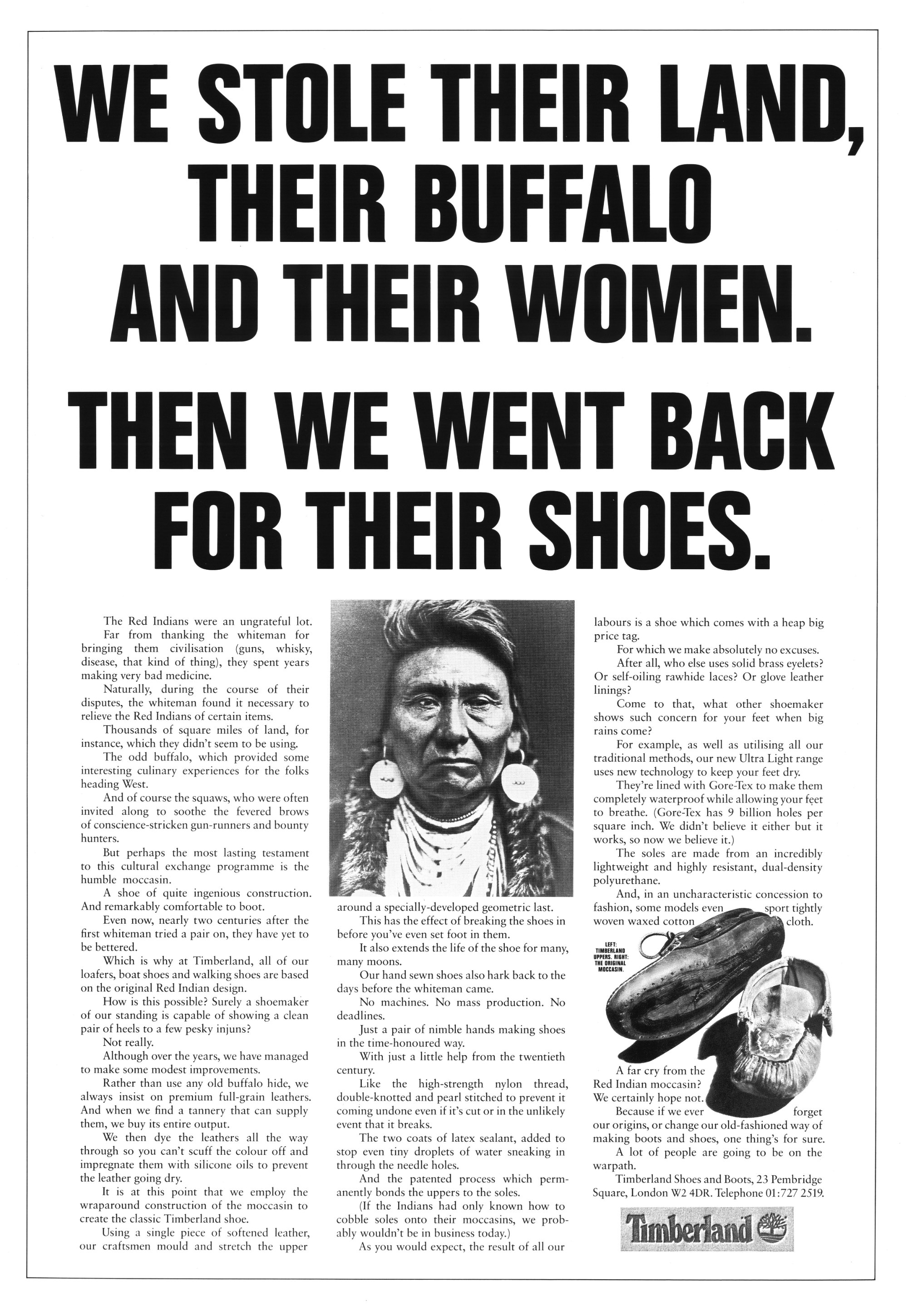
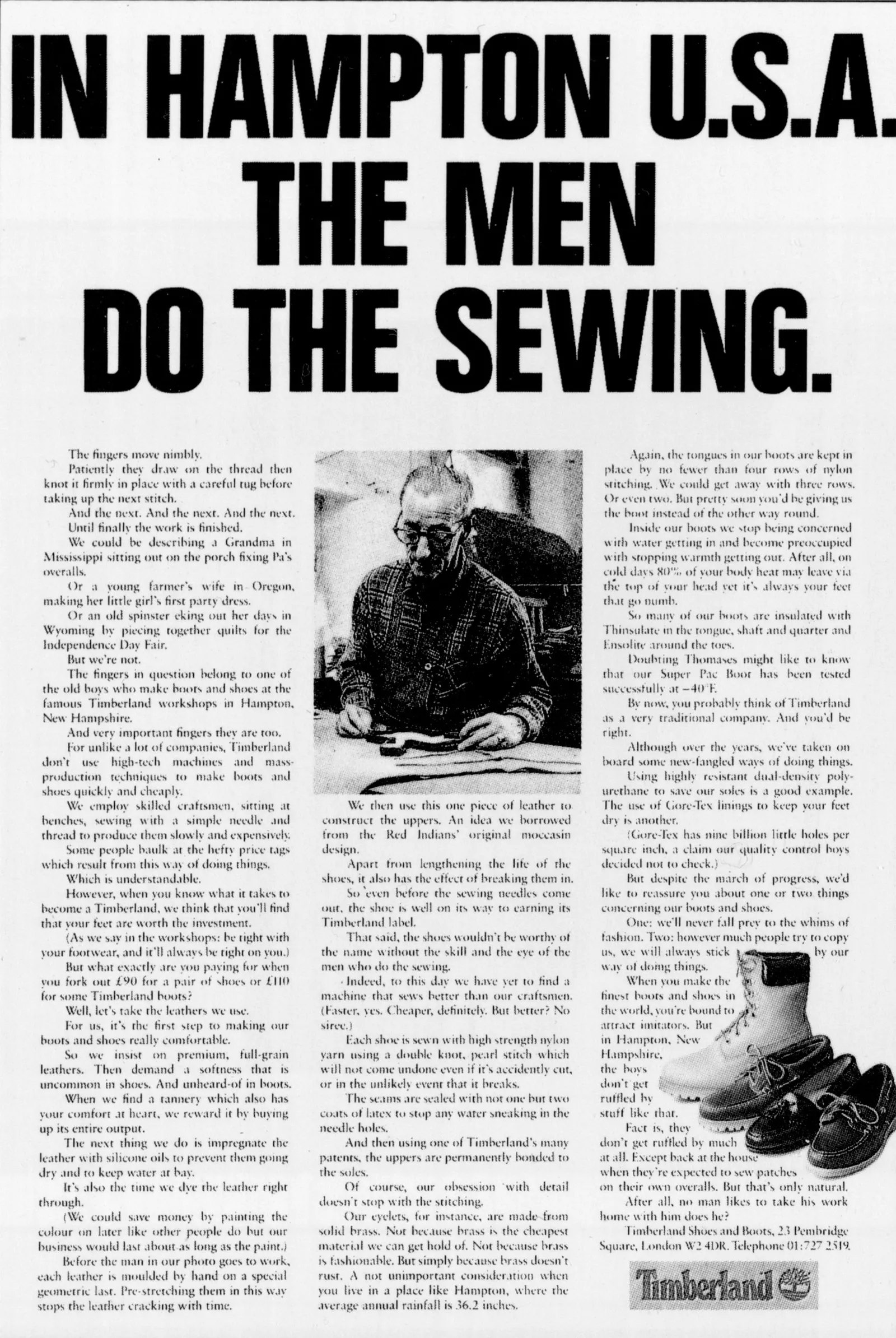
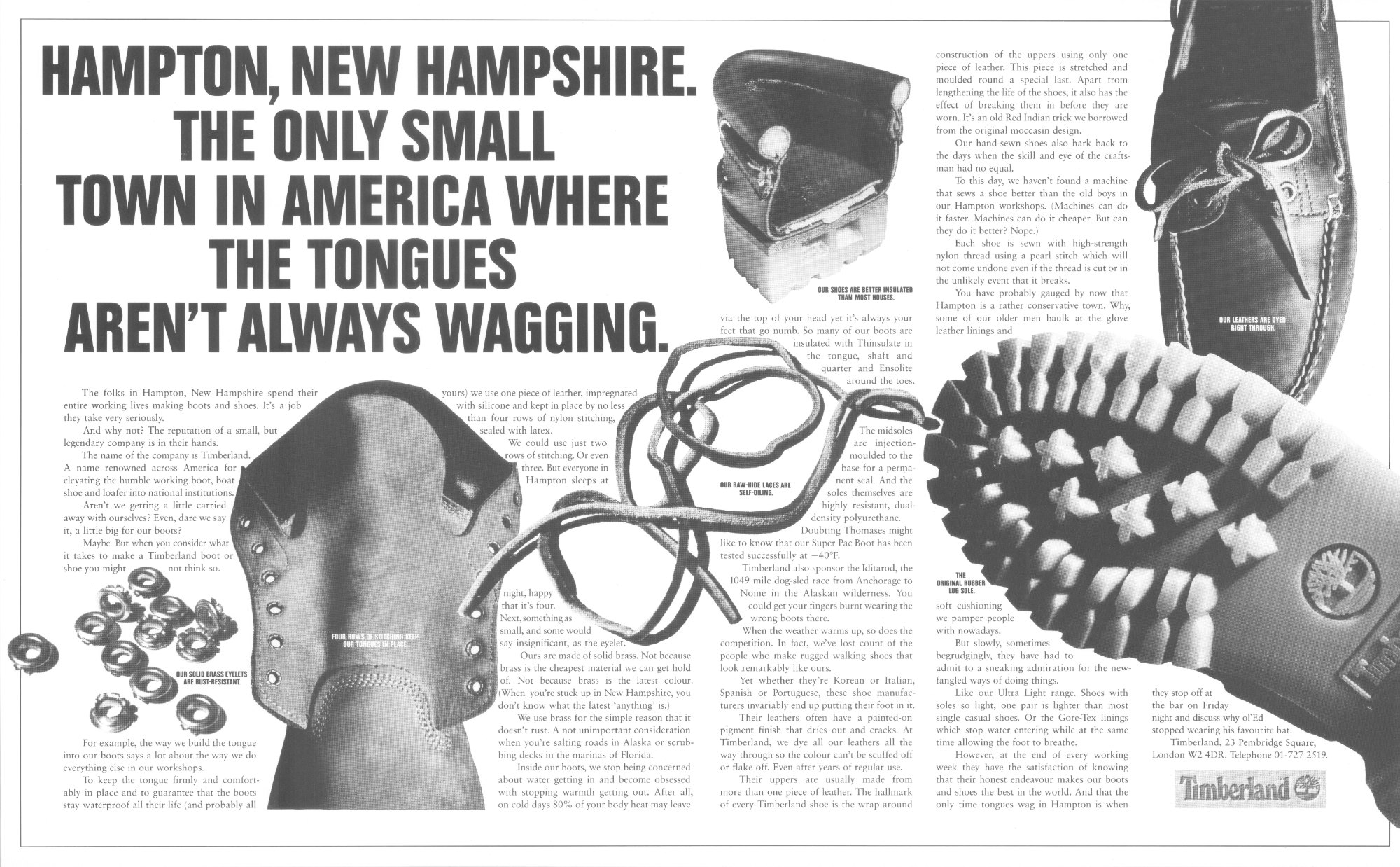
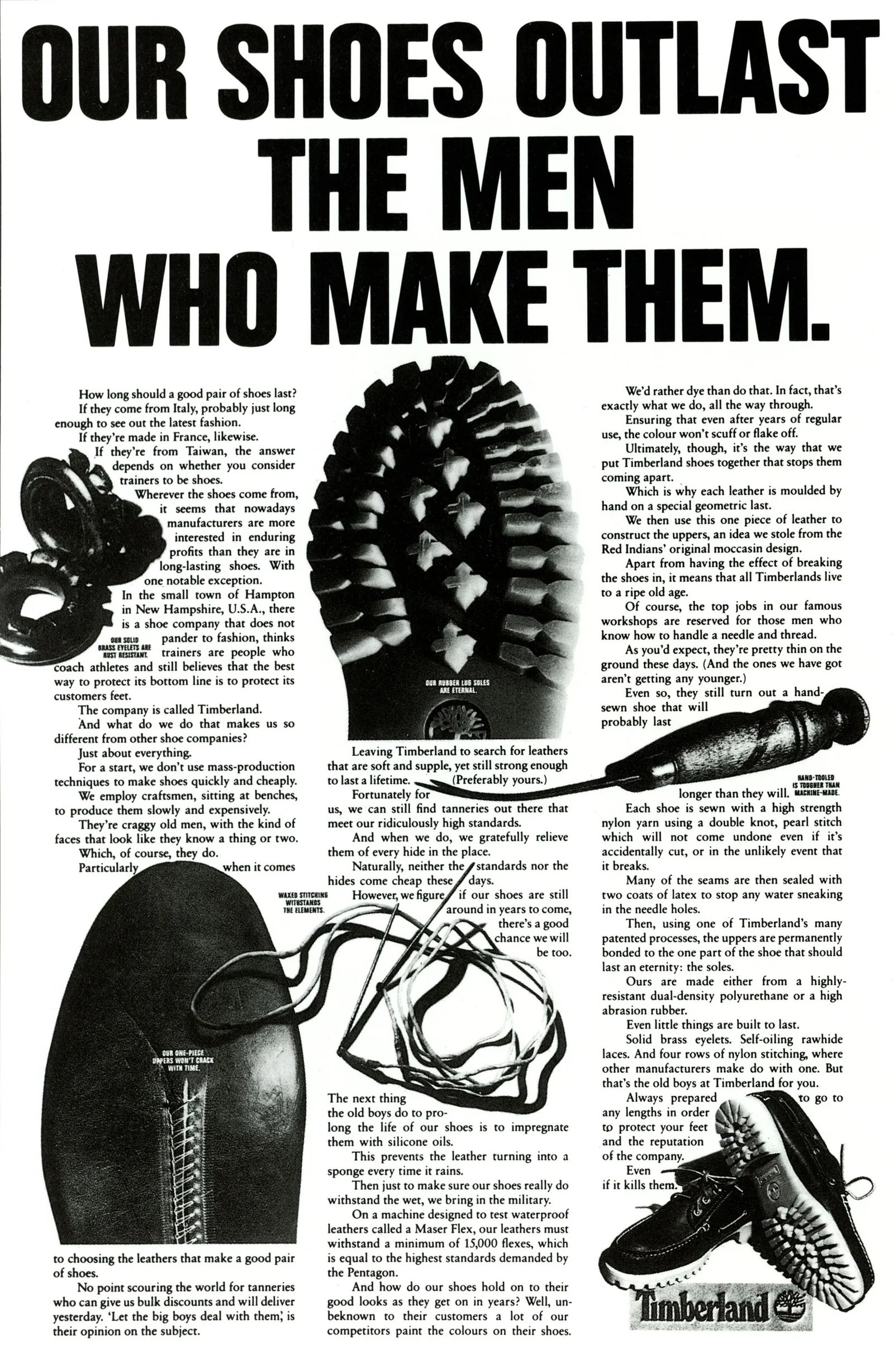
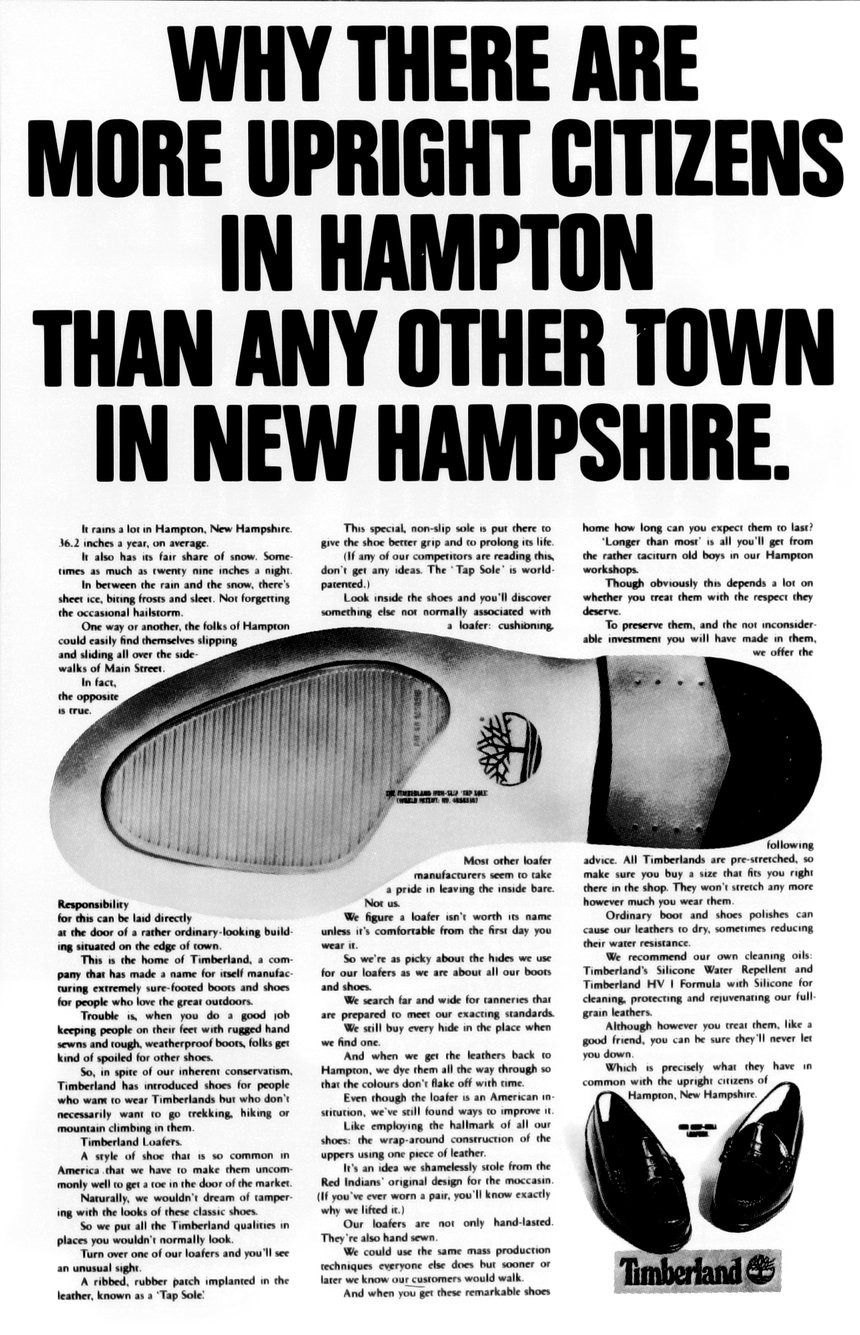
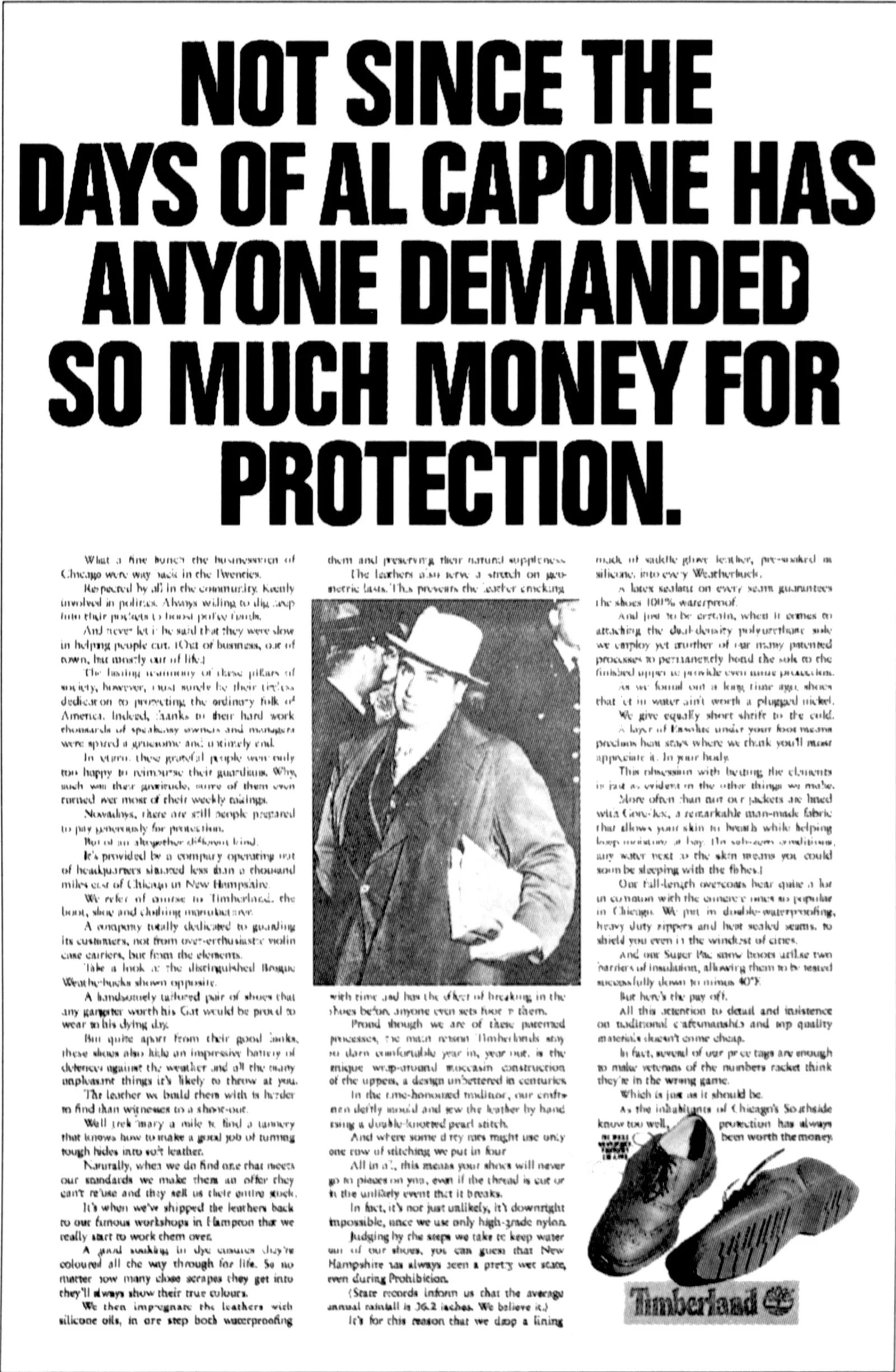
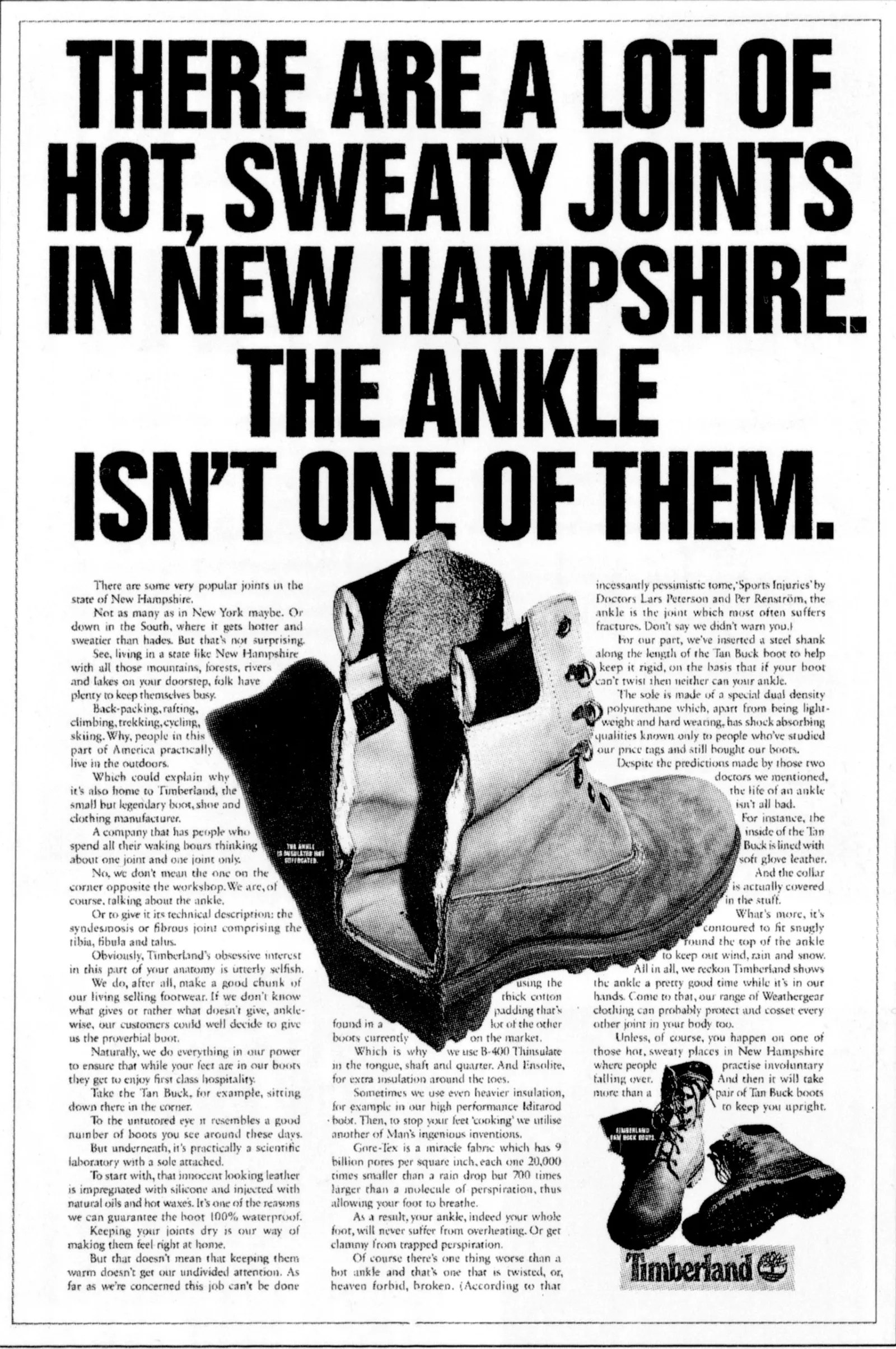
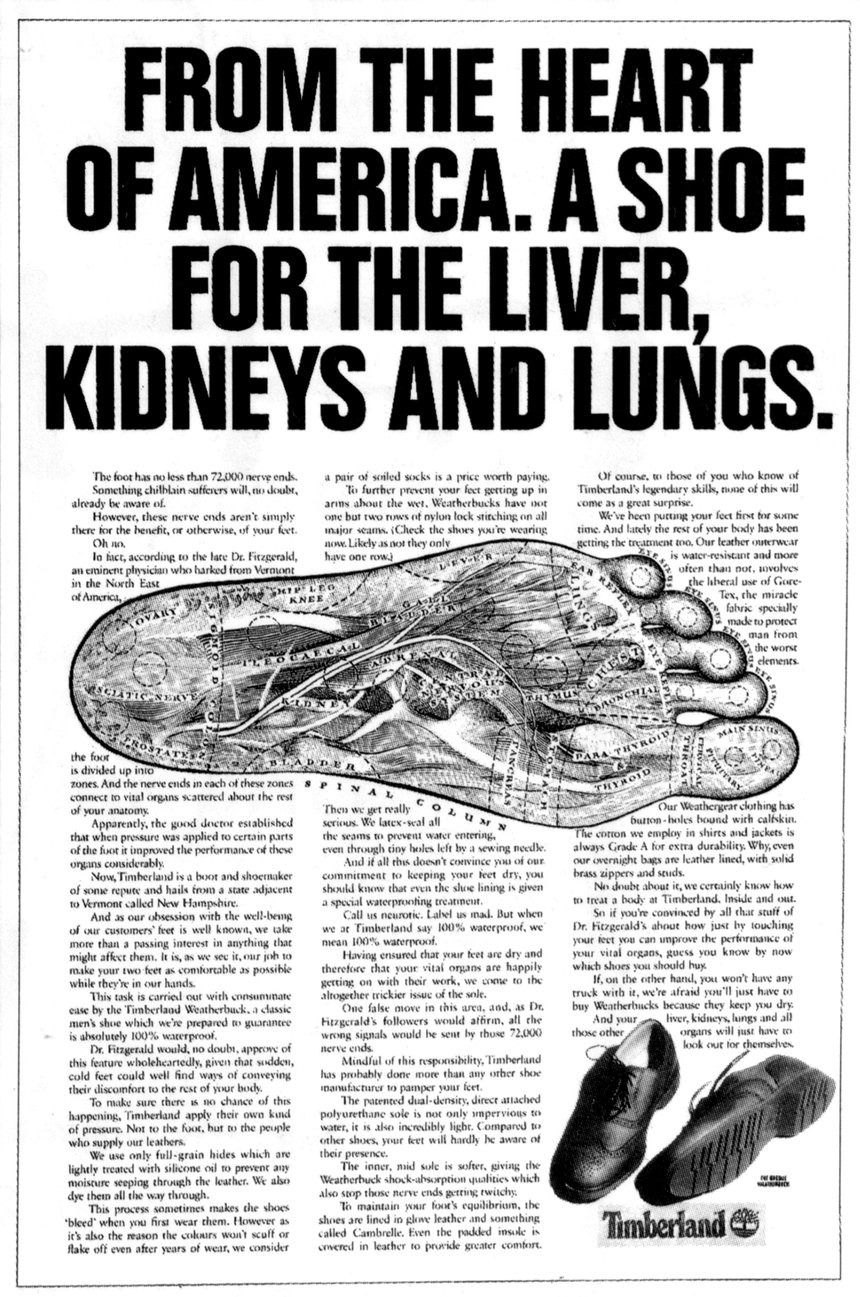
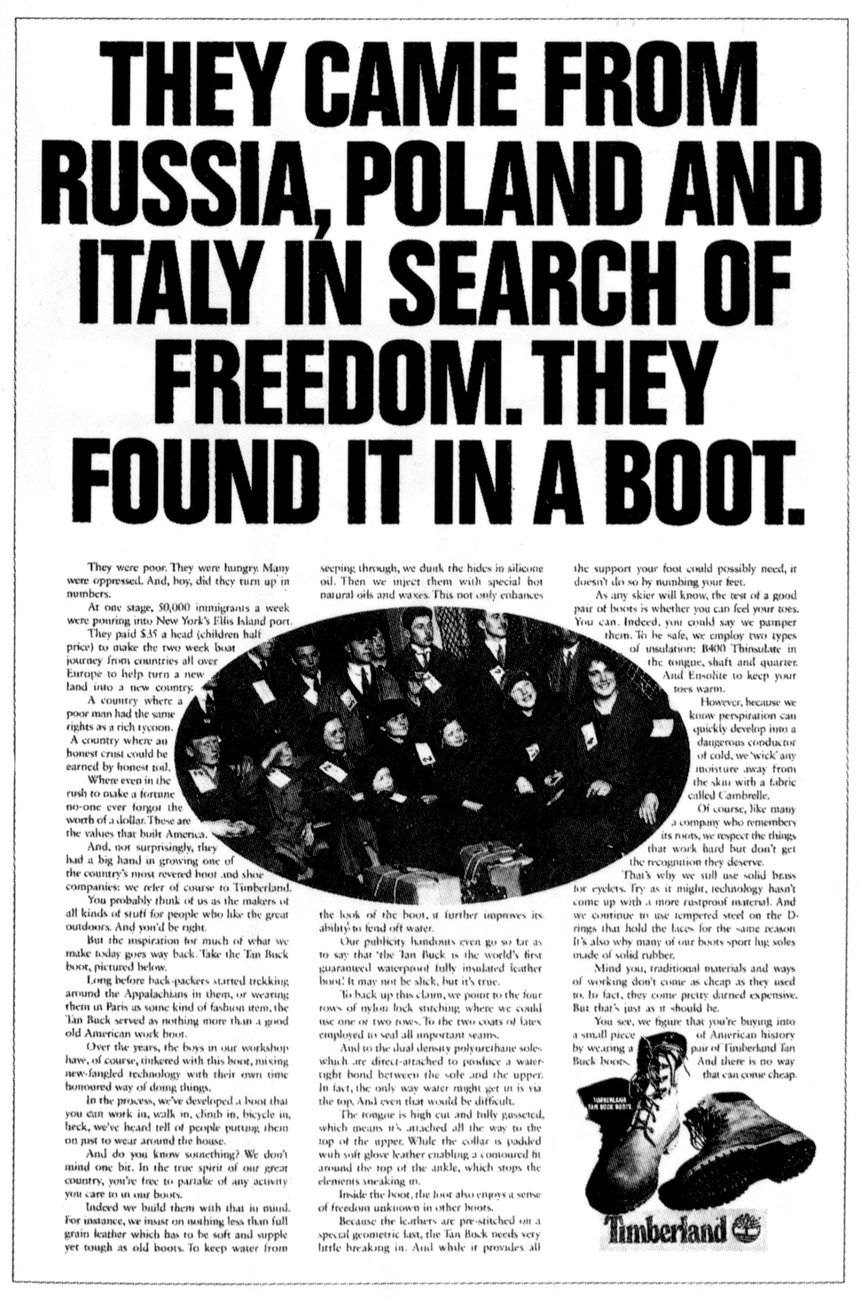
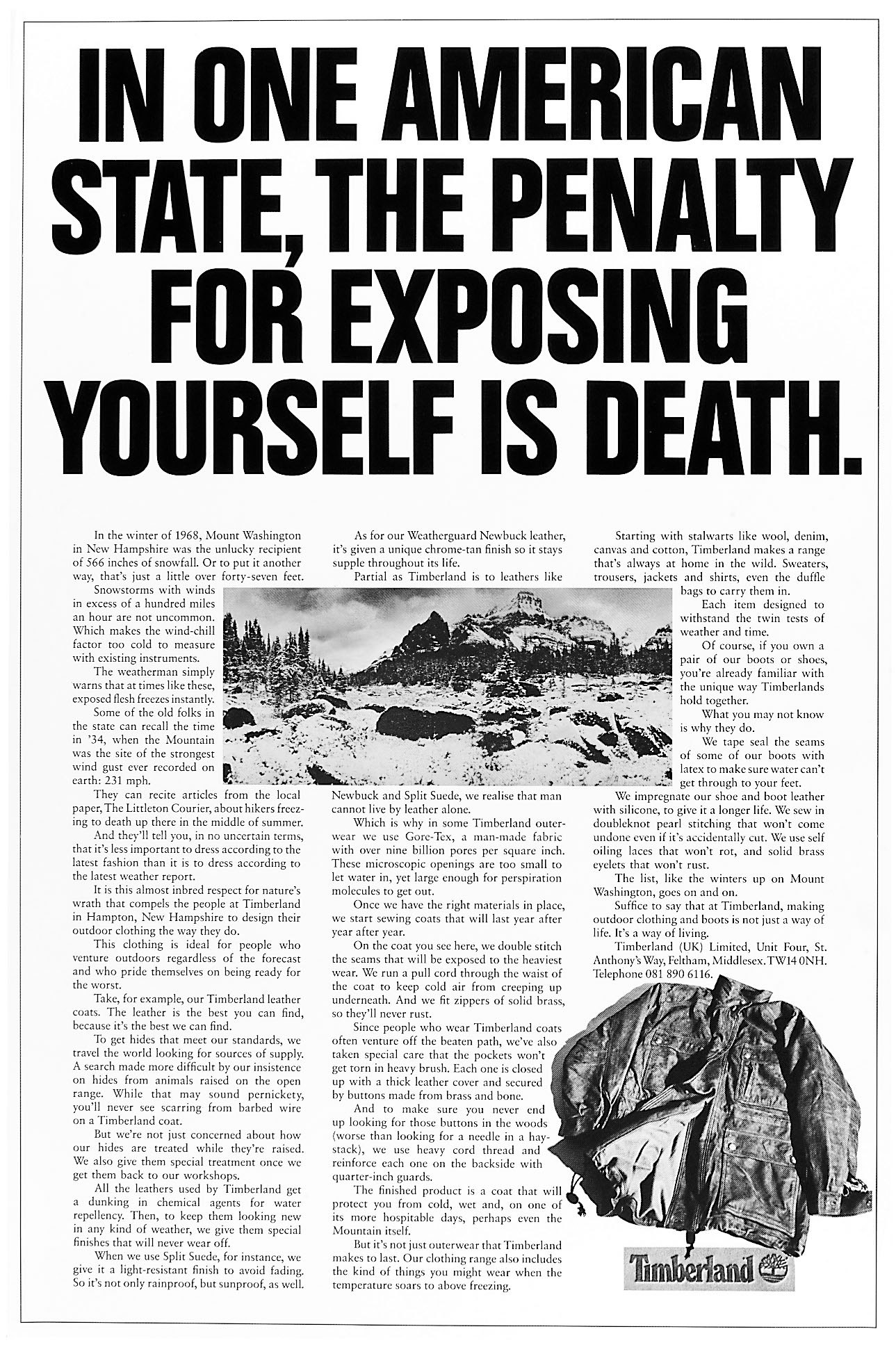
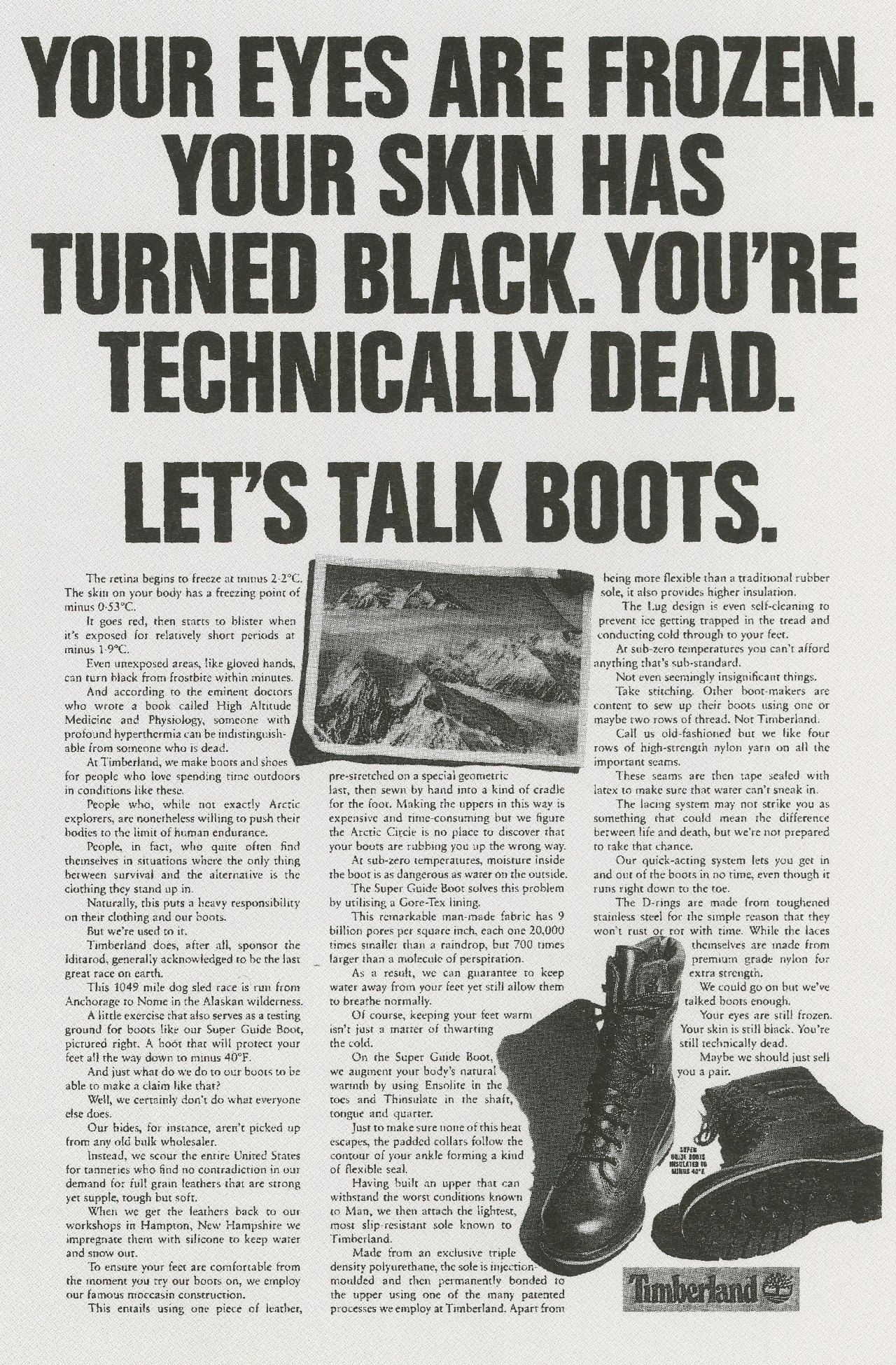
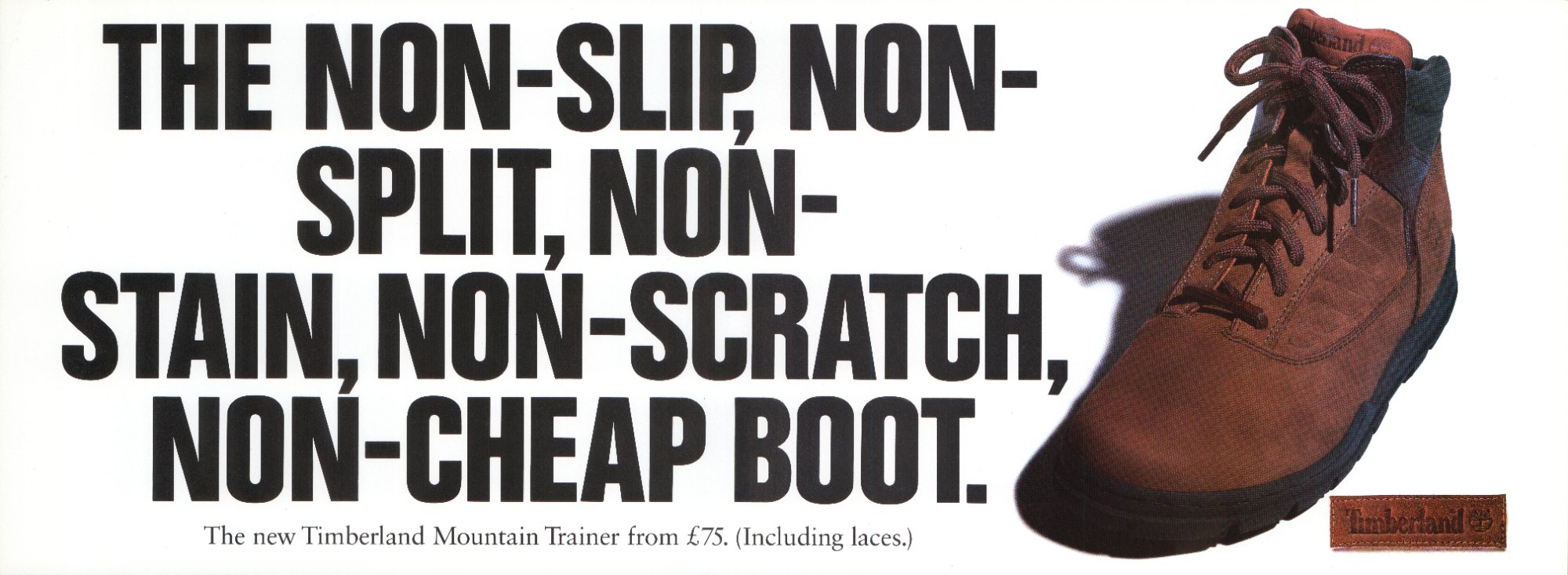
The ads told readers the boots were expensive, then spent a thousand words on the stitching.
Back to the archive →