Braniff International · Jack Tinker & Partners
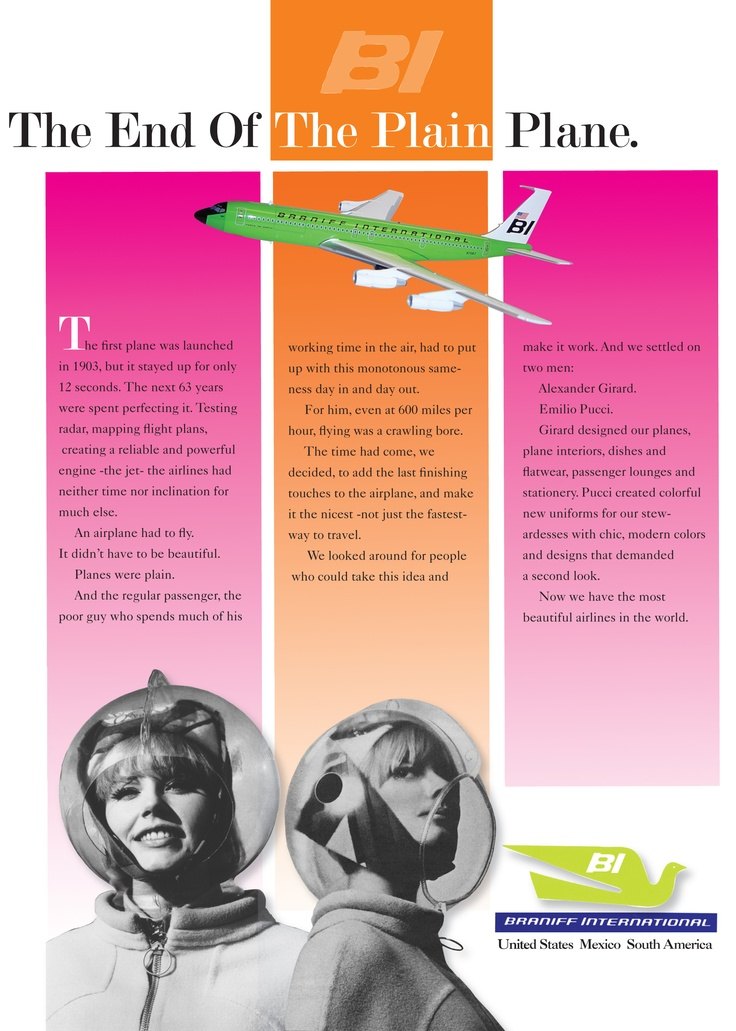
The End of the Plain Plane
The campaign that stopped describing the product and rebuilt it instead — then ran the rebuild as news.
The era.
From 1938 until deregulation in 1978, the Civil Aeronautics Board set what American airlines could charge and where they could fly. A carrier could not undercut a rival on fare and could not open a route without a federal award. What was left to compete on was schedule, aircraft type and the feeling of the cabin — and by the mid-sixties the cabins had converged too. Every jet in American skies was bare polished aluminium with a stripe.
Braniff was a Dallas carrier of the middle rank, running roughly $100m of business and thirteen different aircraft types. In May 1965 Troy V. Post of Greatamerica installed Harding L. Lawrence, lately of Continental, as president in place of Charles Beard. Lawrence took the account to Jack Tinker & Partners, the small Interpublic unit run as a think tank rather than a shop. Mary Wells led it, with Richard Rich and Stewart Greene. In 1966 the three left to found Wells Rich Greene and Lawrence moved the $6.5m account with them; TIME reported the transfer on 2 June 1967. Wells and Lawrence married that November.
The culture.
Jet travel in 1965 was still young enough to be an occasion and already old enough to be dull. The glamour was in the idea of flying, not in the object doing the flying, which was upholstered like a waiting room. Meanwhile design had become a public language: Alexander Girard had run Herman Miller's textile division since 1952 and Emilio Pucci's prints were shorthand for a certain kind of modern Italian confidence. Colour was doing cultural work everywhere except at 30,000 feet.
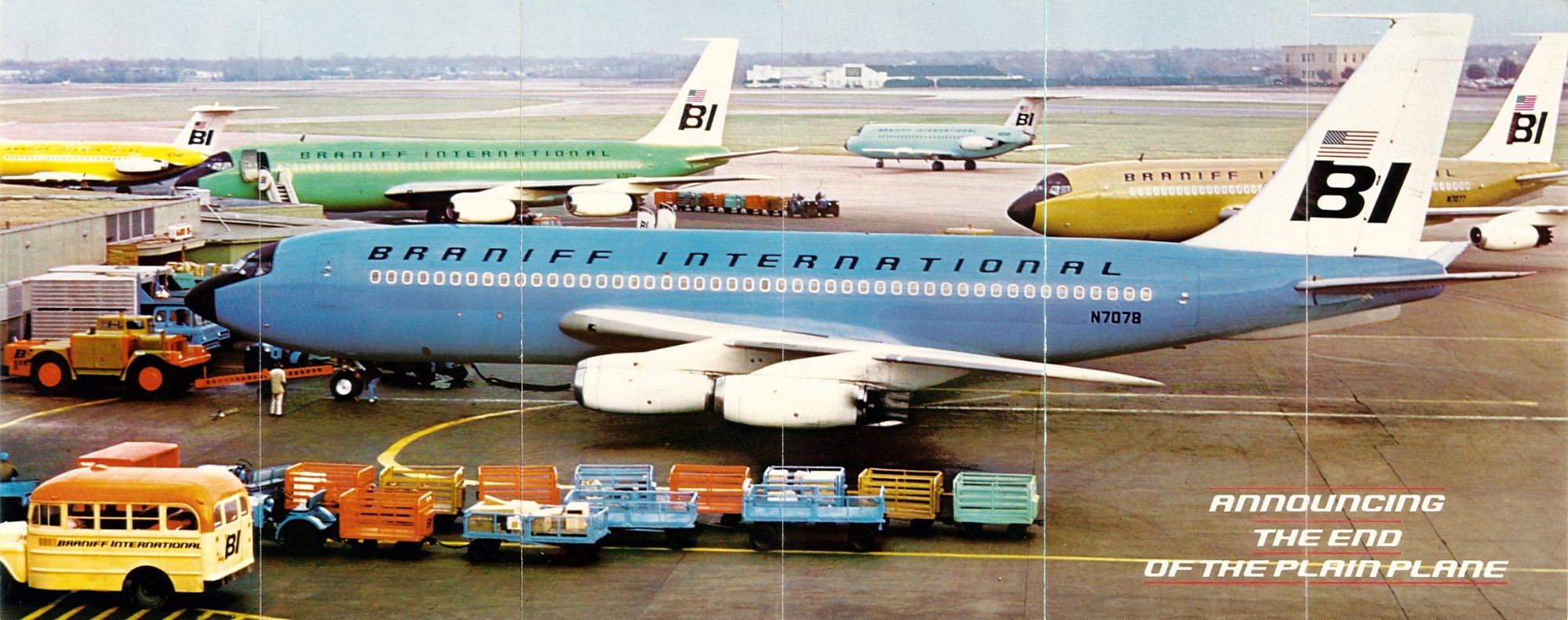
There is also a plain physical fact the campaign understood. A commercial aircraft is the largest branded object most people will ever stand beside. It sits on an apron in front of a wall of terminal glass, taxis past every other airline's passengers, and is photographed constantly by people who are not being paid to photograph it. Once a carrier owns the fleet, painting it costs the price of paint. The medium was already on the balance sheet.
The problem.
Every airline flew the same planes on the same fares, so no claim about the flight could set Braniff apart.
In the mid-1960s federal regulators set airline fares and handed out routes, so a carrier could not compete on either. The one lever left was the experience on board, and the industry had quietly given up on it: carriers flew similar aircraft and promised similar service.
Braniff was smaller than most of its rivals. Troy Post's insurance holding company, Greatamerica, bought it in 1964, and Harding Lawrence arrived from Continental Airlines as president in May 1965 needing the airline noticed. The product was sound but indistinguishable. No claim written about the flight could be true of Braniff and untrue of the carrier at the next gate.
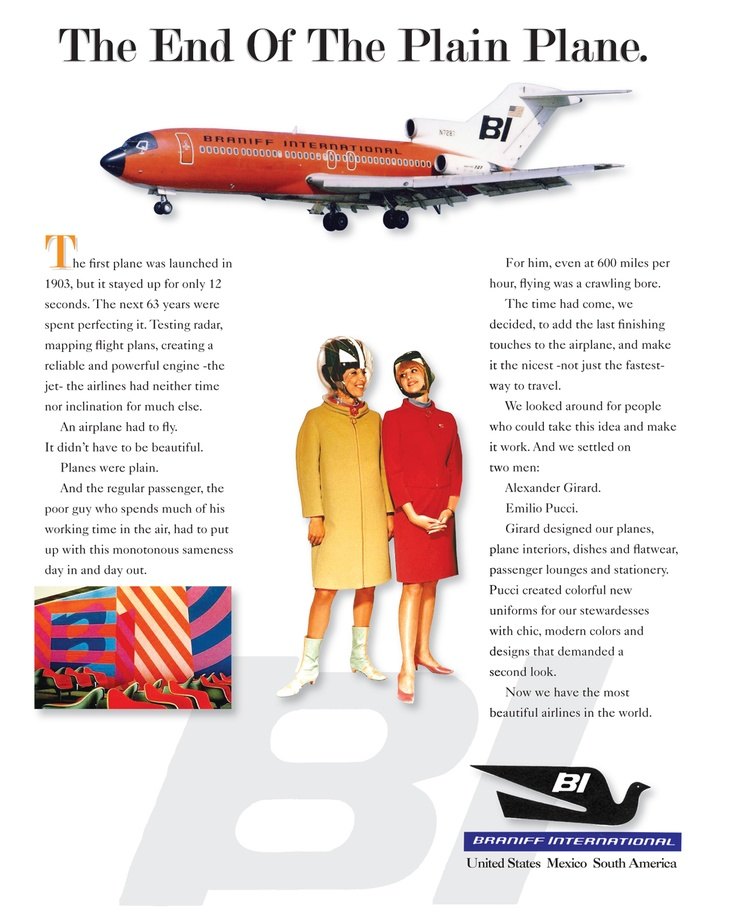
Harding Lawrence came to Braniff from Continental Airlines and hired Jack Tinker & Partners to overhaul the airline's public image. The agency put Mary Wells in charge of the account, and she brought in Alexander Girard and Emilio Pucci to redesign the airline itself.
The solution.
Stop advertising the flight. Rebuild the object, then report the rebuild as news.
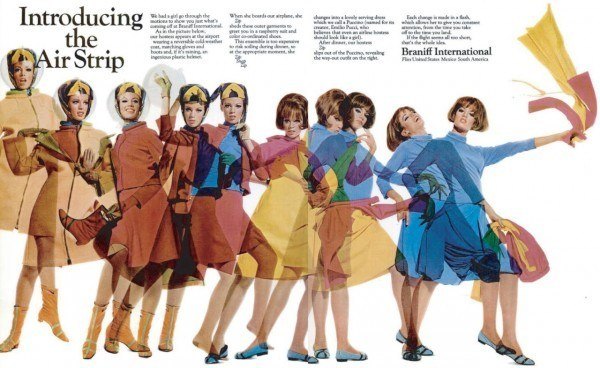
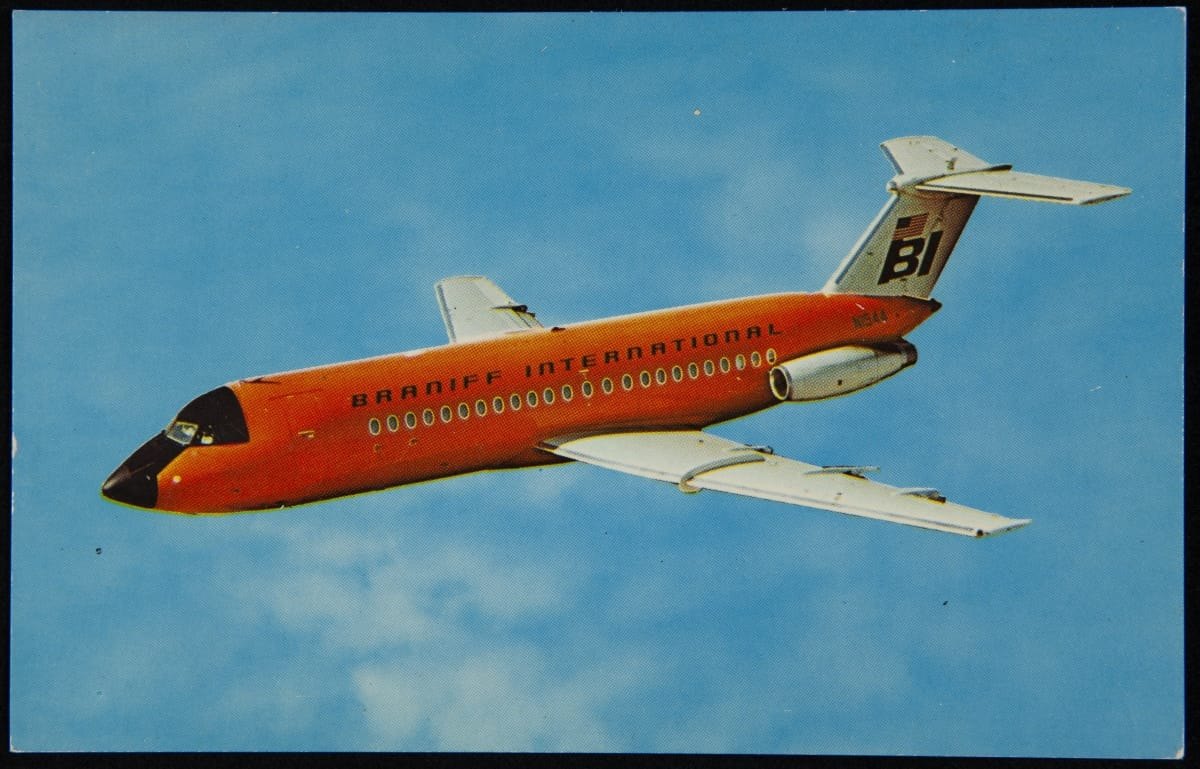
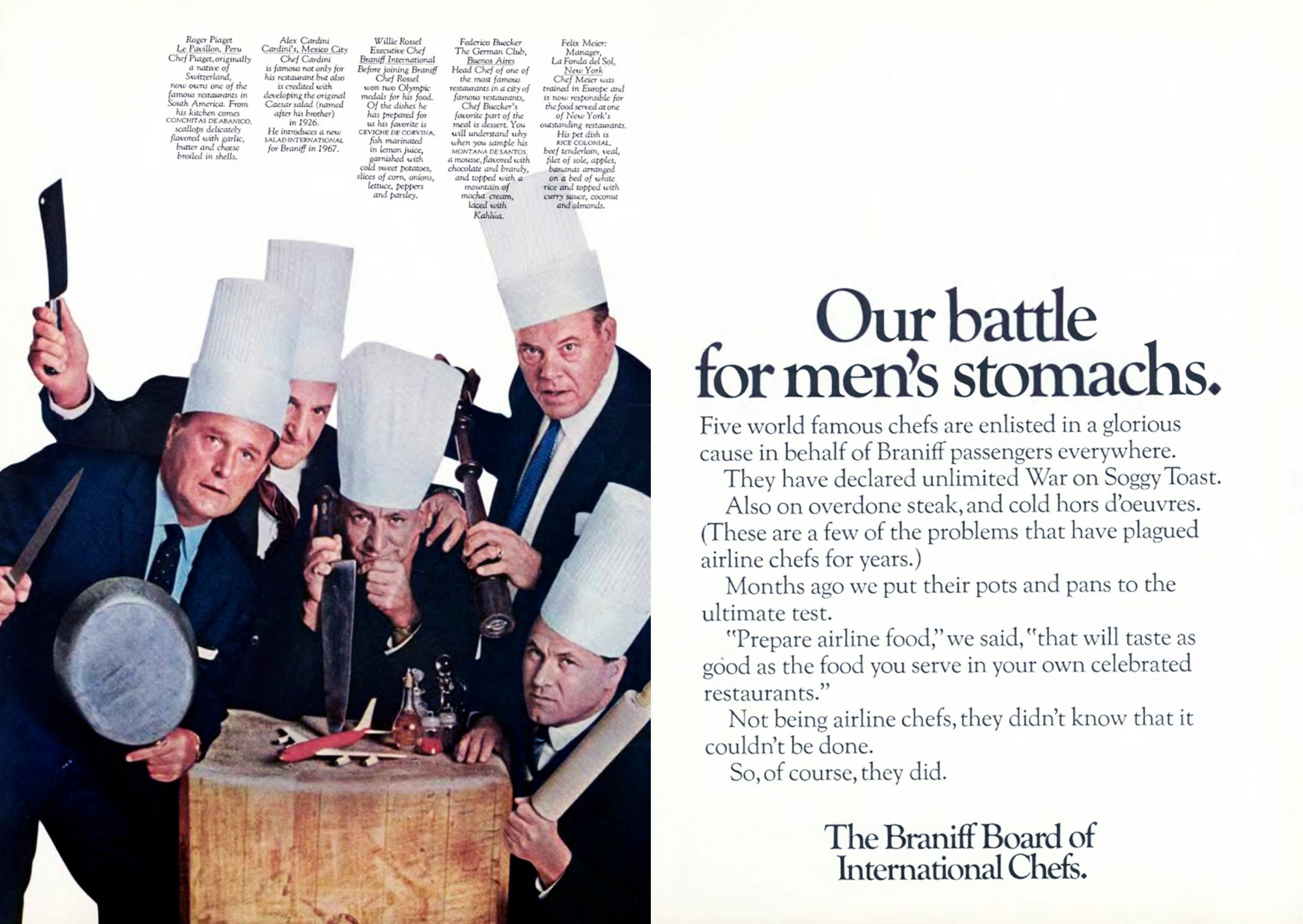
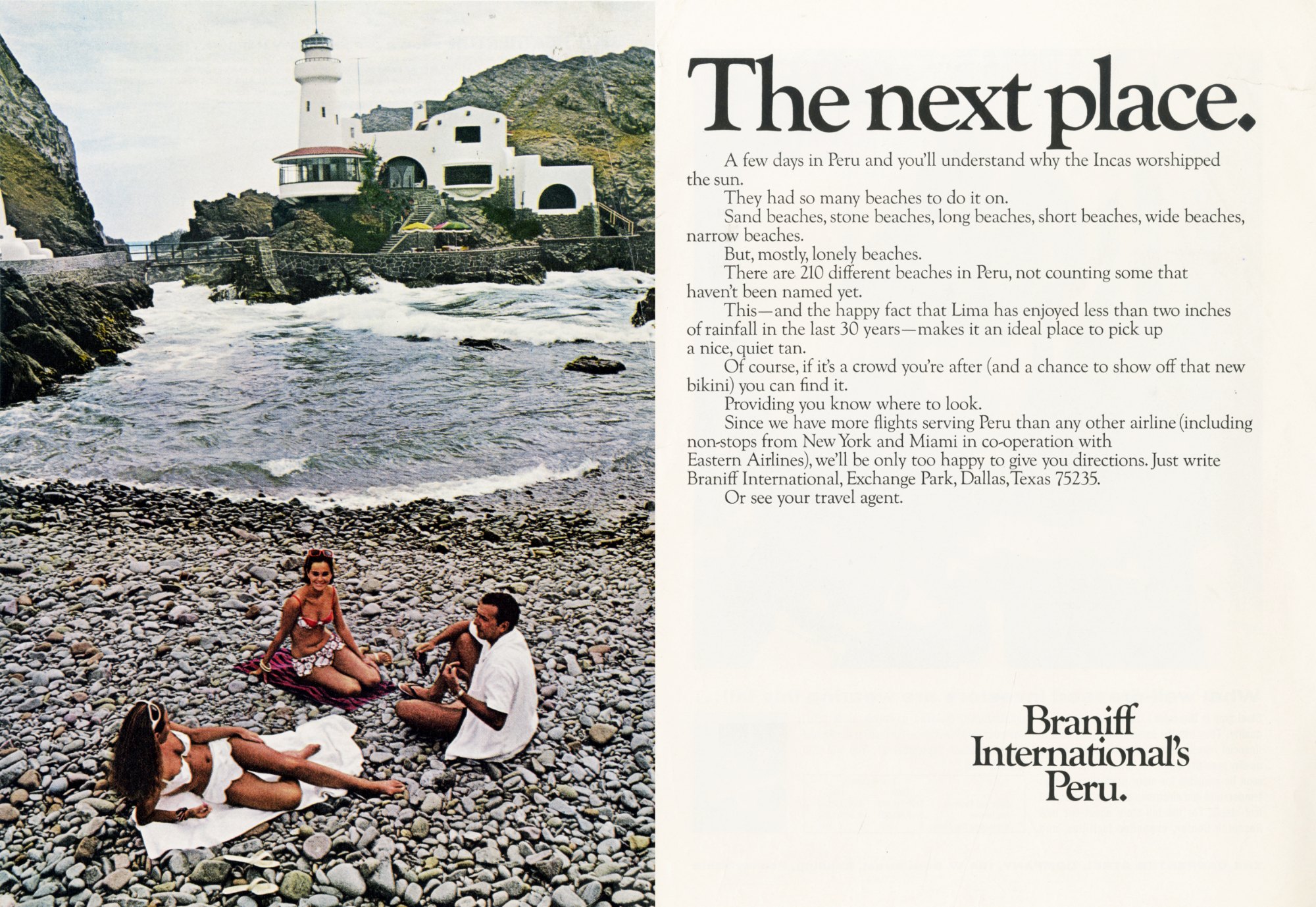
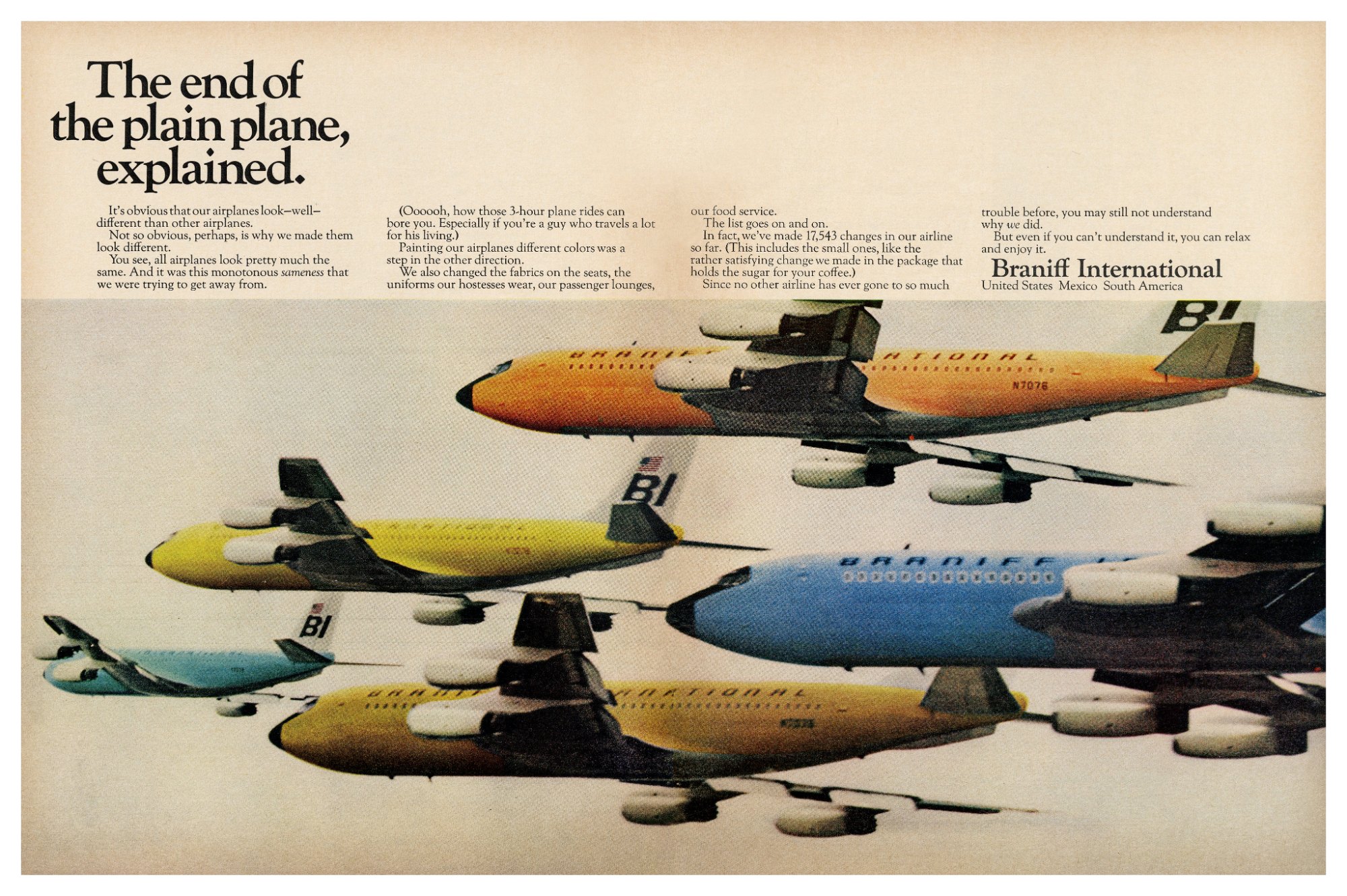
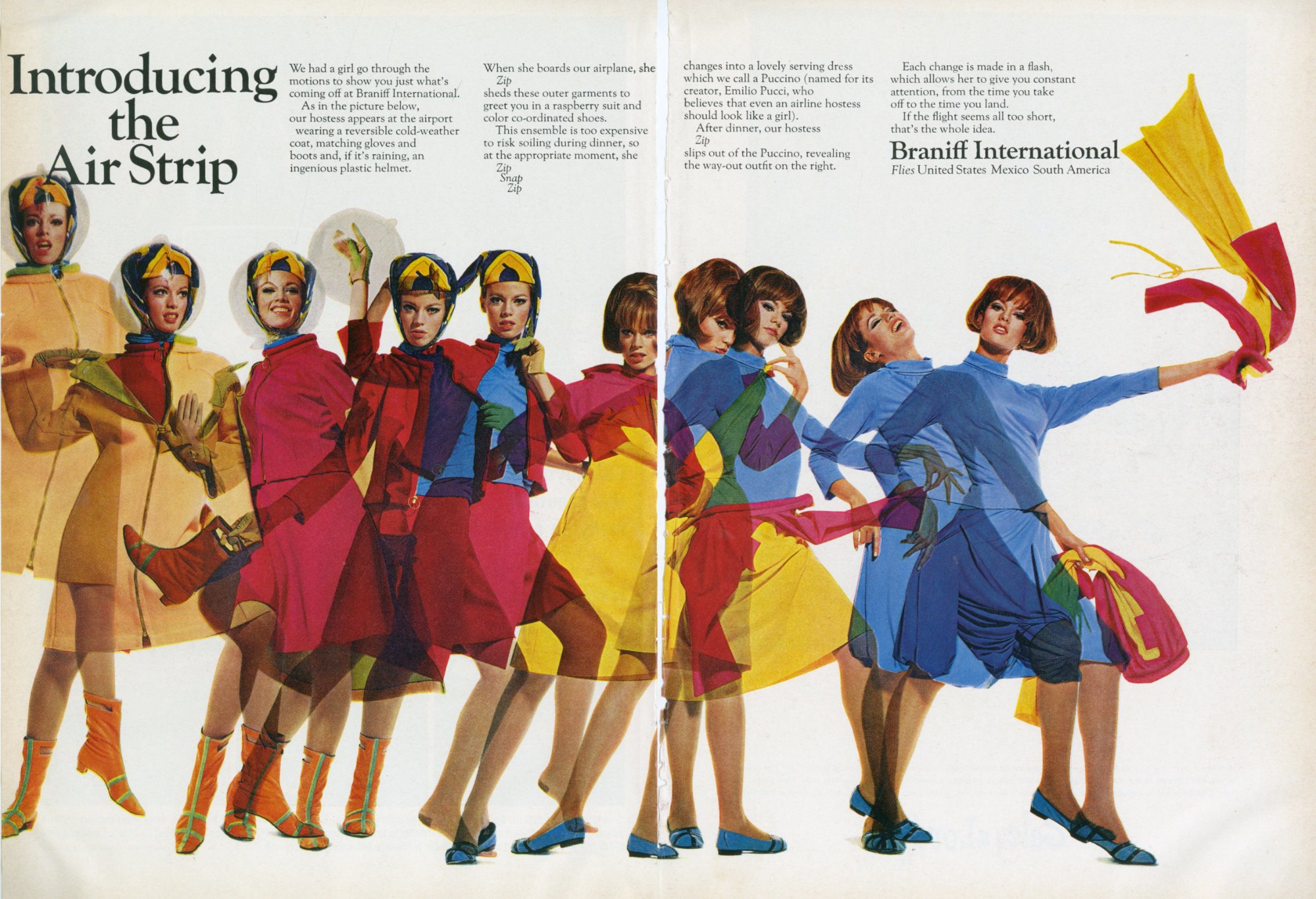
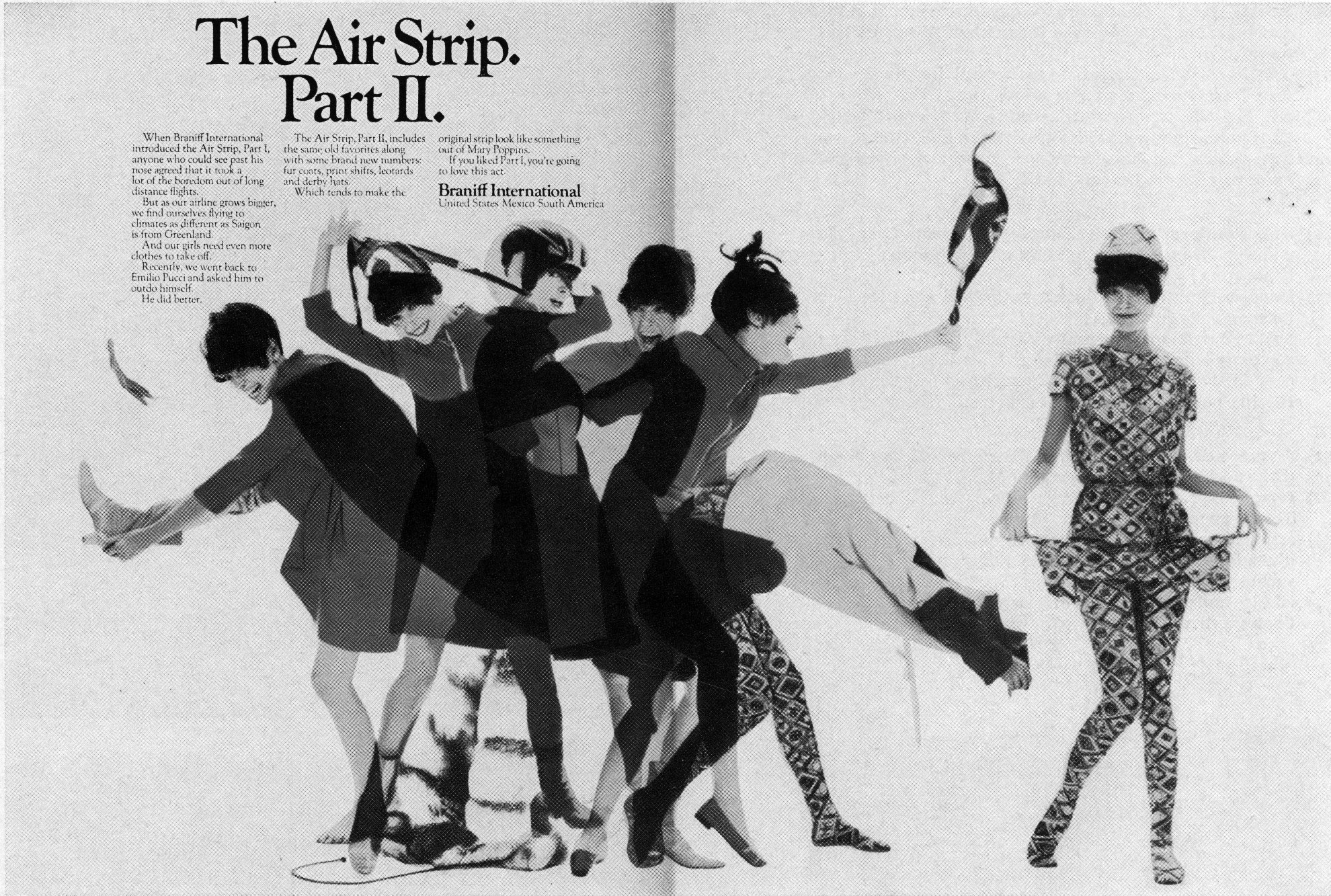
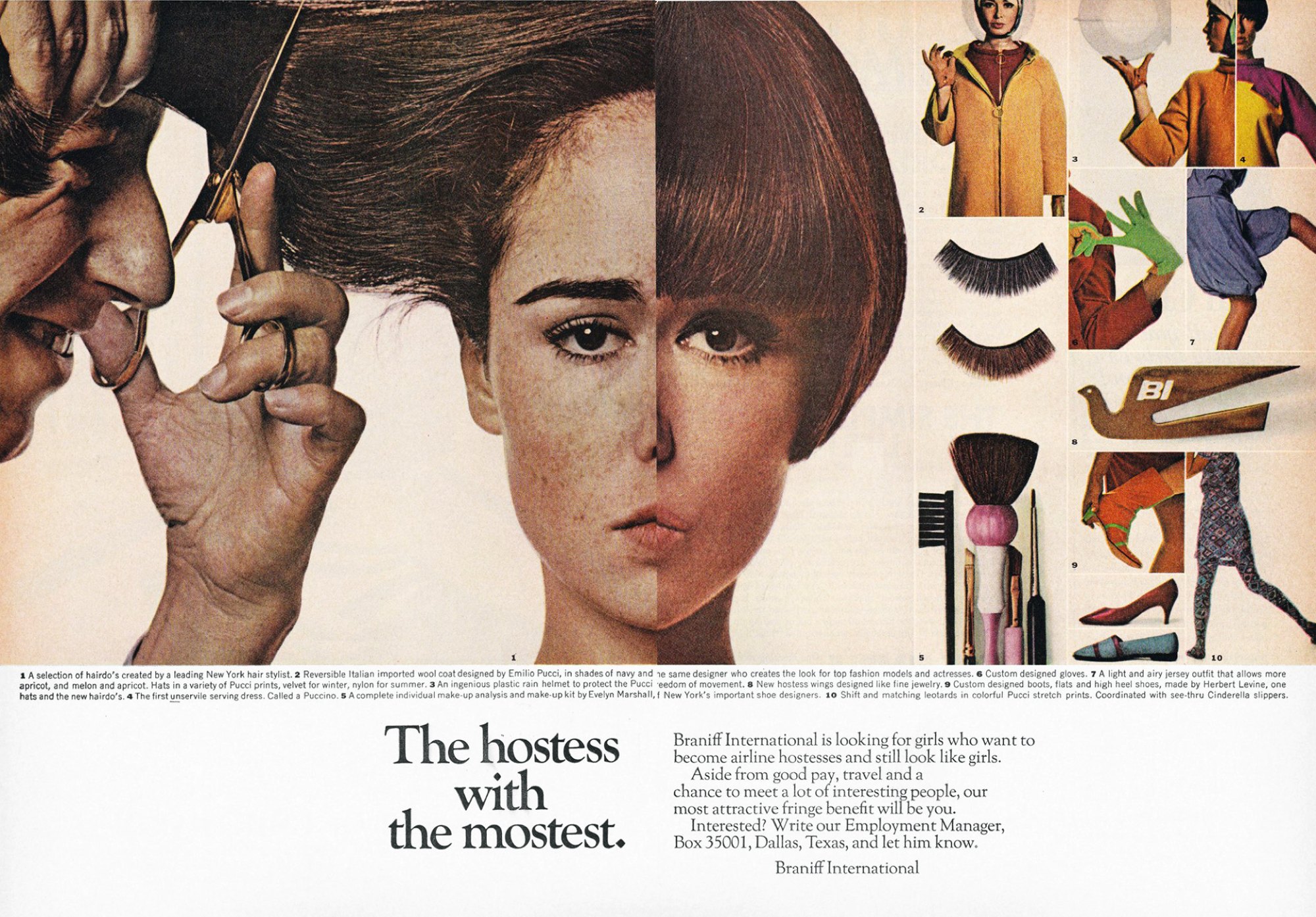
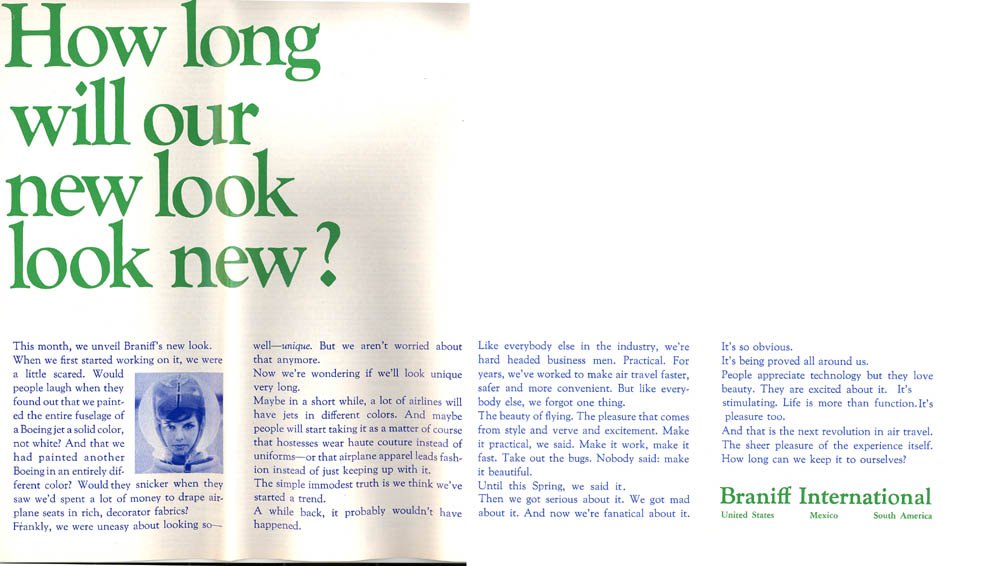
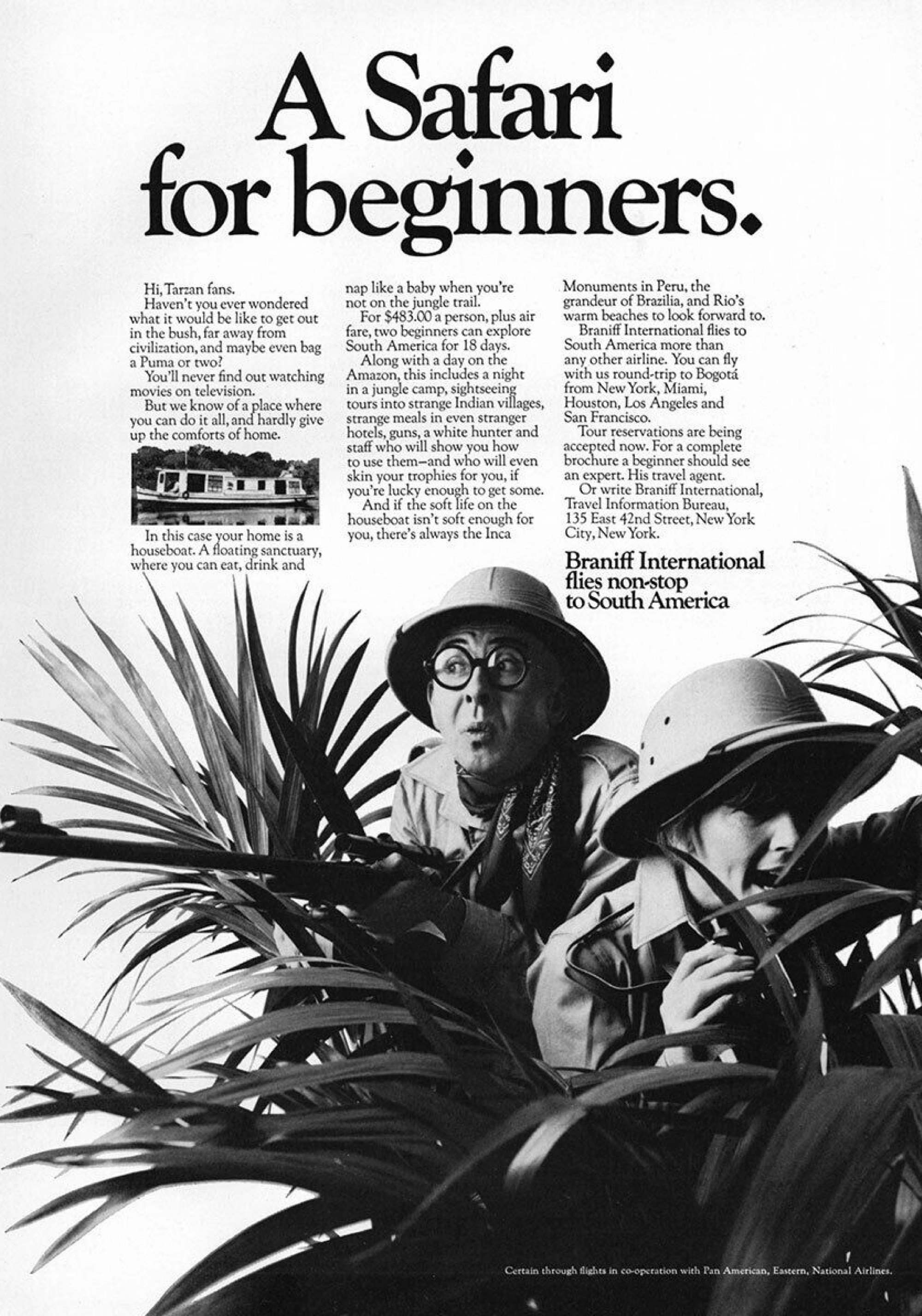
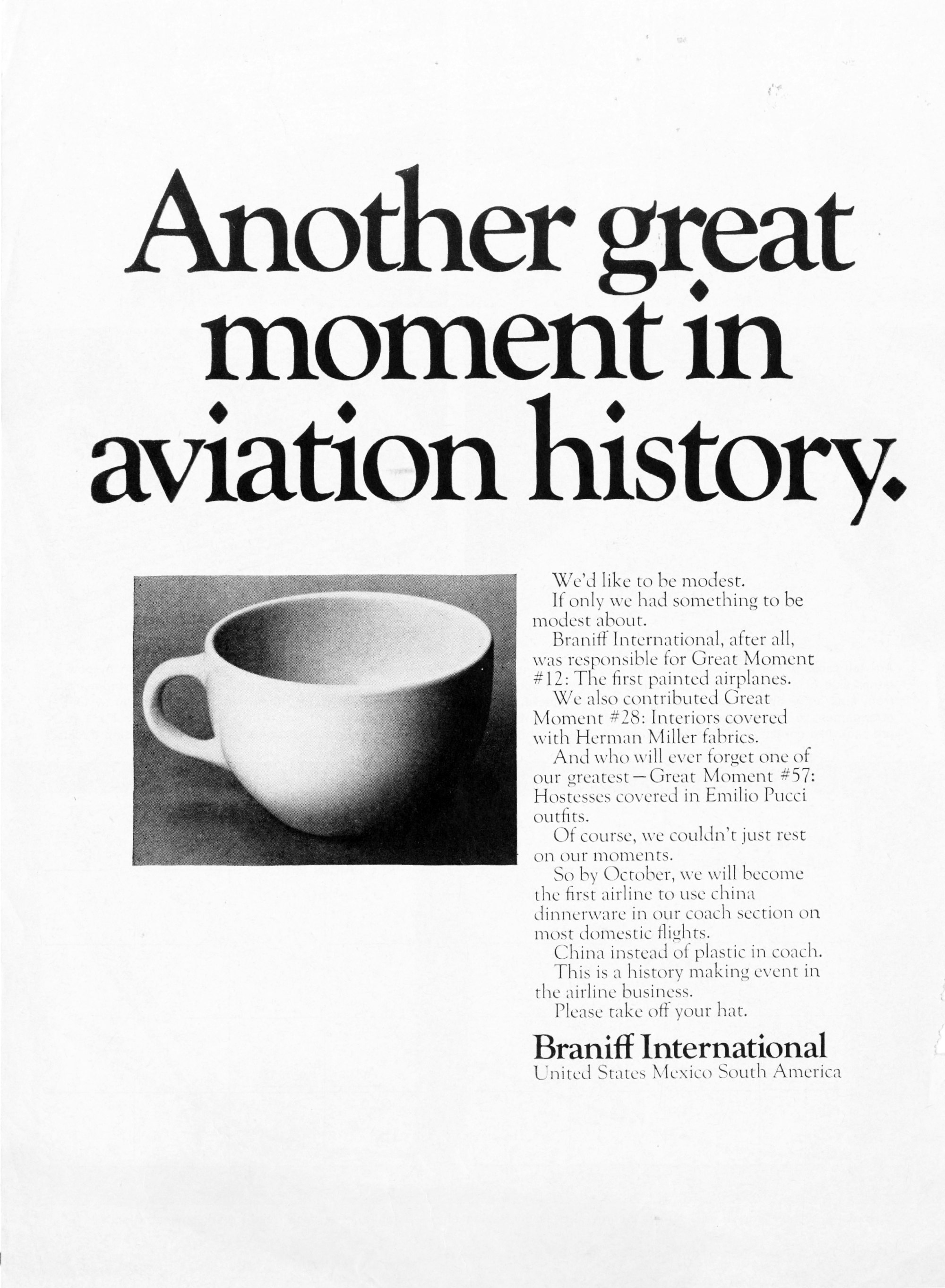
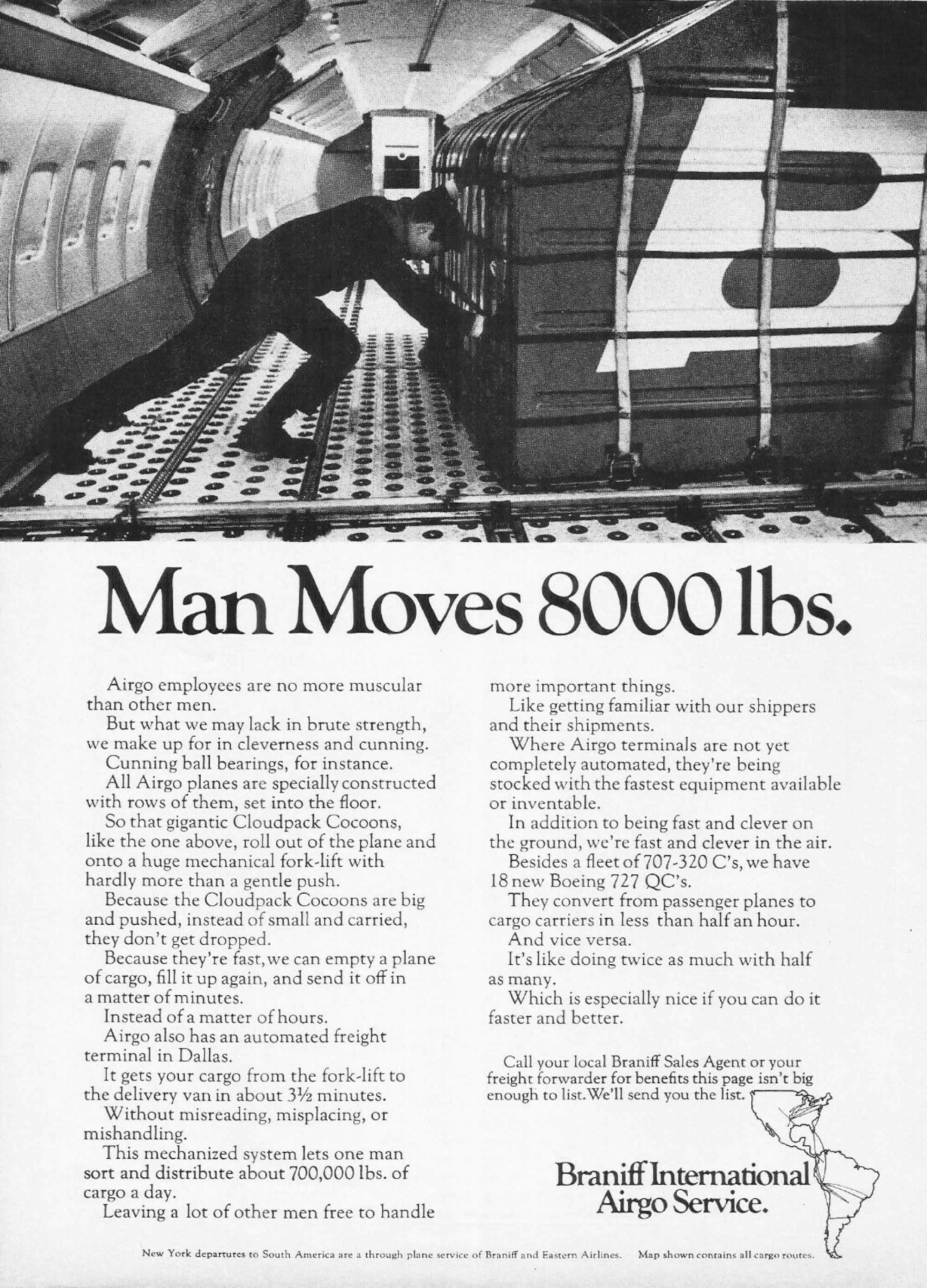
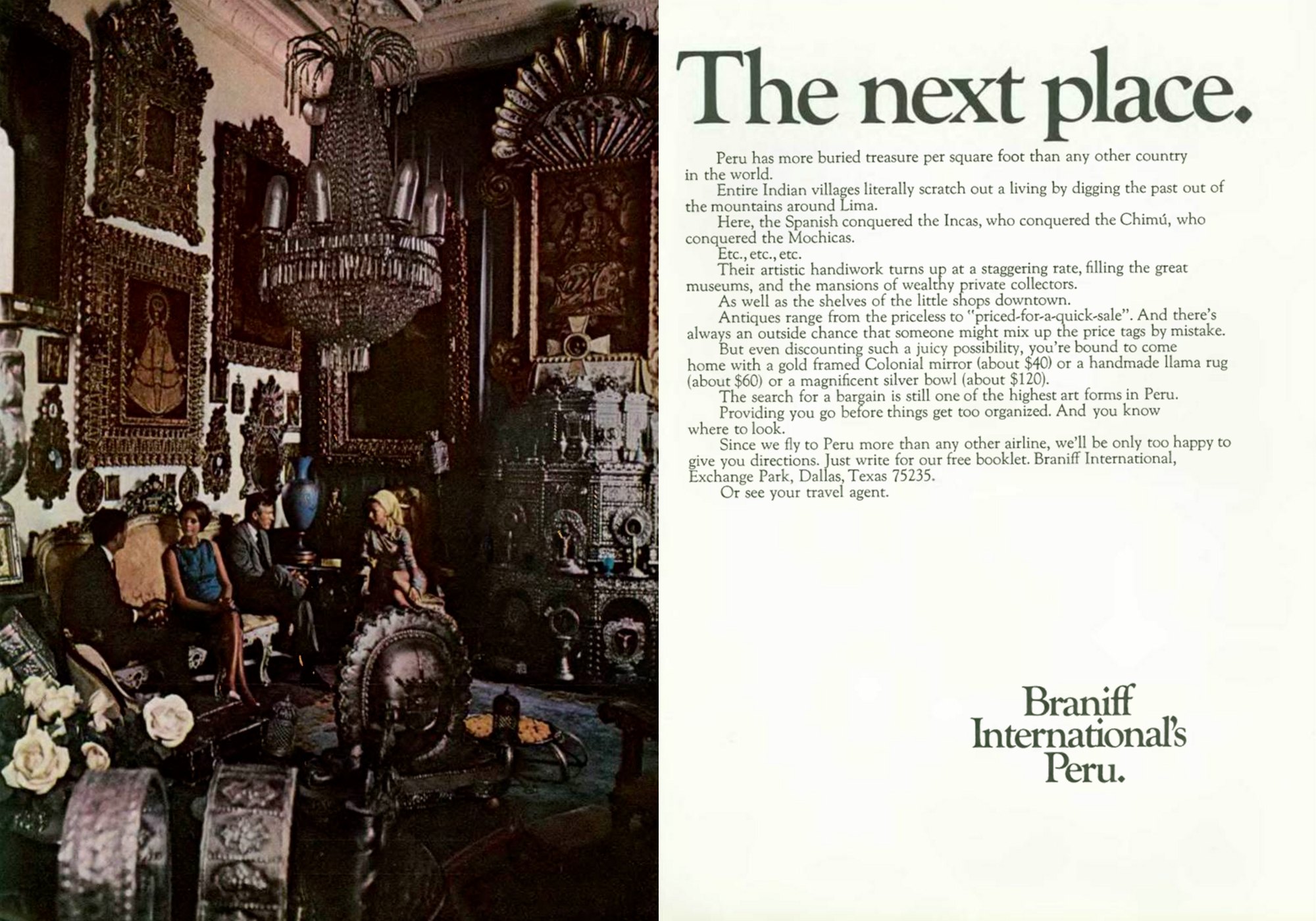
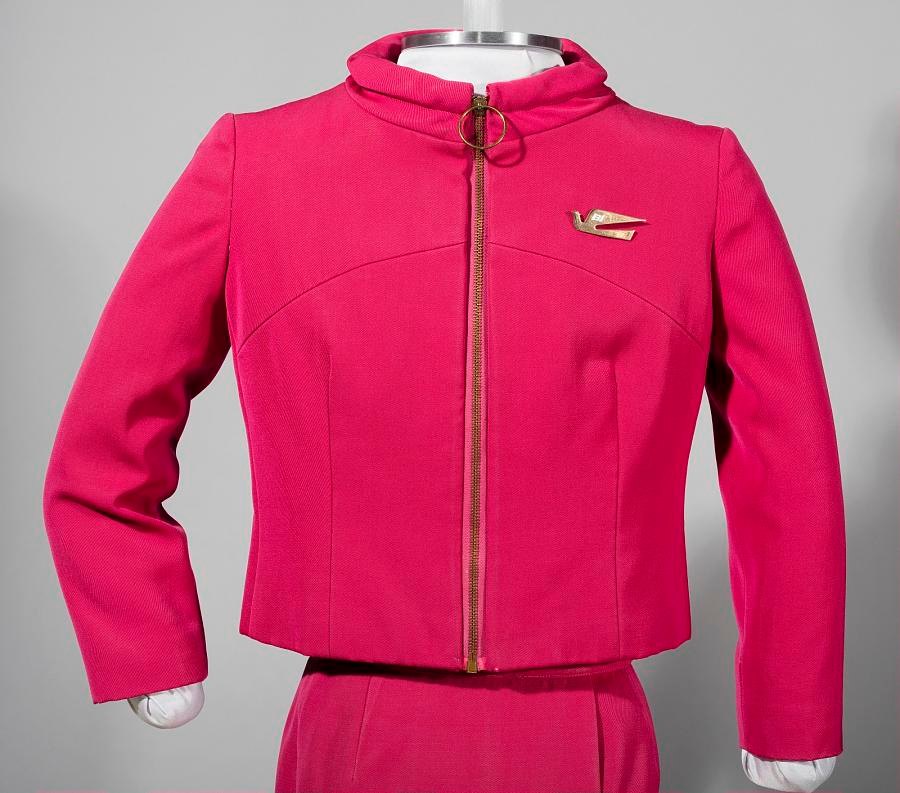
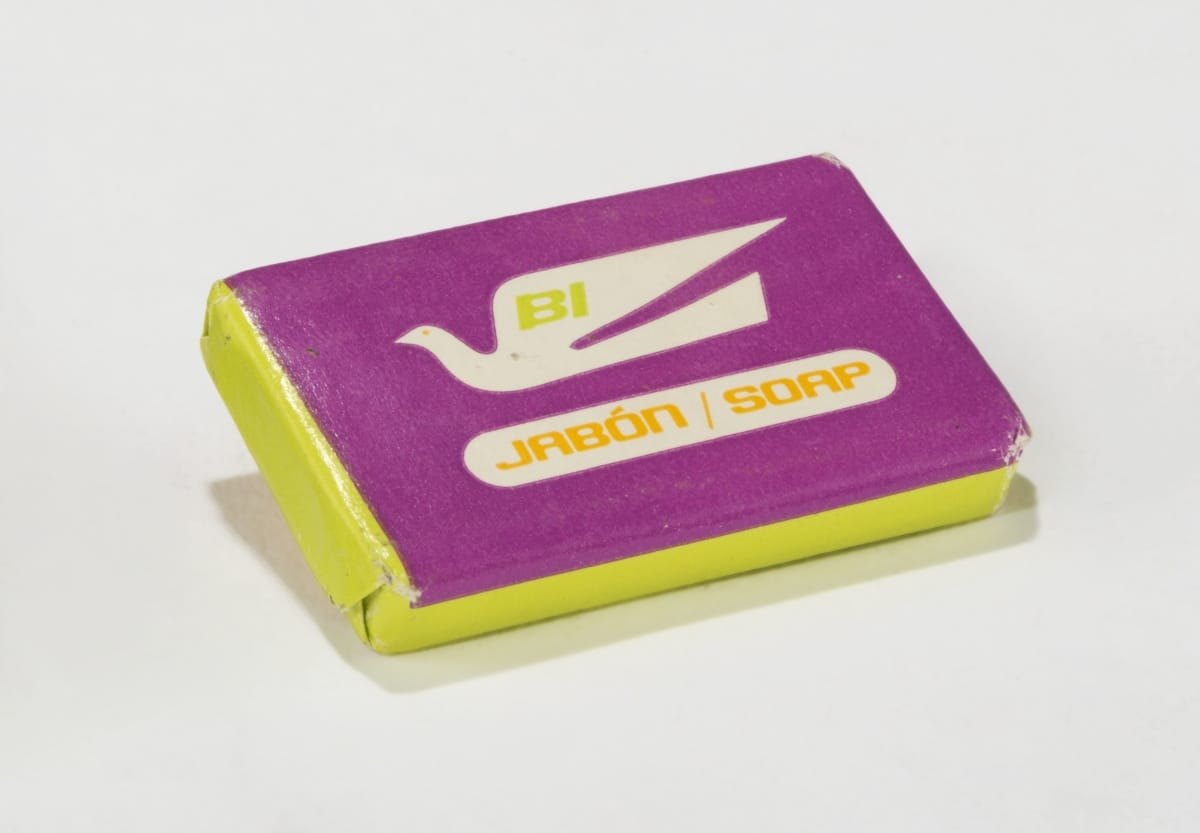
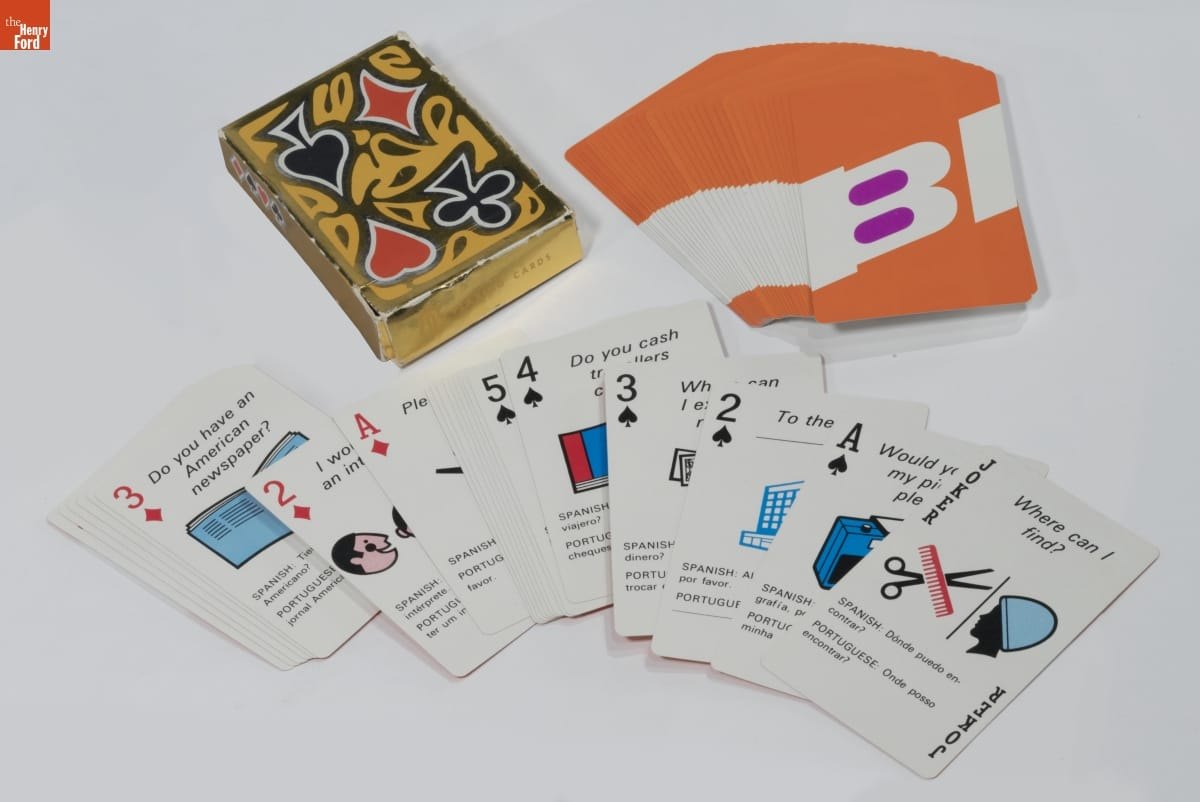
Mary Wells changed the airline before she wrote a word about it. Alexander Girard was commissioned to redesign Braniff itself: seven fuselage colours, new interiors, terminals and a typeface, more than 17,000 individual elements by Northwestern University Library's count, down to the soap and the sugar sachets. Emilio Pucci dressed the cabin crew in layered uniforms that were shed over the course of a flight. Only then did the advertising appear, and it read like a news report: 'The end of the plain plane, explained.' Every claim in it could be checked from the terminal window, which no rival's copy could match.
The work.
Film
Around the work
Same shape of problem.
More from Braniff International.
Every Braniff Internationalcampaign →In 1965 an American airline could not change its fares or its routes. So Braniff changed its colour.
Back to the archive →