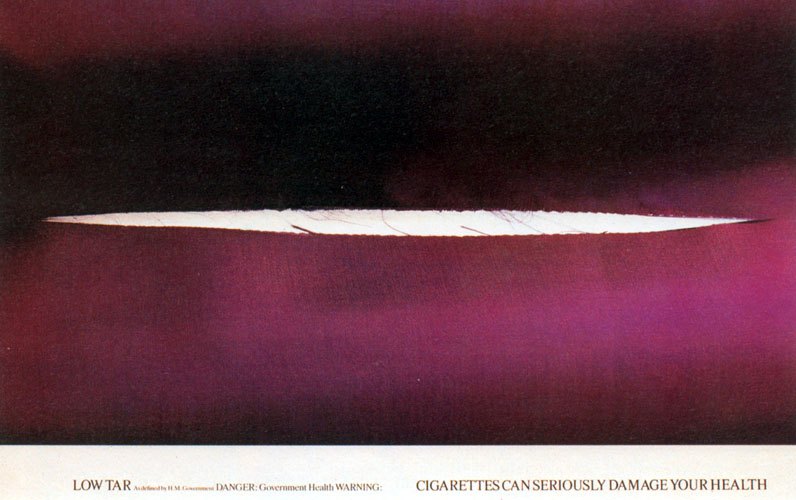
Purple Silk
A cigarette sold for nearly two decades with no name, no smoker and no claim, only purple, a fabric and a cut.
The era.
Britain in the early 1980s was Margaret Thatcher's Britain. Saatchi & Saatchi had made the Conservative Party's 1979 posters, including "Labour Still Isn't Working". Paul Arden, at the agency since the 1970s, was art directing political posters, British Airways and a long list of consumer brands. He became executive creative director in 1987.
Cigarettes were still advertised on posters and in the press. Television had been closed to them since 1965. From 1971 every press and poster advertisement had to carry the line "Every pack carries a Government health warning". The rules came through voluntary agreements between the government and the tobacco companies, renegotiated every few years.
Each new agreement took a little more away. The 1980 agreement brought four new health warnings, more poster space for them and a 30 percent cut in poster spending. The 1982 agreements cut poster and cinema spending again, and the 1986 agreement ended cinema advertising for tobacco. Members of Parliament brought bills to ban tobacco advertising in 1979 and 1983, and the British Medical Association began campaigning for a ban in 1984.
The culture.
A cigarette poster without people or claims already existed. When the Advertising Standards Authority brought in a new cigarette code in 1976, campaigns such as the Marlboro cowboy were withdrawn at once. Collett Dickenson Pearce answered for Benson & Hedges in 1977 with surreal photographs of the gold pack: art director Alan Waldie, copywriter Mike Cozens, photographs by Brian Duffy and later Adrian Flowers. The pack turned up in a mousehole, a birdcage, a gallery.
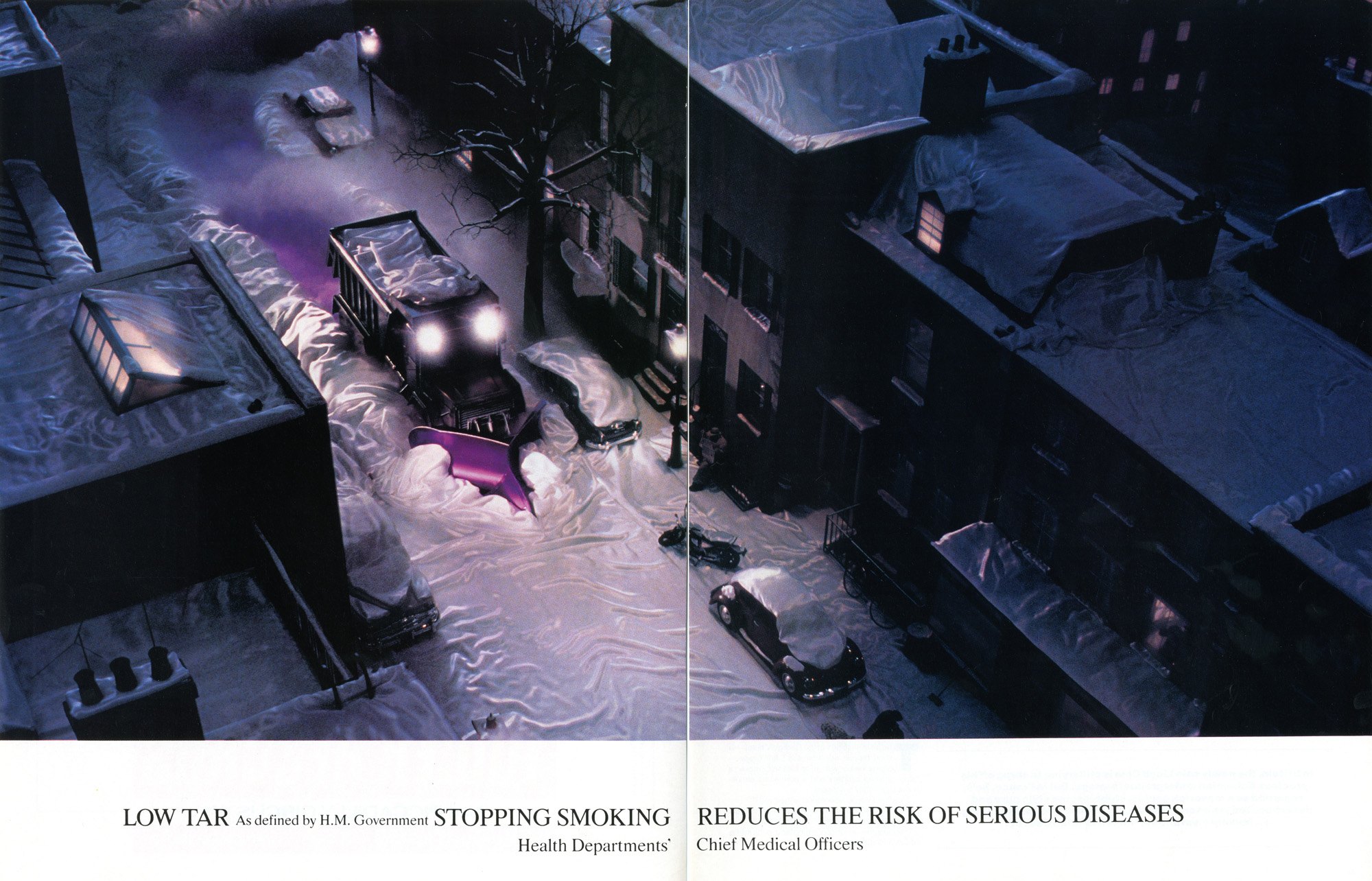
London advertising photography in this period was a slow craft. Graham Ford, who shot for both Benson & Hedges and Silk Cut, said the briefs on those two brands were loose enough to give him a week or more on a single picture. Barney Edwards shot on 5x4 film and went back and forth with Arden at the agency's Charlotte Street office until a picture was right. Many of the images were built as models and sets before they were photographed.
Charles Saatchi, the agency's co-founder, was also a collector and dealer in contemporary art. One artist he owned was Lucio Fontana, the Italian painter known for canvases sliced open with a single cut. Gallery art and poster art sat close together in his agency, and the people who walked past a 48-sheet hoarding had already learned to read a cigarette poster as a riddle.
The problem.
The rules had taken away the smoker, the claim and soon perhaps the name, and Silk Cut still needed a poster that sold Silk Cut.
Silk Cut was Gallaher's low-tar cigarette, launched in 1964. It grew through the 1970s and 1980s as smokers moved to lower-tar brands.
By the early 1980s the usual tools of cigarette advertising were gone. The advertising code ruled out the people, the lifestyle and the heroes. Poster and cinema budgets had been cut by agreement, and every poster gave a strip along the bottom to the government health warning.
A ban on brand-named tobacco advertising was being discussed in the mid-1980s, and Parliament kept returning to a full ban. Gallaher needed a campaign that obeyed the rules as they stood, could survive tighter ones, and still made one low-tar brand stand apart from the others on the hoardings.
Gallaher gave the Silk Cut account to Saatchi & Saatchi around 1983 to 1984. The task was a campaign that obeyed the British restrictions on cigarette advertising and still promoted the brand.
The solution.
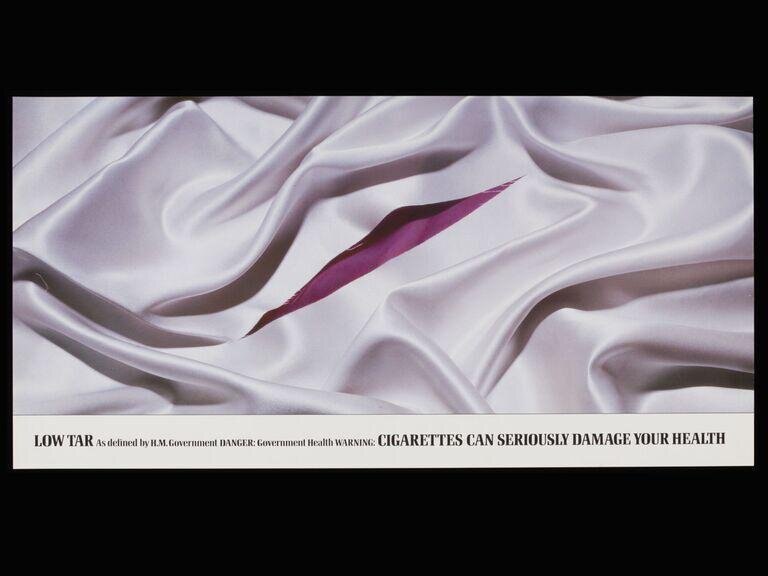
Turn the brand name into a picture: purple silk, cut, with no words at all, and let the health warning tell people what it was selling.
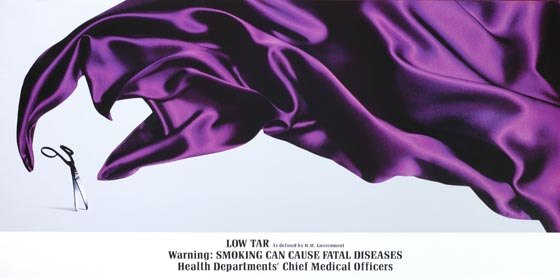
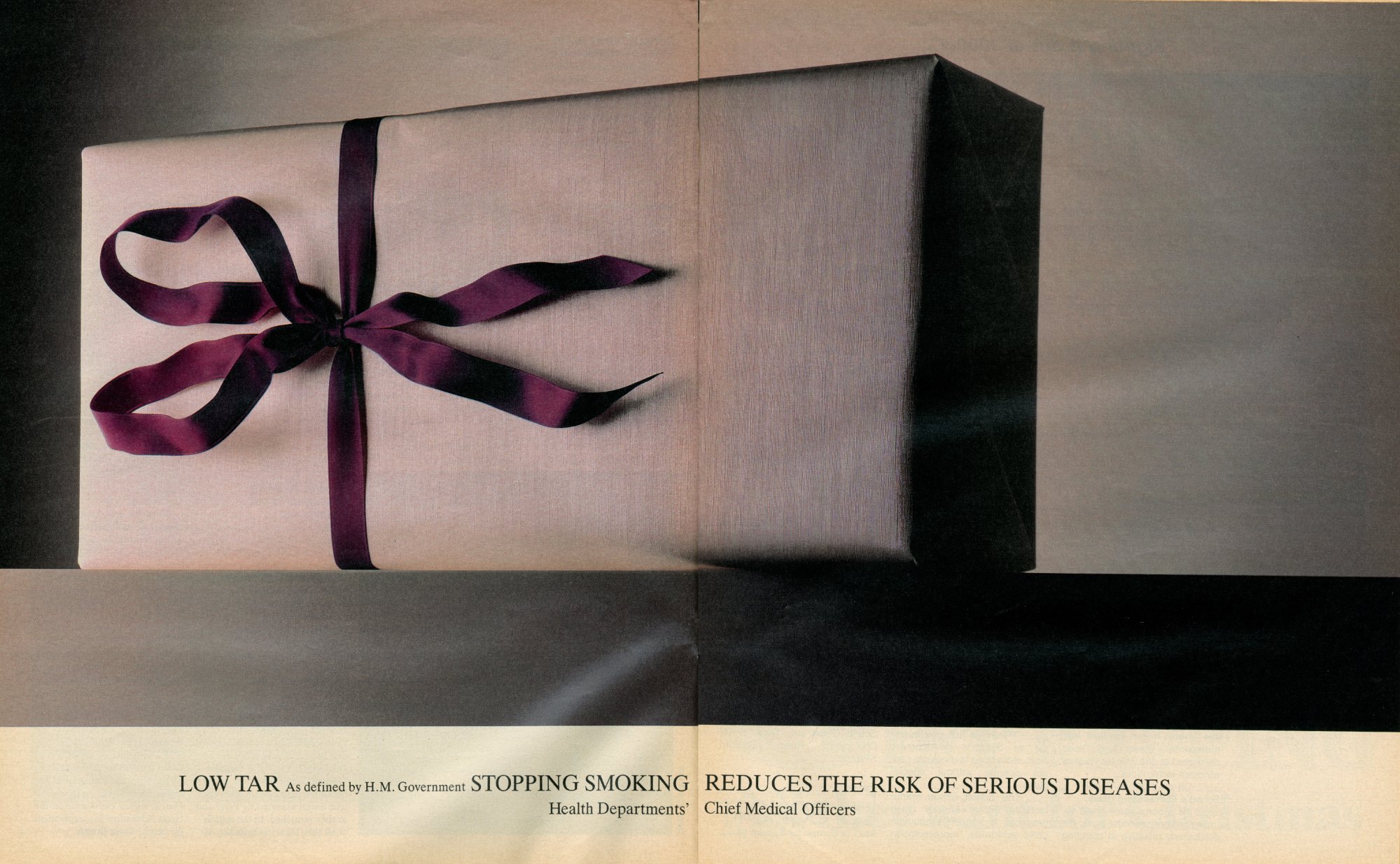
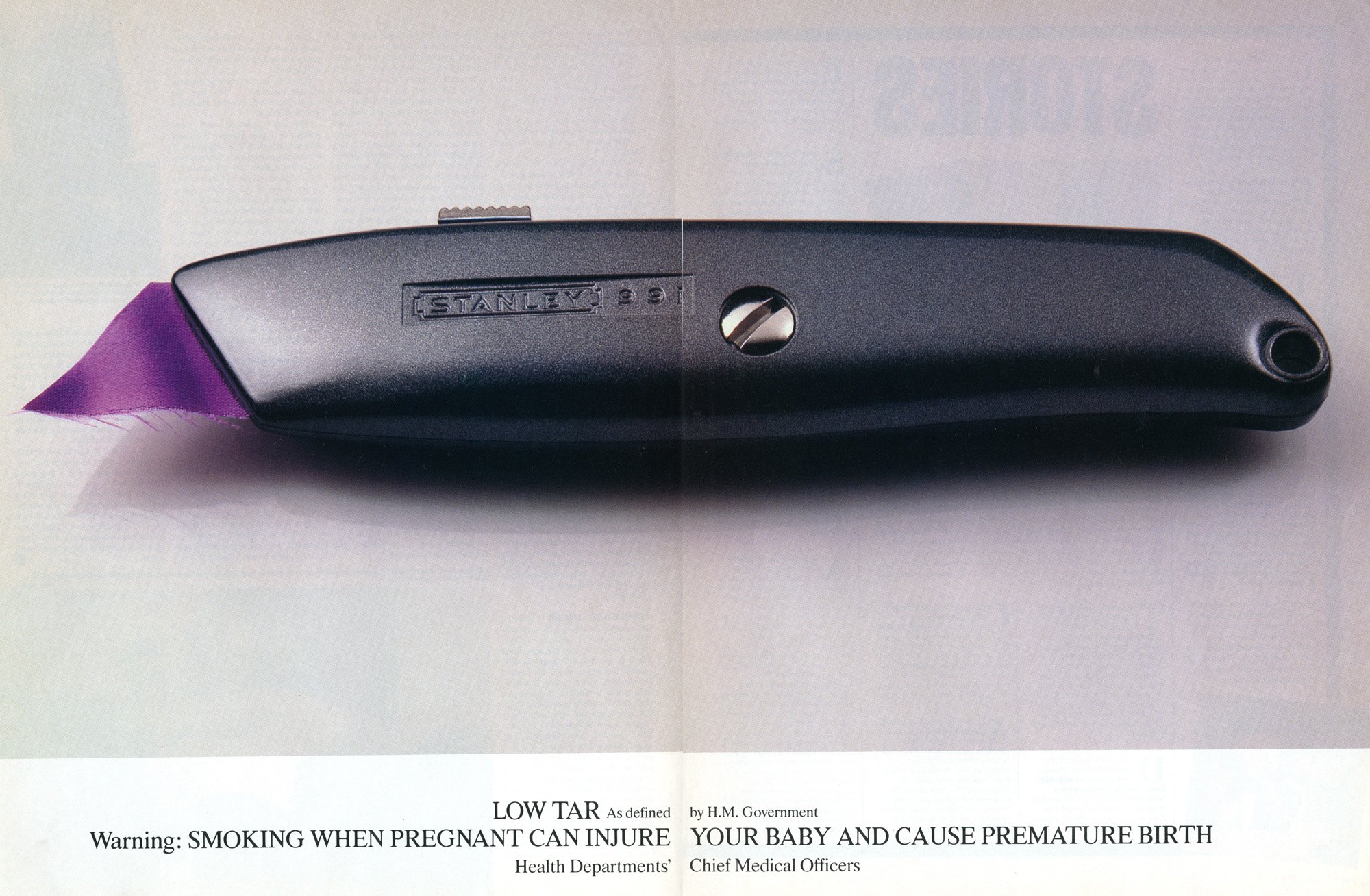
Charles Saatchi brought a Fontana painting to Paul Arden and his partner Tim Mellors and, as the story is told, said: "Here is the next campaign for Silk Cut. Photograph it." The first poster showed silk with a single slash and purple fabric showing through. The brand name did not appear. The only words were the government health warning, and purple and white, taken from the pack, did the rest.
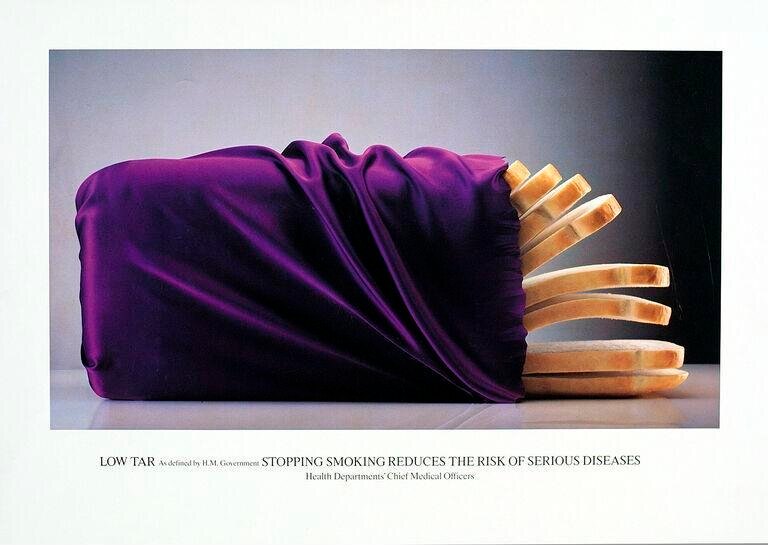
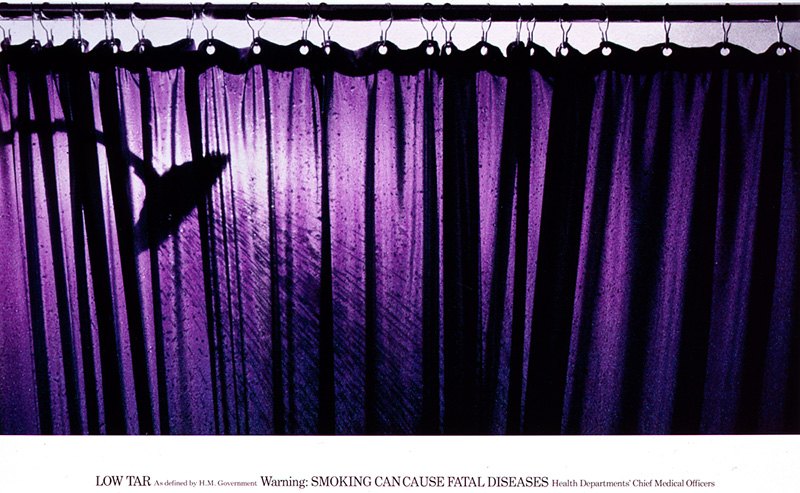
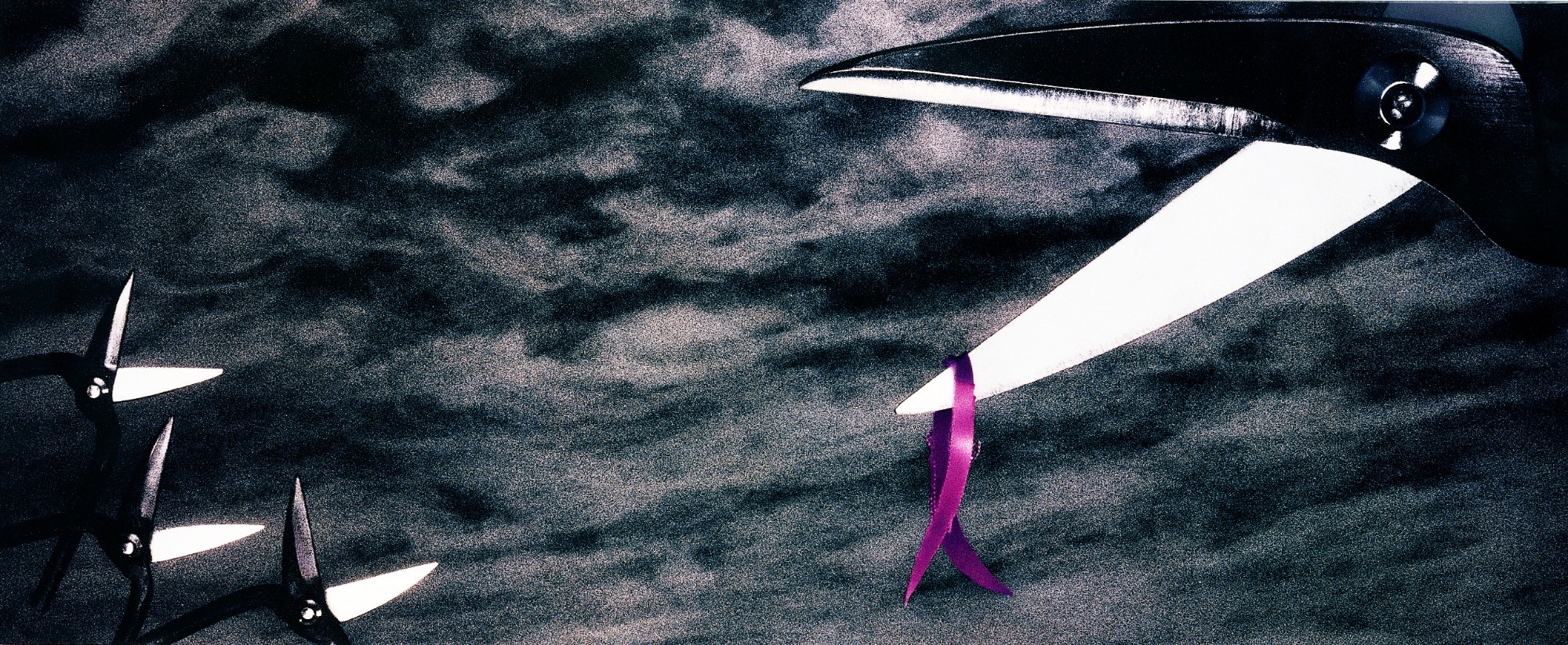
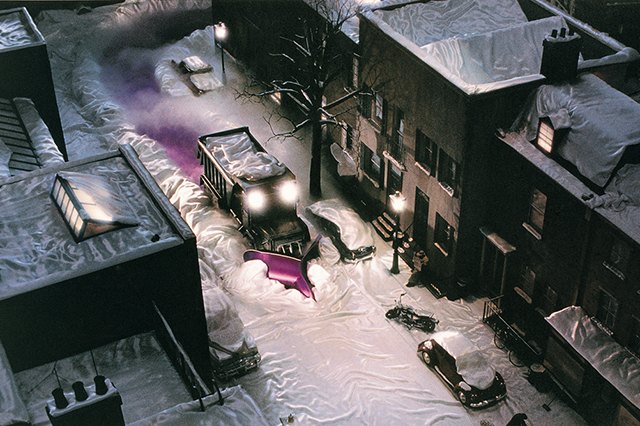
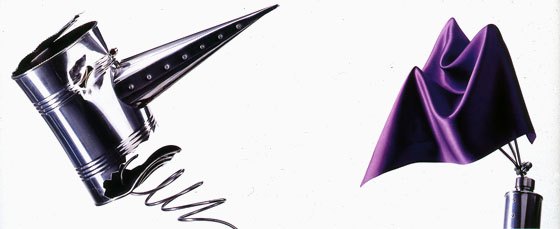
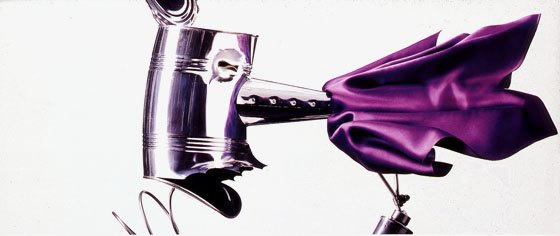
Arden then put several photographers on it for weeks. Graham Ford learned how to dye, cut and light silk, and Arden had the posters inked and printed twice to get the purple deep enough. Later posters played on the name in other ways: scissors, baby birds being fed a strip of silk like a worm, the shower scene from Psycho. Mellors objected at the time that the pun only worked in English. Saatchi overruled him.
Each poster was a small puzzle, and the reward of solving it attached itself to the brand. Purple came to stand for Silk Cut the way red stood for Marlboro, so the campaign could keep working as the rules tightened. By the early 1990s Silk Cut was the best-selling cigarette in Britain, and the posters ran until tobacco advertising was banned in 2002.
The work.
Same shape of problem.
Charles Saatchi handed his creative team a slashed painting and told them to photograph it.
Back to the archive →