Sierra Club · Freeman, Mander & Gossage
Should We Also Flood the Sistine Chapel?
Took the opposition's own selling point and moved it to a category where it read as vandalism; the reply came from the Internal Revenue Service the following morning.
The era.
In 1966 American trust in the federal government stood near its recorded peak. Pew's long series puts it at 77 per cent in 1964, the highest reading it has ever taken, and the machinery of public works ran on that credit. The Bureau of Reclamation was not a villain in the public mind. It was the agency that had built Hoover Dam, and its engineers talked about rivers the way surgeons talk about patients.
Conservation was a lobbying craft rather than a public one. The Wilderness Act had passed in September 1964 after an eight-year legislative fight conducted almost entirely in committee rooms. Silent Spring was four years old; Earth Day was four years away. There was no organised environmental electorate to mobilise, and the commercial category later called advocacy advertising did not yet exist. Mobil's op-ed page series, usually treated as its starting point, began in 1971.
The culture.
The Bureau's Pacific Southwest Water Plan bundled the Central Arizona Project together with two dams inside the Grand Canyon, at Marble Canyon and Bridge Canyon. Their purpose was financial as much as hydrological: power sales would repay construction and underwrite further reclamation work, which is why the agency's own people called them cash register dams. Bridge Canyon, as drawn in 1963, would have been the tallest dam in the Western Hemisphere.
Reclamation's public case rested on access. Raise the water, the agency argued, and ordinary Americans in hired boats would be carried up close to canyon walls that only river runners and mule parties had ever seen. Commissioner Floyd Dominy pressed the point at congressional hearings and had a scale model built to help him make it. It was a democratic argument, it was sincerely meant, and on its own terms the Sierra Club had no answer to it.
The problem.
The case against the Grand Canyon dams was sound, technical and read only by experts, while the other side was promising the public a closer look.
The Bureau of Reclamation planned two dams on the Colorado River, at Bridge Canyon and Marble Canyon, to power the pumps of a water project for central Arizona. The reservoirs would have reached into Grand Canyon National Park and National Monument. The bill to build them was moving through Congress.
The Sierra Club was fighting on the Bureau's ground and losing. Evaporation rates, load factors and repayment schedules made a sound case that nobody outside the field would read. Arguing it handed the moral high ground to an agency offering to bring the public closer to the canyon walls. The Club was reaching only people who were already experts, and it needed ordinary readers to write to Washington before the vote.
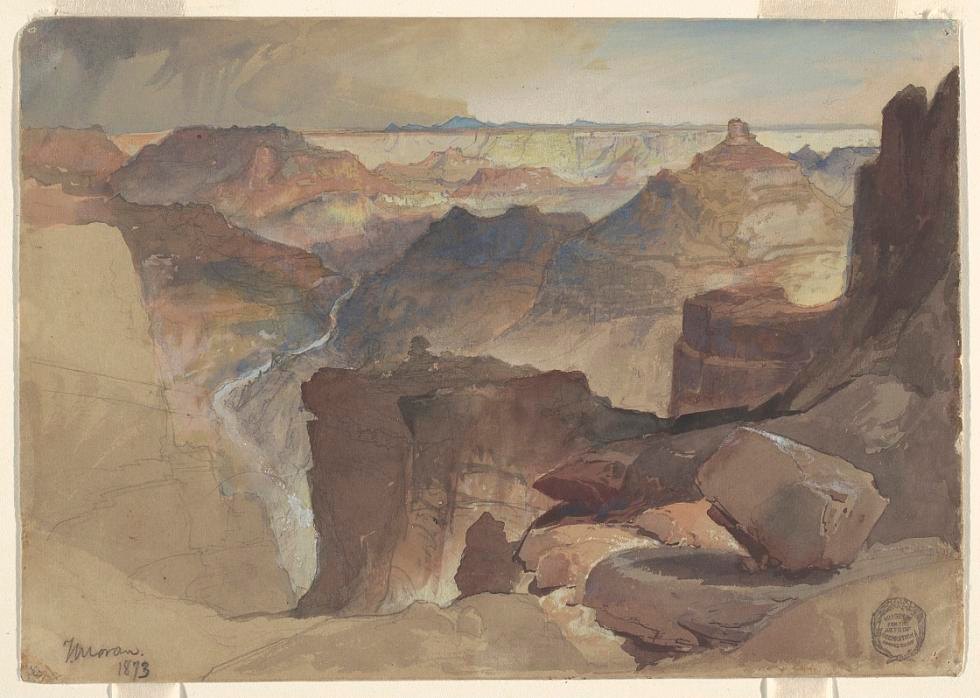
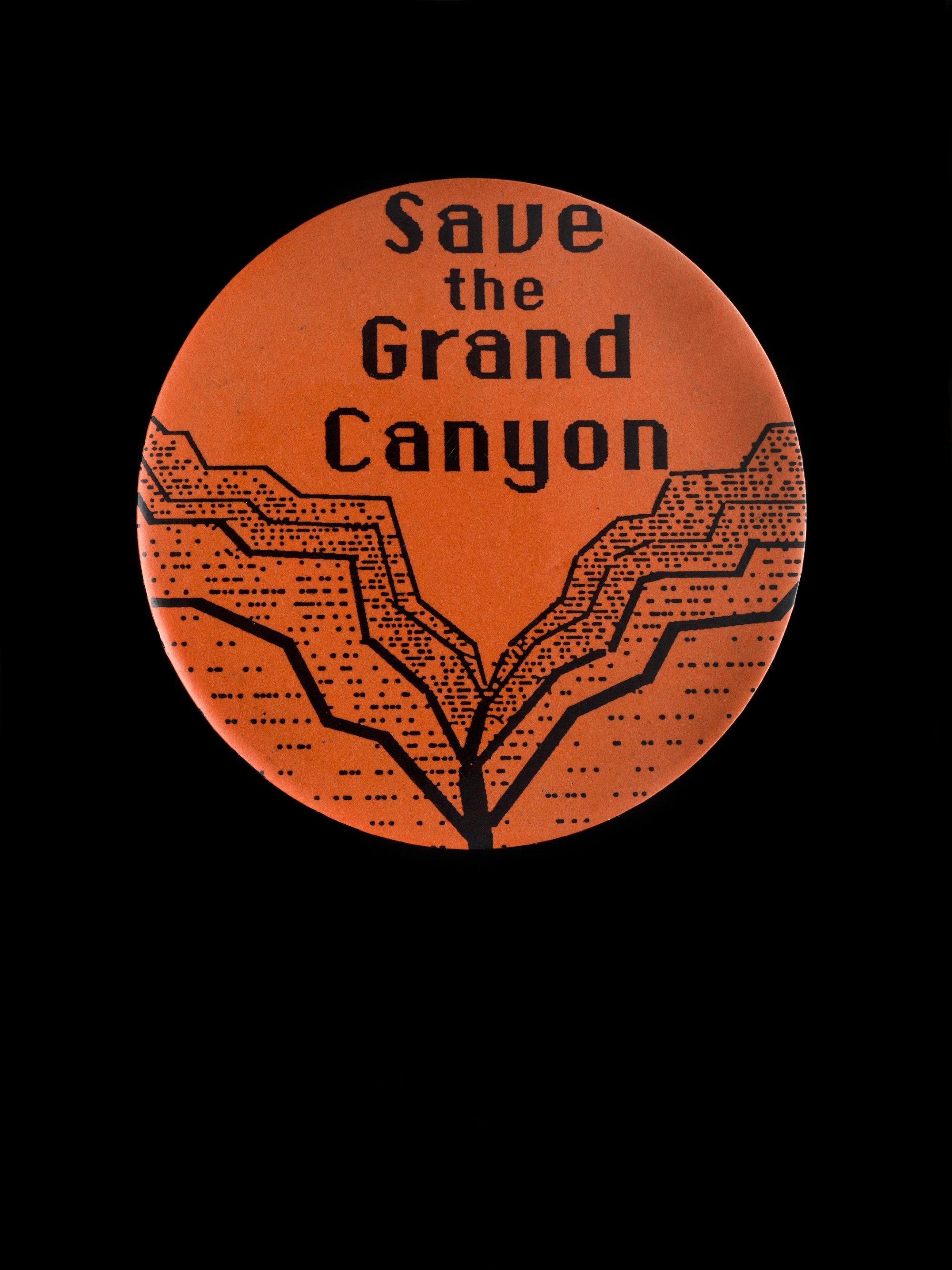
The Sierra Club, led by David Brower, was trying to stop the Bureau of Reclamation from building two dams that would flood parts of the Grand Canyon. In 1966 it took the fight to full-page newspaper ads through Howard Gossage's San Francisco agency, where Jerry Mander had just started.
The solution.
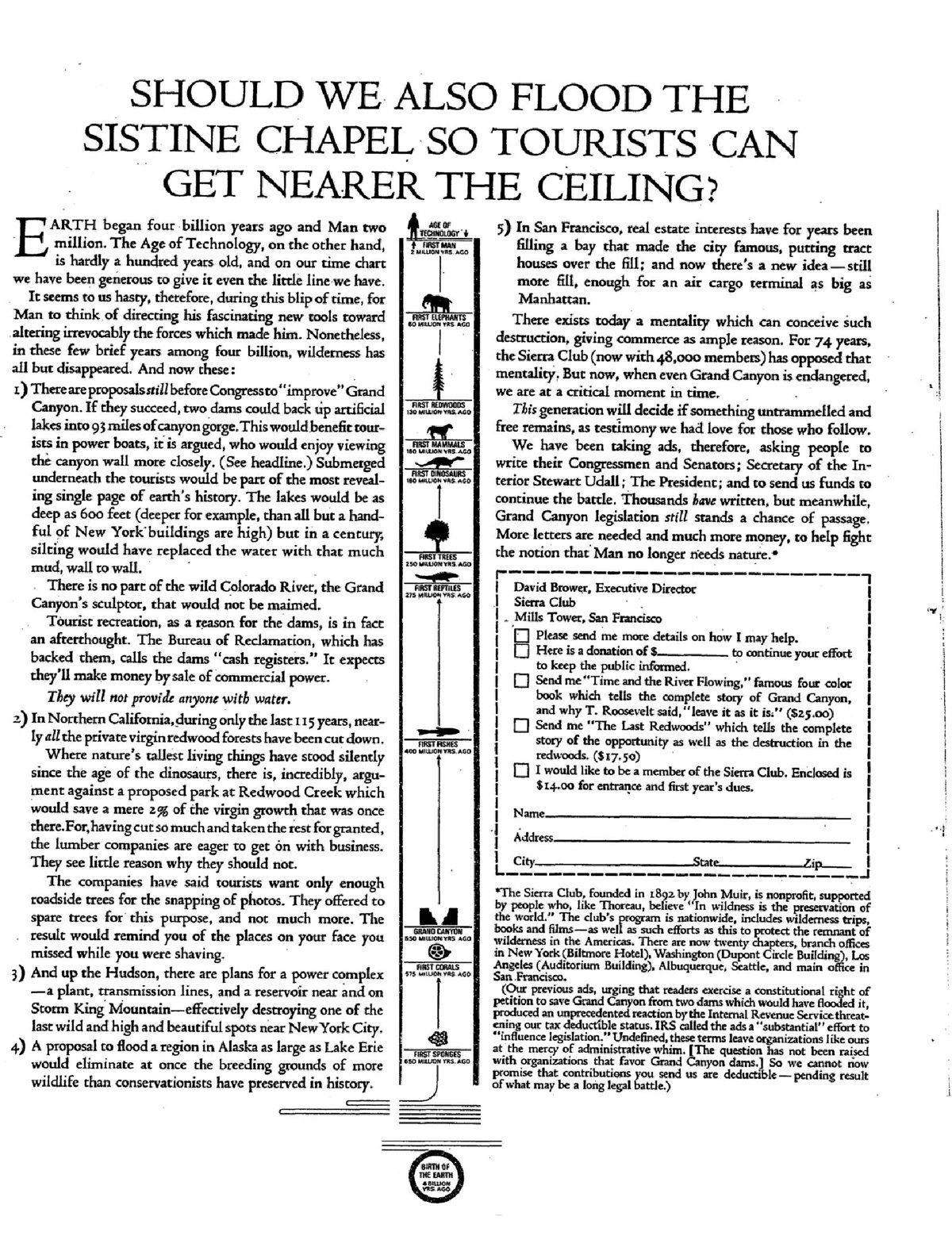
Grant the argument in full. Then apply it to the Sistine Chapel.
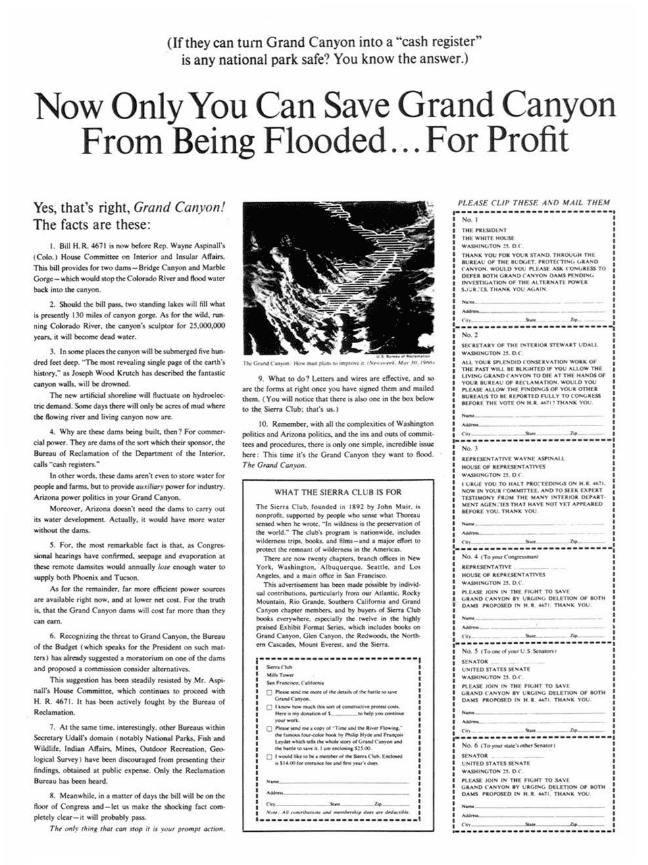
The advertisements did not dispute that higher water would bring tourists nearer the canyon walls. They accepted the premise and moved it somewhere the same logic reads as vandalism. The headline asked whether we should also flood the Sistine Chapel so tourists could get nearer the ceiling. The reader finishes the argument unaided, and having finished it cannot unthink it. The full pages ran in The New York Times and The Washington Post in June 1966, each with clip-and-mail coupons addressed to the President and the Secretary of the Interior, so that agreement turned into mail before the paper was folded. The Club gained many new members, and the campaign is widely credited with stopping the dams.
The work.

Around the work
Same shape of problem.
Two newspaper pages on 9 June 1966. The Internal Revenue Service answered the next morning.
Back to the archive →