Dewar's Profiles
A Scotch whisky stopped talking about Scotland and started introducing its drinkers, one real person at a time, for more than two decades.
The era.
Dewar's came back to the American market after Prohibition ended in 1933. From 1936 it was distributed in the United States by Schenley Industries. By the early 1980s about 95 percent of Dewar's output was exported, and roughly half of that went to America. Dewar's alone made up half of Schenley's profits.
The late 1960s were good years for Scotch in America. Dewar's sales tripled between 1960 and 1980. The brand competed for the same bar and the same liquor-store shelf as every other blended Scotch.
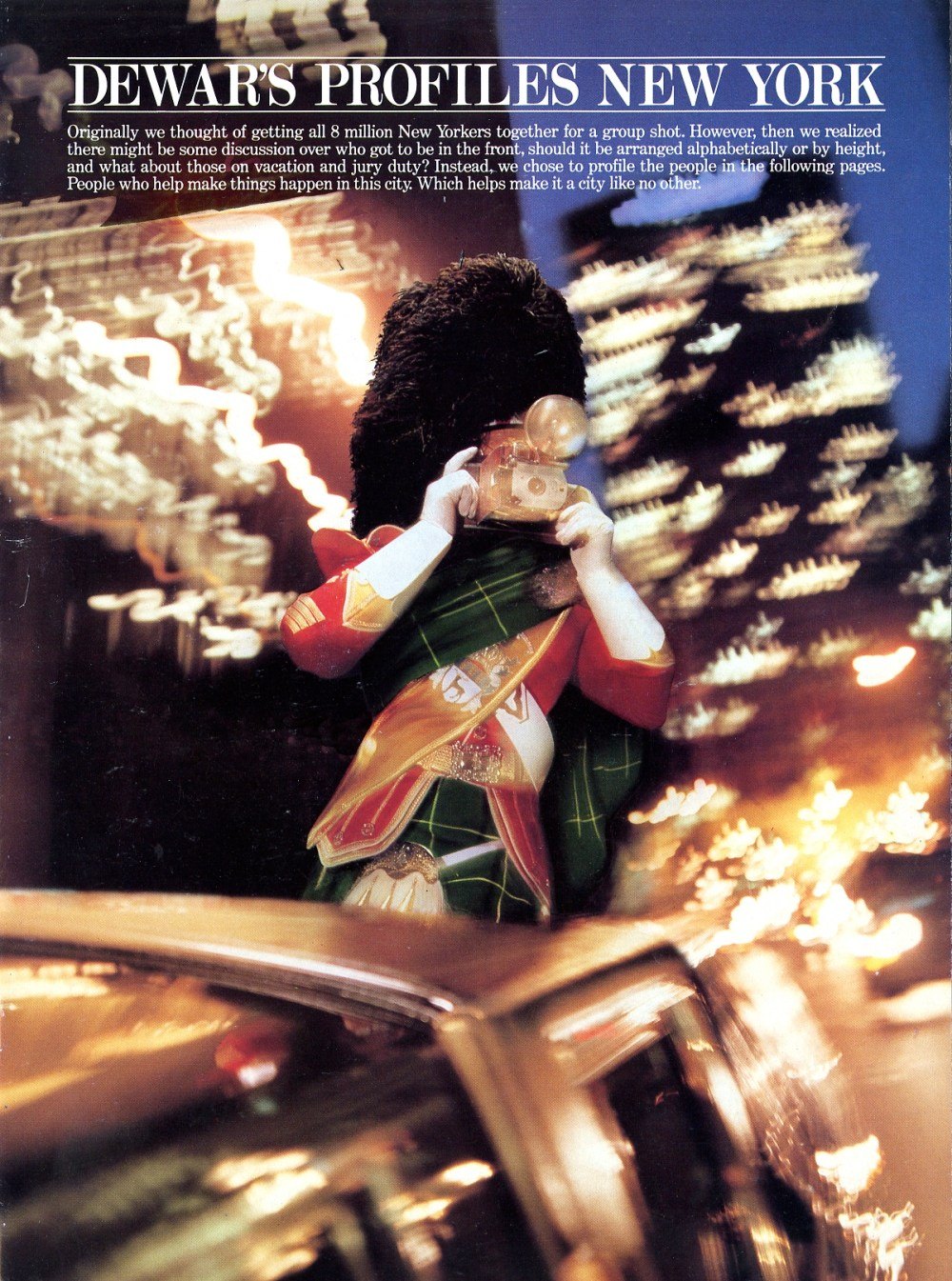
Its advertising had long leaned on Scotland. A 1956 Dewar's ad showed a piper in red tartan and promised "a wee bit o' Scotland in a bottle." The brand sold heritage and consistency under the line "Dewar's never varies."
The culture.
The campaign started in 1969. More women and more Black Americans were moving into professional careers, and magazines such as Ebony covered their achievements and carried national advertising alongside them. An early Dewar's Profile ran in Ebony in July 1969.
The format borrowed from journalism. A magazine profile told you who someone was through what they had done. A name followed by an occupation in brackets was enough to place a person.
By the late 1980s the market had turned. A 1989 Los Angeles Times report noted declining Scotch consumption in the United States. In 1986 Dewar's had become the top-selling whisky in the country, and it now had to hold that position in a shrinking category.
The problem.
A Scotch that sold itself on pipers and tartan had to mean something to Americans who had never been to Scotland and who defined themselves by what they did.
Dewar's was a large brand in a crowded category. Every blended Scotch on the shelf could claim Scottish heritage.
The brand's own advertising had relied on the piper and the promise that Dewar's never varied. That told a buyer where the whisky came from. It did not say who drank it, or why a successful American should choose it over the bottle next to it.
The brand did have one asset nobody else could copy: a name that sounds like "doers."
No source found says who at Schenley commissioned the series or which agency created it in 1969. By 1993 Adweek described it as one of Leo Burnett's best-known campaigns.
The solution.
Make the drinker the subject: a real, accomplished person, set out like a résumé, with the Scotch listed as one more fact about them.
From 1969 each Dewar's Profile introduced one real person, identified by name and occupation in brackets. The first, according to the Los Angeles Times, was the actor Jerry Orbach. An early profile in Ebony in July 1969 featured the fashion designer Ola Hudson.
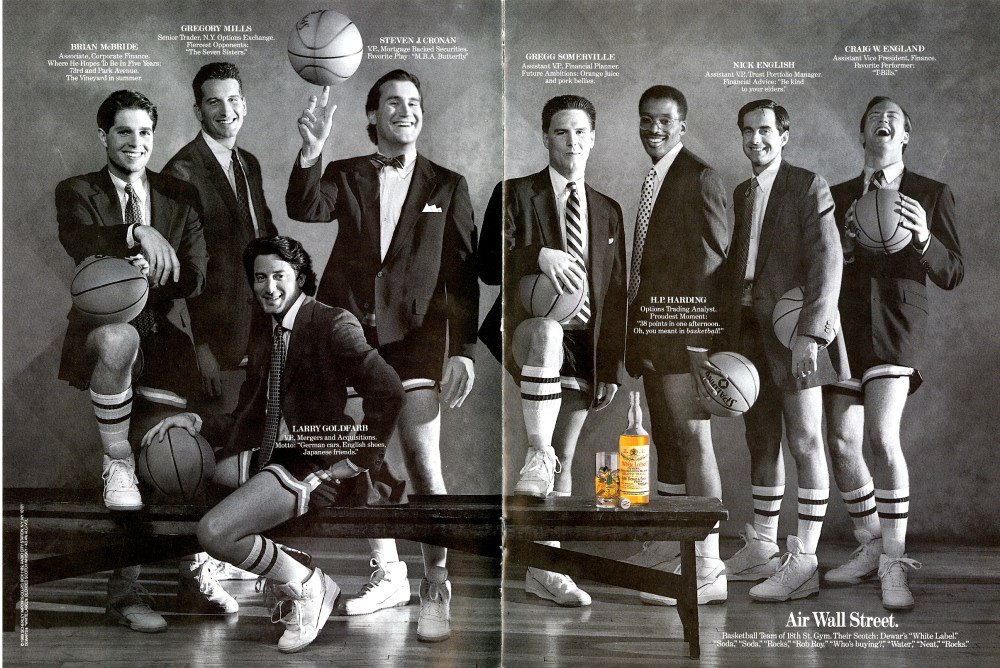
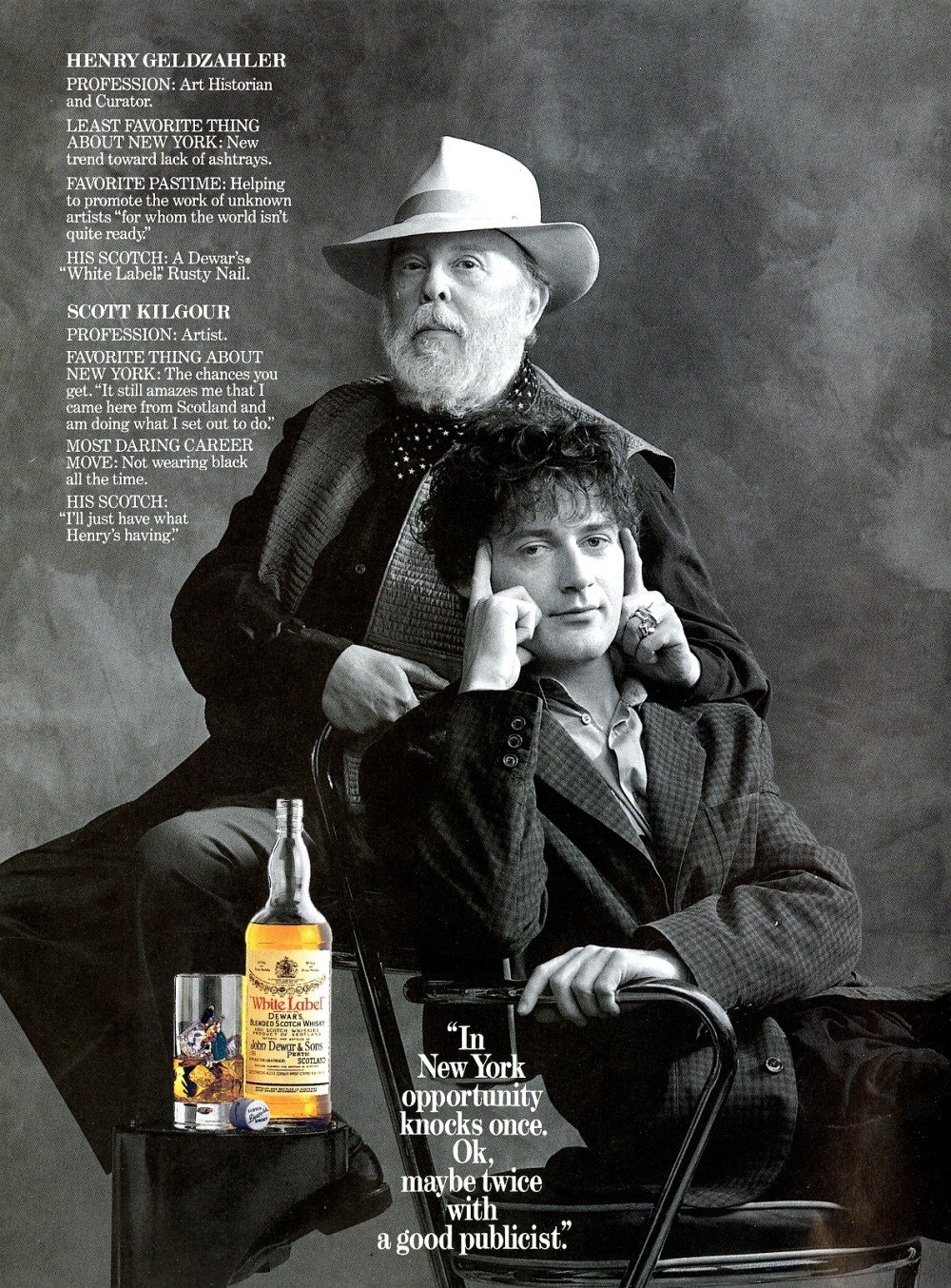
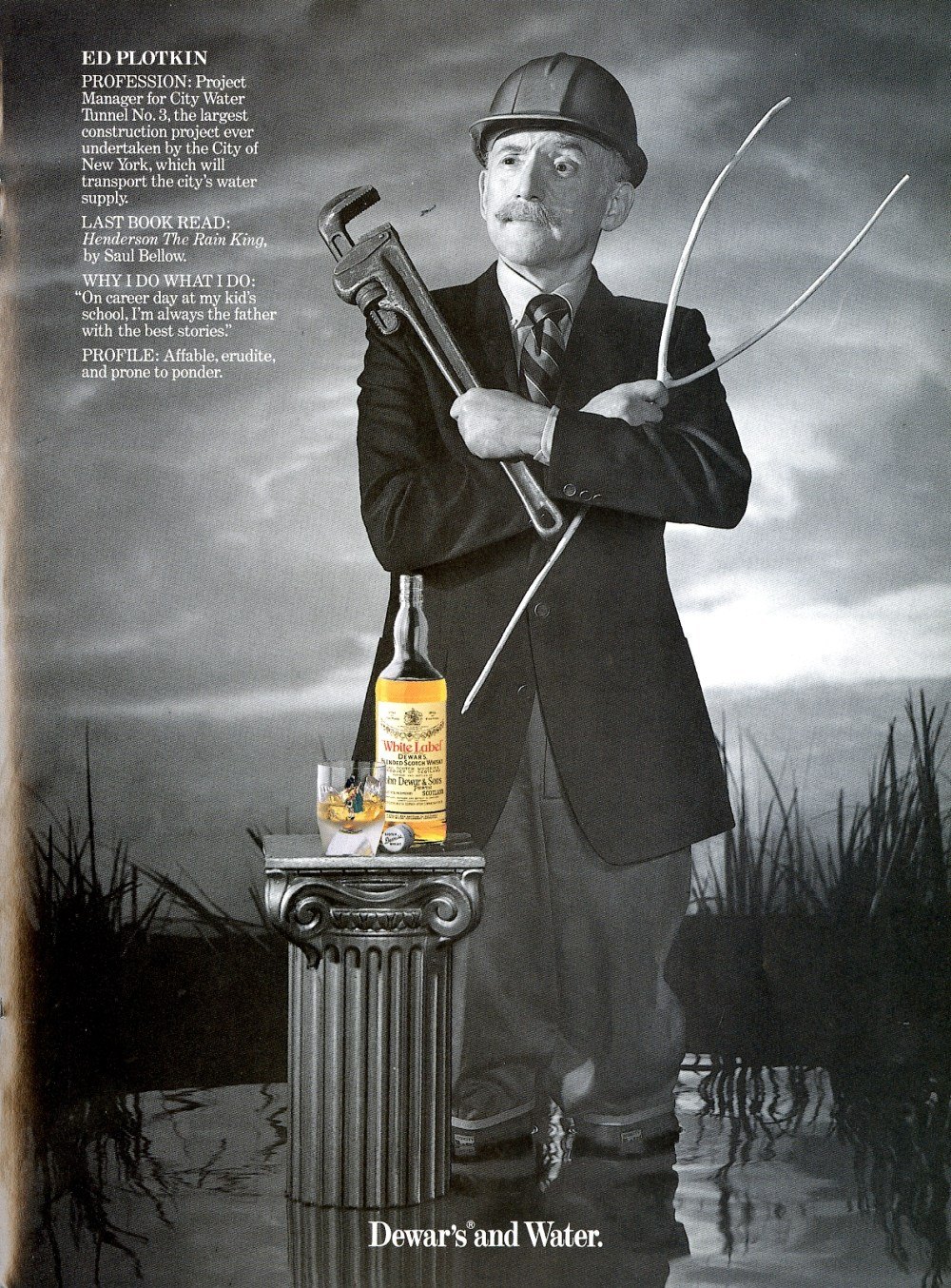
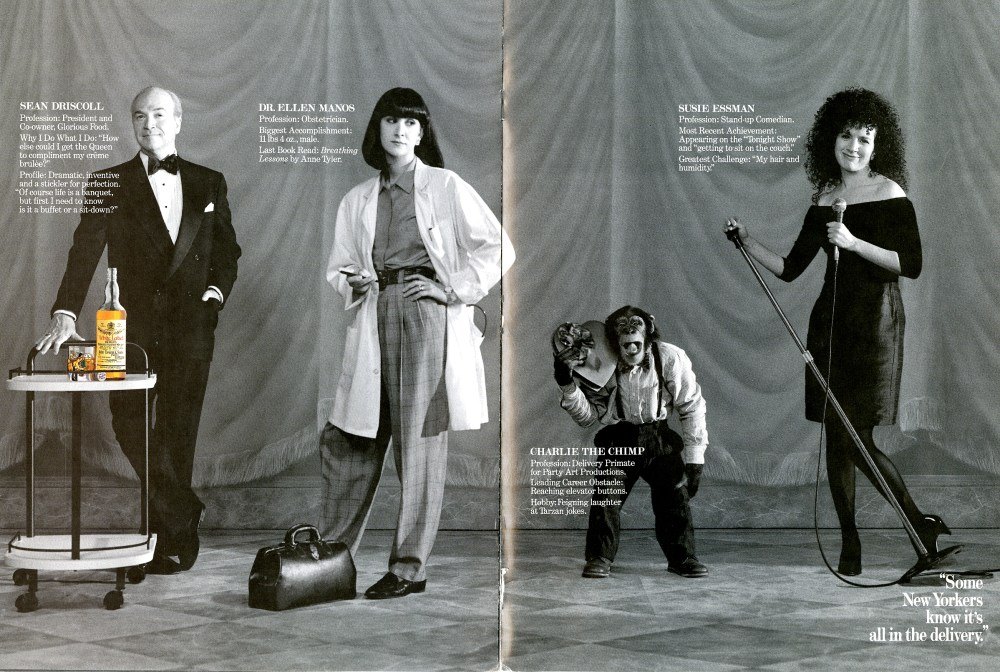
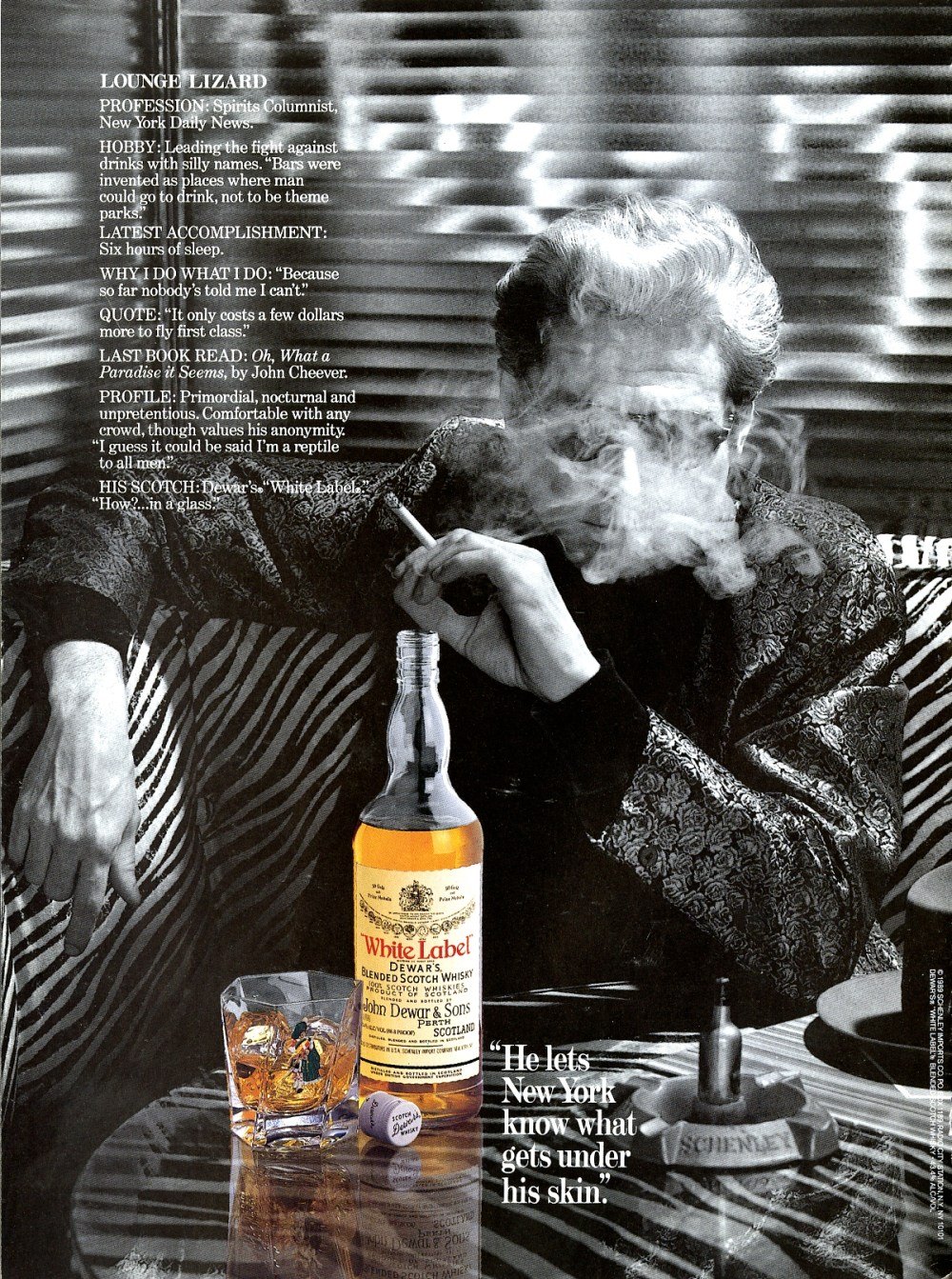
The ads set out each subject's life and achievements as a short profile, with a small bottle of Dewar's White Label alongside. The name of the series played on the way the brand's name sounds: Dewar's, or doers.
The subjects were mostly people readers had not heard of: a journalist, a pilot, a conservationist, a stuntwoman. Adweek noted in 1993 that the campaign was known for not using major celebrities. That kept the ads believable and let readers picture themselves in the series. People who appeared were recognised for it years later. The journalist Les Payne told the Los Angeles Times that people would say, "Gee, I didn't know you were a Dewar's Profile!"
The format ran for at least 24 years. The 100th profile, a stuntwoman named Diane Peterson photographed by Greg Gorman, appeared in Sports Illustrated, Business Week and Time in September 1993.
The work.
Same shape of problem.
For twenty-four years a Scotch whisky ran ads about its drinkers, and the people in them were still being recognised for it a decade later.
Back to the archive →